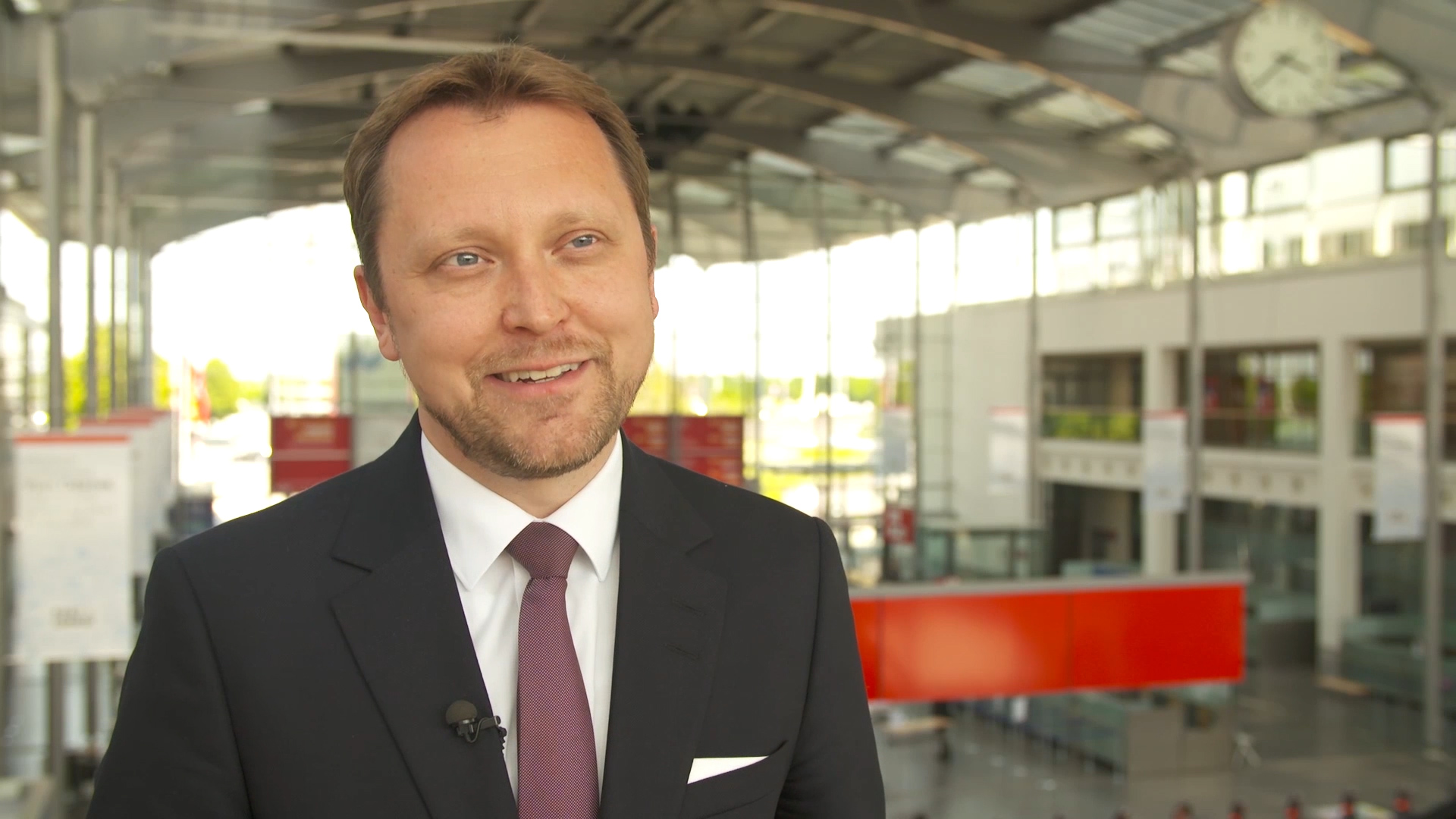
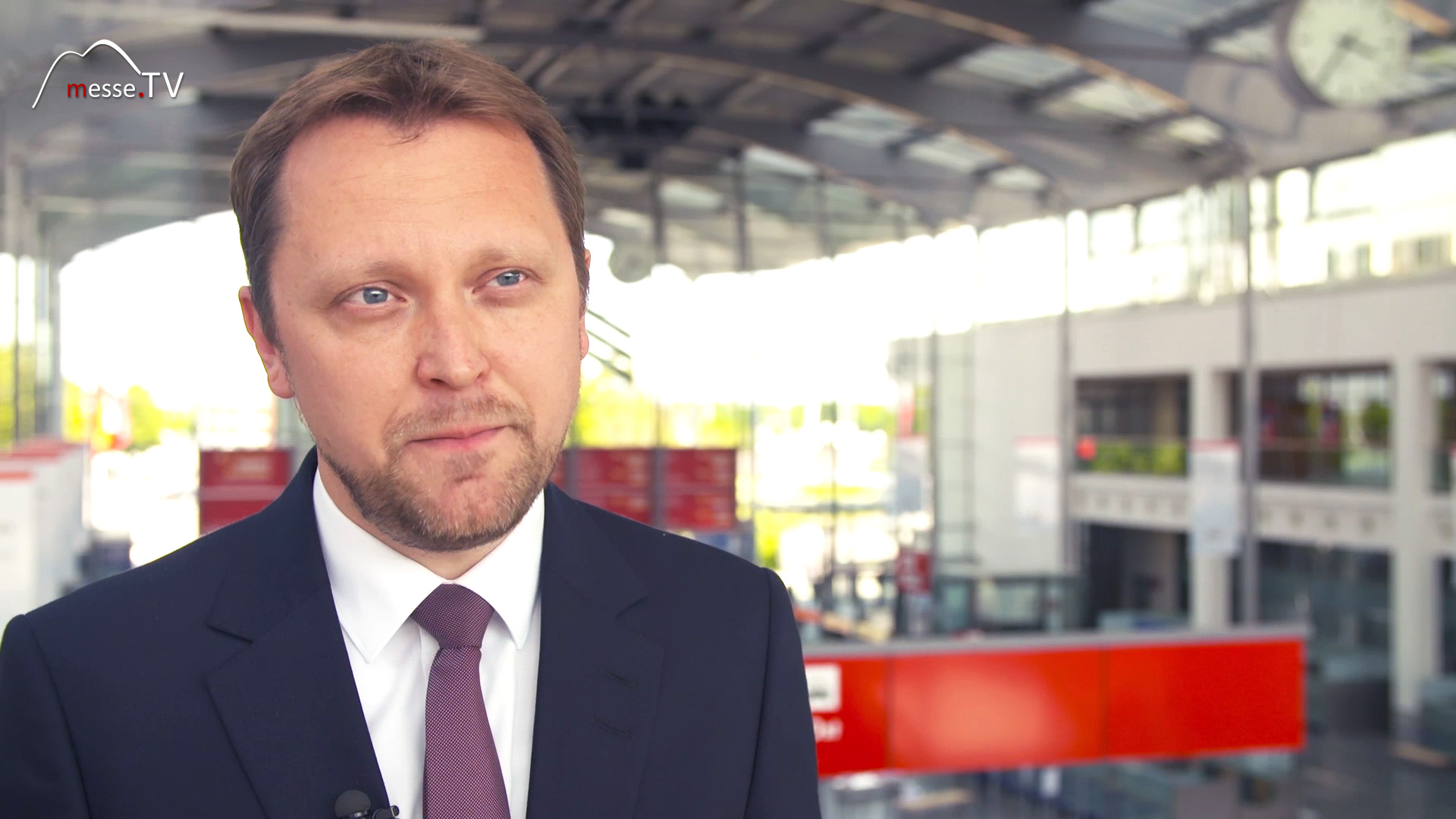
Andreas Scheuer: Freedom of trade and innovation as the mission of logistics
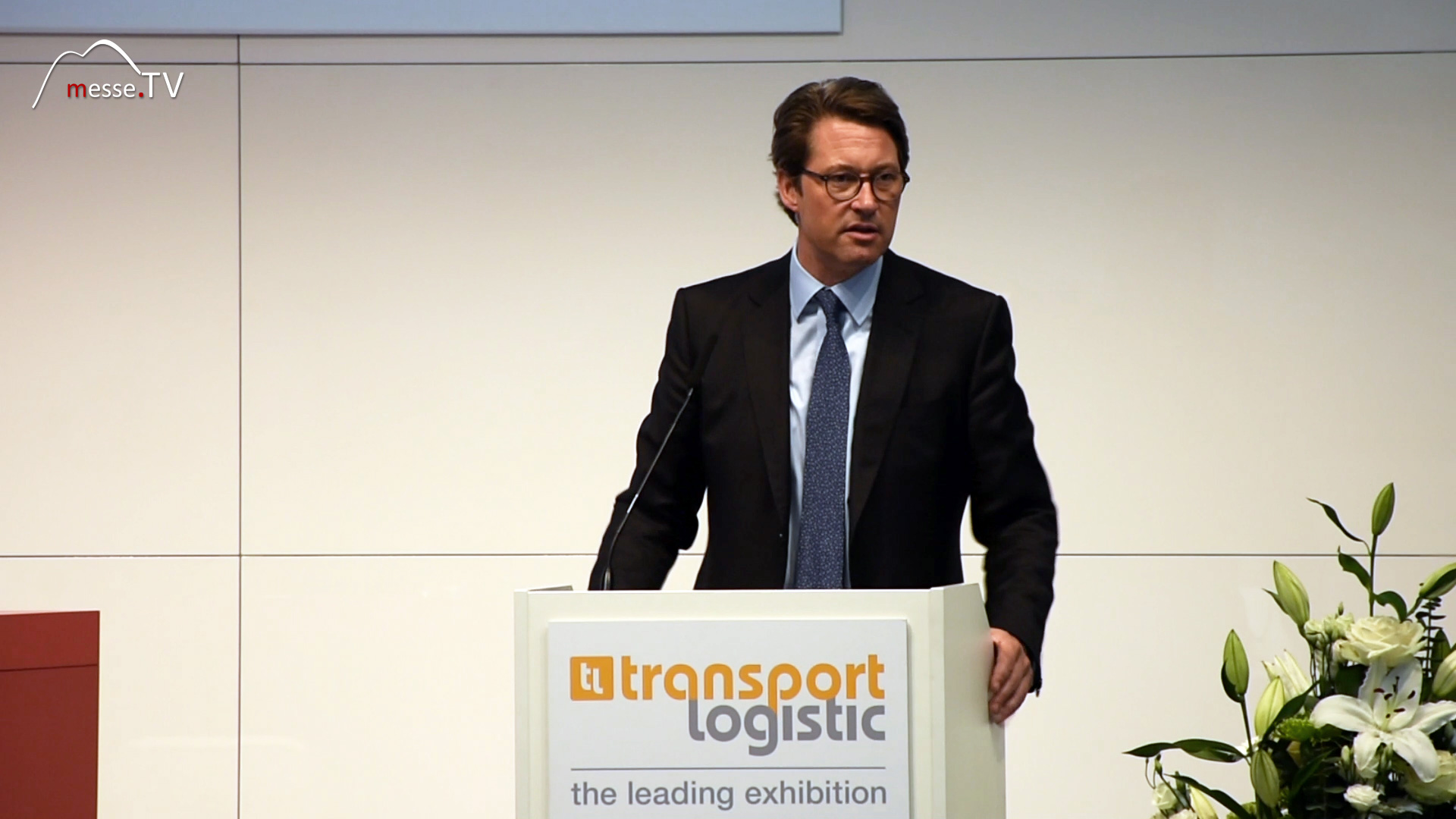
by A. Bergmeier - 2024-02-13Trade does not arise from isolation, but from exchange. Those who talk about customs duties, restrictions and barriers miss the core of what drives long-term economic success. Today, more than ever, logistics is at a crossroads: it can either become an administrator of restrictions or an active enabler of growth, networking and progress. This is precisely the central message of this trade fair.
Freedom of trade is not an abstract political demand, but the basis of functioning supply chains. Without open markets, innovations lose their impact because they cannot be scaled up. At the same time, more than just regulatory openness is needed. What is needed is enthusiasm for new solutions, for technical development and for the courage to question existing processes. Logistics is no longer purely a cost factor, but a strategic lever for competitiveness. Once a trade fair is over, the real work begins. Participants leave the venue not only with new contacts, but also with responsibility. Those who gather information, network and find inspiration here pass on what they have learned. This role as ambassadors is crucial, because logistics only works when knowledge is shared and convictions are passed on. Silence after the trade fair would mean stagnation – and stagnation is not an option in a globally networked economy.
Germany and Europe as a logistics location in a global context
Germany as a logistics location is exemplary for Europe's performance. Its strength lies not only in its infrastructure or geographical location, but also in the close interconnection of industry, trade and services. Europe is part of global networks, dependent on partnerships and mutual trust. This interconnectedness determines whether prosperity is secured or squandered. Logistics creates connections between markets, cultures and economic areas. Where prosperity already exists, it must be maintained through efficiency, resilience and innovation. In regions where economic stability is still lacking, logistics can become a driving force. Progress is achieved when know-how, technologies and processes are exported, not as a one-way street, but in exchange with local partners. Innovation plays a dual role here. On the one hand, it improves existing structures, for example through digitalisation, automation or new transport concepts. On the other hand, it opens up opportunities for regions that have previously only been able to participate in global trade to a limited extent. Logistics thus becomes an instrument of economic development that extends far beyond national borders.
Innovation and progress as economic responsibility
Innovations do not arise in a vacuum. They require courage, investment and a culture that allows for change. In logistics in particular, this means questioning established routines. New technologies must not only be developed, but also accepted and applied. Progress is not evident in individual flagship projects, but in the breadth of implementation. This is not exclusively about technology. Organisational and strategic innovations are also in demand. Flexible networks, partnership models and transparent communication are becoming increasingly important. Companies that ignore these requirements risk falling behind. Trade fairs thus become a place where not only products but also attitudes become visible.
The role of trade fairs as a source of inspiration
Trade fairs are more than just presentation spaces. They are sounding boards for ideas and indicators of the state of an industry. Good impressions are created where content has substance and discussion is allowed. Good innovation is evident when solutions provide realistic answers to real problems. And courage for the future is needed to implement these solutions. To make the central tasks of logistics tangible, the core aspects can be summarised as follows:
- Freedom of trade as a prerequisite for functioning supply chains
- Innovation as a driver for efficiency, sustainability and growth
- Global networking through reliable partnerships
- Responsibility for securing prosperity and economic development
Courage for the future instead of managing the status quo
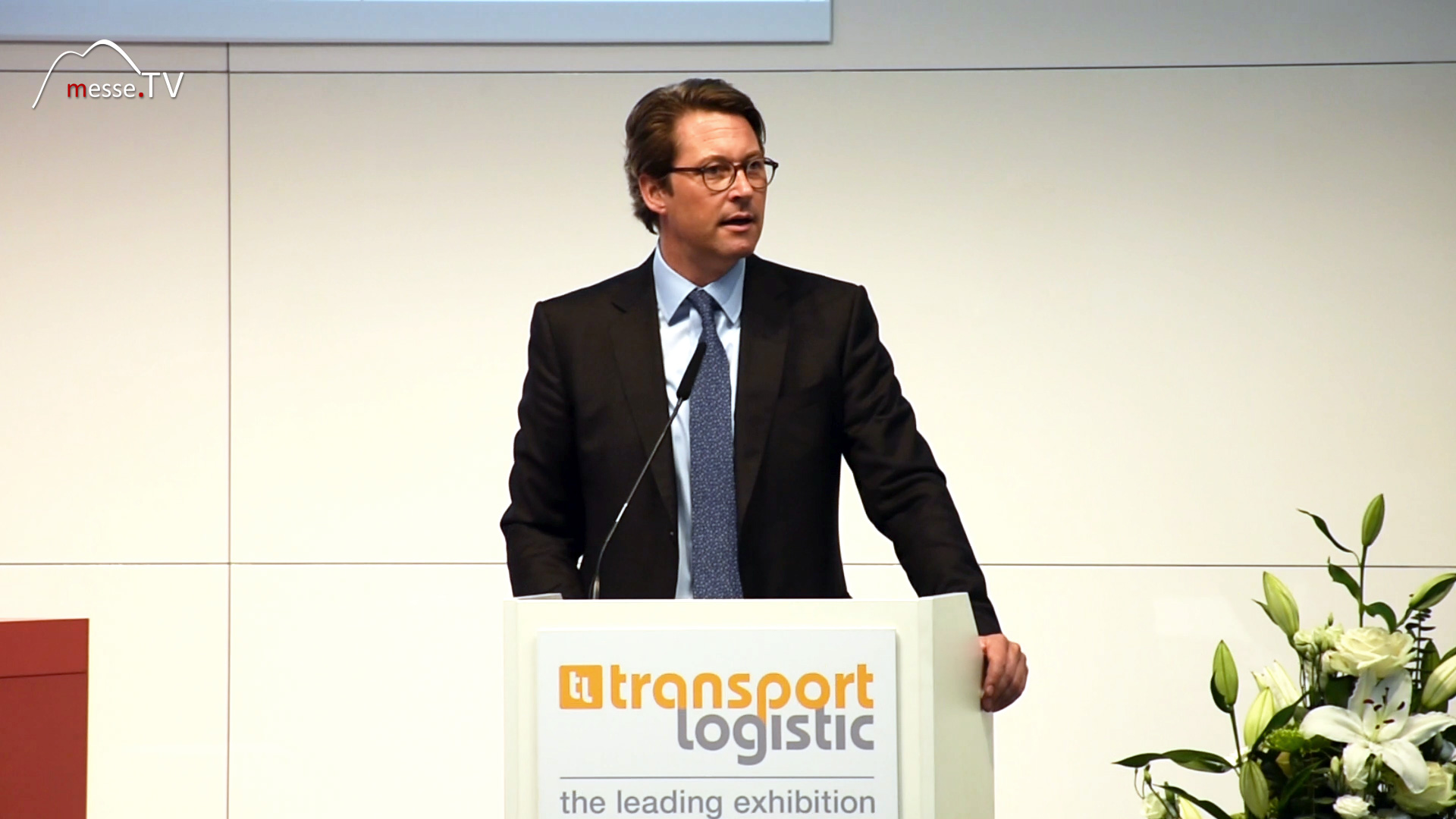
Ultimately, there is one clear desire: courage for the future. Courage means not hiding behind regulations, but using the scope for creativity. Courage also means taking risks in order to be successful in the long term. The logistics industry has the expertise, experience and innovative strength to follow this path. The trade fair provides a framework for this, but the real success will be determined afterwards. When participants pass on what they have heard, initiate discussions and integrate ideas into their companies, the effect unfolds. In this way, an event becomes a sustainable contribution to Germany as a logistics location, to Europe and to a globally networked economy.
Trade fair reporting Germany - Trade fair knowledge, dates & events


