Automatic mortar injection for foundation retrofitting
by B. Velonavy - 2024-02-13The housing shortage in many cities is increasingly changing the demands placed on construction. Vacant plots are becoming scarcer, whilst the costs of demolition and new construction are rising.
Consequently, the focus is shifting towards technical solutions that allow existing buildings to be preserved and extended. At the bauma in Munich, Morath is demonstrating an automatic mortar injection system for specialised civil engineering, designed specifically for such applications. At its heart is a combination of drilling technology, a mixing plant and an injection system. The system is designed to retrofit and reinforce the foundations of existing buildings and safely transfer additional loads into deeper soil layers. Particularly when adding storeys to older buildings, situations frequently arise where the existing foundations were not originally designed to support additional storeys. The technology shown therefore combines traditional drilling methods with automated cement mortar injection. The aim is to be able to continue using existing buildings whilst expanding them, without sealing off additional ground areas or demolishing entire structures.
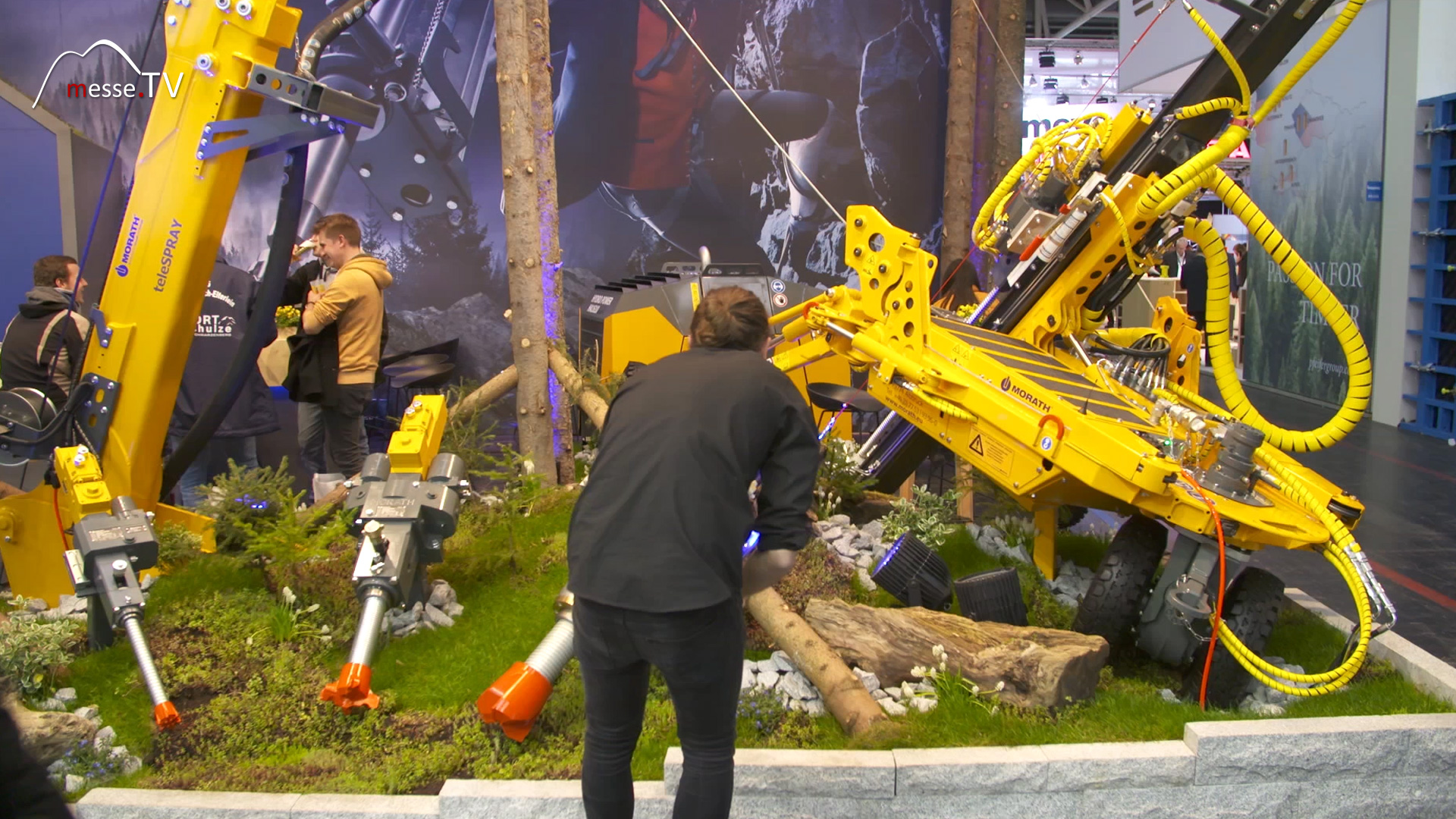
Morath combines drilling technology with automatic mortar injection
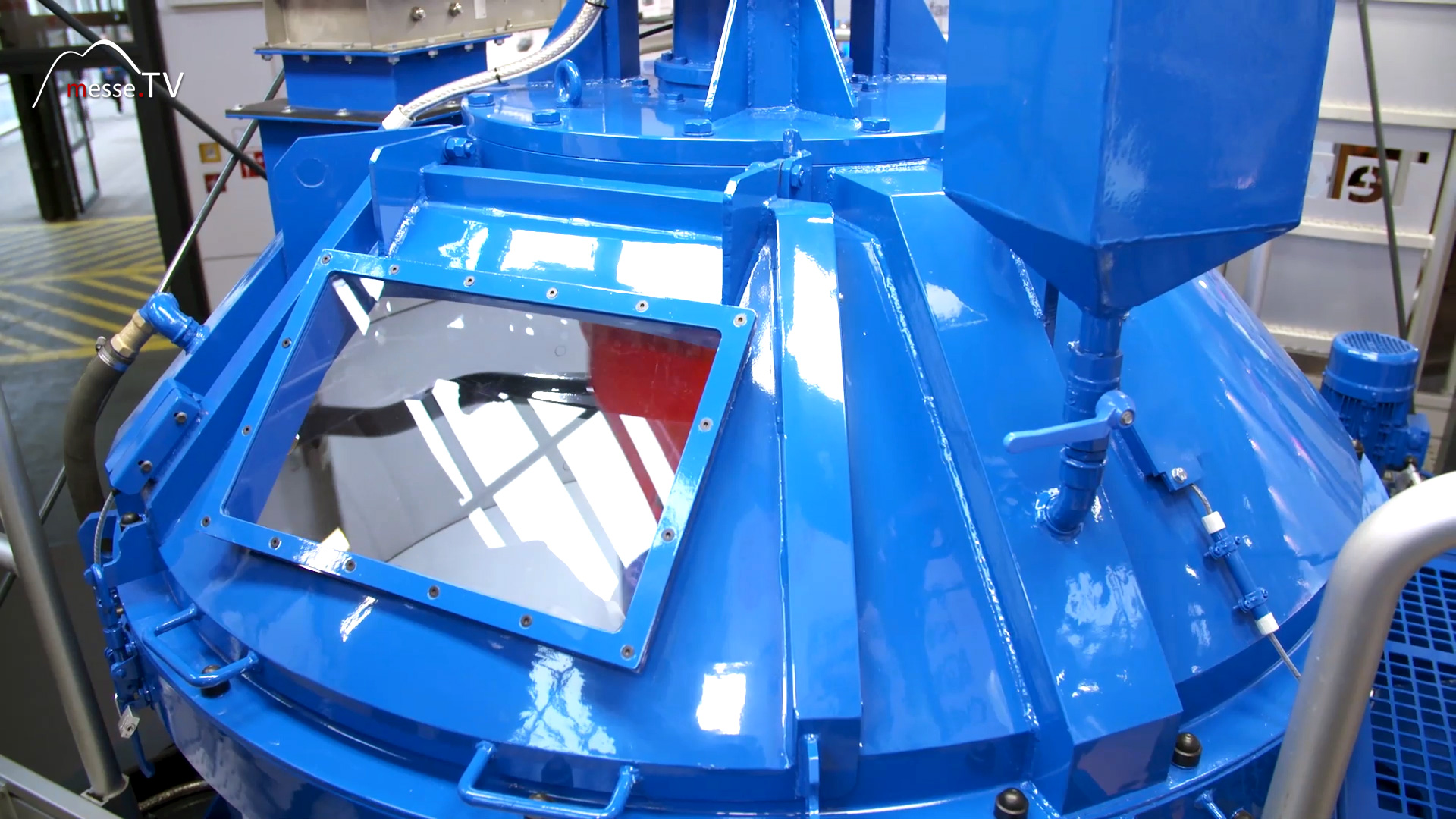
The system operates as an integrated unit comprising mixing technology, a storage tank and a pump unit. Cement and water are automatically processed within the mixing plant and prepared into an injection mortar. The mortar is then fed into a storage tank and conveyed from there directly to the drilling rig. The drilling technology is then used to inject the mortar into the ground or into the self-drilling anchors in place. In special civil engineering in particular, the consistent quality of the injection mortar plays a central role. Variations in mixing ratios or flow rates can have a direct impact on load-bearing capacity and load transfer. Automated systems are therefore designed to enable reproducible results whilst simultaneously reducing the workload on site. Another interesting aspect is the combination of all work steps within a single system. Whilst conventional methods often require several separate machines and manual process steps, the solution presented combines mixing, dosing and delivery within a compact system.
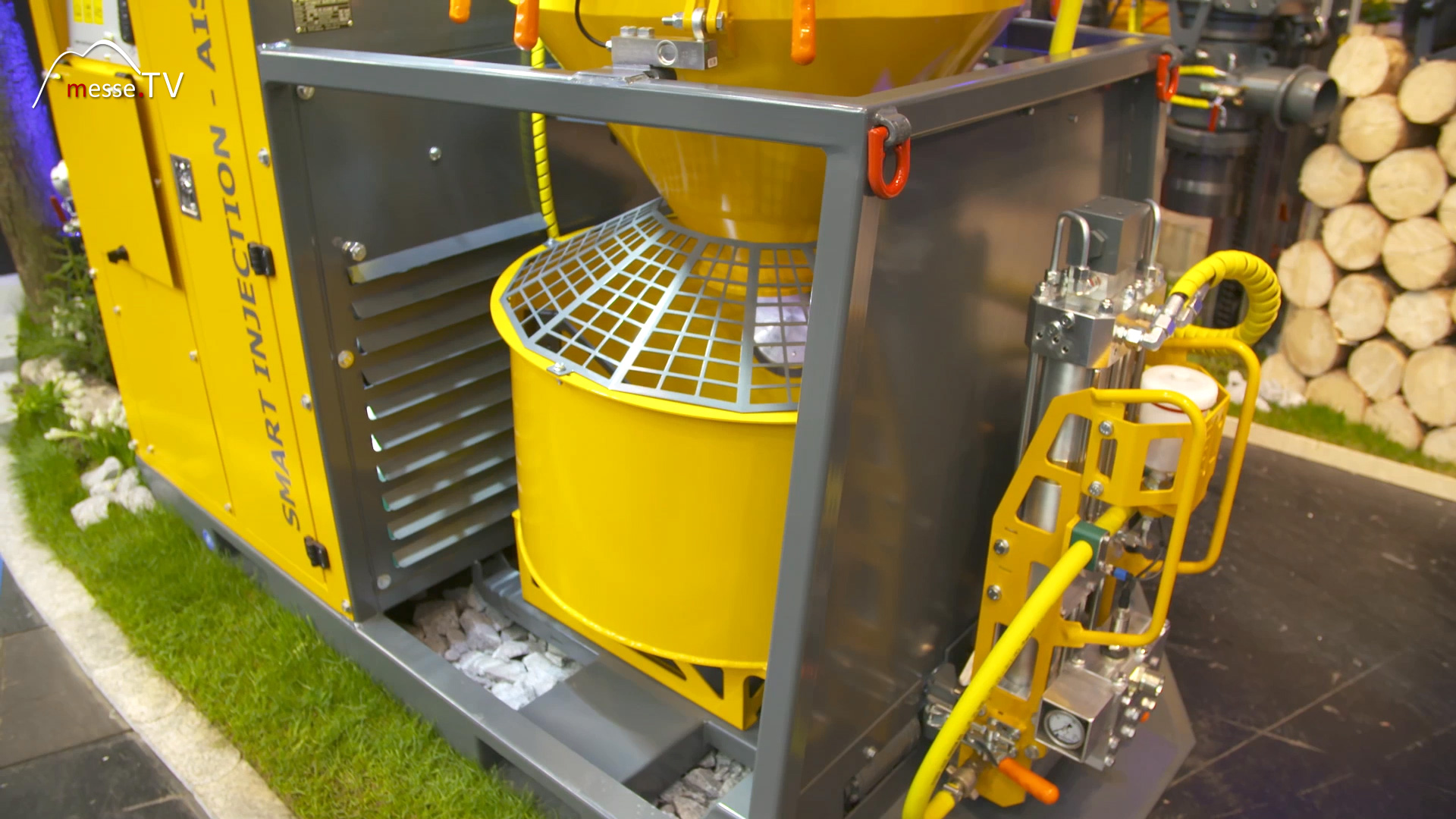
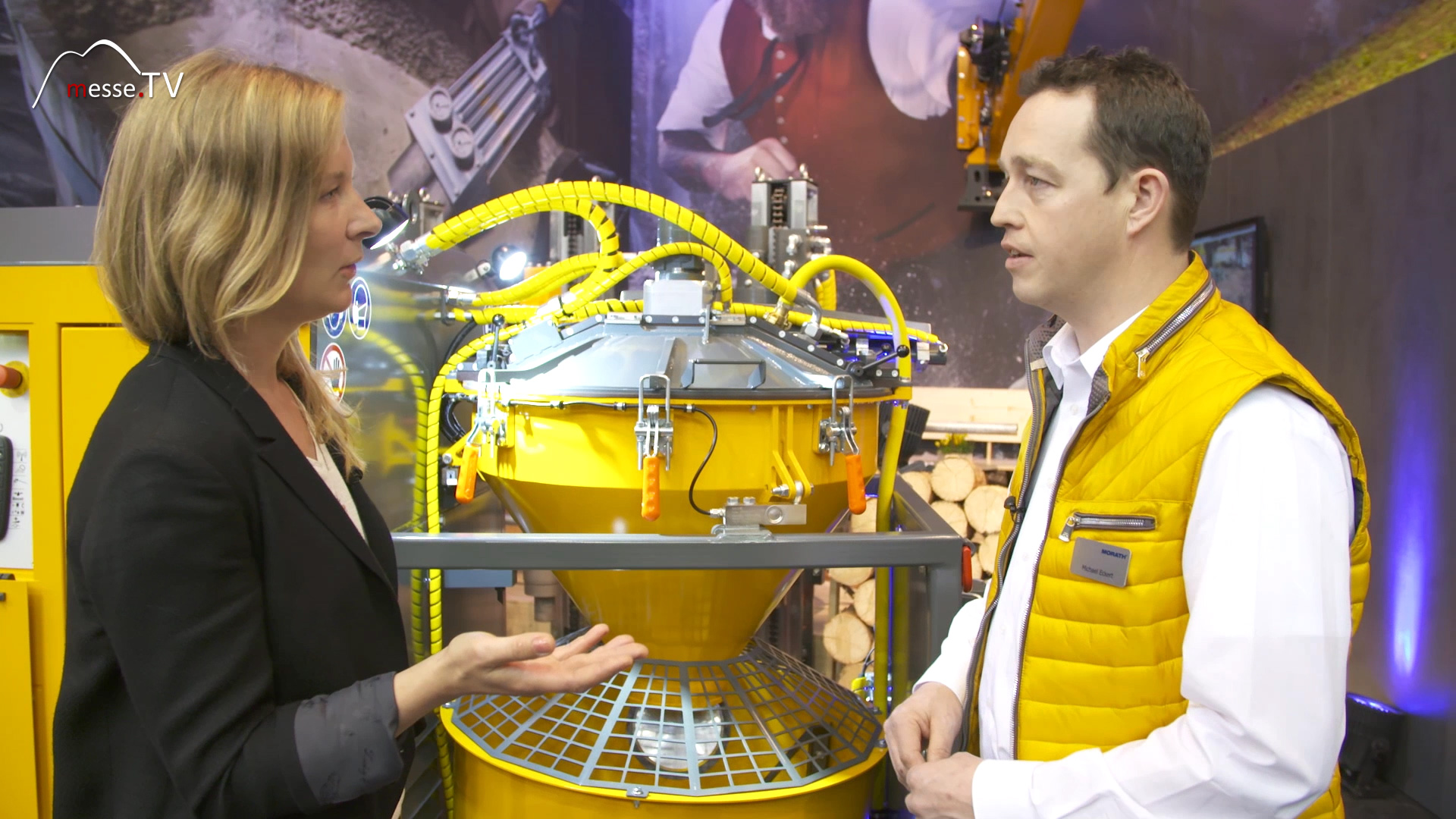
Self-drilling anchors stabilise existing foundations
The most important area of application is so-called foundation reinforcement. This involves retrofitting existing foundations to reinforce or extend them so that additional loads can be accommodated. Self-drilling anchors are used for this purpose; these are driven into load-bearing soil layers and simultaneously injected with cement mortar. The injection grout improves the bond between the anchor and the ground and ensures that loads are safely transferred. Such methods are becoming increasingly important, particularly in densely built-up urban areas. Many older buildings are now due to be extended or raised, even though the existing foundations were not originally designed for this purpose.

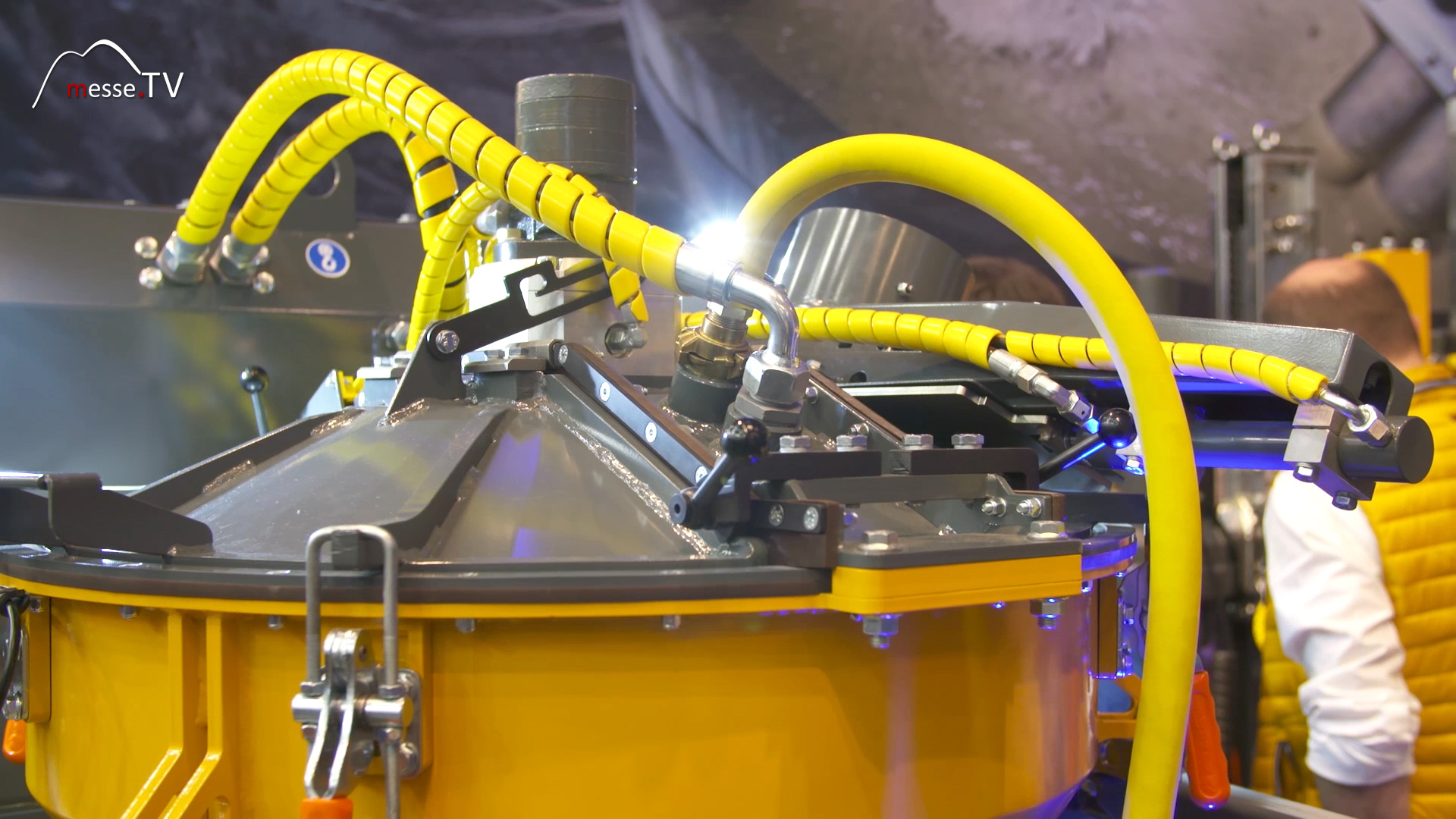
Key components of the system:
- automatic mortar injection using mixing technology
- processing of cement and water directly on site
- use of self-drilling anchors for post-foundation work
- Delivery of the injection mortar via pump systems
- Suitable for building extensions and foundation reinforcement
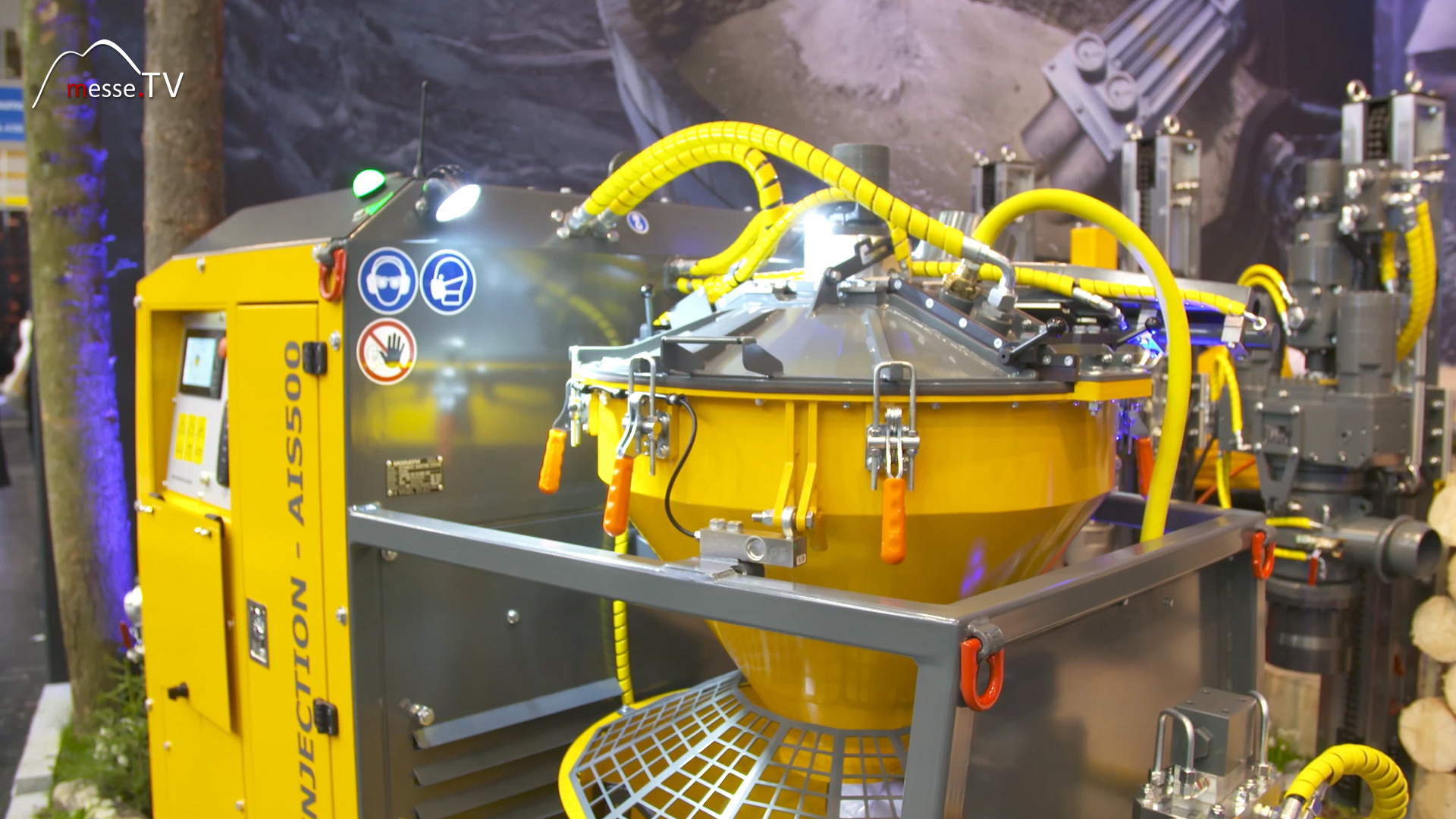
Mortar injection supports building extensions in urban areas
Building extensions in particular are now regarded as an important component of modern urban development. Additional living space is created not through new development areas, but through the use of existing buildings and infrastructure. Technically, this places high demands on the subsoil and the load-bearing capacity of existing foundations. Additional storeys generate higher loads, which must be safely transferred into the ground. This is precisely where retrofitting foundations using drilling and mortar injection techniques comes into play. There is also an economic factor. Demolition and complete new construction incur high material costs and involve long construction times. Retrofitting foundation reinforcements, on the other hand, often allow for the gradual extension of existing properties. Another interesting aspect is the conservation of resources. Reusing existing buildings reduces demolition waste and saves large quantities of building materials. At the same time, established urban neighbourhoods and existing infrastructure are preserved.
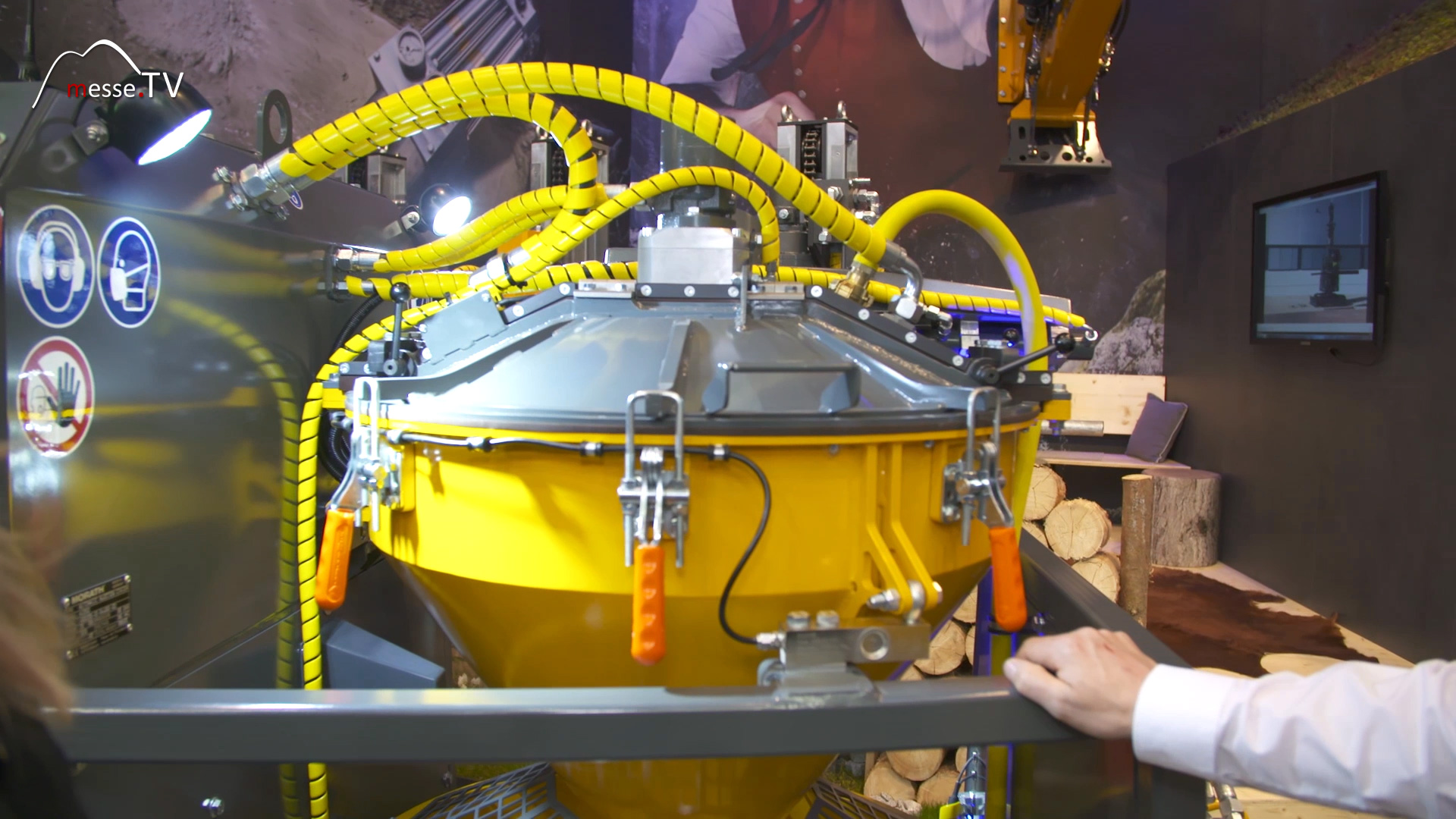
Specialised civil engineering is becoming increasingly automated
This development highlights just how much specialised civil engineering is changing. Modern construction sites no longer rely exclusively on mechanical drilling rigs, but increasingly on automated process systems. Mixing technology, pump control and material dosing are now being monitored and integrated digitally to an ever-greater extent. The aim is to control the quality of mortar injection more precisely and to make work processes more efficient. Morath is thus positioning itself in a market that is likely to continue growing due to infill development and renovation. Particularly in conurbations, increasingly complex construction projects are emerging, where work must be carried out in confined spaces and in the immediate vicinity of existing buildings. Automatic mortar injection systems could help to make specialised civil engineering more predictable and cost-effective in such situations. At the same time, the requirements for documentation and evidence are increasing. Clients and authorities are increasingly demanding traceable processes, particularly when it comes to structural interventions in existing buildings. The solution presented here makes it clear that drilling technology today goes far beyond traditional earthworks. It is increasingly becoming part of modern strategies for infill development, building refurbishment and the long-term use of the urban built environment.
Trade fair reporting Germany - Trade fair knowledge, dates & events


