Compact wheel loader with 130 hp for demanding industrial applications
by A. Bergmeier - 2026-05-29In many industrial and recycling applications, operators face a conflict of objectives: on the one hand, compact machines are required that can manoeuvre safely in confined worksites.
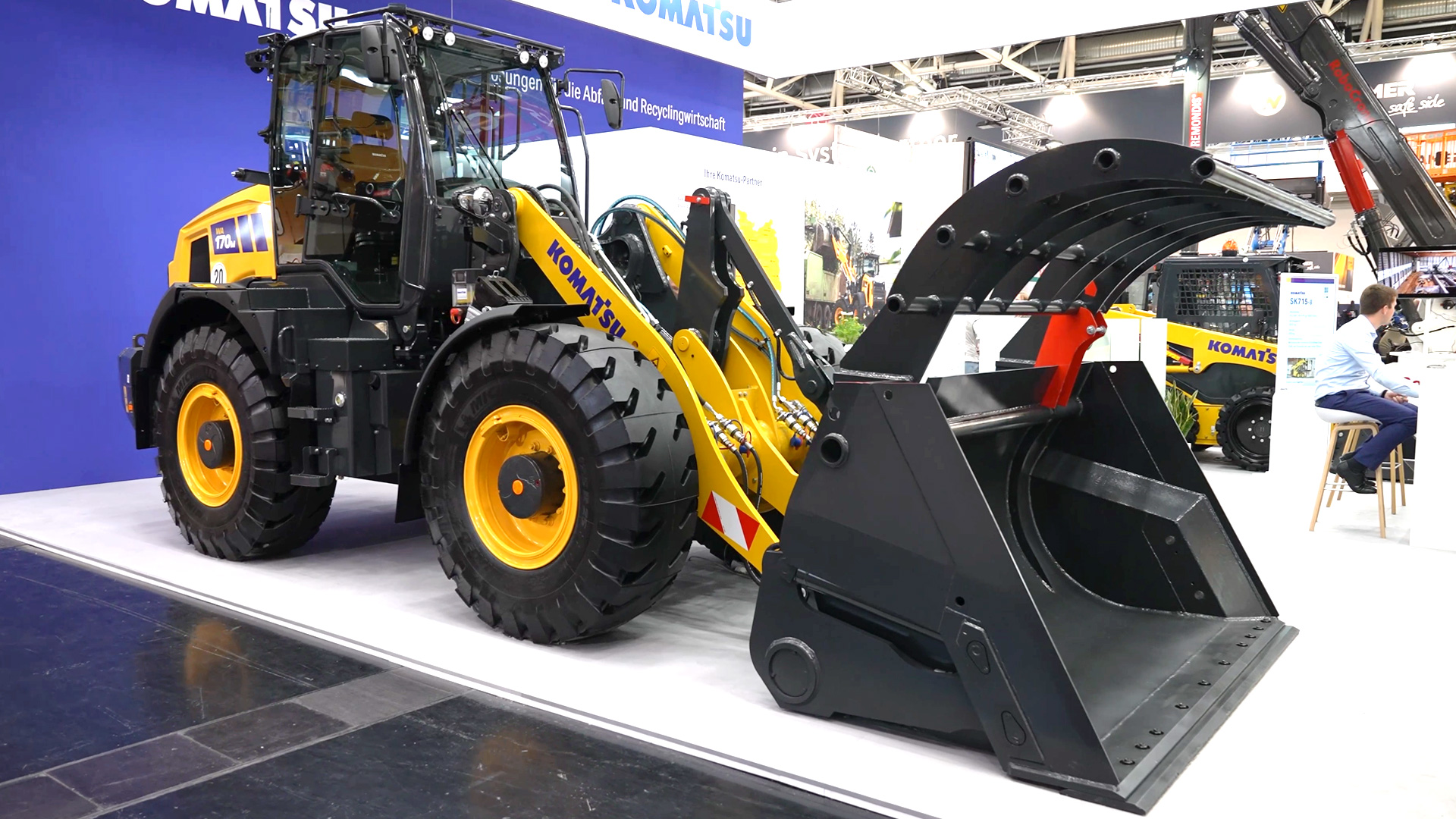
On the other hand, these vehicles must provide sufficient power to handle large buckets, high-performance attachments or demanding material handling tasks. At Ifat Munich, Komatsu is therefore presenting a new compact wheel loader in the 10-tonne class designed to combine precisely these requirements. The manufacturer has deliberately positioned the machine between traditional compact machines and significantly larger wheel loaders. Despite its compact design, the vehicle is intended to achieve performance figures previously typical of higher weight classes. The machine is therefore aimed in particular at operators in industry, the recycling sector, building materials handling and municipal applications.
Komatsu focuses on high performance in the compact segment
At the heart of the machine is a four-cylinder diesel engine with 130 hp. Together with a powerful hydraulic system, it is designed to enable applications normally reserved for larger machines. According to Komatsu, the entire design has been engineered to deliver high hydraulic performance even in the standard configuration. The machine achieves high-flow rates of up to 160 litres per minute at 270 bar. These performance figures are particularly significant for hydraulically driven attachments. The design takes a practical approach. Many machines require extensive retrofitting for specific applications after purchase. Here, the basic configuration is intended to meet numerous requirements for a variety of applications. Key features include:
- 130 hp four-cylinder engine
- High-flow hydraulics with up to 160 l/min
- Preparation for high-performance attachments
- Third and fourth control circuits including a return line
- High lifting and tipping forces
- Compact design with a high tipping height
New machine concept improves safety during access
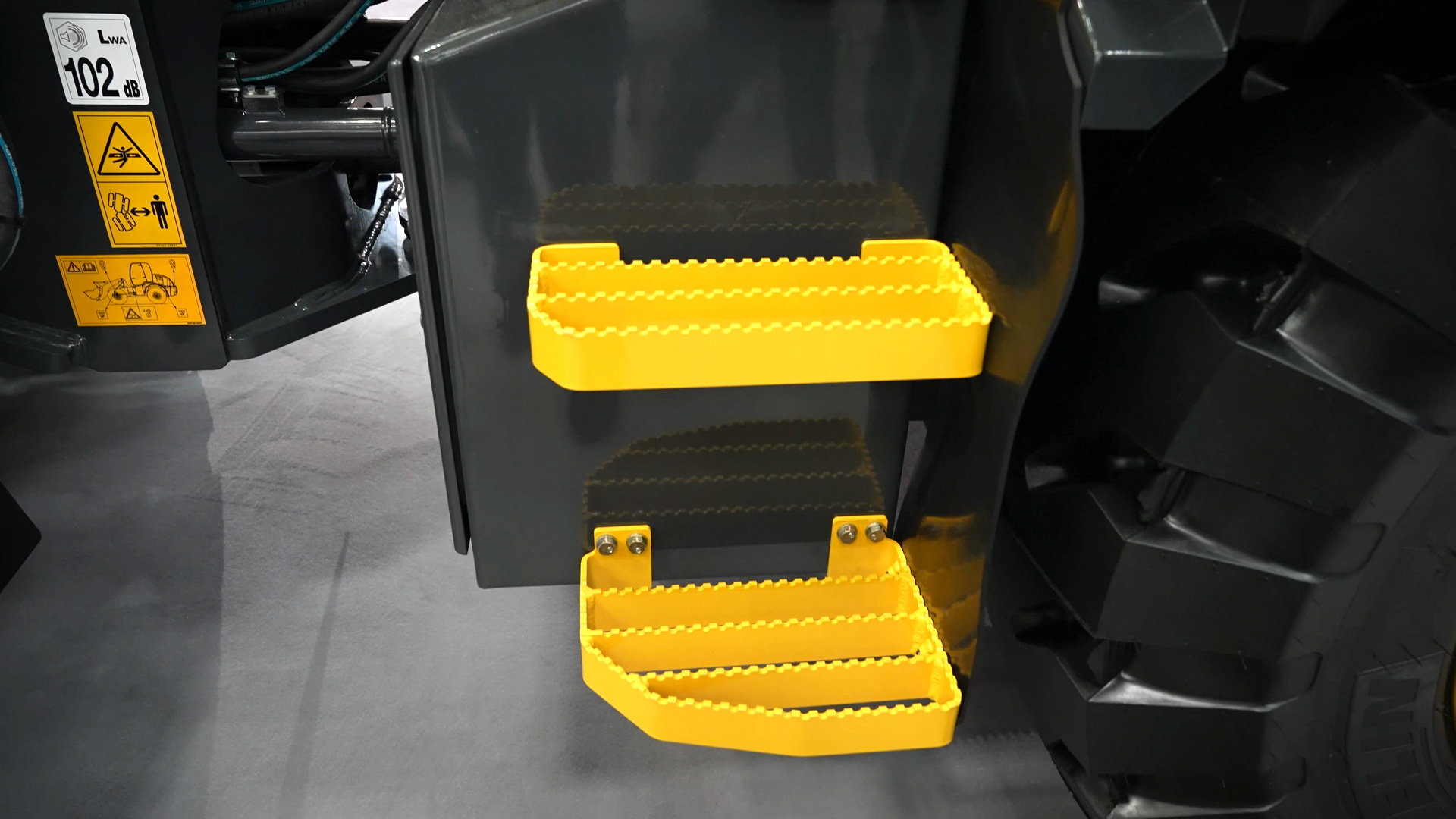
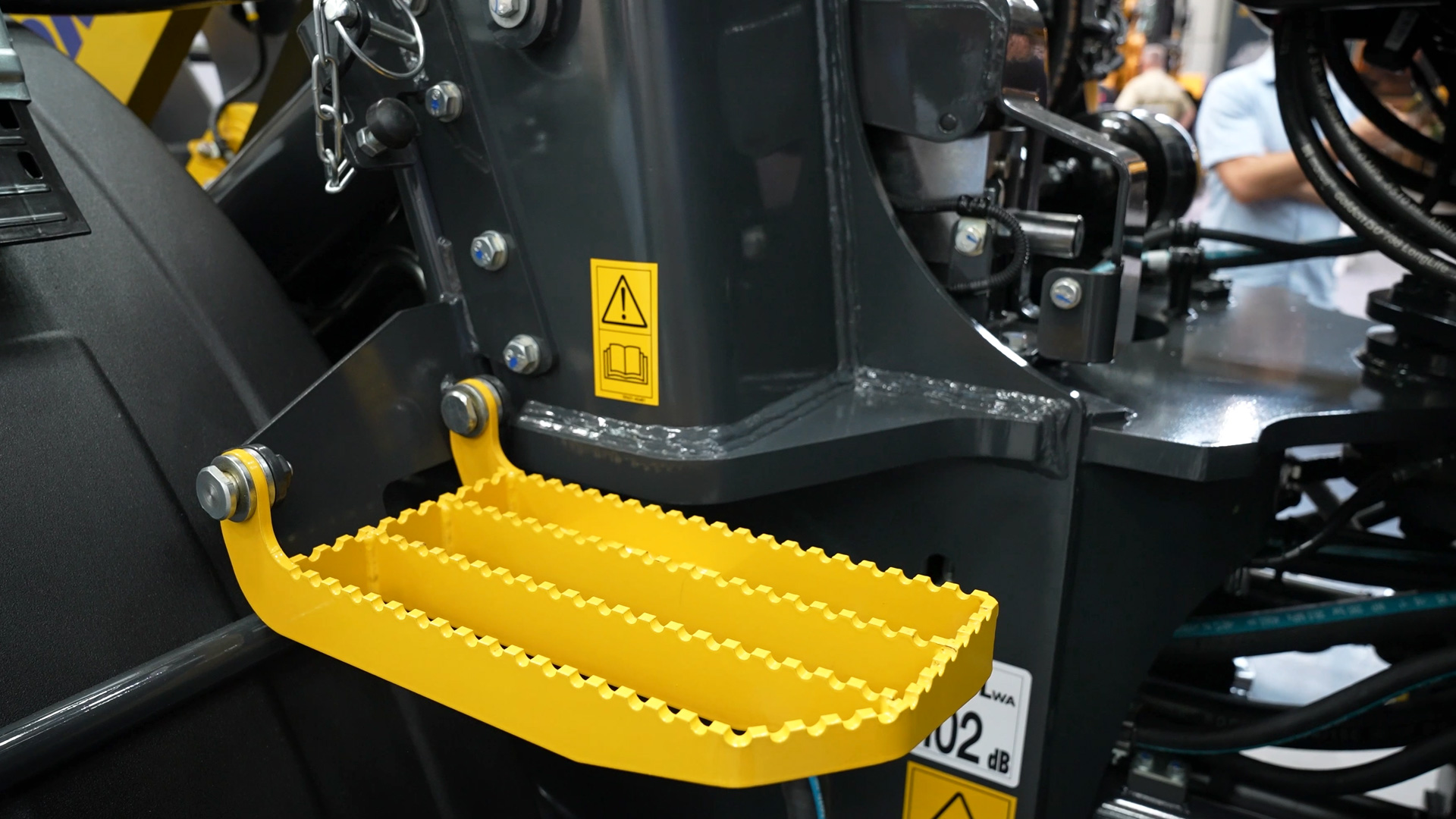
A large part of the further development does not concern pure performance, but the driver’s day-to-day work. Komatsu has placed particular emphasis on safety and ergonomics in the new machine concept. This includes colour-coded steps designed to facilitate safe entry. According to the manufacturer, many workplace accidents occur when getting on and off construction machinery. Accordingly, access to the cab has been redesigned. In addition, the machine features a fold-down maintenance and cleaning step for the windscreen. This allows cleaning to be carried out safely without having to resort to improvised aids. At the same time, the design has been engineered so that the step is not damaged during operation. These details may seem unspectacular at first glance, but they take on considerable significance in daily use. Particularly in machines that are operated for many hours a day, such solutions influence both safety and productivity in equal measure.

Comfort cab with new joystick steering
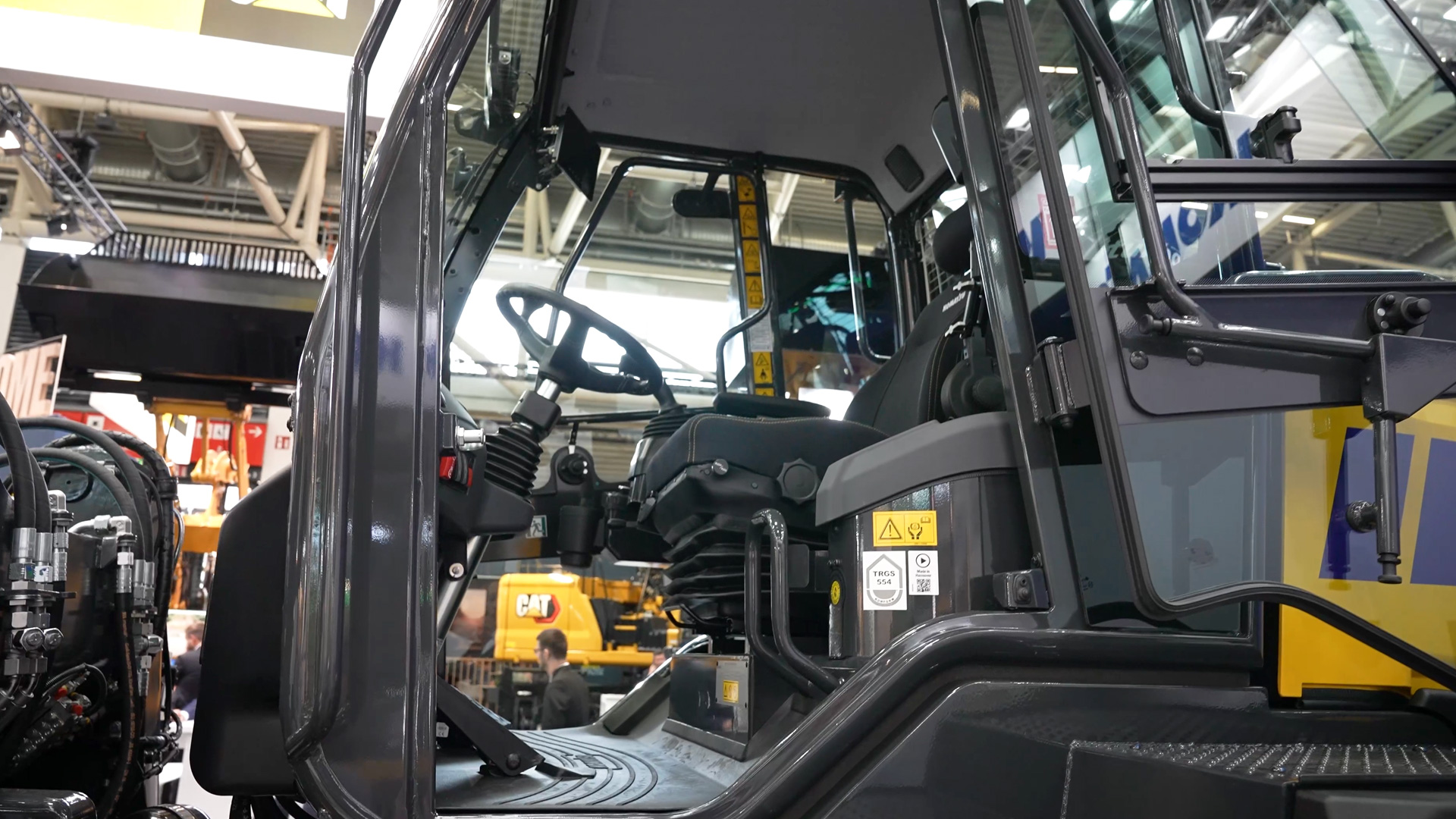
The machine has also undergone extensive modernisation in the driver’s workplace. The cab features a floating driver’s console designed to reduce movements and vibrations. Particularly striking is the new joystick steering. This technology is being used for the first time in this machine class and replaces traditional control concepts with fully integrated joystick control. The operator can customise the response characteristics. At the same time, numerous functions remain directly accessible without having to take their hands off the controls. Added to this are large glass panels offering a clear view of the working area and attachments. A second full-size cab door further enhances safety and serves as an alternative escape route. Ergonomics is playing an increasingly important role, particularly during long shifts in industrial or recycling plants. Modern machines today must not only be powerful but also provide long-term relief for the operator.
Ease of maintenance as an economic factor
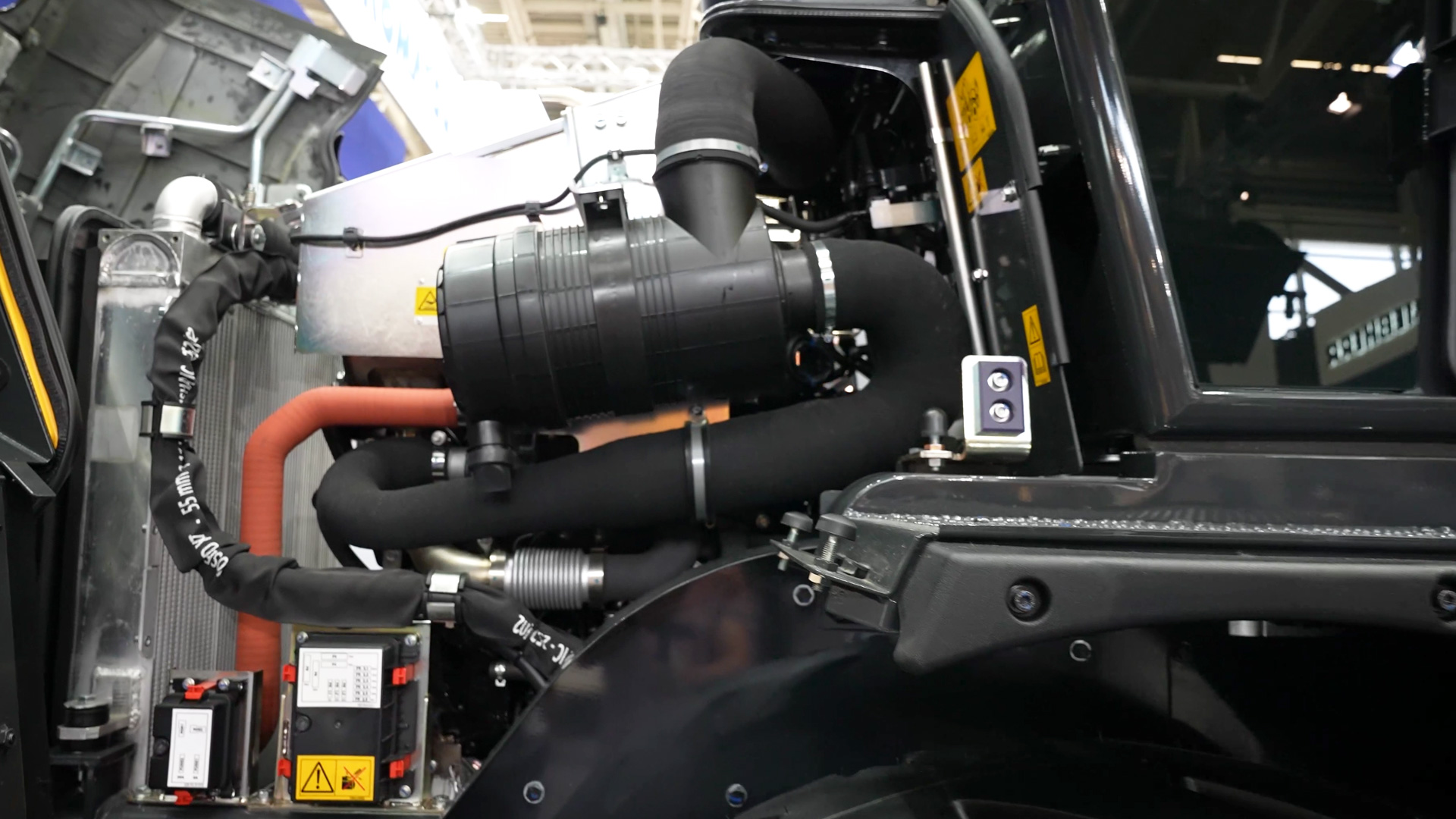
Alongside performance and comfort, maintenance is at the heart of the development. Many operators now assess not only purchase costs or consumption figures but also the effort required for servicing. That is why both the bonnet and the cab can be opened wide. The cab can be raised using an integrated hand pump without the need for additional lifting equipment. This provides quick access to the engine, hydraulic components and drivetrain. Maintenance work can be carried out more easily, which reduces downtime and increases operational readiness. High availability is crucial, particularly in industrial environments where machines are often used as key production assets. Every hour of downtime incurs costs and disrupts operations.
Large attachments despite compact machine dimensions
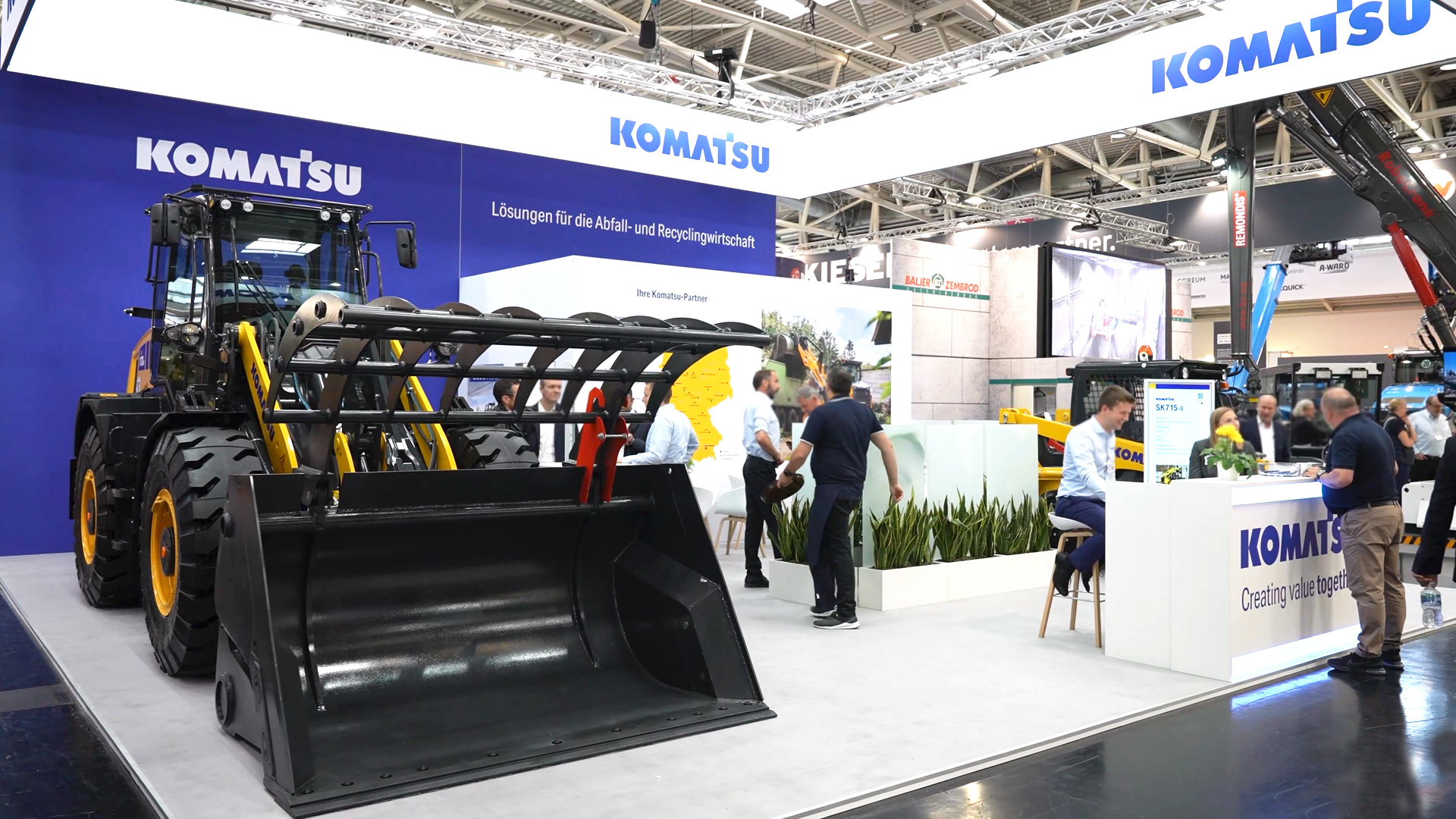
Another key focus is on the kinematics. These have been specially developed for high tipping forces and are designed to safely handle even large buckets or heavy attachments. At the same time, the machine remains compatible with standard tooling mounts. Operators can often continue to use existing attachments without having to purchase additional adapters or special solutions. Komatsu is thus pursuing a strategy that is gaining importance in many areas of mechanical engineering: the focus is not on individual performance figures, but on the interplay between hydraulics, operation, maintenance, safety and attachment integration. The new compact wheel loader thus demonstrates how modern machines are evolving in the industrial and recycling sectors. Today, it is no longer just high engine power that is in demand, but holistic concepts that take productivity, ease of operation and cost-effectiveness into account in equal measure.
Trade fair reporting Germany - Trade fair knowledge, dates & events


