Fully autonomous sweeper for private areas and recycling centres
by A. Bergmeier - 2026-05-07Autonomous vehicles have been regarded for years as one of the major future trends in mechanical engineering. Whilst much of the discussion focuses on passenger cars, robotaxis or delivery vehicles, specialised systems for industrial applications are being developed in parallel.
It is precisely where processes are repetitive, clearly defined and spatially limited that autonomous concepts can be put to particularly good use. An autonomous sweeper fits perfectly into this category. In enclosed areas such as industrial sites, recycling centres or port areas, daily cleaning tasks arise that must be repeated constantly. The challenge lies less in the actual sweeping than in safe navigation within a complex environment.
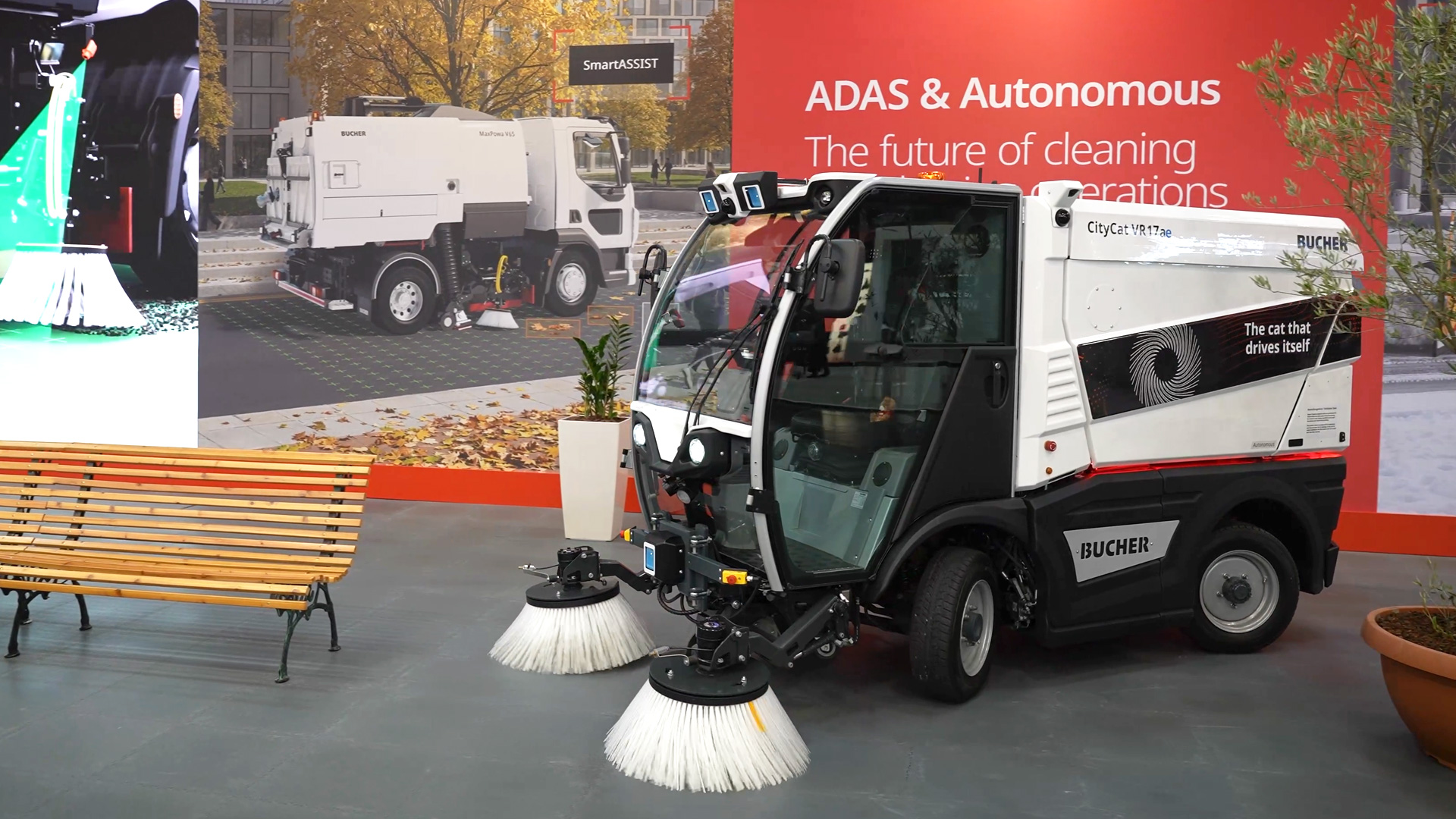

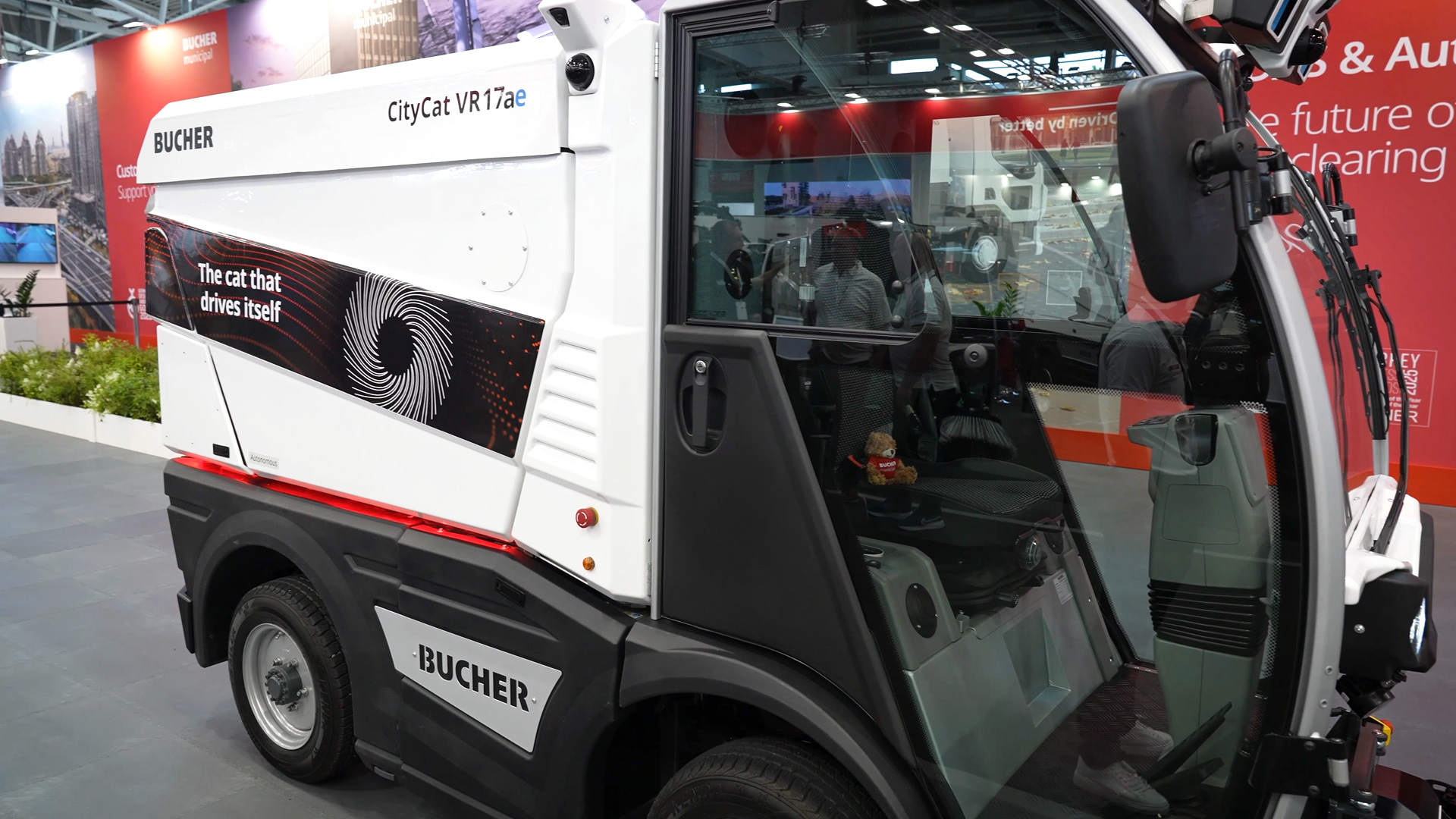
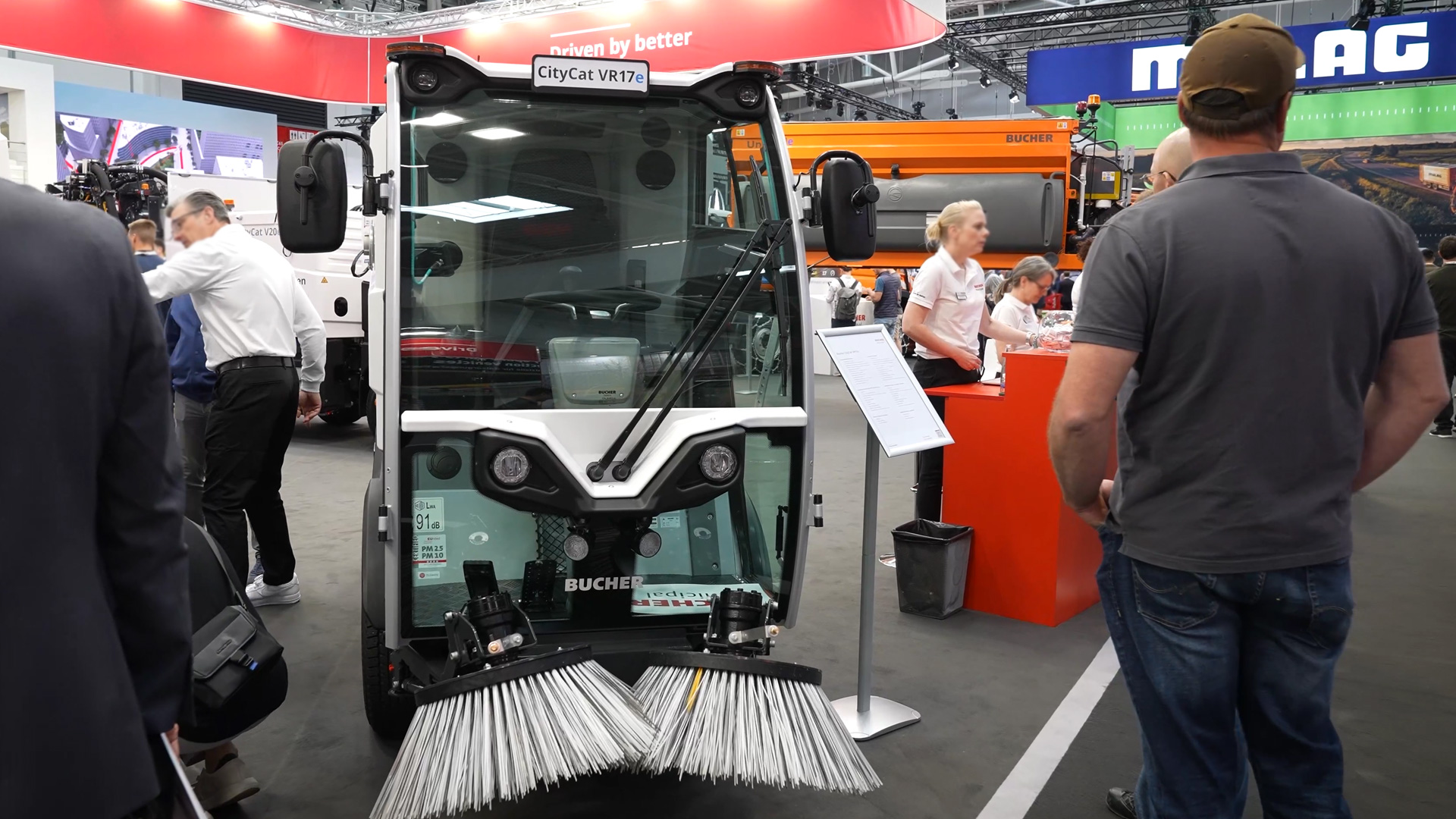
Bucher Municipal continues to develop the autonomous CityCat VR17e
With its new solution, Bucher Municipal is showcasing an autonomous sweeper based on the existing CityCat VR17e. The base machine has been in regular use for years. Instead of developing a completely new vehicle, the existing platform has been enhanced with autonomous functions. It is precisely this approach that sets the project apart from many concept studies. The actual sweeping technology is considered tried and tested, whilst development focuses on sensor technology, navigation and safety functions. According to the company, development took around ten years before the system was ready for market launch. The machine is intended for private and enclosed areas. These include, amongst others:
- large industrial sites
- recycling centres
- port areas
- logistics sites
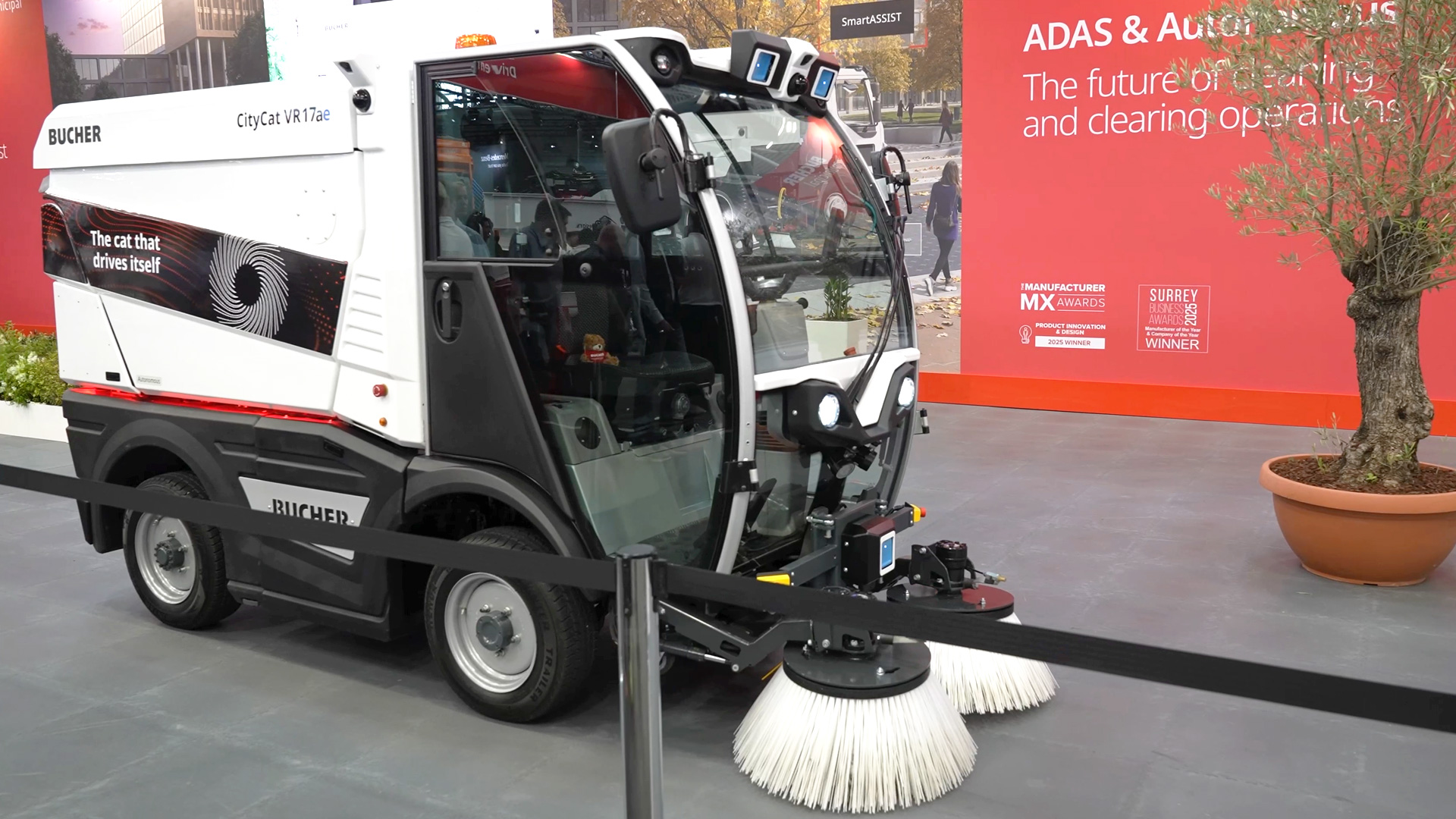
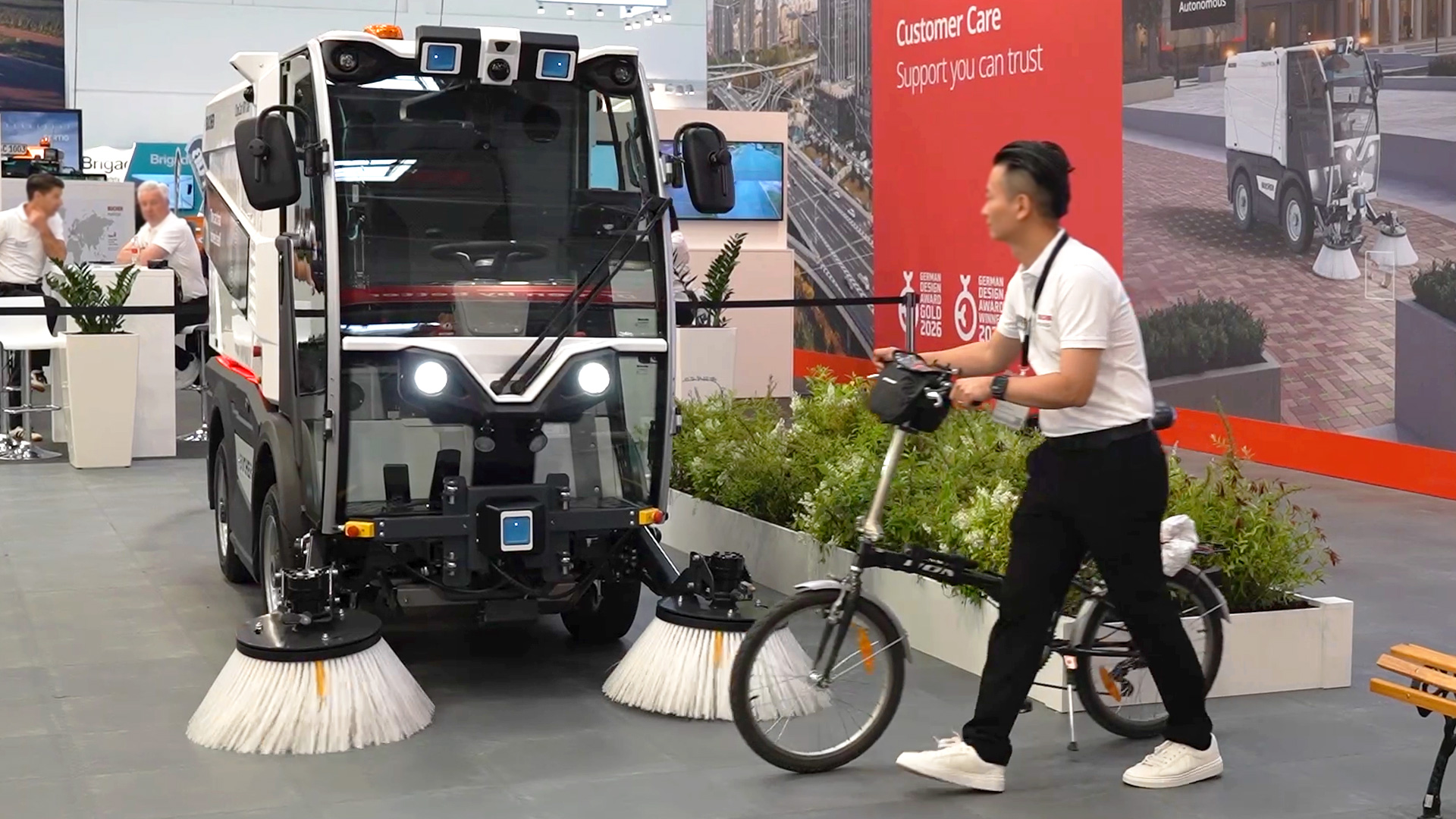
Sensor technology in the autonomous sweeper for safe navigation
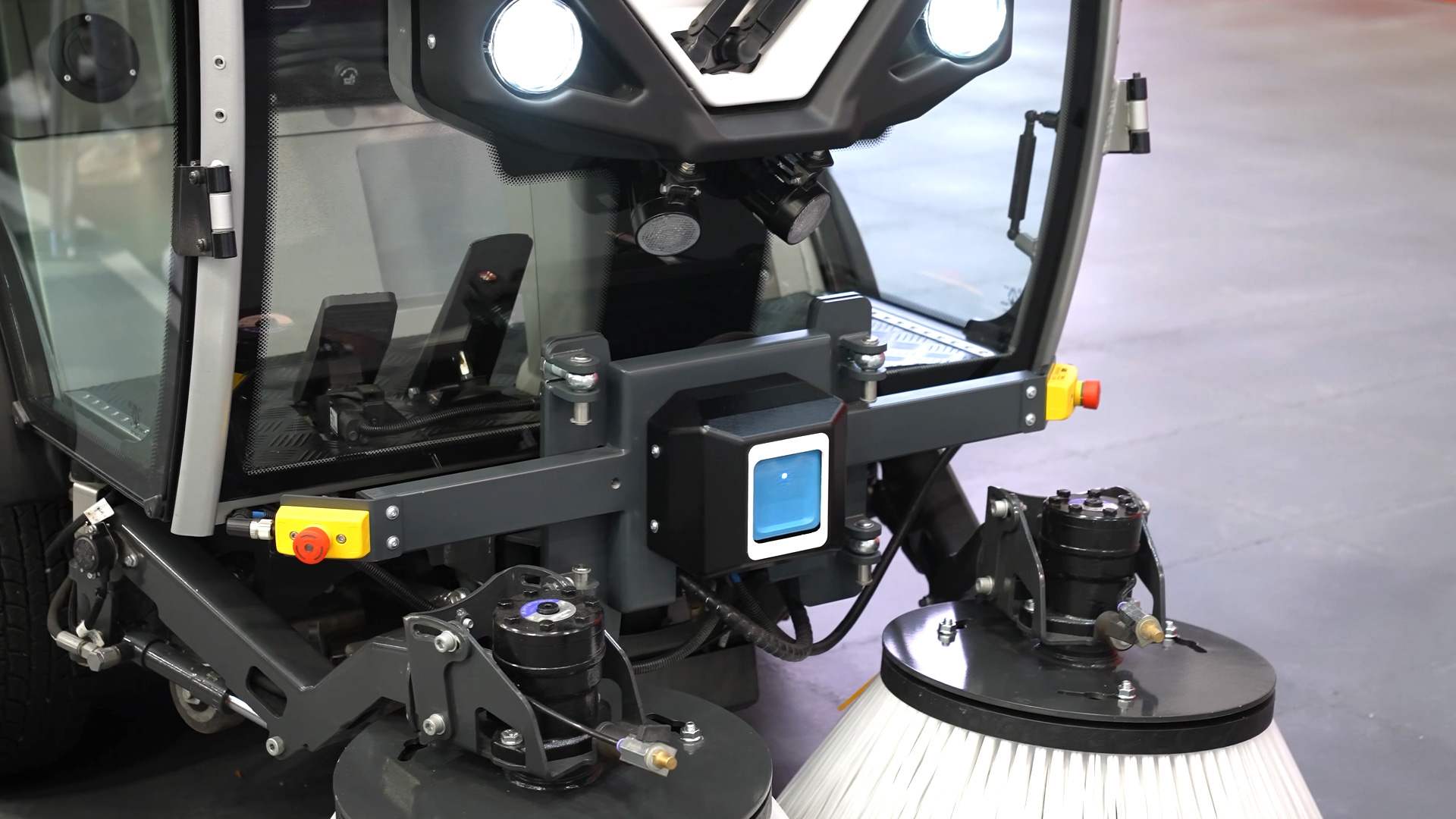
For an autonomous vehicle to operate reliably, it must constantly monitor its surroundings. Bucher Municipal combines several systems to achieve this. Laser scanners, radar and camera technology are used. The sensor technology is supplemented by safety-certified person detection. It is precisely the combination of different technologies that is crucial. Individual sensors quickly reach their limits in real-world environments. A laser scanner, for example, can suffer a massive loss of performance in dusty environments. It was precisely such situations that became apparent during development. Practical conditions at recycling centres differ significantly from theoretical tests. Dust, changing light conditions or cluttered material areas have a considerable impact on the recognition systems. Consequently, a large part of the development work involved analysing real operating conditions over a period of years and designing the systems to be correspondingly robust. Autonomous operation is therefore not achieved by software alone, but through the coordination of many technical levels.

Autonomous sweeper caught between technology and reality
The development of autonomous systems is often presented in simplified terms. In practice, however, it becomes clear just how complex industrial applications actually are. Many problems only become apparent once machines are operating continuously in real-world conditions. Bucher Municipal describes this process as a continuous accumulation of experience. Technologies that work in the laboratory must first prove themselves under real-world conditions. Particularly in the high-tech sector, new possibilities are constantly emerging, yet requirements are changing at the same time. It is notable that the company is deliberately relying on an existing platform. The CityCat VR17e provides a technical foundation that has already been tested. This allows innovation to focus on autonomous operation itself rather than on completely redesigning the machine. This reduces risks whilst also facilitating integration into existing operational concepts.
Regulatory frameworks remain the biggest obstacle for autonomous vehicles
Technologically, development appears to be significantly ahead of the legal framework. There are currently no clear regulations for autonomous sweepers on public land. This is precisely where Bucher Municipal currently sees the biggest hurdle. On private land, the machine can be classified under existing standards and certifications. There, the system can be operated in compliance with CE standards. Things become more difficult in public spaces. Many existing regulations are heavily geared towards conventional cars or autonomous taxi systems and are hardly suited to specialised municipal vehicles. Added to this is the fact that different countries are developing their own sets of rules. Uniform standards have so far only been established to a limited extent. For manufacturers, this means a considerable additional burden in terms of development and approval. For autonomous work machines in particular, this creates a gap between technical feasibility and regulatory reality.
Market launch of the autonomous sweeper with initial pilot projects
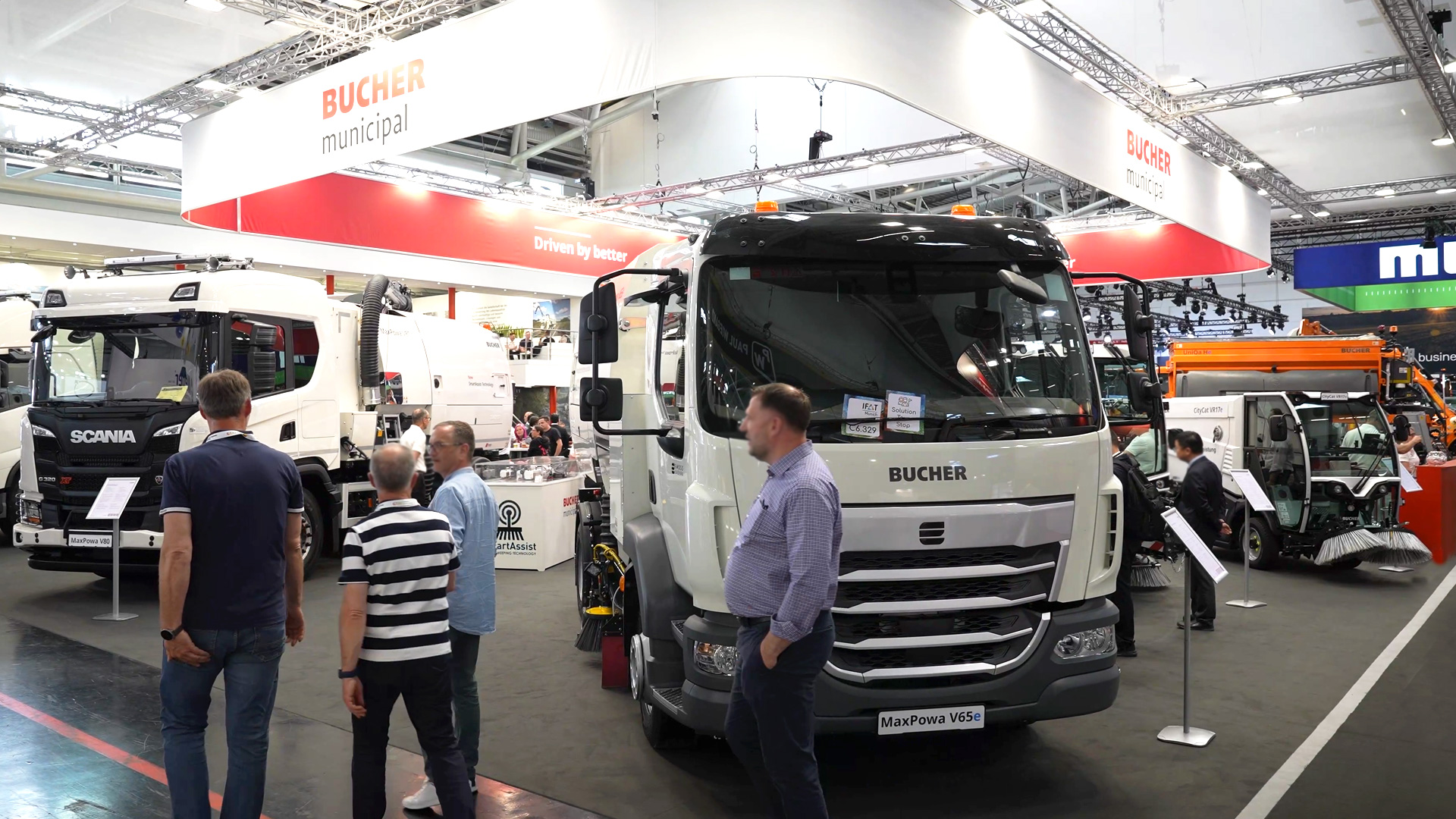
Despite these challenges, Bucher Municipal is already launching its first pilot programmes. According to the company, the response to the new machine has been overwhelmingly positive. The available production volume for the current year has already been allocated. This shows that autonomous cleaning systems are no longer regarded merely as experimental technology. Operators of large areas are increasingly seeking solutions that automate recurring processes whilst functioning reliably. The demand is also driven by the shortage of skilled workers. Recurring cleaning tasks are difficult to staff, whilst requirements for operational safety and documentation are rising. Autonomous systems could play an important role here in the medium term. The development of the CityCat VR17e highlights a fundamental trend in municipal and industrial engineering: autonomy does not happen overnight. It develops gradually from existing machine platforms, supplemented by sensor technology, safety logic and years of practical experience.


Trade fair reporting Germany - Trade fair knowledge, dates & events


