Mercedes-Benz eActros 400 as a multifunctional municipal vehicle
by A. Bergmeier - 2026-05-06Municipal vehicles face particularly high expectations. They must be operational all year round, cover a range of tasks and, at the same time, operate economically and reliably.
The eActros 400 demonstrates how these requirements can be combined in an electric vehicle concept that is not limited to a single purpose, but has been deliberately designed for versatility. At its core is an approach that combines traditional areas of application such as winter maintenance, transport or crane operations. Instead of specialised individual vehicles, this creates a platform that can be adapted to changing requirements.
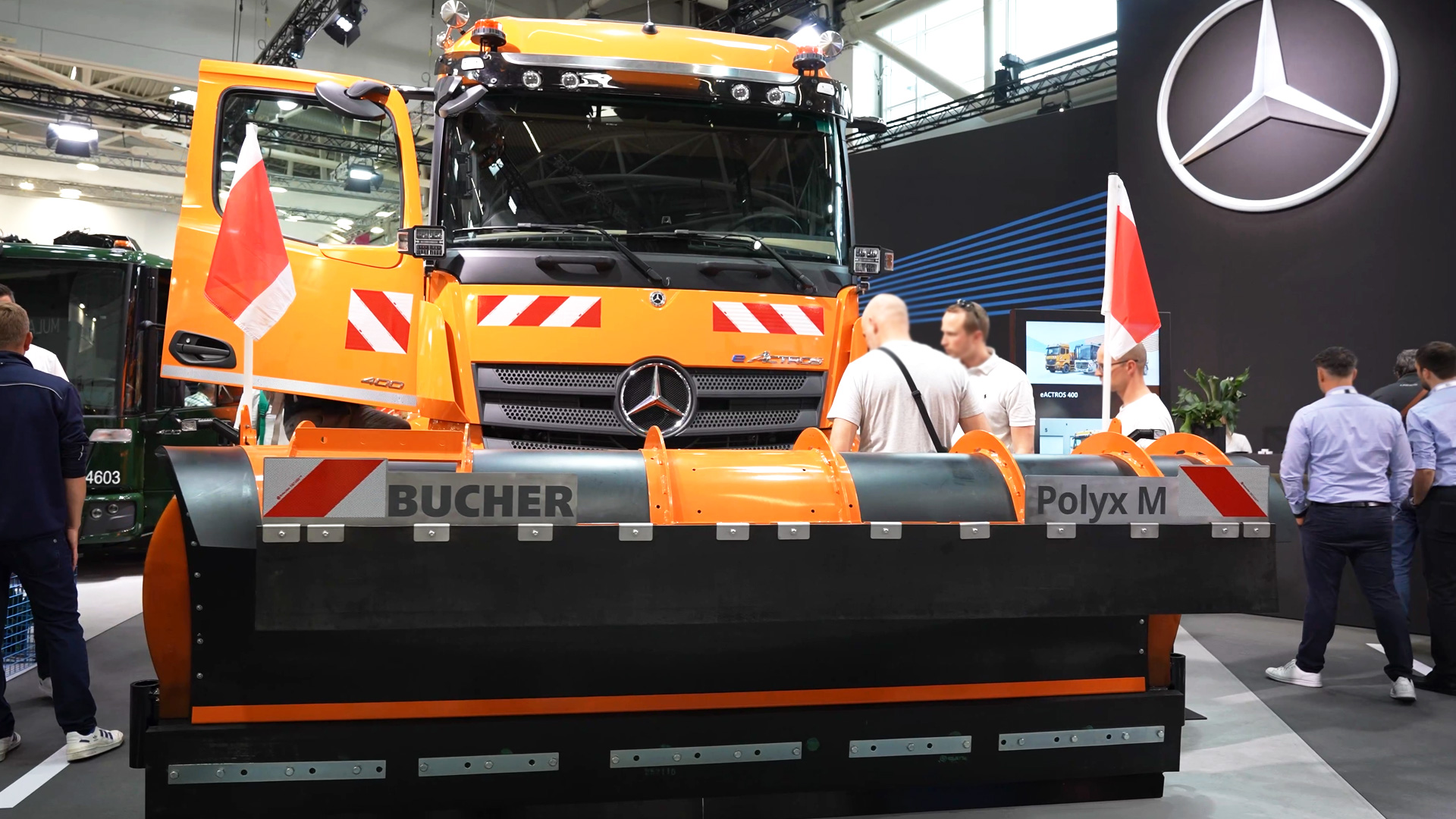
Daimler Truck is positioning the Mercedes-Benz eActros 400
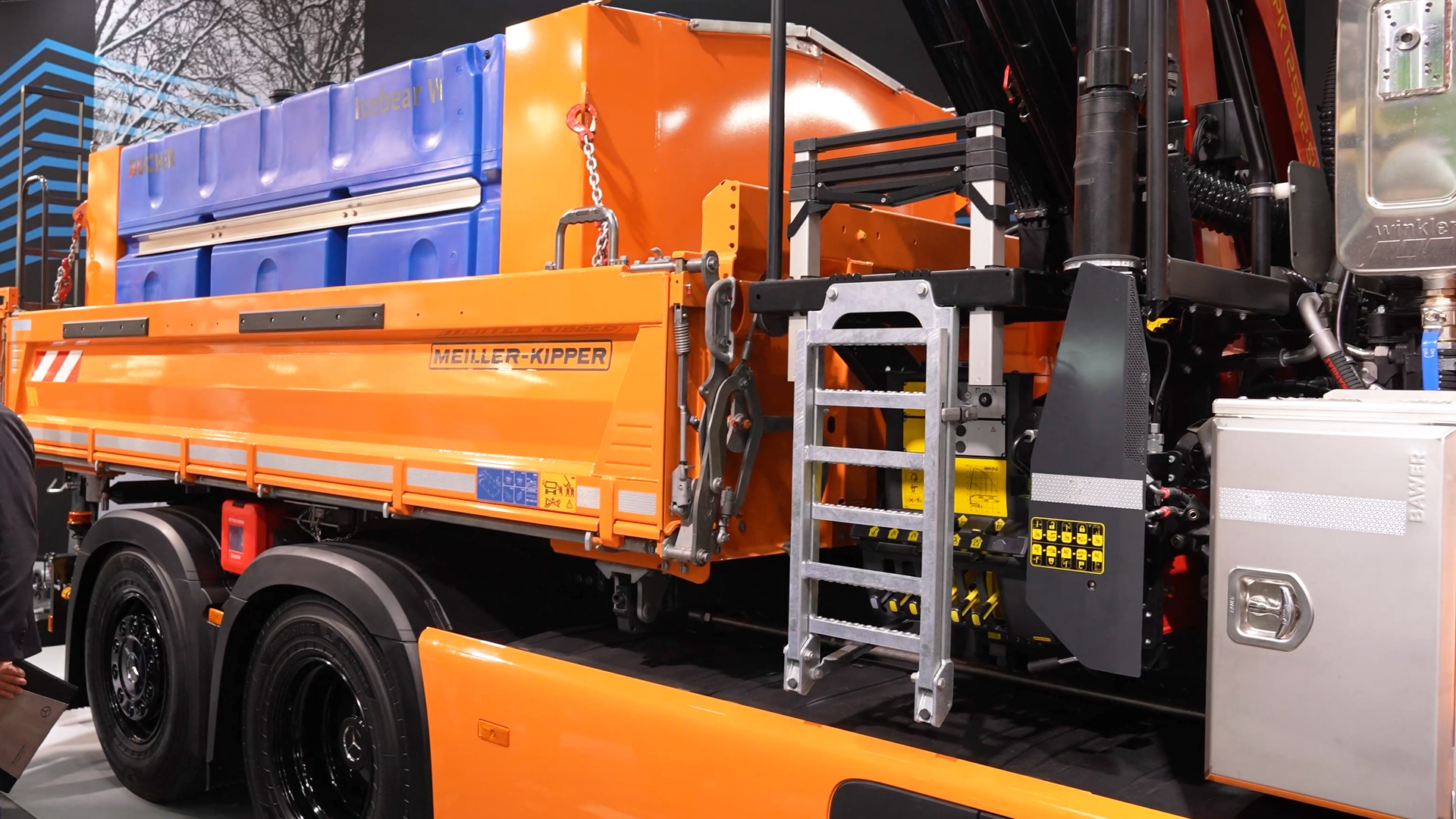
Daimler Truck positions the Mercedes-Benz eActros 400 as a flexible and multifunctional vehicle for the municipal sector. Its unique feature lies not so much in a single function as in the combination of multiple applications. The bodywork was developed in collaboration with a specialist partner and integrates a tipper, crane and winter service equipment into a single system. This approach is immediately apparent in the cab. The cab offers space for up to six people and is therefore not designed solely for single-person operation. This offers a significant practical advantage, particularly during summer operations when teams are working together. At the same time, it remains efficient for winter use, when often only one person is working in the vehicle. The design thus follows a clear principle: a vehicle that adapts seasonally and functionally without altering its basic structure.
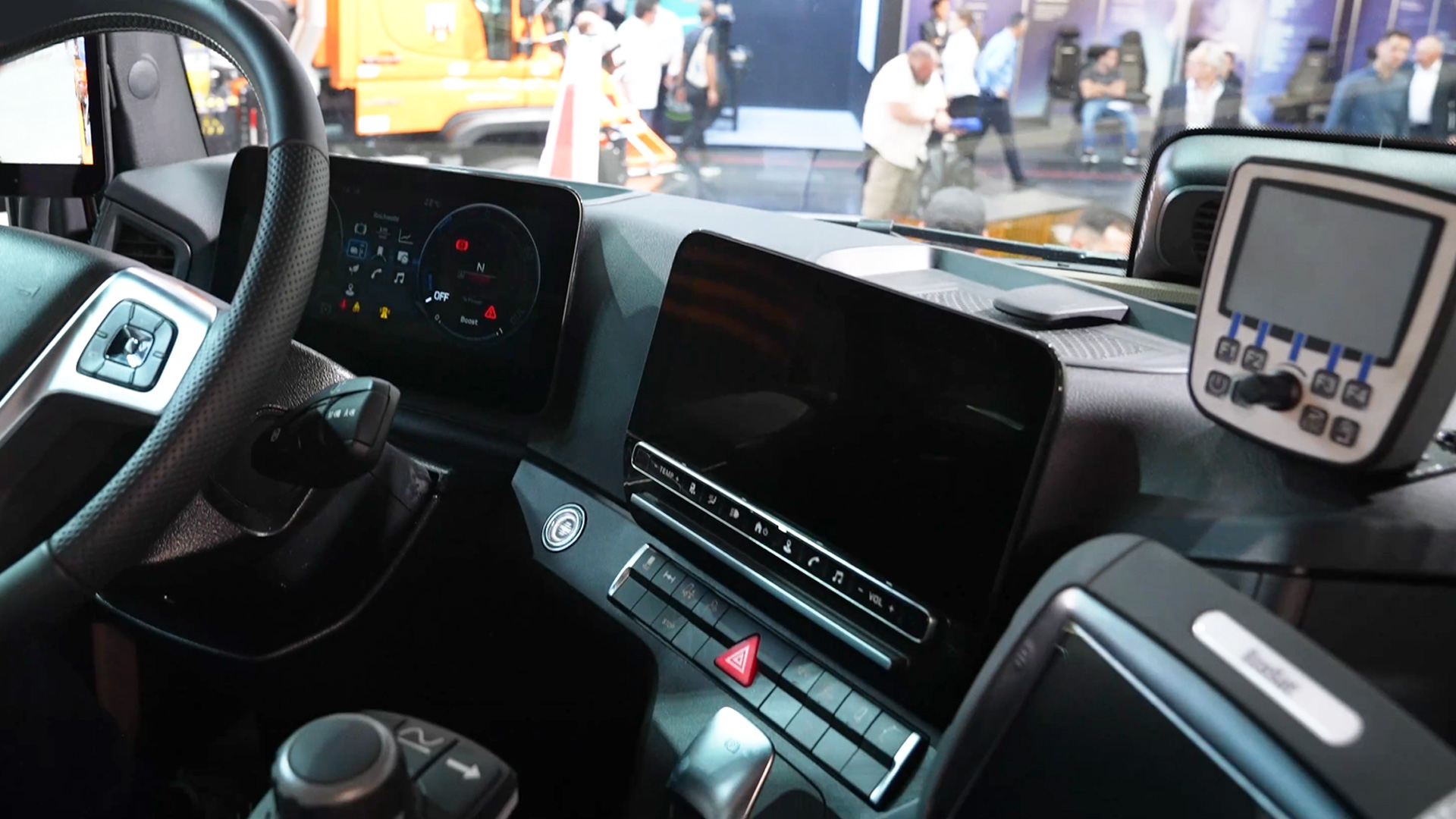
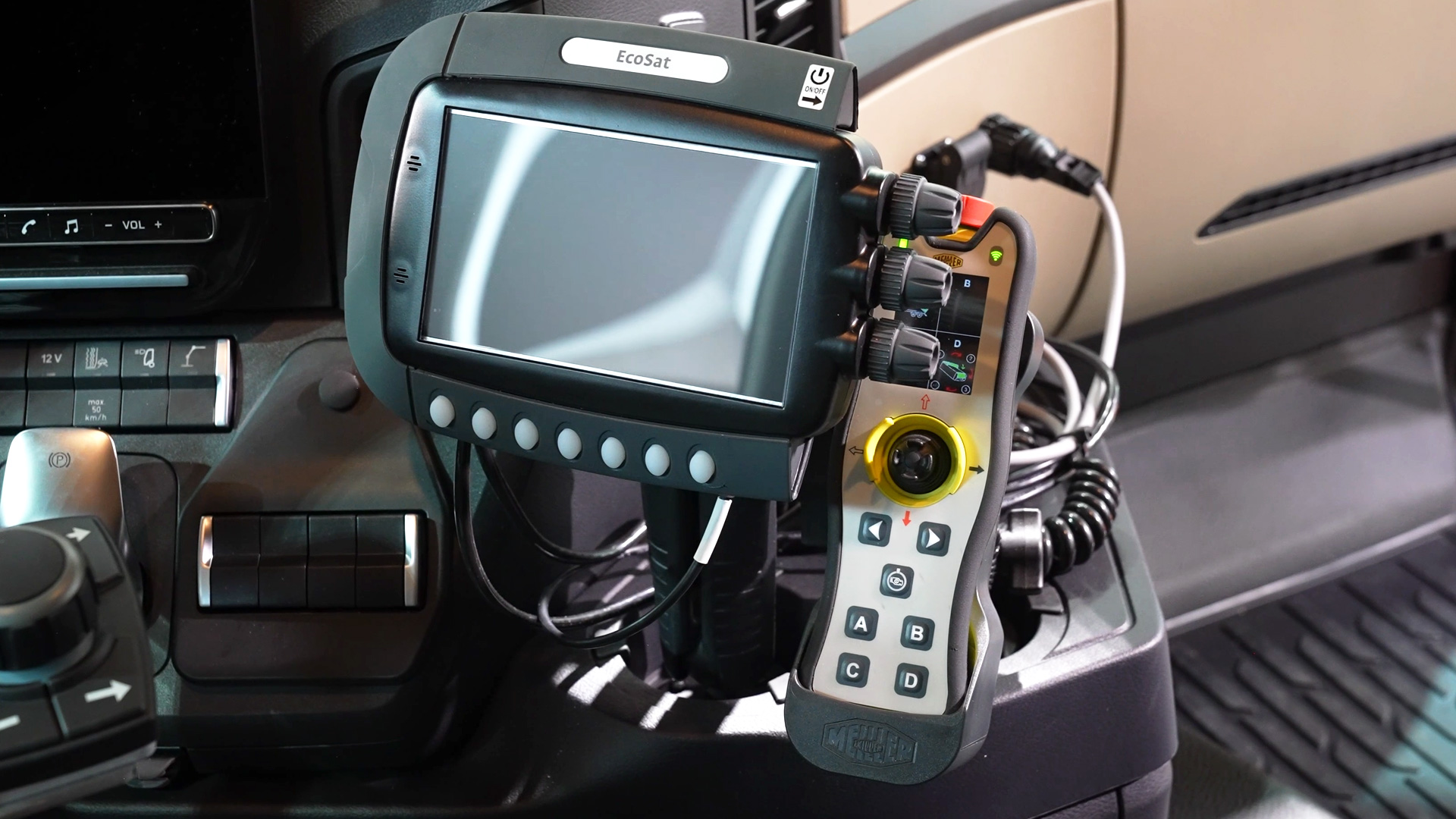
Cab concept with space and ergonomic controls
The cab fulfils several tasks simultaneously. In addition to the increased seating capacity, the raised design creates a spacious feel. This also makes longer operations more comfortable. The rear bench seat can also be used as a reclining seat, which is particularly relevant during longer working days. The controls are consistently tailored to the respective application. Specific control elements are available for winter service, whilst other functions take precedence during summer operation. A removable control panel allows switching between operating modes without the need for additional conversions. This integration reduces complexity in day-to-day use. The driver always works with a clearly structured interface, regardless of which task is currently the focus.

MirrorCam and assistance systems for greater safety
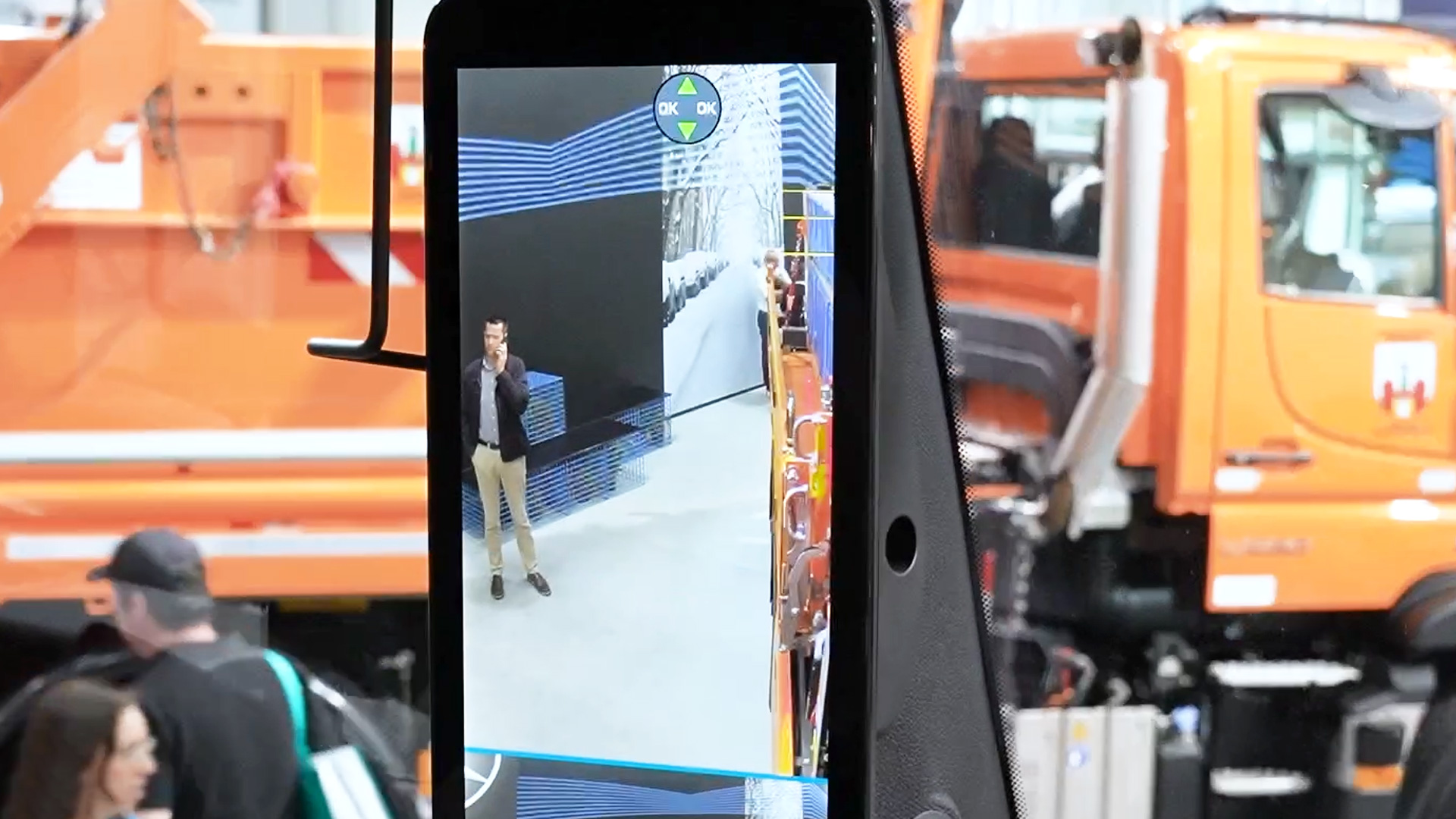
A striking feature is the absence of traditional exterior mirrors. Instead, Daimler Truck relies on a camera-based system. The so-called MirrorCam transmits the image to displays in the cabin and remains active even when the door is open. This offers a practical safety advantage, particularly in municipal operations. When stepping out into moving traffic, visibility is maintained, whereas traditional mirrors no longer provide any information in this situation. This system is complemented by further assistance functions. These include an Active Sideguard Assist, which detects potential hazards in the side area and intervenes automatically in an emergency. The driver is first warned; in the next step, the system can brake automatically. The key safety features can be summarised as follows:
- camera-based MirrorCam instead of conventional exterior mirrors
- Active Sideguard Assist with intervention in the braking system
- Brake Assist for critical situations in road traffic
- Sensors for monitoring the vehicle’s surroundings
Electric drive and energy supply in everyday use
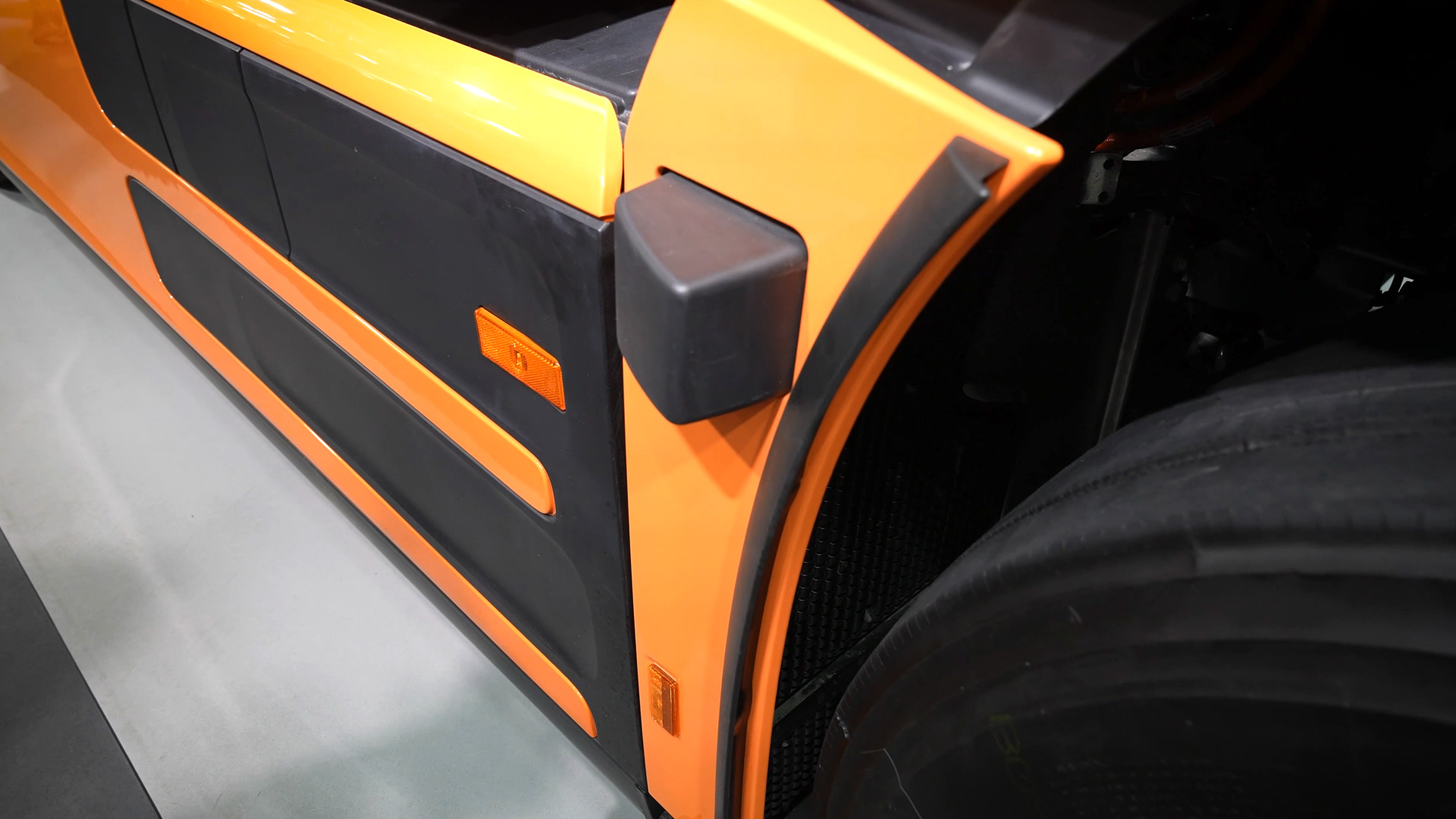
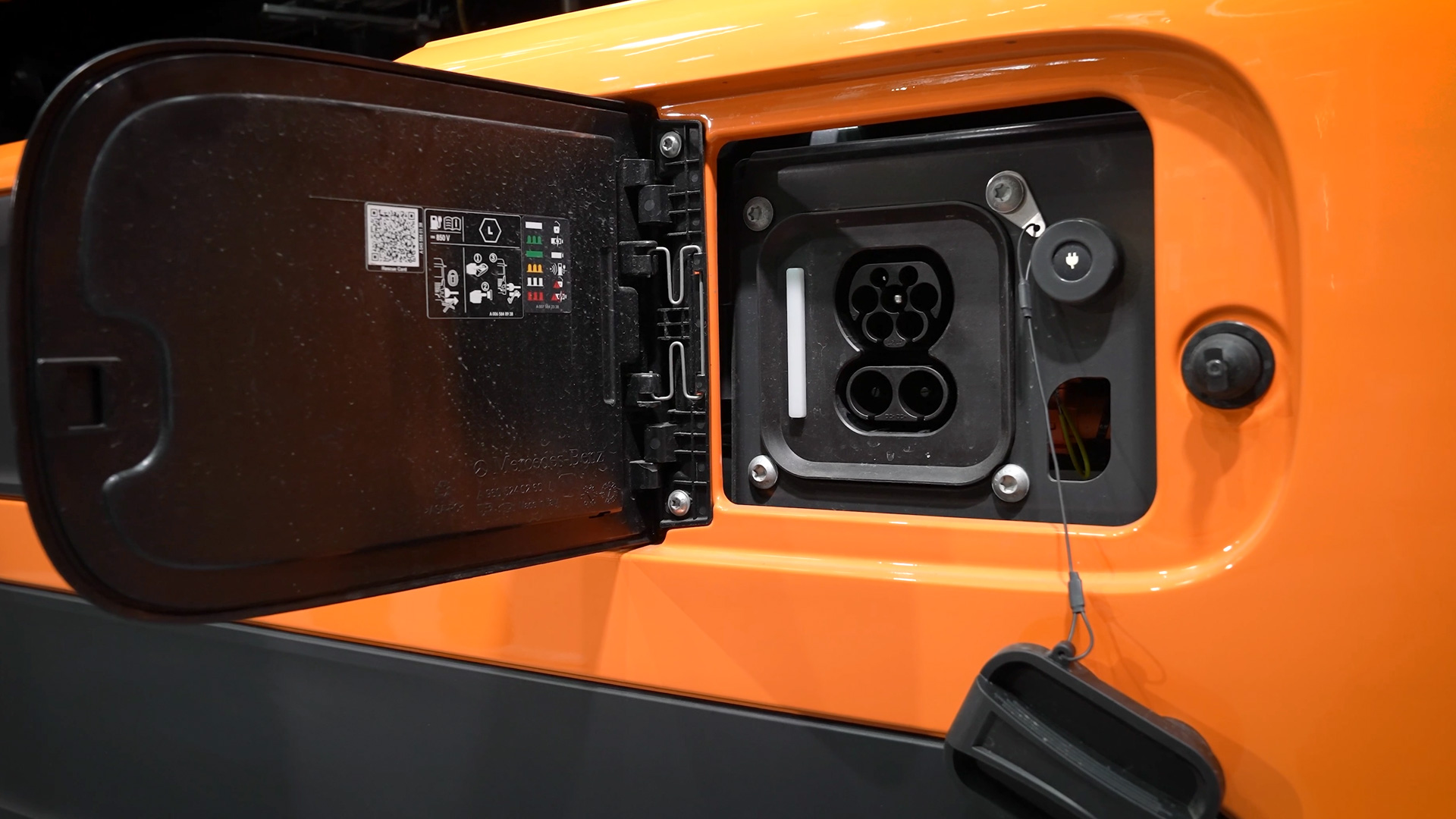
The eActros 400 is based on a fully electric drive system. Two batteries provide a capacity of over 400 kilowatt-hours. This power is sufficient for typical municipal operations, as daily routes are usually clearly defined. A key factor is the energy consumption of the bodywork. Compared to driving, this is low and has little impact on the range. This is particularly relevant for vehicles with additional functions such as a crane or winter service equipment. Charging is carried out via standard DC interfaces. In practical use, this means that a single overnight charge is sufficient to make the vehicle fully operational again the next day. This allows operation to be integrated into existing workflows without the need to schedule additional charging windows.
Market positioning and requirements for municipal technology
The municipal sector places high demands on vehicles. In addition to technical performance, reliability, ease of maintenance and long-term operational capability play a central role. Daimler Truck addresses these points with an approach based on mature systems rather than being viewed as a test platform. At the same time, the market remains in flux. New providers are entering the field of electric mobility, including from international markets. The decisive factor will be the extent to which these solutions can meet the specific requirements of municipal applications.
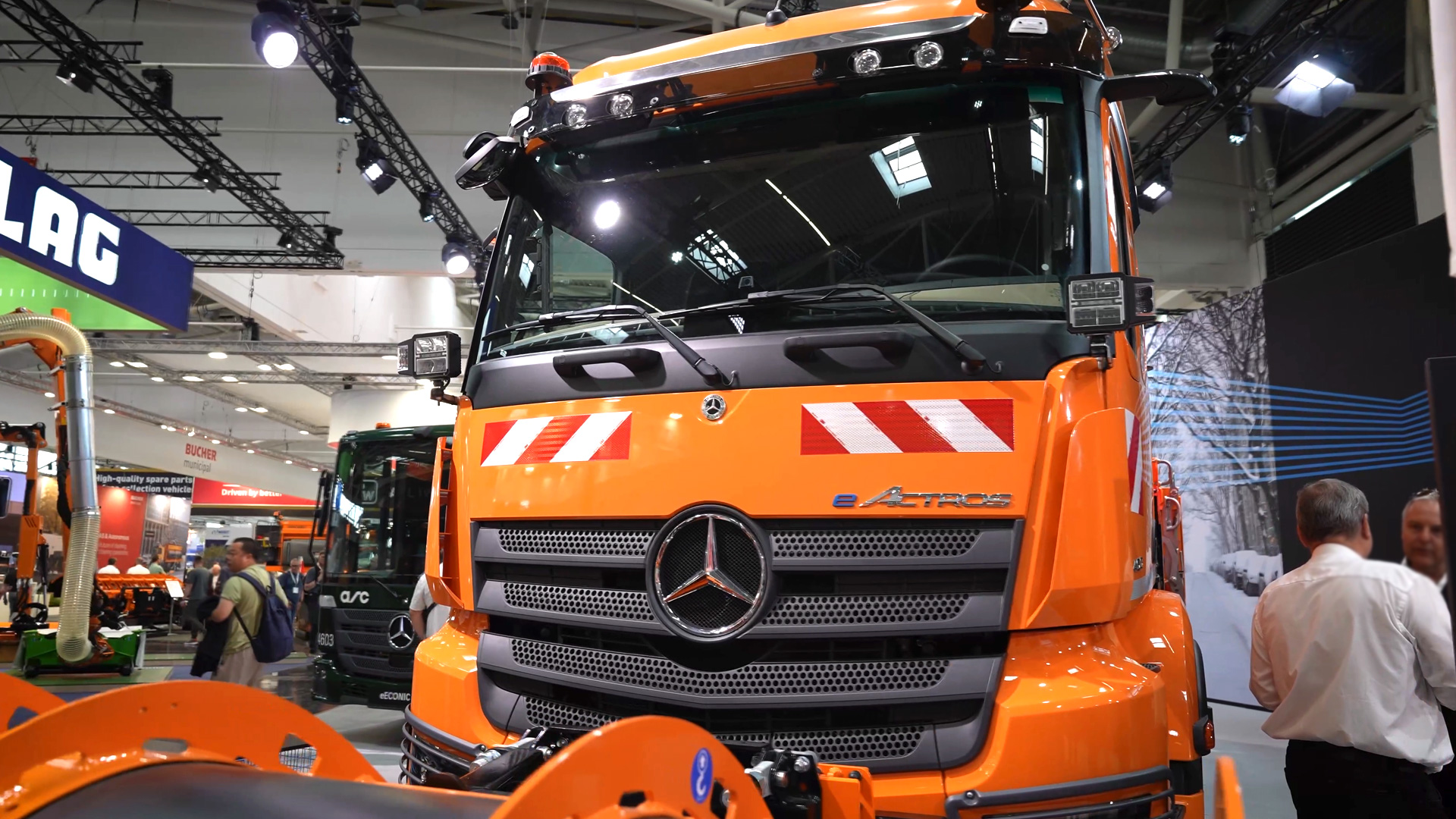
The eActros 400 demonstrates what a vehicle concept might look like that not only relies on electric drives but also rethinks the entire operational logic. Flexibility, safety and integration are at the forefront. This provides cities and municipalities with a solution that combines multiple tasks into a single system whilst facilitating the transition to electric mobility.
Trade fair reporting Germany - Trade fair knowledge, dates & events


