Handling excavators with interchangeable booms for scrap and recycling
by A. Bergmeier - 2026-05-12The requirements in the scrap and recycling industry have changed significantly in recent years. Today, operators must not only work economically but also comply with stricter environmental regulations and safety requirements.
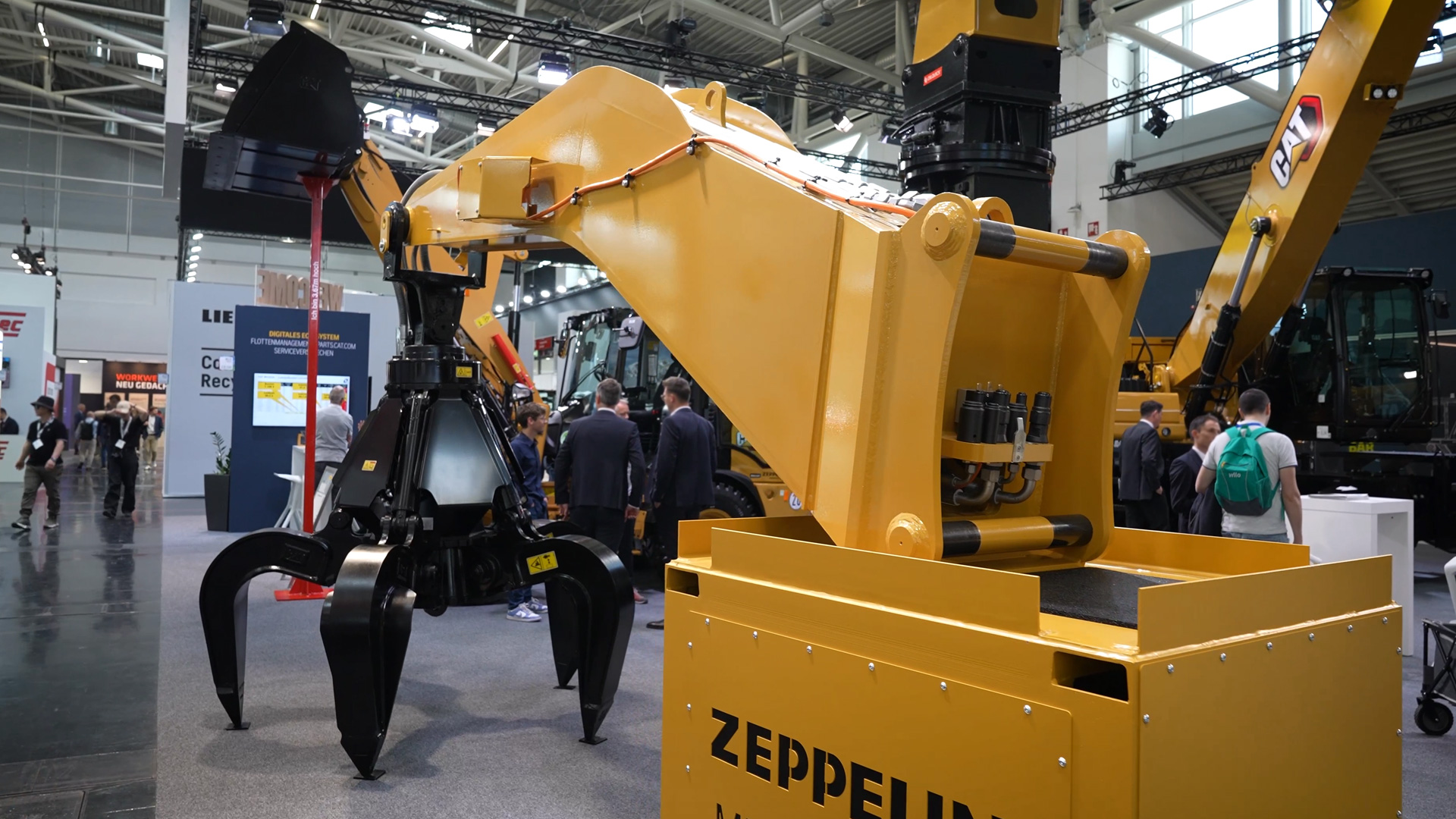
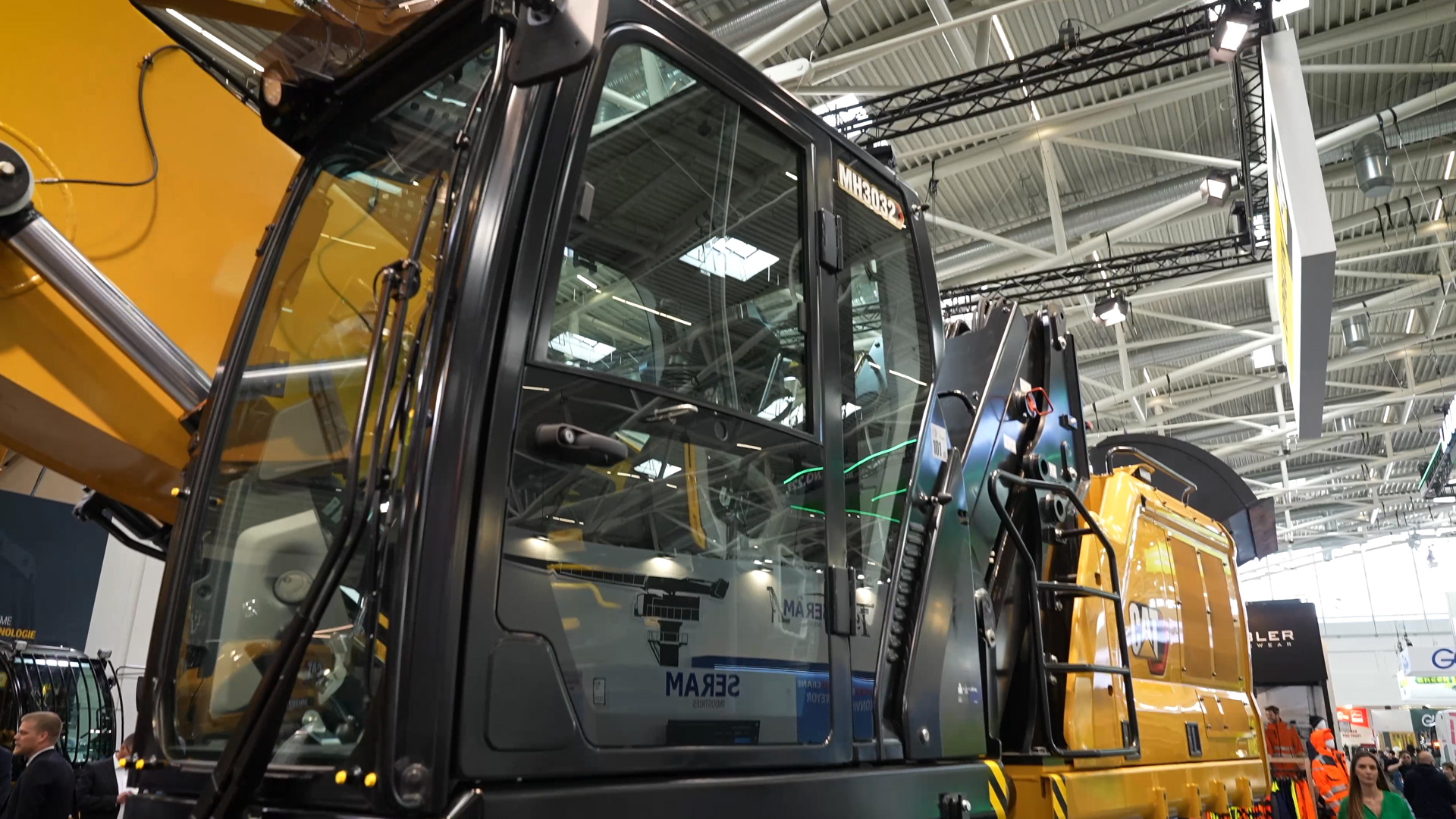
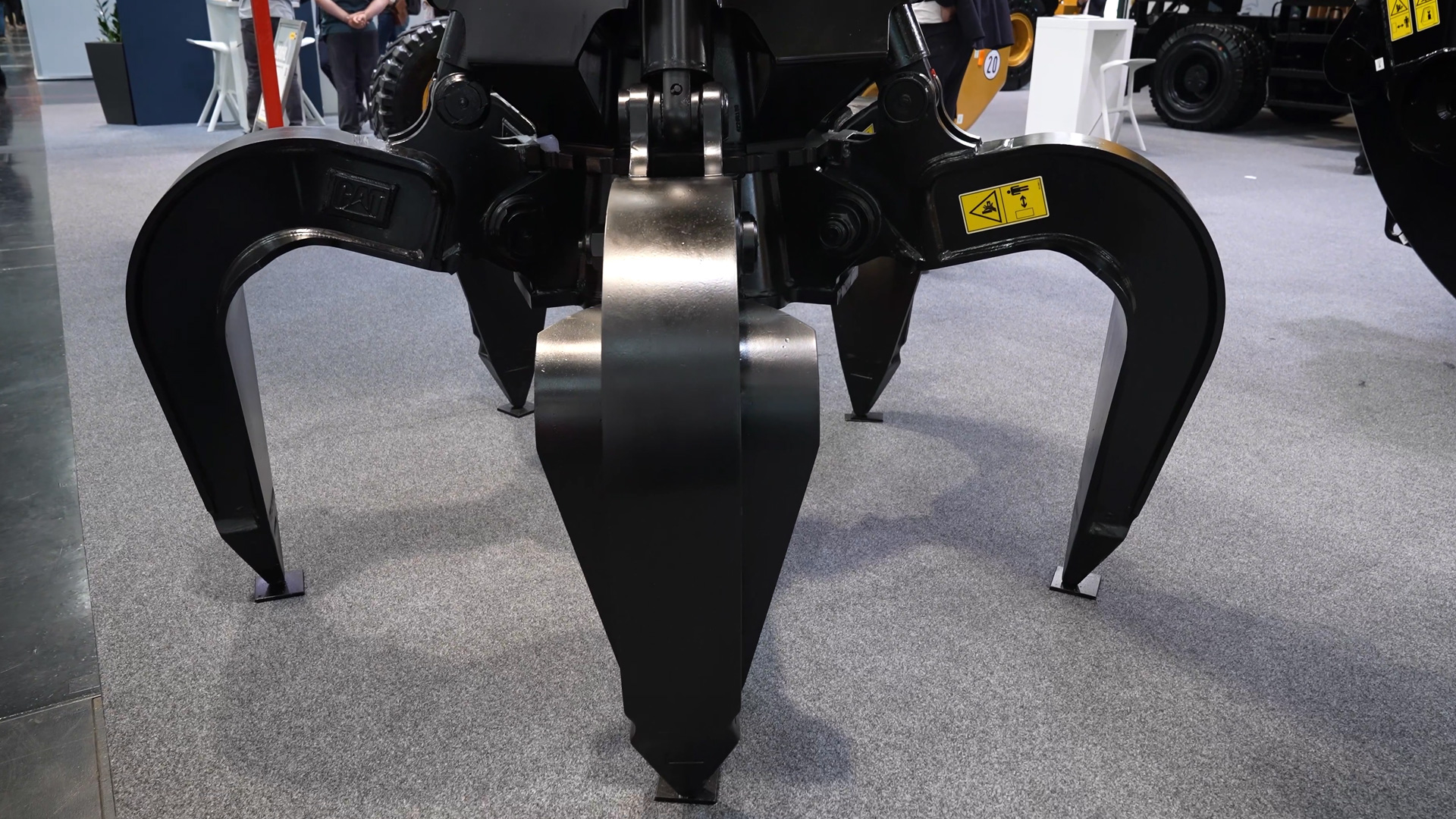
Particularly in the field of metal processing, the pressure is mounting to make processes more efficient and reduce emissions. This is precisely where a new machine concept from Zeppelin and Caterpillar comes in. At Ifat Munich, Zeppelin is showcasing the MH3032, a 35-tonne class material-handling excavator that combines two different applications in a single machine. At the heart of the concept is a fully hydraulic interchangeable arm, which enables rapid switching between a scrap shear and a polyp grapple. This is intended to allow both the pre-shredding of material and the subsequent loading to be carried out using just a single machine.
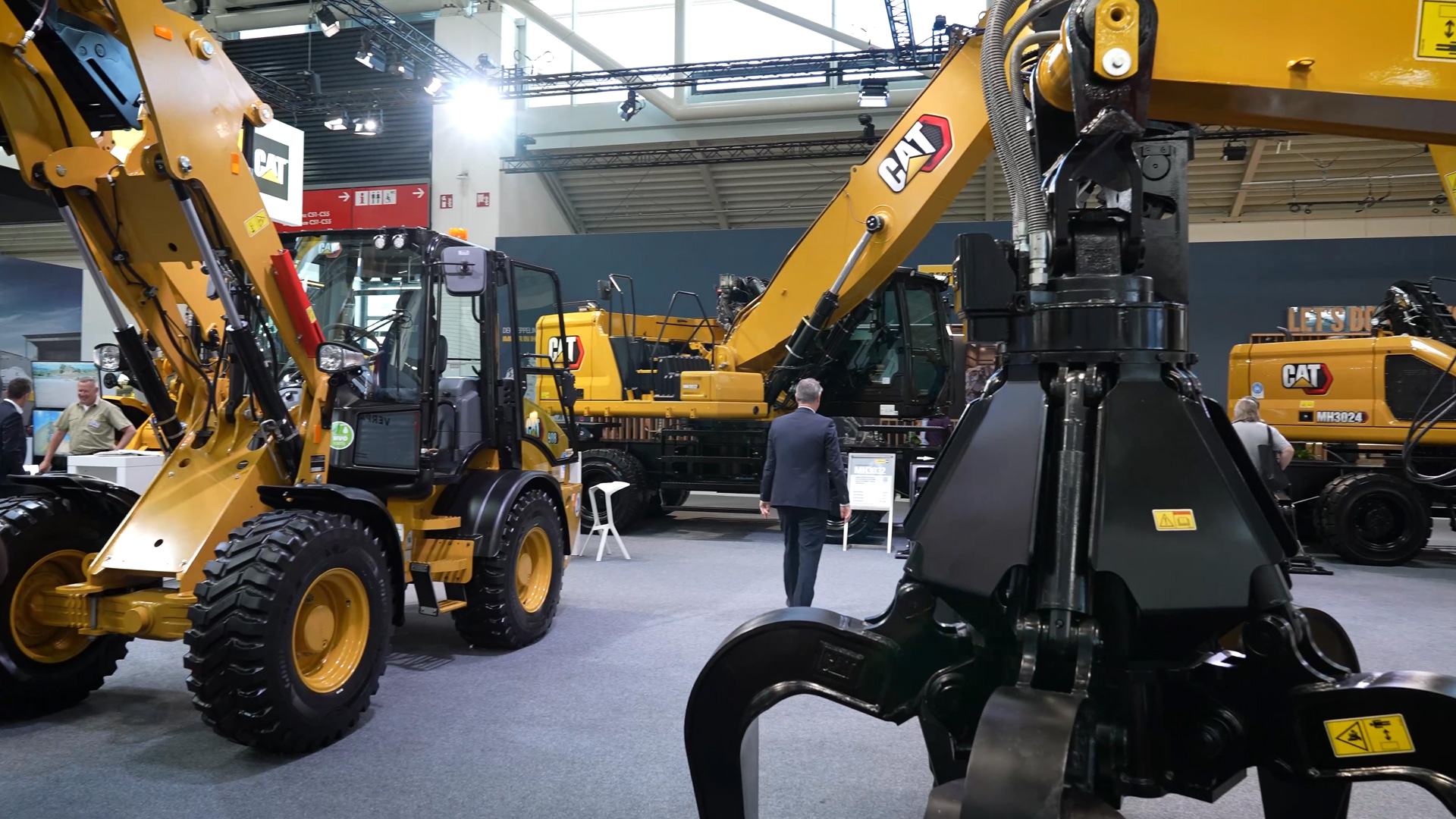
Caterpillar MH3032 combines shears and polyp grapple
The MH3032 is based on a Caterpillar material handler, but has been specifically enhanced for applications in the recycling and scrap industry. The machine can switch between different tools fully hydraulically. This means operators no longer necessarily need two separate machines for cutting and handling work. This flexibility is becoming particularly important for scrap dealers. Among other things, this is due to stricter regulations such as the TA Luft. Many materials may no longer simply be thermally separated or processed. Instead, pre-shredding is increasingly carried out mechanically using hydraulic shears. However, after the cutting process, the material still needs to be loaded or sorted. This is precisely where the polyp grab comes into play. Switching between the two tools takes place directly on the machine, reducing both downtime and investment costs. The key features of the machine concept:
- fully hydraulic switching between scrap shears and polyp grab
- Use as a pre-shredder and handling machine
- Telematics system with machine and operational data
- Assistance systems for safety and operational support
Zeppelin opts for flexible conversions rather than specialised machines
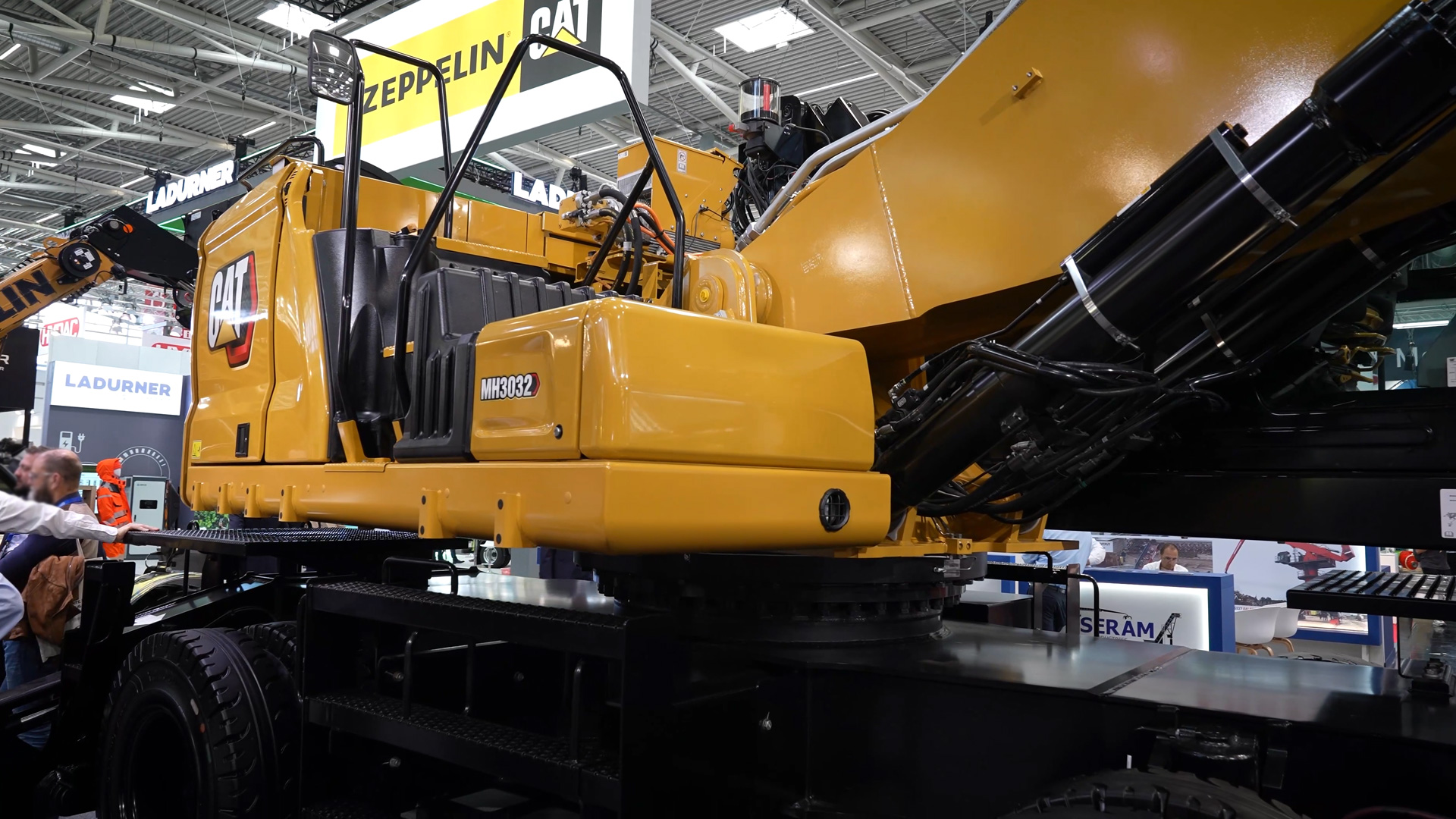
It is striking that, despite the conversion, the machine has remained as close as possible to its standard configuration. Zeppelin is thus pursuing an economic approach that goes beyond the initial deployment. The main boom has not been shortened, as is often the case with specialised conversions. This means that the handling excavator can later be refitted with a conventional boom and used as a standard handling machine. It also makes resale on the secondary market easier at a later date. Caterpillar sees a gap in the market, particularly in the 30- to 40-tonne class. Many operators are looking for machines that are not entirely specialised for a single task, but can respond flexibly to different requirements. This versatility is becoming particularly important in the waste management sector. Material flows are changing, legal requirements are becoming more complex, and investments must remain predictable in the long term. Machines that cover multiple application profiles offer economic advantages here.
Driver assistance systems and telematics support the operator
In addition to mechanical flexibility, digitalisation is playing an increasingly important role. The MH3032 features a comprehensive telematics system that transmits operating data and machine information directly to the operator. Added to this are various assistance systems already familiar from other Caterpillar construction machines. These include, amongst other things, height limits or safety shut-offs for the boom’s working range. In the configuration shown, individual functions are restricted due to the specific modification; however, the technical platform remains fundamentally designed for this purpose.
Such systems are also increasingly being used in traditional civil engineering. There, for example, excavation depths or slope angles can be digitally specified, enabling the machine to maintain specific working areas semi-automatically. The operator continues to control the excavator but receives constant support from sensors and software. This development shows that modern material handlers are no longer merely hydraulic work tools. They are increasingly becoming networked systems that collect data, safeguard processes and support workflows.
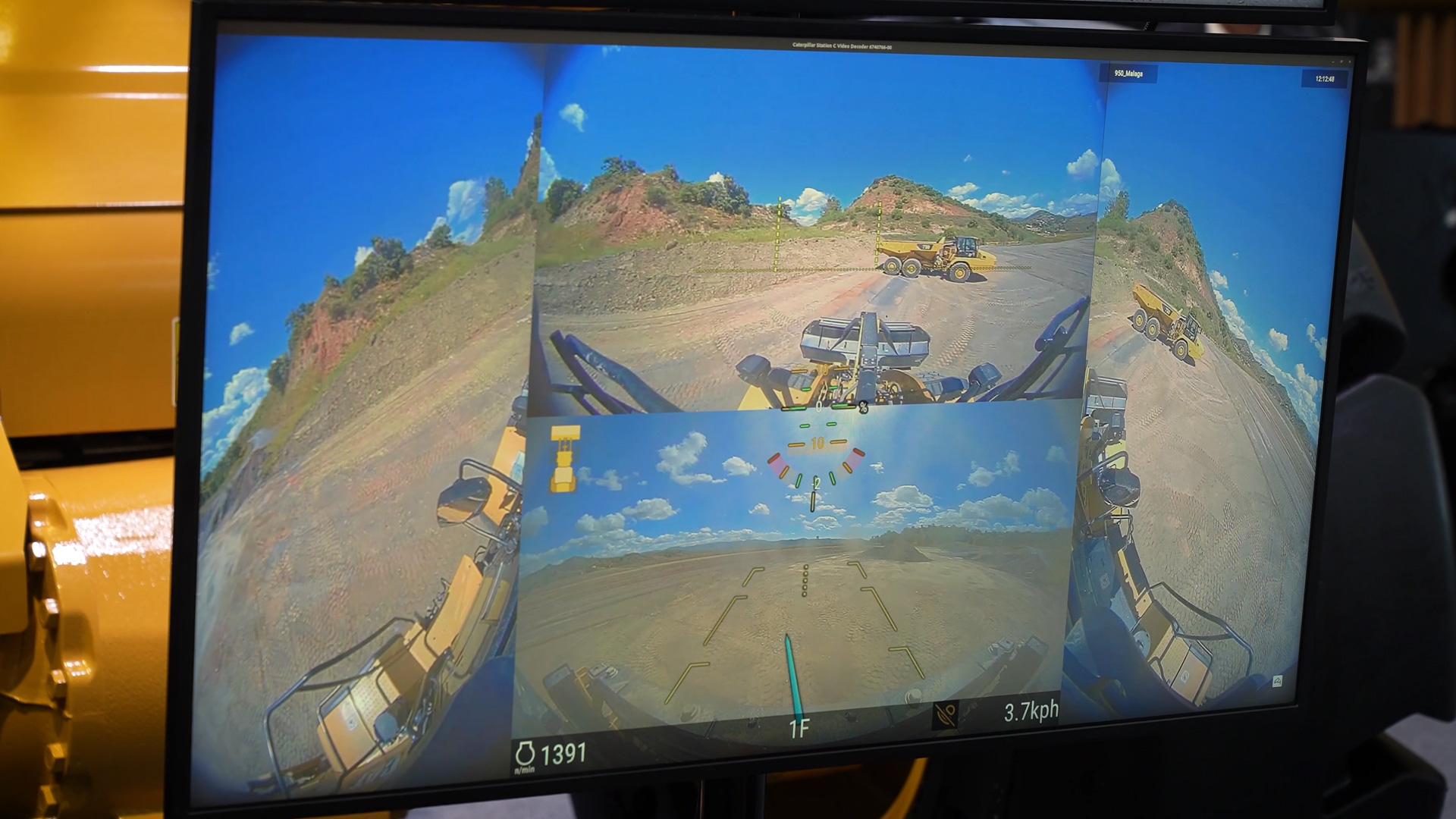
Remote-controlled machines aim to mitigate dangerous operations
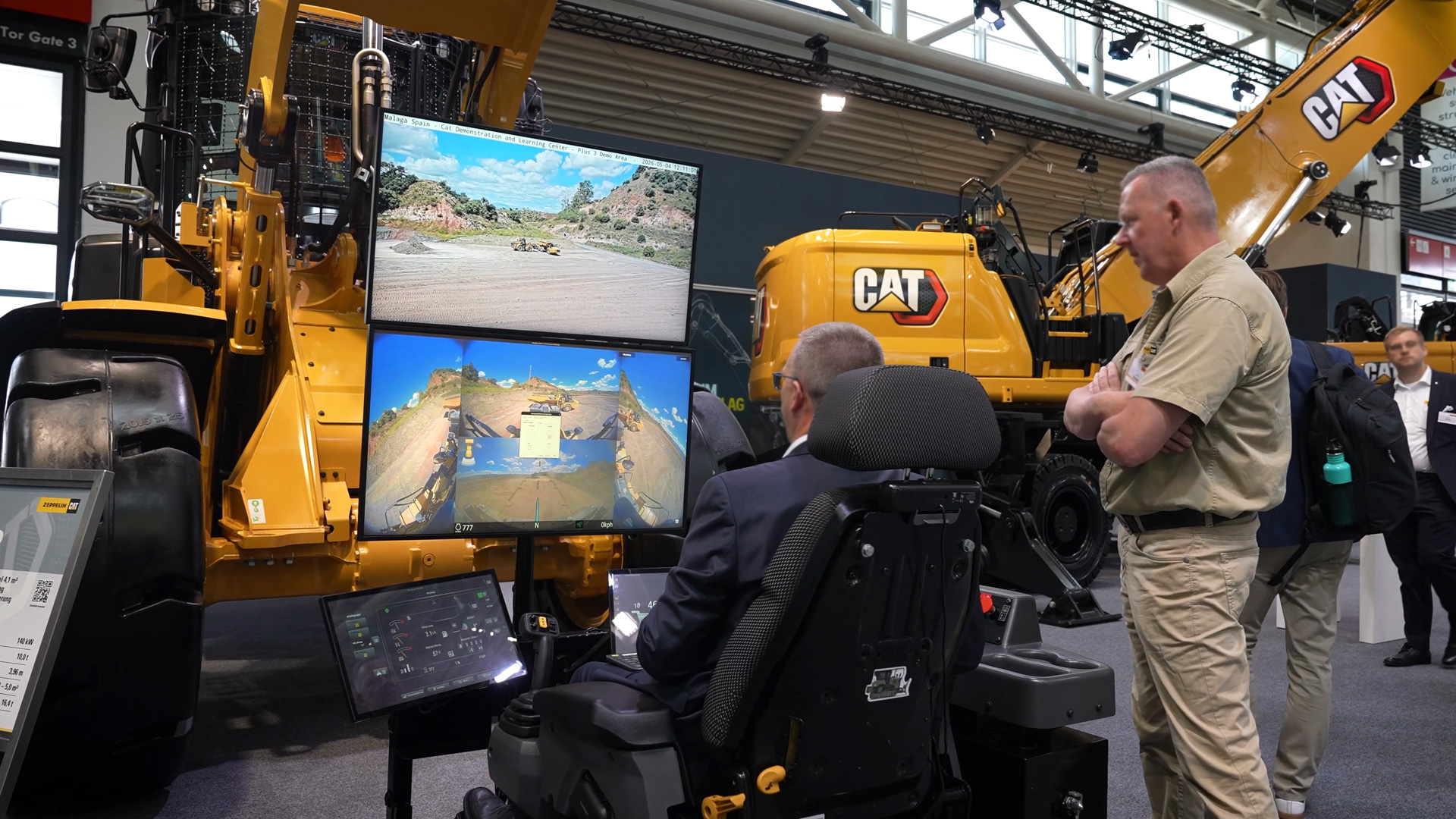
Another focus is on remote-controlled applications. At the trade fair, Zeppelin is also showcasing operator stations that allow machines to be operated from a safe distance via 5G networks. High-risk working environments are particularly common in the waste and recycling sector. Hazardous waste, dust exposure or potentially dangerous substances make direct on-site operation difficult. With remote control, the operator could in future remain outside the danger zone whilst still operating machines with precision.
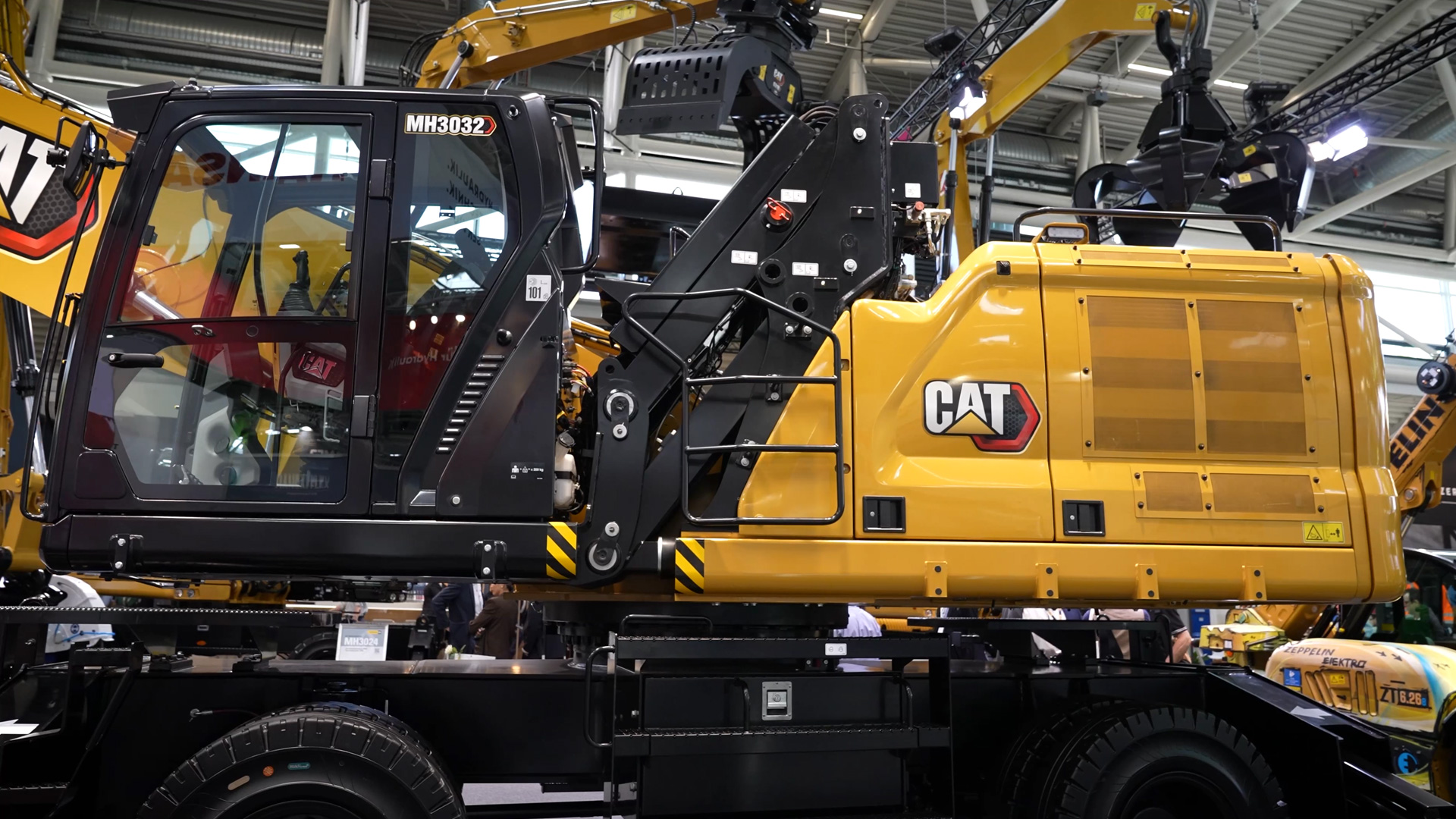
Technically, this already goes beyond individual demonstrations today. According to Zeppelin, machines can even be remotely controlled over long distances – for example, between different countries or sites. In addition to occupational safety, the shortage of skilled workers also plays a role here. Many companies are looking for ways to make jobs more attractive and deploy experienced operators more efficiently. In the future, an operator could control several machines in succession, rather than sitting permanently in a single machine.
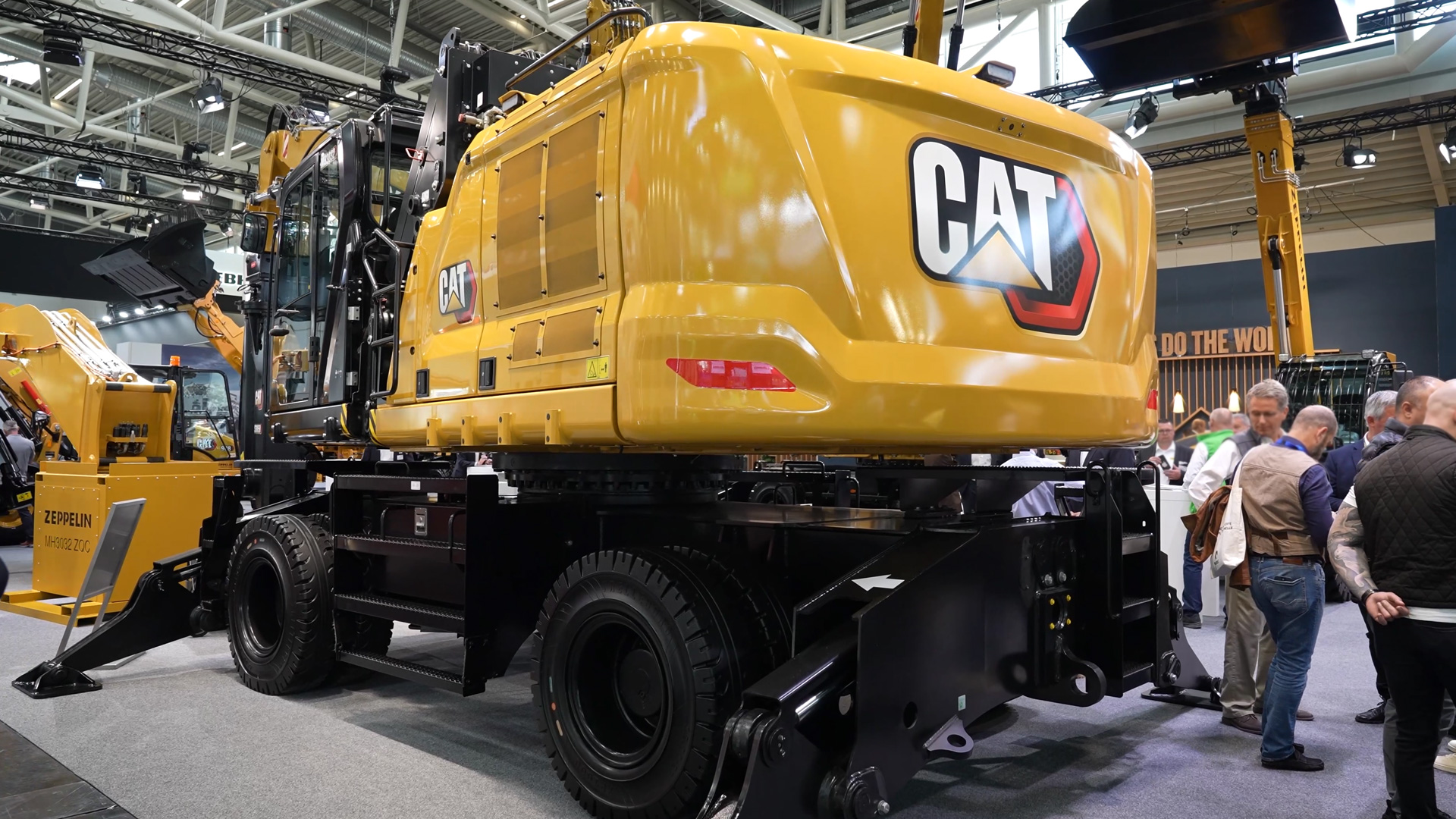
Material handling technology between environmental regulations and automation
The development of the MH3032 exemplifies how the recycling industry is changing. Environmental regulations such as the TA Luft now directly influence machine technology and process design in scrap yards. At the same time, the pressure for automation and digitalisation is growing. Caterpillar and Zeppelin combine these requirements in a machine concept that merges traditional material handling technology with flexible tool changes, assistance systems and remote functions. The machine is deliberately kept close to a production-ready platform to ensure that maintenance, servicing and resale costs remain economically manageable. This approach is likely to gain in importance, particularly in the waste management sector. Operators are increasingly seeking solutions that not only fulfil individual specialised tasks but can also flexibly cover various process steps within a plant.
Trade fair reporting Germany - Trade fair knowledge, dates & events


