Rotary shears for shredding end-of-life tyres in plants
by J. Groh - 2026-05-05The shredding of end-of-life tyres is one of the unassuming yet central processes of modern circular economy. Tyres are durable products, but at the same time difficult to dispose of.
Their mixture of rubber, steel and textile makes them a challenging material that can only be processed efficiently with suitable technology. On an industrial scale, this process begins with pre-shredding. This is precisely where a classic rotary shear comes into play, reducing large quantities of tyres to a definable initial format. Only on this basis can downstream processes such as granulation, grinding or pyrolysis operate effectively.
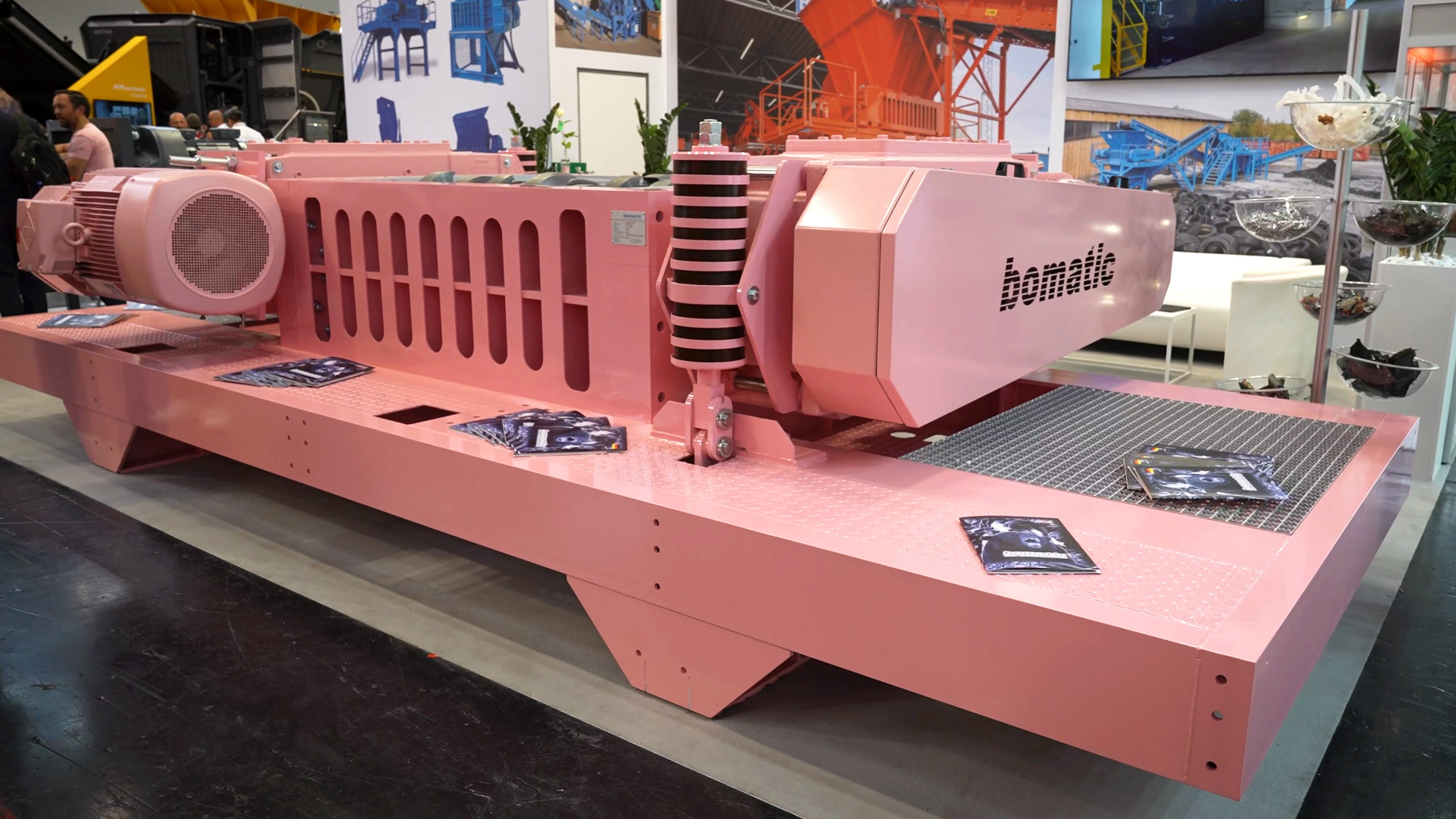

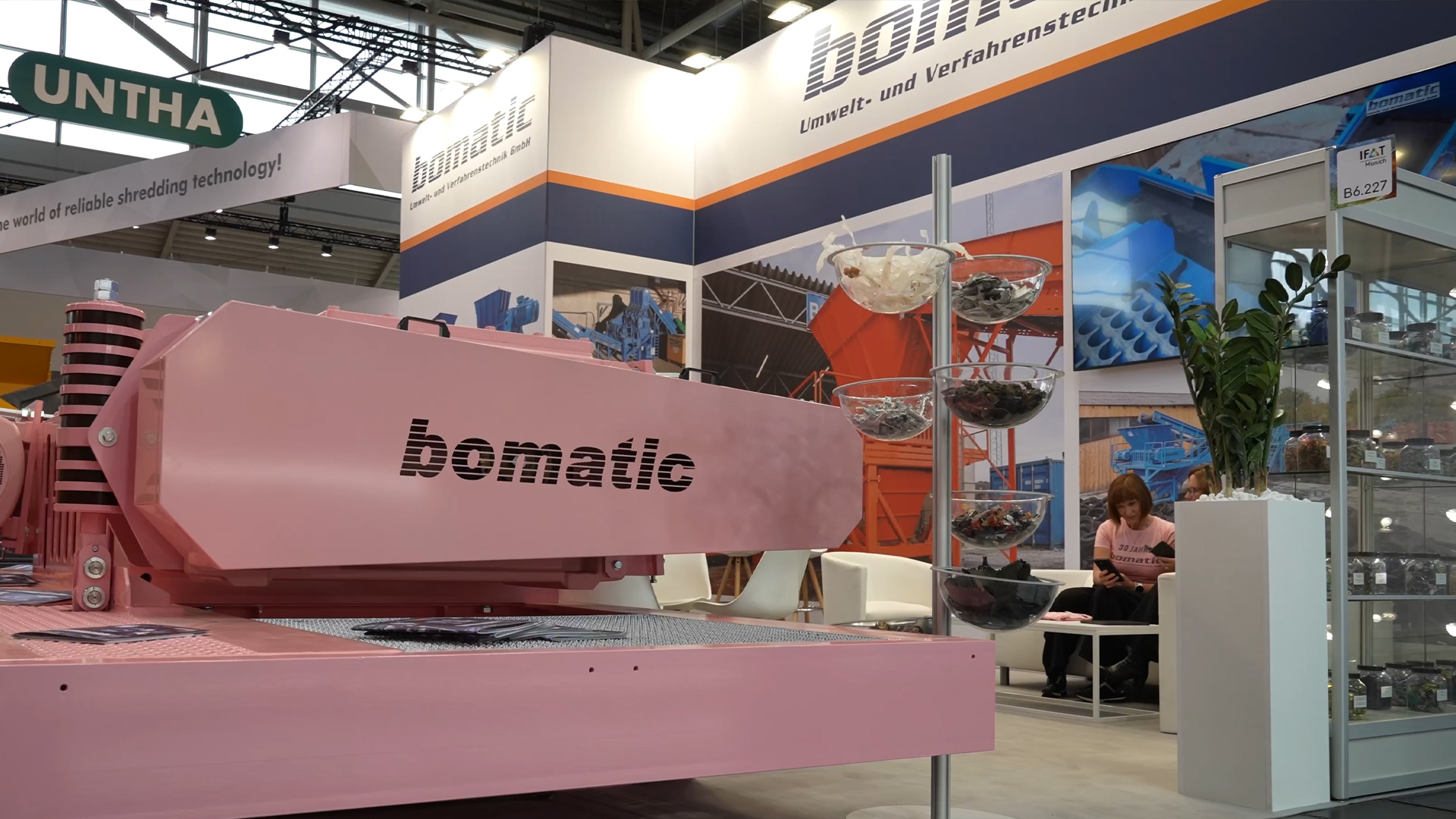
Bomatic rotary shear in operation as a twin-shaft machine
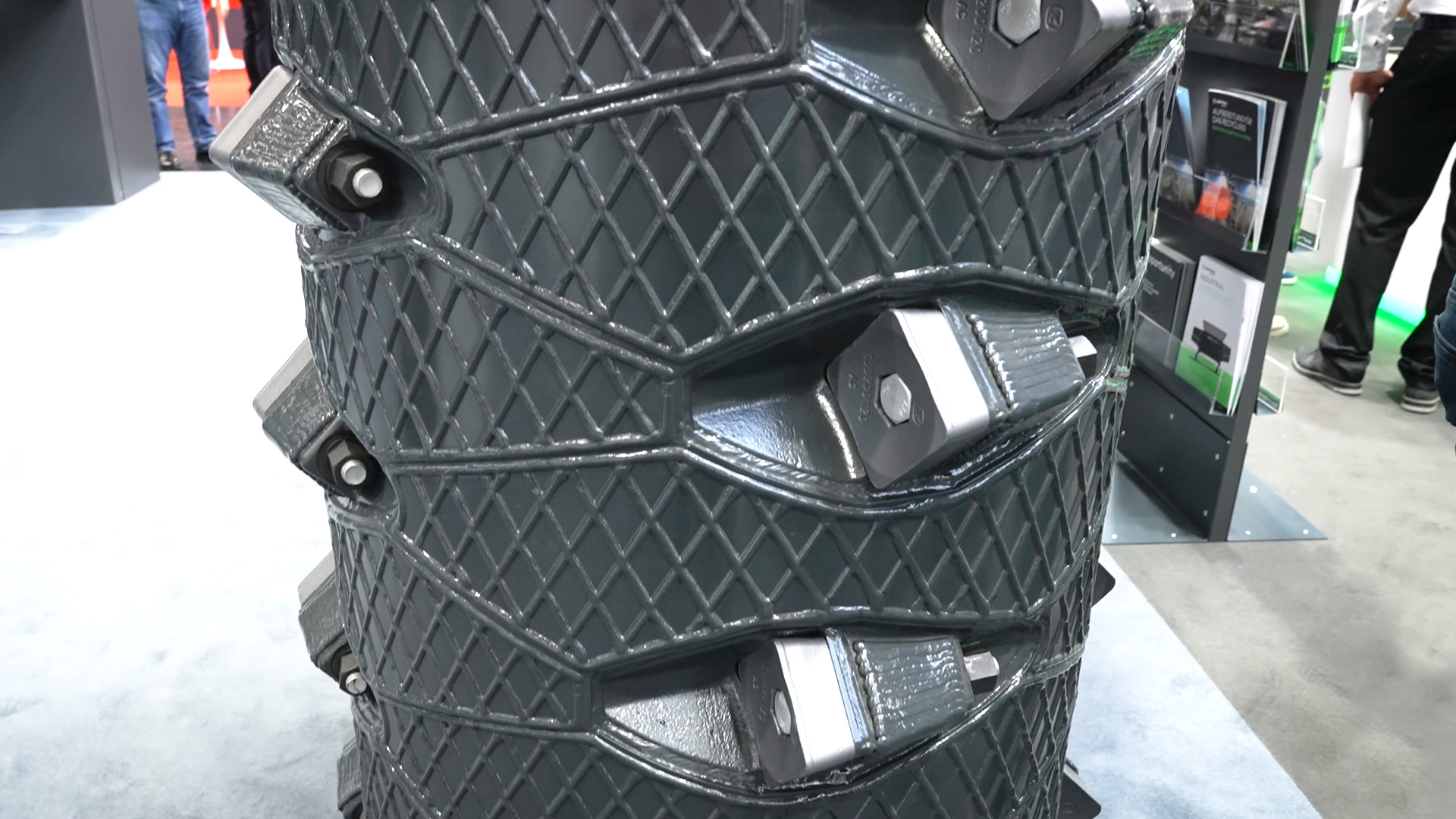
The machine presented here is a classic twin-shaft machine from the Bomatic portfolio. As a rotary shear, it operates with two counter-rotating shafts that grip, grasp and shred the material in a controlled manner. This principle has proven itself over many years and is considered the standard in pre-shredding. With this design, Bomatic relies on robust bearing technology and a construction designed for continuous operation. The machine operates at low speed, which ensures uniform shredding whilst reducing mechanical stress. With a drive power of 275 kilowatts, the system is designed for use in larger plants. The aim is to reduce end-of-life tyres to a particle size of around 100 millimetres in the first stage. This size is crucial, as it forms the basis for all subsequent processing steps.
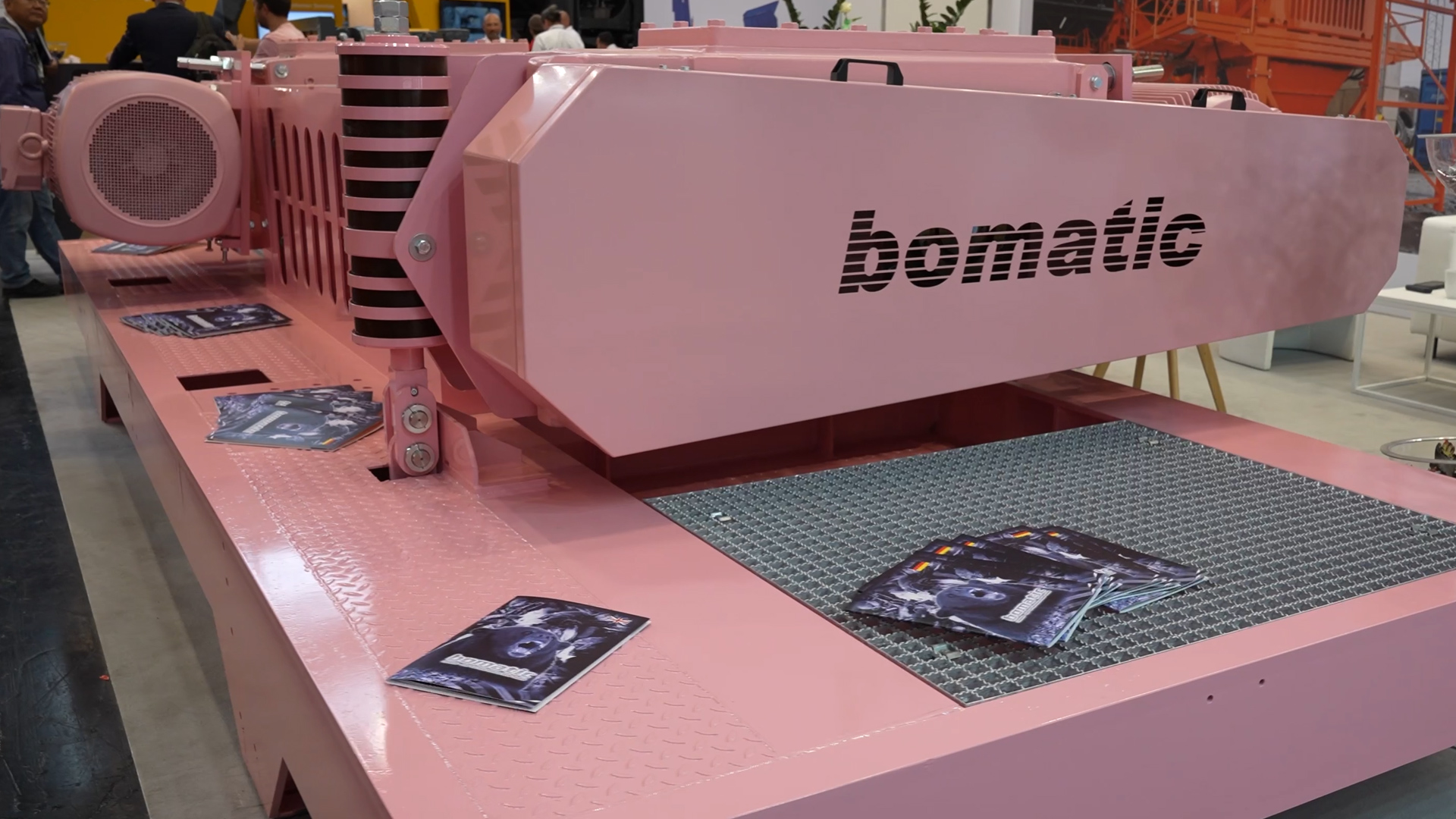
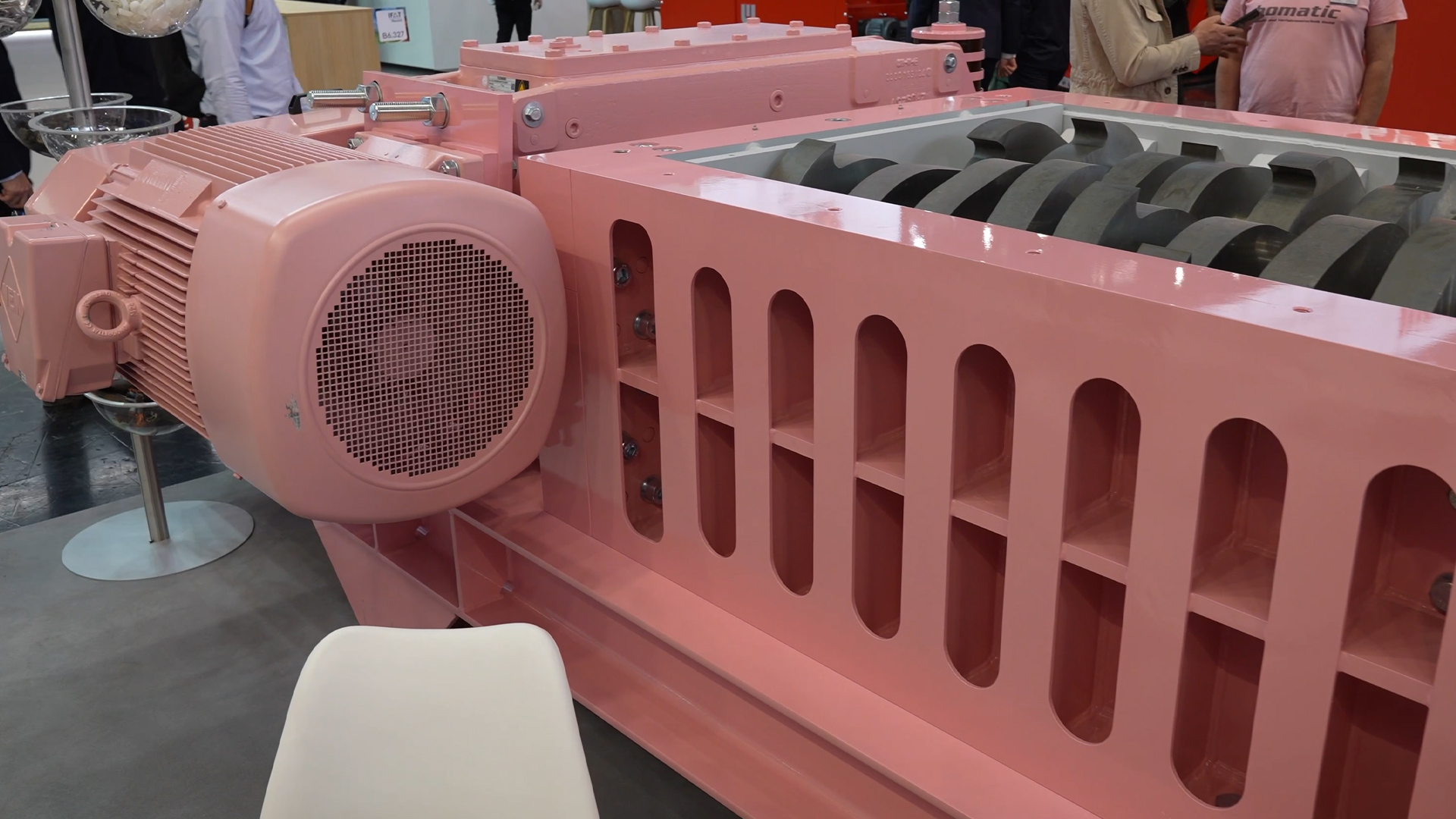
Pre-shredding process with screen and recirculation
The material flow within the plant follows a clearly defined sequence. The end-of-life tyres are first fed into the machine and mechanically shredded there. The material then passes through a screen that determines the target particle size. Particles smaller than the defined size leave the machine and are processed further. Larger pieces are automatically recirculated and shredded again. This principle ensures that a uniform output size is achieved. The process can be described in a few steps:
- Feeding of end-of-life tyres into the rotary shear
- Shredding by counter-rotating shafts
- Screening to determine particle size
- Recirculation of oversized material

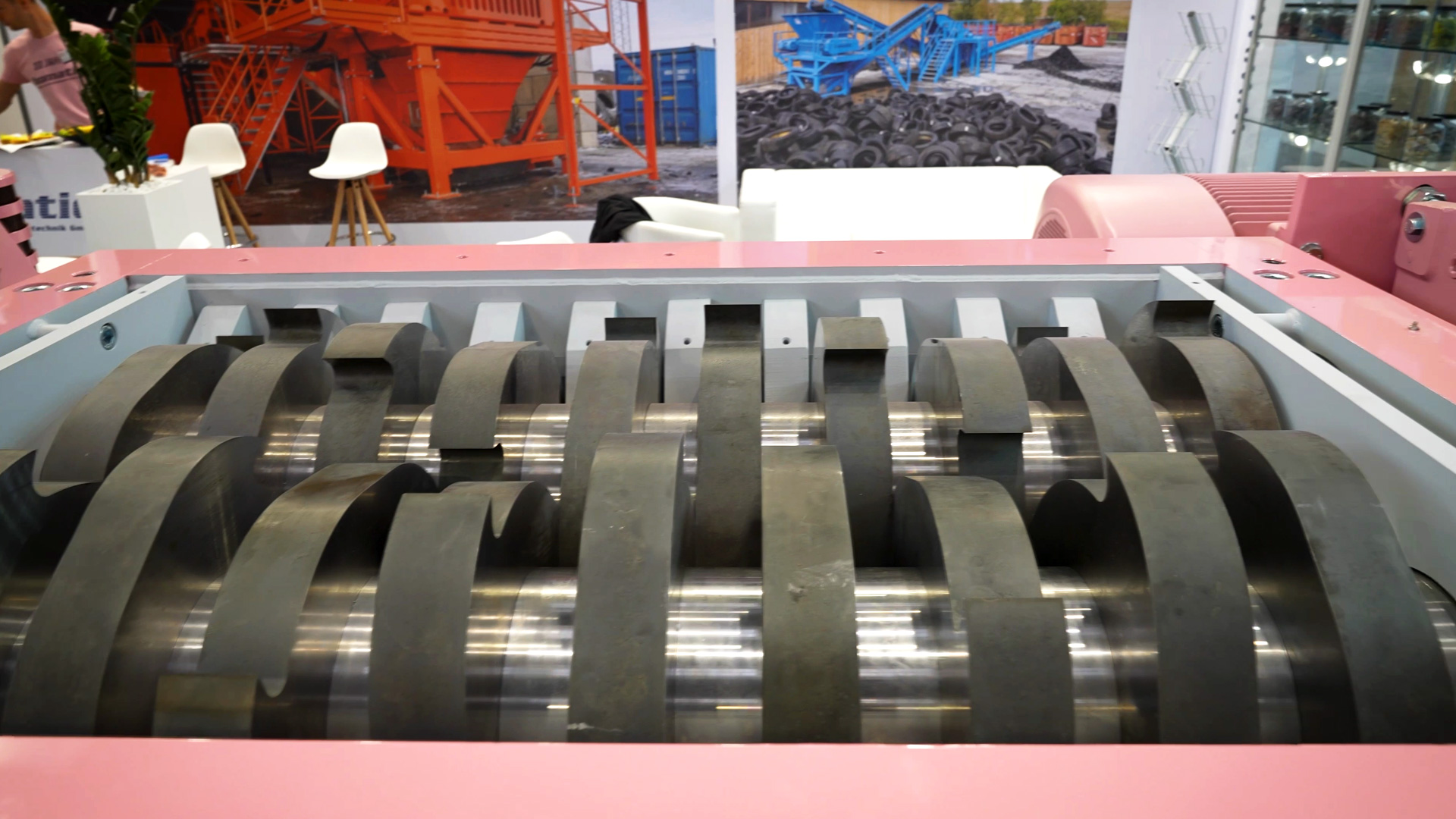
Tyre shredding as part of the circular economy
Pre-shredding is only the first stage in a longer process chain. The rotary shear is followed by further steps such as granulation and grinding, in which the material is further processed. The aim is to produce rubber granules or fine powders that can be reused in industrial applications. Some of these materials find their way back into tyre production. Although the proportion is limited, this nevertheless demonstrates an approach to resource recovery. Alternatively, the materials are used in other sectors, such as the construction industry or in technical applications. Processes such as pyrolysis are also gaining in importance. In this process, end-of-life tyres are thermally decomposed to recover raw materials. Pre-shredding remains a necessary step to make the material processable in the first place.
Bomatic machines in international use
Bomatic supplies such plants worldwide. Locations range from Europe to the Middle East. Industrial recycling solutions are increasingly emerging, particularly in countries with high tyre volumes. In addition to Germany, countries such as Sweden and Kuwait are among the locations where such machines are operated. The main customers are specialist tyre recyclers that process large quantities of end-of-life tyres. Requirements vary depending on the location. Whilst operations in Europe are often characterised by strict environmental regulations, capacity and space constraints are the main concerns in other regions. In both cases, shredding remains the crucial first step.
Positioning the technology between mechanics and digitalisation
It is striking that the machine shown deliberately relies on classic mechanical principles. Digitalisation plays a subordinate role in this process. The rotary shear fulfils a clearly defined task: reliably shredding material. It is only in downstream processes that digital systems are used more extensively, for example in sorting or quality assurance. Pre-shredding, on the other hand, remains an area where mechanical robustness is crucial. This distinction shows that not every industrial process is digitised to the same extent. In many cases, efficiency continues to lie in the combination of tried-and-tested technology and targeted further development. The plant on display thus illustrates a fundamental aspect of industrial practice: innovation arises not only from new technologies, but also from the consistent optimisation of existing systems.

Trade fair reporting Germany - Trade fair knowledge, dates & events


