DiscSpreader automove disc spreader with AI - better sorting in recycling
by B. Velonavy - 2026-05-06In recycling plants, the quality of sorting is not only determined at the actual separator. Even before that, the material must be prepared in such a way that downstream systems can work reliably.
If material streams lie on top of each other, clump together or run onto the belt too narrowly, air classifiers, NIR sorters or eddy current systems lose precision. The separation technology can only work as well as the material distribution allows. The DiscSpreader automove starts at this preparatory process stage. It distributes material from narrower to wider belt areas and ensures that the individual parts are as close together as possible. This is a key point for sorting quality: downstream systems can only reliably recognise, separate and eject the material once it has been cleanly separated and distributed over a wide area.
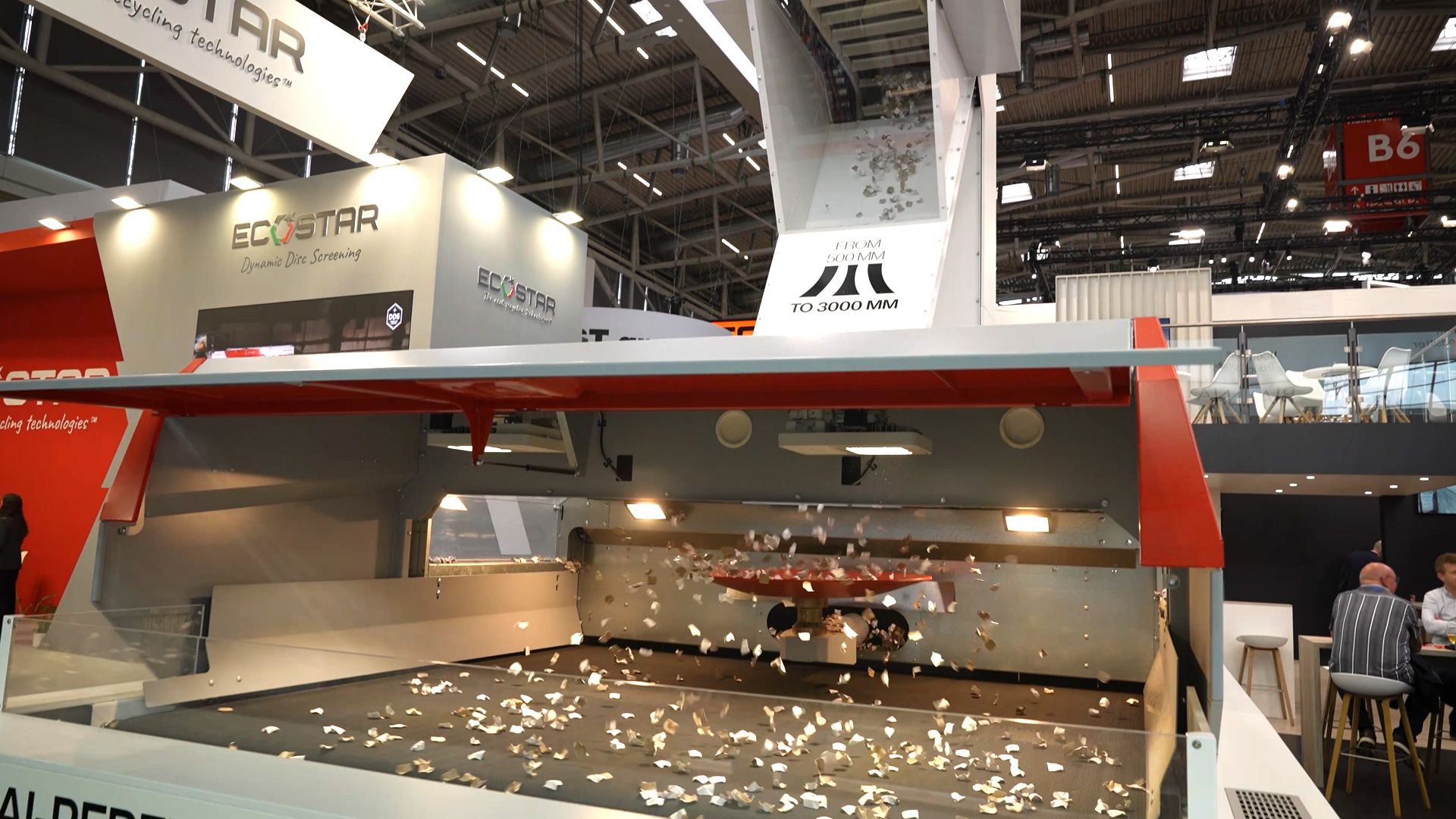

Westeria DiscSpreader automove as a patented disc spreader
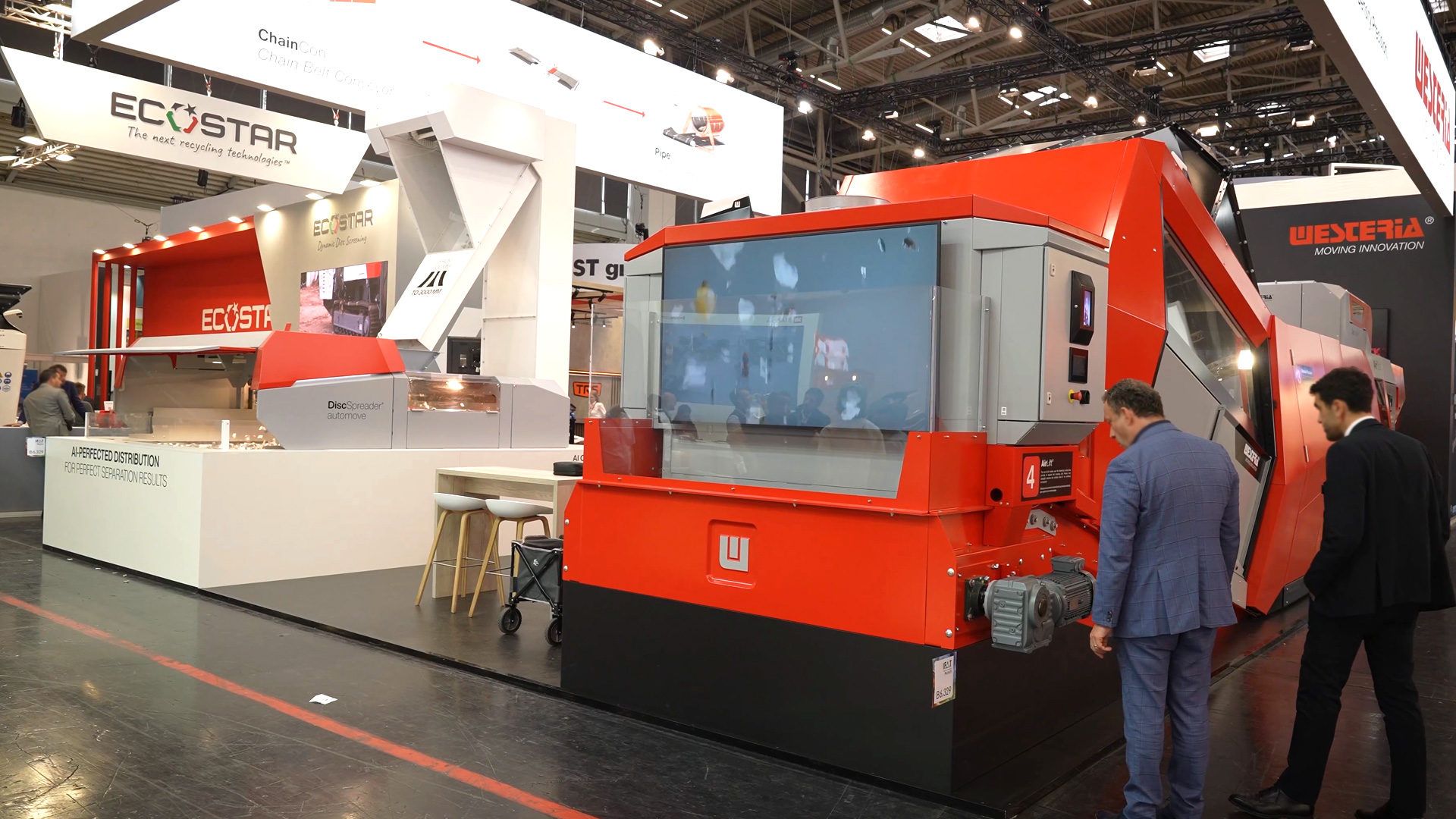
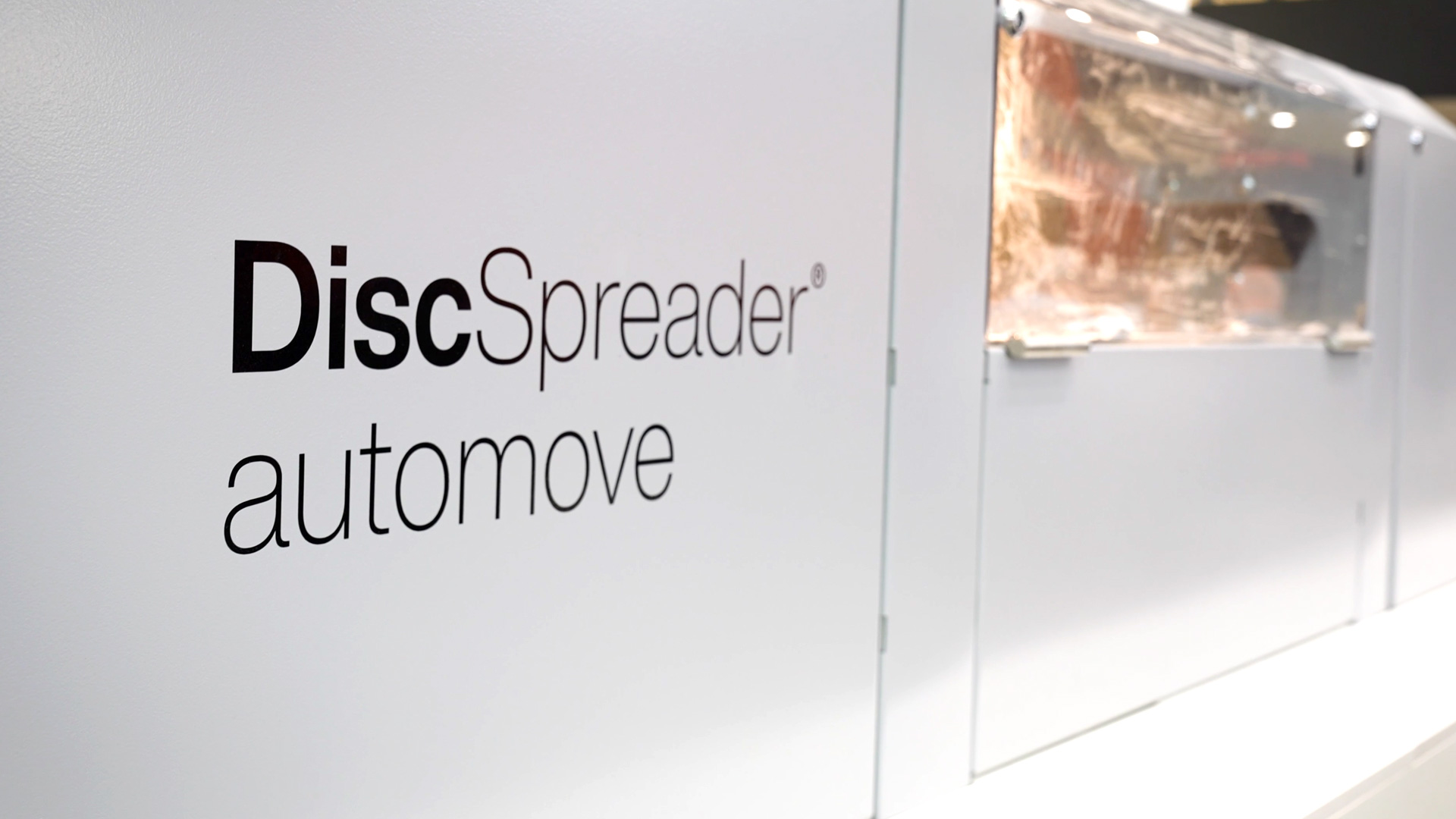
With the DiscSpreader automove, Westeria is presenting a disc spreader that has been specially developed for use in front of sorting machines. The machine can be placed directly on the acceleration belt of a sorting machine. This allows it to be integrated into existing recycling processes without having to rebuild the entire system. The basic principle is mechanically clear: a rotating disc distributes the incoming material over a larger width. However, it is crucial that this movement does not remain static. The speed, tilt angle and position of the disc can be continuously adjusted. This allows the system to react to changing material flows and different distribution qualities.
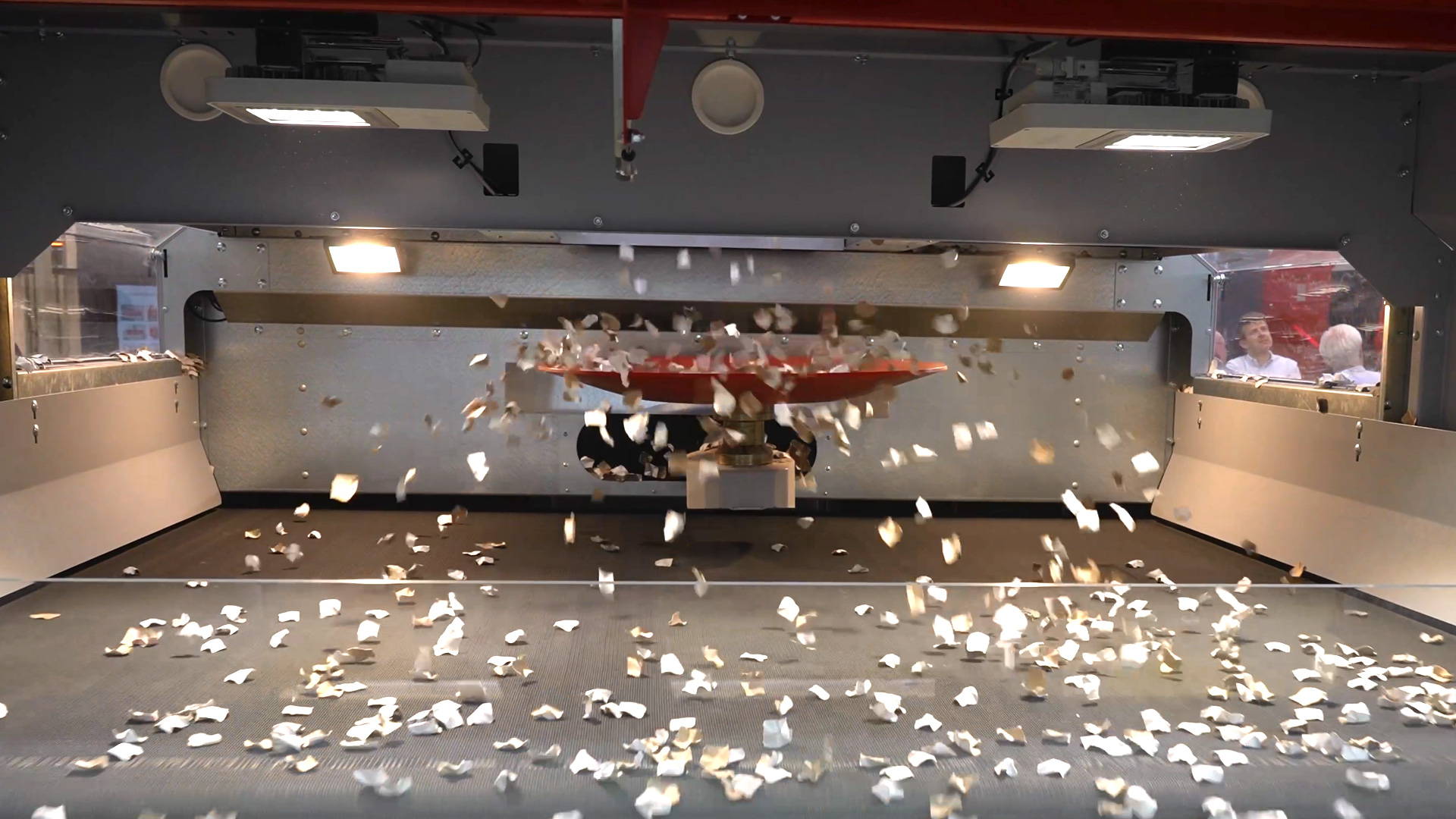
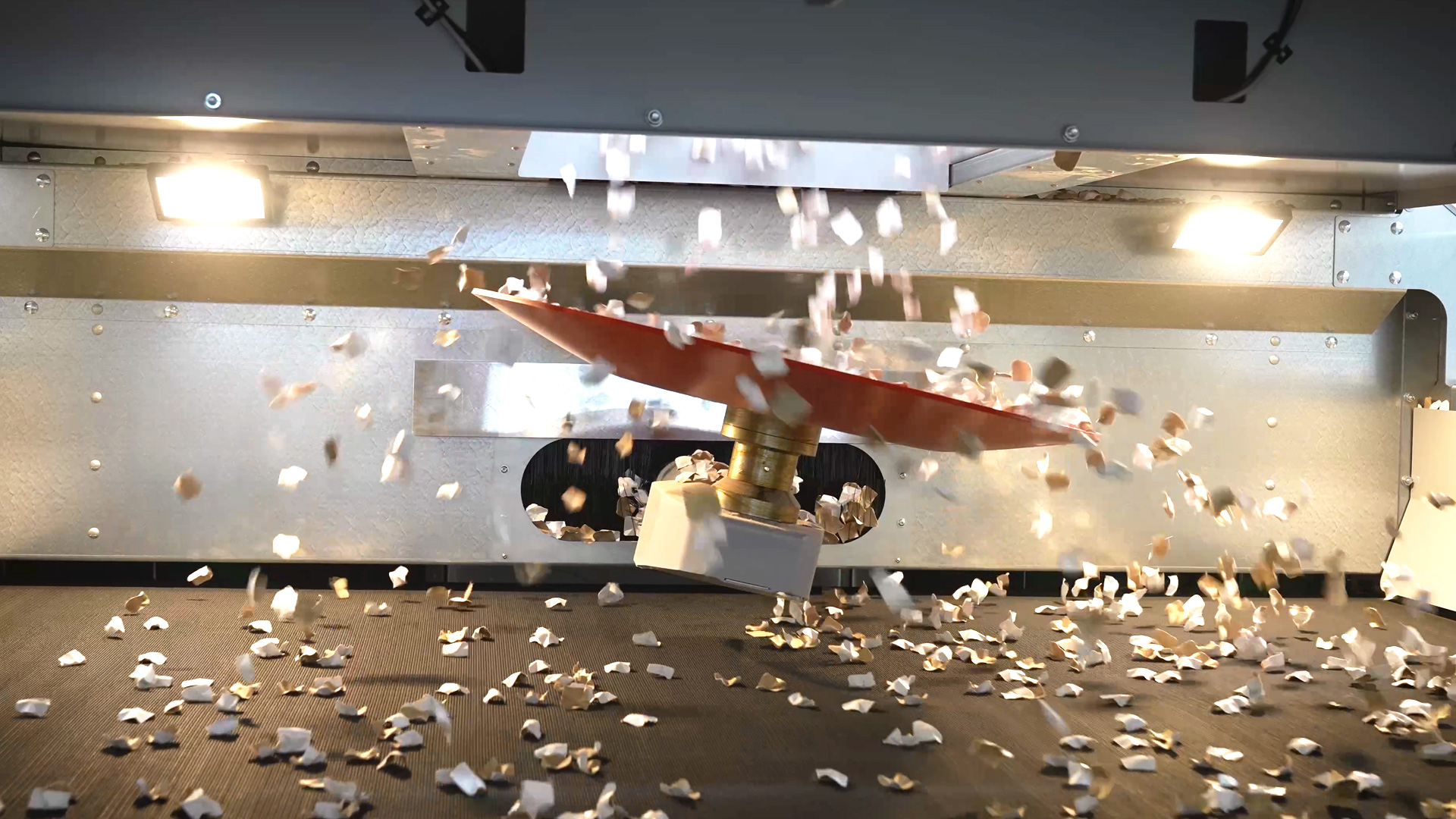
AI optimises distribution via cameras and a neural network
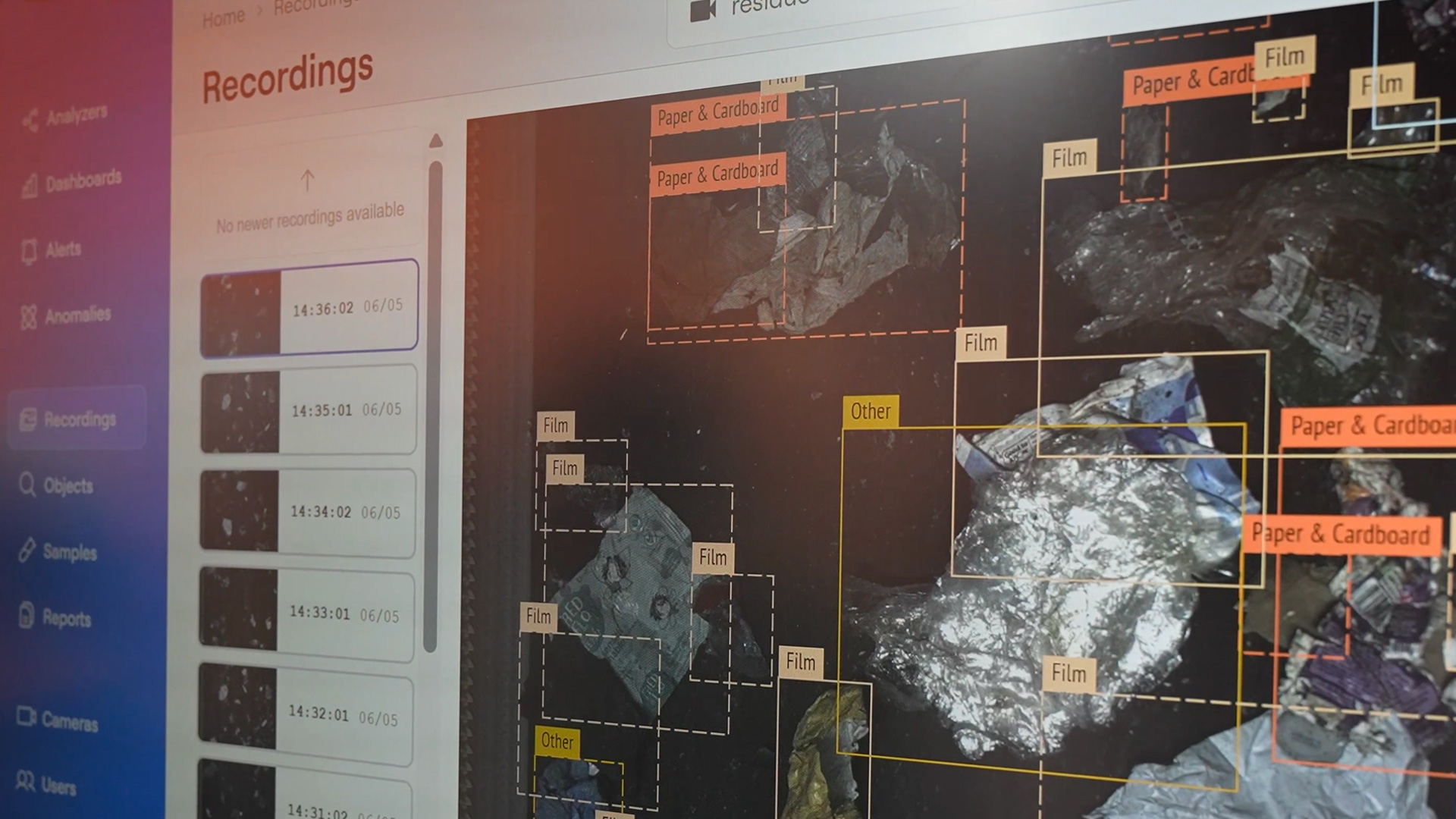
The technical core lies in the combination of the camera system and AI. Two cameras permanently monitor the belt and record how well the material is currently distributed. This information flows into a neural network that continuously optimises the settings of the pane distributor. The AI therefore does not make an abstract assessment, but rather one based on the current material image. If the system recognises that the distribution can be improved, small corrections are made to the disc. This creates a control process that does not rely on a one-off setting, but readjusts during operation. The most important control variables are
- Speed of the rotating disc
- Tilt angle of the disc distributor
- Position of the unit on the belt
- Continuous evaluation of the distribution quality by cameras

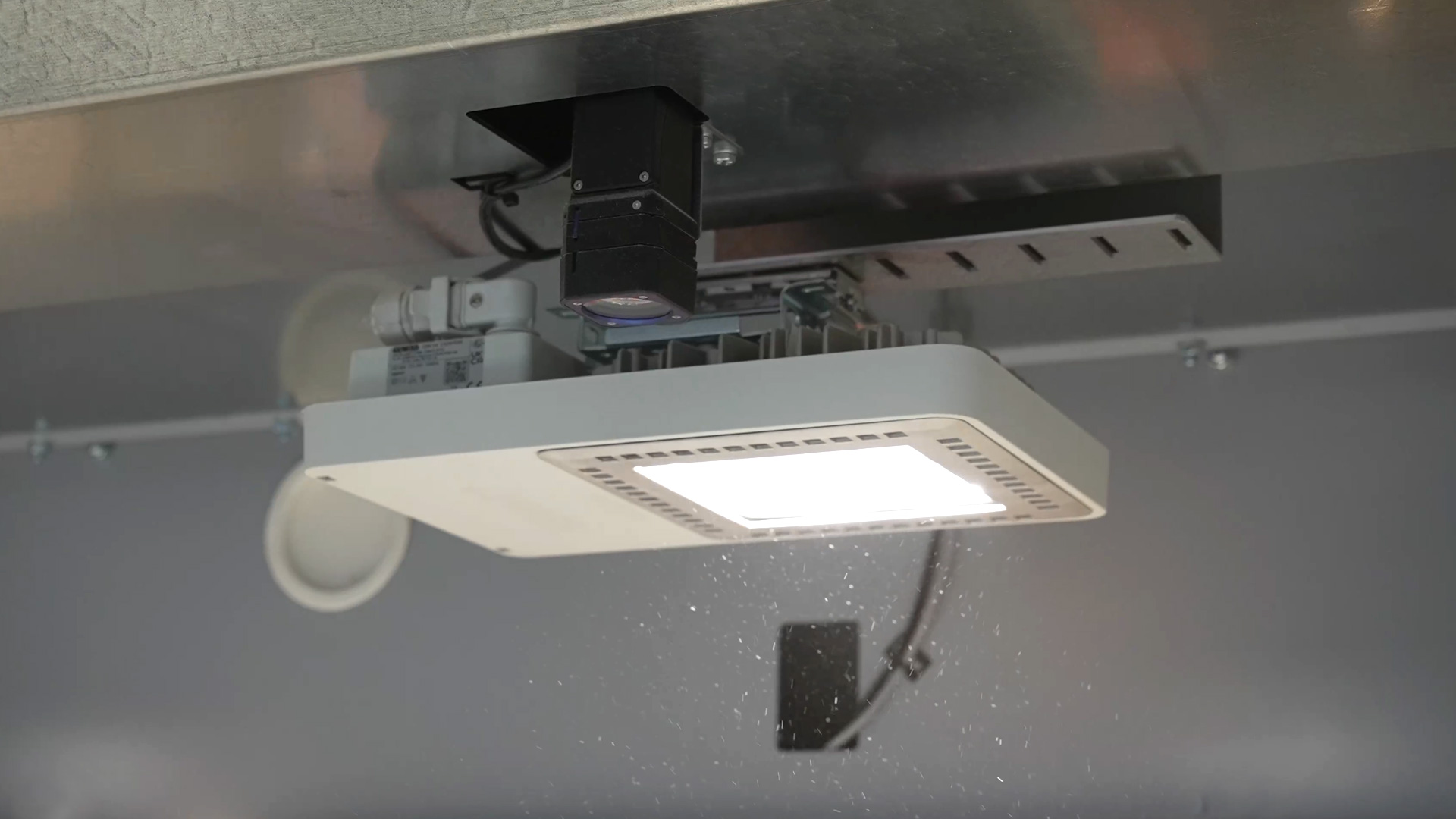
Better starting position for NIR sorters and air classifiers
The benefits are particularly evident in downstream sorting. Whether an air classifier, an eddy current system or an NIR machine follows - all systems benefit from the material lying next to each other and not on top of each other. With optical sorting processes, a clear view of individual parts is crucial. In mechanical or air-based processes, the distribution also influences how precisely the parts can be separated. The DiscSpreader automove therefore does not create sorting in the strict sense, but improves the starting position for it. In practice, this is often the difference between theoretical system performance and the quality that can actually be achieved. If materials are fed in more cleanly, throughput, sorting purity and process stability increase.
Automation to combat labour shortages in recycling plants
Another aspect concerns the operation of such plants. In many recycling companies, skilled labour is in short supply. At the same time, plants need to run reliably and deliver results that are as consistent as possible. Automation is therefore not just seen as a technical gimmick, but as a response to a real operational problem. Westeria emphasises the need for robustness. An AI solution only makes sense if it works stably in everyday industrial operations. A system that theoretically delivers good results but regularly fails would be more of a burden on plant operation than an improvement. The combination of intelligent control and reliable machine technology is therefore crucial.
Prospects for grade purity, throughput and plant monitoring
Developments are pointing towards greater automation in recycling technology. In the coming years, more and more process steps are likely to be monitored and controlled, provided this results in measurable benefits. Particularly relevant are areas in which higher sorting purity, better throughput or early fault detection are possible. The DiscSpreader automove already shows this direction at a specific point in the process. The material distribution is no longer just set mechanically, but is continuously monitored and adjusted. This brings a previously often underestimated section of the system more into focus. This development can be crucial for recycling companies. Preparing material flows more precisely improves the performance of the entire system. Sorting does not just start with the separator, but with the question of how the material is placed on the belt.
Trade fair reporting Germany - Trade fair knowledge, dates & events


