Twin-shaft shredder for flexible material flows in recycling
by A. Bergmeier - 2026-05-13Today’s recycling plants must handle a wide variety of material streams. Wood, end-of-life tyres, mixed scrap, aluminium, cables, plastic canisters and oil tanks each place their own demands on the drive system, cutting mechanism and discharge.
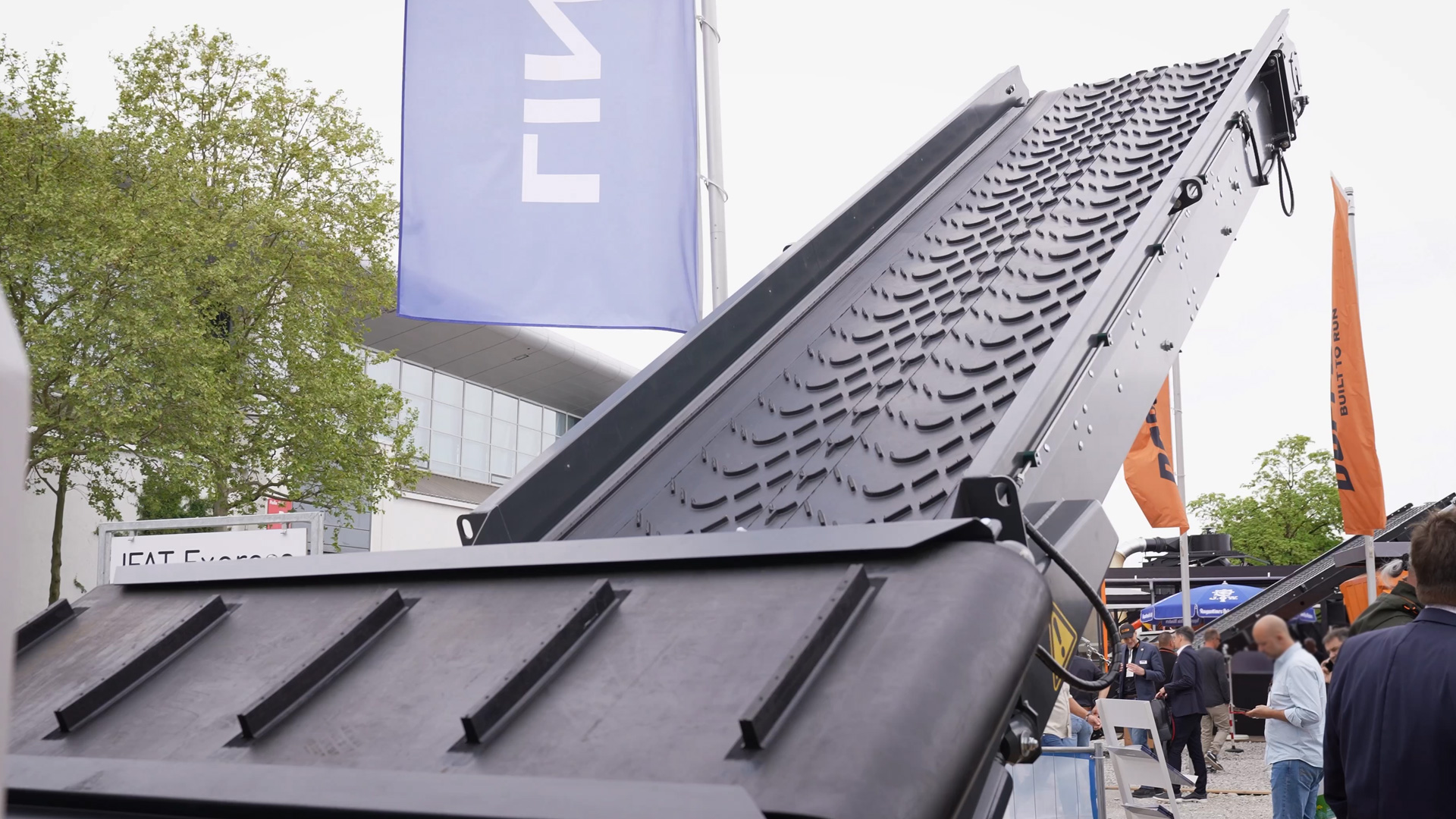
For operators, therefore, it is not just the sheer shredding capacity that counts, but above all the question of how flexibly a machine can switch between different tasks. With the Urraco Evo 75 DT, Lindner is introducing a new generation of its twin-shaft shredders. The series is available in several variants: with a diesel drive, with an electric drive, as a version with a track drive, and as a stationary electric model. The machine is therefore suitable for mobile applications as well as for fixed plant structures in recycling and waste processing.
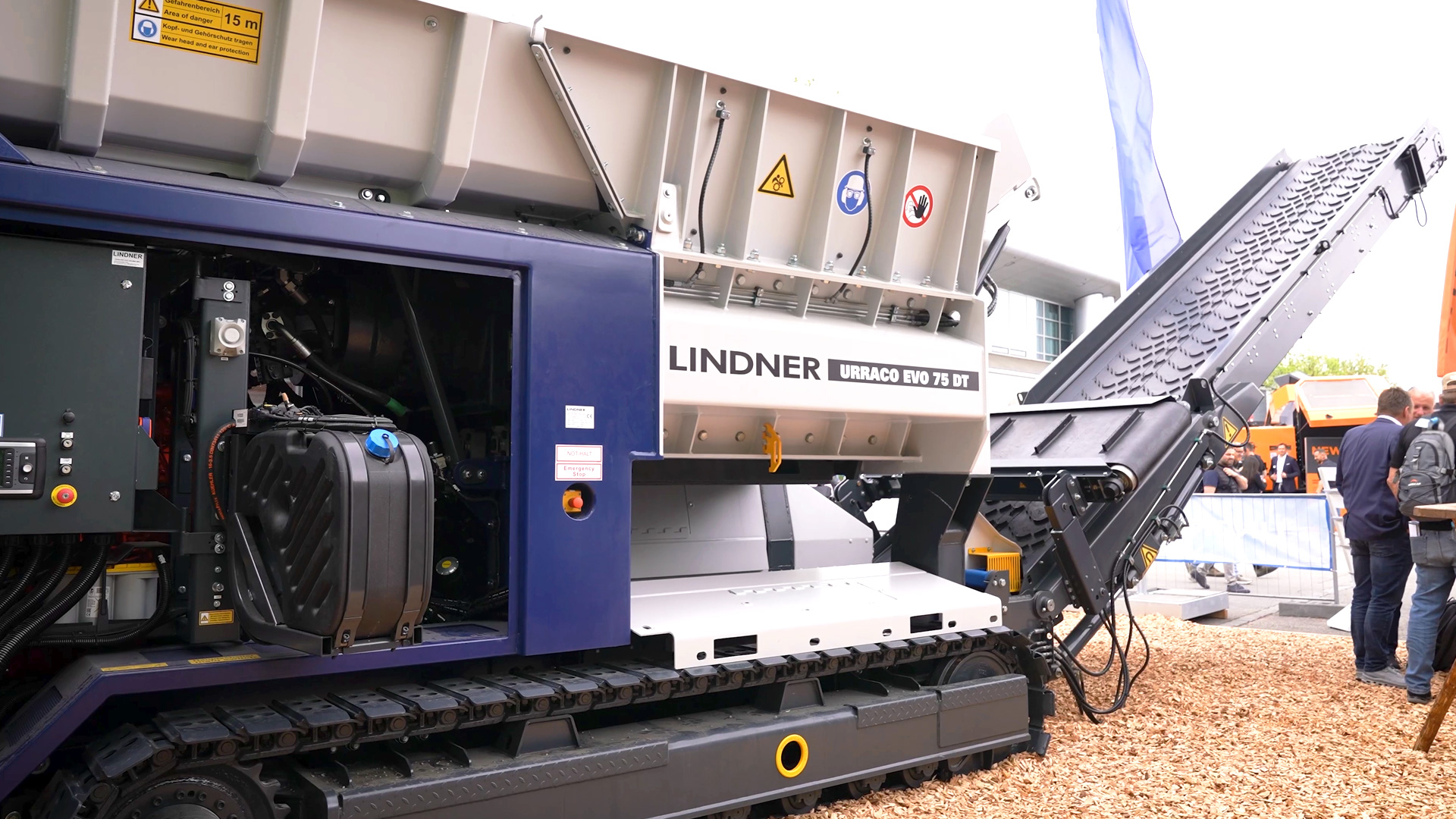

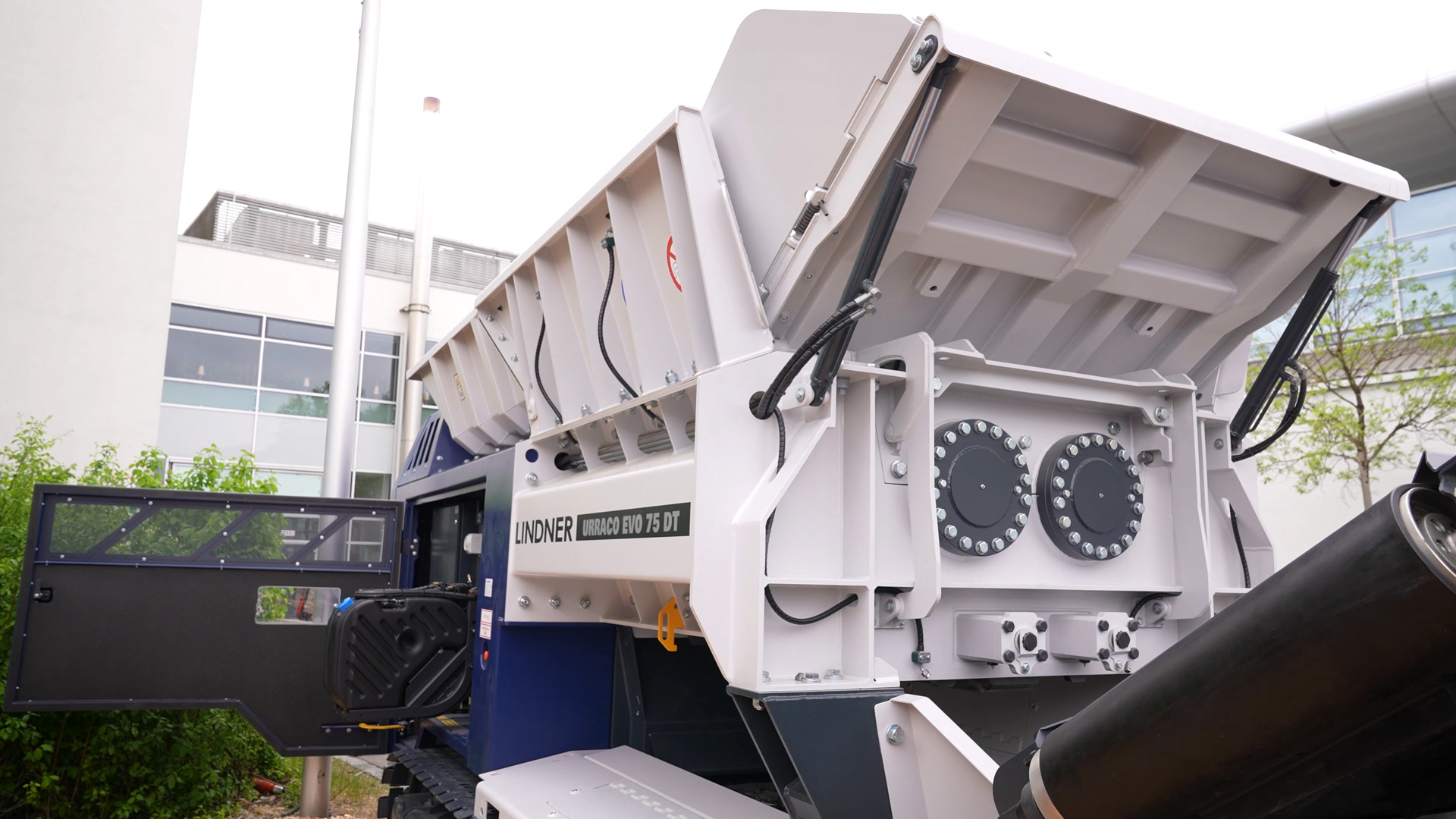
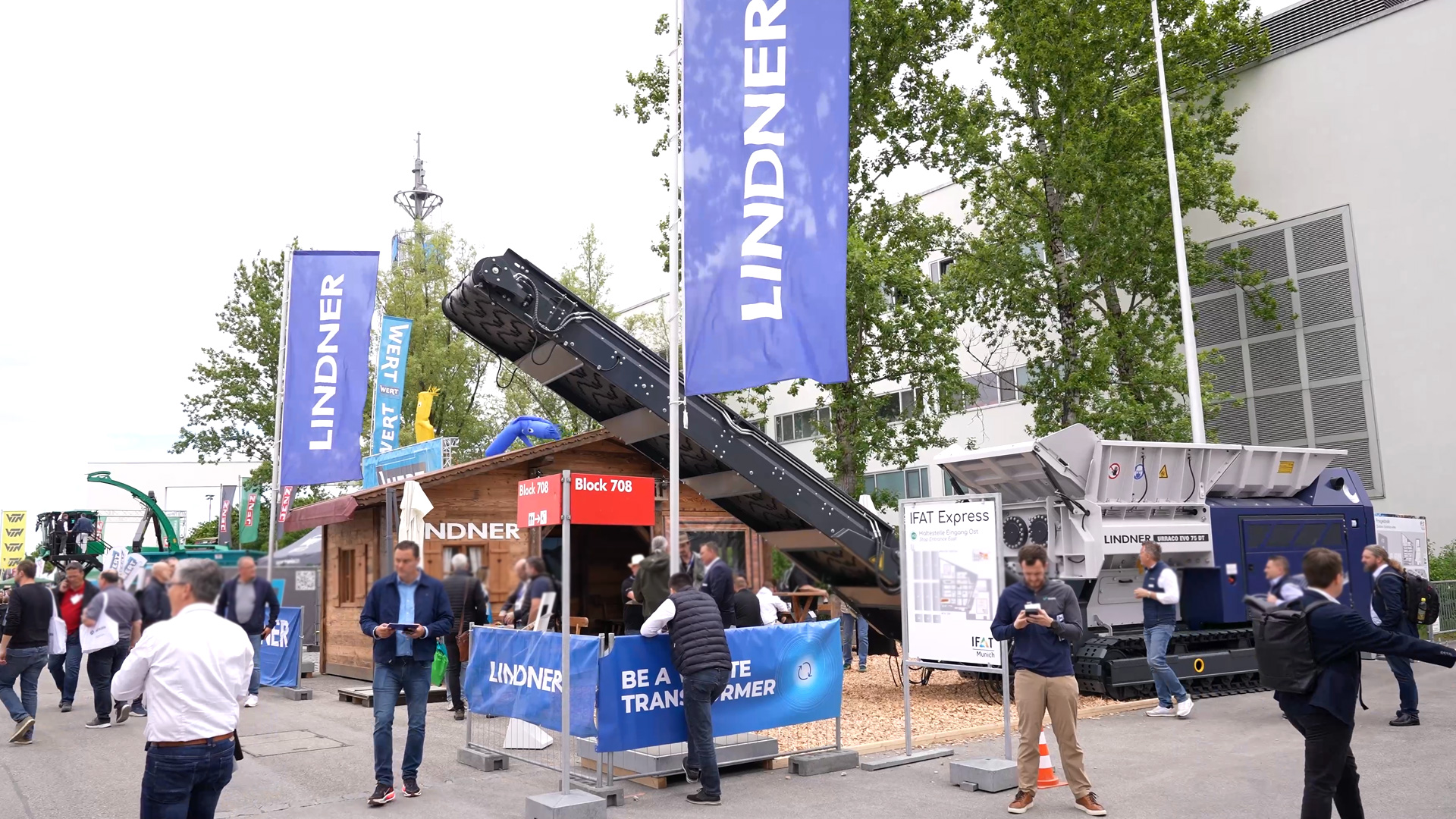
Lindner Urraco Evo 75 DT with new machine series
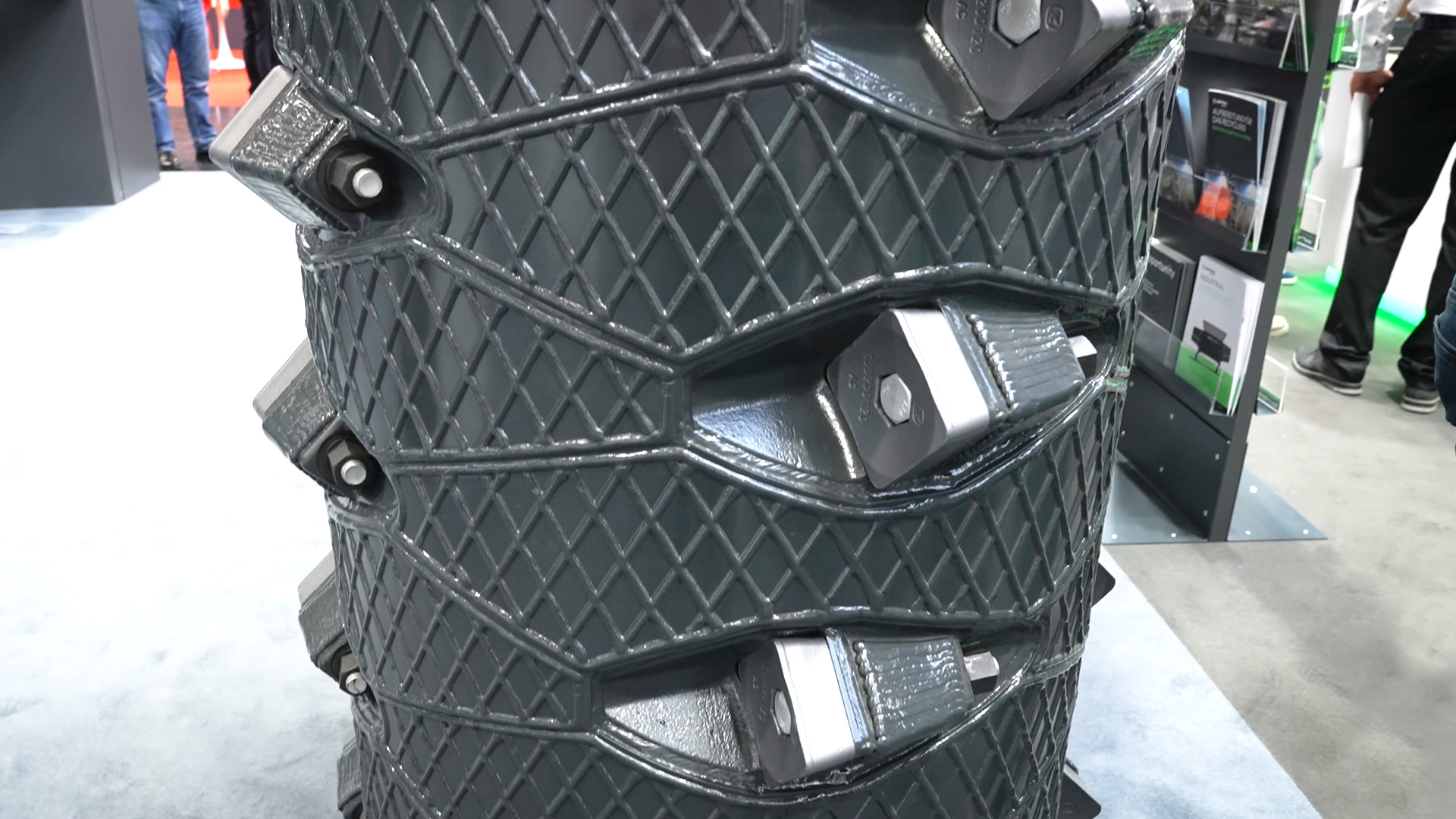
The Urraco Evo 75 DT represents a further development of existing technology. ‘Evo’ stands for ‘evolution’ – meaning not a complete break with previous machine design, but targeted improvements in key areas. The machine has been given a more angular and modern design, but the functional changes are more significant. One of the most striking innovations is a quick-change system for the entire cutting unit. Depending on the configuration, the cutting unit can be swapped within approximately one and a half to three hours. This is particularly relevant for operators when processing different materials, where different shaft bodies or cutting geometries are required. The tank has also been modified. It has now been relocated to the inside and underneath the machine. Further adjustments include the magnet, quick-change system and spiral ventilation cooler. Many of these changes are based on feedback from the field. Lindner emphasises that recurring customer feedback has been explicitly incorporated into the new series.
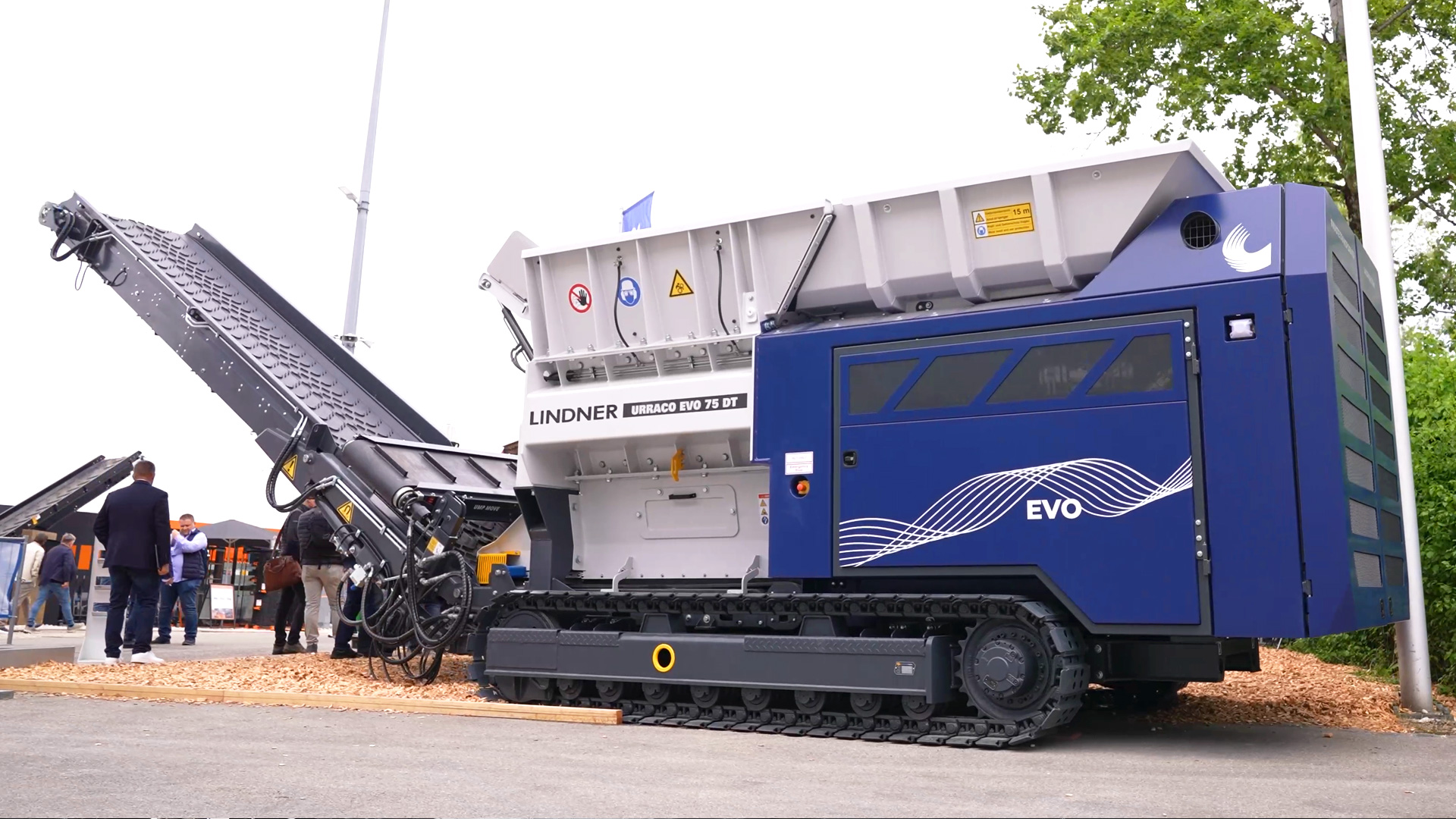
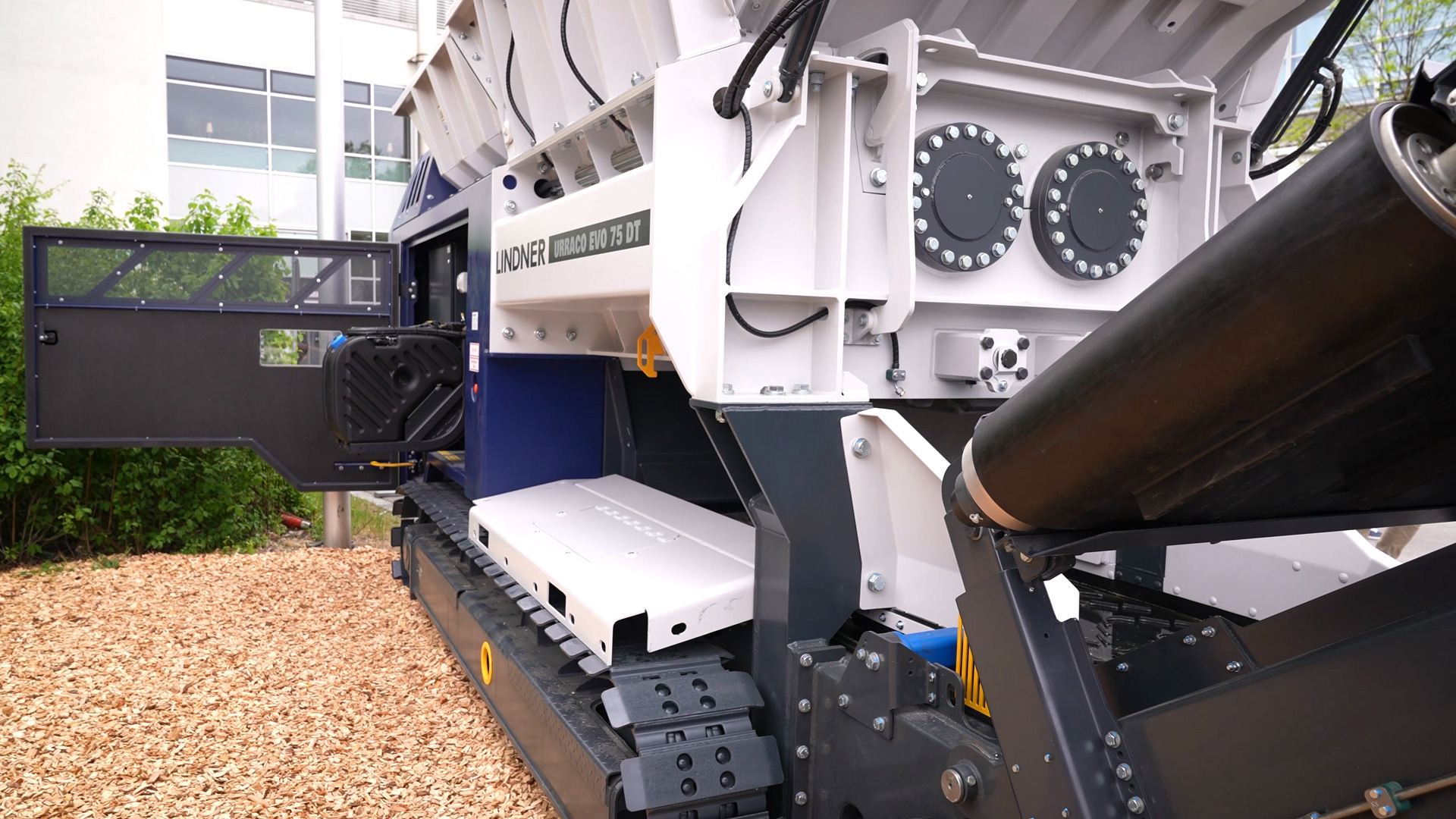
Quick-change system for tyres, scrap and other materials
The Urraco Evo series is designed for a wide range of applications. Typical uses range from wood and waste to aluminium and mixed scrap, right through to less common tasks such as shredding tyres, cables or oil tanks. Plastic canisters and other bulky materials can also be processed. The key benefit lies in its adaptability. Many customers do not work with a single material stream but need to shred varying fractions. The machine offers different strategies for this. With an all-round shaft pair, various materials can be processed, provided the operator is willing to accept certain compromises regarding particle size. For more specific requirements, such as a finer result with tyres, a dedicated shaft with narrower cutting gaps can be used. The key features of the new series can be summarised as follows:
- Variants with diesel drive, electric drive, track drive or stationary design
- Quick change of the cutting unit within a few hours
- All-round shaft pair for multiple material streams
- Applications ranging from wood and waste to tyres, scrap and cables

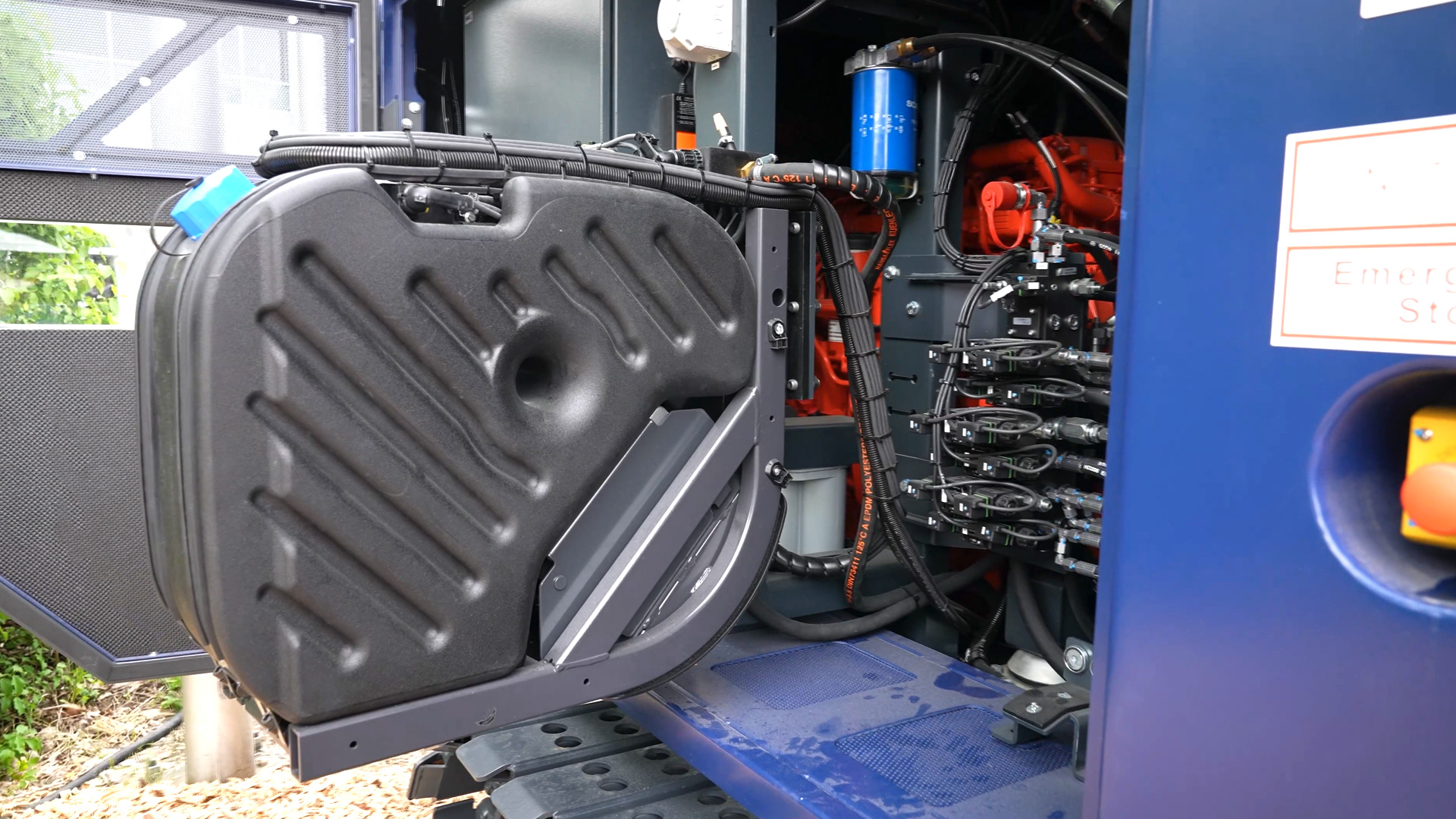
Electric drives and stationary variants are gaining in importance
Alongside mechanical advancements, the drive system plays an increasingly significant role. Interest in electric solutions is growing, particularly in stationary plants or among operators who must pay greater attention to emissions and operating costs. The Evo 75 DT is therefore available not only as a diesel machine, but also with an electric drive and as a purely stationary variant. This significantly expands the range of applications. Mobile machines remain the sensible choice where changing locations or flexible processing are required. Electric or stationary versions, on the other hand, are better suited to fixed recycling lines where energy supply and process integration can be planned.
Nexus System for transparency in machine operation
Another key component is the Lindner Nexus System. This patented digitalisation system is designed to provide near real-time visibility of machine condition, throughput, fuel consumption and potential issues. This enables operators to understand what is happening inside the machine during operation. The benefit lies not only in monitoring, but also in protecting the machine. The system provides guidance on how to operate the machine in a way that is gentle on tyres, the transmission, the engine or fuel-efficient. The aim is to achieve high efficiency and a long service life. This is particularly relevant for high-performance twin-shaft shredders. Wear, incorrect loading or unsuitable operating methods can significantly increase costs. If operators recognise early on how an application affects the machine, maintenance, driving style and deployment planning can be better managed.
Twin-shaft shredders: a balance between robustness and adaptability
The Urraco Evo 75 DT demonstrates how recycling technology is evolving without losing its basic mechanical function. Ultimately, a twin-shaft shredder remains a machine that must reliably reduce large materials to smaller sizes. However, the requirements for such systems are changing: greater material diversity, faster changeovers, electric drive options and digital operating data are becoming increasingly important. For operators, this results in a machine that is not limited to a single application. It can process different material streams, be converted as required and, at the same time, provide data for more efficient operation. It is precisely this combination of robust shredding technology, flexible equipment and digital control that is likely to become increasingly important in the recycling sector.
Trade fair reporting Germany - Trade fair knowledge, dates & events


