Doppstadt DG 4 introduces a new approach to shredding
by B. Velonavy - 2026-05-20Shredding technology in the recycling industry is undergoing a transformation. Increasing demands on throughput, energy efficiency, ease of maintenance and digital process control are significantly shaping the development of modern machines.
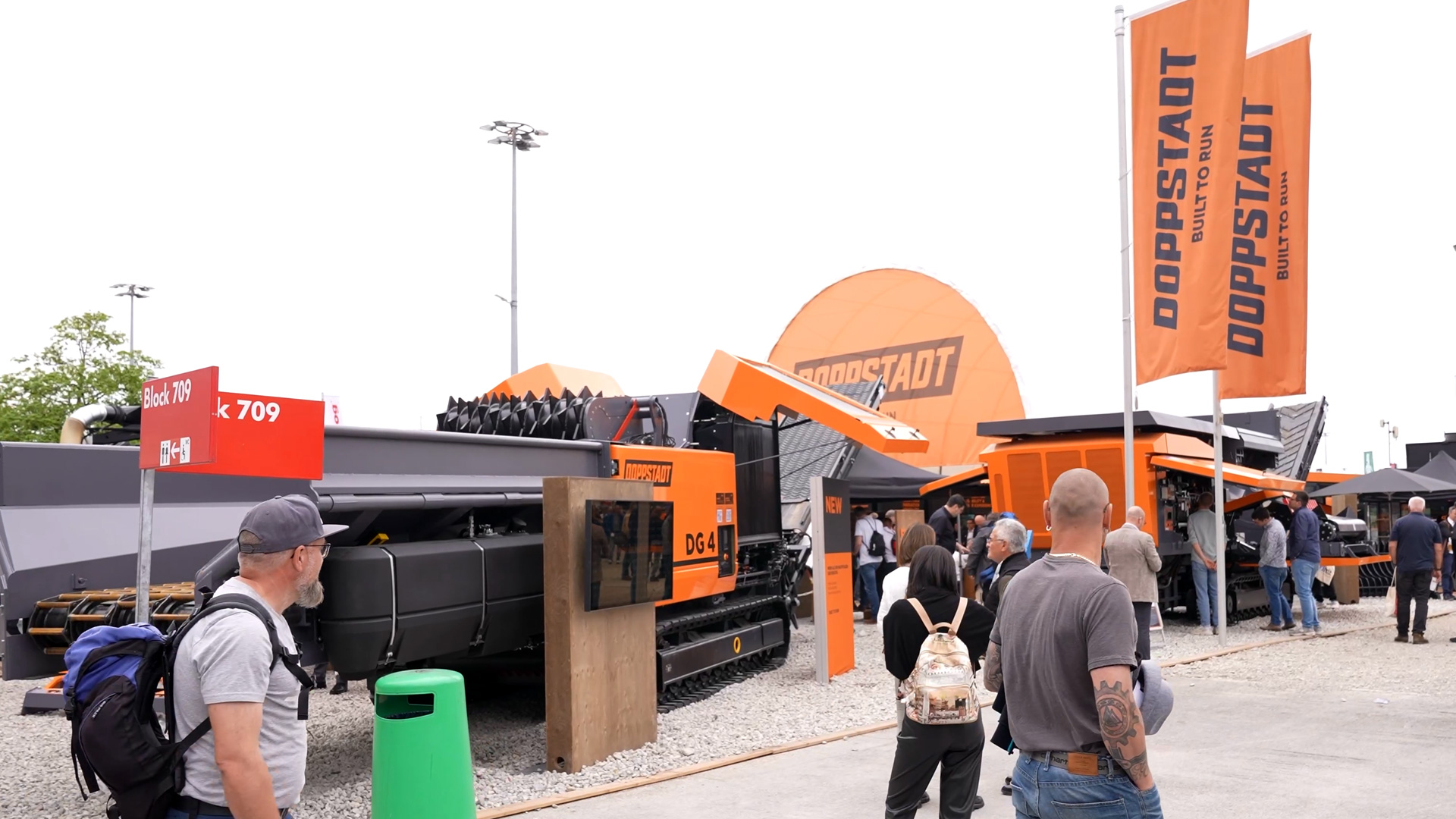
At the same time, pressure is mounting on operators to run their plants in a more economical and resource-efficient manner. At the Ifat in Munich, Doppstadt is therefore presenting the DG 4 not only as a new high-speed grinder, but also as a comprehensive generational shift within its own product strategy. The new machine replaces the previous AK series, which for decades was considered a defining part of the company. The former “waste composter” or “all-rounder” will now continue under the international designation “Doppstadt Grinder”. However, there is far more to the rebranding than just a new label. The DG 4 has undergone a fundamental technical and design overhaul.
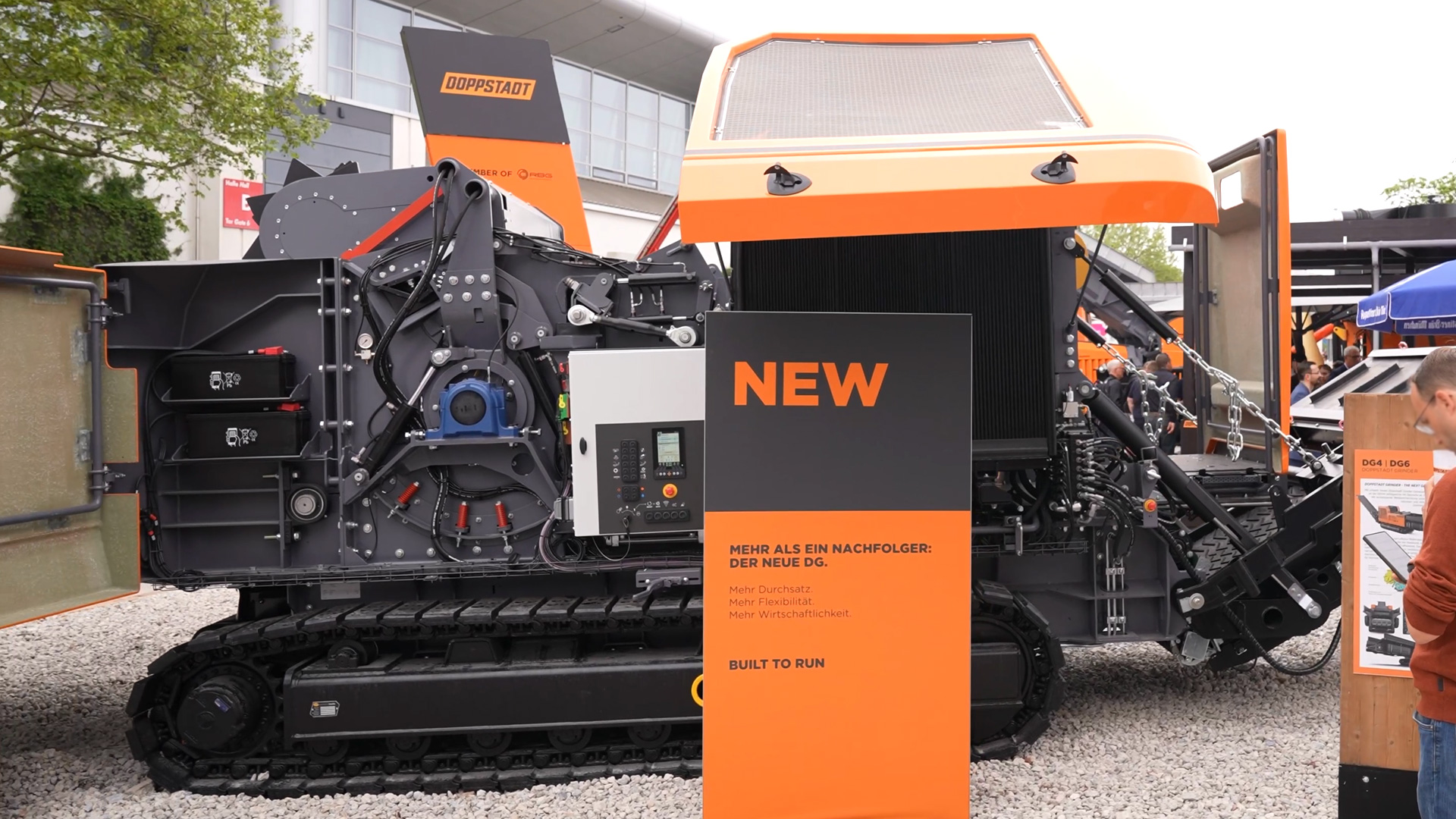
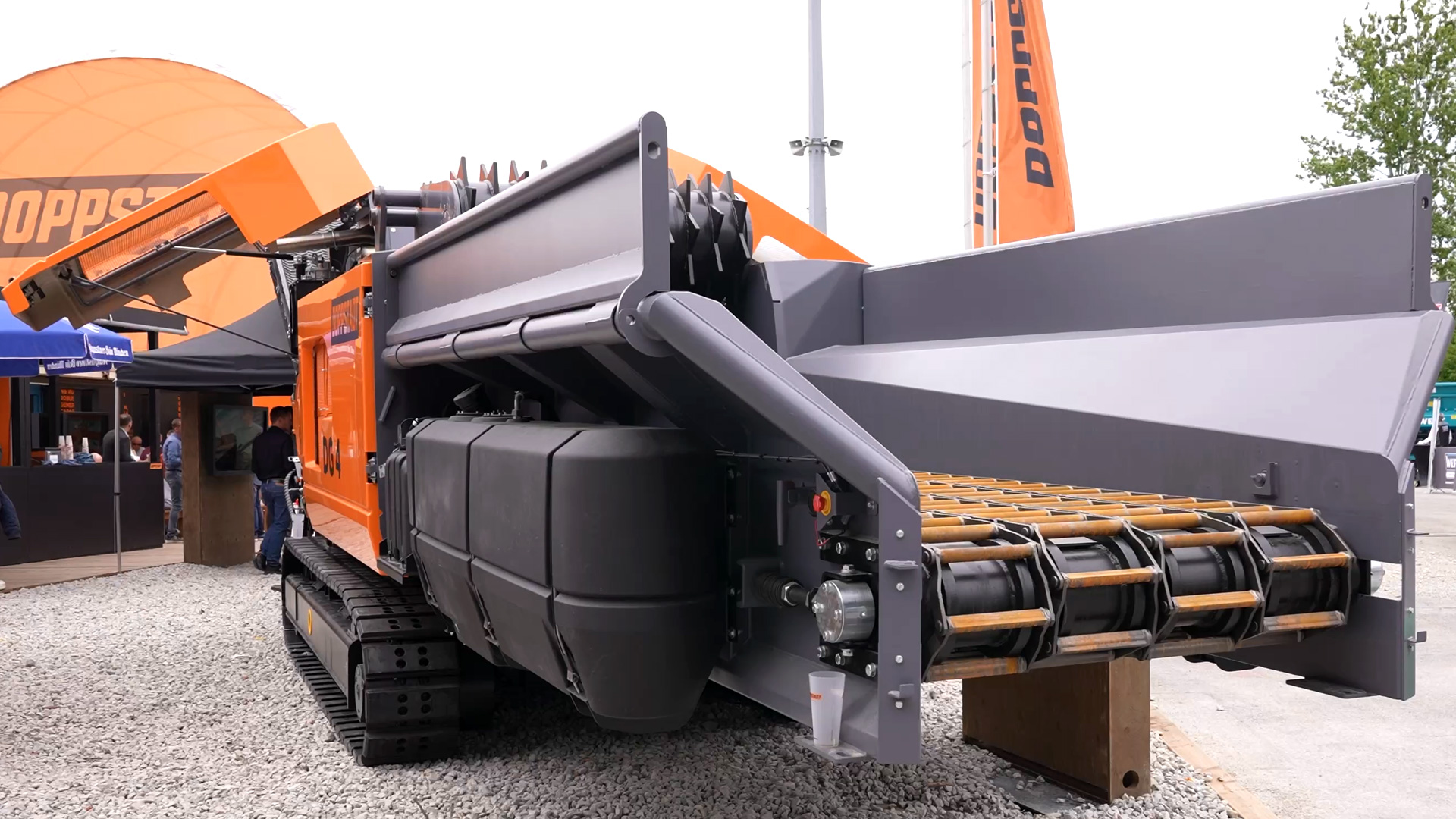
Doppstadt DG 4 features an open feed
One of the most striking changes concerns the machine’s design. Whilst earlier designs positioned the motor at the front, it is now located at the rear of the machine. This creates a significantly more open material feed. This facilitates loading whilst simultaneously improving material flow. According to the manufacturer, the entire feed area has been designed to be more aggressive in order to achieve higher throughput rates. This plays a particularly important role with heterogeneous waste streams or bulky material. Although the rotor, the centrepiece of previous AK technology, remains, it has been expanded and combined with new functions. Added to this is a new belt drive with a gearbox. Doppstadt’s aim is thus to reduce maintenance-intensive and costly components whilst simultaneously increasing the machine’s efficiency. In combination with the new Caterpillar engines, two power classes are created within the same machine concept. Variants with 420 and 585 hp are available.
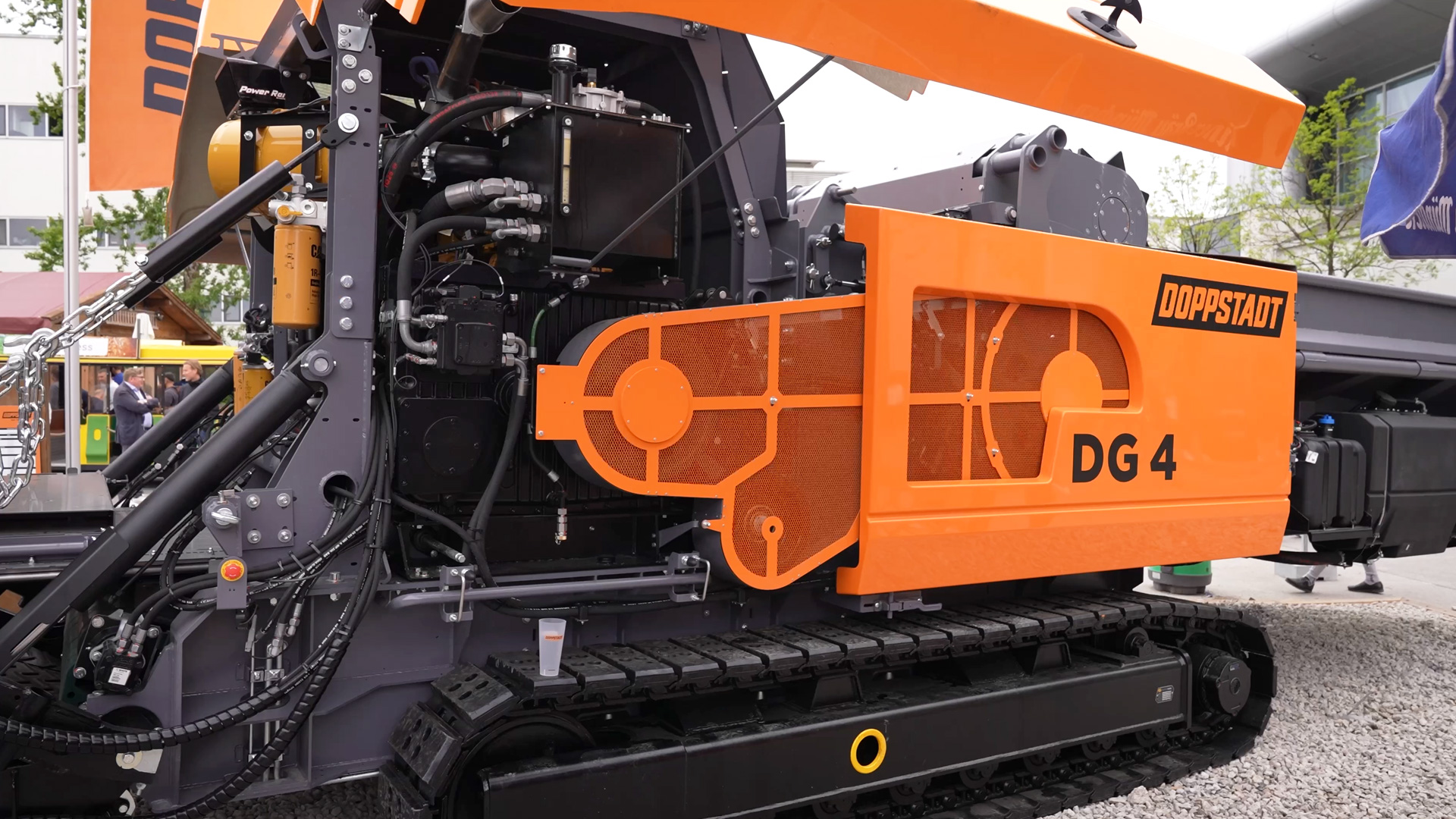
Maintenance platform improves safety and service
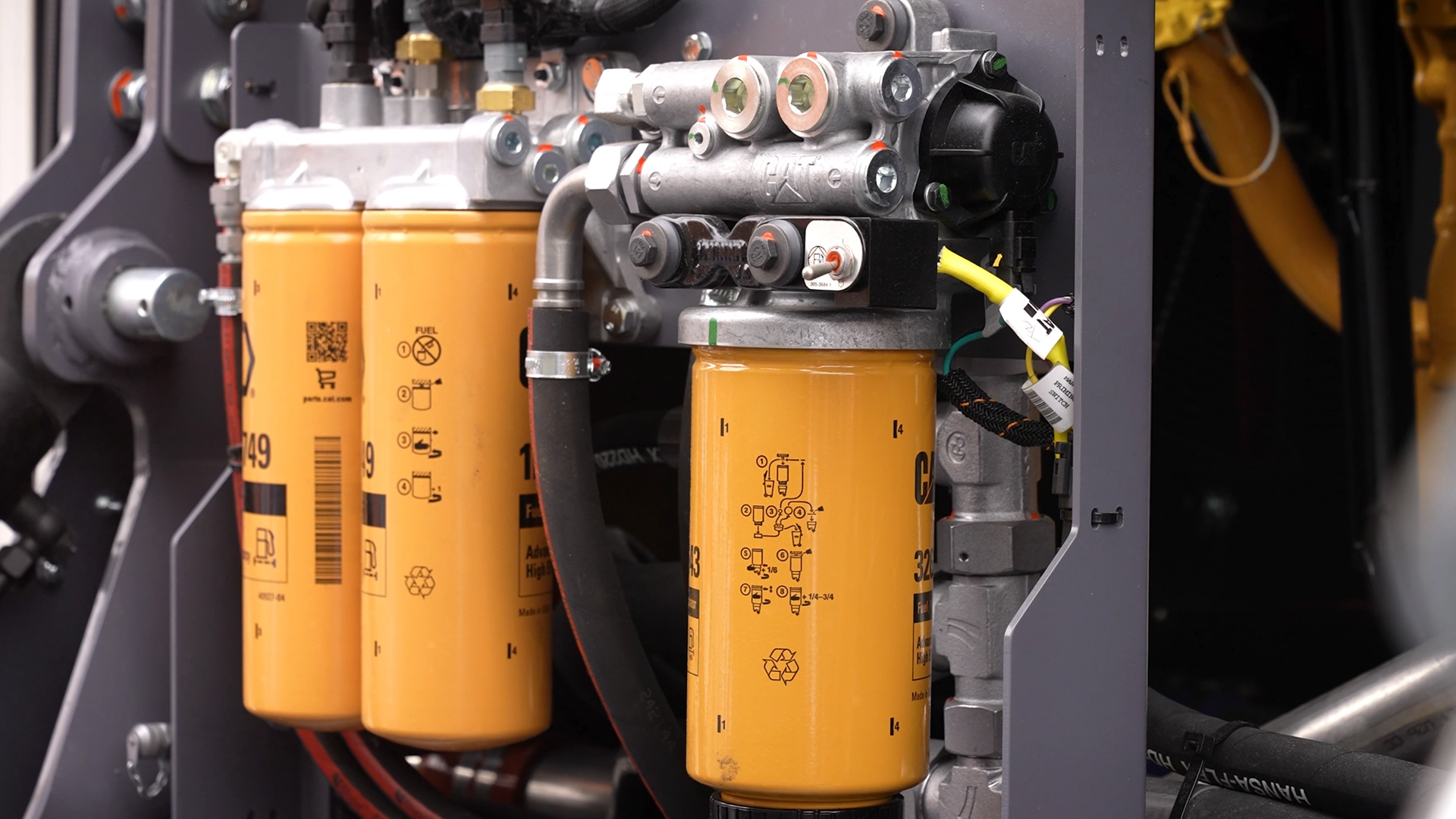
A major focus is on ease of maintenance. The new platform design allows central components to be accessed quickly and without complicated access routes. Air filters, diesel filters and hydraulic oil filters remain accessible without technicians having to climb inside the machine. This is a particularly important factor in the recycling sector. Downtime incurs high costs, as revenue is ultimately only generated whilst the shredder is in operation. Consequently, the machine has been designed with a strong focus on rapid servicing and simple maintenance. The most important changes to the DG 4 at a glance:
- open and redesigned material feed
- new gearbox instead of the classic belt drive
- two power classes with Caterpillar engines
- extendable maintenance platform for safe servicing

Donect control system analyses machines in real time
In parallel with the mechanical redesign, Doppstadt is driving forward the digitalisation of its machine platform. In future, all new machines are to be equipped with the Donect control system. This is not merely a user interface, but a complete analysis and monitoring system. The machines can be monitored digitally worldwide, provided an internet connection is available. Oil flows, temperatures, electrical currents and performance data can be recorded in real time. Of particular interest is the combination of data acquisition and process optimisation. The machine not only provides status data but is also set to actively offer recommendations for process improvement in future. Operators receive guidance on which settings should be adjusted to optimise throughput, energy consumption or material quality. This marks a development in mobile shredding technology that has previously been more commonly associated with industrial production facilities. Machines are increasingly becoming networked process platforms.
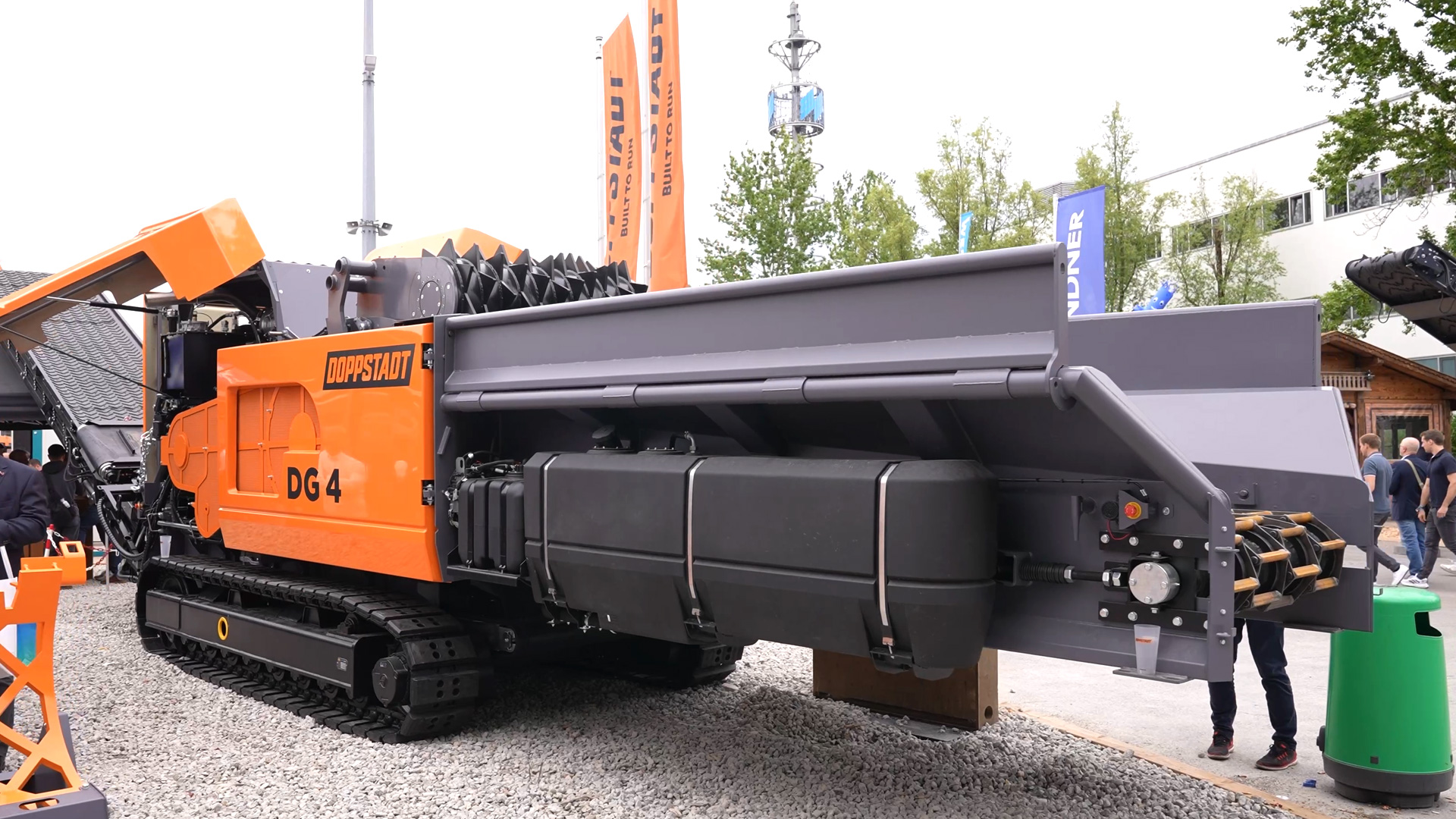
DG 4 combines shredding with digitalisation
Despite all the digitalisation, the core mechanical process remains central. Doppstadt expressly emphasises that the actual material shredding remains a physical process. Neither AI nor electrification can replace the shredder’s fundamental task. Nevertheless, digital systems are significantly changing the way the machine operates. Transparent operating data facilitates service calls, improves maintenance planning and helps to operate machines more economically. This development goes beyond individual functions. The DG 4 visibly represents the company’s strategic reorientation. This applies not only to design or operation, but also to issues such as resource conservation and machine service life. Doppstadt points out that numerous older machines have already clocked well over 20,000 operating hours. It is precisely this durability that is set to remain a central component of the product philosophy in the future. This aspect is becoming increasingly important, particularly in an industry concerned with recycling and resource conservation.
Electric drives are also becoming more important in the shredder sector
Alongside digitalisation, electrification is also playing an increasingly significant role. The manufacturer sees electric drives as a key component of modern shredding technology in the future. Whilst the traditional diesel drive still dominates, alternative concepts are gaining ground. This is less about a complete move away from mechanical processes and more about more efficient energy supply, lower emissions and optimised operational processes. Much like in the automotive sector, electrification is thus gradually finding its way into mobile recycling machinery. With the DG 4, Doppstadt is therefore not only presenting a new high-speed shredder, but a platform designed to meet future requirements – from digital machine analysis and service-friendly design to more efficient drive concepts.
Trade fair reporting Germany - Trade fair knowledge, dates & events


