Magnetic separation for fine metals in recycling
by J. Groh - 2026-05-16Metal recovery is one of the most technically demanding areas of modern recycling plants. Whilst coarse ferrous metals can be separated relatively easily, the effort involved increases considerably as soon as small, fine or only weakly magnetic particles need to be processed.
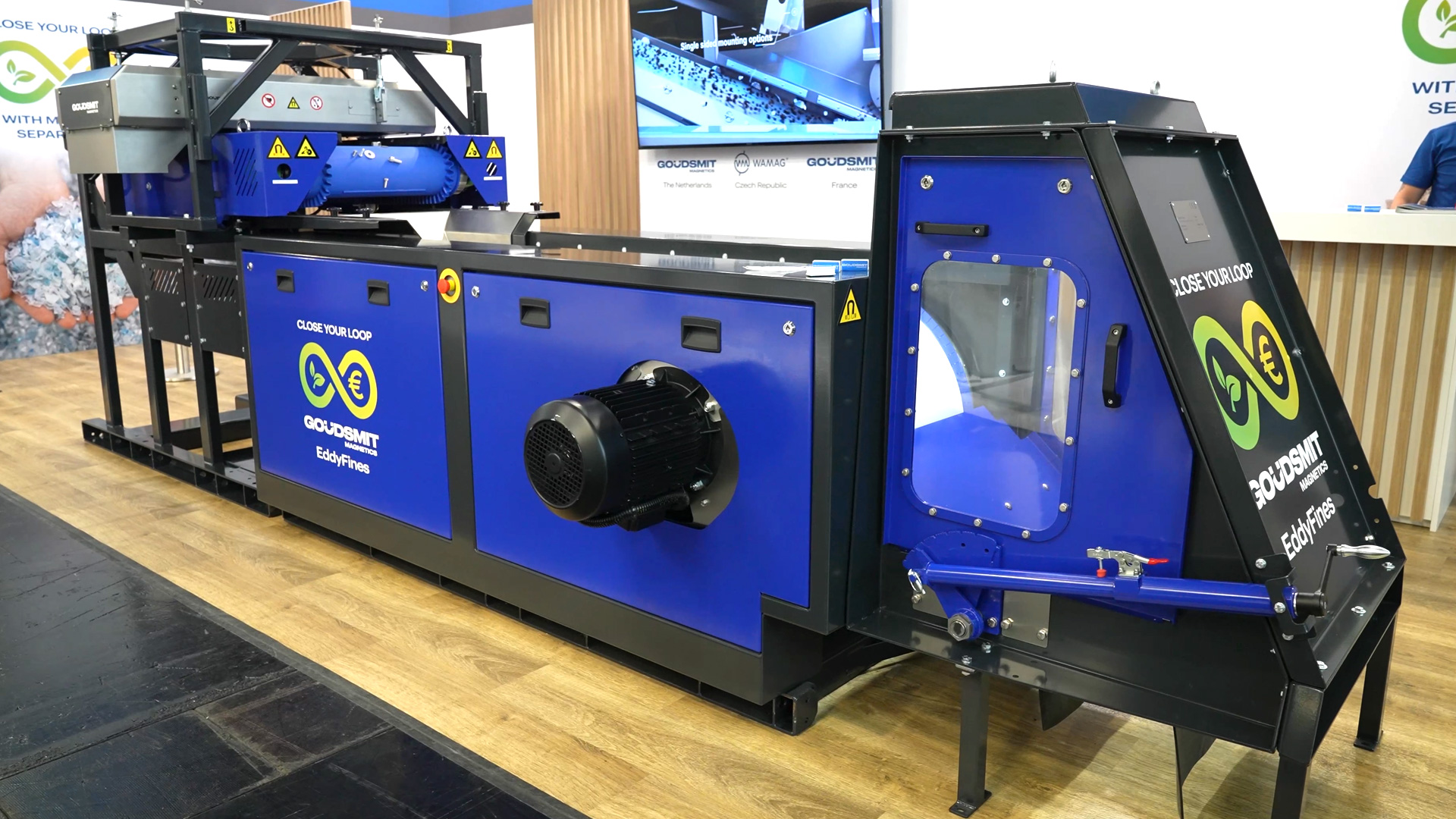
However, it is precisely these material fractions that are becoming increasingly important – not least due to battery recycling, electronic scrap and complex composites from the automotive sector. At Ifat Munich, Goudsmit is therefore showcasing a combined separation system comprising an overhead magnet, a high-gradient magnetic separator and an eddy current separator. The aim of the system is to separate a wide variety of metal fractions from one another as precisely as possible within a compact process and to recover even fine metal components.
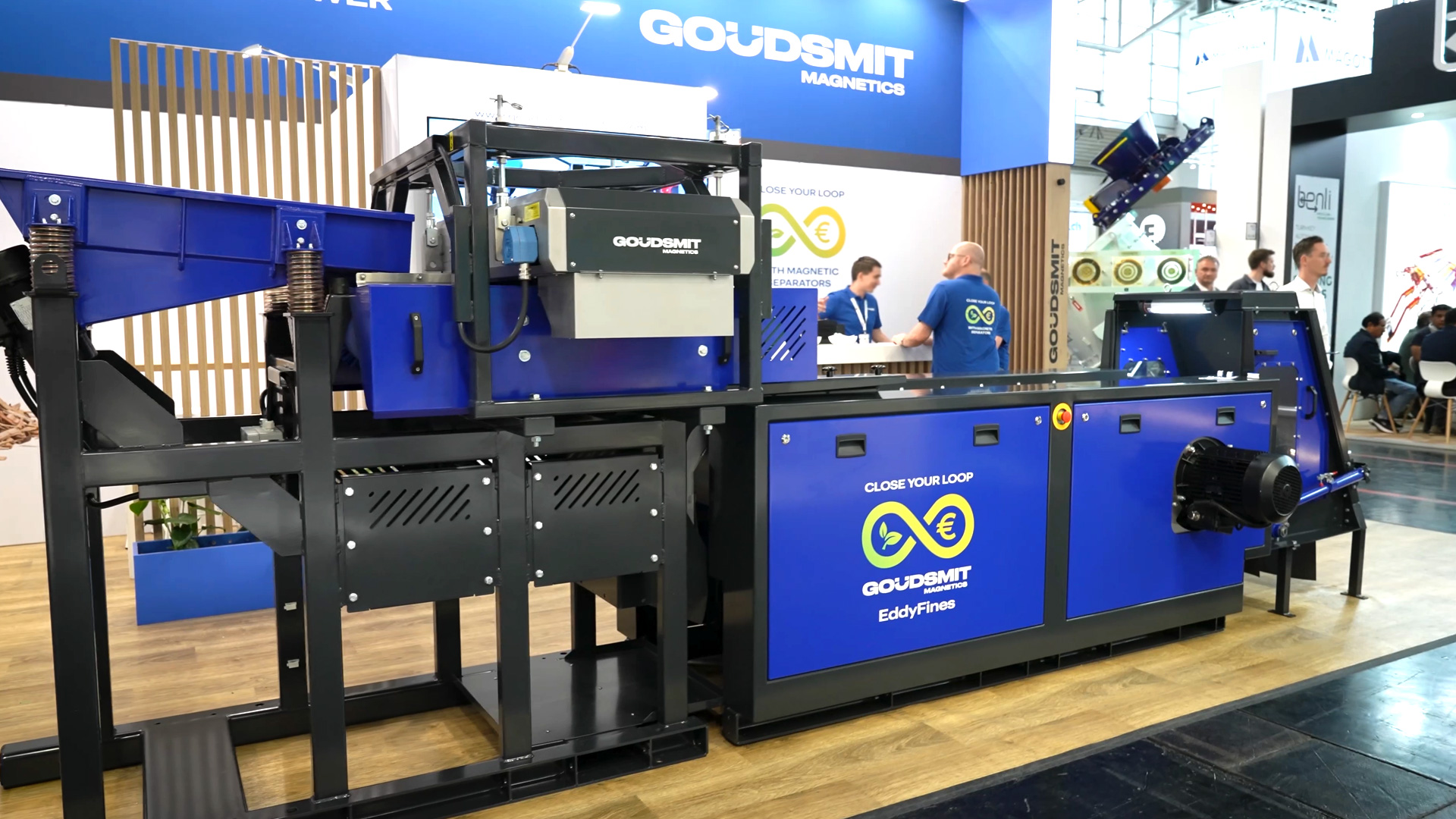

Goudsmit combines several magnetic systems in a single plant
The concept on display is not based on a single separation stage, but on the combination of several magnetic systems. Large magnetic components are first removed by an overhead magnet. This is followed by further stages for smaller or less magnetic materials. The focus is on the staged processing of different particle sizes and material properties. Whilst conventional magnetic separators attract ferromagnetic components, the eddy-current separator operates on a different principle. It actively repels conductive non-ferrous metals, thereby separating them from the rest of the material stream. Aluminium and copper in particular can thus be recovered even in fine fractions. The material is specifically discharged via a chute, whilst non-conductive substances fall to the bottom. The additional high-gradient magnetic separator, in turn, handles the separation of very small or weakly magnetic components. It is only the combination of these systems that enables finer separation of different types of metal within a single process configuration. The main components of the plant:
- Overhead magnet for removing large magnetic components
- High-gradient separator for fine, weakly magnetic particles
- Eddy-current separator for conductive non-ferrous metals
- Feeder system for uniform material feeding
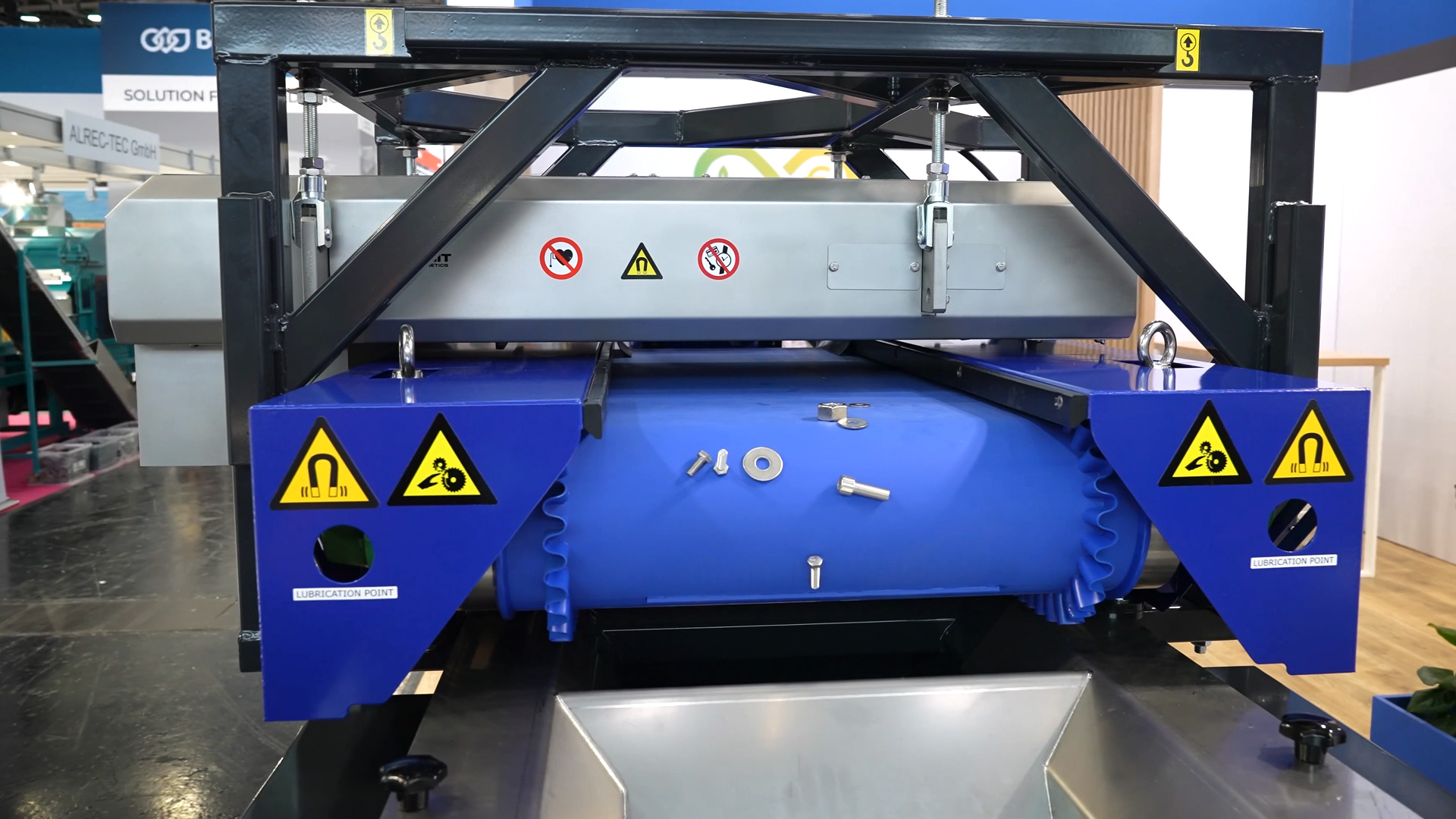
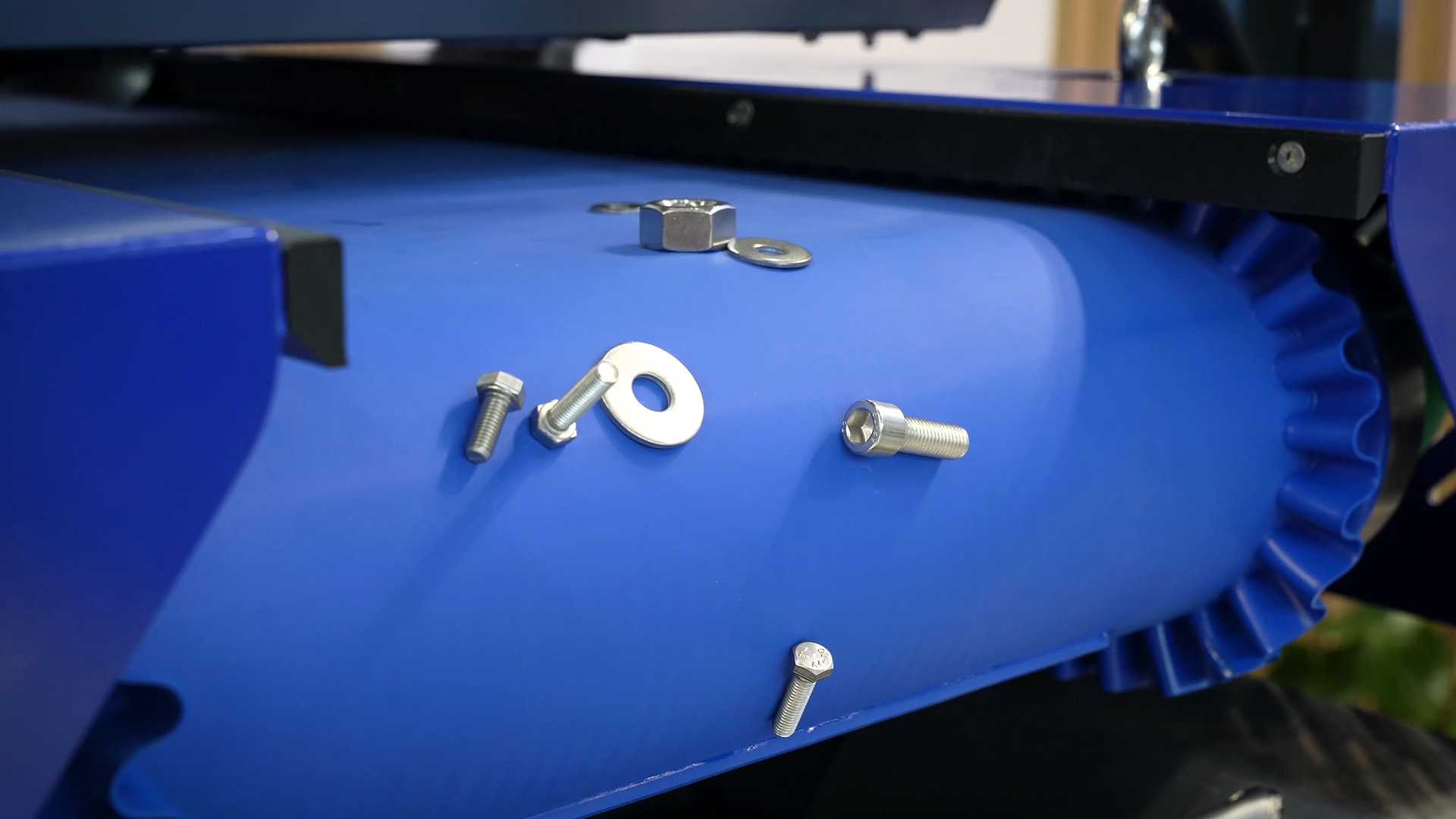
Eddy-current separator separates aluminium and copper
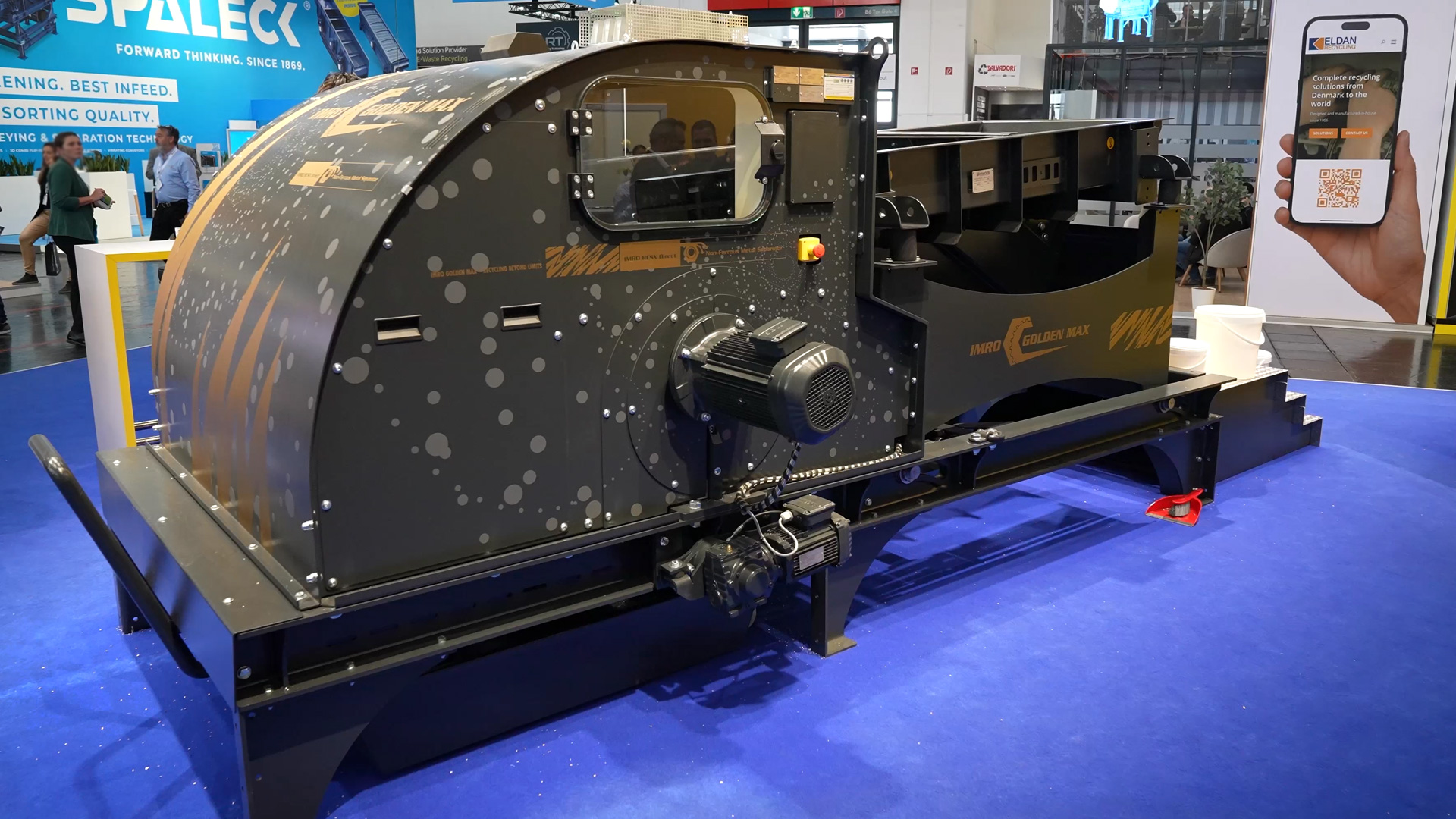
The function of the eddy-current system is particularly interesting. Unlike conventional magnets, the system does not attract metals, but generates eddy currents that actively repel conductive metals. This allows aluminium, copper or other non-ferrous metals to be separated from mixed fractions. This is becoming increasingly relevant, particularly in fine material streams, as these often still contain economically valuable metal content. The Goudsmit system shown here has been deliberately designed to be compact. According to the manufacturer, this is a smaller version intended for laboratory environments or applications with lower material volumes. At the same time, larger variants are available for industrial throughput rates. The modular design also allows for different configurations. In the case of damp or difficult-to-process material, several machines can be arranged in series to further improve separation performance. Damp materials in particular are considered problematic in recycling technology because material particles clump together or are more difficult to separate from one another. Multiple coordinated separation stages can offer advantages here.

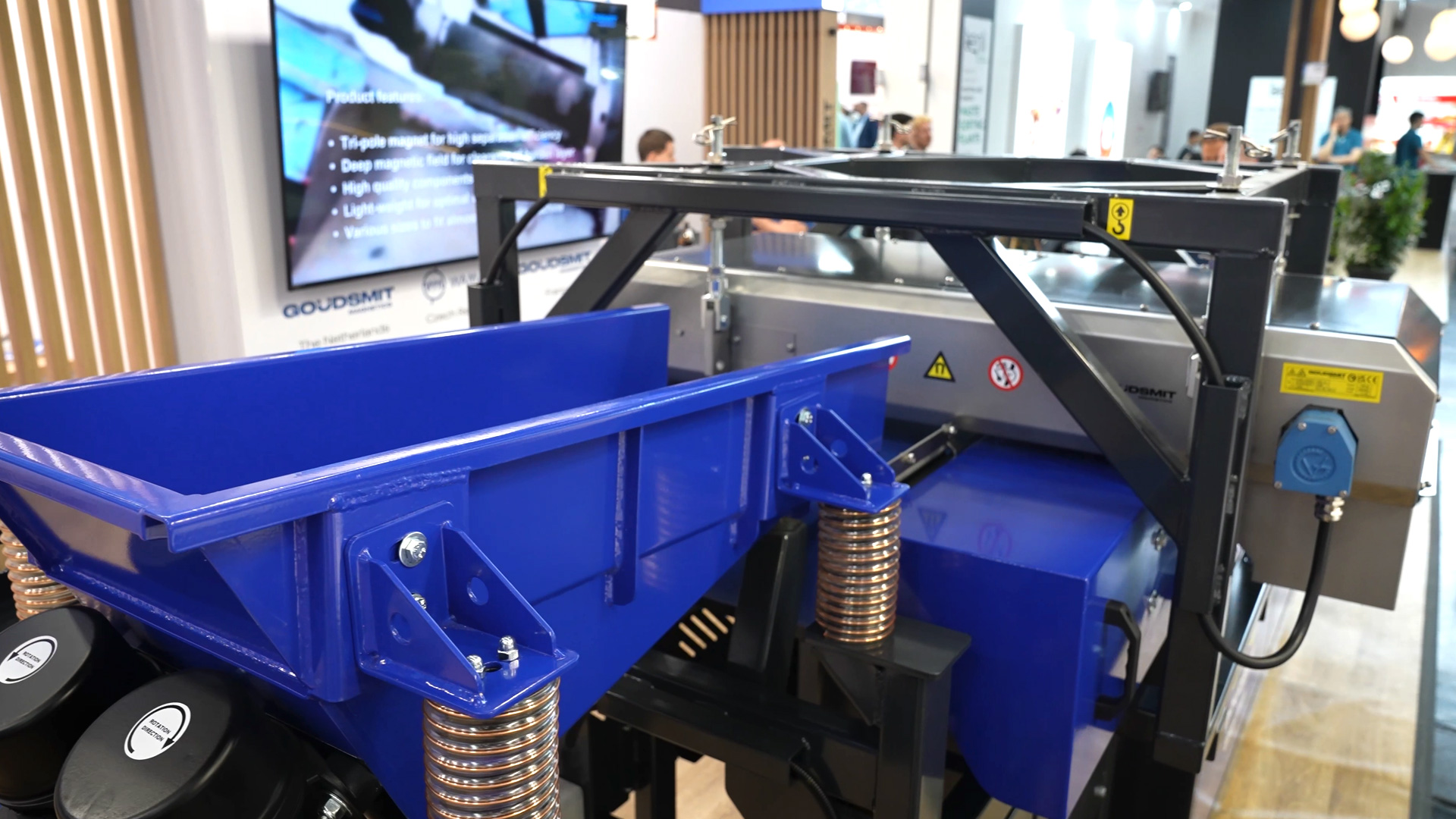
Metal recovery is becoming more important for glass and plastic
The systems are not only used for direct metal recovery. Another area of application lies in the cleaning of other recyclable material streams. For example, small aluminium parts can be removed from crushed glass or plastic. This significantly improves the quality of the recycled materials. In glass recycling in particular, even the tiniest metal contaminants often lead to a reduction in the quality of the end product or necessitate additional processing steps. Similar requirements arise in plastics recycling or in the processing of substitute fuels. In these areas, the focus is increasingly on removing even small contaminants from the material stream as precisely as possible. The combination of multiple magnetic systems therefore not only aims to maximise metal recovery. It also serves to produce secondary raw materials of higher purity and to make recycling processes more cost-effective.
Battery recycling increases demands on separation systems
According to Goudsmit, the importance of such systems will continue to grow in the coming years. Battery recycling and the processing of components from electric vehicles, in particular, are placing new demands on material separation. Lithium-ion batteries contain numerous fine metal fractions that must be separated with as little loss as possible. At the same time, the requirements for purity and recovery rates are rising continuously. Added to this is the fact that modern products consist of increasingly complex material composites. Electronic scrap, vehicle components or composite materials often contain different metals in very small particle sizes. This is precisely where traditional separation methods reach their limits. The precise recovery of small metal fractions is therefore increasingly becoming a central focus of recycling technology.
Magnetic separation is evolving into a precision process
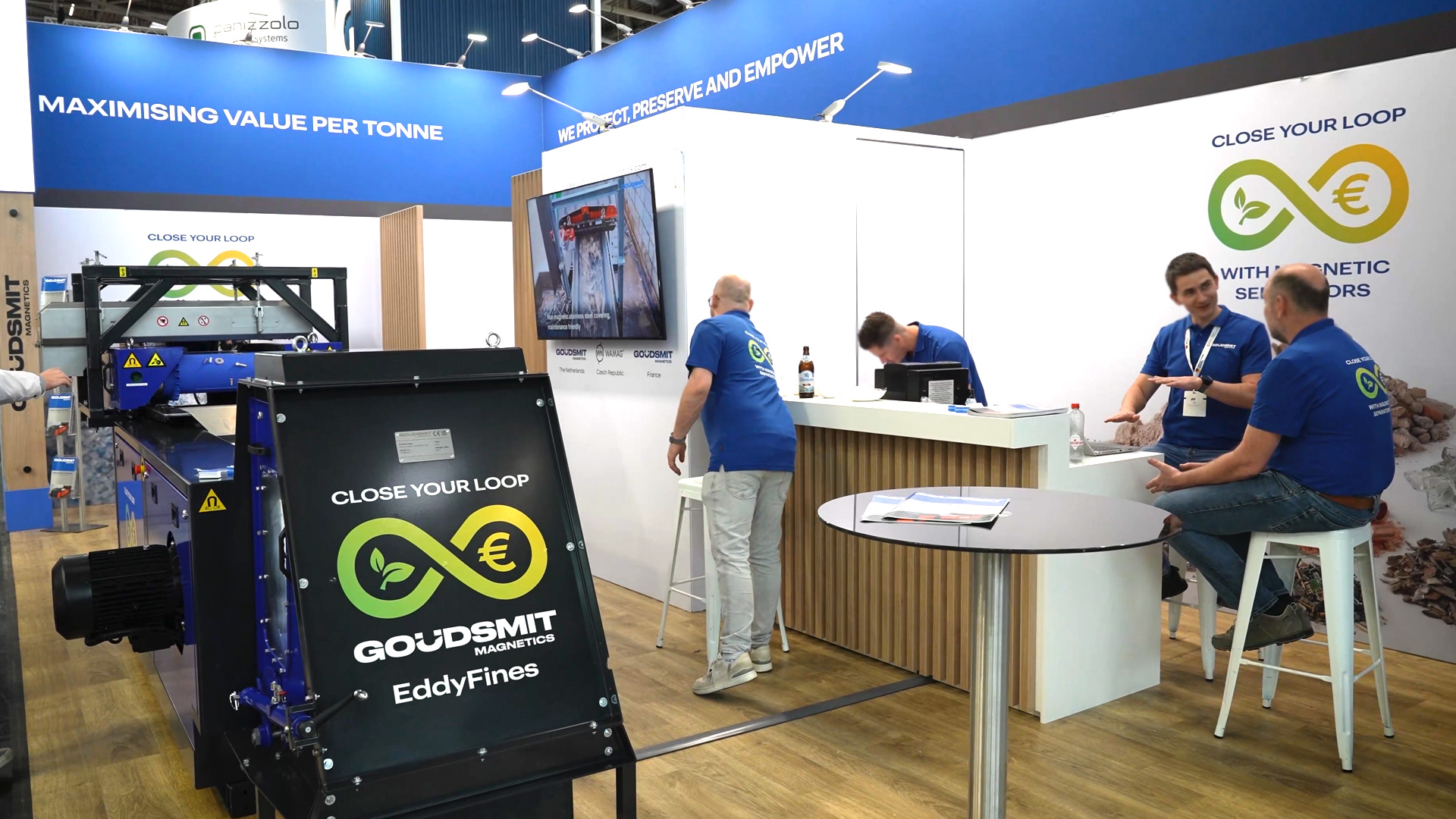
The plant shown illustrates just how much metal-based separation systems have changed. Whilst earlier plants primarily removed coarse iron content, today’s focus is on high-precision separation processes for fine and complex material streams. Goudsmit pursues an approach that combines several technologies within a compact system. Overhead magnets, high-gradient separators and eddy current technology do not operate independently of one another, but complement each other within a multi-stage process. This development is likely to gain in importance, particularly with regard to battery recycling, electronic scrap and high-value secondary raw materials. For the more valuable individual metal fractions become, the more important the ability to recover even the smallest particles economically becomes.
Trade fair reporting Germany - Trade fair knowledge, dates & events


