Sustainability software for ESG, CSRD and product data
by A. Bergmeier - 2026-05-24For a long time, sustainability reporting was seen as a niche concern for large corporations. However, many medium-sized companies are now also faced with the question of how they are even supposed to manage emissions data, supply chain information and regulatory requirements efficiently.
With the expansion of European reporting obligations, the workload has increased massively in a short space of time. At the same time, new regulations such as the Packaging and Packaging Waste Regulation (PPWR) are further changing the requirements for product data and compliance. At the Ifat in Munich, Code Gaia is therefore showcasing a software platform designed to bring together sustainability management, ESG reporting and product compliance within a modular system. The focus is primarily on medium-sized companies, which have often still been handling complex sustainability requirements using Excel spreadsheets and manual processes.
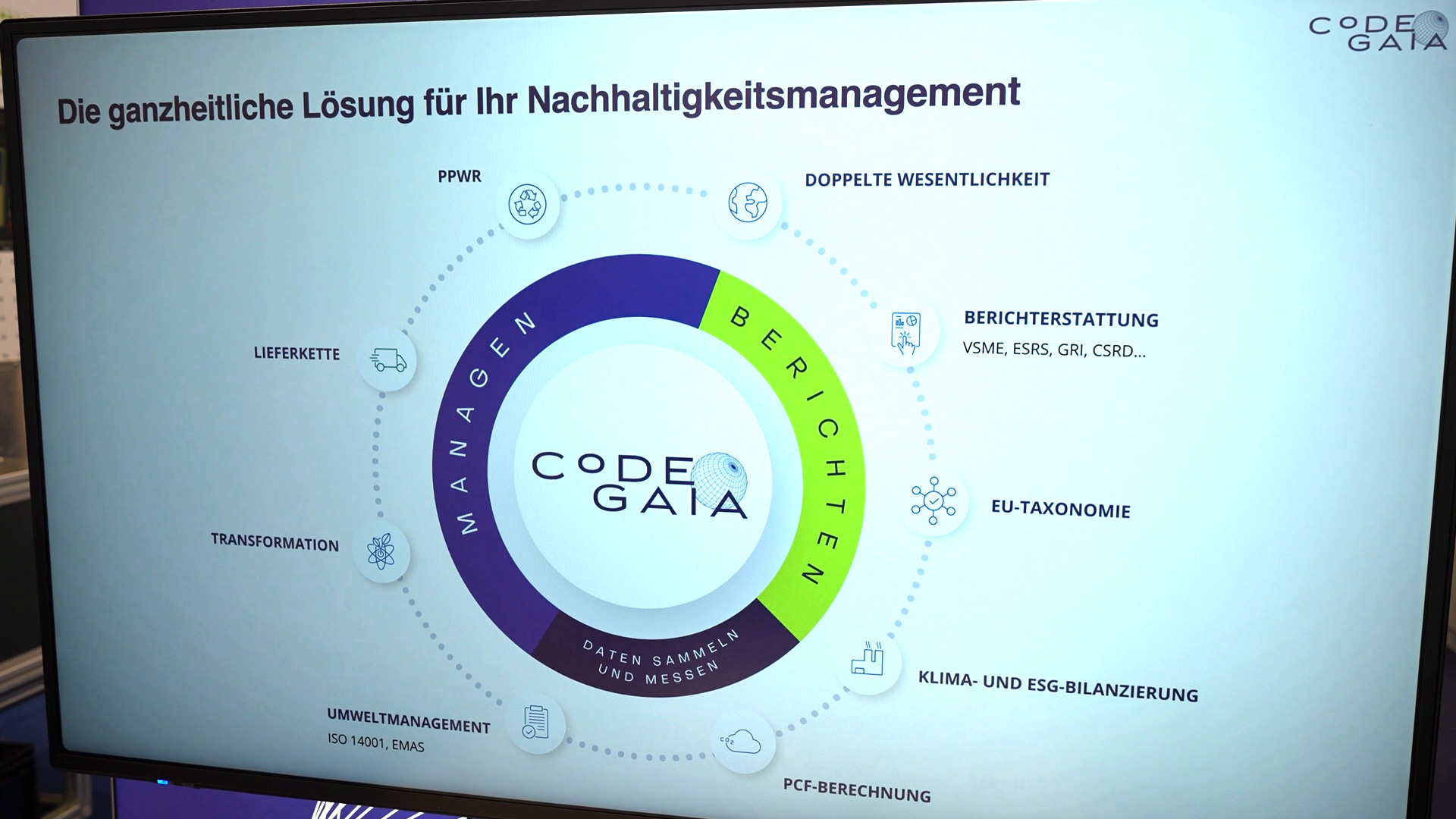

Code Gaia expands ESG platform to include product compliance
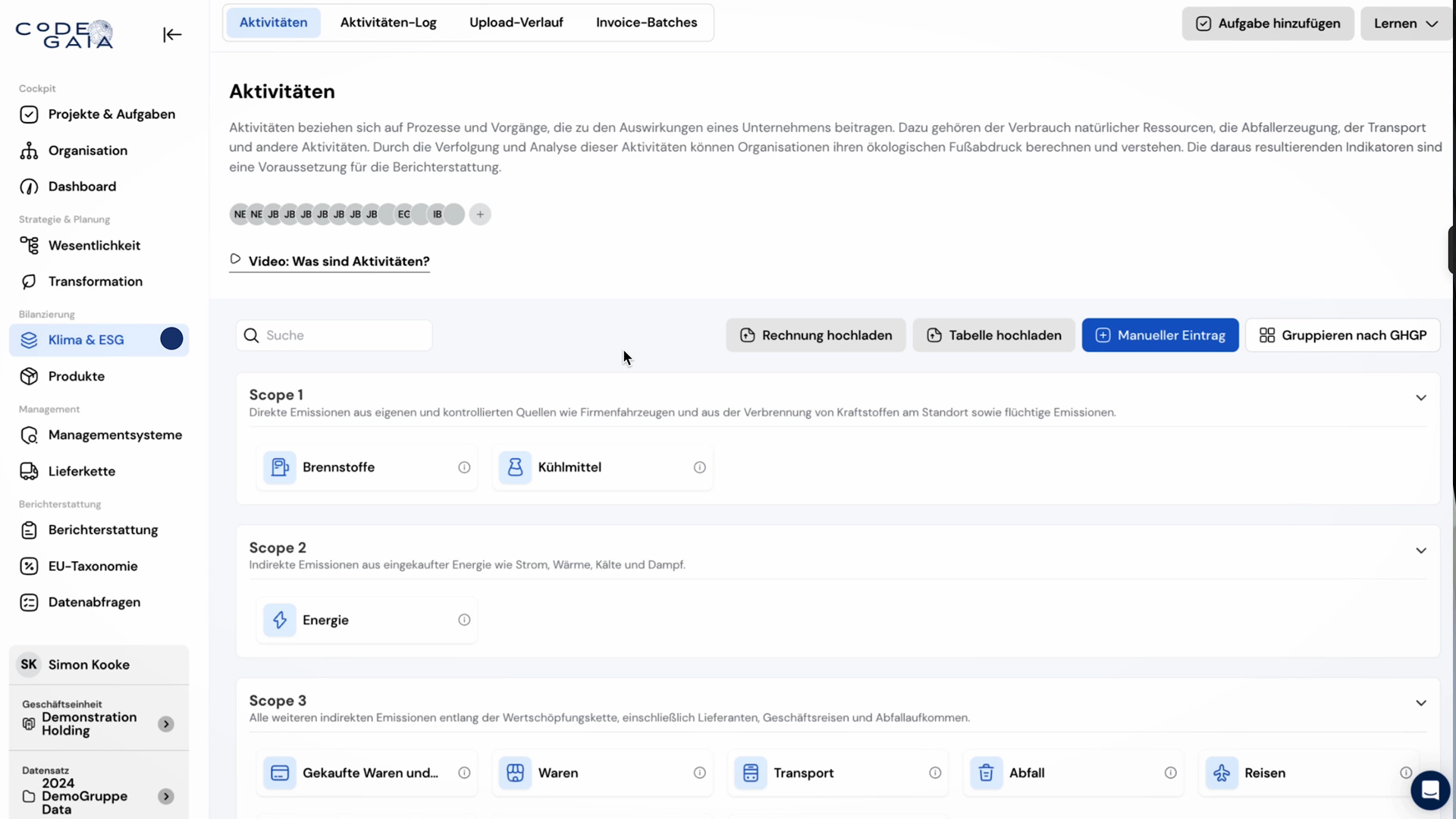
The company originally emerged from the field of climate and ESG accounting. The starting point was the observation that sustainability reporting in many companies involved an enormous amount of manual effort. Spreadsheets, data imports and scattered information sources often led to high costs and poor data quality. Code Gaia initially focused primarily on the corporate carbon footprint, i.e. company-wide climate accounting. SMEs in particular often faced a problem here: professional databases were considered expensive, whilst free sources frequently failed to provide sufficiently reliable data. The portfolio has since been significantly expanded. In addition to traditional ESG and climate topics, the platform is increasingly integrating product compliance requirements. These include, for example, product carbon footprints or new regulatory requirements such as the PPWR. The platform’s key focus areas:
- ESG and climate accounting for businesses
- CSRD and VSME reporting
- Product carbon footprint and product compliance
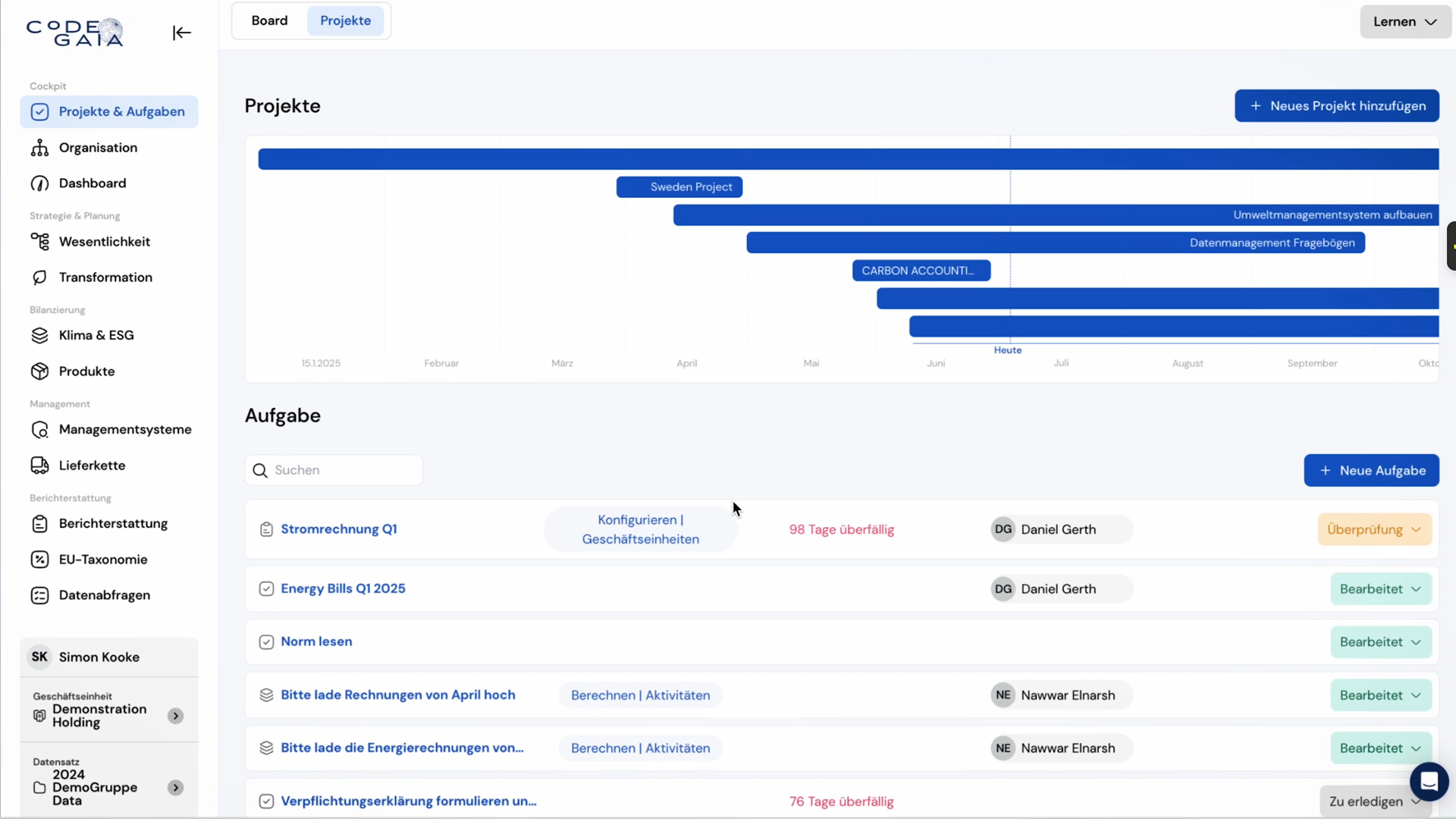
- Transformation and action management
CSRD is changing the pressure on small and medium-sized enterprises
The European CSRD regulation has recently played a central role. Many companies had to establish structures within a short period of time in order to be able to collect and document sustainability data at all. However, following the latest changes introduced by the so-called Omnibus procedure, the situation has shifted somewhat. In many cases, smaller companies are no longer subject to direct reporting obligations. As a result, regulatory pressure has eased temporarily. According to Code Gaia, however, this by no means implies that sustainability is becoming less important for SMEs. Many companies are continuing their projects on a voluntary basis – for example, based on the European VSME standard for small and medium-sized enterprises or as part of their own climate strategies. In addition, larger customers and clients are increasingly demanding sustainability data across the entire supply chain. Consequently, even companies without a direct reporting obligation often have to provide data or document emissions figures.

Transformation module links data with actions
Of particular interest is the approach of not only collecting sustainability data but also deriving concrete management measures from it. It is precisely for this purpose that the platform has been expanded to include a so-called transformation module. This shifts the focus away from mere documentation towards operational implementation. Companies should be able to define targets, record measures and track progress. Code Gaia takes a business-oriented approach here. Sustainability is explicitly understood not merely as a communication or image project, but as an economic process with measurable impacts. This point plays a particularly important role in the SME sector. Many companies face considerable cost pressure and will only invest in sustainability systems on a long-term basis if this yields concrete benefits – such as more efficient processes, better data quality or reduced manual effort.
Modular software aims to reduce effort
According to the company, every project begins with a needs analysis. This involves assessing which regulatory requirements are relevant, what data is already available, and which interfaces can be integrated. The aim is to automate existing processes as far as possible. Data should not have to be entered manually multiple times, but should instead be able to be imported directly from existing systems. This is precisely where a typical problem with many sustainability projects becomes apparent: the real challenge often lies less in the reporting obligations themselves than in data collection and consolidation. That is why Code Gaia relies on a modular structure. Companies should only use the functions they actually need – from carbon footprint to product compliance.
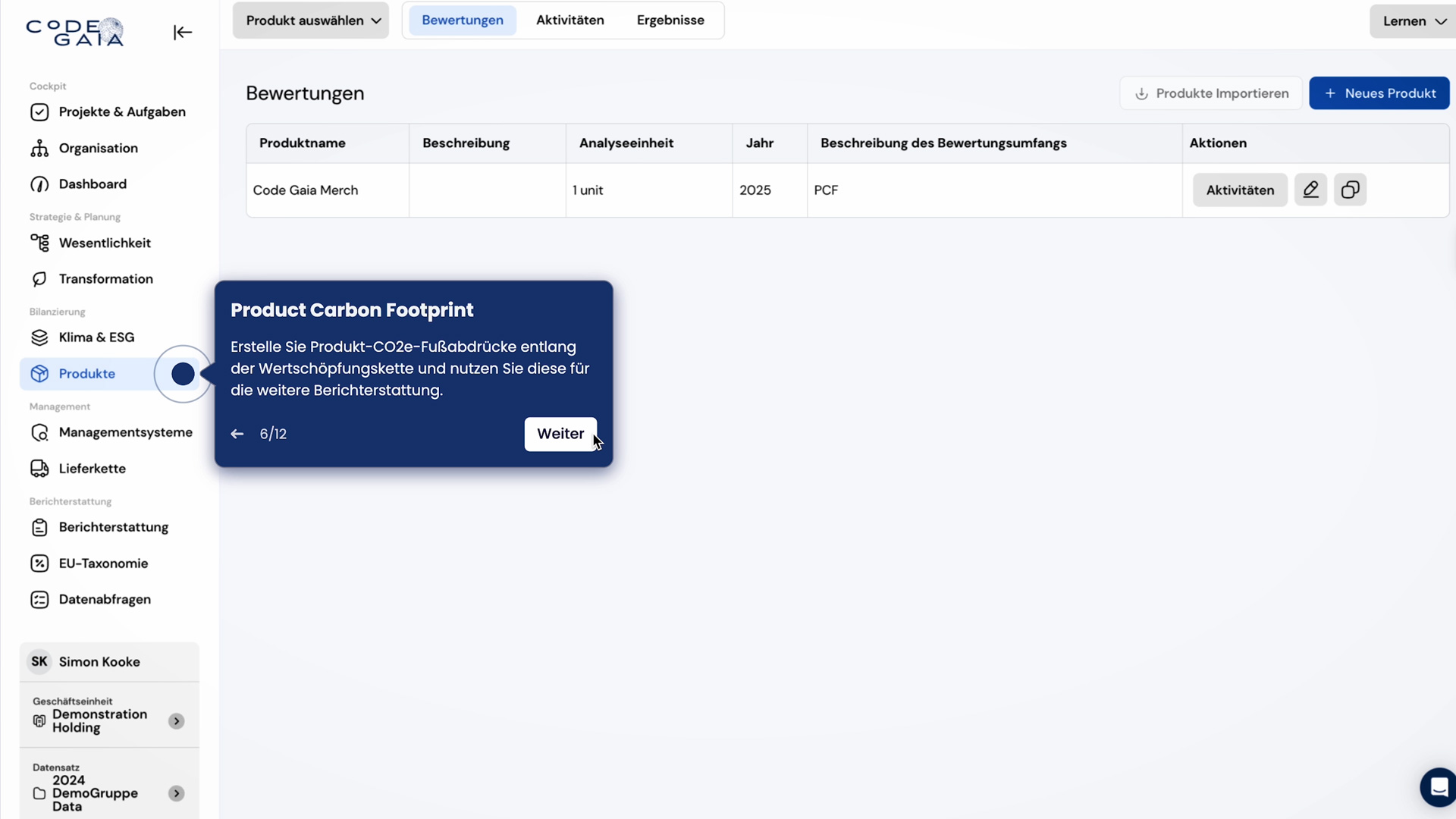
Sustainability management is becoming more data-driven
This development shows just how much sustainability management has changed. Whilst ESG reports used to be isolated documents, data-based management systems are now increasingly being developed. At the same time, the focus is shifting from voluntary measures towards regulatory and operational requirements. Packaging regulations, carbon footprints and supply chain data are becoming increasingly intertwined. Code Gaia positions itself at the intersection of sustainability, compliance and process automation. Particularly striking is its focus on medium-sized enterprises, which have often found themselves caught between complex regulatory requirements and limited human resources. As a result, the discussion on sustainability is becoming significantly more technical and economic. Instead of general environmental goals, the focus is increasingly on data quality, automation and concrete implementation processes.

















Trade fair reporting Germany - Trade fair knowledge, dates & events


