Vertikal, Fördertechnik, Getränke, Logistik, Industrie - für optimierte Logistikprozesse
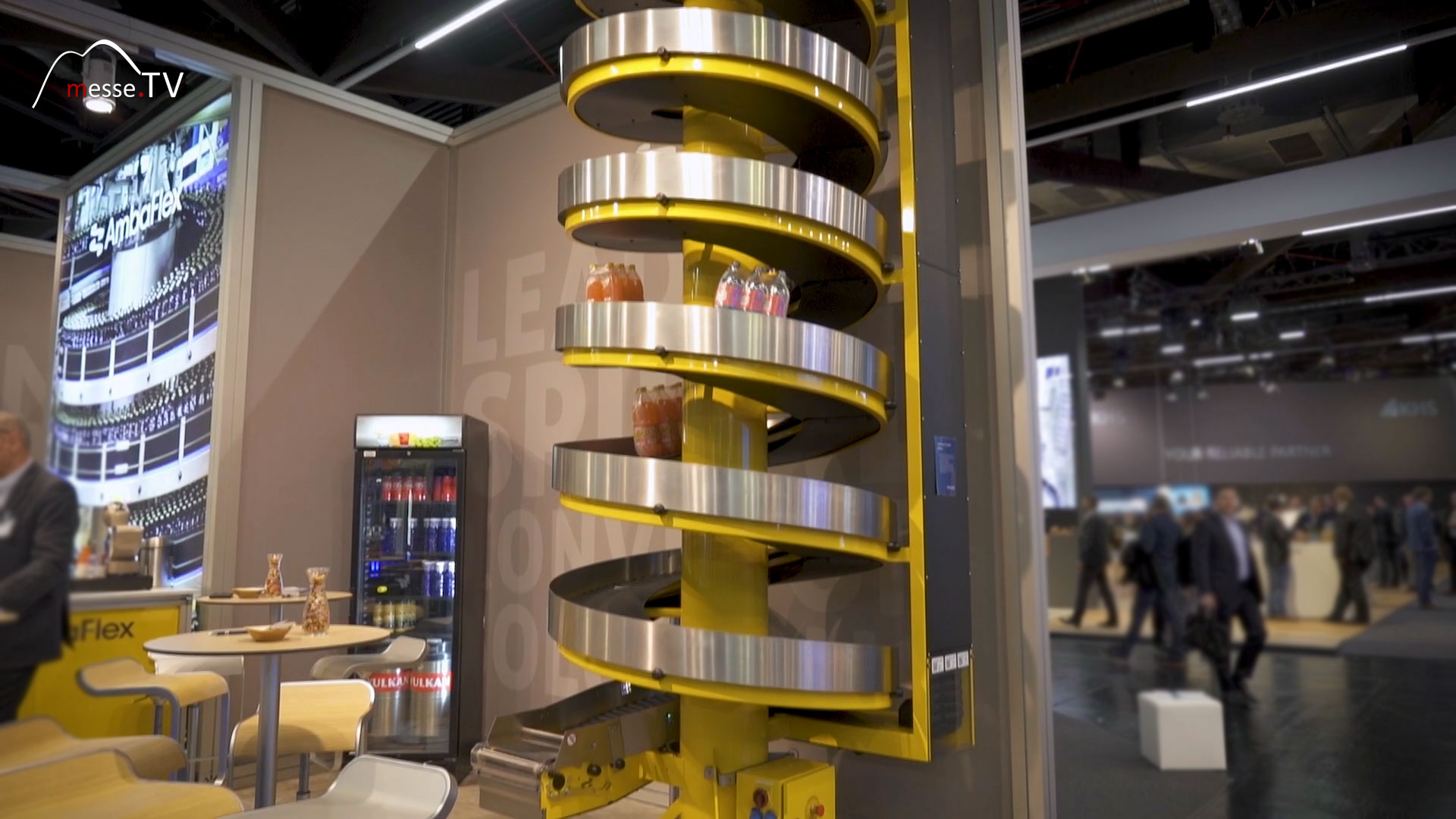
Seit den späten Neunzigerjahren hat sich AmbaFlex als Anbieter von Lösungen etabliert, wenn es darum geht, Produkte platzsparend und zuverlässig über Höhenunterschiede zu transportieren. Der Fokus liegt dabei klar auf der vertikalen Fördertechnik mit spiralförmigen Systemen, die dort eingesetzt werden, wo klassische Geradeausförderer an ihre Grenzen stoßen. Auf der Messe zeigt das Unternehmen, wie sich diese Technologie in unterschiedlichsten Branchen praxisnah einsetzen lässt – von der Logistik bis zur Getränkeindustrie.
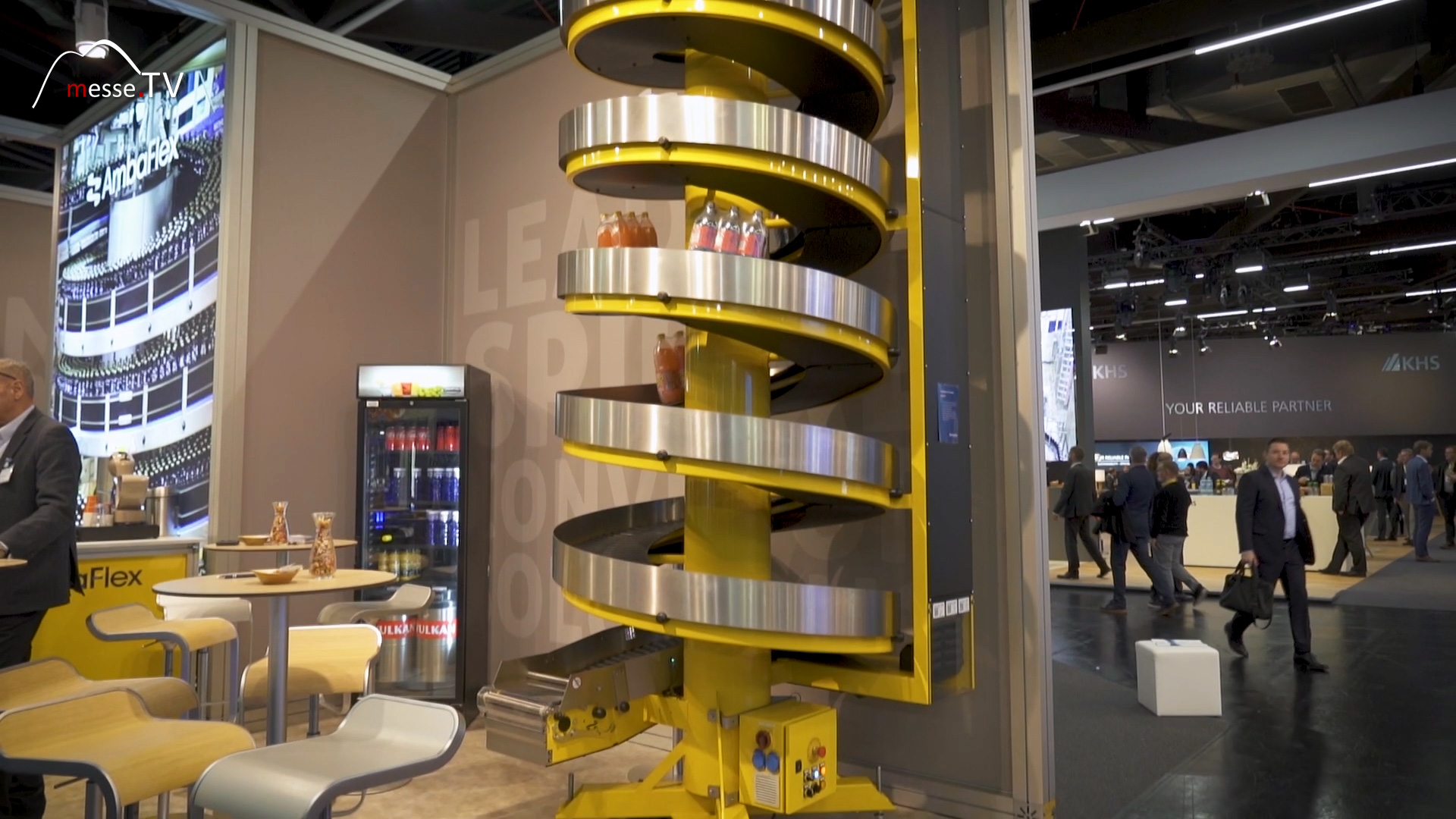
Vertikale Fördertechnik ist längst kein Nischenthema mehr sondern bedeutend für optimierte Logistikprozesse. Produktionslinien werden dichter, Gebäude höher, Materialflüsse komplexer. Genau hier setzen Spiralförderer an, die Produkte kontinuierlich nach oben oder unten bewegen, ohne den Durchsatz zu unterbrechen. Verpackte Waren wie Kästen, Flaschen, Dosen oder Schrumpfverpackungen lassen sich so zwischen mehreren Ebenen transportieren, unabhängig davon, ob es sich um zwei Stockwerke oder deutlich größere Höhen handelt.
Spiralförderer als Kern der Lösung
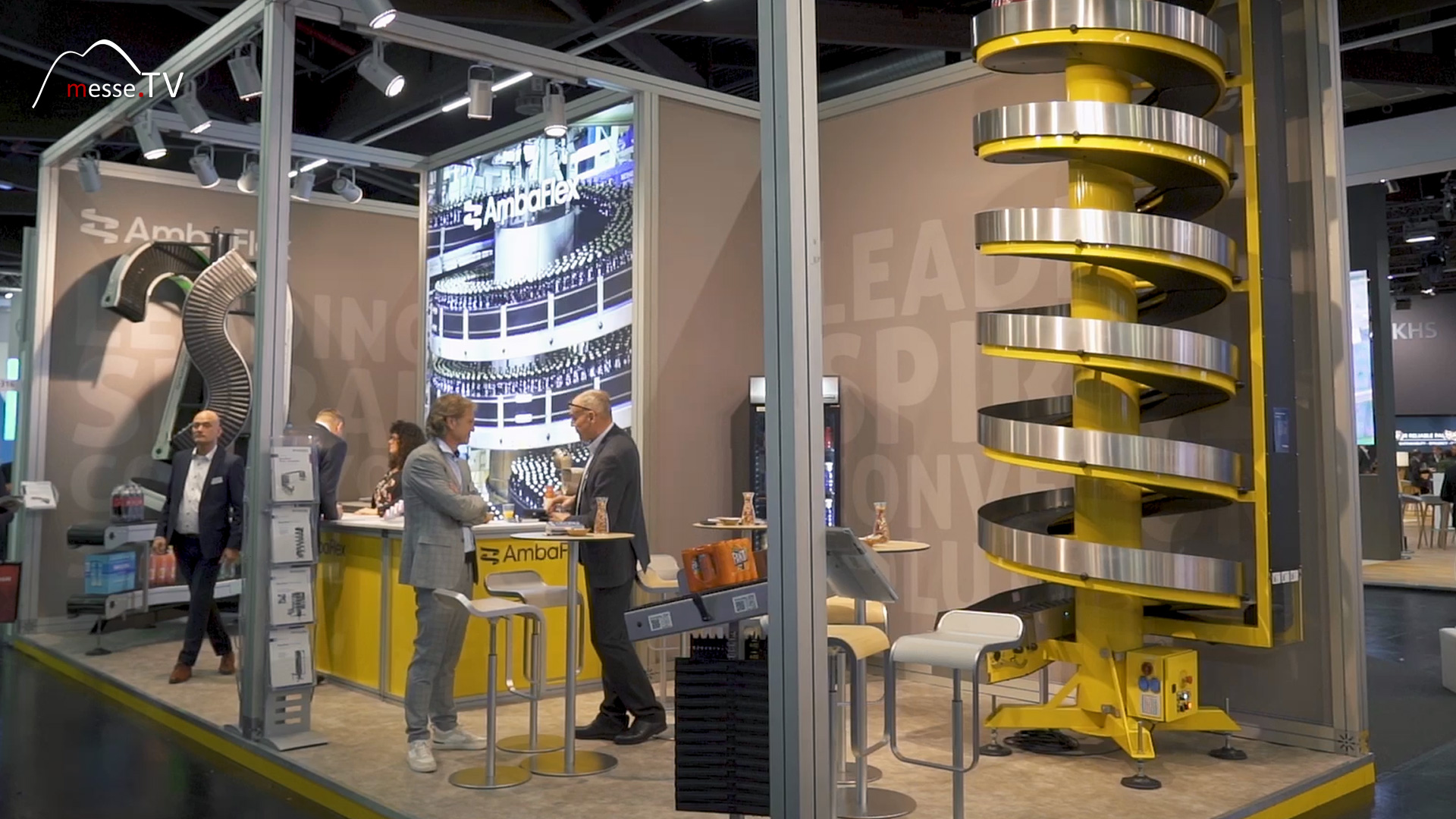
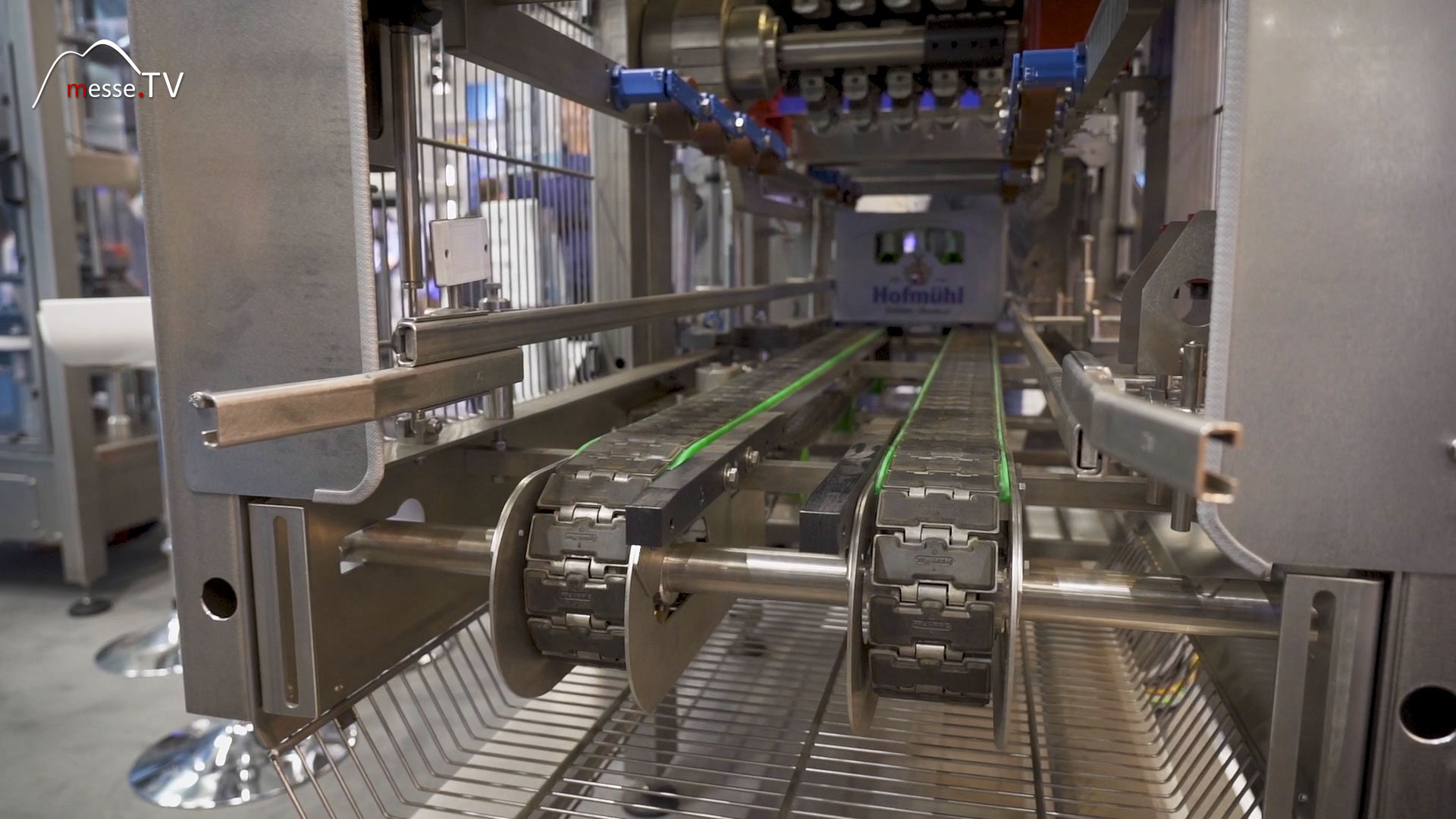
Im Zentrum des Messeauftritts steht ein klassischer Spiralförderer mit Förderband, der als vertikales Element Höhen überbrückt. Solche Systeme sind darauf ausgelegt, verpackte Produkte sicher von einer Ebene zur nächsten zu befördern – etwa vom Erdgeschoss in höhere Stockwerke oder umgekehrt. Die Technik erlaubt dabei nicht nur eine reine Auf- oder Abwärtsbewegung, sondern auch komplexere Verläufe, bei denen Förderstrecken kombiniert werden, um Wartungsgänge oder Übergänge zwischen Hallenebenen zu realisieren. Charakteristisch ist die kontinuierliche Bewegung ohne Stop-and-Go, was insbesondere bei hohen Durchsätzen von Vorteil ist. Ob Einzelgebinde oder Massenstrom – die Fördertechnik lässt sich flexibel an unterschiedliche Anforderungen anpassen. Entscheidend ist dabei die Kombination aus Bandbreite, Steigung und Radius, die exakt auf das jeweilige Produkt abgestimmt wird.
Anwendungen in der Getränkeindustrie
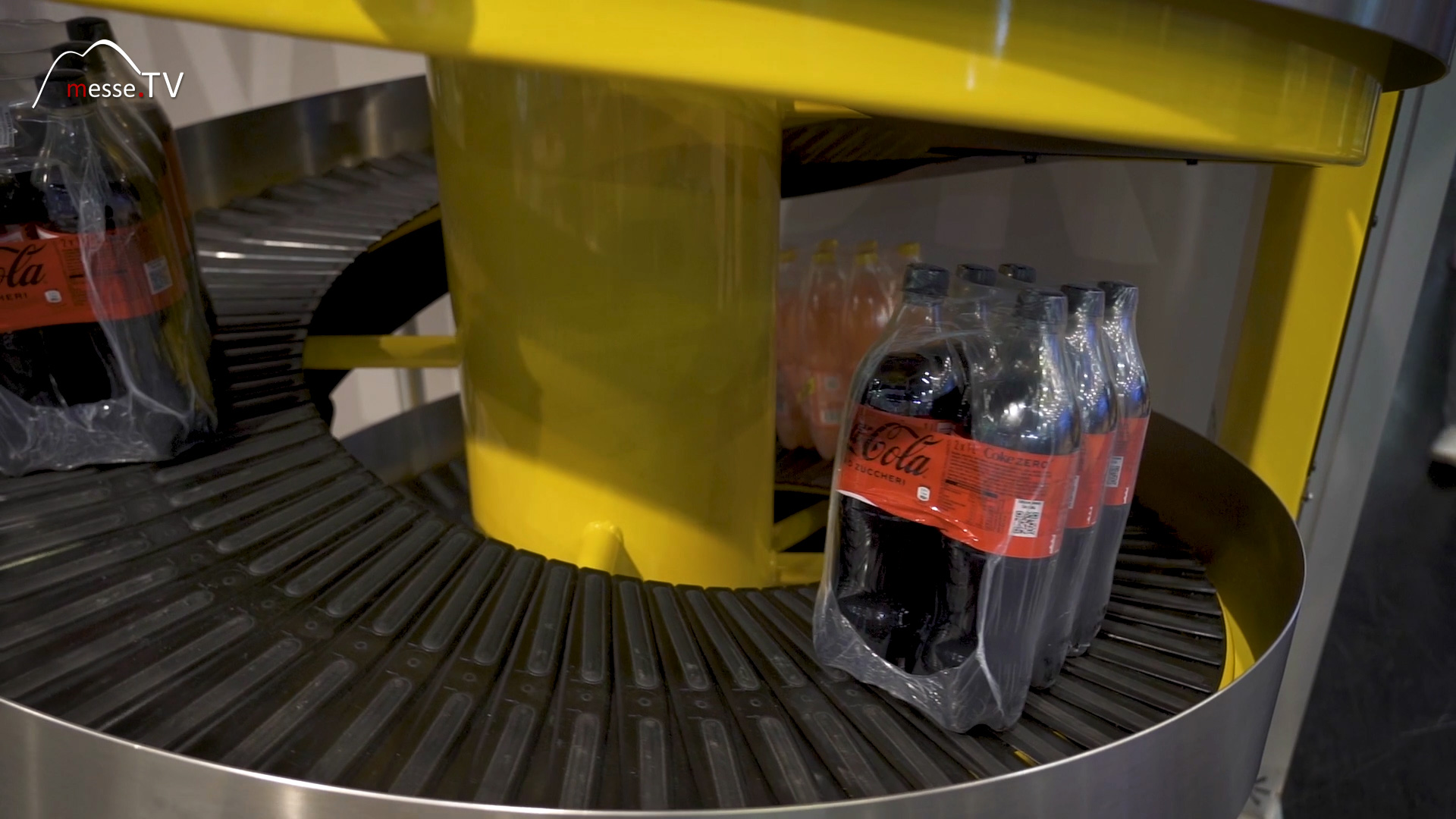
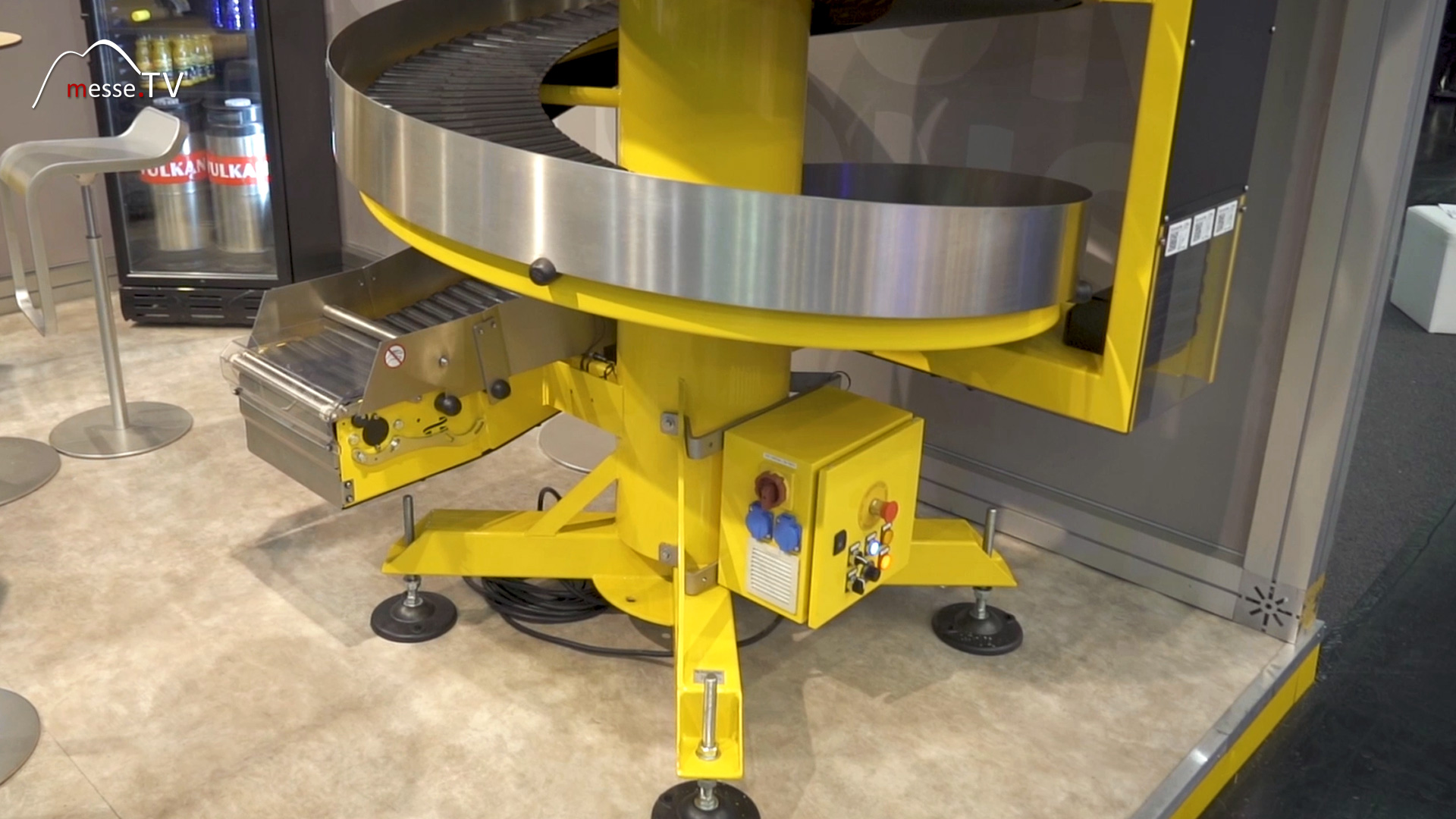
Ein besonders wichtiger Einsatzbereich ist die Getränkeindustrie. Hier müssen empfindliche Verpackungen wie Flaschen, Dosen oder Kästen nicht nur schnell, sondern auch schonend transportiert werden. Die Fördertechnik sorgt dafür, dass verpackte Getränke sicher zwischen Abfüllung, Verpackung, Lagerung und Versand bewegt werden können. Ein zentrales Argument in diesem Umfeld ist die Hygiene. Förderanlagen müssen leicht zu reinigen sein und dürfen keine schwer zugänglichen Schmutzecken aufweisen. Die Konstruktion der Systeme ist daher vollständig verschweißt, mit durchgehenden Seitenführungen ohne Unterbrechungen. Optional kommen Edelstahlvarianten zum Einsatz, die eine vollständige Reinigbarkeit ermöglichen und den Anforderungen sensibler Produktionsumgebungen gerecht werden.
Konstruktive Details und technische Unterschiede
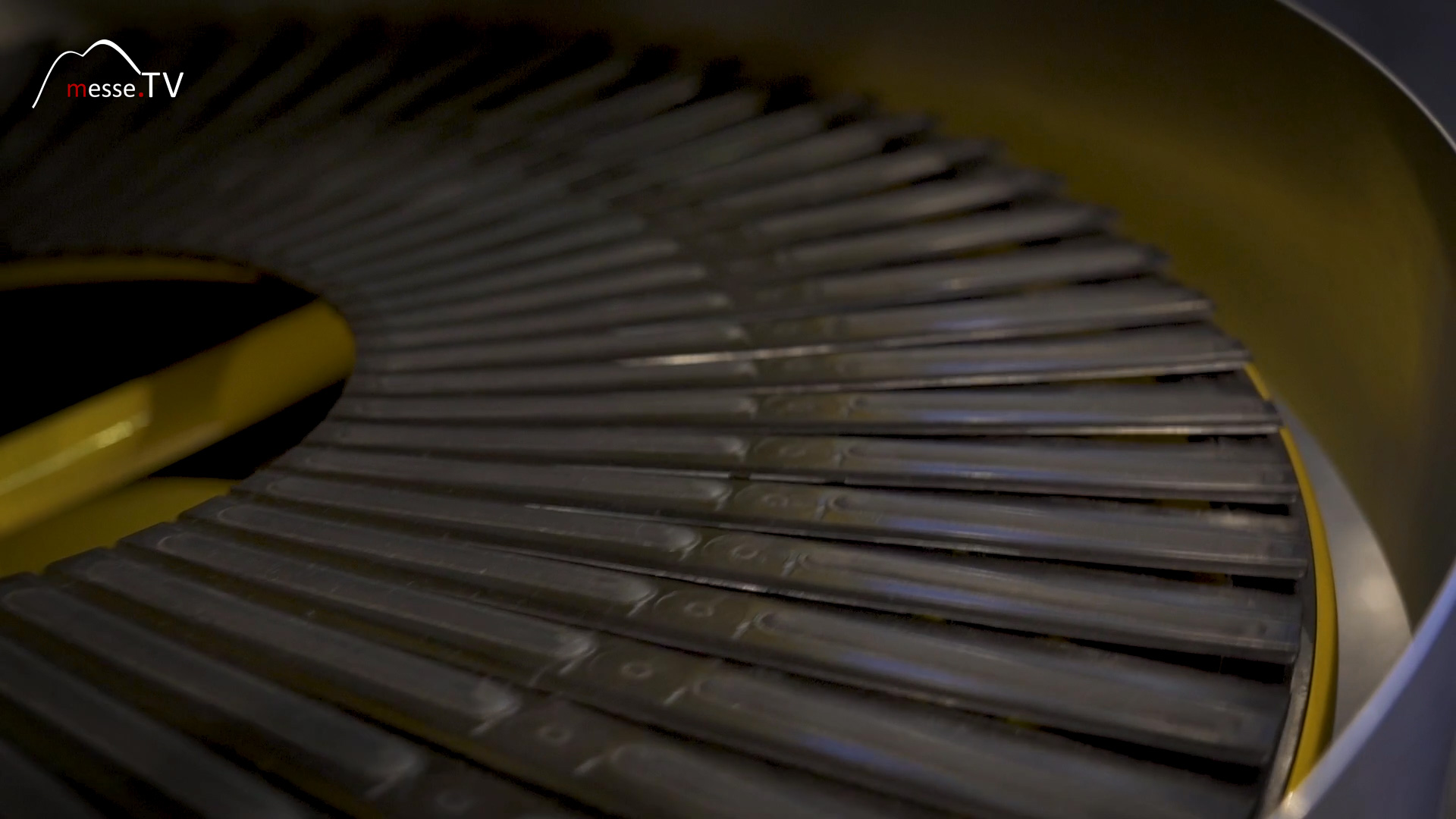
Auch wenn ein Spiralförderer auf den ersten Blick simpel wirken mag, steckt in der Umsetzung erhebliche technische Komplexität. Unterschiedliche Neigungswinkel, enge Radien und wechselnde Förderhöhen erfordern präzise Auslegung. Besonders bei Übergängen zwischen einzelnen Förderbändern spielen kleine Details eine große Rolle. Enge Radien ermöglichen geringe Spaltmaße, wodurch Produkte stabil geführt werden und keine Kippbewegungen entstehen. Ein weiteres Merkmal ist die durchgehende Unterstützung der transportierten Waren. Die Lamellen oder Trageelemente sind so ausgelegt, dass sich die Produkte nicht bewegen oder verkanten. Das sorgt für einen ruhigen Lauf und minimiert Stillstände – ein wesentlicher Faktor in Hochleistungsanlagen.

Vorteile der Spiralfördertechnik im Überblick
Die vertikale Fördertechnik bietet eine Reihe praktischer Vorteile, die sie für viele Branchen interessant macht:
- platzsparende Überbrückung großer Höhen innerhalb kompakter Anlagenlayouts
- kontinuierlicher Produktfluss ohne Unterbrechung des Materialstroms
- hohe Flexibilität bei der Integration in bestehende Förderlinien
- geeignet für unterschiedliche Verpackungsarten und Massenströme
- hygienische Konstruktion für sensible Produktionsbereiche
Logistik und Industrie als weitere Einsatzfelder
Ursprünglich stark aus der Logistik kommend, hat sich die Technologie längst auch in anderen Industriebereichen etabliert. In Distributionszentren werden Warenströme über mehrere Ebenen hinweg organisiert, während in der Industrie Produktionsschritte vertikal miteinander verbunden werden. Verpackte Produkte lassen sich so effizient zwischen Bearbeitung, Prüfung und Versand transportieren. Gerade in modernen Fabriken, in denen Flächen optimal genutzt werden müssen, gewinnt die vertikale Fördertechnik zunehmend an Bedeutung. Sie ermöglicht kompakte Layouts und unterstützt modulare Anlagenkonzepte, bei denen Erweiterungen oder Anpassungen vergleichsweise einfach umgesetzt werden können.
Robustheit und Dauerbetrieb
Ein weiterer Aspekt ist die Auslegung auf den Dauerbetrieb. Die Anlagen sind für den Einsatz rund um die Uhr konzipiert und arbeiten verschleißarm, da auf mechanisch stark belastete Schnittstellen weitgehend verzichtet wird. Durch die durchgängige Schweißkonstruktion und die stabile Führung der Förderbänder bleibt die Leistung auch bei hoher Auslastung konstant. Die Kombination aus konstruktiver Stabilität, hygienischem Design und flexibler Anpassbarkeit macht die Spiralfördertechnik zu einer belastbaren Lösung für unterschiedlichste Anforderungen. Auf der Messe wird deutlich, dass es dabei nicht um ein einzelnes Produkt geht, sondern um ein modulares System, das sich an verschiedene Branchen und Anwendungen anpassen lässt.
Ausblick auf zukünftige Anforderungen
Mit steigenden Anforderungen an Effizienz, Hygiene und Flächennutzung wird die Bedeutung vertikaler Fördertechnik weiter zunehmen. Produktions- und Logistikprozesse werden komplexer, Gebäude höher, Durchsätze größer. Spiralförderer bieten hier eine bewährte Antwort auf diese Entwicklungen und lassen sich auch in bestehende Anlagen integrieren. Der Messeauftritt zeigt, dass die Technologie nicht nur ausgereift, sondern auch vielseitig einsetzbar ist. Für Unternehmen aus Getränkeindustrie, Logistik und Industrie bietet sie eine stabile Grundlage, um Materialflüsse zuverlässig und platzsparend zu organisieren – heute und in Zukunft.
Messe-Berichterstattung bundesweit - Messewissen, Termine & Veranstaltungen


