Biomasseanlagen Restholz Hackschnitzelheizung - Fernwärme im Betrieb
von Bastian Velonavy - 2024-05-16Die Energiewende im Wärmesektor wird häufig aus der Perspektive von Wohngebäuden diskutiert. Doch gerade im gewerblichen und kommunalen Umfeld stellt sich die Frage nach zuverlässigen, leistungsstarken und gleichzeitig wirtschaftlich tragfähigen Lösungen noch einmal anders.
Hier spielen Biomasseanlagen eine zentrale Rolle, insbesondere dann, wenn Reststoffe genutzt werden können, die ohnehin im Betrieb anfallen. Genau an dieser Stelle setzen spezialisierte Hersteller an, die Heiztechnik, Brennstoffaufbereitung und Fördertechnik als Gesamtsystem denken.
Heizomat als regionaler Hersteller mit hoher Fertigungstiefe
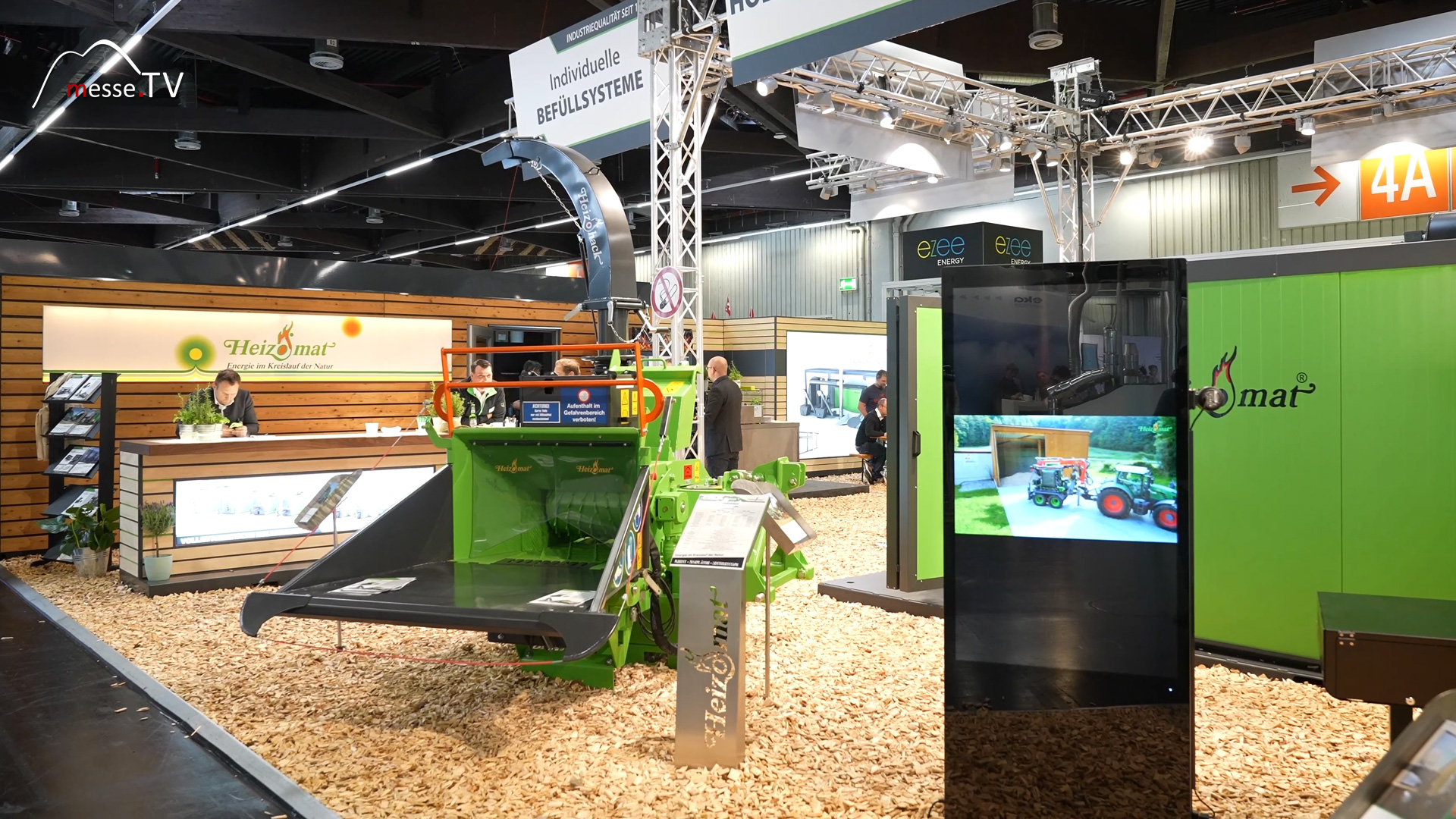
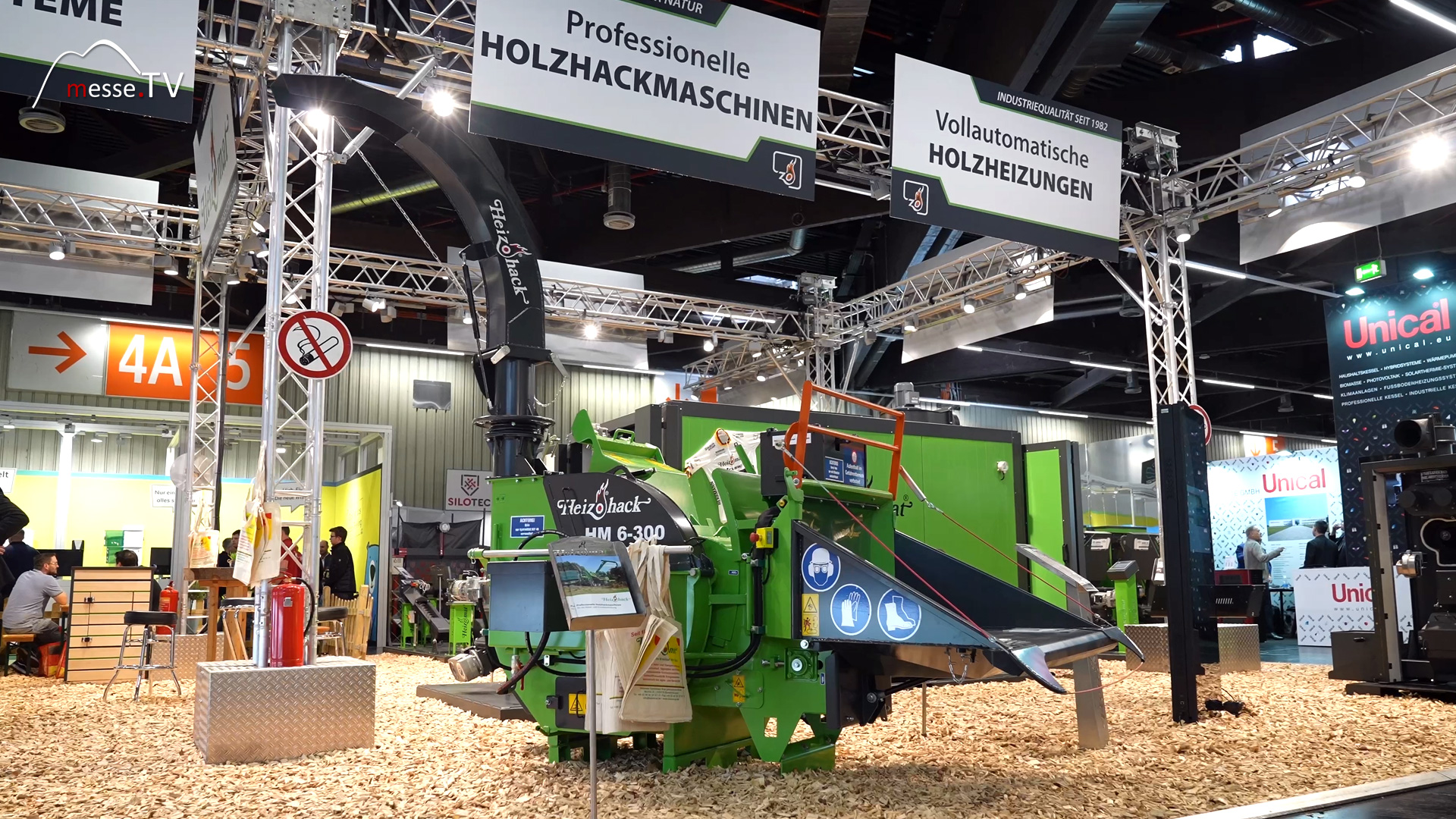
Heizomat ist ein familiengeführter Hersteller aus dem fränkischen Seenland und versteht sich bewusst als regional verwurzeltes Unternehmen mit eigener Produktion. Charakteristisch ist die hohe Fertigungstiefe, die sich durch nahezu alle Produktbereiche zieht. Anstatt Komponenten zuzukaufen und lediglich zu integrieren, werden zentrale Bauteile selbst entwickelt und gefertigt. Das betrifft sowohl die Heizkesseltechnik als auch die vorgelagerten Systeme zur Brennstoffaufbereitung und -zuführung. Der Anspruch als Komplettanbieter im Bereich Hackschnitzelheizung zeigt sich darin, dass der Prozess nicht erst beim Kessel beginnt. Vielmehr wird die gesamte Wertschöpfungskette betrachtet – von der Zerkleinerung des Holzes über die Austragung und Förderung bis hin zur Verbrennung und Ascheentsorgung.
Hackschnitzelheizung mit Fokus auf Restholz und Abfallbiomasse
Ein zentrales Alleinstellungsmerkmal liegt in der Spezialisierung auf problematische Brennstoffe. Während viele Systeme auf klassisches, homogenes Hackschnitzelmaterial ausgelegt sind, richtet sich dieses Konzept gezielt an Anwender, die mit Resthölzern, Abfallprodukten oder geschredderten Paletten arbeiten. Auch Landschaftspflegematerial, Wipfelholz oder heterogene Hackschnitzelqualitäten gehören zum typischen Einsatzspektrum. Damit wird ein Ansatz verfolgt, der den Gedanken der Kreislaufwirtschaft konsequent aufgreift. Restholz verbleibt im Betrieb, wird nicht entsorgt, sondern energetisch genutzt. Die Wertschöpfung bleibt damit beim Anwender und wird direkt in Wärme umgewandelt.
Hackmaschinen und Zerkleinerung als Teil des Systems
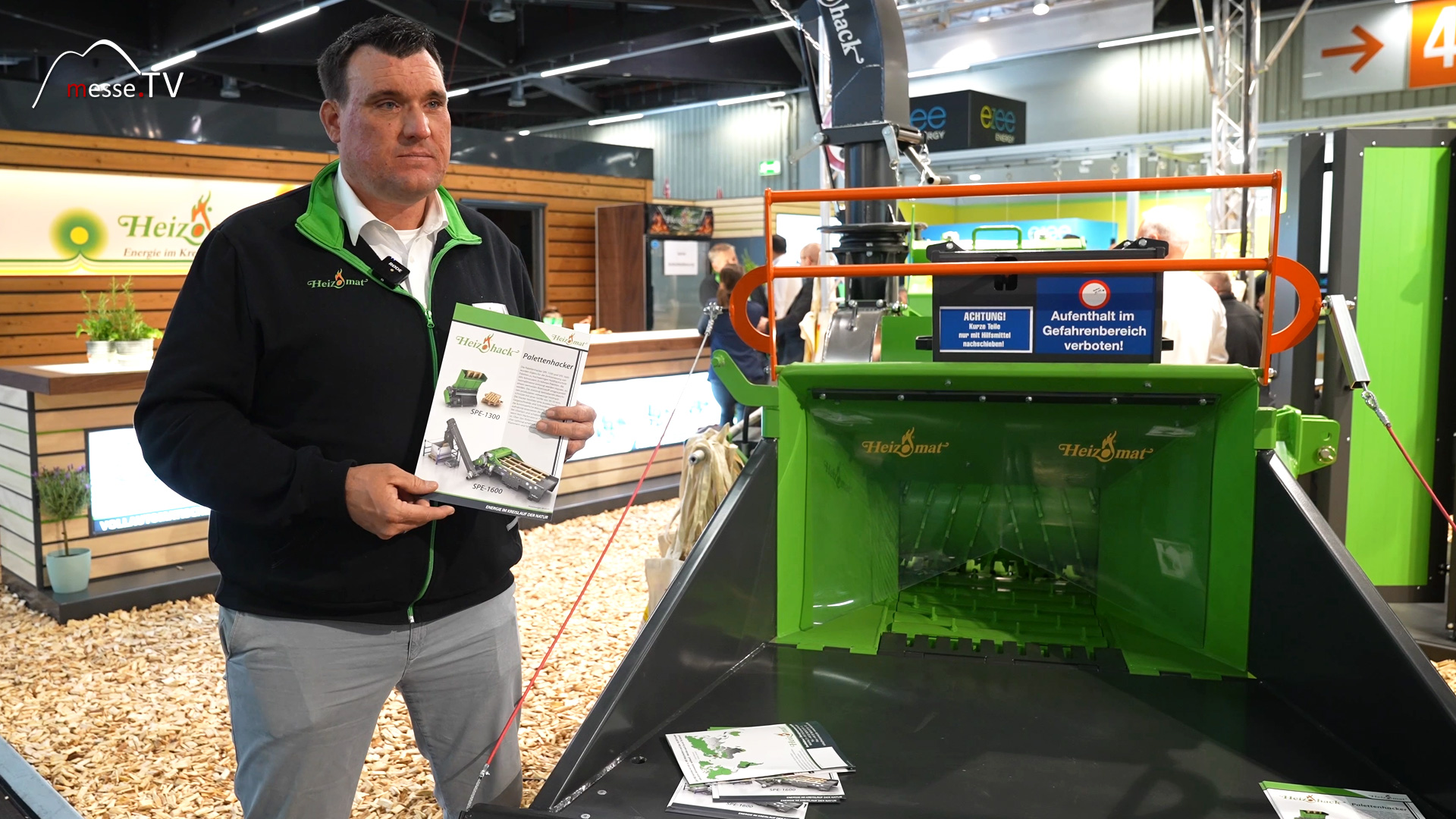
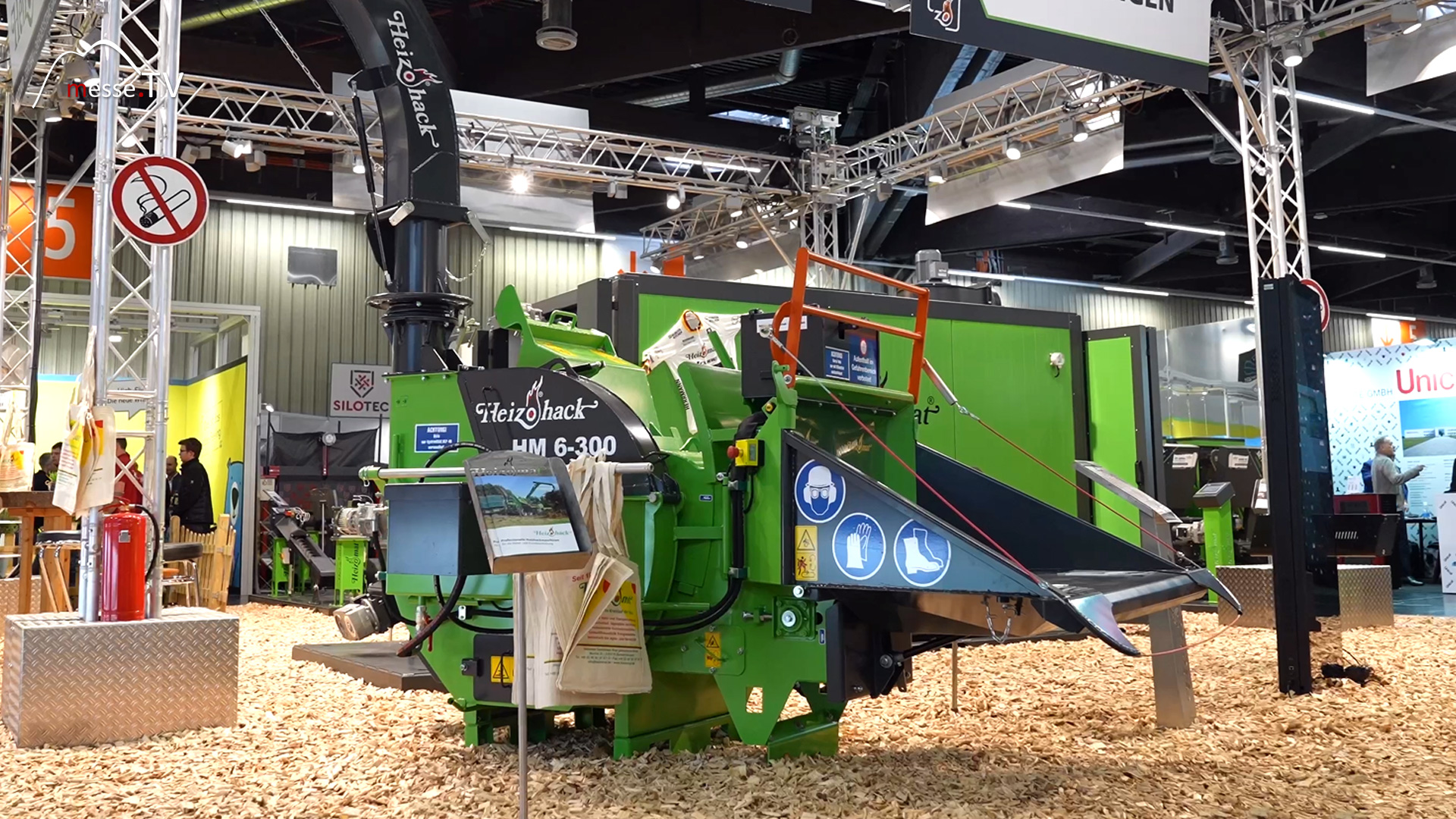
Zum Portfolio gehören eigene Hackmaschinen, die unterschiedliche Leistungsbereiche abdecken. Diese reichen von kleineren Lösungen bis hin zu groß dimensionierten Systemen, die auf Lkw-Aufbauten oder als stationäre Anlagen ausgeführt sind. Besonders auffällig sind spezielle Palettenhacker, die gezielt auf die Verwertung von Altholz und industriellen Reststoffen ausgelegt sind. Durch diese Integration der Zerkleinerungstechnik wird sichergestellt, dass Brennstoffqualität und Heizsystem optimal aufeinander abgestimmt sind. Der Kunde erhält kein isoliertes Produkt, sondern ein durchgängiges System, das auf seine individuellen Brennstoffe ausgelegt werden kann.
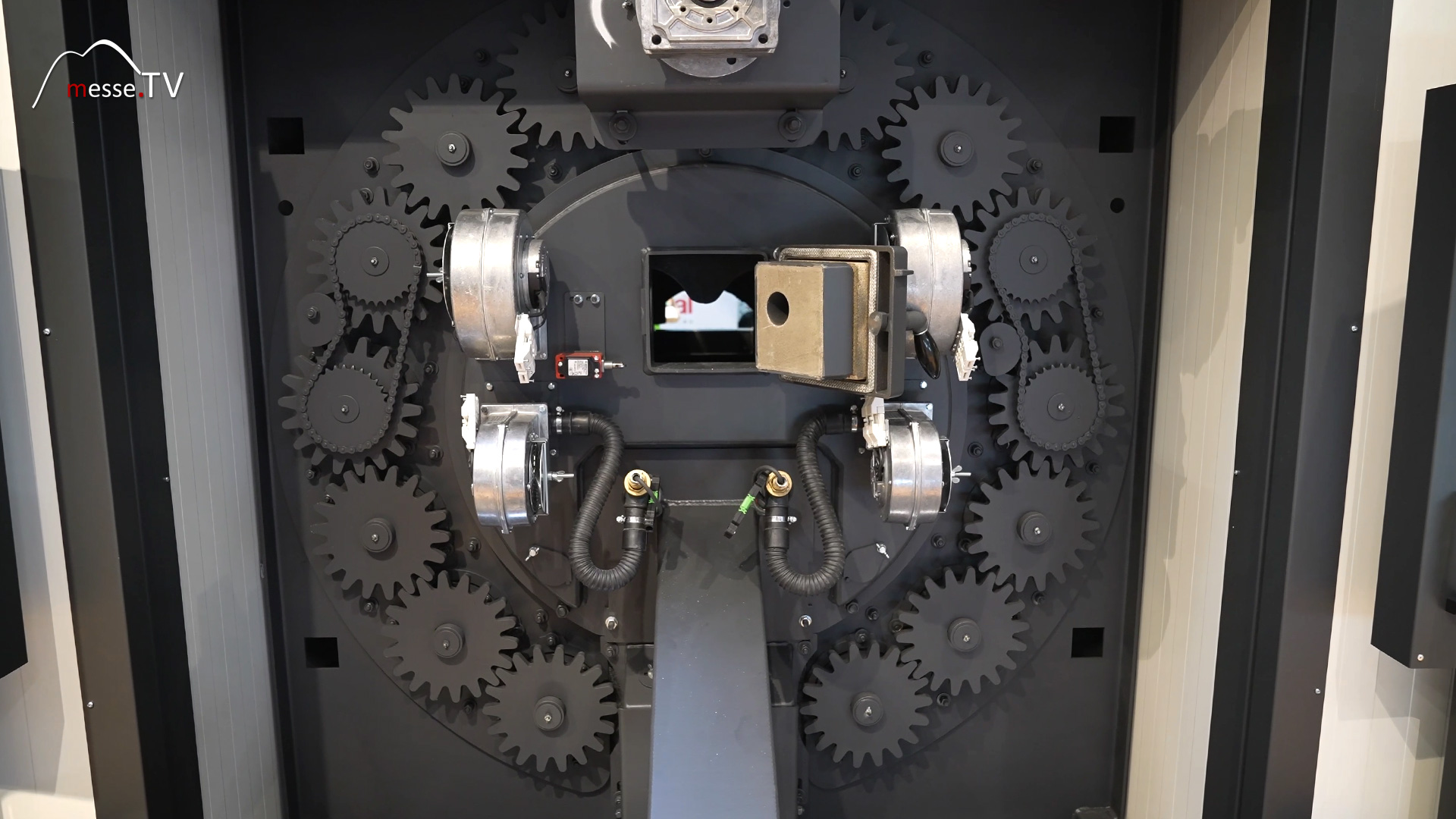
RHK Restholzkessel mit 300 kW Leistung im Detail
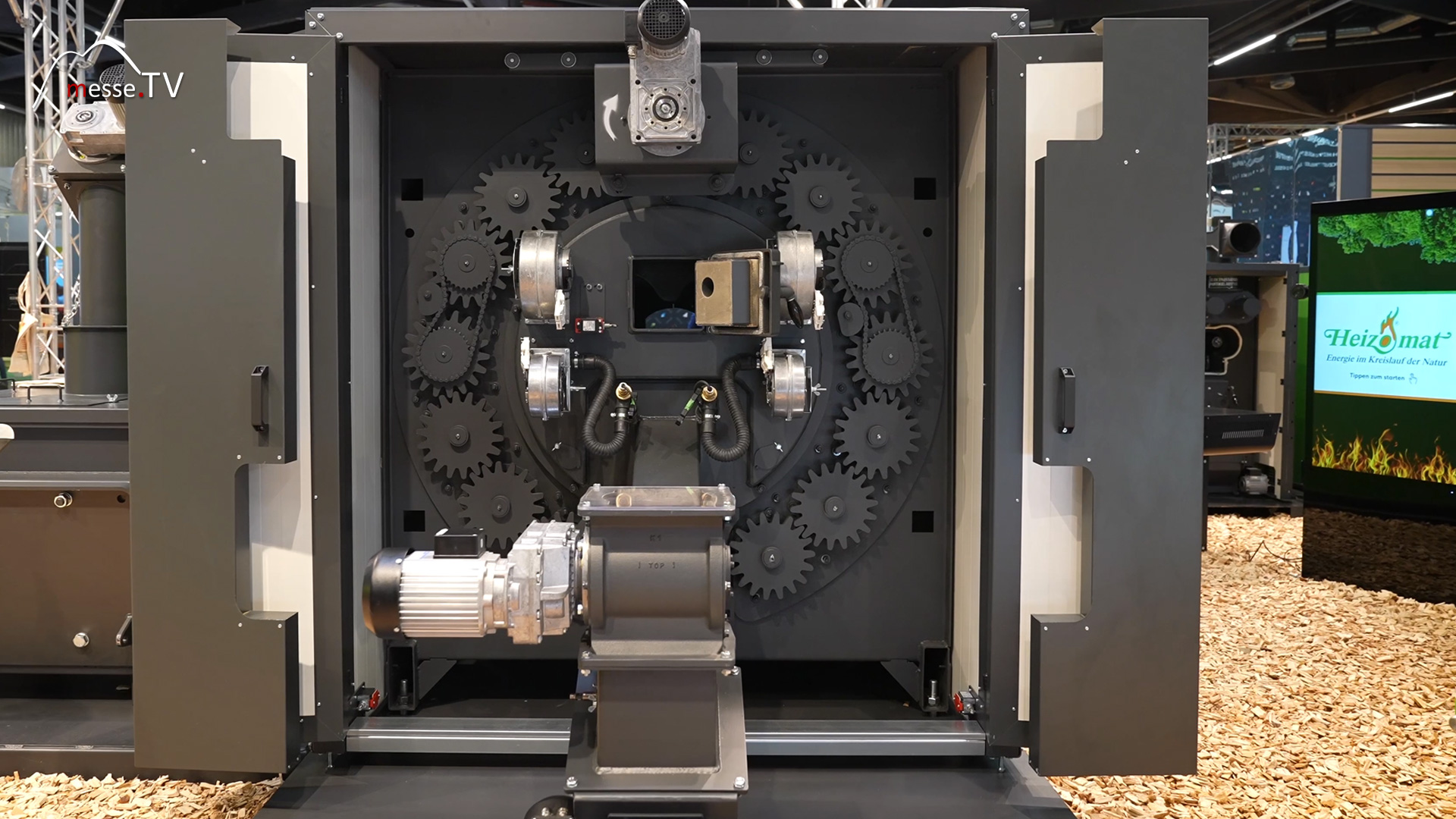
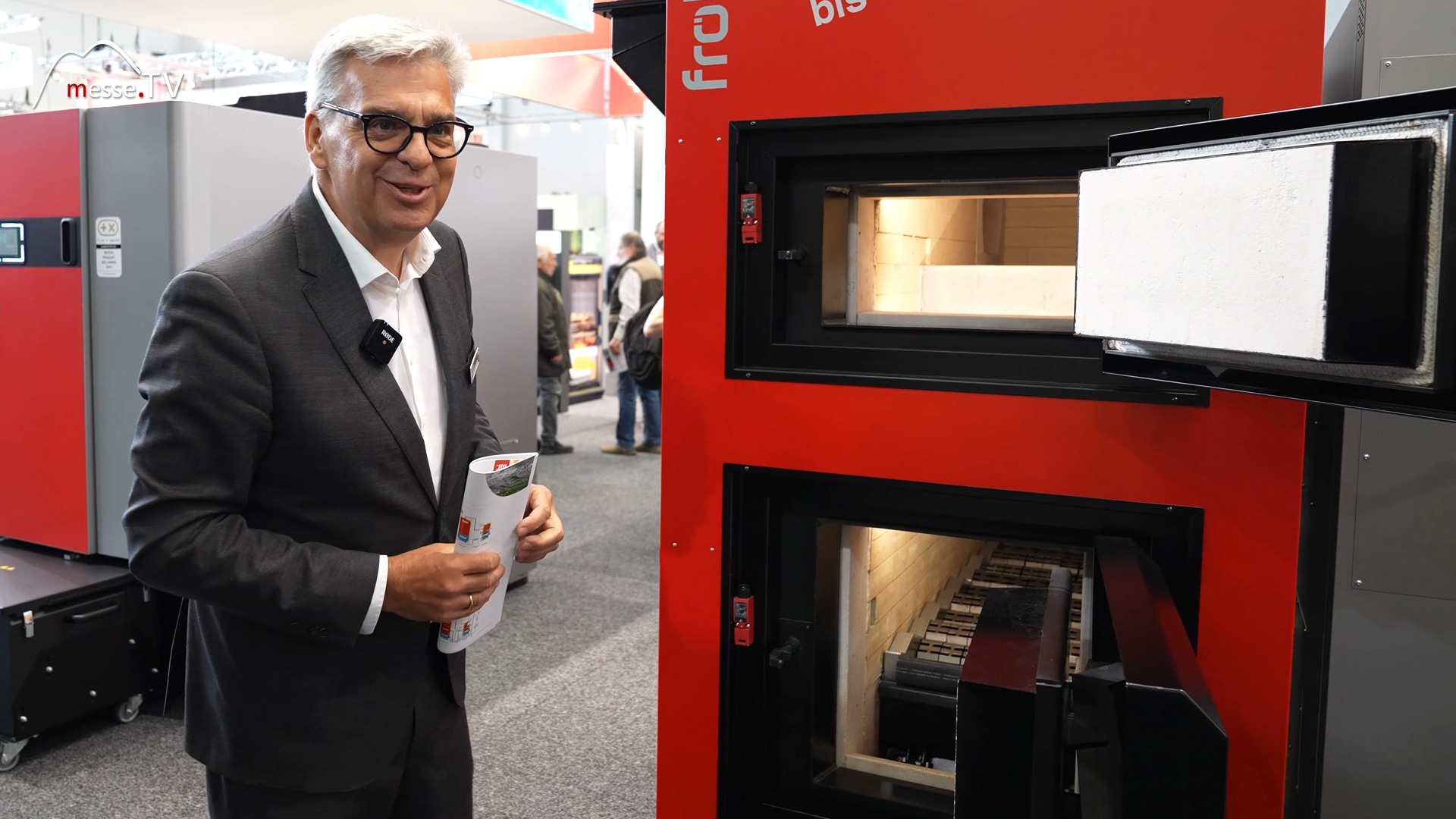
Im Zentrum der Präsentation steht ein 300 kW starker RHK Restholzkessel. Dieser zeichnet sich durch eine massive Bauweise aus, die auf Langlebigkeit und Betriebssicherheit ausgelegt ist. Trotz dieser Robustheit kommt eine moderne Regelungstechnik zum Einsatz, die unter anderem eine App-basierte Steuerung ermöglicht. Fernzugriff, Überwachung und Anpassungen im laufenden Betrieb gehören damit zum Standard. Ein wesentliches konstruktives Merkmal ist die liegende Brennkammer, die vollständig wasserumschlossen ist. Diese Bauweise erfordert eine entsprechend lange Brennkammer, bietet jedoch entscheidende Vorteile im Umgang mit schwierigen Brennstoffen. Durch die größere Brennzone können auch minderwertige oder stark schwankende Hackschnitzelqualitäten gleichmäßig verbrannt werden, ohne dass die Leistung instabil wird.
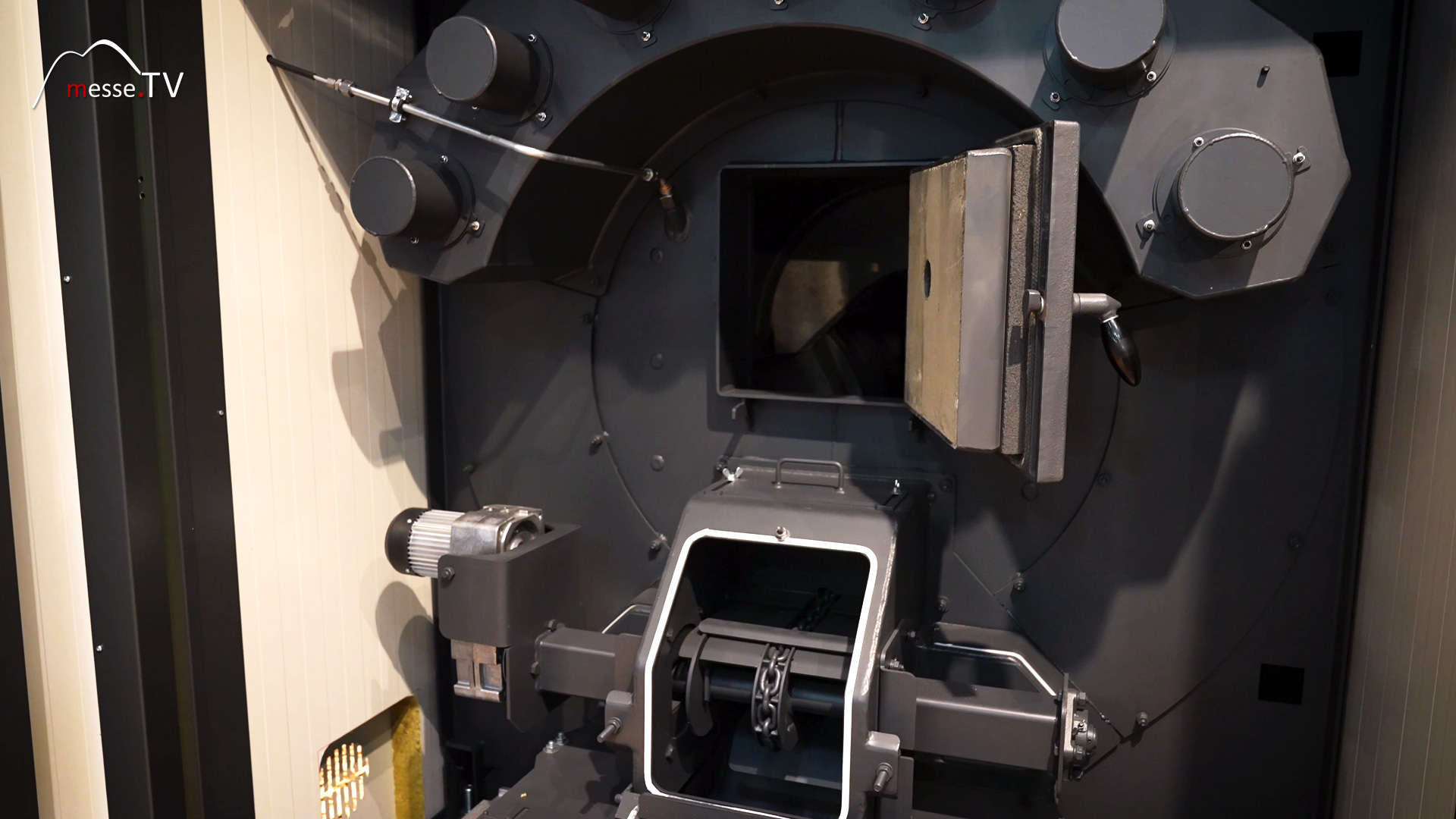
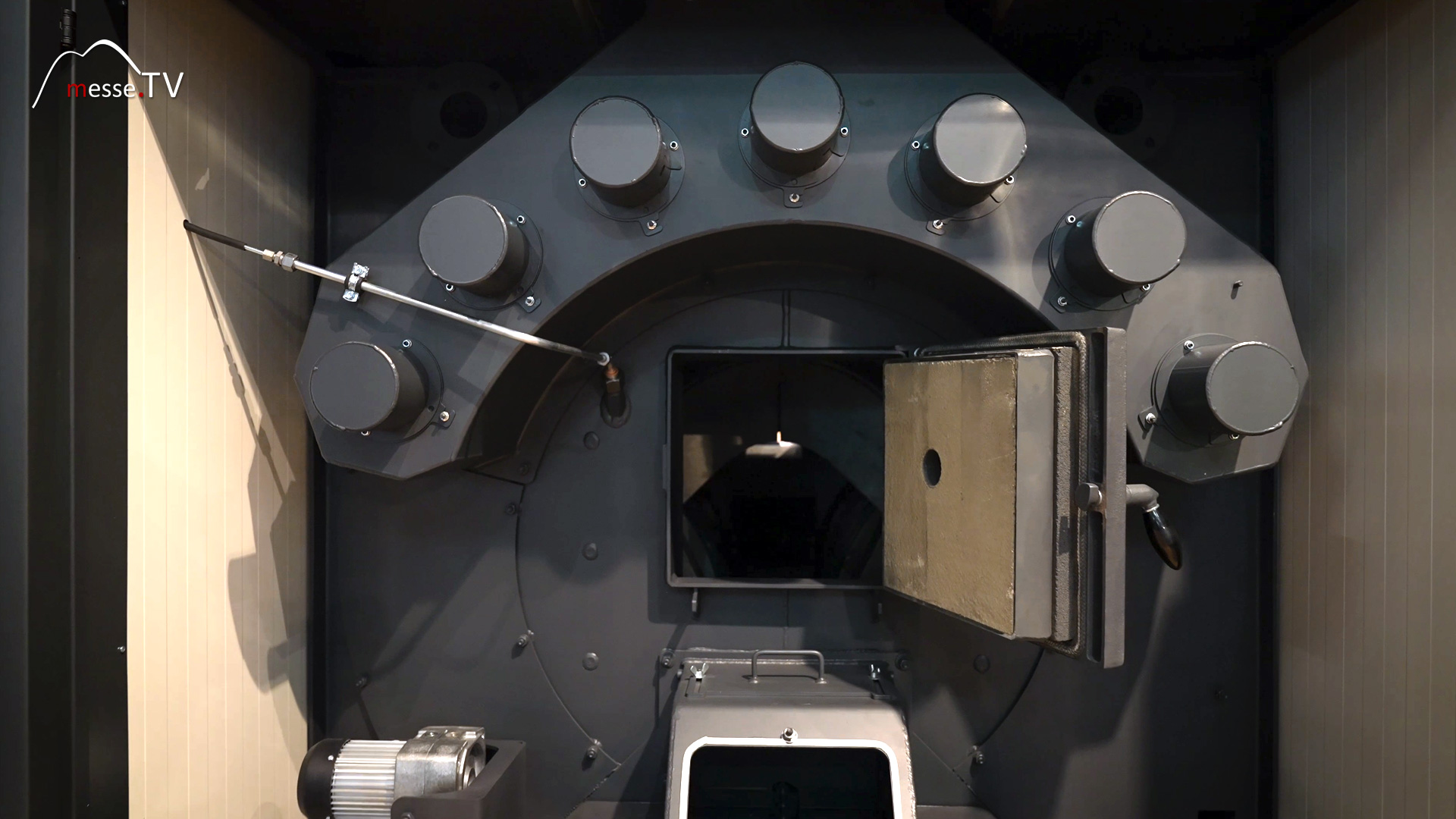
Ascheaustrag und Brennraumtechnik ohne Klapproste
Im Gegensatz zu klassischen Konstruktionen verzichtet das System auf Klapp- oder Kipproste. Stattdessen kommt eine umlaufende Aschekette zum Einsatz, die funktional einem Kratzboden aus der Landwirtschaftstechnik ähnelt. Diese Lösung ist extrem robust ausgeführt und sorgt für einen kontinuierlichen Austrag der Asche. Das Ergebnis ist ein sehr störungsarmer Betrieb, selbst bei anspruchsvollen Brennstoffen. Die Asche wird automatisch aus dem Kessel geführt und in entsprechende Behälter ausgetragen, was den Wartungsaufwand reduziert und den Dauerbetrieb erleichtert.
- Geeignet für Restholz und heterogene Hackschnitzelqualitäten
- Liegende, wasserumschlossene Brennkammer
- Automatische Beschickung und Zündung
- Aschekette statt Klapp- oder Kipprosten
- App-basierte Regelung und Fernzugriff
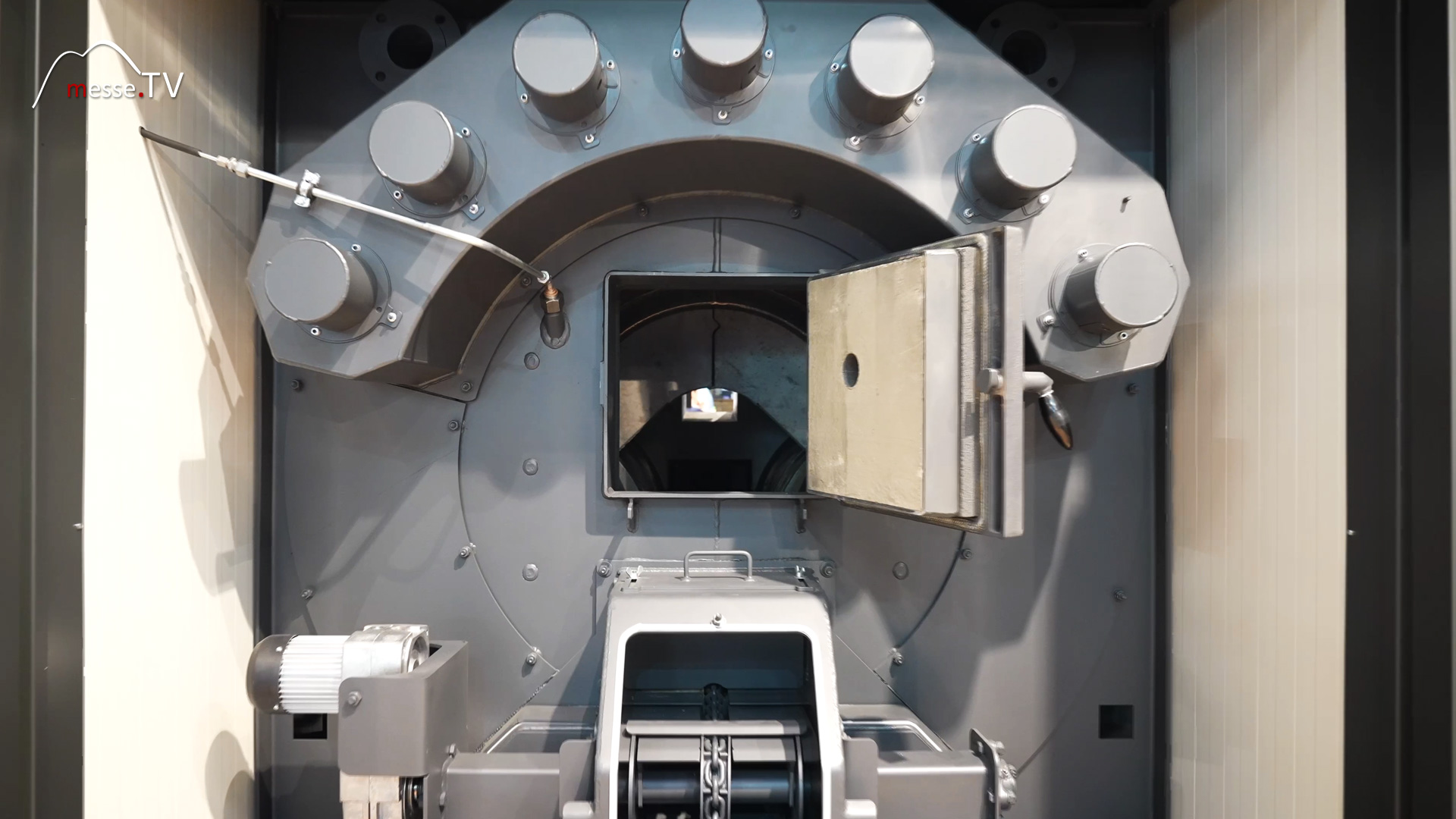
Flexible Austragung und modulare Bunkerlösungen
Je nach Anlagengröße und Brennstofflagerung stehen unterschiedliche Austragungssysteme zur Verfügung. Neben Fräslösungen werden auch verschiedene Varianten von Schubböden angeboten. Dadurch lassen sich sowohl kleine als auch sehr große Bunker zuverlässig anbinden. Diese Flexibilität ist insbesondere für gewerbliche Anwender relevant, bei denen Platzverhältnisse, Brennstoffanfall und Logistik stark variieren können. Die Anlage kann individuell an die Gegebenheiten vor Ort angepasst werden, ohne dass grundlegende Kompromisse bei der Betriebssicherheit eingegangen werden müssen.
Mobile Containerlösungen bis in den hohen Leistungsbereich
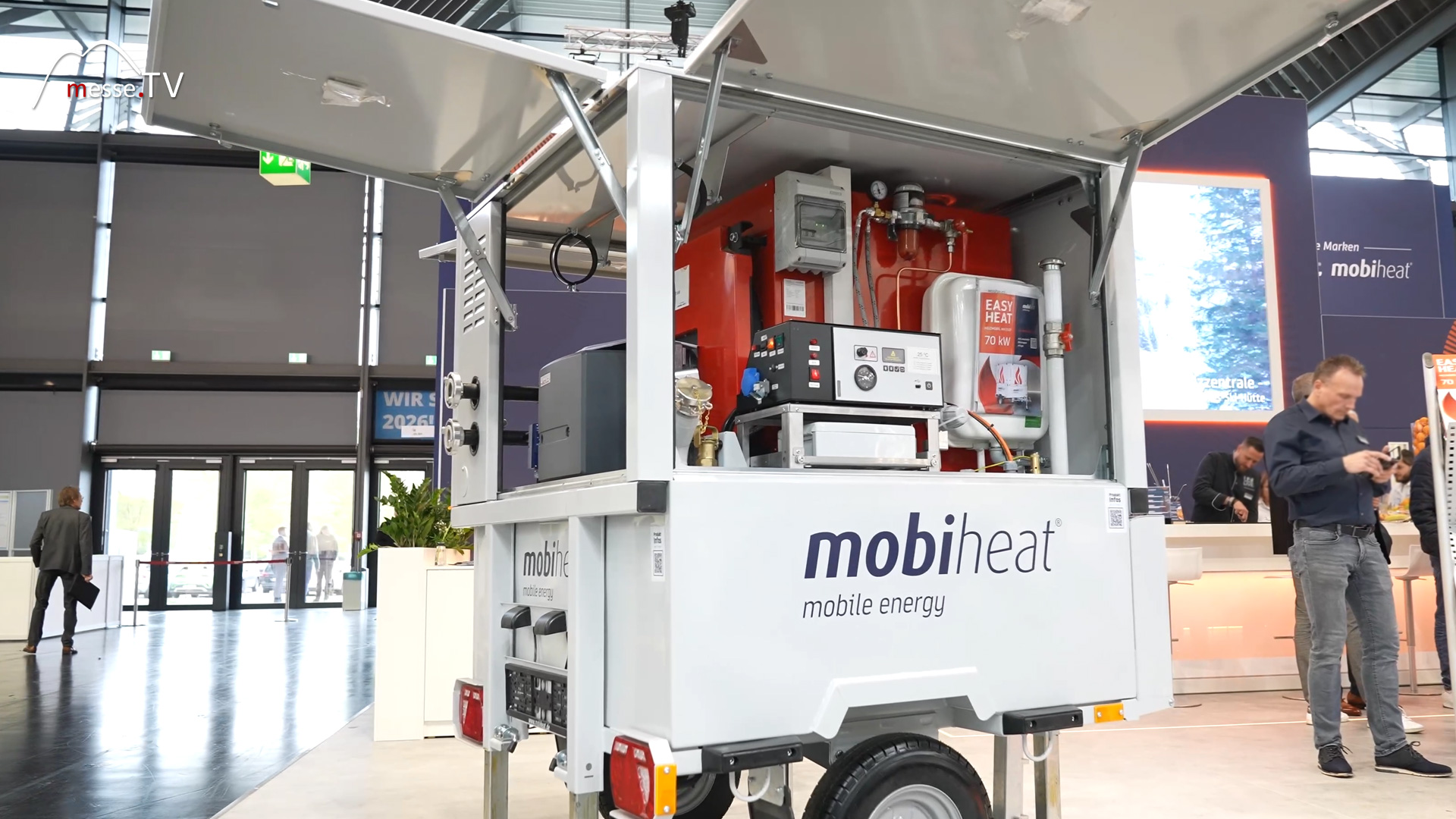
Neben der klassischen Aufstellung im Gebäude werden auch mobile Lösungen angeboten. Dabei wird der Heizkessel in einem Container untergebracht, was Leistungen bis in den hohen dreistelligen Kilowattbereich ermöglicht. Der Vorteil liegt auf der Hand: Der Bau eines separaten Heizhauses entfällt, ebenso aufwendige Planungen für Gebäudehülle und Infrastruktur. Gerade bei temporären Anwendungen oder bei der Versorgung kleiner Wärmenetze kann diese Variante wirtschaftliche Vorteile bringen und den Planungsaufwand deutlich reduzieren.
Einsatzbereiche von Einzelfeuerung bis Fernwärme
Das Leistungsspektrum reicht von Anlagen im Bereich kleiner Gebäude bis hin zu Großanlagen für Fernwärme und Wärme-Contracting. Während kleinere Leistungen eher im landwirtschaftlichen oder gewerblichen Umfeld zum Einsatz kommen, liegt ein klarer Schwerpunkt im Bereich mittelständischer Unternehmen und kleiner Wärmenetze. Großanlagen mit Leistungen bis in den Megawattbereich adressieren kommunale Projekte und industrielle Anwendungen, bei denen konstante Wärmeabnahme und langfristige Betriebssicherheit entscheidend sind.
Wirtschaftliche Einordnung und Investitionsrahmen
Im mittleren Leistungsbereich liegen die Investitionskosten entsprechend der Dimensionierung deutlich über klassischen Heizsystemen. Für eine Anlage um 300 kW bewegt sich der grobe Kostenrahmen im oberen fünfstelligen Bereich, abhängig von Ausstattung, Austragung und Peripherie. Entscheidend ist dabei weniger der reine Anschaffungspreis als die langfristige Wirtschaftlichkeit durch günstige Brennstoffe und hohe Verfügbarkeit. Gerade für Betriebe mit eigenem Restholz oder kontinuierlichem Anfall von Biomasse entsteht so ein energetisches Gesamtkonzept, das Kosten senkt, Entsorgung vermeidet und Versorgungssicherheit schafft.

Messe-Berichterstattung bundesweit - Messewissen, Termine & Veranstaltungen


