Plastic fibre belts for lifts: lighter without steel
In lift technology, the focus is often on controls, energy consumption and maintenance intervals. However, components that are rarely in the spotlight are just as important: belts, ropes, drives and the supporting mechanics. These are the factors that determine whether a system runs efficiently in everyday use, how much mass needs to be moved – and how well modernisation can be implemented in existing shafts. When it comes to heavy loads, high cycle rates or cramped machine rooms, every kilogram and every bit of design leeway becomes a technical currency.
A solution that challenges a classic standard is being presented at a trade fair: a belt in the lift industry that is not reinforced with steel. Instead, high-performance fibres are used to provide reinforcement. The aim is not to create a show effect, but to achieve a sober improvement in weight, handling and system design – in other words, lighter, easier to integrate and more flexible in design.
Swiss materials expertise for multiple industries
Behind this approach is Aritec New Materials Group AG from Switzerland. The company describes itself as a specialist in the refinement and processing of plastic fibres for various industries. These include the lift industry, but also the reinforcement of conveyor belts and applications in the water and underwater sectors. This is an important context: Anyone designing fibres for multiple applications must systematically understand material behaviour, ageing, friction and load cycling – not just for a single use case. In this logic, the material is not an accessory, but the starting point for the design. Especially in safety-critical areas, material development becomes a question of verifiability and reproducible manufacturing.

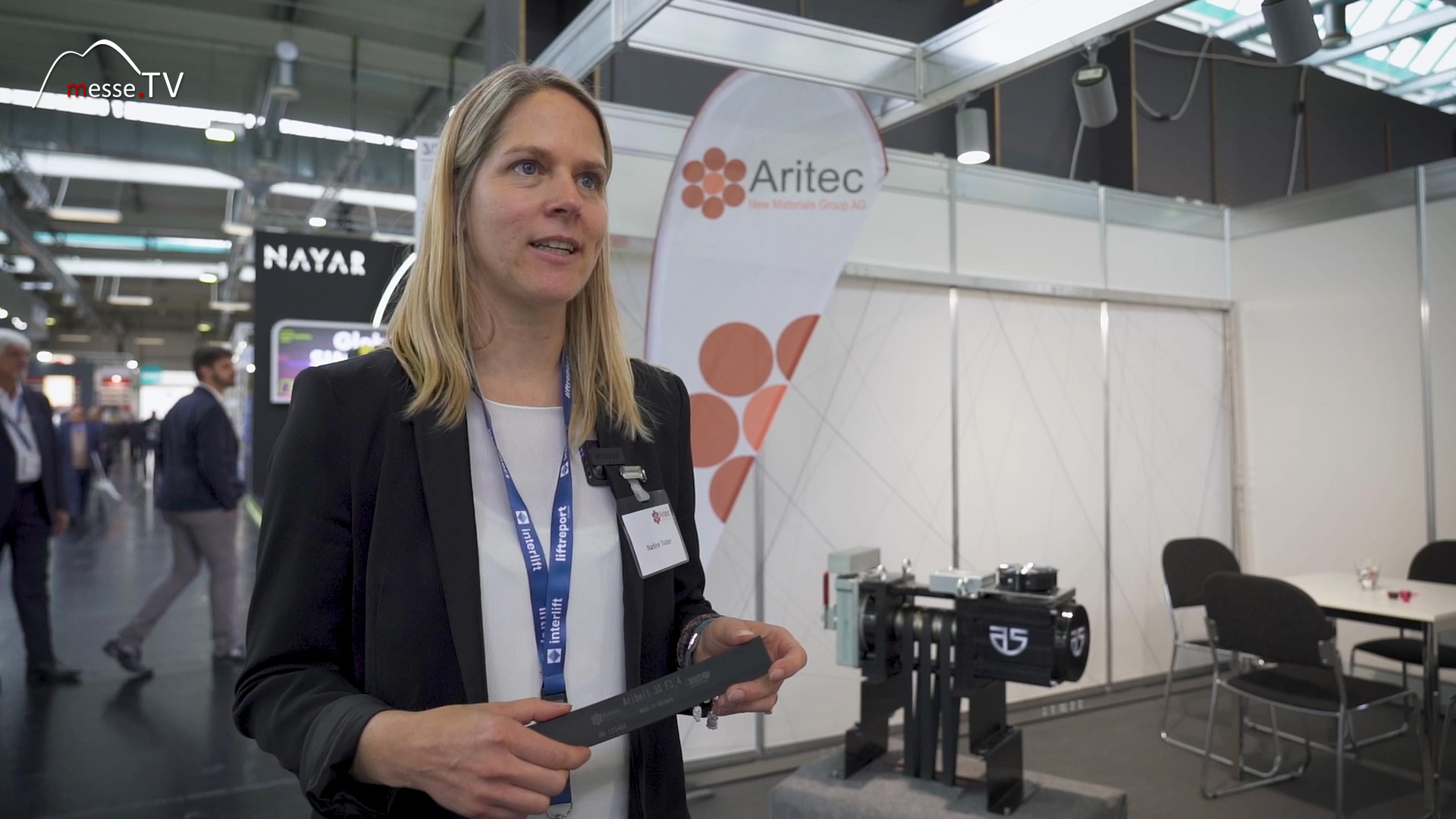
Aribelt as an example of a belt without steel
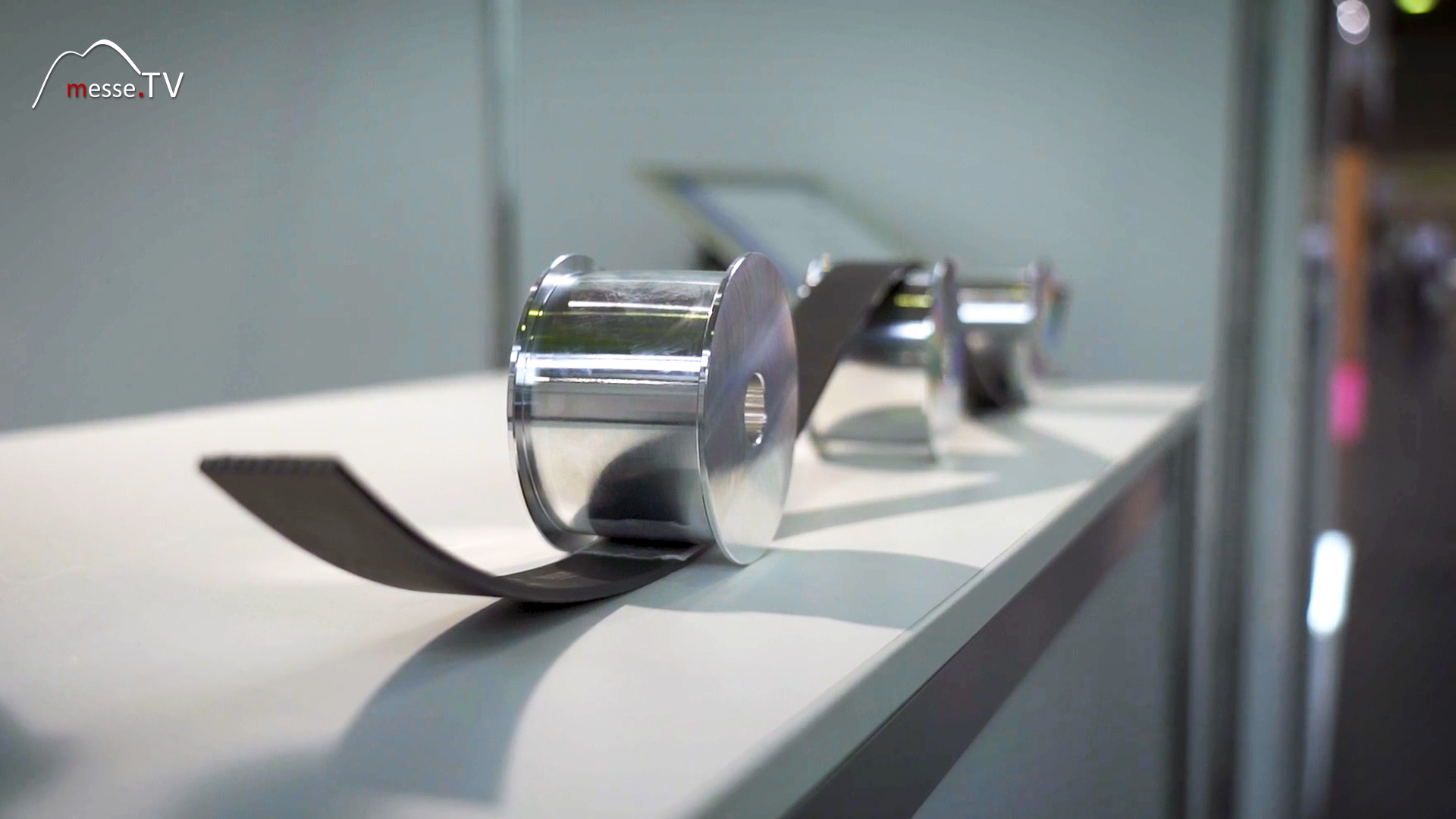
The product shown is called Aribelt and is described as the world's first TÜV-certified belt reinforced with aramid – a high-performance fibre from the spectrum of plastic fibres. The key point remains: no metal reinforcement, no classic steel strands. Steel-reinforced belts have dominated the market to date; this concept deliberately takes a different approach. The difference is not just academic. When steel is omitted, the mass, bending radii and potentially also the requirements for surrounding components change. This is precisely where the argument comes in: the belt is significantly lighter, which means that smaller drive pulleys can be used in the design. In practice, this can mean that units can be made more compact and the overall system reacts less sluggishly in certain areas.
Weight, drive pulley and carbon footprint in the same package
The discussion also mentions carbon neutrality. Such statements must always be precisely defined in practice – nevertheless, the reference is not coincidental. In many industries, sustainability is no longer treated as an accompanying text, but as part of the technical evaluation: energy requirements, material use, logistics and service life are increasingly being factored into decisions. This makes material change a systemic issue. A plastic fibre approach can simultaneously reduce weight, free up installation space and serve ecological objectives – provided that the evidence is correct and integration remains smooth. However, between aspiration and everyday life lies the question of execution. The belt is therefore not presented as a rigid product, but as an adaptable one: longer or wider depending on the application, with variants designed for specific systems as required.
- Belt construction without steel reinforcement, but with aramid as the fibre base
- Significantly lighter, thus allowing leeway for the drive pulley and unit
- TÜV-certified as formal proof for lift application
- Adaptable in length and width for different lifts

Areas of application beyond lifts
The caption makes it clear that it doesn't stop at lifts. In addition to lift belts, ropes are also mentioned, including crane ropes and ropes for the lift industry. The company also refers to applications in conveyor technology and water. This is more than just a subordinate clause: anyone who is able to design fibres for mechanically stressed systems in different environments inevitably works with a wide range of parameters – from abrasion to moisture, from continuous load to alternating stress. In practice, this often means that a material or manufacturing principle can be ‘translated’ into another field. It is precisely such translations that sometimes result in robust solutions: not because they are spectacular, but because they are based on experience in several industries.
Assembly at the exhibition stand as a reality check
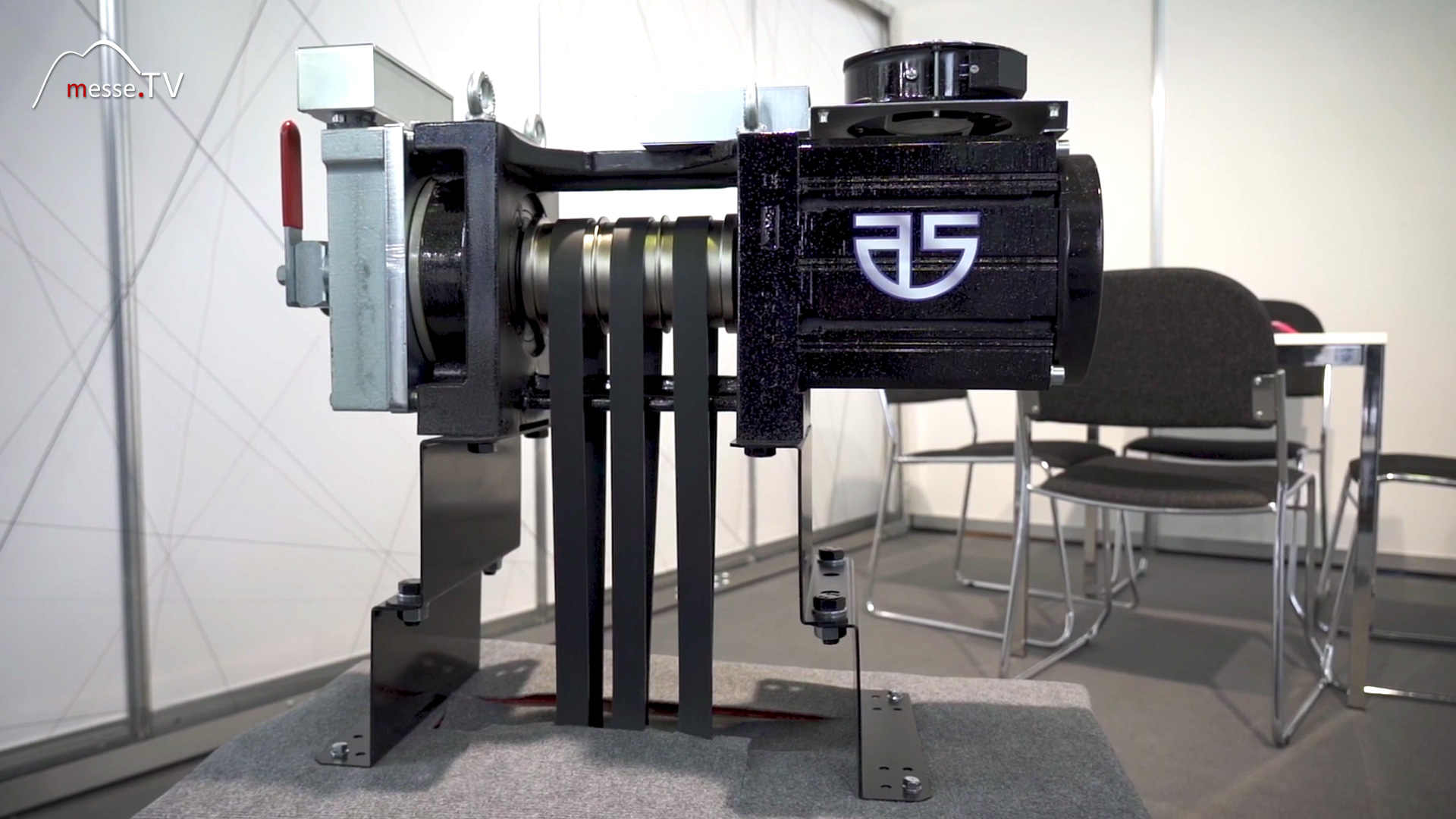
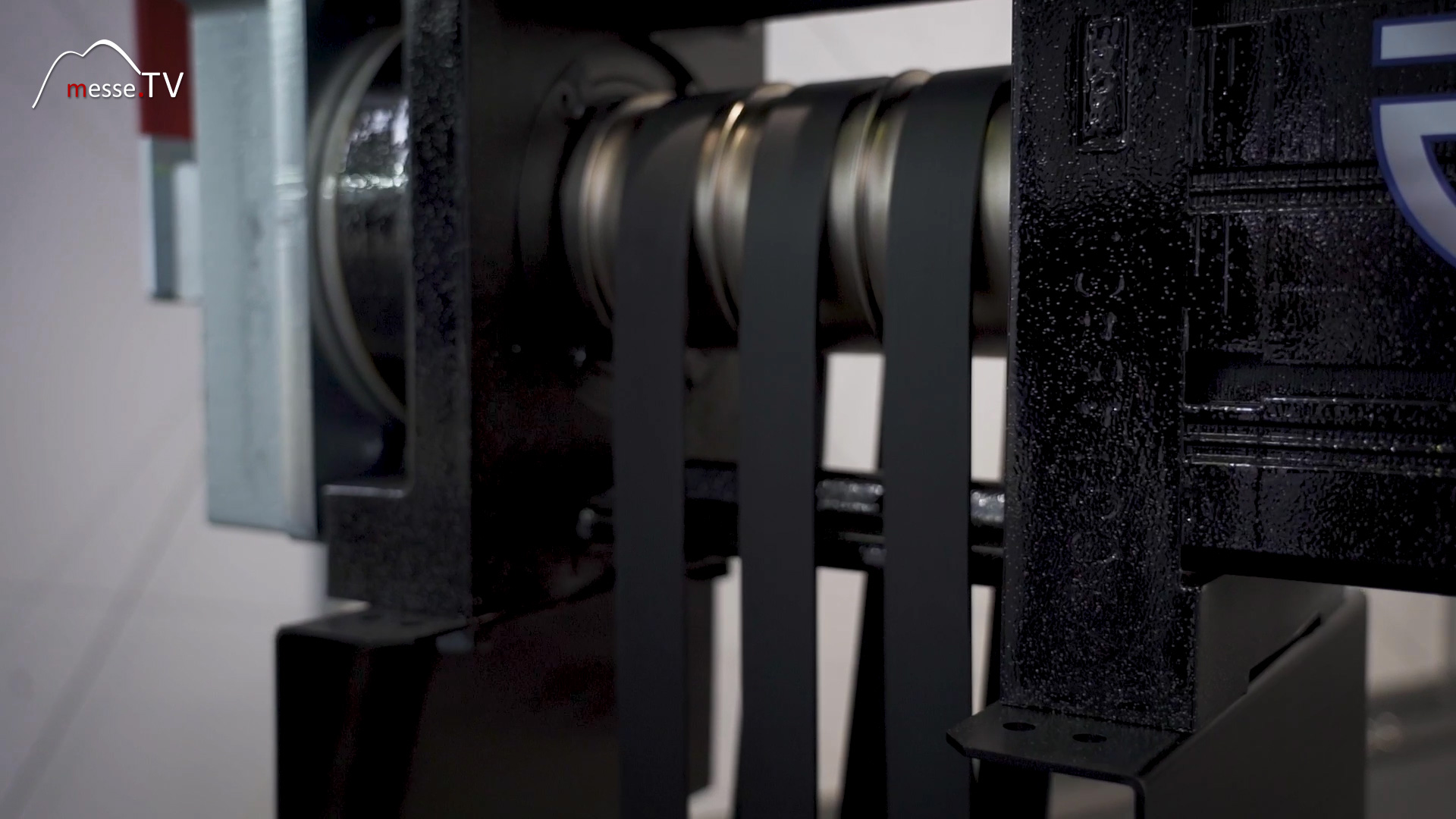
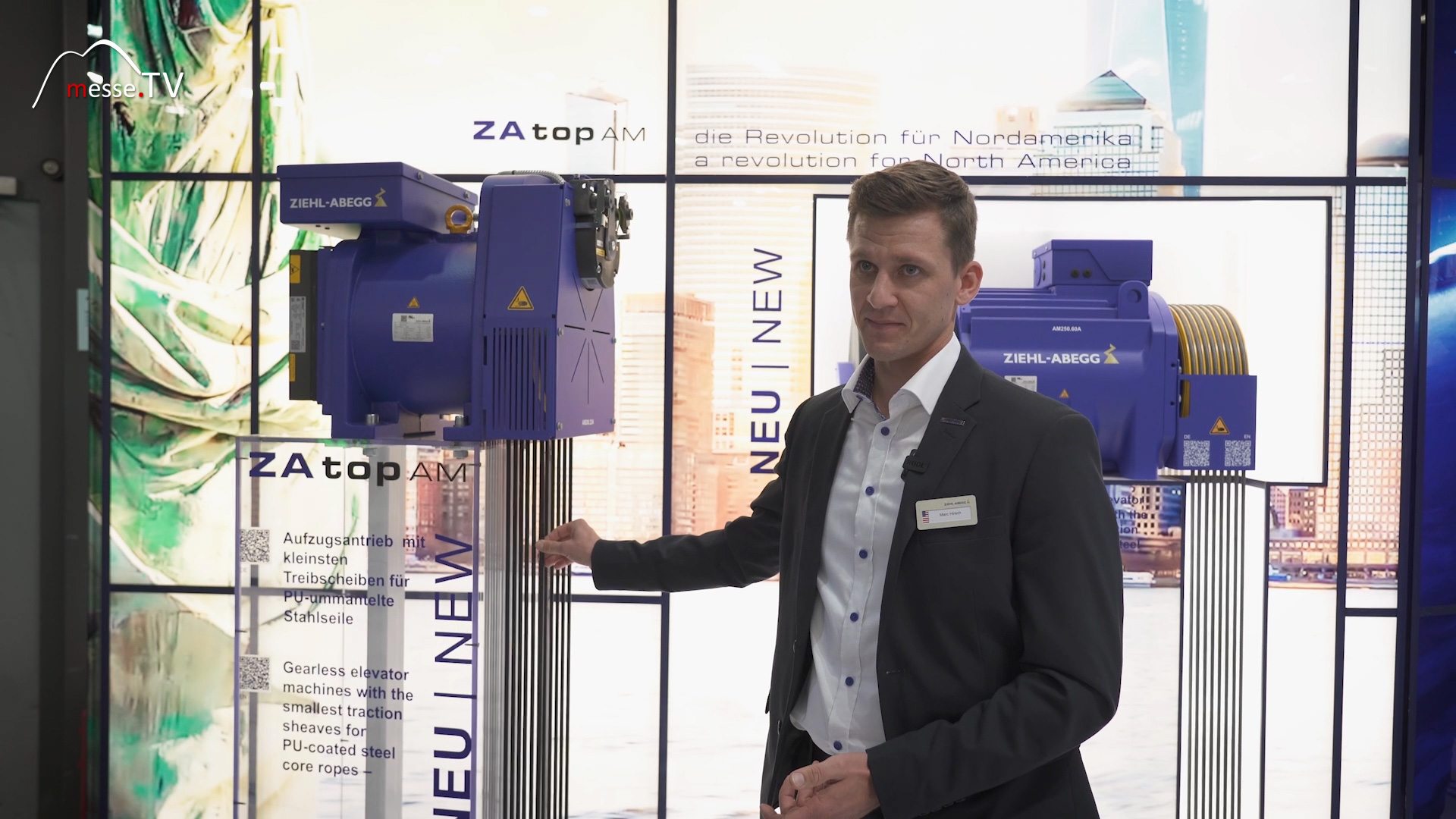
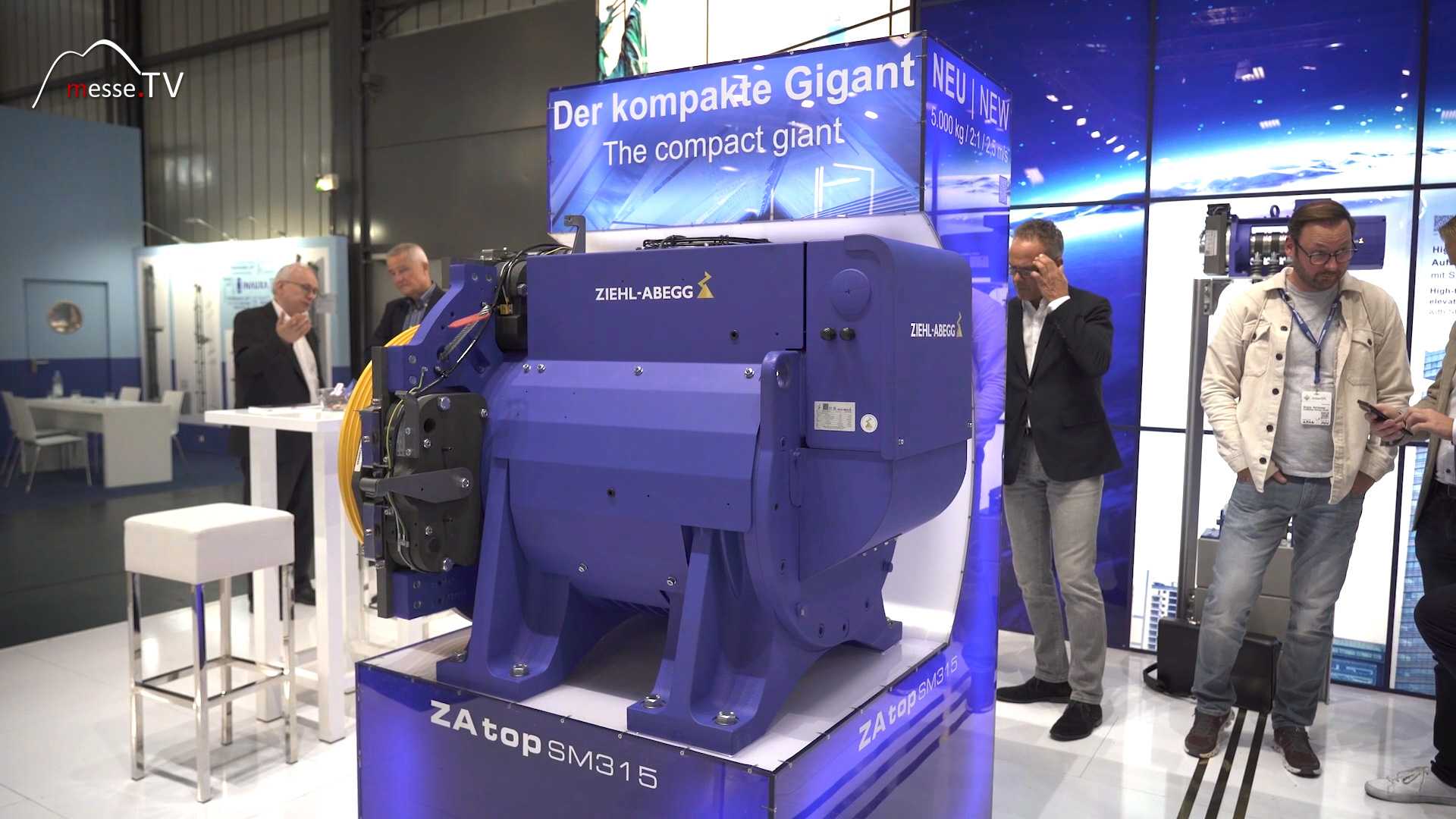
Finally, the belt is shown assembled on a machine from a manufacturer who is also exhibiting. This seems like a casual demonstration, but it is technically crucial: Whether a belt is suitable for lifts is not determined by the data sheet, but by its interaction with real components – i.e. in contact with pulleys, deflections, fastenings and the boundary conditions of a machine room. Aritec New Materials Group AG is thus positioning Aribelt as an alternative to steel-reinforced solutions – not as a break with the principle, but as an evolutionary step: plastic fibre instead of steel, lighter in the system, variable in design, and intended as a component that can be integrated into existing systems.
Trade fair reporting Germany - Trade fair knowledge, dates & events


