Automatic fibre dosing for dry-mix building materials and concrete
by B. Velonavy - 2024-02-13Fibres play an important role in numerous building materials. They increase strength, improve certain material properties and are used in concrete, screeds and special mixtures, amongst other things.
In practice, however, it is not the use of the fibres that poses the greatest challenge, but their precise dosing. Short organic or synthetic fibres in particular tend to become entangled, form bridges or flow unevenly. At bauma, a solution is therefore being presented that aims to automate precisely this problem. According to the manufacturer, the system on display was developed based on specific customer requirements. The aim was to integrate fibre material into industrial production processes reliably, reproducibly and with as little manpower as possible.
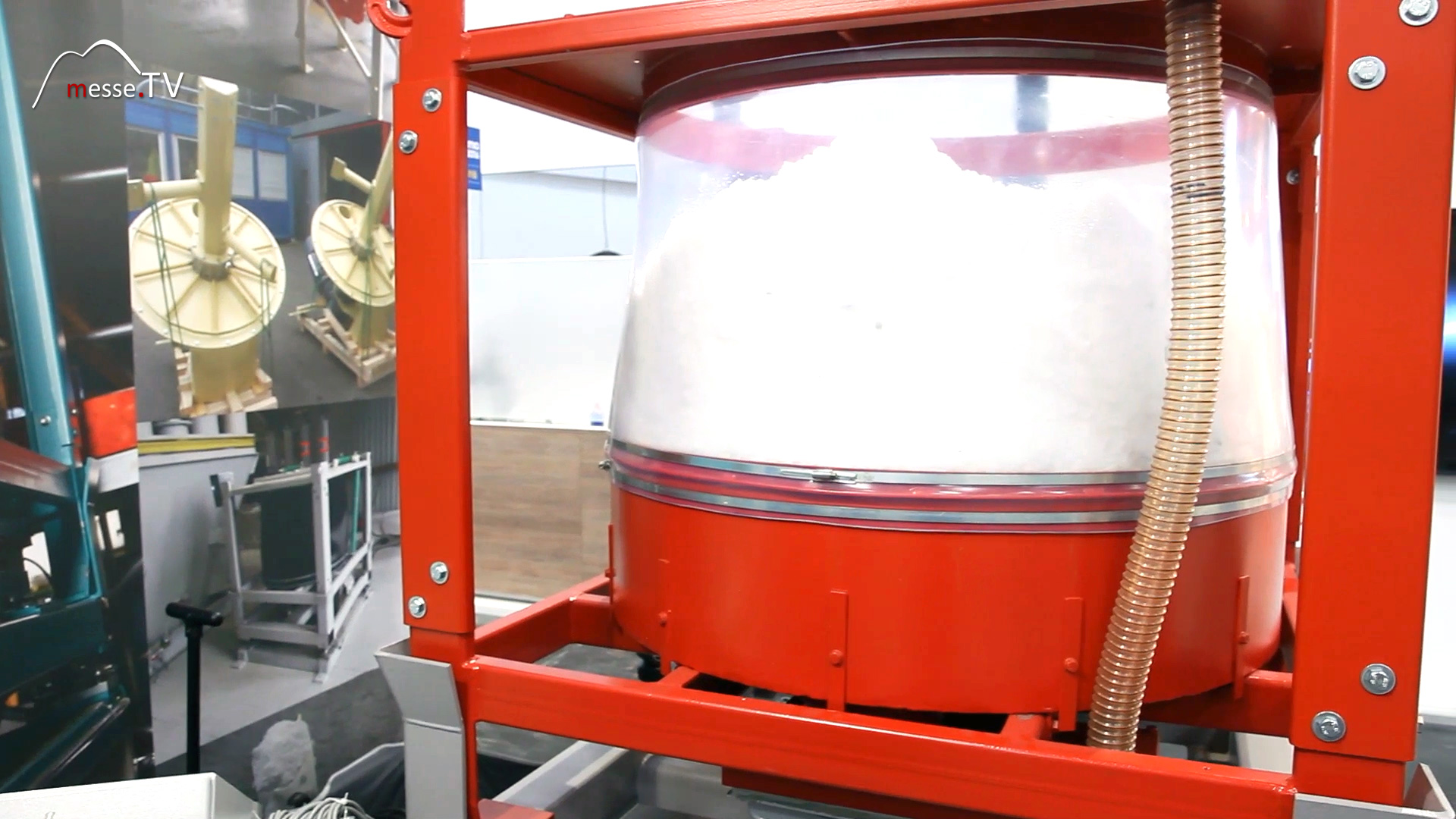

Inocon develops automatic fibre dosing system
The centrepiece of the exhibition stand is an automatic fibre dosing system for organic and synthetic fibres. Depending on the application, the fibres used are between approximately three and eight millimetres in length and, due to their structure, are considered a challenging bulk material. Whilst powders or granulates can be dosed relatively easily, fibres behave in a much more complex manner. They become entangled with one another, form compacted clumps and are often difficult to discharge in a controlled manner. This is precisely where Inocon’s development comes in. The system is designed to dispense the fibres fully automatically in defined quantities, making it particularly suitable for batch processes where each formulation must be adhered to precisely.
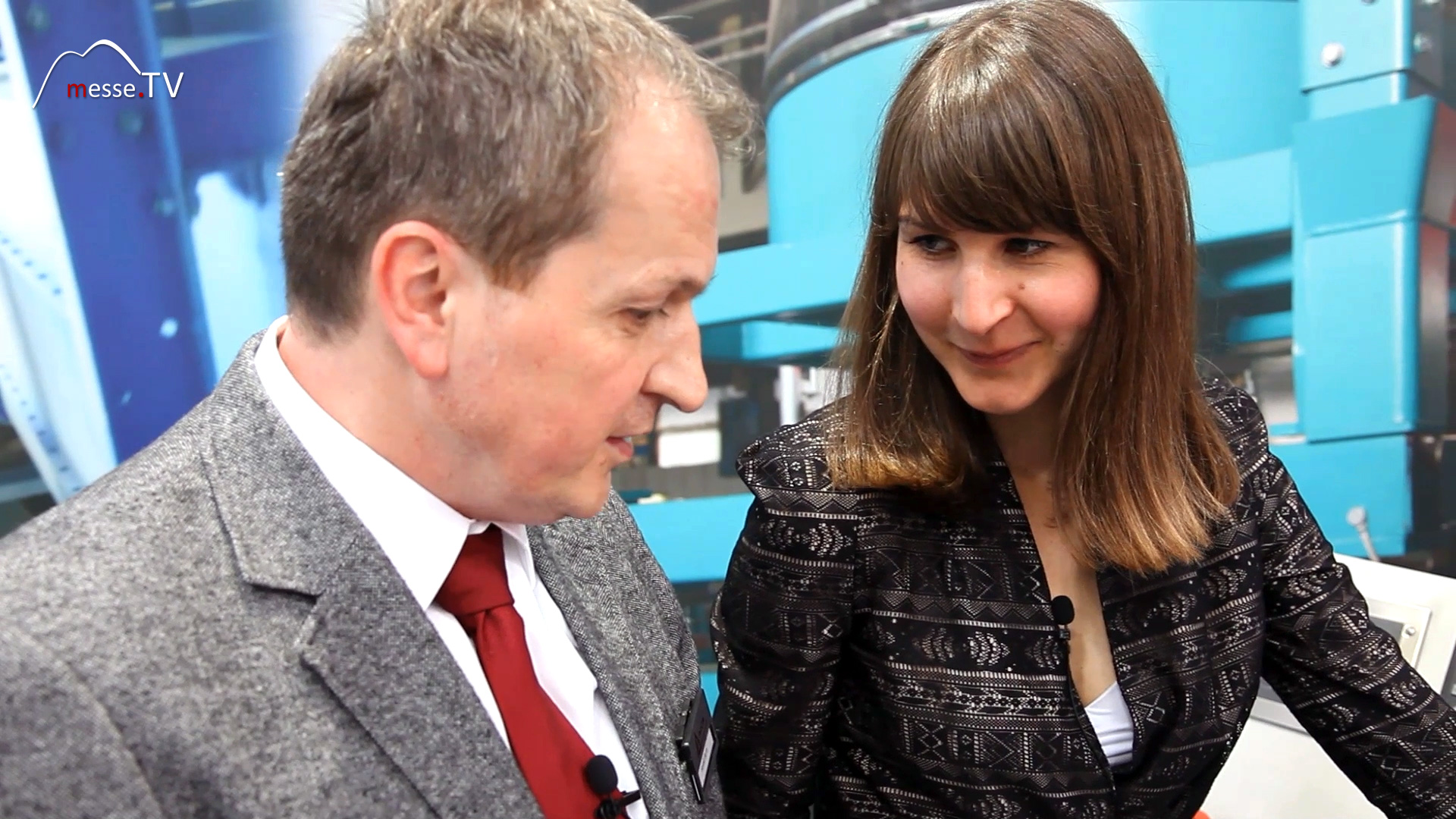
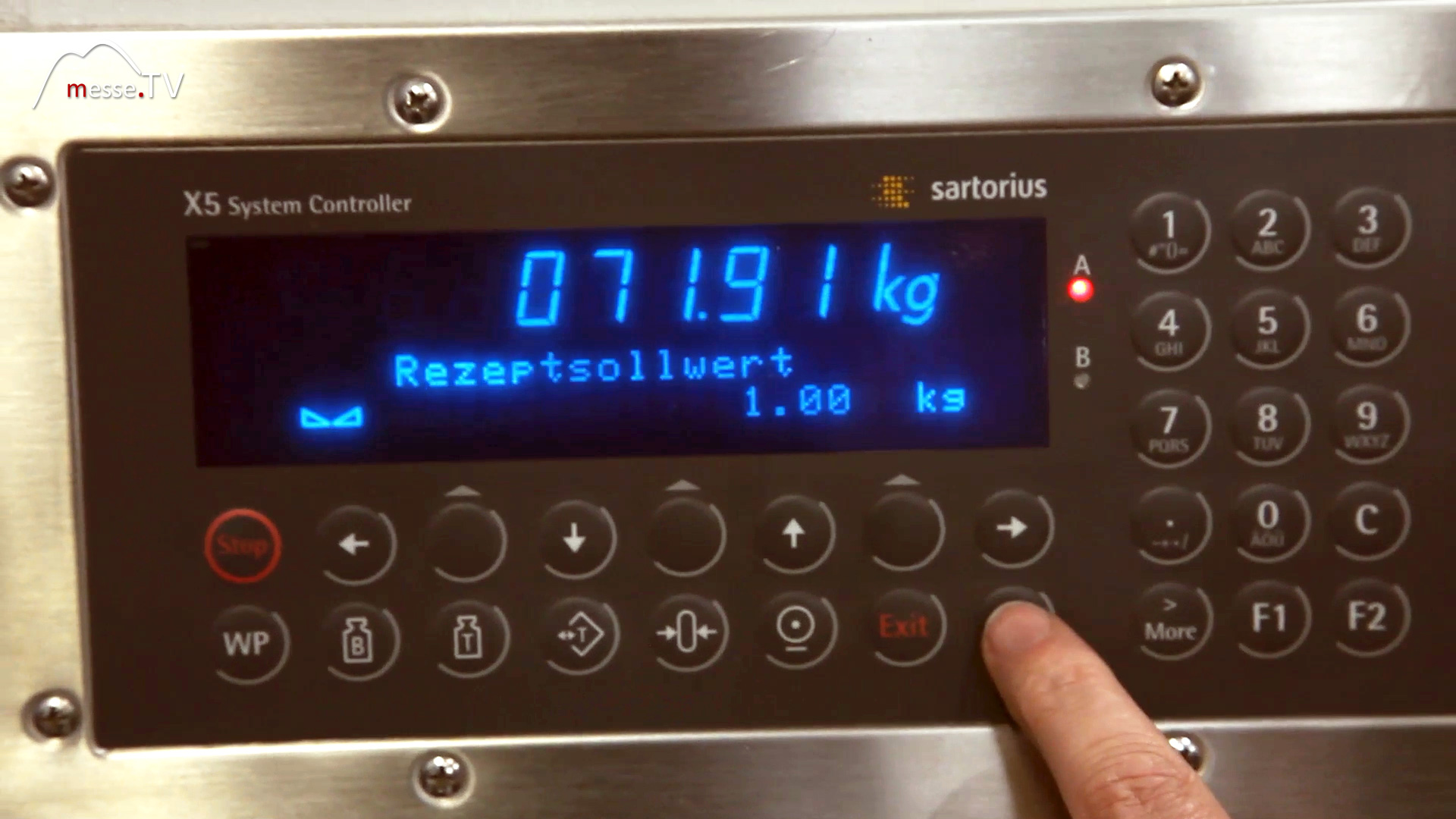
Fibre dosing with special container geometry
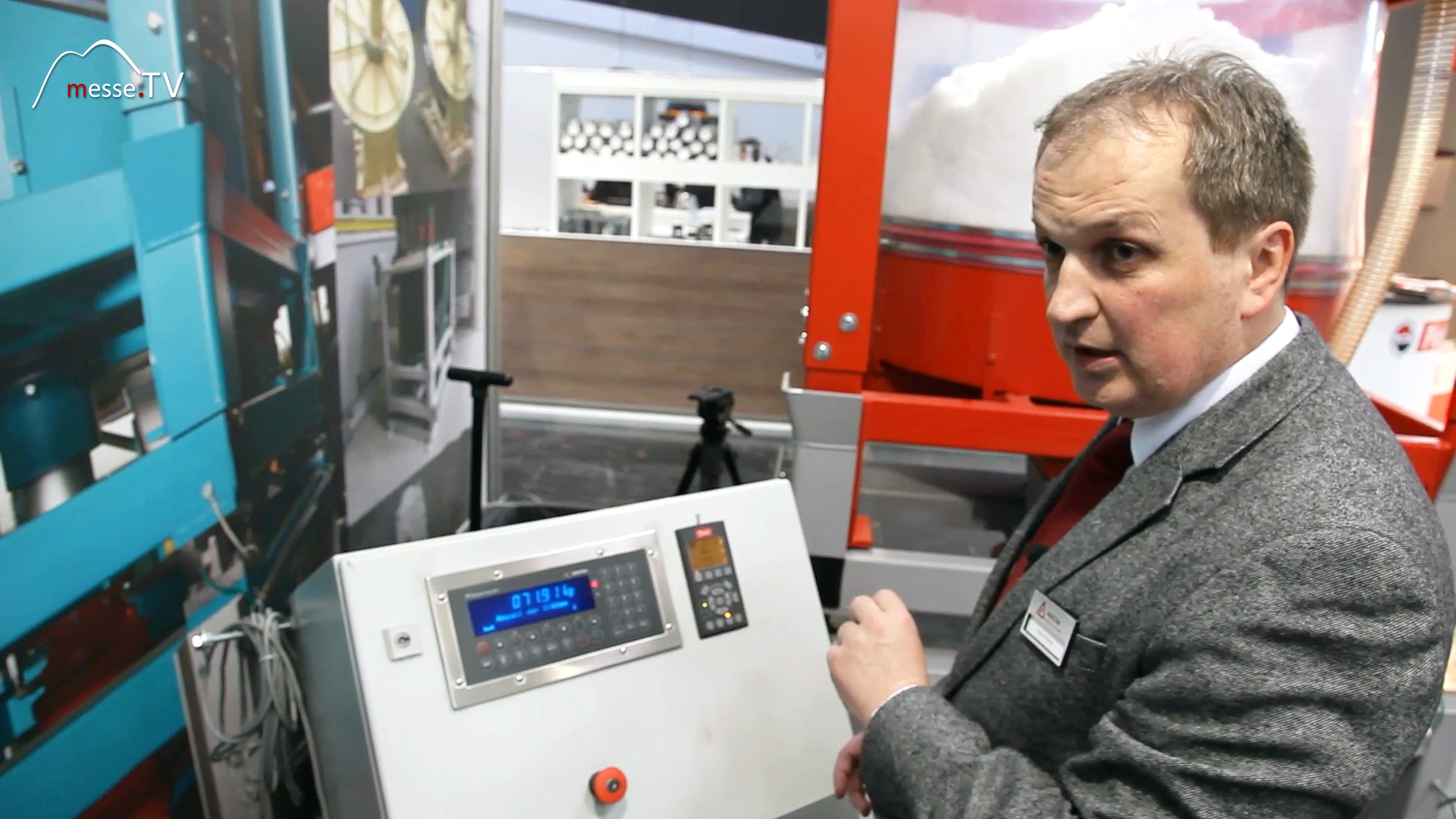
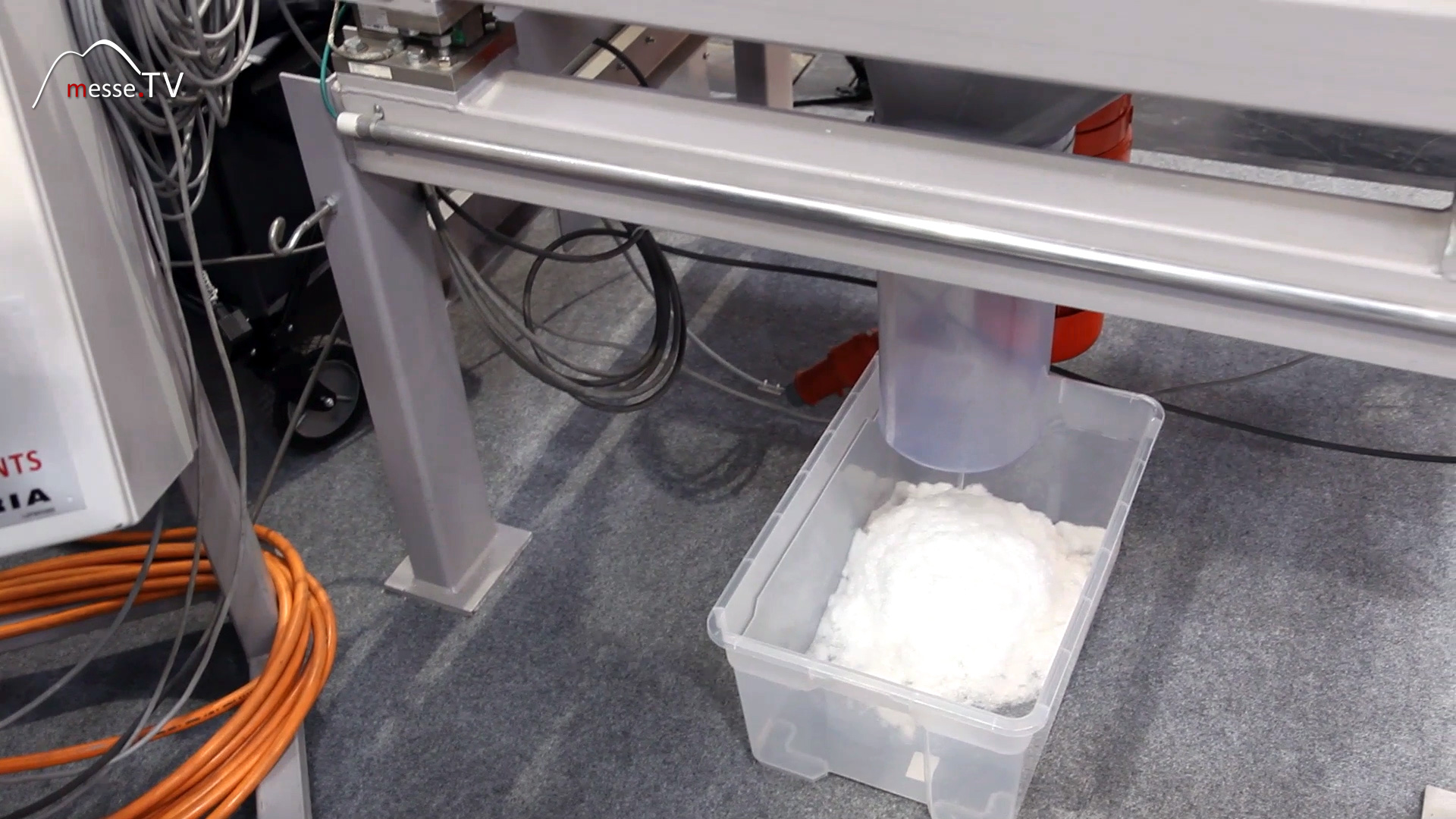
A central element of the system is the storage container. This has been designed so that the material can slide down continuously. The container geometry widens towards the bottom, thereby supporting the flow of material. At the exhibition stand, there are around 71 kilograms of fibre material in the container. The operator can then use the control system to enter the desired dosing quantity. In the demonstration example, a target quantity of one kilogram is selected. In addition, multiple dosing cycles can be programmed. This allows the same quantity to be dispensed automatically not just once, but several times in succession. This function is particularly useful for recurring production runs with identical recipes.

Agitator arm ensures uniform material discharge
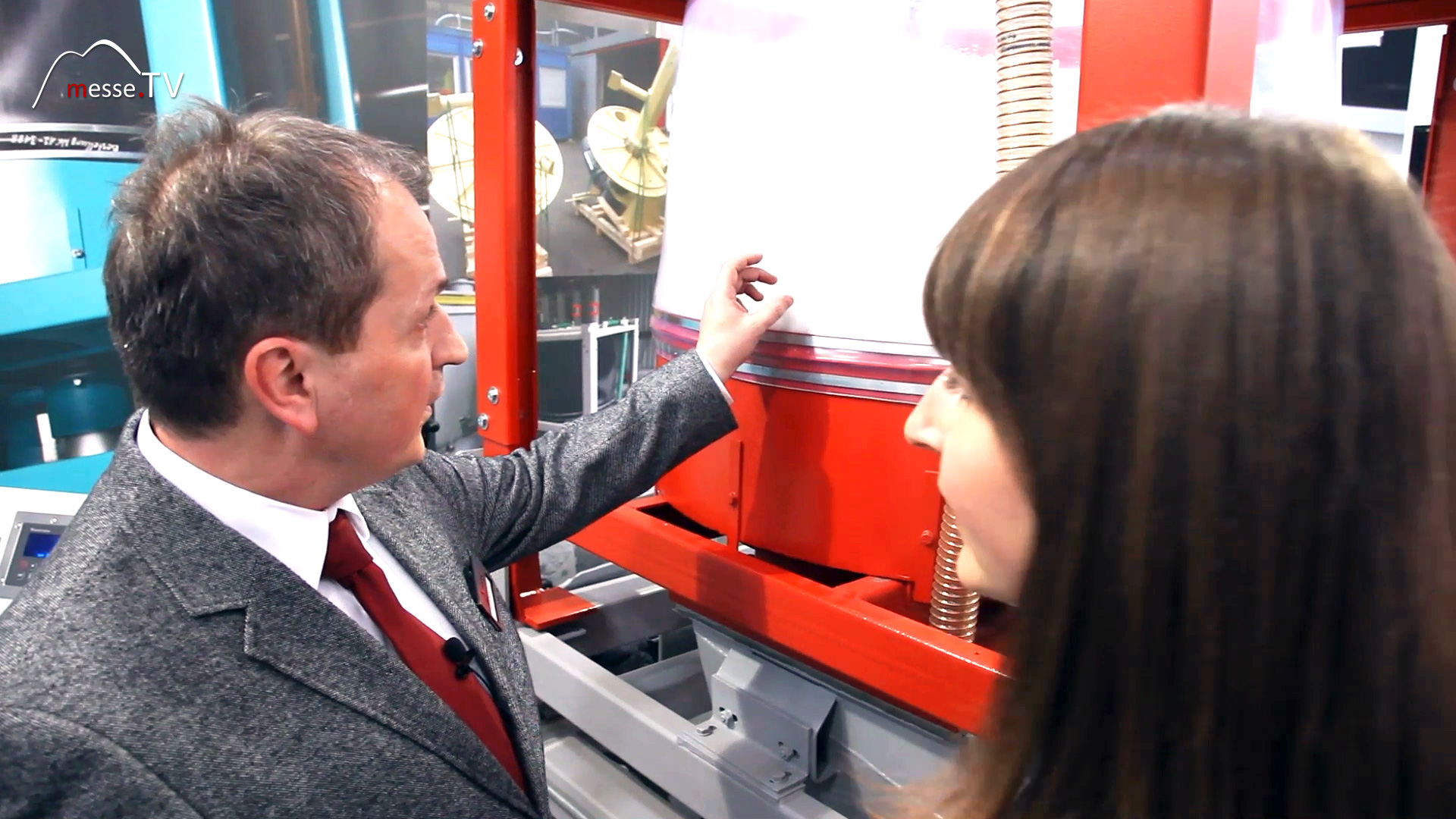
To ensure reliable dosing, the system operates with a rotating agitator arm in the lower section of the system. This continuously moves the fibre material and guides it to a defined discharge opening. This principle prevents material build-up and ensures that the fibres are discharged evenly. This step is crucial for achieving reproducible results, particularly with light and voluminous materials. According to the manufacturer, the system achieves an accuracy of approximately plus or minus 30 grams for a dosing quantity of one kilogram. For many applications in the industry, this represents sufficiently precise dosing. The system’s key features include:
- automatic dosing of organic and synthetic fibres
- processing of fibres with a length of three to eight millimetres
- dosing accuracy of approximately ±30 grams per kilogram
- multiple programmable dosing cycles
- suitable for batch processes
- automatic discharge via stirring arm and discharge opening
Applications in building materials plants and production facilities
Automatic fibre dosing systems are becoming particularly important where large quantities of building materials are produced. In dry mortar plants, concrete plants or in the production of special building materials, aggregates must be dosed precisely to ensure consistent product properties. Manual processes are not only time-consuming but also carry the risk of dosing errors. Automated systems enable greater repeatability whilst reducing labour costs. Particularly in modern production facilities, where numerous raw materials are automatically weighed and fed in, such fibre dosing systems fill a gap that has often been difficult to automate until now.
In-house manufacturing as part of the development strategy
The Austrian company Inocon sees a key advantage in its in-house manufacturing capabilities. According to the company, the essential components are manufactured in-house. This enables design and production to work closely together. In addition to dosing and weighing technology, the portfolio also includes conveying components, conveying systems and complete plant solutions for dry building materials plants. The direct collaboration between development and production is intended to help translate customer requirements into technical solutions more quickly. The company is already working on further projects. One specific example mentioned is the development of a large-scale screw discharge floor. Although details remain under wraps for now, the direction is clear: the automation of material handling, dosing and conveying technology remains a key area of development. The fibre dosing unit on display at bauma illustrates just how significantly even seemingly minor process steps can affect the efficiency of industrial production. Particularly with demanding bulk materials such as fibres, precise dosing often determines the product quality, process reliability and cost-effectiveness of an entire plant.

Trade fair reporting Germany - Trade fair knowledge, dates & events


