Compact excavators and wheel loaders for urban areas, construction sites and material handling
by A. Bergmeier - 2024-02-13Today, construction machinery must do far more than just dig or load. On inner-city construction sites, compact dimensions, low operating costs and high versatility are key.
In material handling, on the other hand, the focus is on productivity, fuel efficiency and long operating times. At bauma, it became clear just how varied these requirements can be – and how broad modern machine ranges have become. The range of machines on display extends from compact short-tail excavators for confined worksites to large wheel loaders for heavy material handling. The focus is not only on performance figures, but also on features designed to make day-to-day work easier and reduce operating costs.
Doosan offers a wide product range
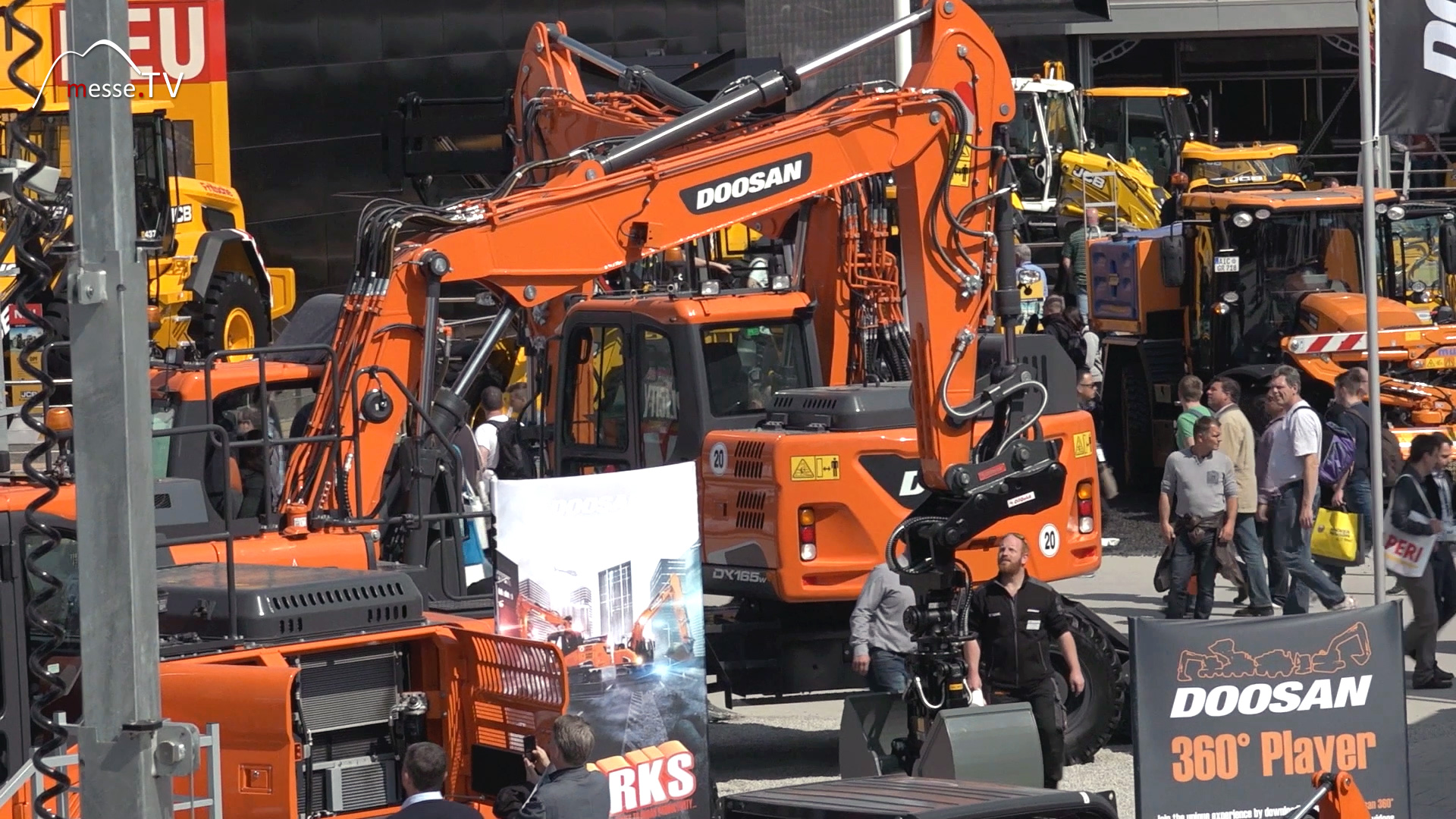
Doosan is one of the manufacturers offering a particularly broad range of machinery. The range includes crawler excavators from around 14 to 53 tonnes, as well as wheel loaders with operating weights of around 12 to 33 tonnes. Furthermore, the group is also active outside the construction machinery sector. The group’s activities include power plant construction, seawater desalination plants and large-scale engine manufacturing. However, the focus of the trade fair presentation was on machinery for construction companies, local authorities and materials handling. It is precisely the combination of compact machines for confined worksites and powerful heavy-duty equipment for quarries, landfills or gravel pits that demonstrates the breadth of the range.
Short-tail excavators for working in confined spaces
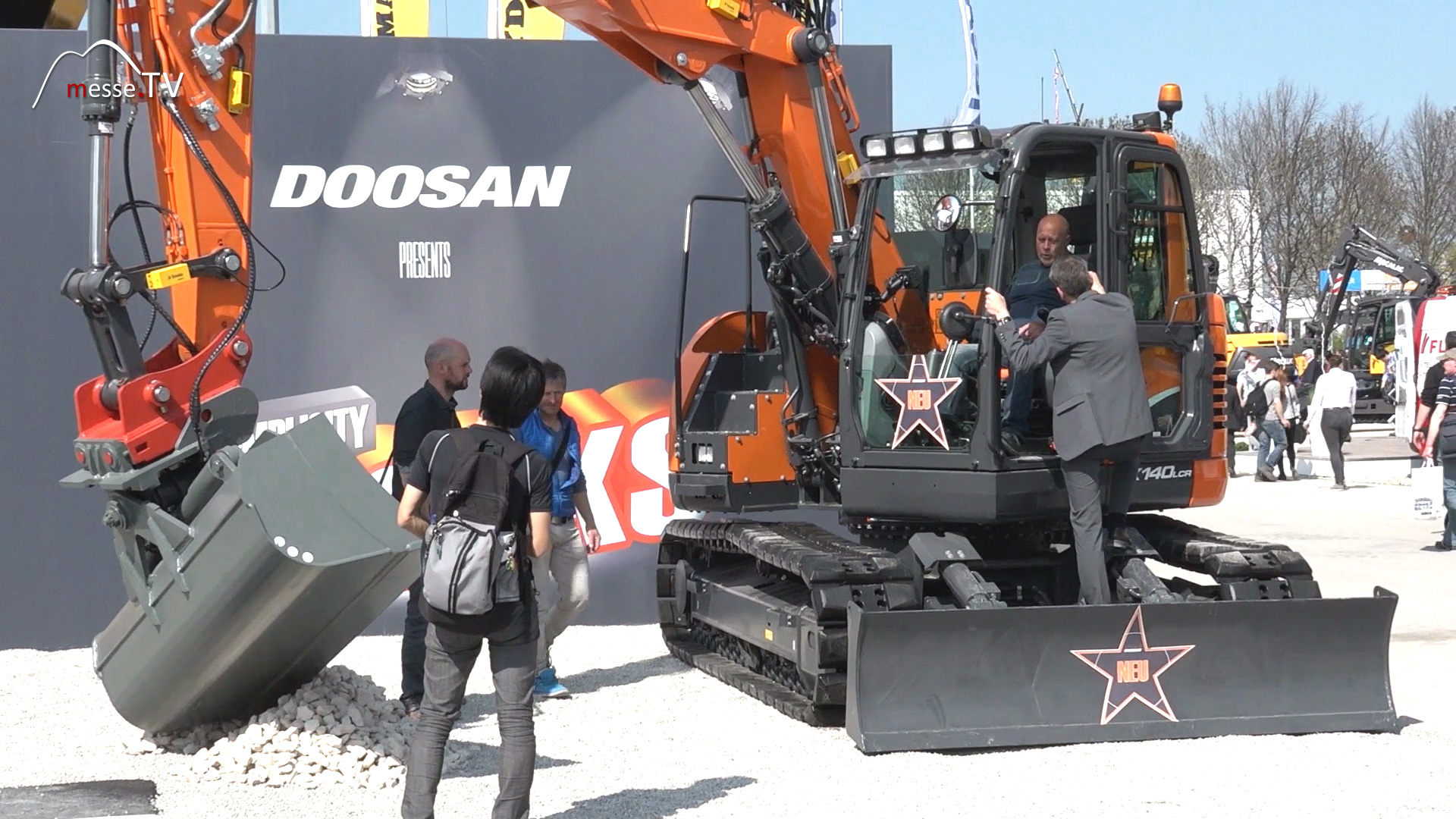
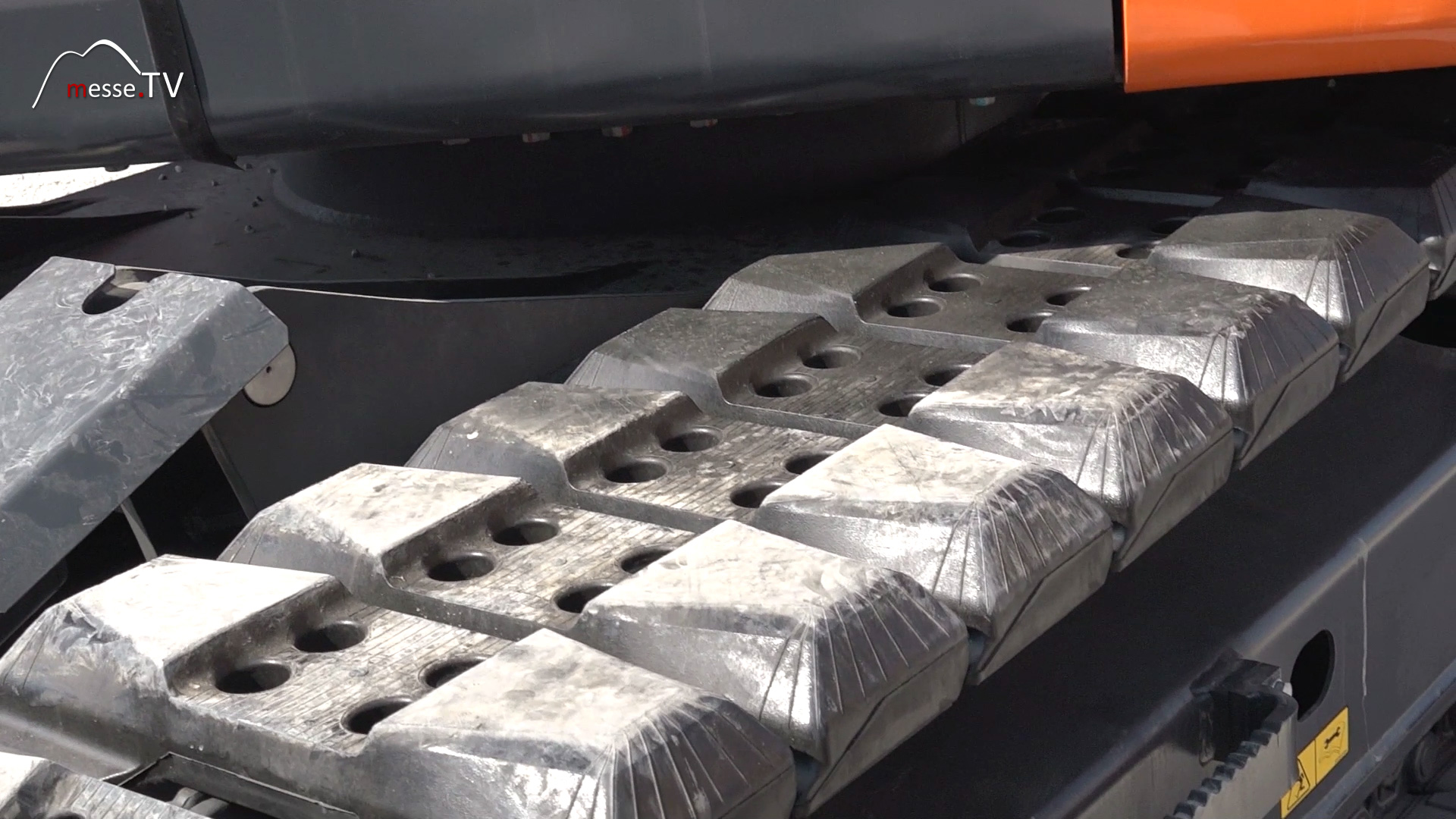
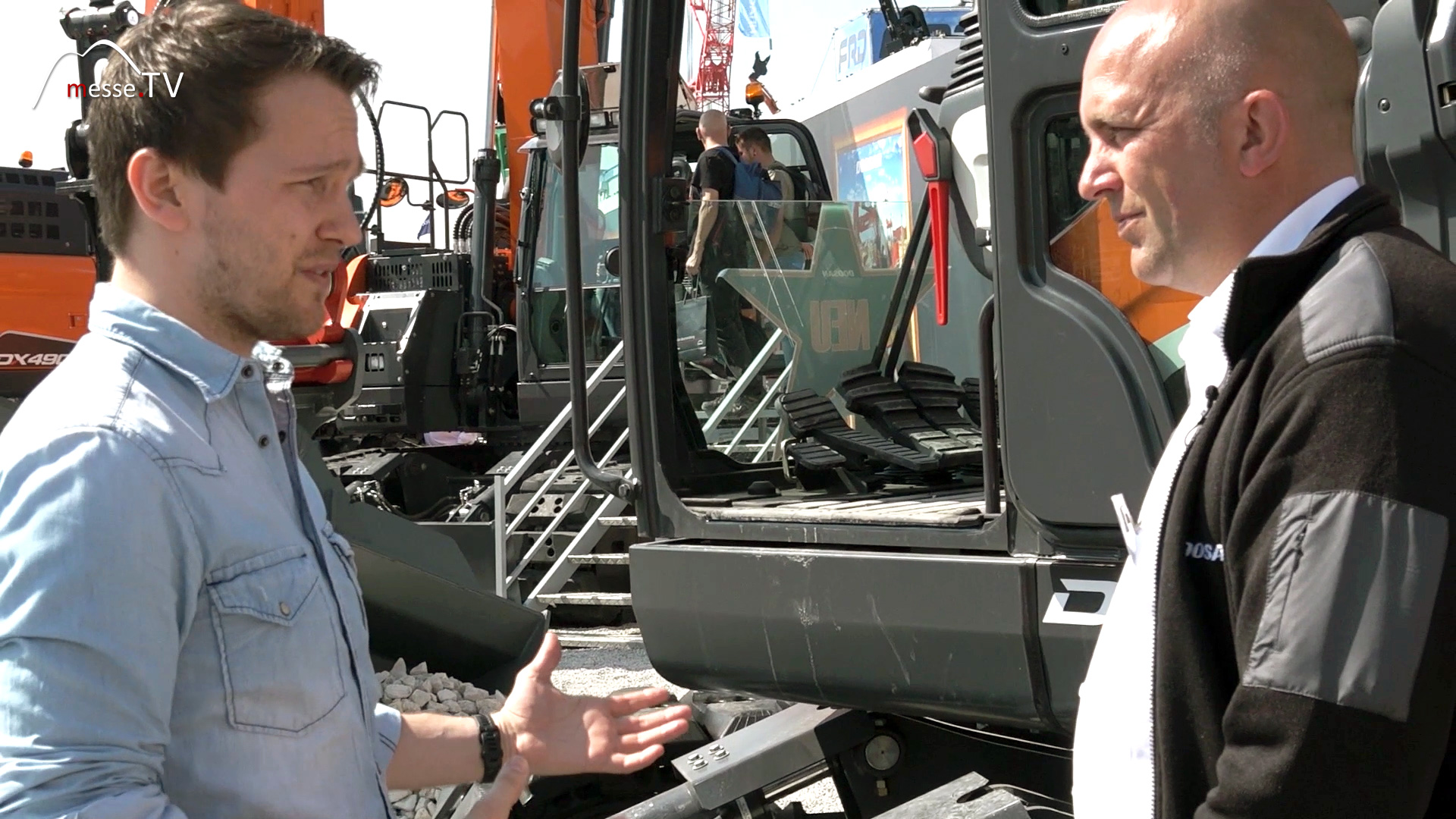
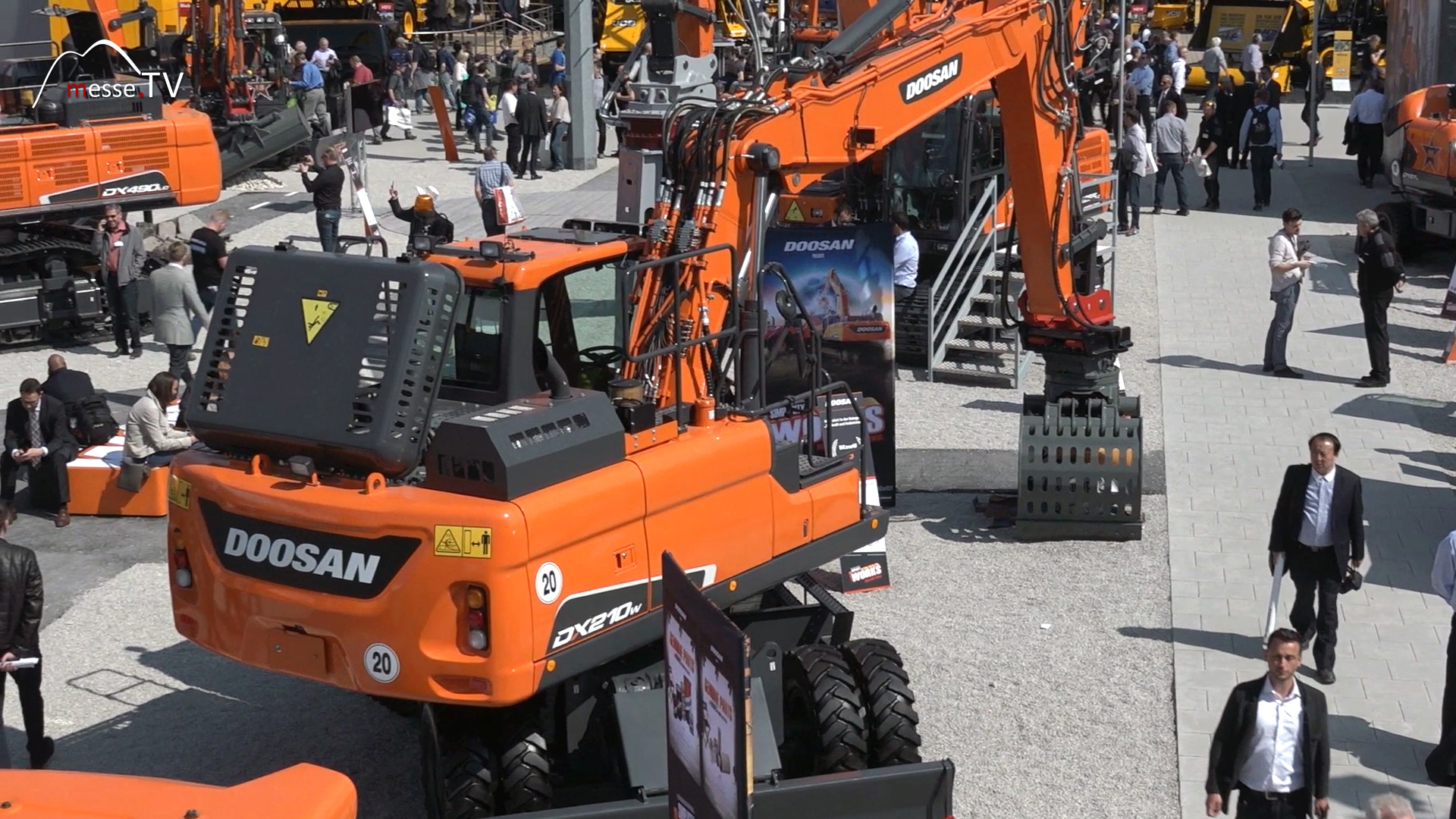
A compact tracked excavator, developed primarily for use in municipal environments, attracted particular attention. In such settings, machines are often faced with the challenge of having to work in confined spaces – for example, between buildings, along roads or in densely built-up urban areas. The short rear overhang allows for slewing movements without protruding far beyond the machine’s outline. This reduces the risk of collisions and makes more efficient use of the available working space.

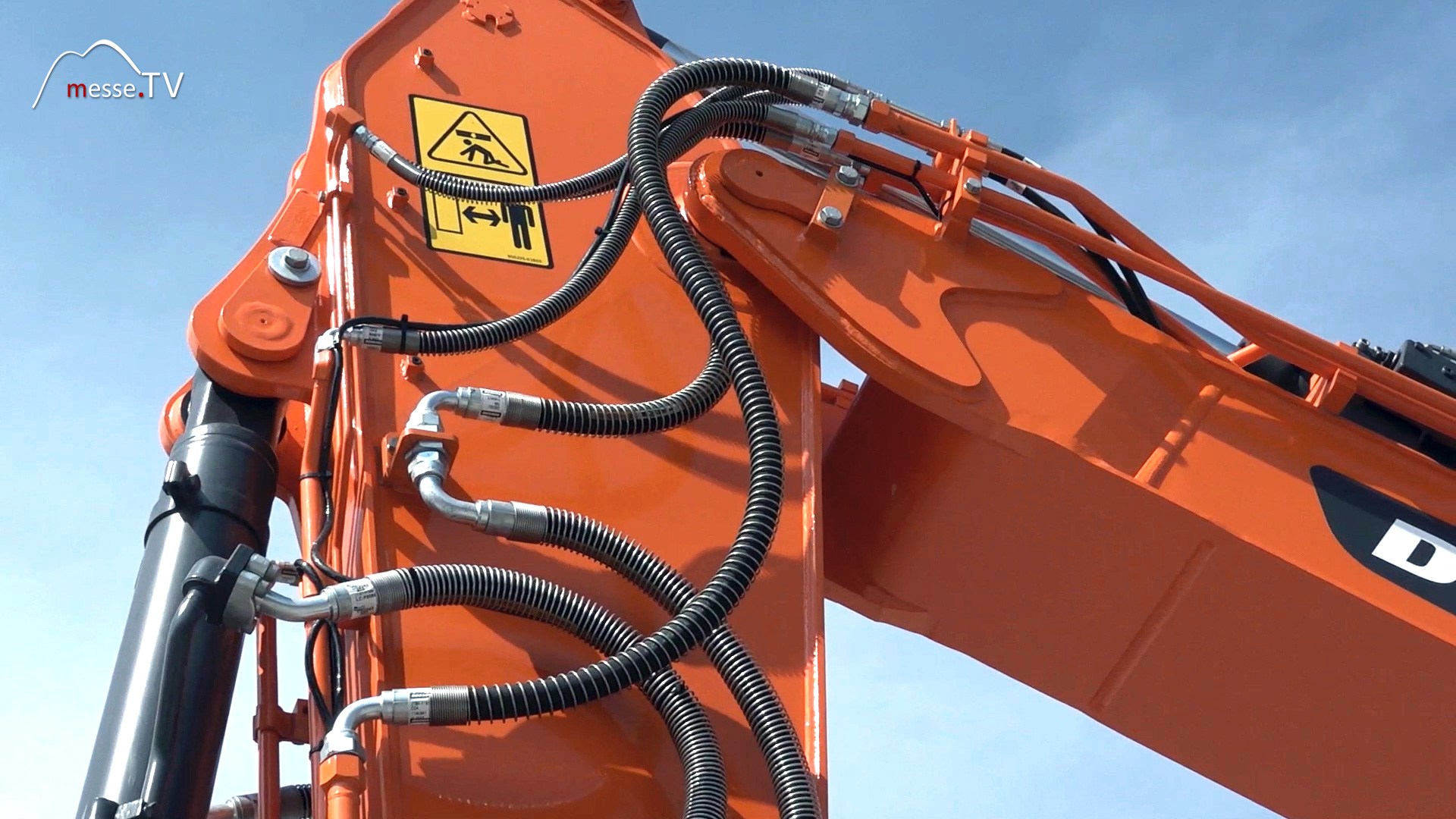
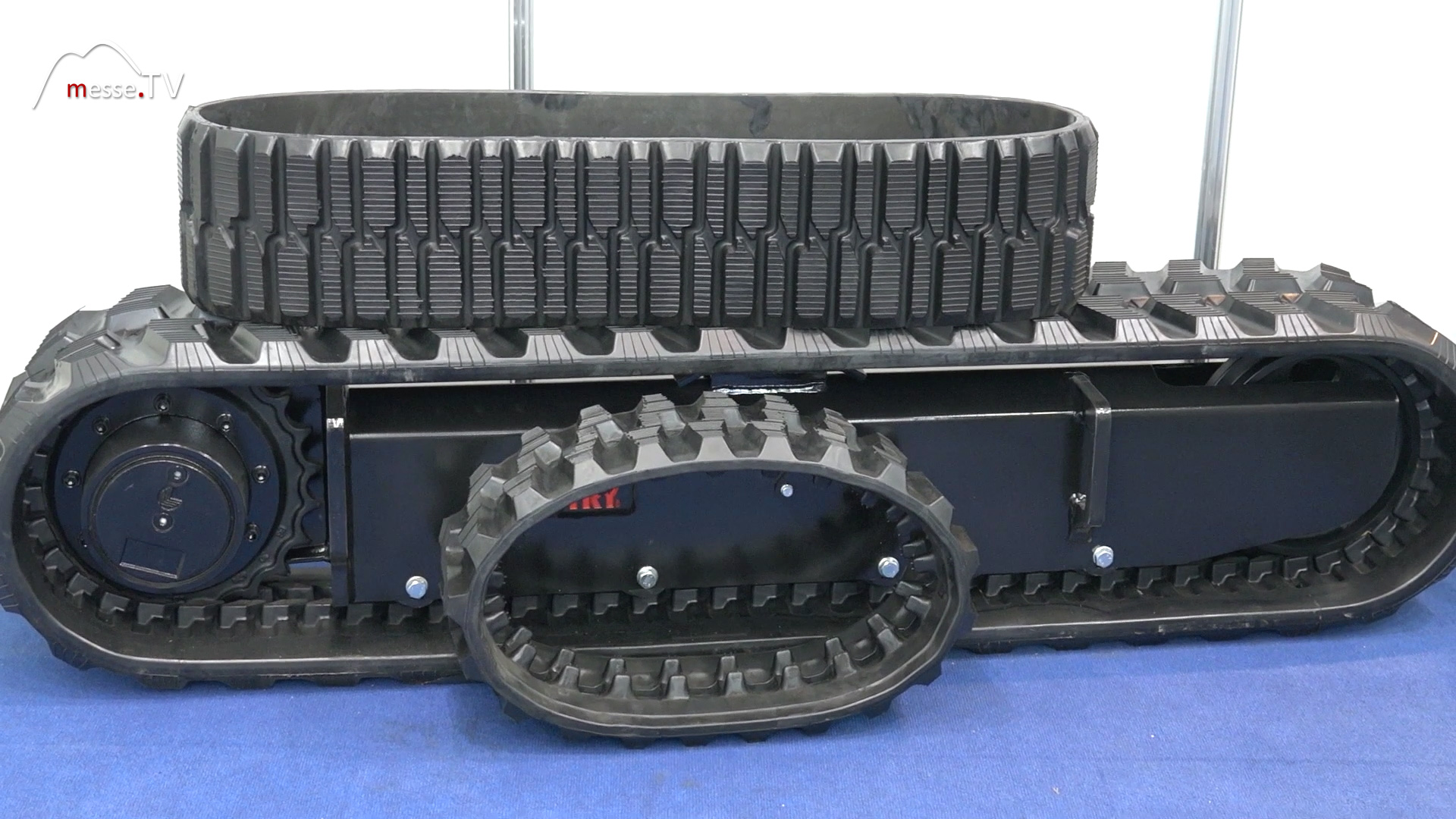
Added to this is extensive configurability. A dozer blade, adjustable boom, special track designs or various attachments allow the machine to be adapted to different applications. Of particular interest is the ability to permanently store the parameters for up to ten different tools. These include, for example, hydraulic hammers or grapples. Oil volume, operating pressure and engine speed can be individually saved and retrieved directly when required. This saves time when changing tools and simplifies operation.
- Storage of ten tool profiles
- customised settings for pressure and oil volume
- short rear overhang for confined construction sites
- numerous equipment variants for municipal applications
- use of hydraulic hammers, grapples and other attachments
Engine technology without a particulate filter
One technical feature that the manufacturer particularly highlights concerns exhaust after-treatment. The machines meet the requirements of Stage IV Final or Stage 4 without using a particulate filter. From the perspective of many operators, this can bring advantages in terms of maintenance and operation. Particulate filters must be regenerated regularly and cause additional thermal stress. Furthermore, they can lead to higher maintenance costs in certain operating scenarios. The decision to omit this component is intended to reduce downtime and keep the machines attractive, particularly for international second-hand markets. Engines from various manufacturers as well as the Group’s own in-house developments are used.
DL550 wheel loader as the flagship of the series
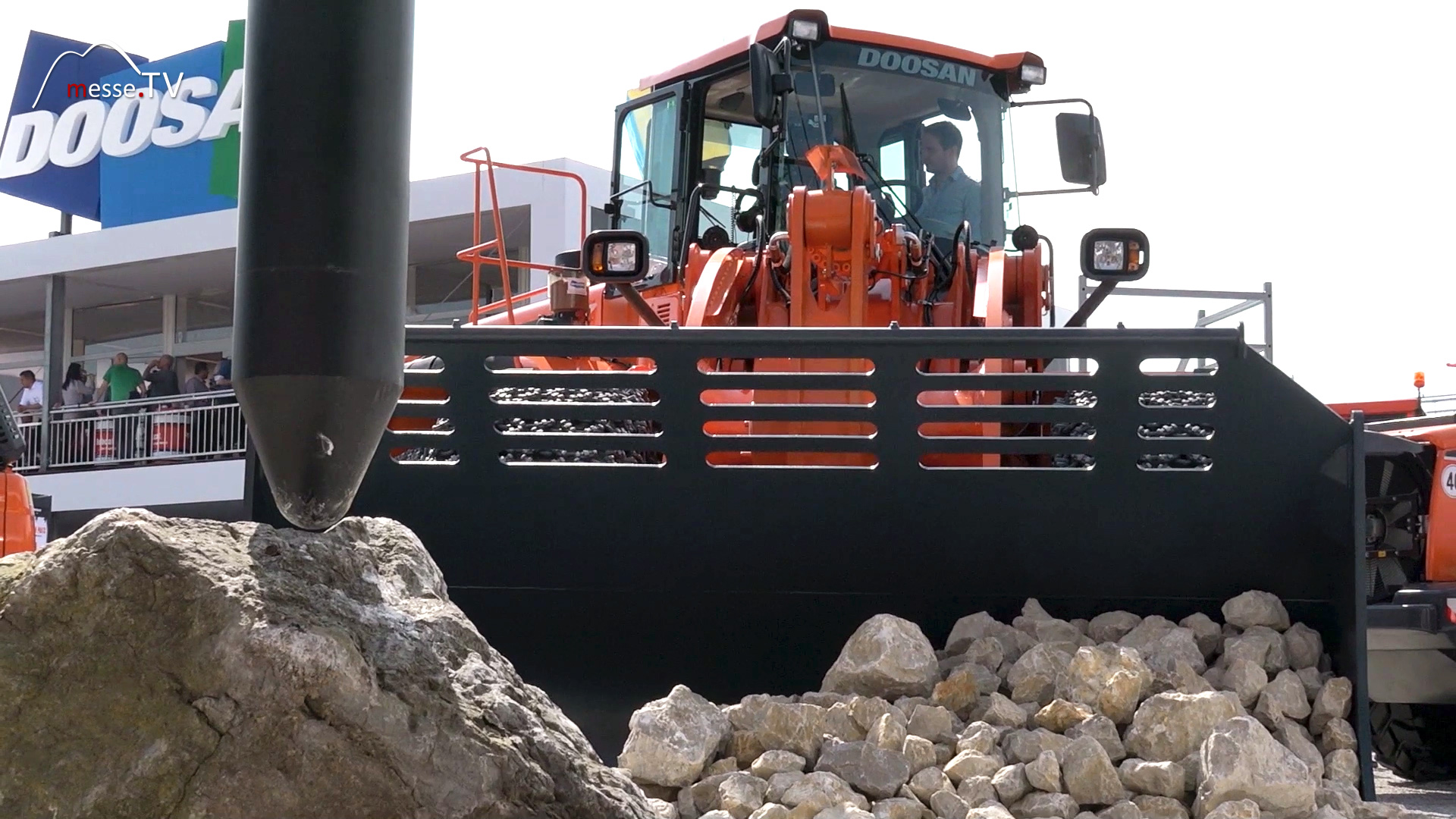
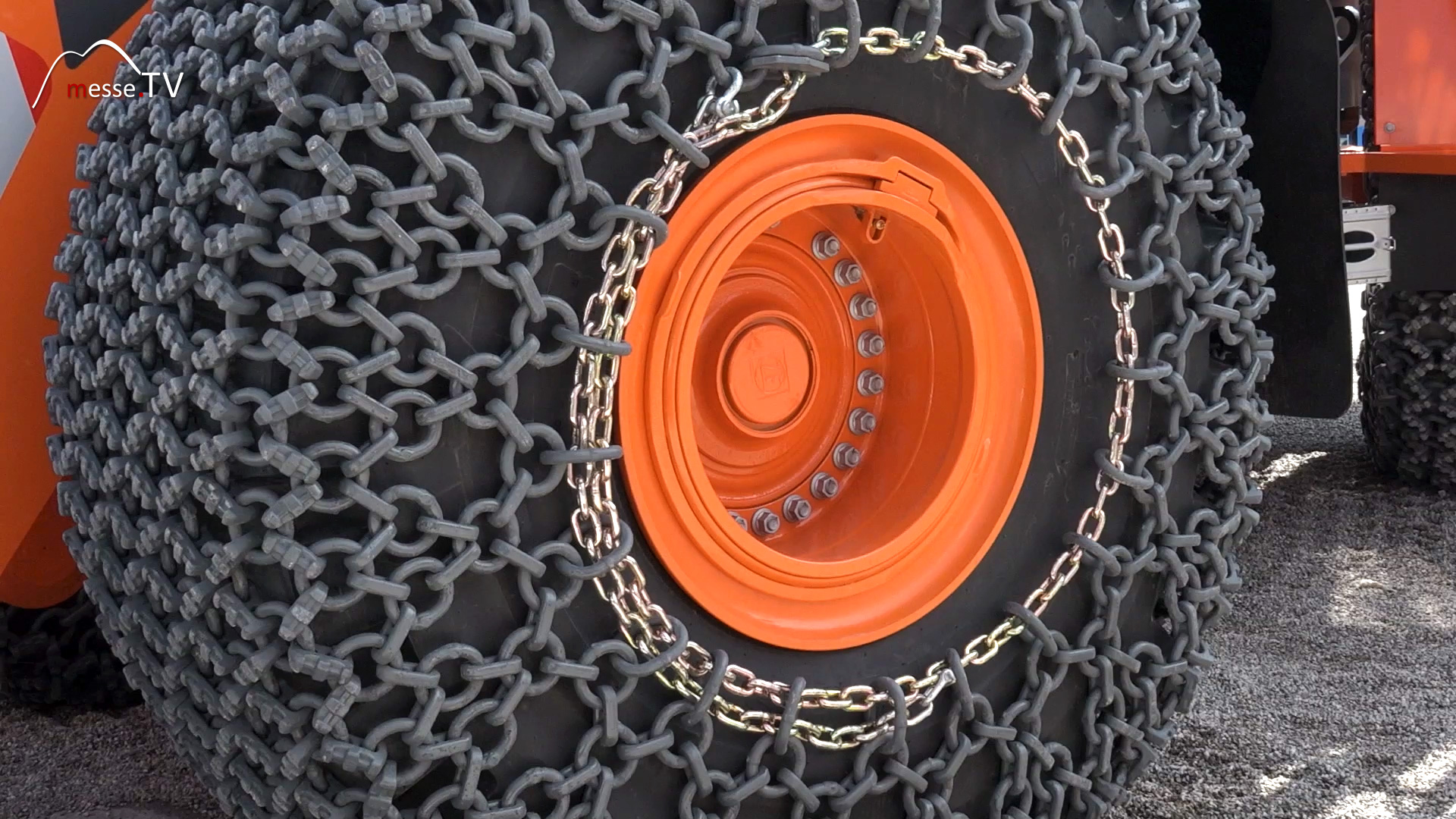
At the other end of the machine range is the DL550. This large wheel loader is one of the manufacturer’s most powerful models and is designed for heavy-duty loading and handling work. A special feature is the five-speed transmission with torque converter lock-up. This technology improves power transmission whilst also reducing fuel consumption. According to the manufacturer, savings of around ten per cent are possible.
Furthermore, the torque converter lock-up improves handling on gradients. Under demanding conditions, the machine can achieve higher travel speeds, thereby shortening transport cycles. Particularly in applications such as quarrying, recycling or bulk material handling, such advantages have a direct impact on productivity.
Extensive standard equipment reduces maintenance requirements
Another key focus is on the equipment. Features that are offered as options by many competitors are already included as standard here. These include, amongst other things, an automatic central lubrication system. It automatically supplies the relevant pivot points with lubricant and significantly reduces daily maintenance requirements. At the same time, continuous lubrication can extend the service life of the components. Also fitted as standard are a cyclone pre-separator and a three-stage filter system for the intake air. A third hydraulic control circuit is also available ex-works, allowing additional hydraulic attachments to be used without the need for costly retrofitting.
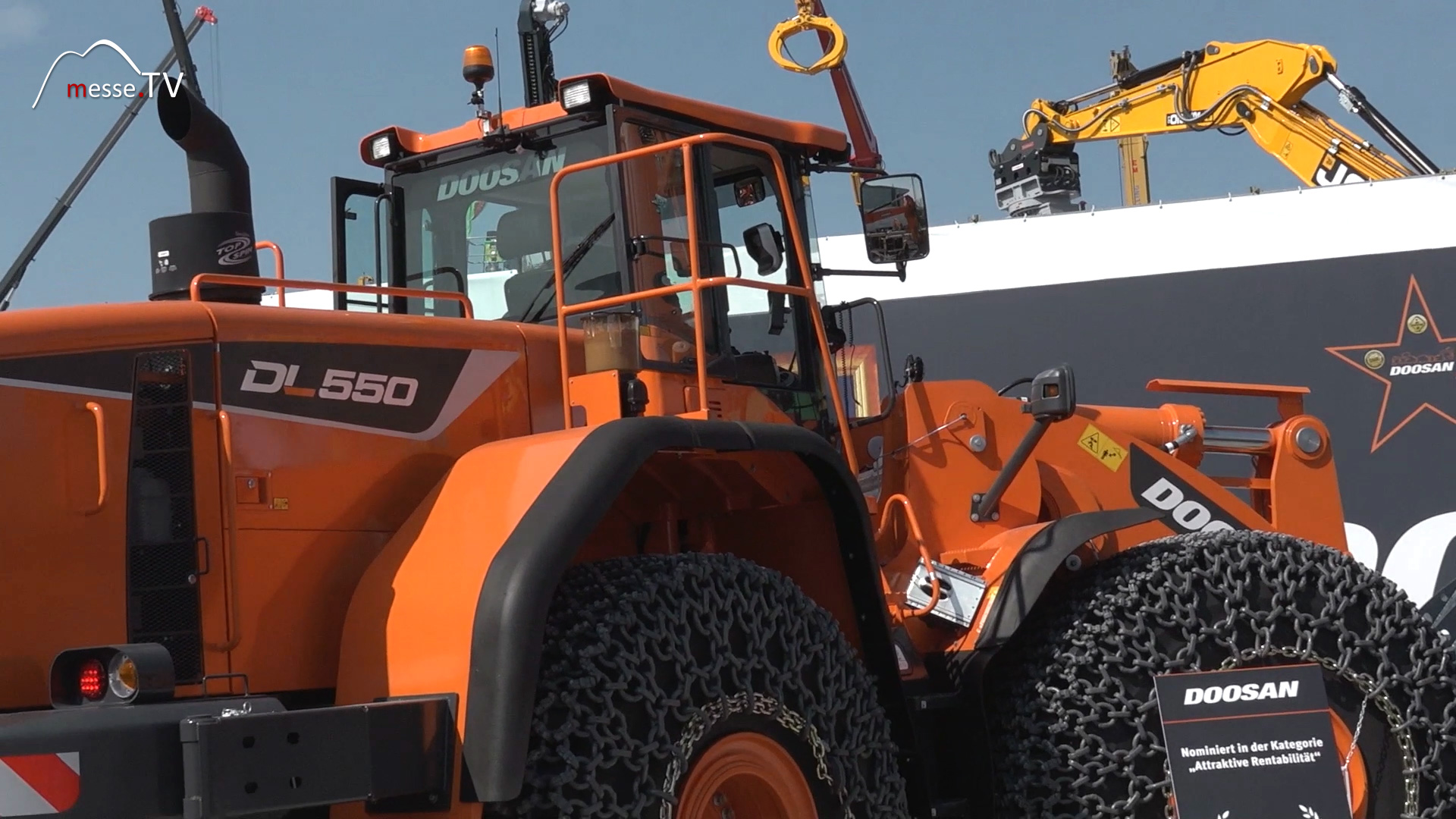
The DL550 on display at the trade fair is priced in the region of around 260,000 euros, depending on the specification and the outcome of negotiations. The machines on display illustrate that modern construction machinery is no longer defined solely by engine power or bucket capacity. Factors such as ease of maintenance, flexibility, fuel efficiency and comprehensive standard equipment are becoming increasingly important. Particularly in the competition for low operating costs and high availability, it is often precisely these details that determine a machine’s cost-effectiveness.

Trade fair reporting Germany - Trade fair knowledge, dates & events


