Digital health mirrors for nursing homes - Hello Mirrors
Therapy, activation, and activities are among the central tasks in everyday care – but at the same time, there is often a lack of time and human resources. A digital system from Munich addresses this very issue and supports caregivers in individual and group activities. The approach combines therapeutic content with ease of use and a clear structure.
Digital activities for care facilities
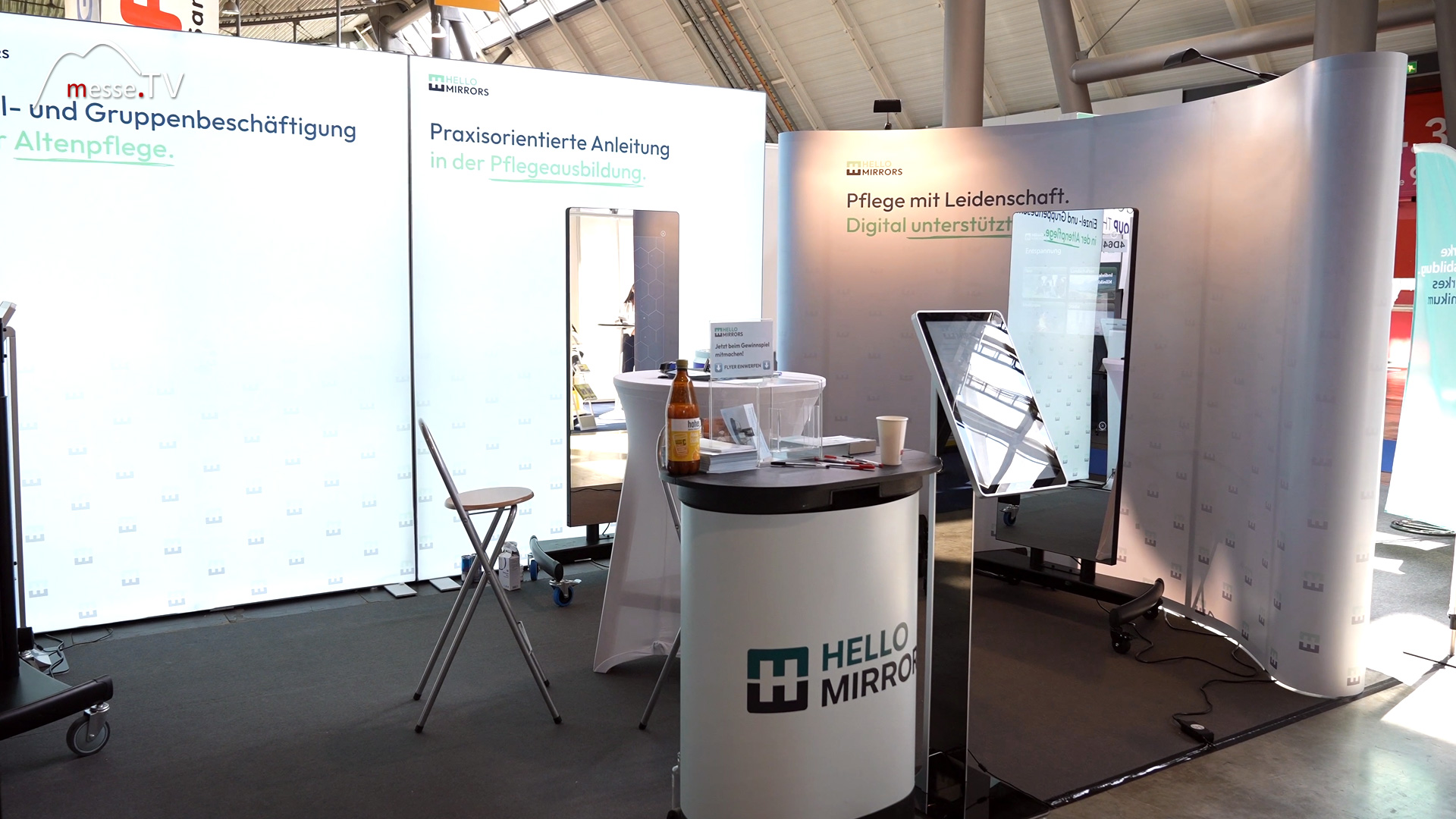
Hello Mirrors was founded in 2018 and is based in Munich. The company specializes in digital solutions for therapy and activities in care facilities. The focus is on offerings for individual and group settings that support nursing staff in their daily work and at the same time facilitate the activation of seniors. The system is now in use in numerous facilities throughout Germany. The approach is not only aimed at classic occupational activities, but also includes physiotherapy, occupational therapy, and dementia-specific content.
A mobile system for therapy and activation
At the heart of the concept is a mobile device on wheels that can be used flexibly in different rooms. It is integrated directly into individual or group therapy and can be positioned without much effort. This provides caregivers with a tool that is ready to use and can be utilized immediately without lengthy planning. The digital solution combines various therapeutic disciplines. It includes exercises from physiotherapy and occupational therapy as well as content for people with dementia. This creates a wide range of possible applications that can be used on a daily basis – regardless of whether it is a short activation session or a structured therapy unit.
Structured content for different needs
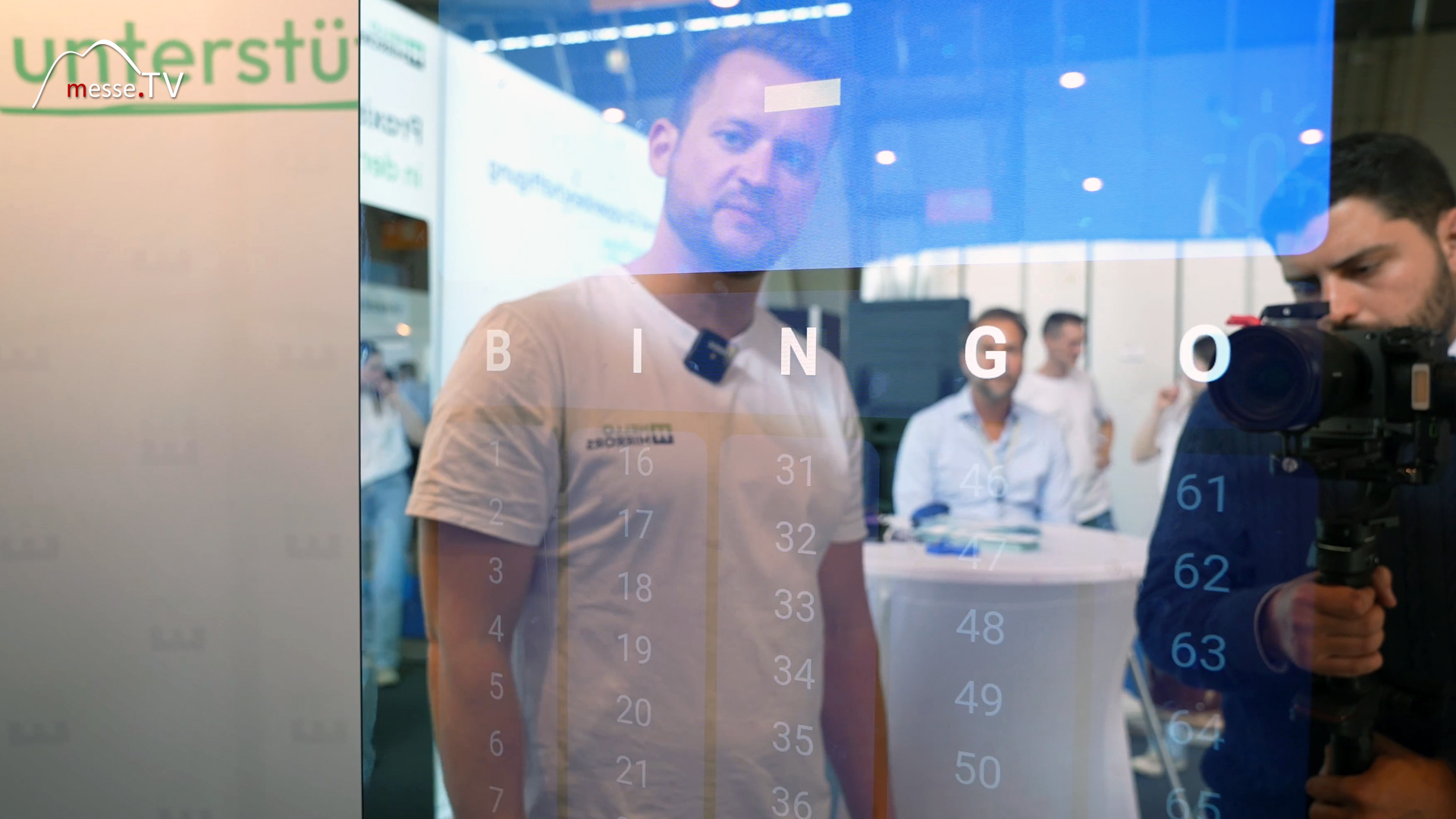
Various training areas can be selected via a clear menu navigation. These include sitting and standing exercises, gymnastics units, and health promotion programs. Seated exercises are particularly popular, as they are suitable for many residents and can also be easily implemented in groups. The exercises are led by professionally qualified therapists who demonstrate the movements. Caregivers can actively participate themselves or devote their time to individual residents who need additional support. This structure saves time and ensures safety during implementation.
The mirror as a central element
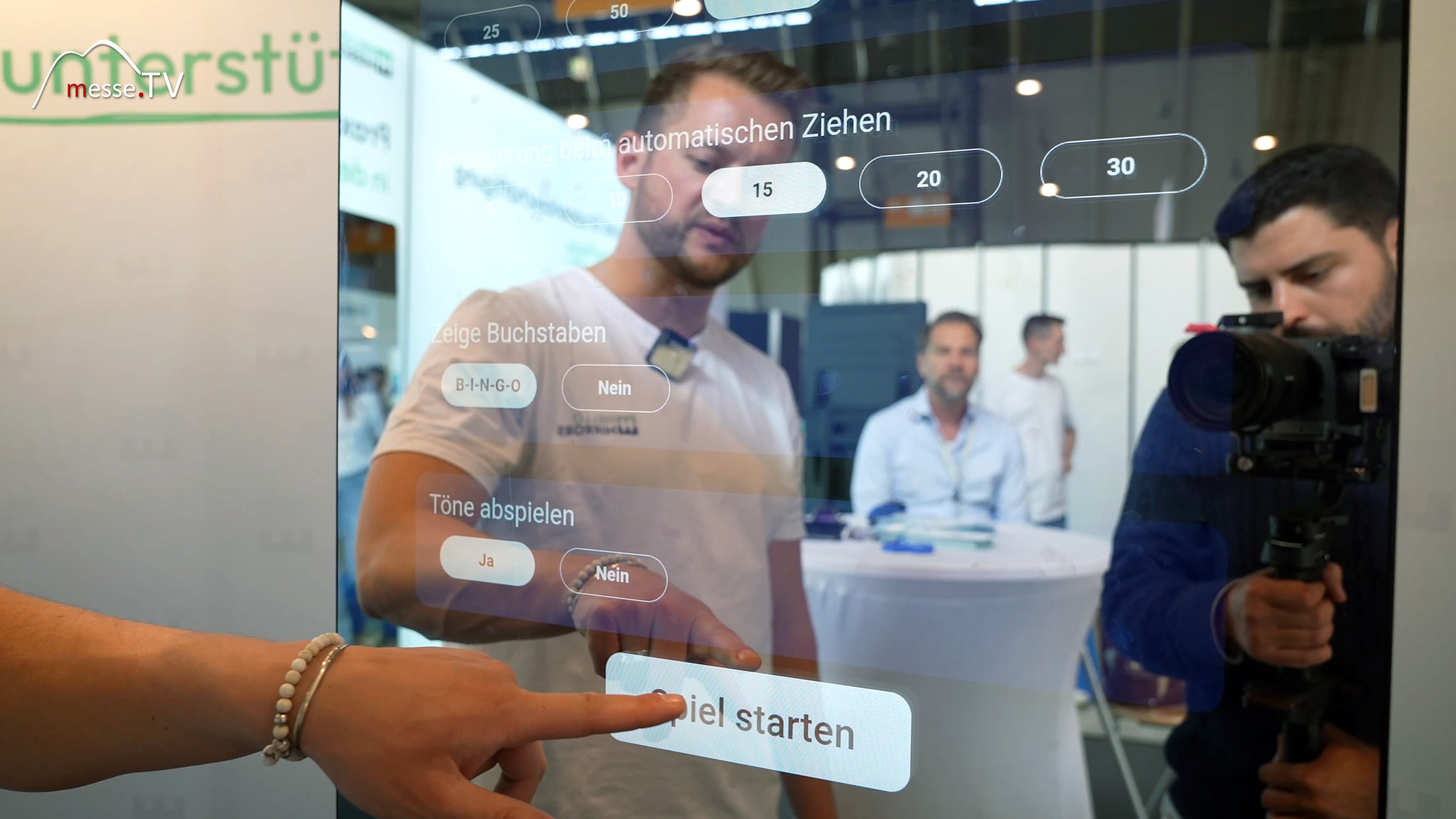
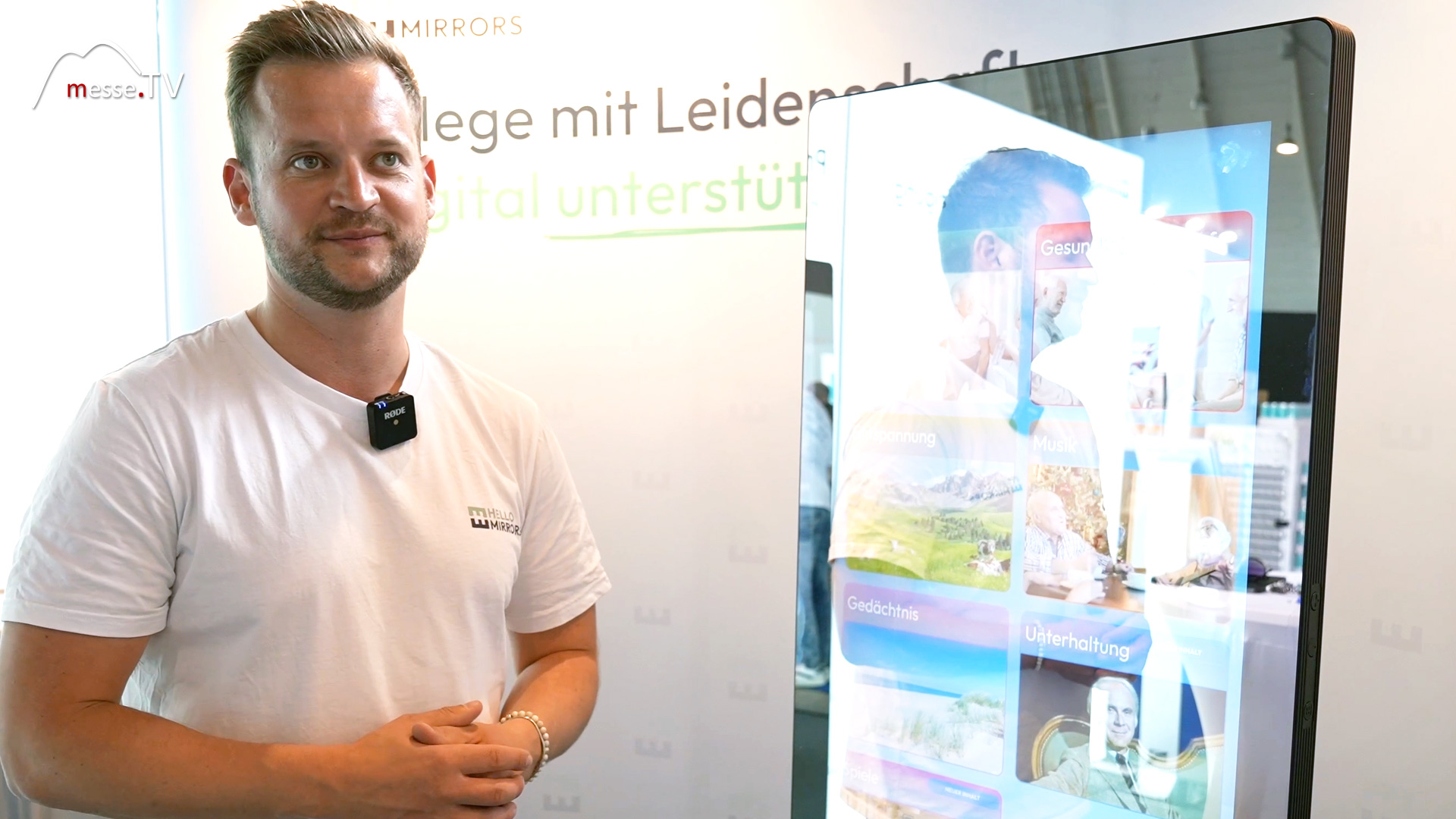
A key feature of the system is the combination of a screen and a mirror. Residents see themselves during the exercises and thus receive direct visual feedback. This promotes body awareness and makes it easier to participate, especially in motor exercises. At the same time, the system is also suitable for group situations. Several people can train together without losing the individual connection. The mirror effect supports both motivation and orientation in the room.

Wide range of services from dementia to bedridden patients
In addition to classic movement exercises, the range of services also includes content for people with dementia. Cognitive activation, simple movement sequences, and familiar rituals are the focus here. There are also programs for bedridden residents that can be performed while lying down. The content is continuously expanded and updated. New exercises are added regularly to provide variety and ensure that the program evolves with the needs of the facilities. The system is therefore not intended as a static solution, but as a growing offering.
Digitalization as support, not as a replacement
A central idea of the concept is the clear distinction between technology and human care. The system is not intended to replace nursing staff, but to relieve them. It takes on preparatory and instructional tasks, leaving more time for personal attention. The use of digital tools can increase the attractiveness of the profession, especially for young people in nursing training. Digital applications thus become a natural part of everyday work and show that the nursing sector is also evolving.
Flexible rental model for getting started
The system is used on a rental basis. Facilities can initially take advantage of a trial period to test the product in their own everyday work. After that, they have the option of continuing to use the device on a monthly basis. This model keeps costs predictable while ensuring that new content is regularly available. This gives care facilities flexible access to digital therapy and activity offerings that structure everyday life and noticeably improve residents' quality of life.

Trade fair reporting Germany - Trade fair knowledge, dates & events


