CareTable Digitalization Care Activity Organization in everyday life
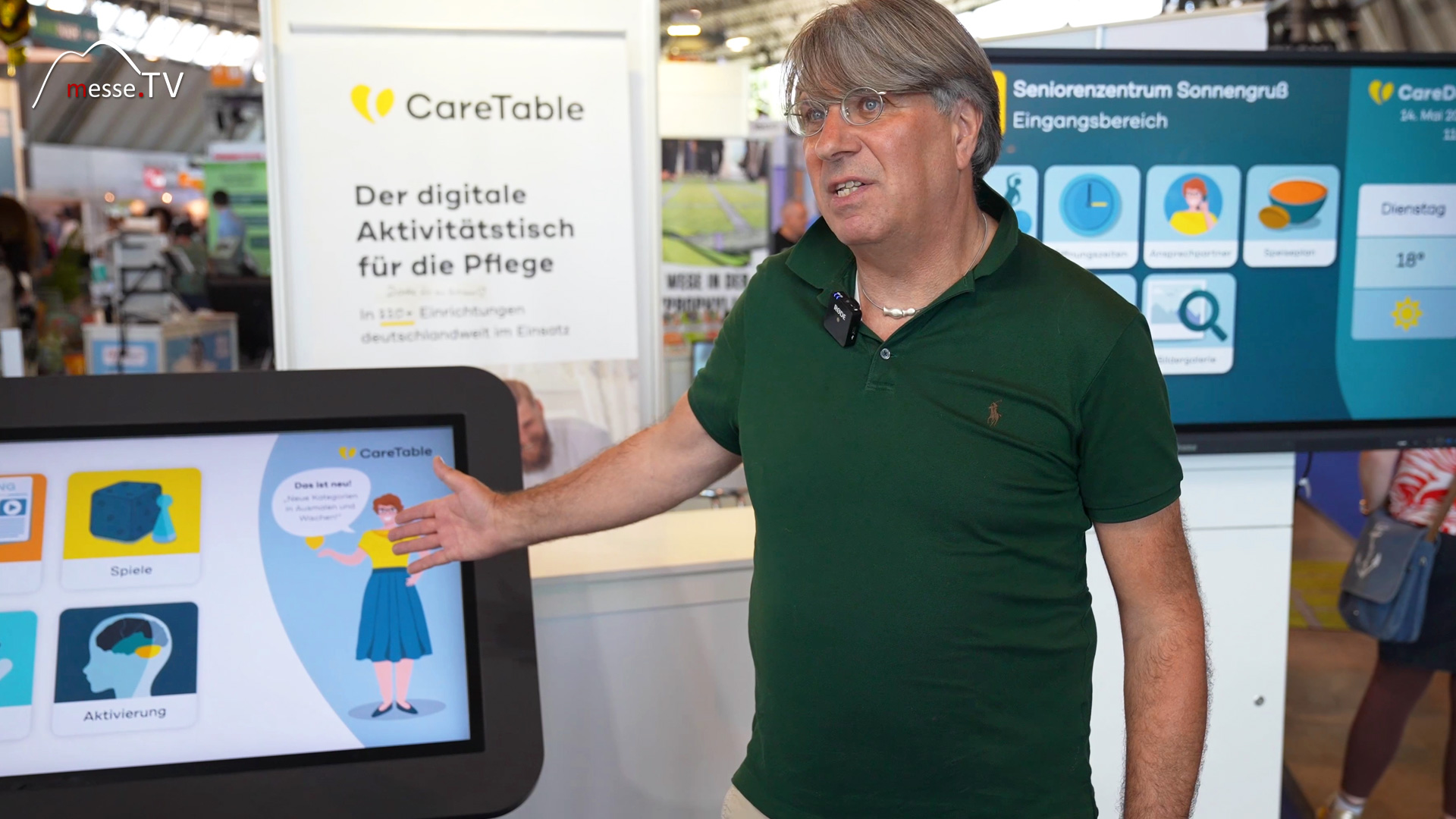
Digital solutions are increasingly finding their way into care facilities, but their usefulness is not determined by technical buzzwords, but by their suitability for everyday use. Care, support, and activities are under considerable time pressure, while at the same time the requirements for documentation, orientation, and participation are growing. This is precisely where CareTable comes in, a digital activity table that sees digitalization not as an end in itself, but as a tool for activity, organization, and social interaction in everyday care.
Digitalization as support, not as a disruptive factor
In many facilities, digitalization is still associated with additional effort. Systems are considered complicated, maintenance-intensive, or personnel-intensive. The approach behind CareTable deliberately takes a different direction. Digital technology should simplify processes, facilitate activities, and relieve the burden on caregivers instead of creating new dependencies. The focus is not on the staff, but on the activities of the residents. Content is designed to be intuitive to use and to work without lengthy explanations. This does not make care more technical, but more structured and easier to plan.

Activity as part of holistic care
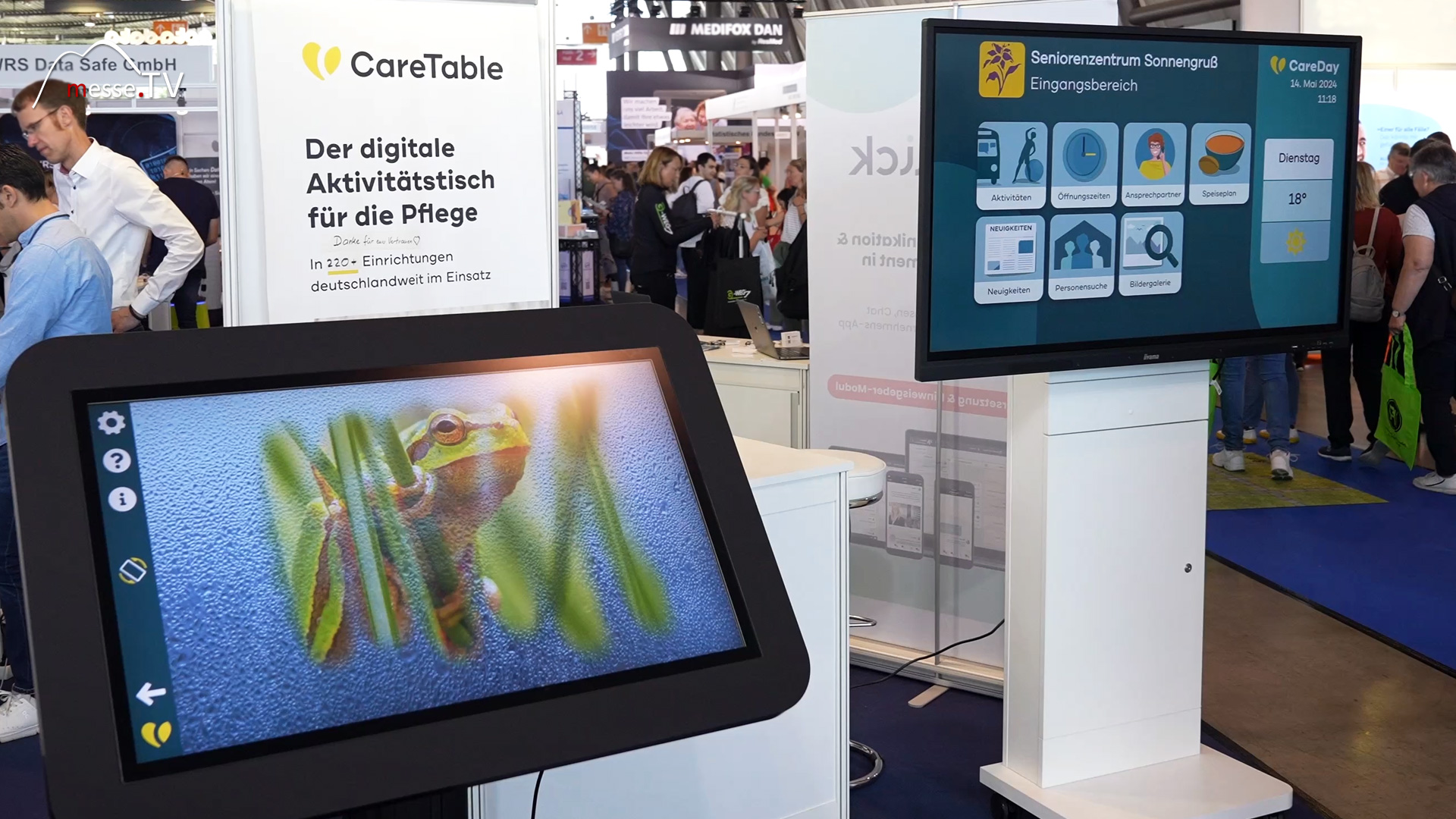
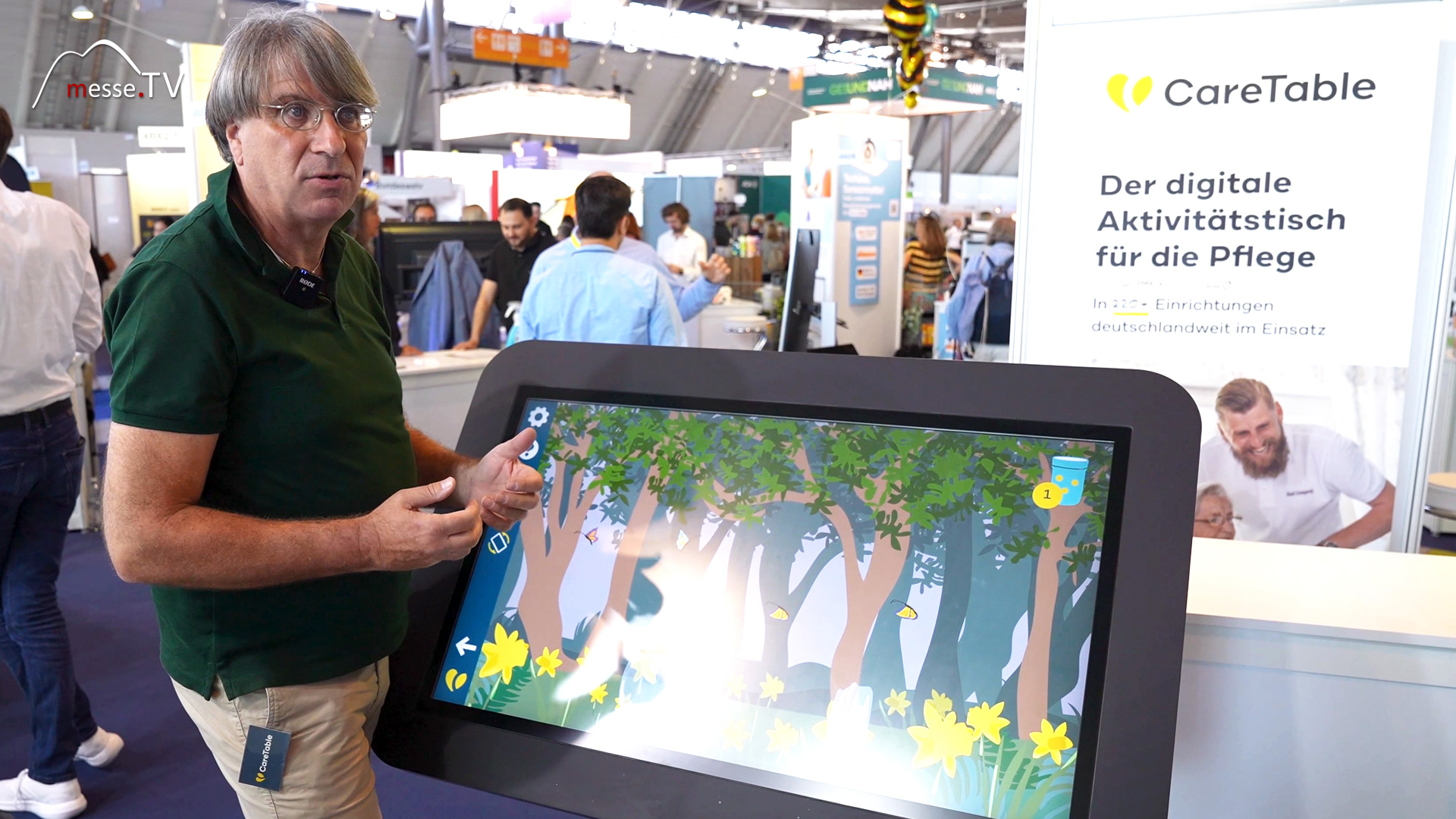
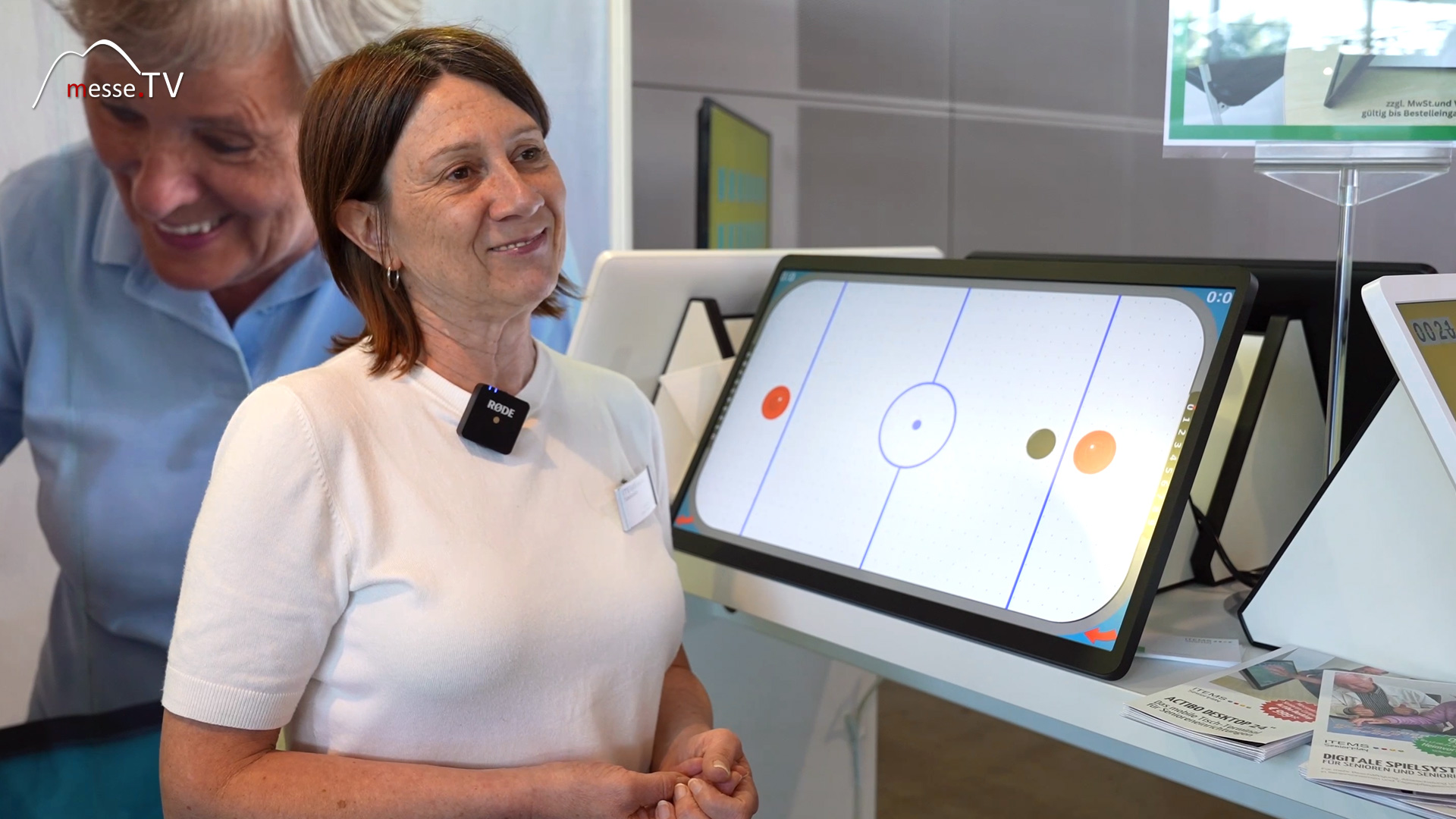
Activity is not an additional service, but a central component of modern care. Targeted activities play an important role, especially in the care of people with dementia or after a stroke. This is where the CareTable comes in, combining playful elements with therapeutic benefits. One example is hand-eye coordination exercises. Simple, visually appealing tasks activate skills that are often lost or deteriorate in everyday life. Revealing pictures, recognizing animals, or tapping moving objects promotes motor skills, concentration, and perception in equal measure. The low threshold is crucial here: the table is operated directly, without additional devices or complex menus.
Group activities and social interaction
Care does not take place in isolation. Group games in particular have a high social value, as they promote communication and actively involve relatives. The CareTable is therefore deliberately used as a communal medium. Exercises are designed so that several people can participate at the same time, regardless of their individual performance level. Especially in the presence of relatives, situations arise in which care is not experienced as a deficit, but as a joint activity. Activity becomes the connecting element between residents, visitors, and care staff.

Concrete benefits in everyday life
The added value of digital activity often only becomes apparent over time. In a practical example from a care facility, it was reported that a resident regularly used coordination exercises over several weeks. As a result, she was able to perform everyday activities such as using a knife and fork more confidently again. Such effects are not spectacular breakthroughs, but they mean independence on a small scale – a central aspect of dignified care. It is precisely these unspectacular advances that make a difference in everyday life. Care does not become faster, but it does become more effective.
Organization as a complementary component
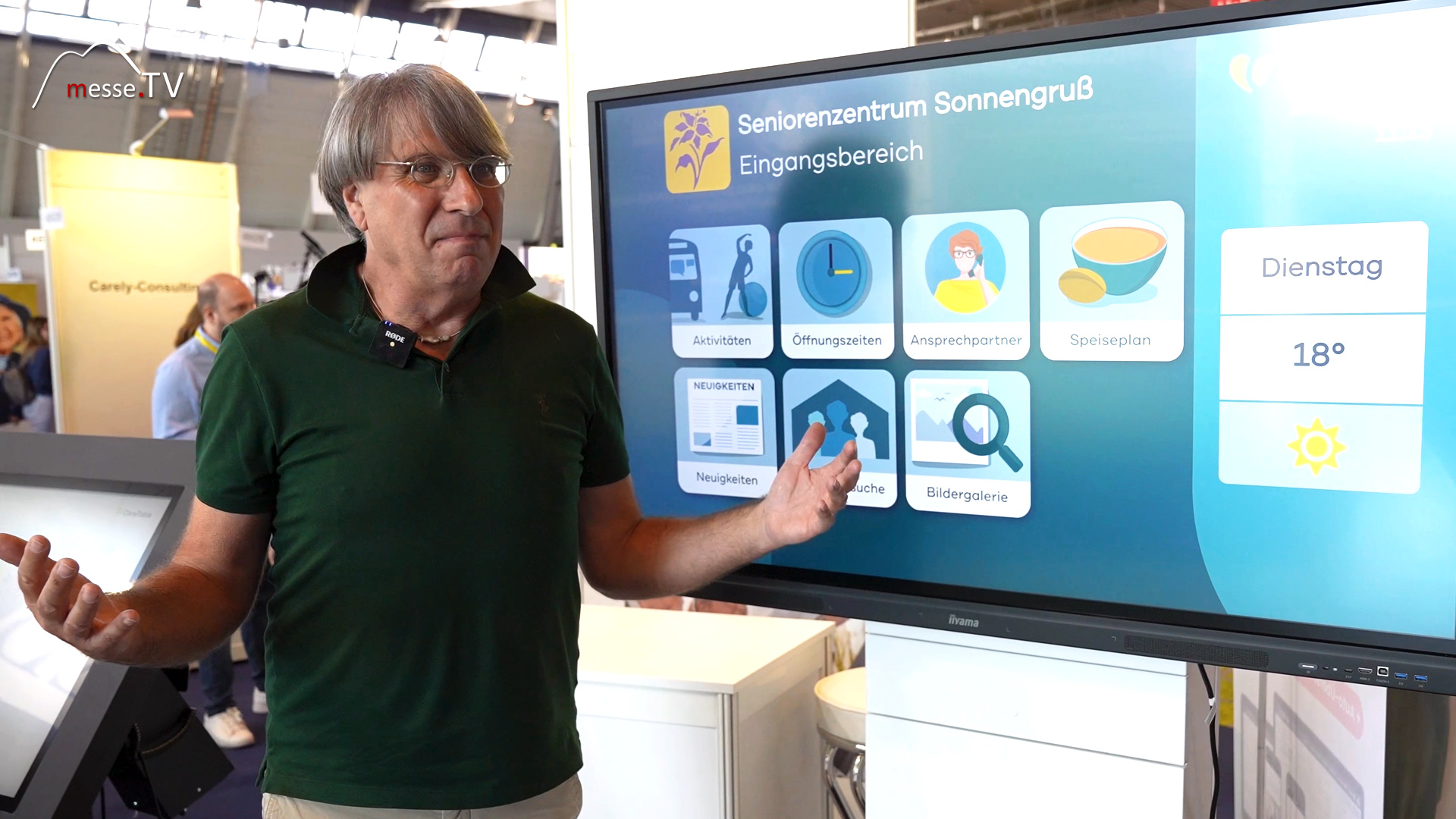
In addition to activity, the CareTable takes on a second role: organization. Care facilities are complex systems in which residents, relatives, and employees need guidance. Information such as meal plans, contact persons, activities, or news must be visible without disrupting operations. The digital bulletin board was developed to meet this need, supplemented by a separate organization board. This system is deliberately separated from the activity table so that activities are not interrupted by organizational content. While the CareTable is often in use for many hours a day, the board in the foyer or corridors takes over the information function. Among other things, the following are displayed:
- Daily activities and events
- Opening hours and organizational information
- Affiliation with living areas
- Orientation within the facility
Care between dementia and rehabilitation
The thematic focus of the applications is clearly in the area of dementia. Much of the content is designed to activate memories, train perception, and enable simple experiences of success. At the same time, the CareTable is also suitable for other target groups, such as people who have suffered a stroke or have motor impairments. The combination of activity and organization creates a framework in which care can take place in a structured manner without appearing rigid. Digitalization is not used as a control instrument, but as a supportive infrastructure.
Cost-effectiveness and long-term use
An essential aspect of digital systems is their economic viability. The CareTable is offered as a one-time investment, including software, updates, and service. Subscription models were deliberately avoided in order to create planning security. Facilities receive a system that is continuously evolving without incurring ongoing additional costs. This decision is particularly relevant in the care sector, as budgets must be calculated on a long-term basis. Organization and digitalization should not become financial risks, but should support stability.
Care, activity, and organization combined
The CareTable shows that digitalization in care makes sense when it connects several levels. Activity, organization, and care cannot be viewed separately. Only when they interact does a benefit arise that can be felt in everyday life. Digital solutions cannot replace human attention. However, they can create structures that free up time, provide orientation, and enable activity. In this sense, the CareTable stands for a form of digitalization that adapts to everyday life – not the other way around.

Trade fair reporting Germany - Trade fair knowledge, dates & events


