G-Weg: Effective fall prevention for seniors and people requiring care
Falls are one of the greatest risks in the everyday lives of elderly and neurologically impaired people. At the same time, there is a lack of concepts in many places that sensibly combine exercise, safety, and social participation. This is where G-WEG comes in, viewing fall prevention as activating group work rather than an isolated individual measure.

Fall prevention as a central issue of mobility
Since its inception, G-WEG has been involved in targeted fall prevention training for various target groups. These include people with dementia, the elderly, and people who have suffered a stroke or have neurological diseases such as Parkinson's or multiple sclerosis. What they all have in common is an increased risk of falling, which often results from changed movement patterns, uncertainty, and a lack of activity. Since its inception, the concept has become established in several European countries. It is used in inpatient care facilities as well as in day care centers, therapy facilities, and associations. The approach is therefore not exclusively aimed at the care sector, but at anyone who wants to promote mobility and exercise in old age.
The G-WEG as a training area for safe walking
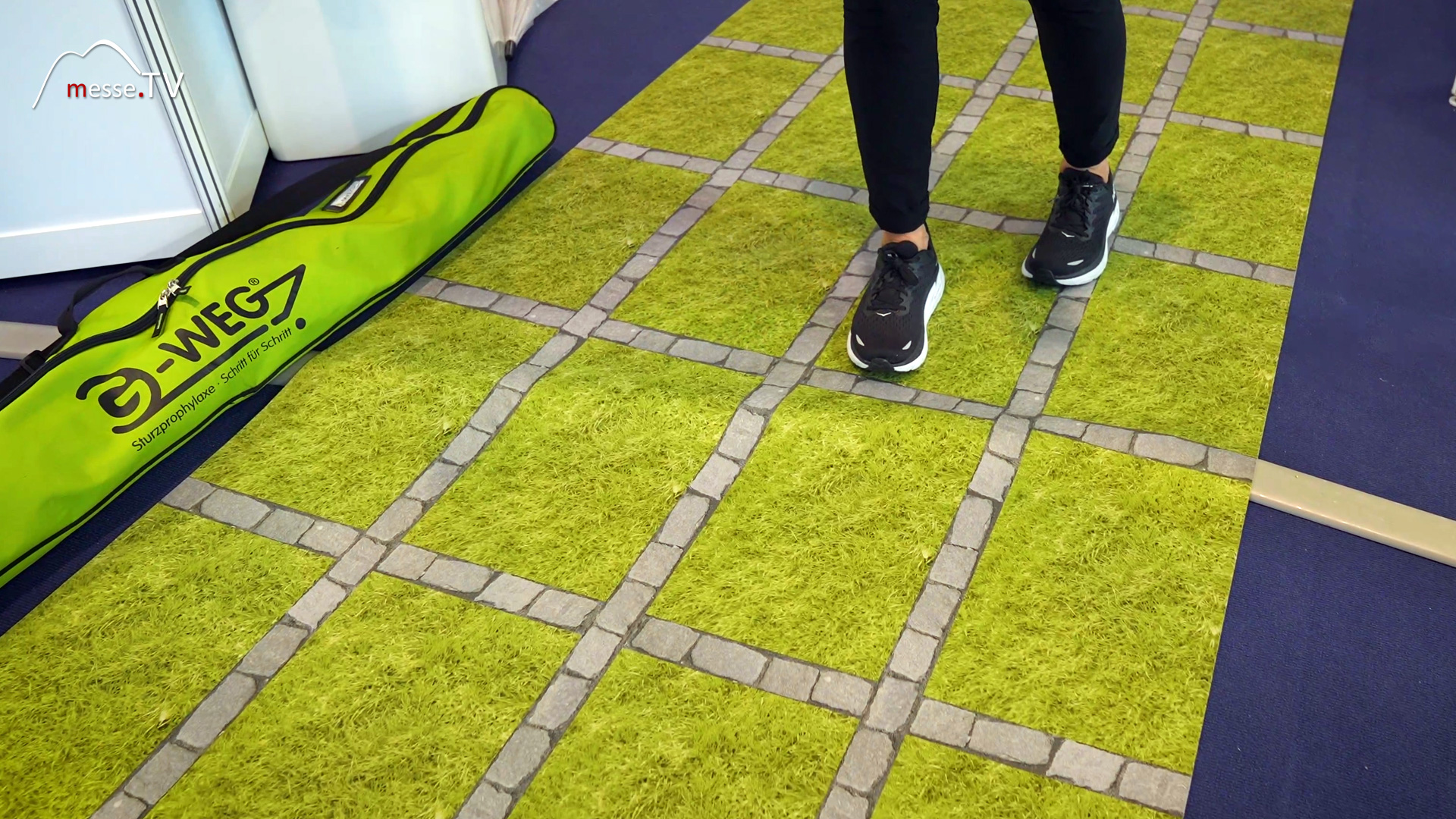
At its core, G-WEG consists of a structured training area with clear grid fields. This visual and spatial structure serves to consciously train the gait pattern. Many older people tend to no longer lift their feet properly or to take only very short steps. They often have the impression that more contact with the ground means more safety. In fact, however, this behavior significantly increases the risk of falling. The grid fields help to specifically train stride length, stance phase, and weight transfer. Typical gait patterns can be observed, particularly in stroke patients or the elderly, which can be gradually corrected through repeated practice on the G-WEG.
Three lanes for individual group training
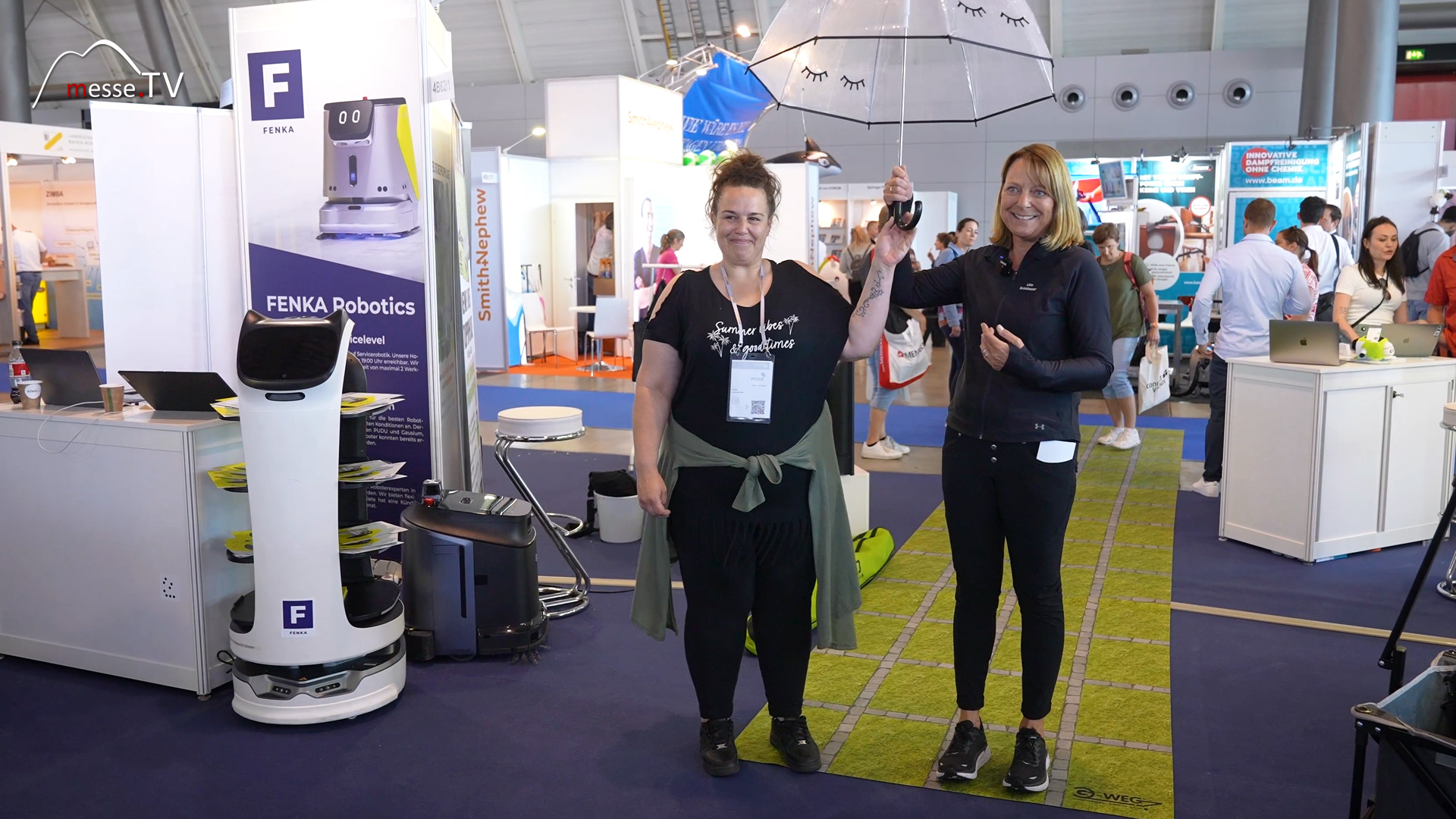
A key feature of the concept is the division into several lanes of different widths. This allows people with very different motor skills to train at the same time. While one person with a walker is guided more broadly and safely, another with better motor skills can use narrower lanes. This principle enables individualized group therapy. Weaker and stronger participants train together without hindering each other. This is particularly relevant in light of the shortage of skilled workers, as therapeutic resources can be used more efficiently.
Exercise, participation, and social interaction
G-WEG does not view exercise as purely physical activity. Rather, it is about social participation, communication, and shared experiences. In many facilities, group activities mainly take place while seated. At the same time, there are complaints that residents are becoming increasingly immobile. G-WEG counters this with an active, standing, and walking training format. Training together encourages conversation, mutual support, and a stronger sense of community. Exercise thus becomes a natural part of everyday life again, rather than an isolated therapeutic measure.

Methodology instead of just a training mat
The training area is merely the basis. The real heart of the program is the methodology behind it. There is a large number of exercises that build on each other, ranging from very easy to challenging. These can be used in individual settings as well as in groups. Each exercise has a clear therapeutic background. One example is an exercise in which participants take on a task, such as symbolically protecting someone from the rain. This directs their gaze forward, stabilizes their balance, and improves their gait. At the same time, a playful framework is created that reduces inhibitions and creates motivation.
Wide range of applications in the health and social sectors
G-WEG is used in a variety of contexts: in care facilities, hospitals, therapy facilities, disability services, and neighborhood-based projects. Volunteer groups also use the concept to regularly activate seniors. This shows that G-WEG is a low-threshold, yet professionally sound tool that rethinks movement. Not as a compulsory program, but as a shared experience that combines mobility, safety, and quality of life.

Trade fair reporting Germany - Trade fair knowledge, dates & events


