Slimy Knete: Kreatives Formen mit vielseitigen Eigenschaften
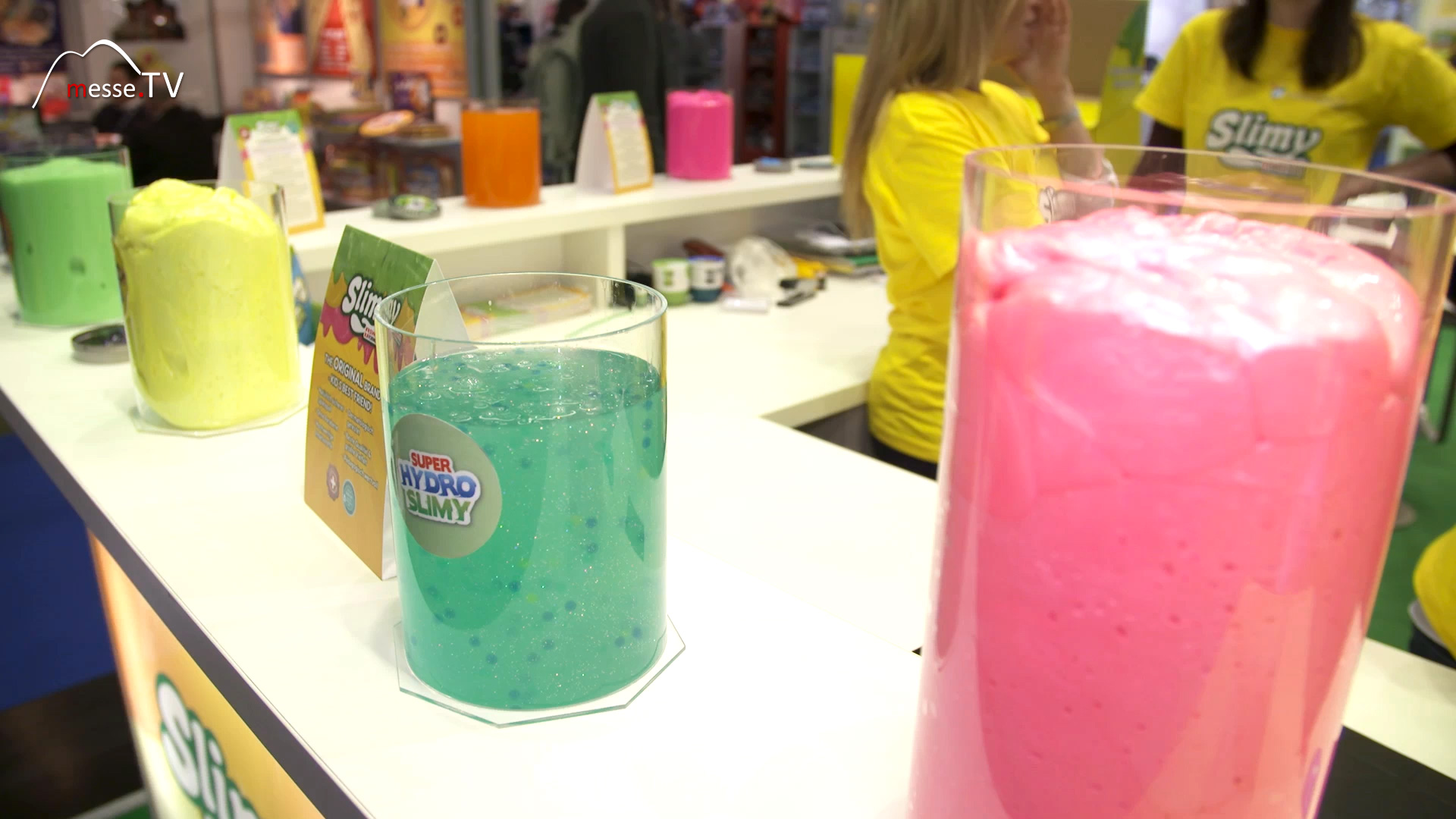
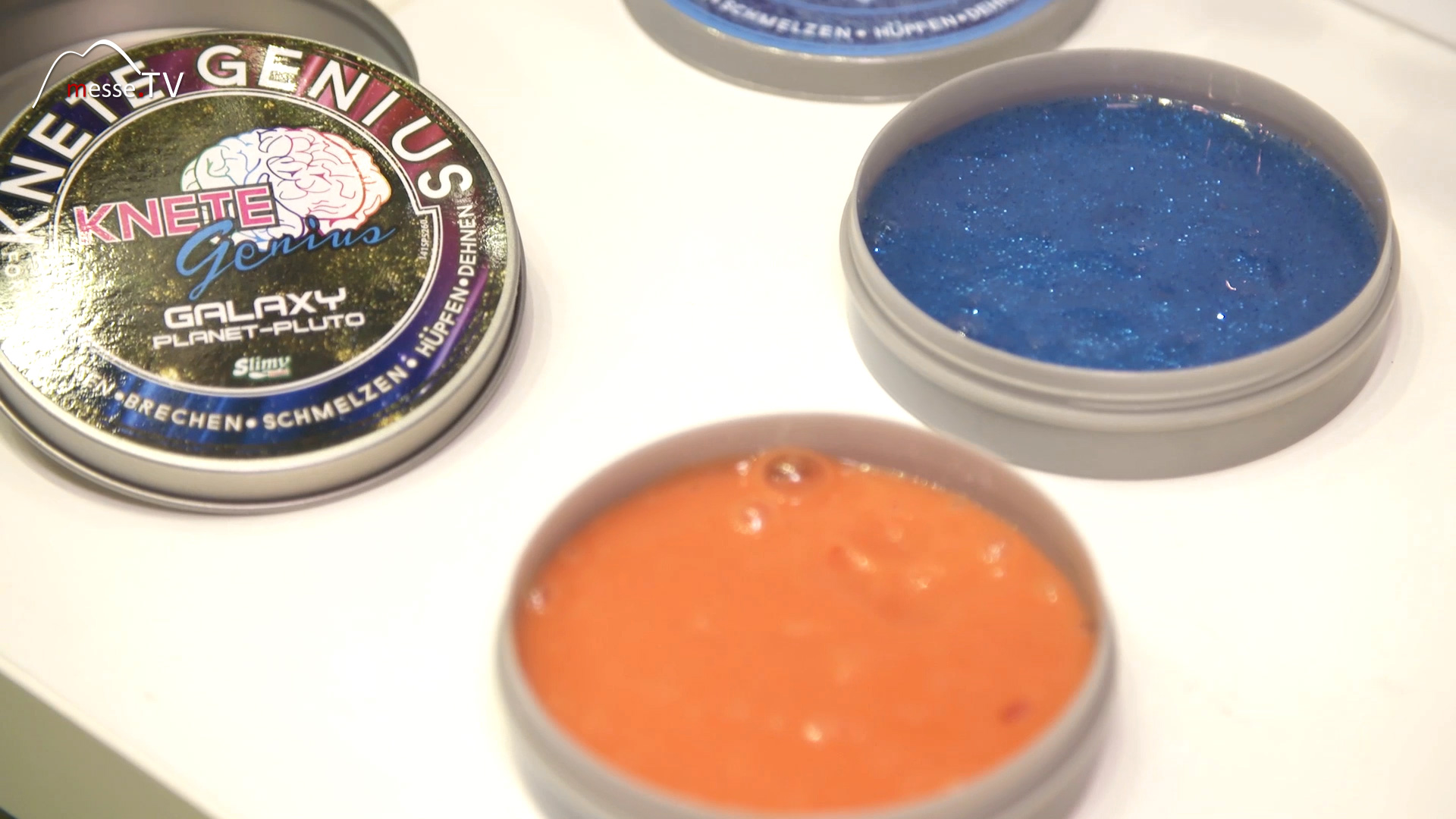
Slimy Knete erweitert das bekannte Slimy-Sortiment um einen deutlich stärker formbaren Materialtyp. Im Unterschied zu klassischen Schleimvarianten steht hier weniger das Ziehen oder Fließen im Vordergrund, sondern das gezielte Gestalten. Auf der Messe wird die Variante *Knete Genius* vorgestellt, die sich bewusst zwischen Funktionsknete und Kreativmaterial positioniert und damit andere Spielimpulse setzt als herkömmlicher Slime.
Zwischen Funktionsknete und Kreativmaterial
Slimy Knete ist so aufgebaut, dass sie mehrere Eigenschaften in sich vereint. Einerseits bleibt sie weich genug, um geknetet zu werden, andererseits besitzt sie eine höhere Festigkeit, die das Formen stabiler Figuren ermöglicht. Damit bewegt sich die Knete deutlich näher am klassischen Modellieren als am reinen Schleimspiel. Kinder können Objekte gestalten, verändern, wieder zerdrücken und neu formen, ohne dass die Masse sofort zerläuft.
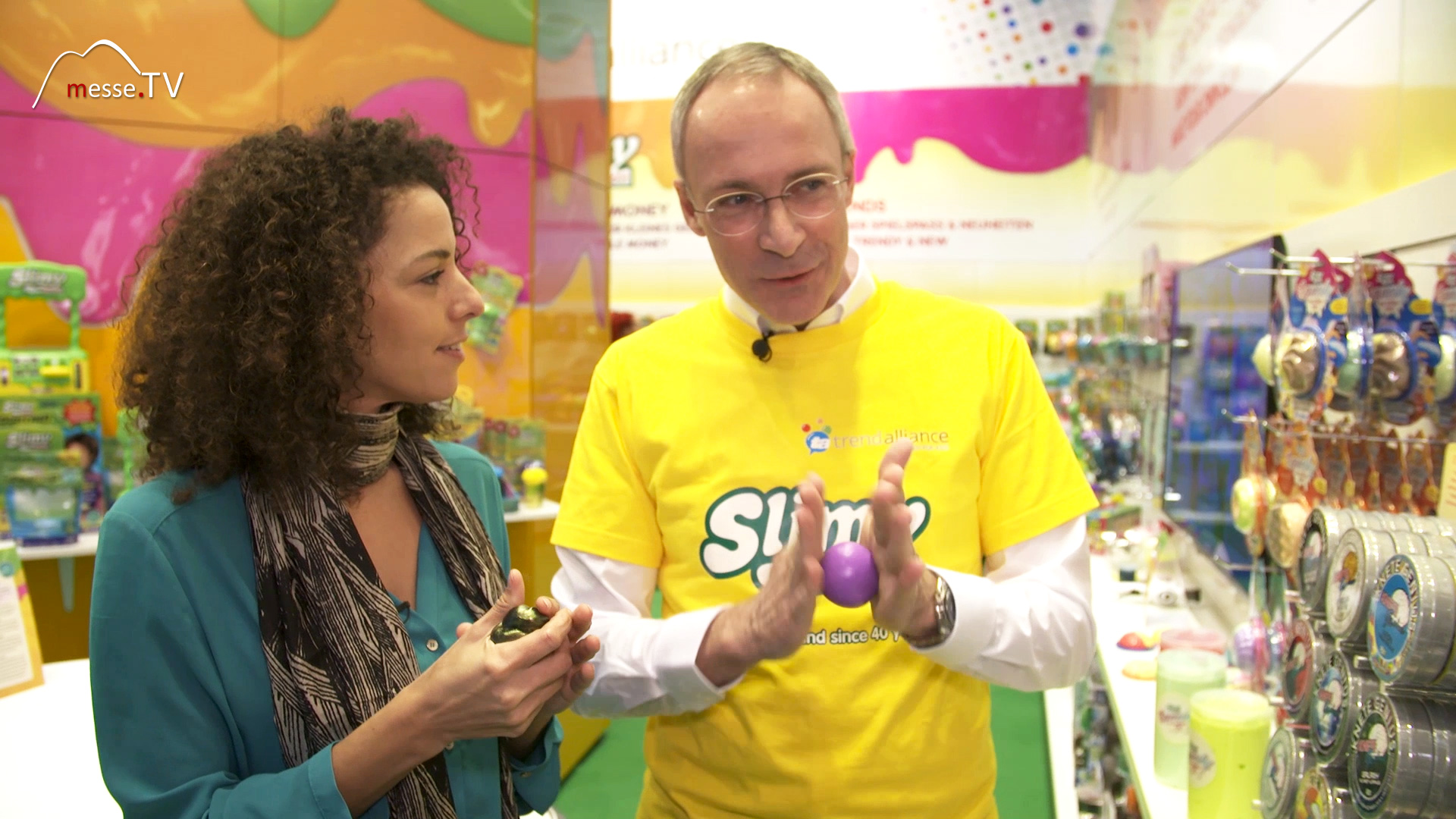
Vielseitige Materialeigenschaften im Spiel
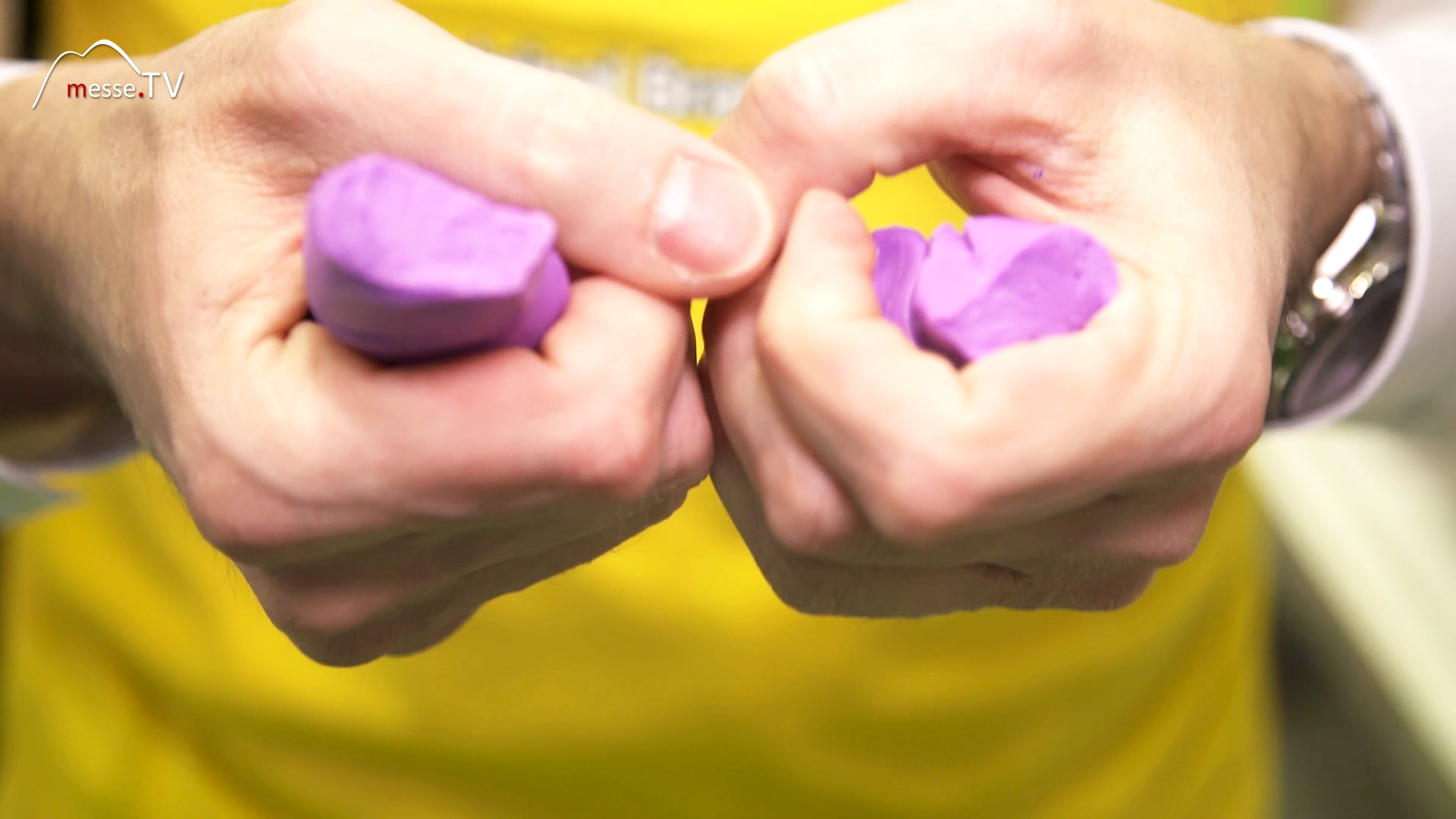
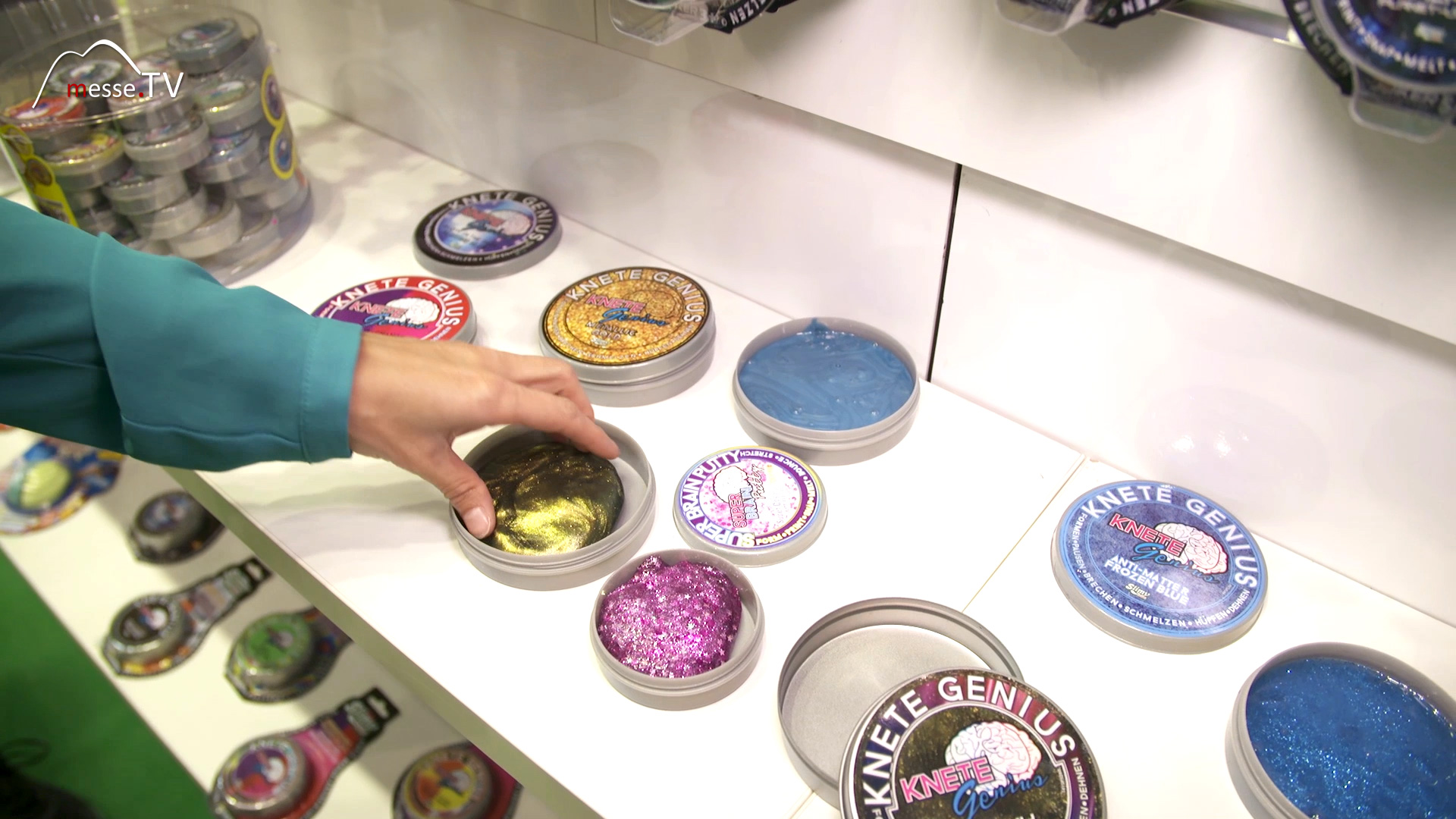
Ein zentrales Merkmal der Slimy Knete ist ihre Wandelbarkeit. Die Masse lässt sich nicht nur kneten, sondern auch brechen oder teilen. Legt man sie anschließend zurück in die Dose, fließt sie langsam wieder zusammen und nimmt eine neue, glatte Form an. Optisch fällt zudem der starke Glanz auf, der je nach Variante unterschiedlich wirkt. Einige Massen schillern, andere leuchten im Dunkeln oder verändern ihre Farbe.
Systematische Themenwelten statt Einzelprodukte
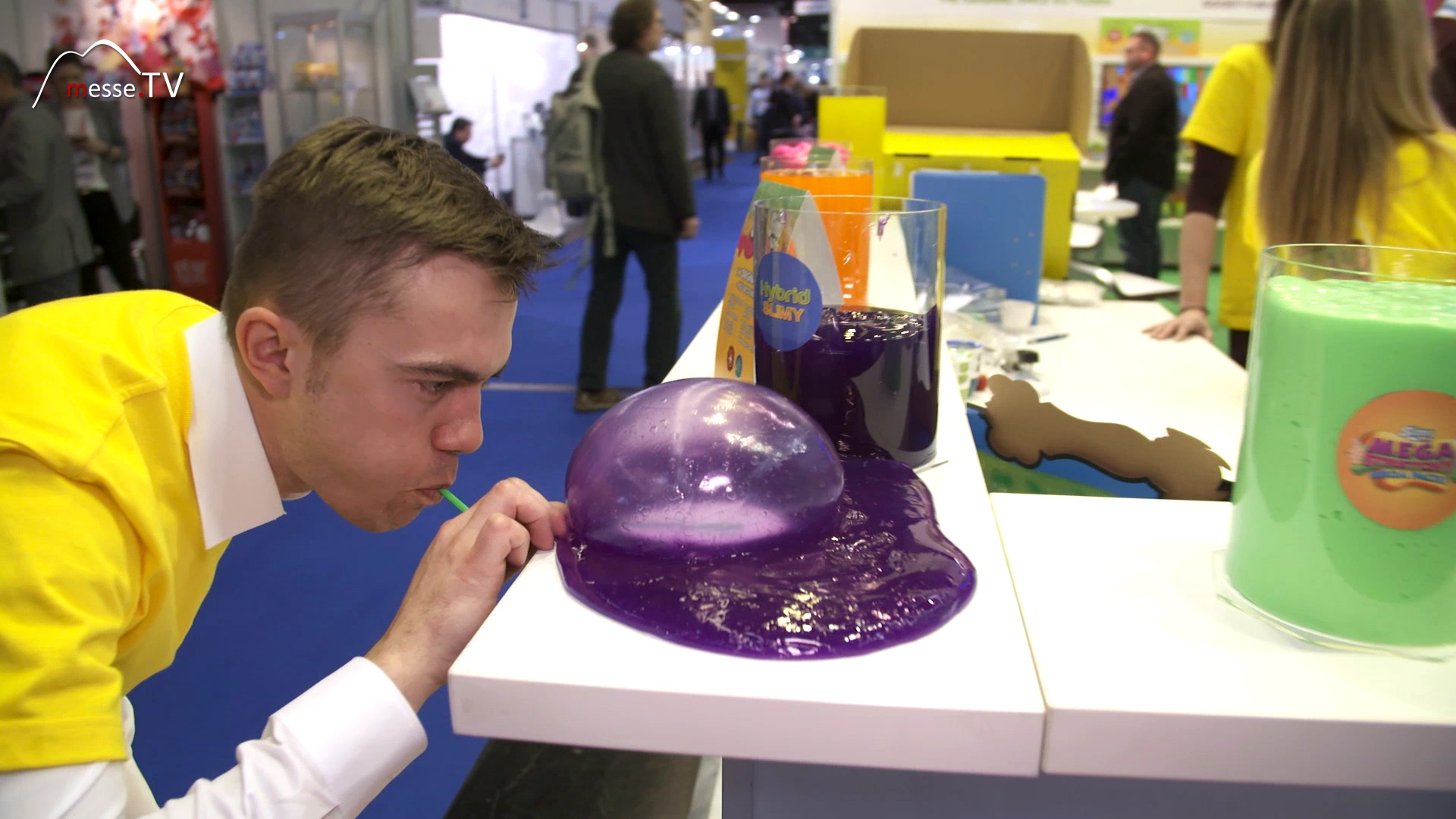
Im Gespräch wird deutlich, dass Slimy Knete nicht als isoliertes Produkt gedacht ist. Die Massen sind thematisch aufgebaut und folgen klaren Systematiken. Begriffe wie Galaxy, Antimaterie oder Colorchange beschreiben dabei nicht nur Farben, sondern ganze Erlebniswelten. Auch spezielle Varianten wie goldfarbene Knetmassen gehören dazu. Dieses Konzept erleichtert es, das Sortiment zu erweitern, ohne beliebig zu wirken.
- Stärker formbare Knete mit kreativem Schwerpunkt
- Kneten, Brechen und erneutes Zusammenfließen als Spielelemente
- Optische Effekte wie Glanz, Schillern, Leuchten oder Farbwechsel
- Systematisch aufgebaute Themenwelten wie Galaxy oder Colorchange
Positionierung innerhalb des Slimy-Sortiments
Slimy Knete ergänzt die bekannten Slimy-Massen um einen klaren Kreativaspekt. Während klassische Slimy-Produkte vor allem durch Haptik und Bewegung überzeugen, richtet sich die Knete an Kinder, die gestalten und experimentieren wollen. Damit wird das Sortiment nicht ersetzt, sondern sinnvoll erweitert. Slimy Knete steht für eine ruhigere, konzentriertere Spielweise, bei der Formen, Farben und Materialverhalten im Mittelpunkt stehen.
Slimy Knete im Kontext moderner Kreativspielzeuge
Slimy Knete fügt sich in einen größeren Trend innerhalb der Spielwarenbranche ein, bei dem Materialien nicht mehr nur einen einzelnen Spielzweck erfüllen sollen. Gerade im Kreativbereich wird zunehmend Wert auf Produkte gelegt, die mehrere Spielansätze miteinander verbinden. Kneten, Formen, Experimentieren und sensorisches Erleben greifen hier ineinander. Slimy Knetmasse steht exemplarisch für diese Entwicklung, da sie klassische Kneteigenschaften mit typischen Slimy-Merkmalen kombiniert. Im Vergleich zu herkömmlicher Knete, die oft auf reines Modellieren ausgelegt ist, erweitert Slimy Knete das Spiel um zusätzliche Ebenen. Die Masse reagiert sichtbar auf Bewegung, verändert ihre Struktur und ihr Erscheinungsbild und lädt damit zum Ausprobieren ein. Dieser offene Spielansatz entspricht dem heutigen Verständnis von Kreativspielzeug, bei dem nicht das Ergebnis, sondern der Prozess im Vordergrund steht. Kinder entscheiden selbst, ob sie Figuren bauen, Strukturen erzeugen oder einfach mit Materialverhalten experimentieren.
Sensorisches Spiel und Materialerfahrung
Ein weiterer Aspekt, der Knetmasse in diesem Zusammenhang relevant macht, ist die bewusste Ansprache mehrerer Sinne. Haptik, Optik und teilweise auch visuelle Effekte wie Glanz oder Farbveränderungen sind feste Bestandteile des Spielerlebnisses. Das Material reagiert auf Druck, Zug und Temperatur der Hände und vermittelt dabei unterschiedliche Rückmeldungen. Diese Form des sensorischen Spiels ist längst nicht mehr nur ein Nebeneffekt, sondern ein zentrales Qualitätsmerkmal moderner Spielmassen. Gerade im Vergleich zu digitalen Spielangeboten bietet die formbare M einen bewussten Gegenpol. Das Arbeiten mit den Händen, das direkte Verändern von Material und das Beobachten physischer Prozesse schaffen eine Art analogen Erlebnisraum. In diesem Kontext wird Slimy Knete weniger als klassisches Spielzeug wahrgenommen, sondern als Material, das Kreativität, Konzentration und Experimentierfreude fördert.
- Anti-Agression Kinder
- Baby Spielzeug - Fehn
- Camcar VR-Brille - Carrera
- Dragons Kostüme - Rubie's
- Einstein Bär - Steiff
- Fortnite Kostüme - Rubie's
- Gips Bausteine - Ankenstein
- Tierfiguren und Handpuppen
- HoRutsch Holzrutsche - Höllinger
- Spiele entwickeln
- Hubschrauber Red Bull - Carrera RC
- Kids Mode - Rubie's
- Kinderwagenkette - Fehn
- Marvel Kostüme - Rubie's
- Morgen-Management mit Kindern
- Porsche RSR - Carrera
- Power Snake - Carrera RC
- Bubblegator - Pustefix Seifenblasen
- Rubies Kostüm Modenschau
- Fluffy und Hybrid - Slimy
- Knete Genius - Slimy
- National Geographic Stofftiere - Steiff
- Zotty Bär - Steiff
- Strategiespiel Penta Ludea
- Super Mario Scooter - Carrera RC
Messe-Berichterstattung bundesweit - Messewissen, Termine & Veranstaltungen


