Outdoor game Guess Who? and Tetris Tumble for events
by B. Velonavy - 2026-03-07Large-format games have been one of the more striking trends in the leisure sector for several years. What used to be a classic table game played in the living room now often appears in a much larger form – for garden parties, events or public meeting places.
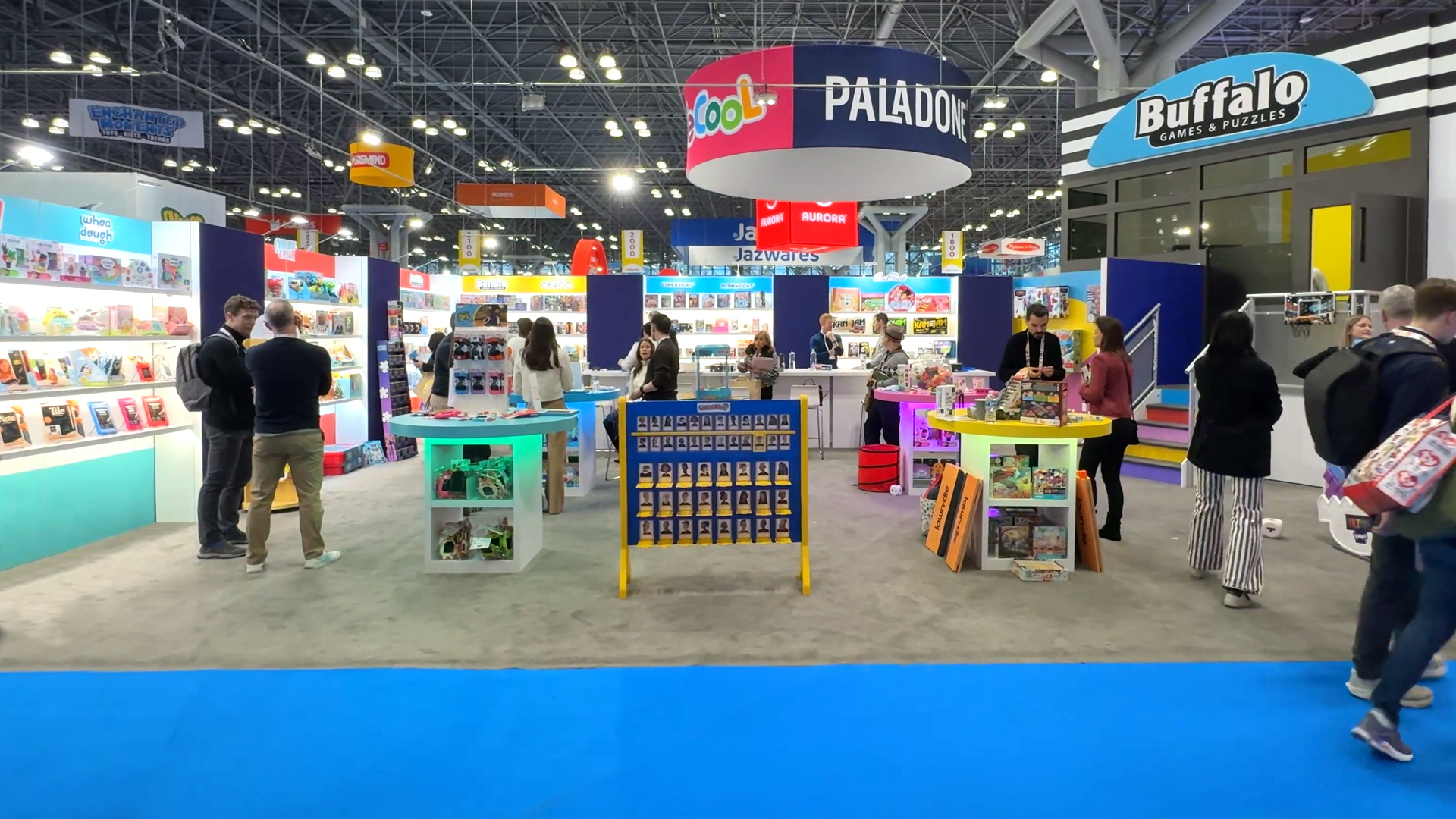
Two examples of this development are the outdoor games Guess Who? and Tetris Tumble from Buffalo Games. Both transfer familiar game principles into a format designed for outdoor group activities. While the original concept of ‘Who is it?’ is based on a small table game, the idea here is expanded to a playing area of around 1.20 metres wide. At the same time, Tetris Tumble takes the familiar video game principle and transforms it into a physical game of skill with large components.

Buffalo Games brings Guess Who? as a large-format outdoor game
The classic guessing game ‘Guess Who?’ is one of the best-known game ideas in the family sector. Two players try to identify their opponent's character. The playing area shows a series of faces or characters, from which one character is selected. The players take turns asking questions that can only be answered with ‘yes’ or “no”. A typical question might be: ‘Does your character wear glasses?’ Depending on the answer, characters are eliminated by being turned down. Step by step, the selection is reduced. Buffalo Games has transferred this principle to a weatherproof outdoor format. The two playing areas are identical in design and face each other. This allows players to enjoy the game outside their living rooms. The game is suitable for different age groups and, according to the manufacturer, can be played by children from around three years of age. Typical questions during a round include:
- Does your character wear glasses?
- Does your character have a specific hair colour?
- Does your character wear a hat?
- Does your character have a beard or moustache?
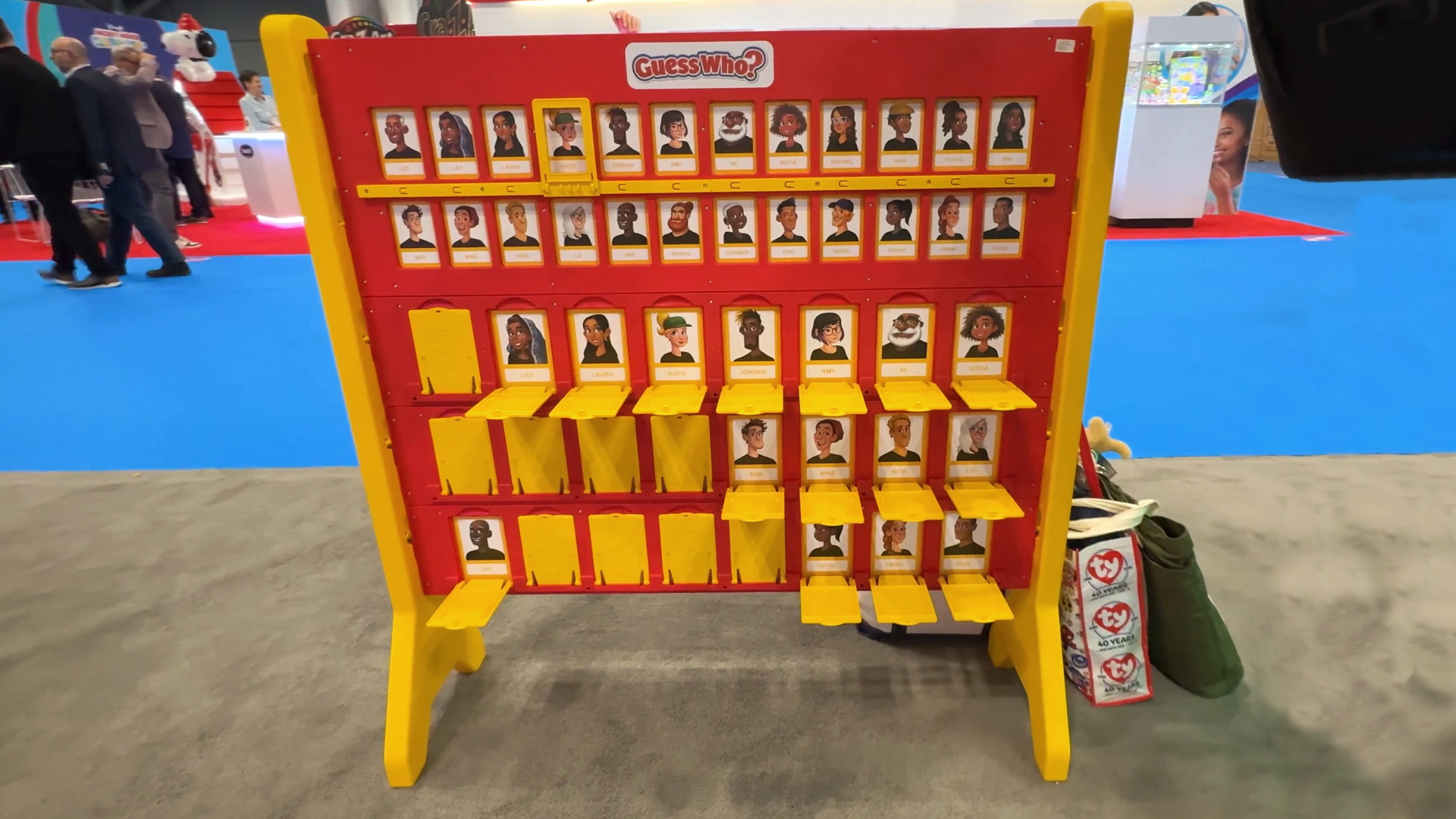
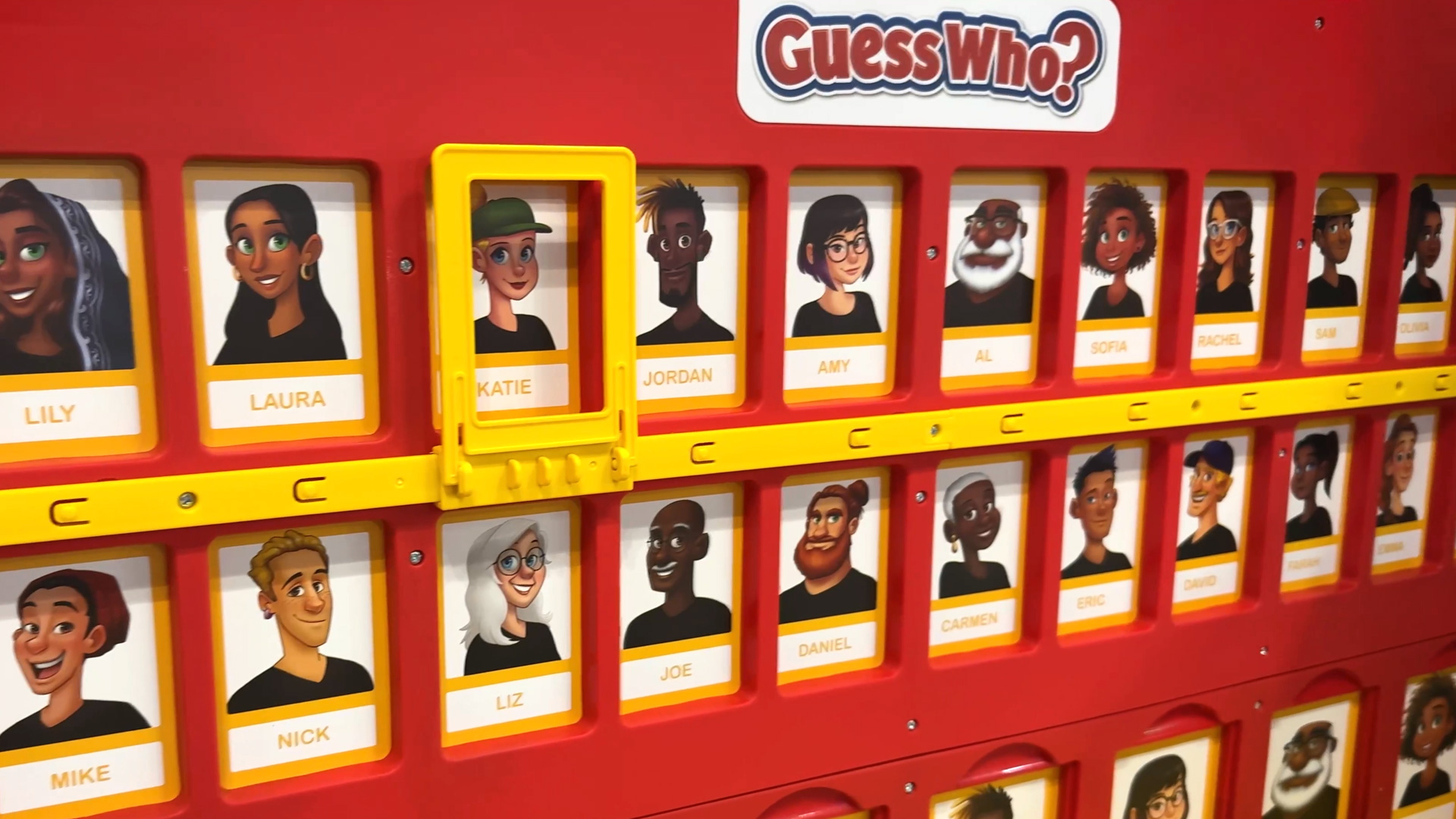
Outdoor game Who is it? for garden parties and events
A key difference to the classic version is the area of application. The large version is weatherproof and therefore specifically designed for outdoor use. Typical scenarios are:
- Barbecues in the garden
- Sports events or tailgating
- Family celebrations
- Outdoor events
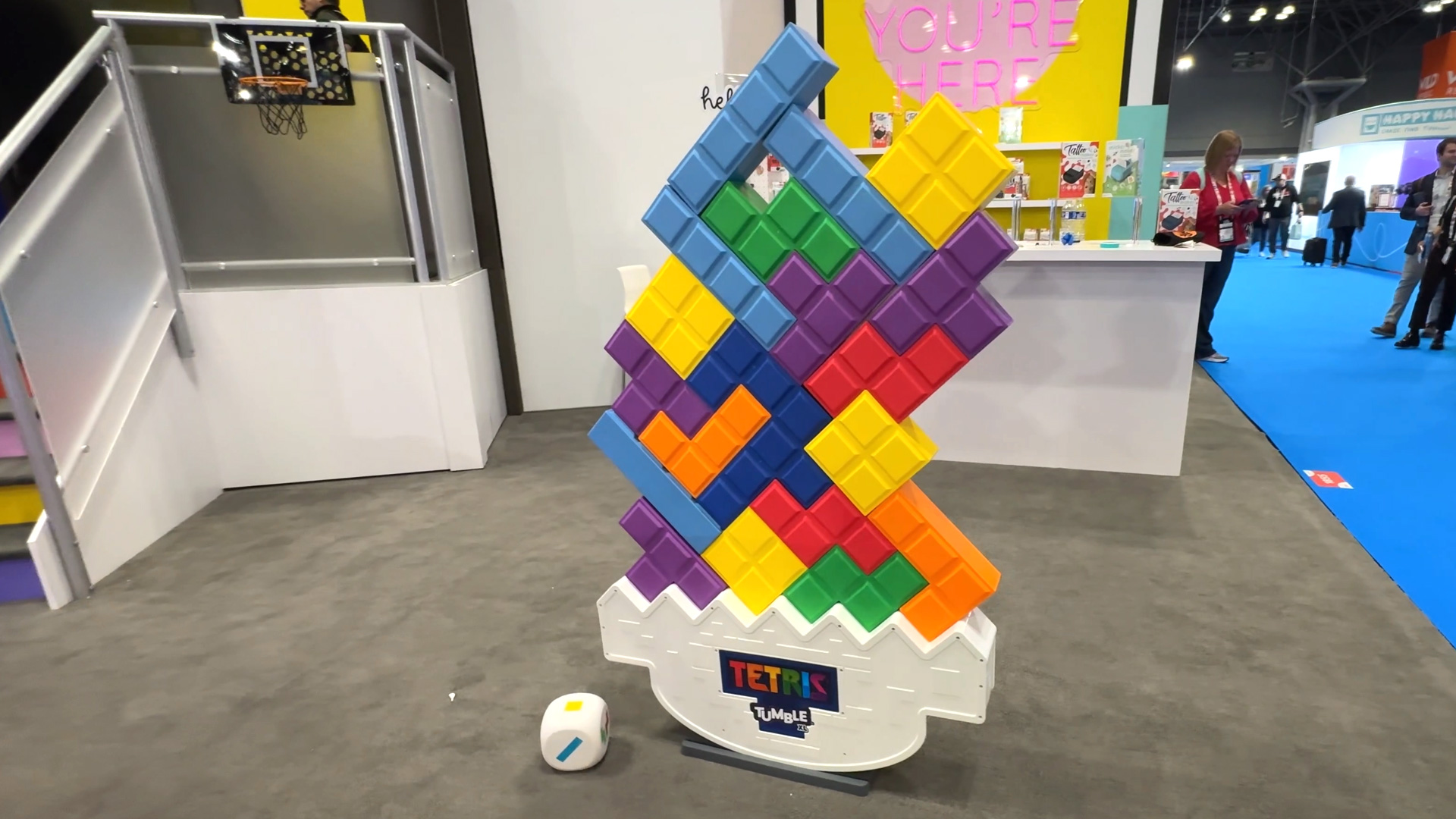
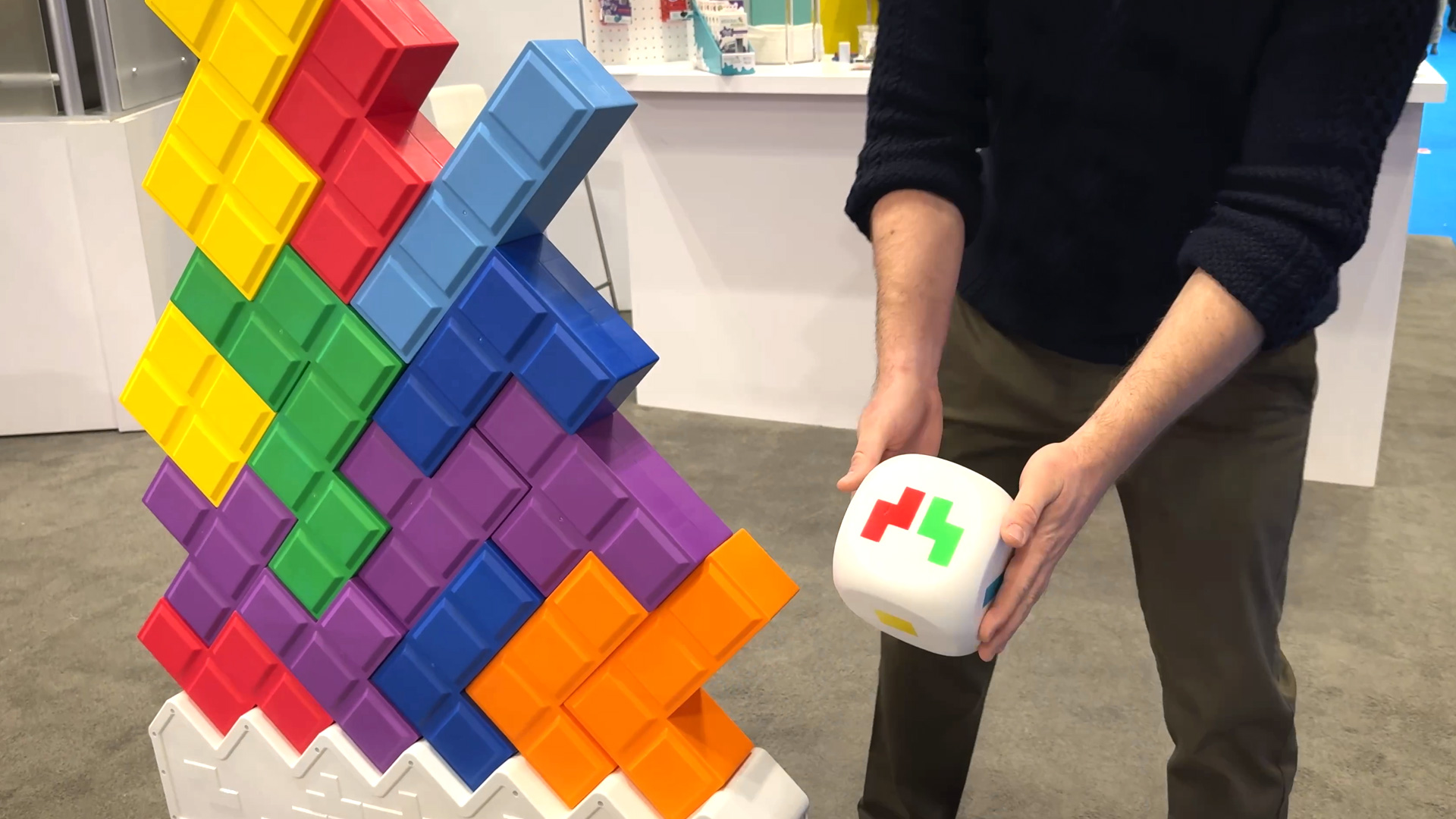
Buffalo Games develops Tetris Tumble as a physical game of skill
In addition to the outdoor game Who is it?, Buffalo Games is also presenting the game Tetris Tumble. While the guessing game is based on communication, this game focuses on balance and skill. The principle is based on the well-known Tetris concept. However, the building blocks appear here as real objects. Players first roll a large foam dice. This determines which building block must be placed next. The corresponding piece is then placed on a tower. The aim is to keep the structure stable. With each round, the tower grows taller – until finally a building block is placed incorrectly and the structure collapses. This moment is part of the game principle. The collapse marks the end of a round.
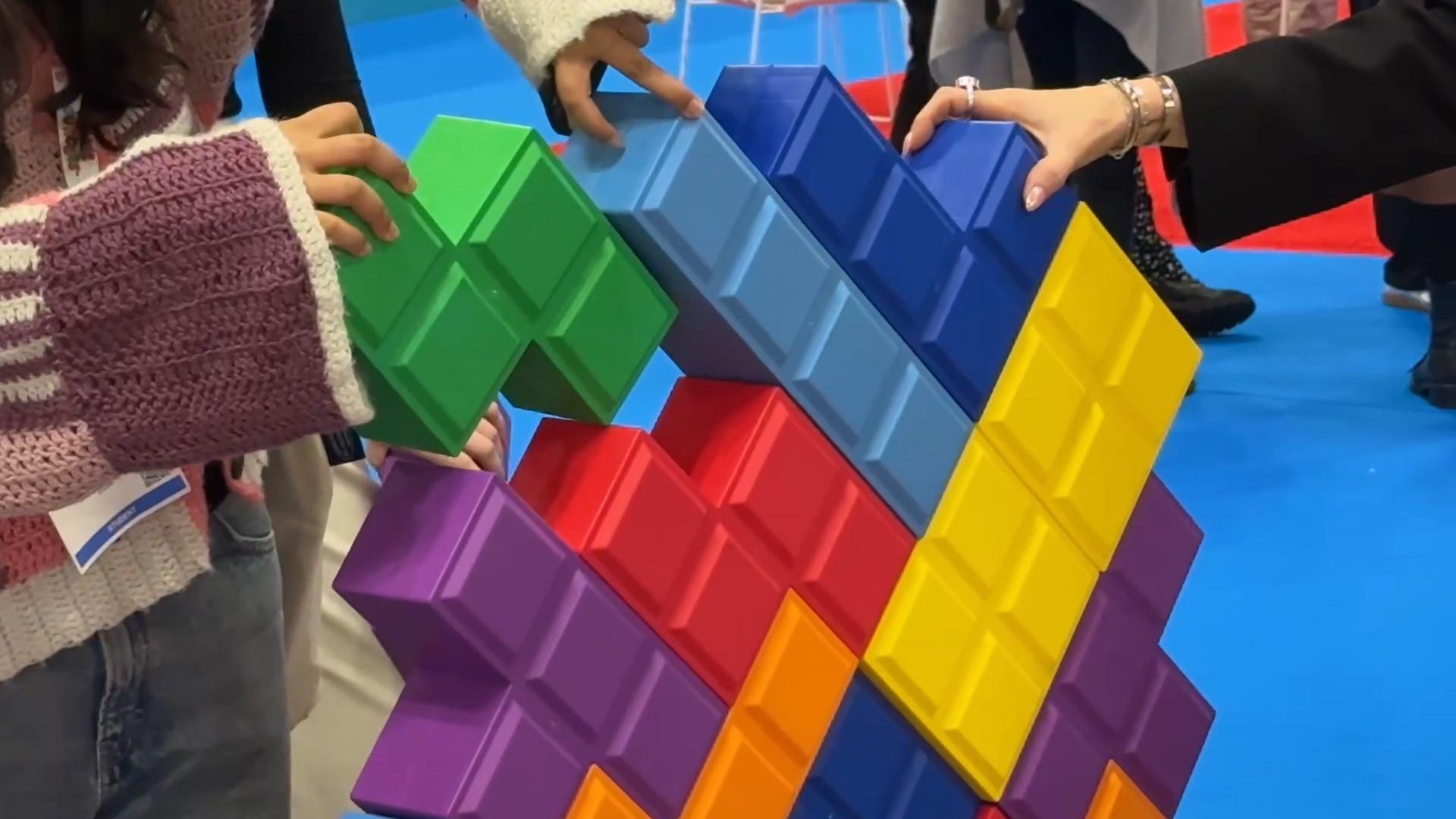
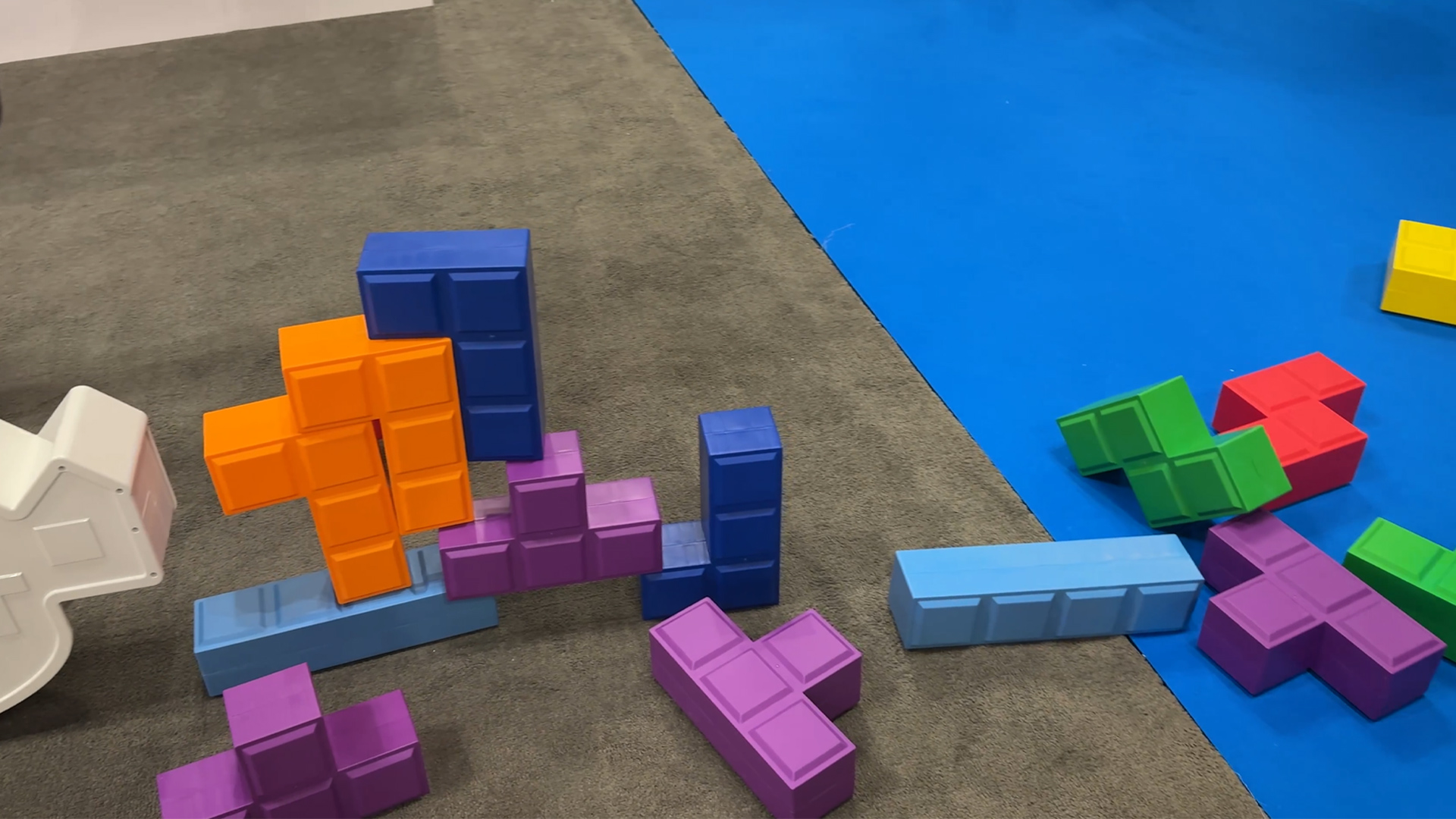
Tetris Tumble as an outdoor game of skill
Tetris Tumble is also designed for outdoor use. The game consists of large building blocks and comes with a carrying bag for easy transport and storage. The combination of dice mechanics and balance elements creates an easy-to-understand game flow:
- Rolling a large foam dice
- Selecting the appropriate building block
- Placing the element on the tower
- Observing whether the structure remains stable
Large-format games as a growing leisure trend
Beide Spiele stehen exemplarisch für einen Trend, der in Bars, Freizeitparks und Veranstaltungsorten bereits seit einiger Zeit zu beobachten ist. Klassische Spiele erscheinen zunehmend in übergroßen Varianten. Bekannte Beispiele sind etwa:
- Giant Jenga
- große Connect 4 Varianten aBoth games are examples of a trend that has been observed in bars, amusement parks and event venues for some time now. Classic games are increasingly appearing in oversized versions. Well-known examples include:
- Giant Jenga
- Large Connect 4 variants
- Oversized chess sets
- überdimensionierte Schachspiele
Licensed games and familiar concepts in a new format
The two games show how familiar concepts can be further developed. ‘Guess Who?’ has been part of the classic family repertoire for decades, while Tetris originally comes from the world of video games. In both cases, the original concept has not been changed, but merely scaled up. The rules remain understandable, but the gaming experience shifts from the table to the garden or to events. This creates a mixture of nostalgia and event gaming – familiar mechanics in an unusually large dimension.






Trade fair reporting Germany - Trade fair knowledge, dates & events


