Arotherm Pro heat pump with R290 for compact installation
by A. Bergmeier - 2026-04-22The heat pump is increasingly at the centre of technical developments in existing buildings. While early systems were primarily aimed at new buildings, the focus today is clearly shifting towards flexible installation and compact design.
With the Arotherm Pro, Vaillant is presenting a solution that addresses precisely this issue. The system combines high power density with a different approach to safety distances, opening up new scope for installation in private homes. The focus here is not only on efficiency, but also on the question of how a heat pump can be integrated as easily as possible under real conditions. In detached houses in particular, space and structural restrictions often determine whether an installation is possible at all.
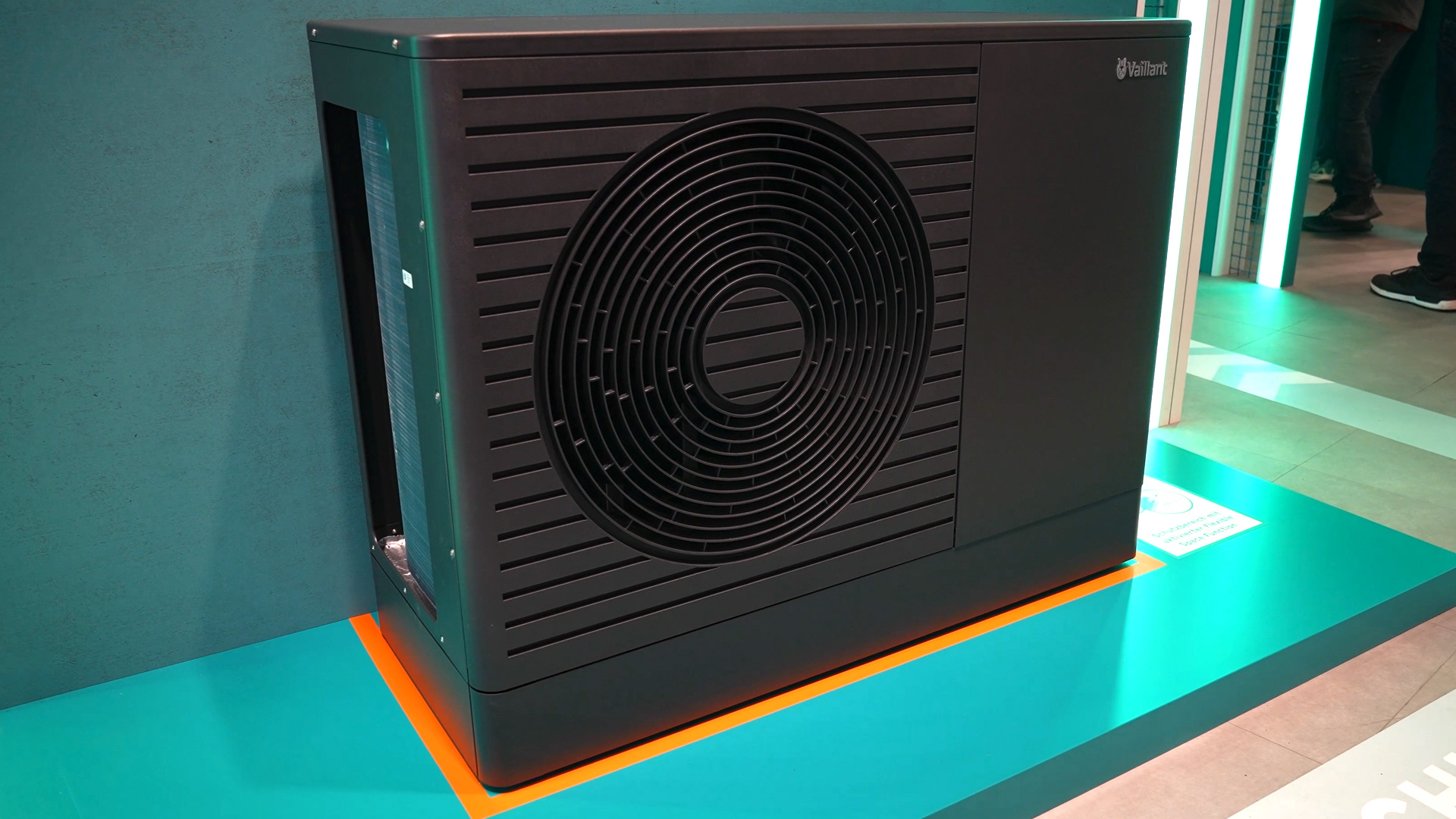

Vaillant Arotherm Pro with reduced protection range for R290
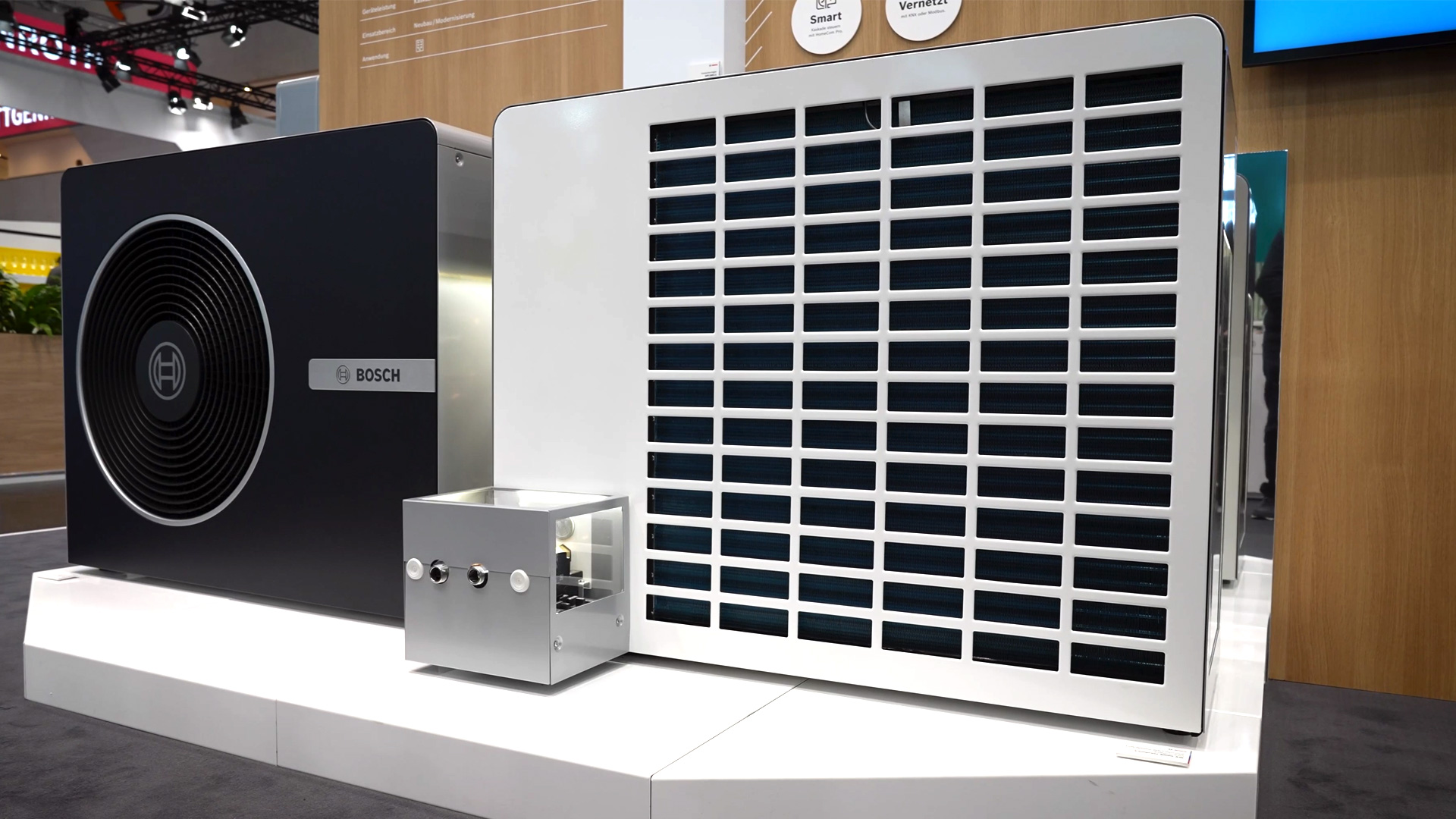
One of the most striking features of the Arotherm Pro is its handling of the refrigerant R290. Propane is considered efficient, but places increased demands on safety concepts. Traditionally, this leads to larger protection areas around the system, such as minimum distances from basement windows or light wells. This is precisely where the new function comes in. The protection area can be significantly reduced by setting it to installation level. In concrete terms, this means that structural elements such as basement windows or light wells can be present outside a defined zone without affecting the installation. This is a crucial point for many applications in existing buildings. The practical consequences are evident in everyday life. Where previously large distances had to be maintained, the system can now be moved closer to existing structures. This creates new flexibility, particularly in the case of narrow plots or limited installation areas.
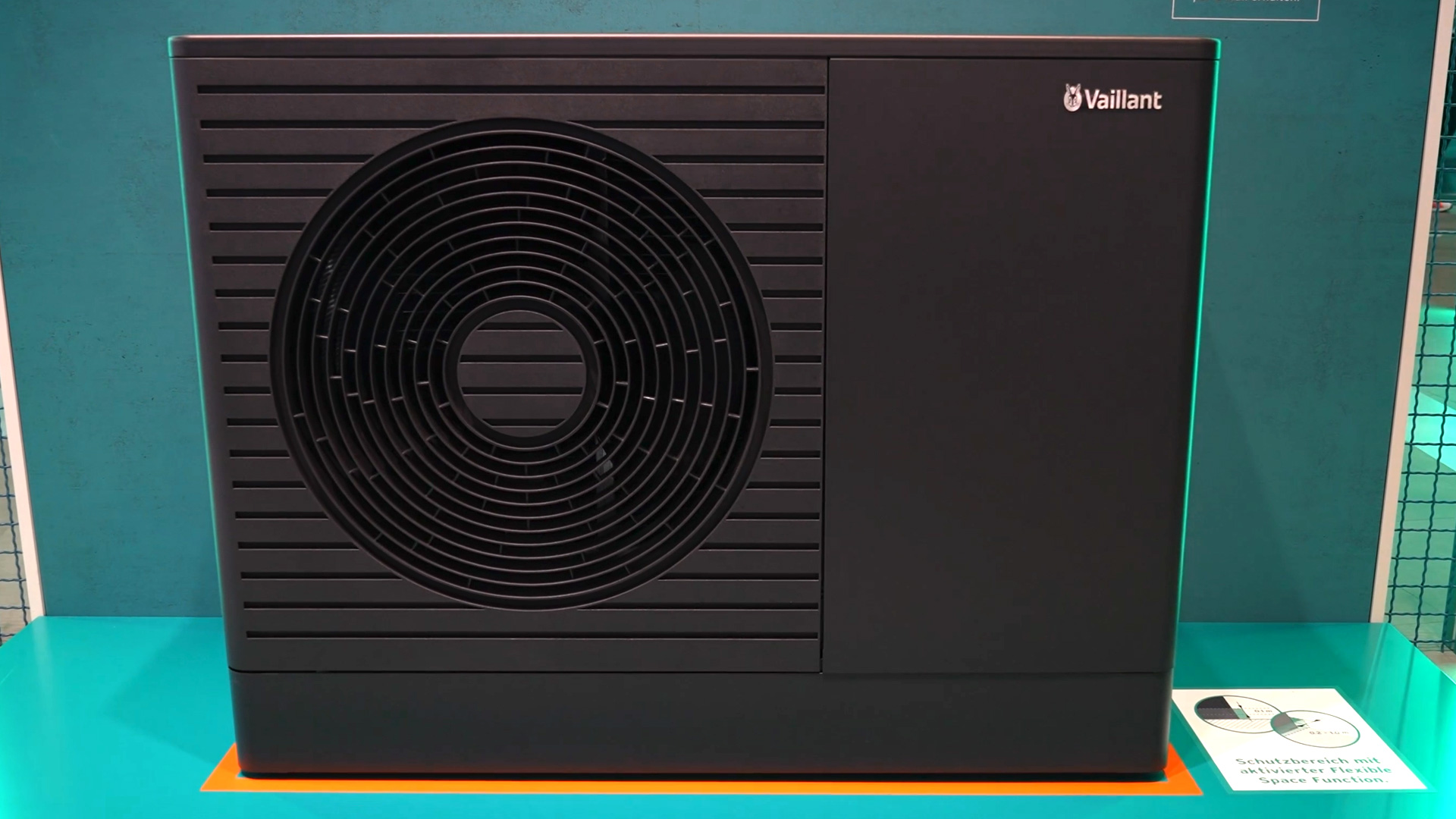
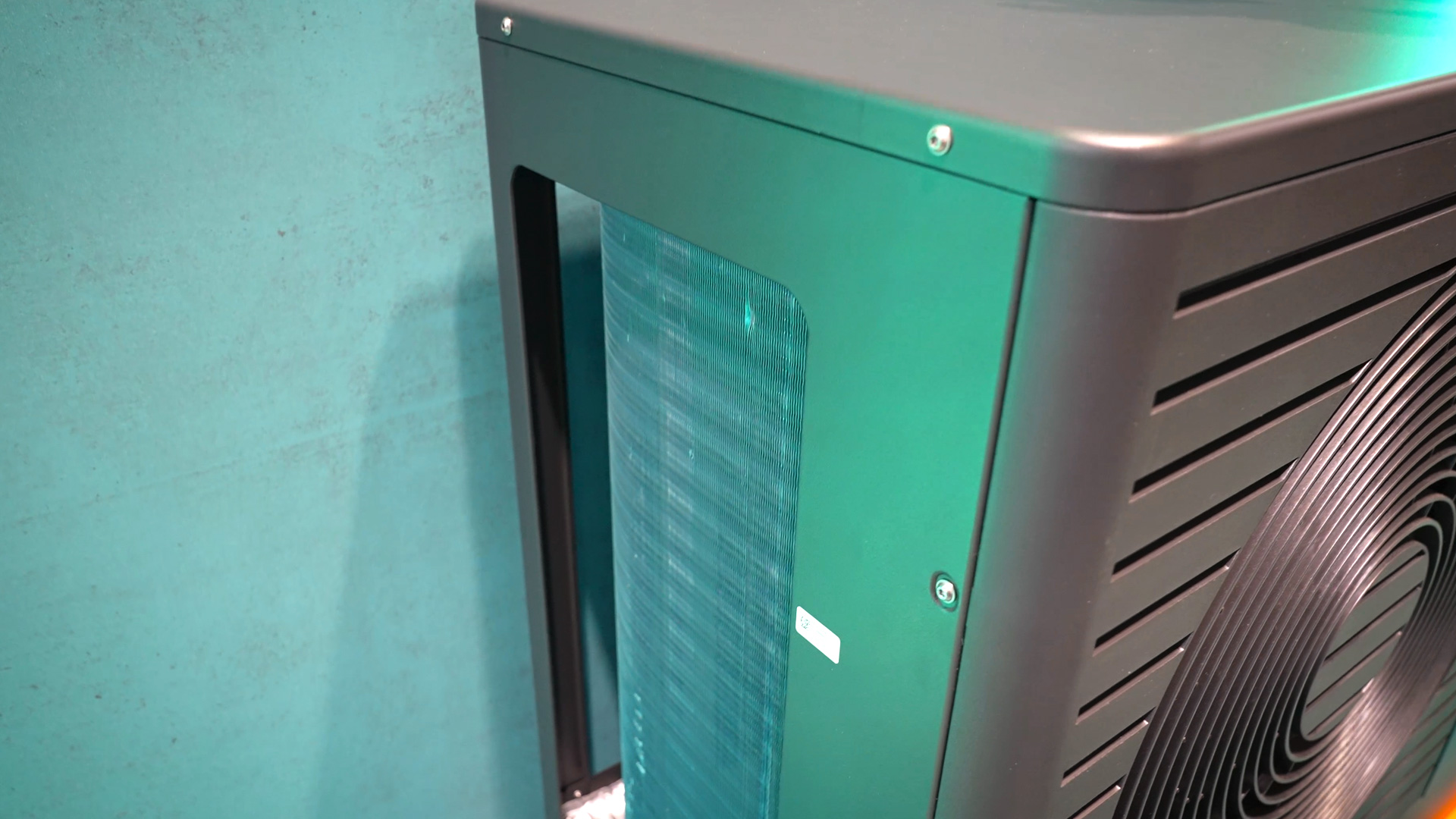
Comparison of the compactness and performance of the Arotherm Pro
In addition to the safety concept, the compact design is particularly striking. The Arotherm Pro is designed as the smallest air-to-water heat pump in the portfolio, yet achieves a comparatively high output. It is available in output sizes of 5, 7 and 11 kW. This is made technically possible by an L-shaped evaporator. This design utilises the available space more efficiently and increases the power density within the housing. Compared to other appliances of a similar size, more heat output is generated. The design of the fan also reflects this approach. Even in the 11 kW version, the system works with just one fan, whereas comparable systems often rely on two fans. This not only reduces the space required, but also has an effect on noise levels and maintenance requirements. The combination of compact design and high performance is aimed at a clear application profile: systems that can be installed in confined spaces without compromising on heating performance.

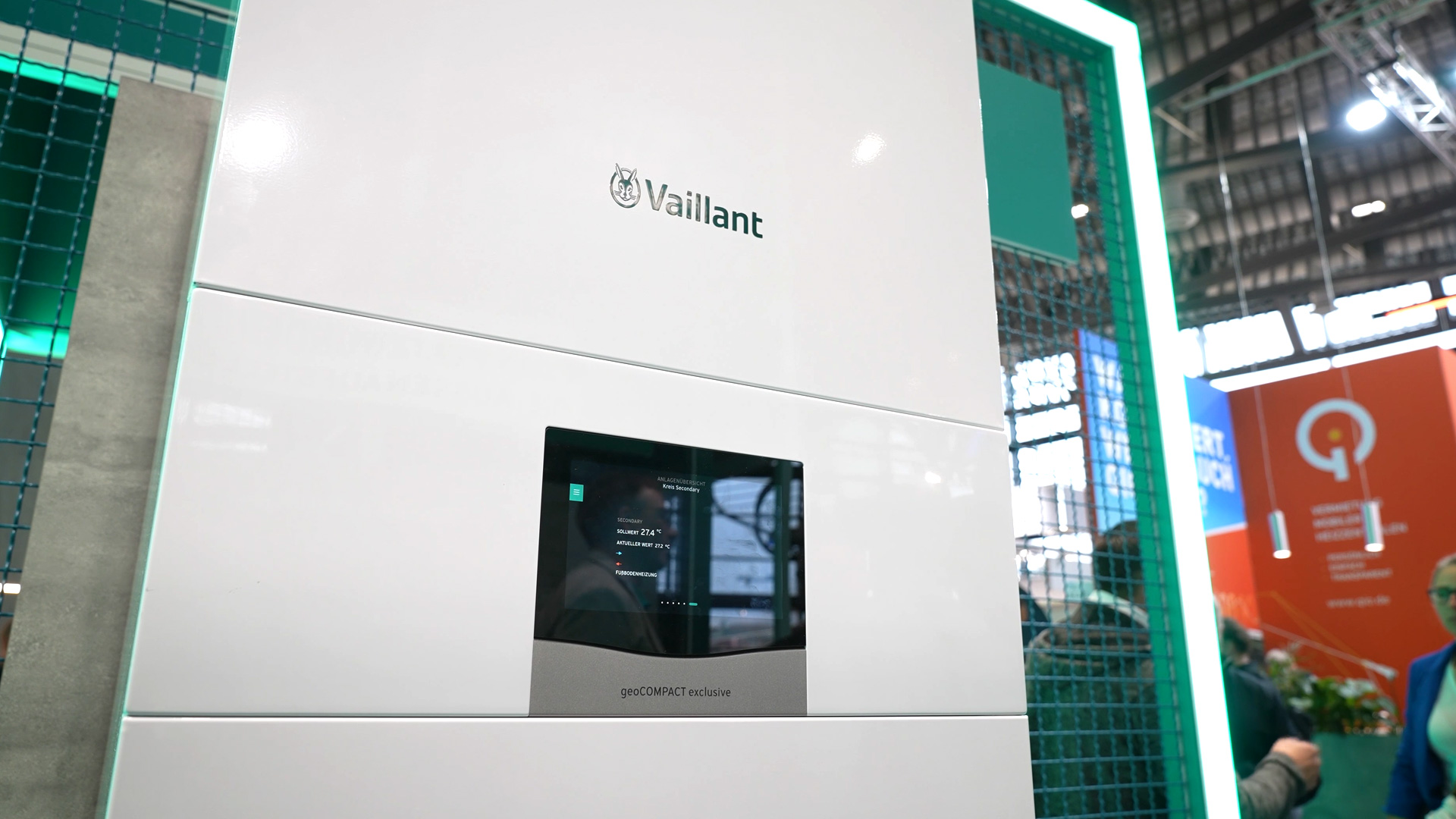
geoTHERM geoCOMPACT with integrated storage tank and safety concept
In addition to the Arotherm Pro, the geoTHERM geoCOMPACT is another development that addresses a different area of application. This is a brine-to-water heat pump with an integrated drinking water storage tank of 180 litres. The focus here is on a new safety concept for the use of R290 indoors. While previous systems with this refrigerant could not be installed in the building without additional measures, the geoCOMPACT relies on a so-called Safeguard concept. At the heart of this approach is an activated carbon filter. In the event of a leak in the refrigeration circuit, this filter completely absorbs the escaping refrigerant and renders it harmless. This prevents the formation of an explosive atmosphere. The system therefore not only works preventively, but also reacts actively to possible faults. The effect is far-reaching. The system can be installed in the basement of a house without additional safety measures. No external ventilation pipes are required and existing installations can be replaced without major structural work.
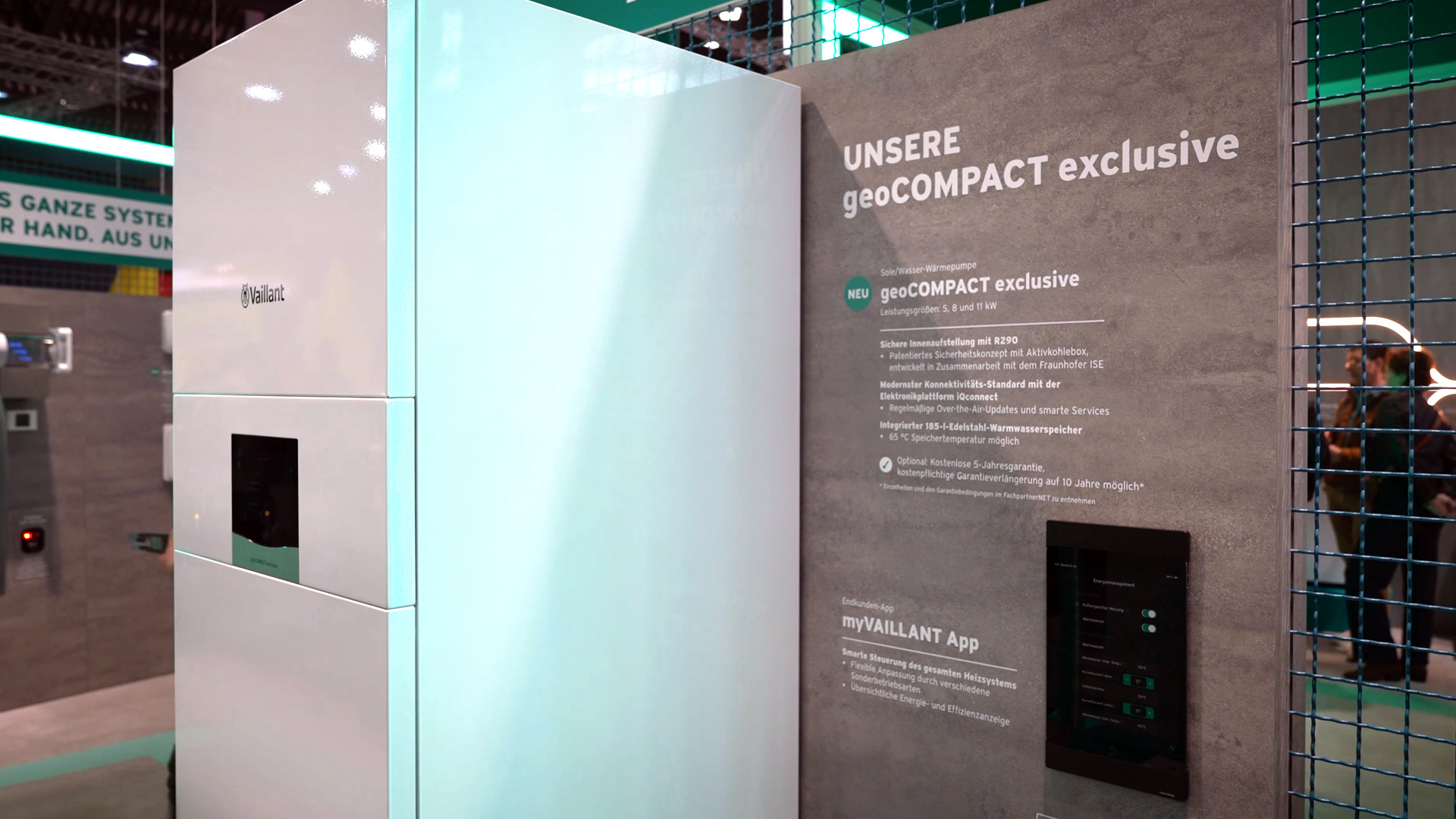
Areas of application and performance ranges of the geoTHERM systems
The geoTHERM geoCOMPACT is designed for output ranges of 5, 7 and 11 kW. It is supplemented by the geoTHERM variant without an integrated storage tank, which covers outputs of up to 17 kW. This results in a broad spectrum for different application scenarios. The range of applications can be clearly structured:
- Use in single-family homes with limited space
- Replacement of existing heating systems without structural modifications
- Integration in basement areas without additional safety measures
- Coverage of different performance requirements through graduated variants

Installation in existing buildings and significance for the heat pump market
The systems presented illustrate a shift in the market. Heat pumps are increasingly being developed for existing buildings, where space, distances and existing infrastructure play a central role. Technical solutions must therefore not only work efficiently, but also fit into existing structures. Vaillant addresses this point with two different approaches. The Arotherm Pro reduces the requirements for the outdoor installation site. At the same time, the geoTHERM geoCOMPACT expands the possibilities indoors thanks to an integrated safety concept. What both developments have in common is that they are designed to simplify installation. Fewer restrictions mean less planning effort and more room for manoeuvre during implementation. This lowers the hurdle for both specialised companies and owners to replace existing heating systems. Ultimately, it's not just about the technical details, but also about how new heating technologies will become established in everyday life. Systems that can be integrated without major conversion work have a clear advantage here. It is precisely in this area of tension that the solutions presented are positioned - as a further development of existing technology with a view to real installation situations.
Trade fair reporting Germany - Trade fair knowledge, dates & events


