Exhaust gas measurement for efficiency and emission control
by A. Bergmeier - 2026-04-15Wherever combustion takes place, exhaust gases are produced. This applies to heating systems in buildings as well as industrial processes with high thermal loads. What can be measured in the chimney or flue gas pipe not only provides information on emissions, but also on the quality of the ongoing process.
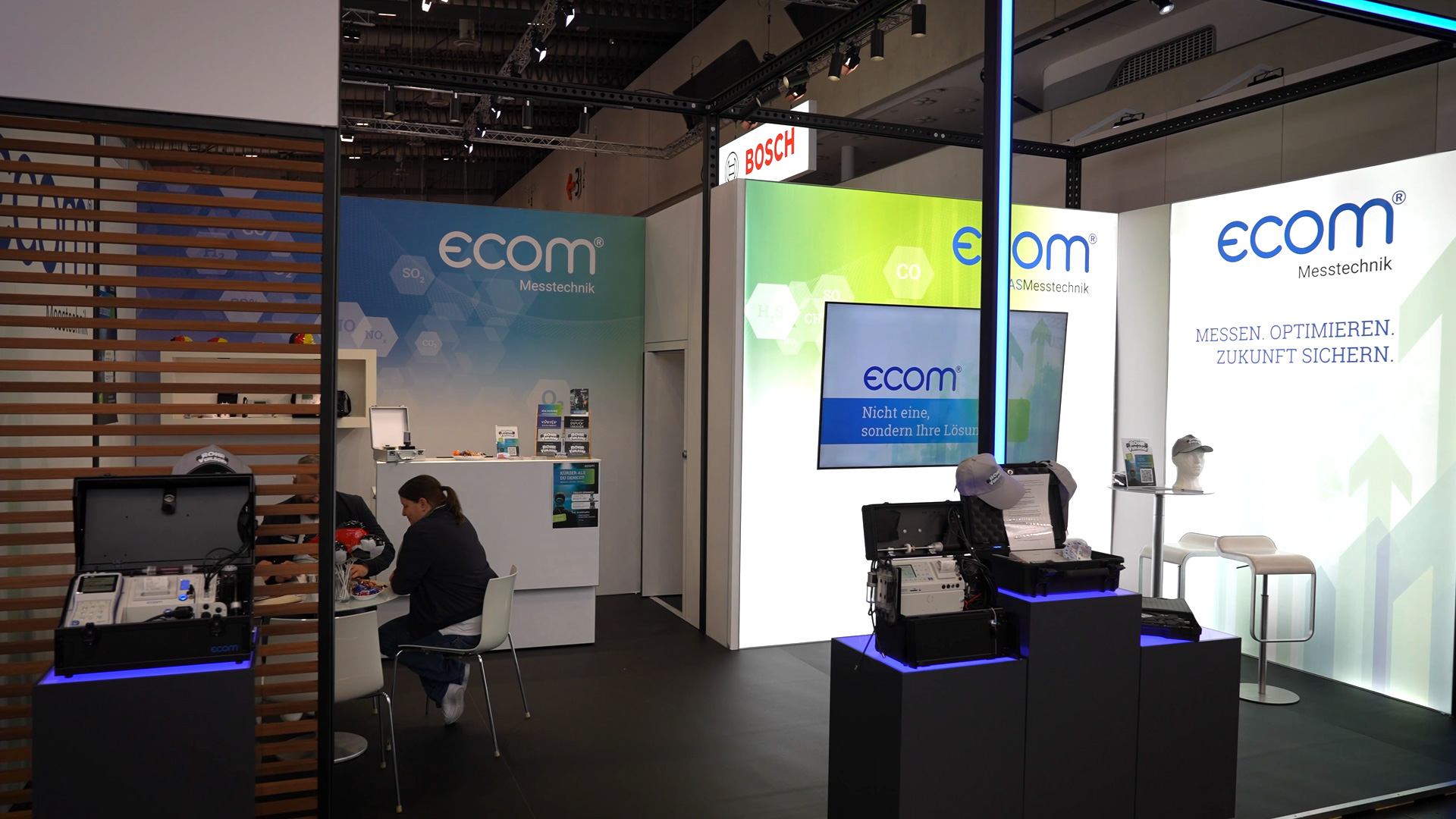
Modern measurement technology works at this interface: it serves to comply with legal requirements, but is also a tool for optimising energy use and plant operation. The technology presented here addresses a point that is often underestimated in practice: everyday use under real conditions. The focus is not on spectacular reinvention, but on the reliability of a system that has to stand up to the everyday work of heating engineers, HVAC technicians and industrial personnel. Ecom expressly emphasises that the technical basis of the devices is already at a high level. The current focus is less on a fundamental new development and more on establishing this measurement technology more broadly on the market.
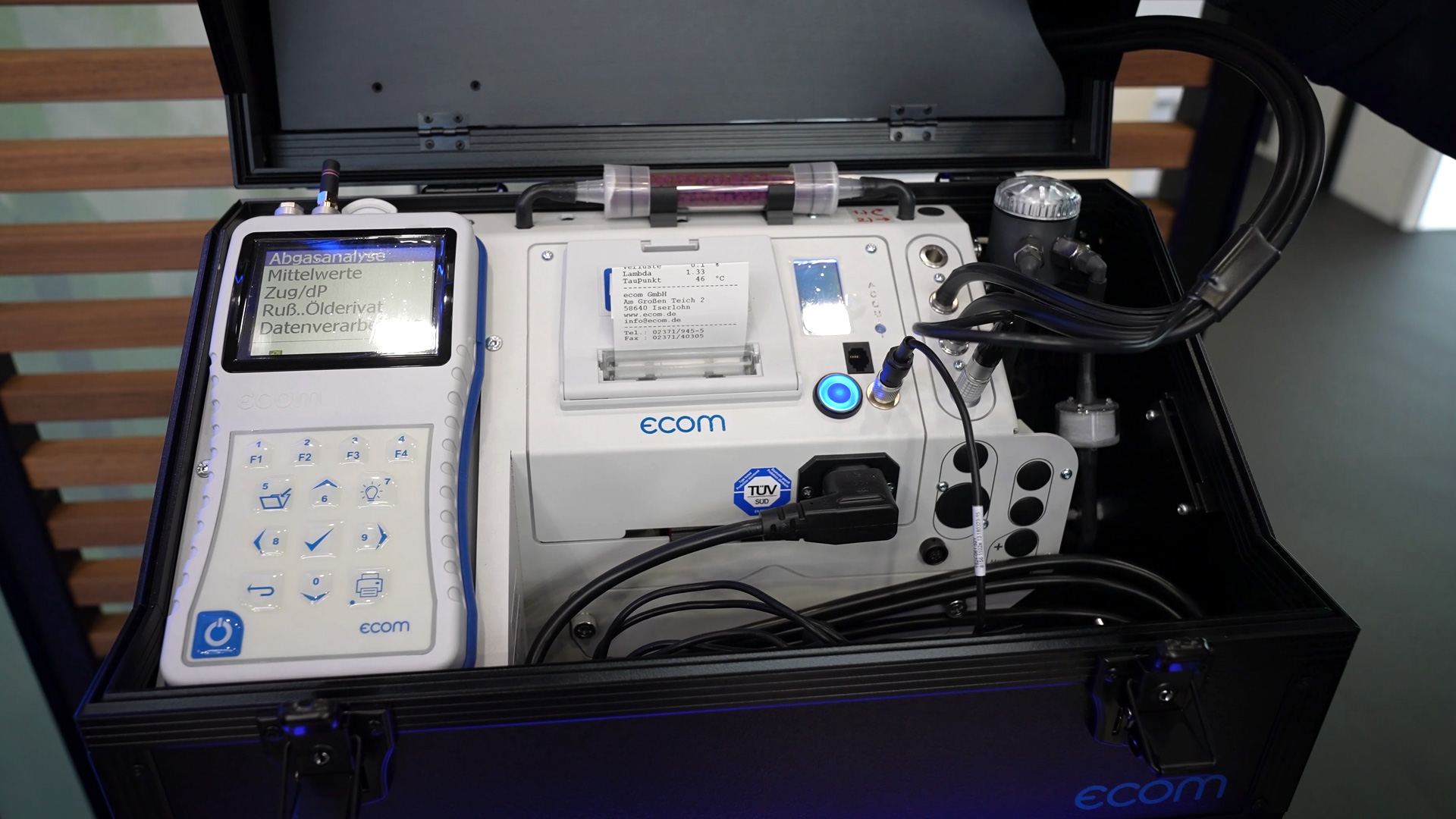

Ecom measurement technology in everyday use in heating construction and industry
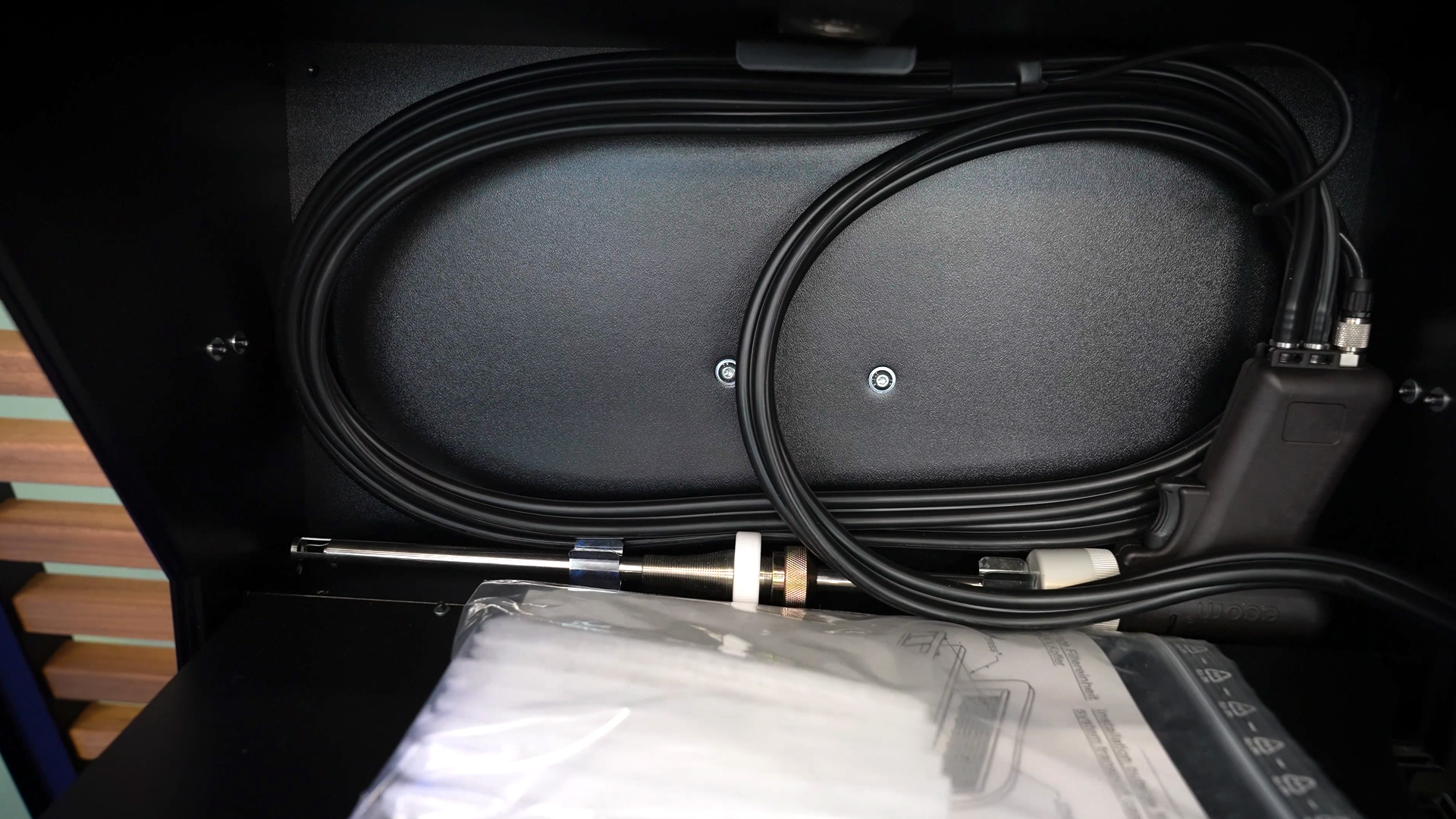
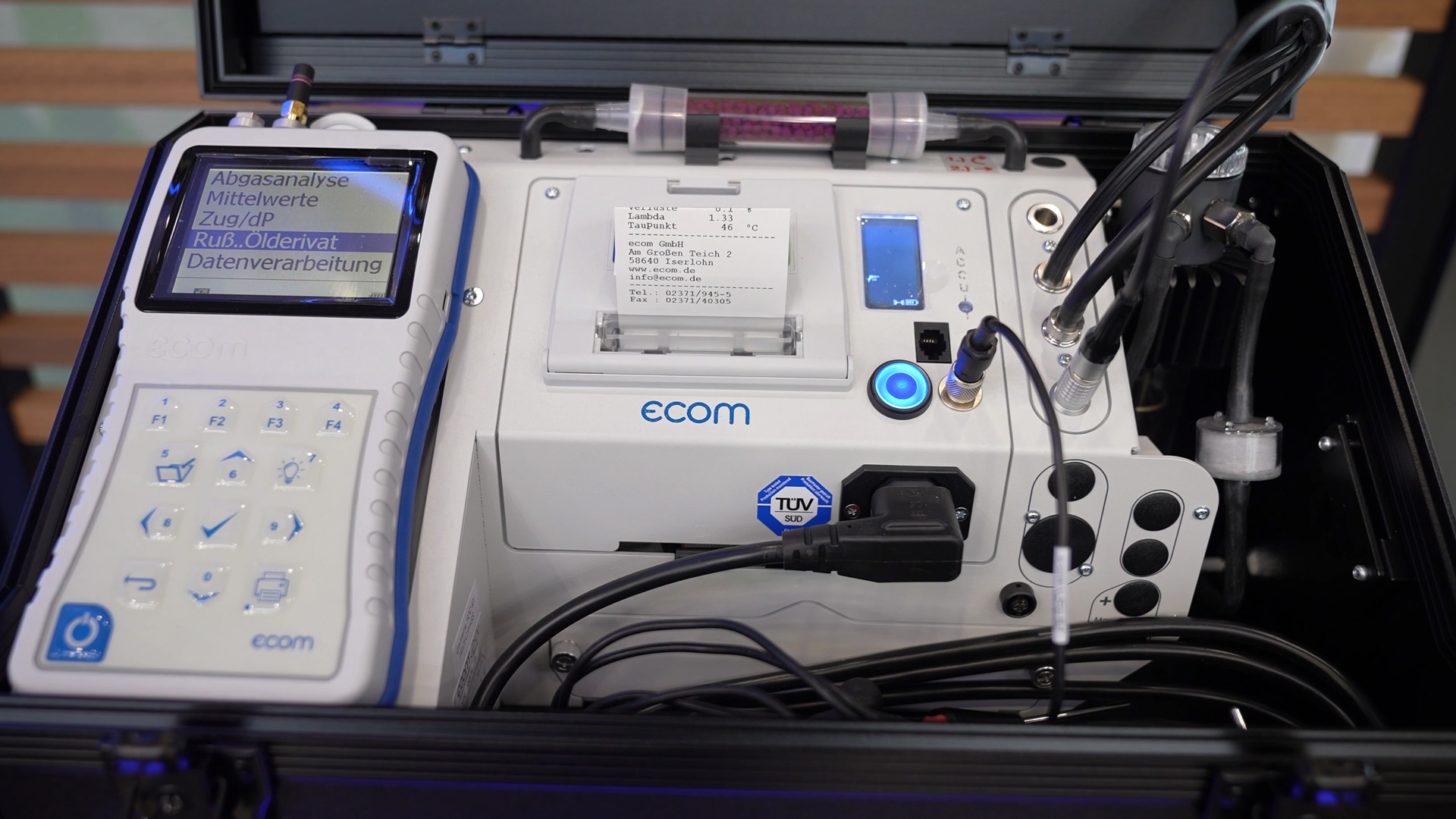
The application always starts at the point of combustion. Exhaust gas is extracted there via a sampling point with a probe and fed into the measuring device via a hose system. The decisive factor is that the raw gas is not yet directly analysed in this form. It must first be processed so that the sensors can provide reliable values. To do this, the exhaust gas passes through various filter and cooling systems in the device. The aim is to obtain a dry and clean gas that is suitable for downstream measurement. Moisture is removed, interfering components are filtered out and the gas is then fed to the individual electrochemical sensors via different channels. It is this preparation that creates the conditions for the precise determination of the components contained. According to information from the presentation, the accuracy reaches into the ppm range with one decimal place. This precision is relevant in practical use because it is often not a question of rough trends, but of subtle differences during operation. Even small deviations can indicate a change in combustion, poorer efficiency or problems in the system.
Robust measuring devices for tough operating conditions
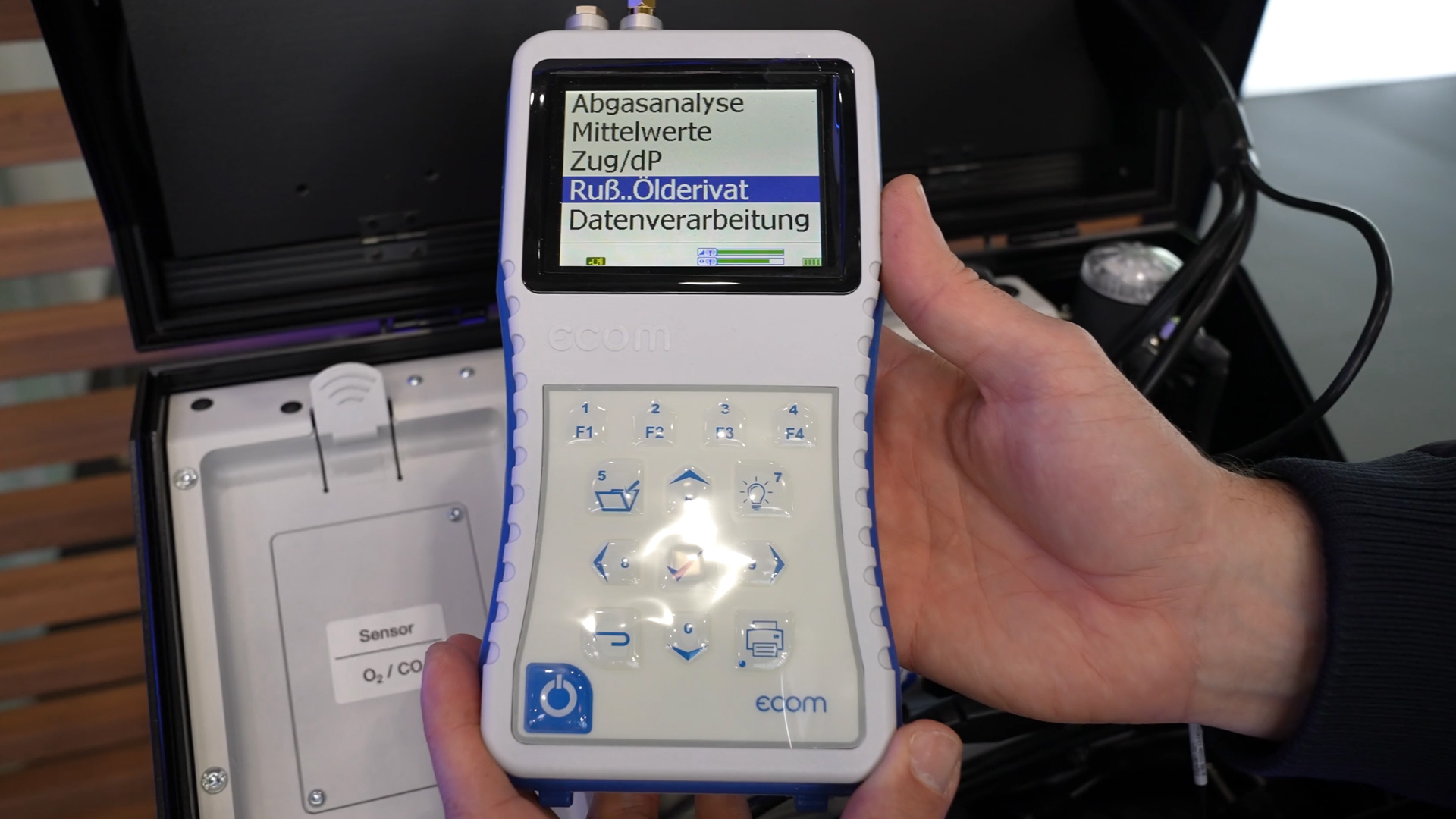
A key argument is the design of the devices. Ecom emphasises the robust metal housing and the deliberate avoidance of plastic in key areas. This decision is not just a design feature, but is based on the conditions on site. Measurements on boilers, chimneys or industrial firing systems do not take place in a sterile laboratory, but often in confined, hot or difficult to access areas. This is where robustness counts above all. A device that can withstand knocks, transport and even the occasional fall in daily use saves downtime and reduces follow-up costs. This is precisely what is emphasised as a key distinguishing feature. Measurement technology not only has to be precise, it also has to work when the environment is anything but comfortable. There is also another technical point: the calibration of the electrochemical sensors in a temperature range of 5 to 40 degrees. This takes into account the fact that measuring conditions fluctuate greatly in practice. A device that only works accurately under ideal temperatures is only of limited suitability for mobile use. Temperature adjustment is therefore not a detail, but a prerequisite for stable results.

Exhaust gas measurement as a lever for environmental regulations and energy savings
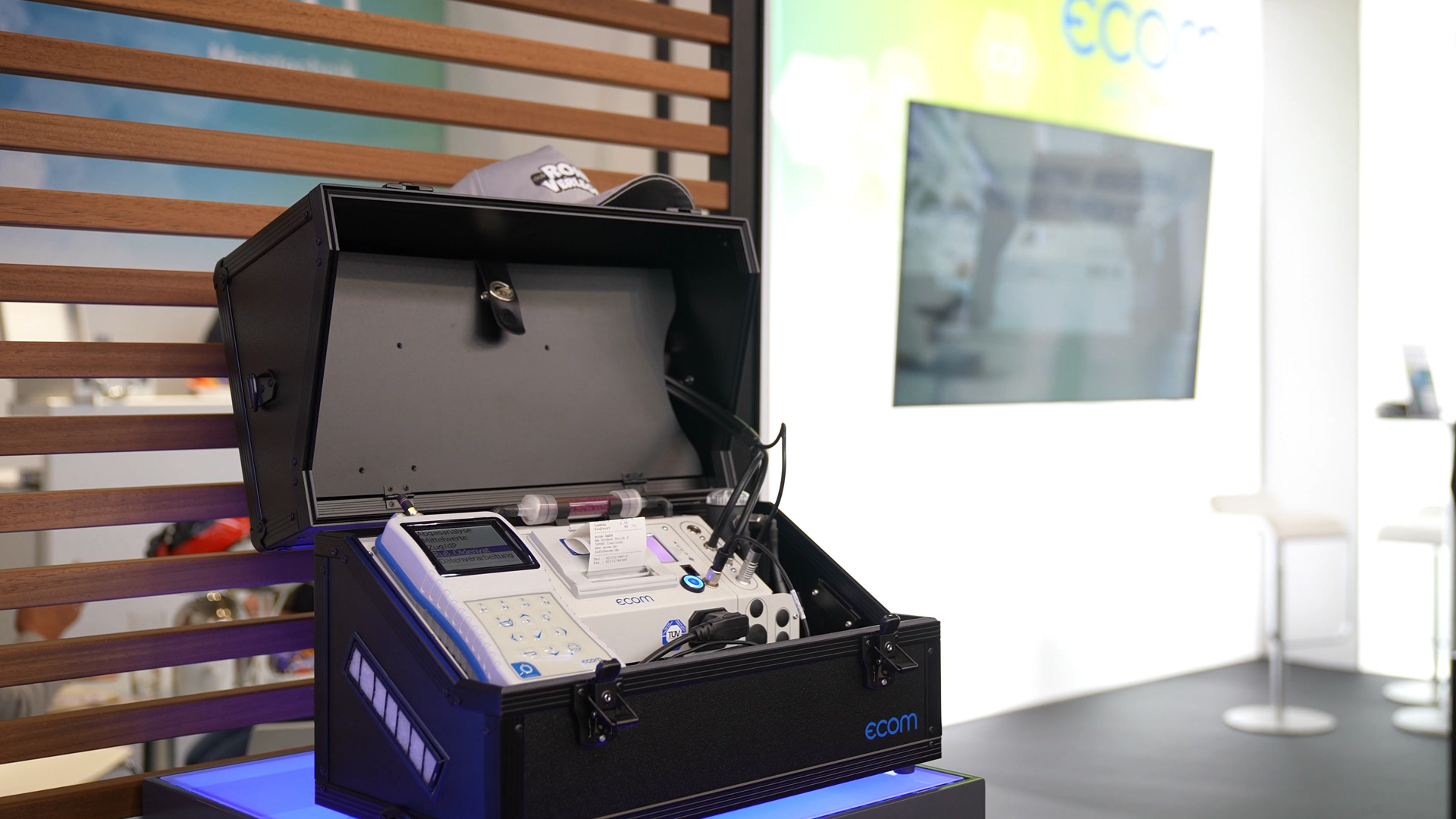
The measurement of exhaust gases initially fulfils an obvious purpose: it helps to comply with environmental regulations. National regulations define which limit values are permissible and which emissions must be documented. Anyone operating combustion processes must know and be able to monitor these values. At the same time, the caption points to a second, often economically even more important point: efficiency. If you know the composition of the exhaust gas, you can draw conclusions about how well a combustion process is running and how much energy is actually being used sensibly. Exhaust gas measurement thus becomes an instrument for process control. This is a tangible advantage, especially when energy prices are high. In industrial plants, even small optimisations can result in considerable savings. However, costs can also be reduced on a smaller scale, for example in heating systems in buildings, if combustion is properly adjusted and energy is not lost unnecessarily.
Continuous monitoring instead of selective testing
One interesting aspect of the caption is the reference to the change in the way emissions data is handled. While exhaust gas tests used to be regarded as a one-off compulsory task, many companies now want to measure continuously. This is particularly true for industrial companies, which are increasingly monitoring their exhaust gases themselves in-house. The advantage is obvious: those who monitor regularly recognise changes earlier and can readjust the process more quickly. Instead of only reacting to conspicuous values or official inspections, measurement becomes part of ongoing operations. This increases process reliability and improves the controllability of the system. Ecom combines this approach with training for technicians. This is logical, because precision depends not only on the device, but also on its correct use. When companies take over control themselves, the importance of instruction, routine and technical expertise in handling the measurement technology also increases.
Wide range of devices and economic benefits
The devices presented range from smaller models costing less than 1000 euros to larger industrial devices in the 4500 to 5000 euro range. This makes it clear that the technology is not only intended for large system operators. It is also aimed at tradesmen and service personnel who work with heating and combustion systems on a day-to-day basis. The economic argumentation is remarkable: the investment in a measuring device is not only evaluated by the purchase price, but also by the benefits in operation. If energy savings are achieved with precise flue gas measurement, a device can pay for itself in the first year. Added to this is the aforementioned service life of eight to ten years, which further improves cost-effectiveness. Ecom and its partner Weishaupt are thus focussing on a field that is technically established, but is becoming increasingly important in practical terms. The market is not demanding a spectacular revolution, but devices that measure reliably, withstand robust conditions and help to operate processes more cleanly and efficiently. This is precisely the core of this measurement technology: it makes visible what is actually happening in the combustion process - and thus creates the basis for better decisions.
Trade fair reporting Germany - Trade fair knowledge, dates & events


