Modular HSM manifold for heat pumps and heating circuits
by A. Bergmeier - 2026-05-03The requirements for heating systems are changing noticeably. Heat pumps operate efficiently, but at the same time place higher demands on hydraulics, flow rate and system integration.
A manifold is now much more than a simple connection point between the flow and return lines. It becomes the central interface where functionality, expandability and operational reliability are determined. This is precisely where a modular HSM manifold comes into play. The concept aims to meet different requirements not through separate components, but via an integrated system. The structure remains flexible – both for the initial installation and for subsequent adjustments.
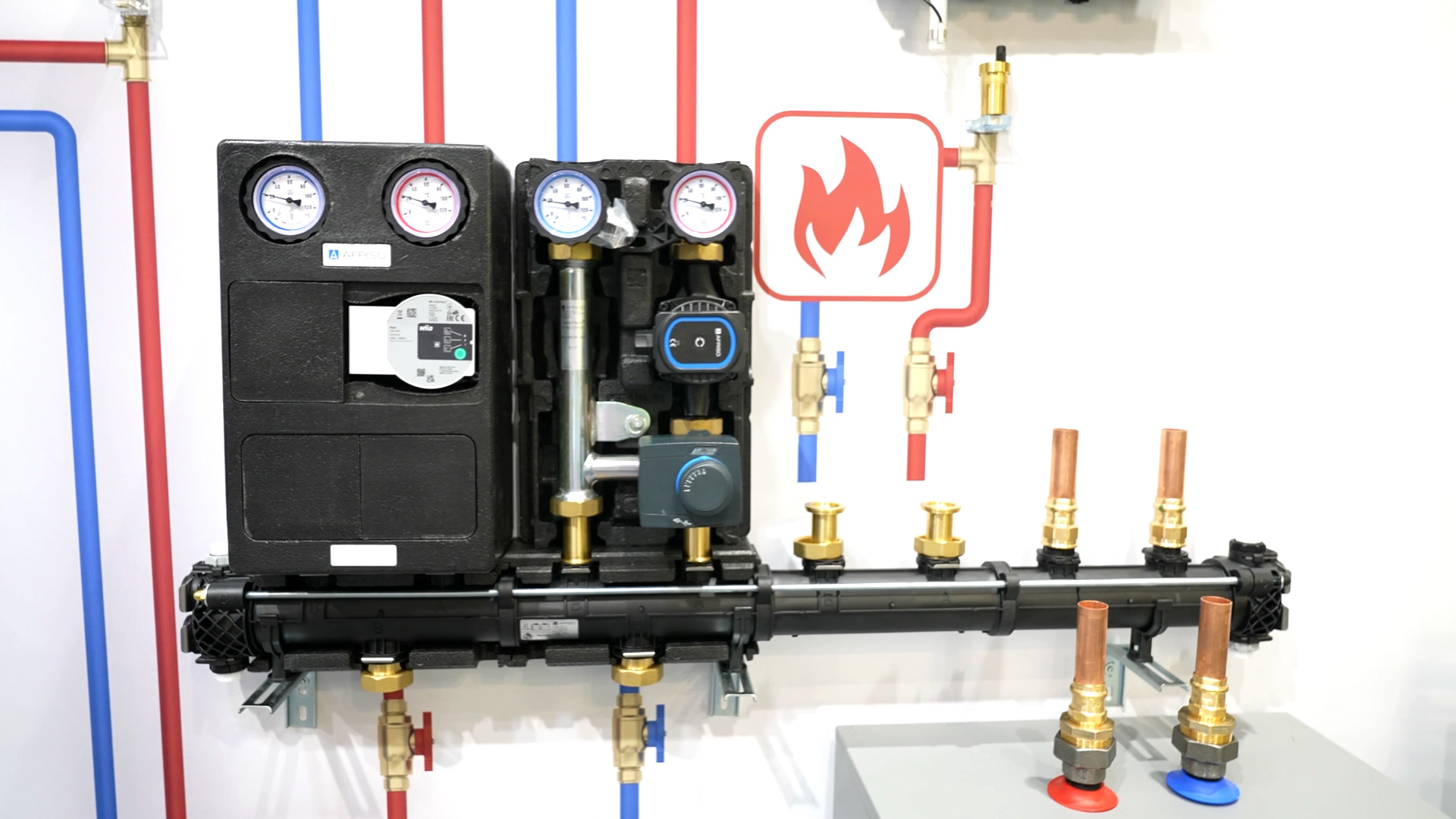

Afriso HSM manifold as a modular system for heat pumps
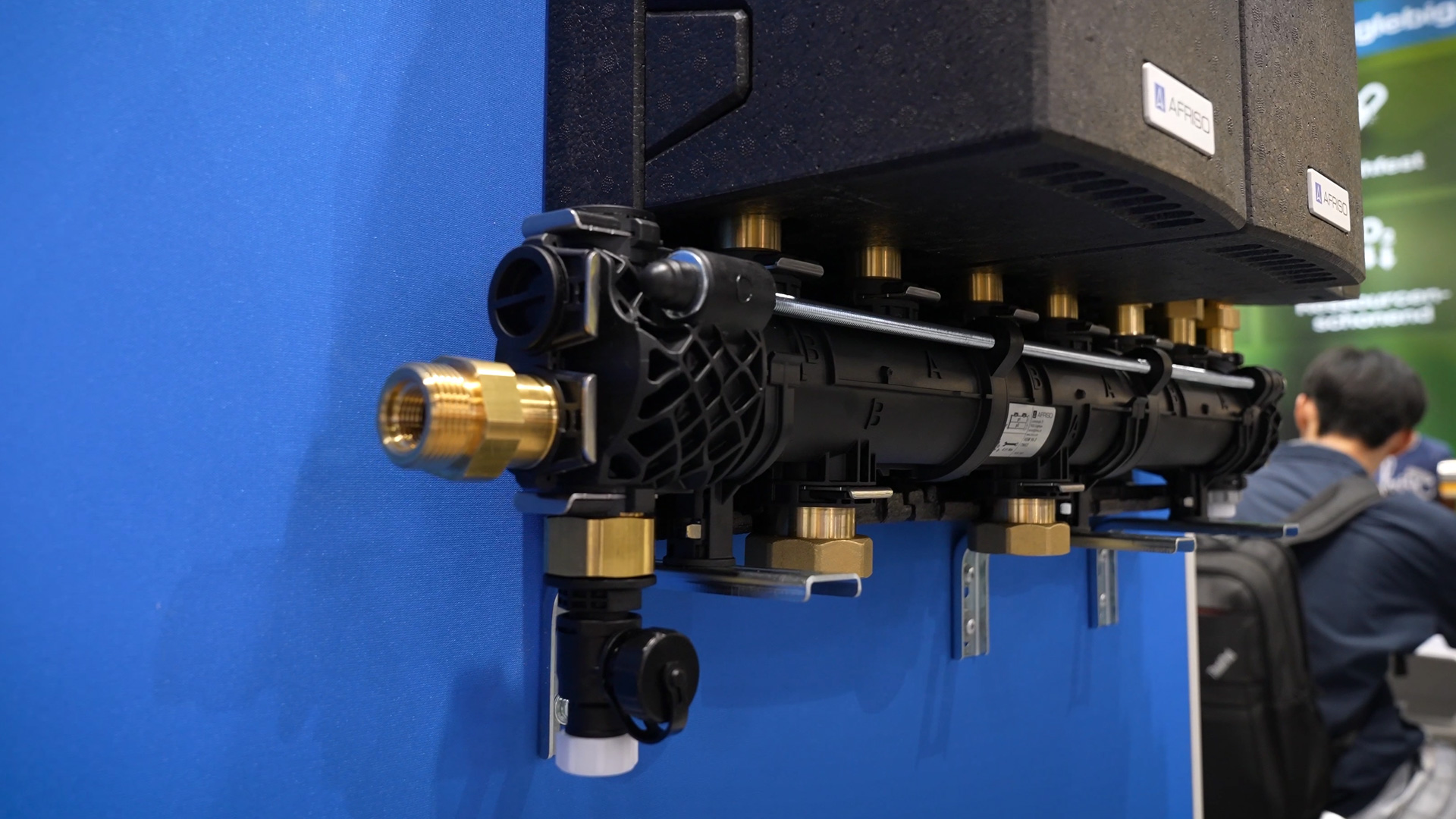
The HSM manifold from Afriso is designed as a modular system. Individual segments can be swapped or added without having to alter the entire installation. This modularity applies not only to complex extensions but also to fundamental adjustments to the pipe layout. For example, the flow pipe can be swapped with the return pipe without the need for additional pipe bends or fittings. This allows installations to be realised in a more compact and organised manner. Afriso uses this approach to solve typical challenges in heating system installation directly at the component level. Furthermore, the system remains open to extensions. Additional functions can be retrofitted without dismantling existing structures. This flexibility is particularly crucial in the context of heat pumps, whose configuration often adapts during operation.
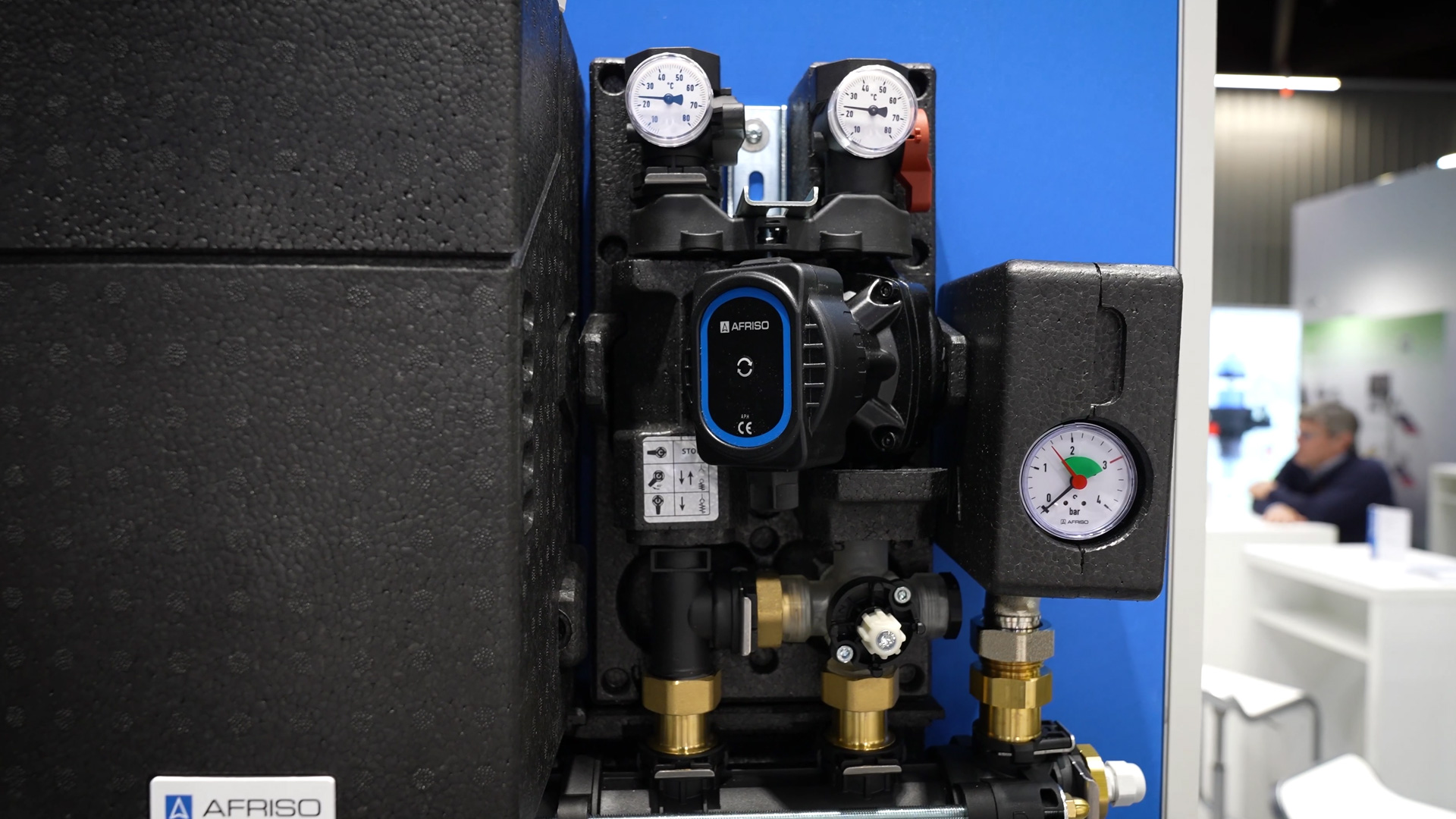
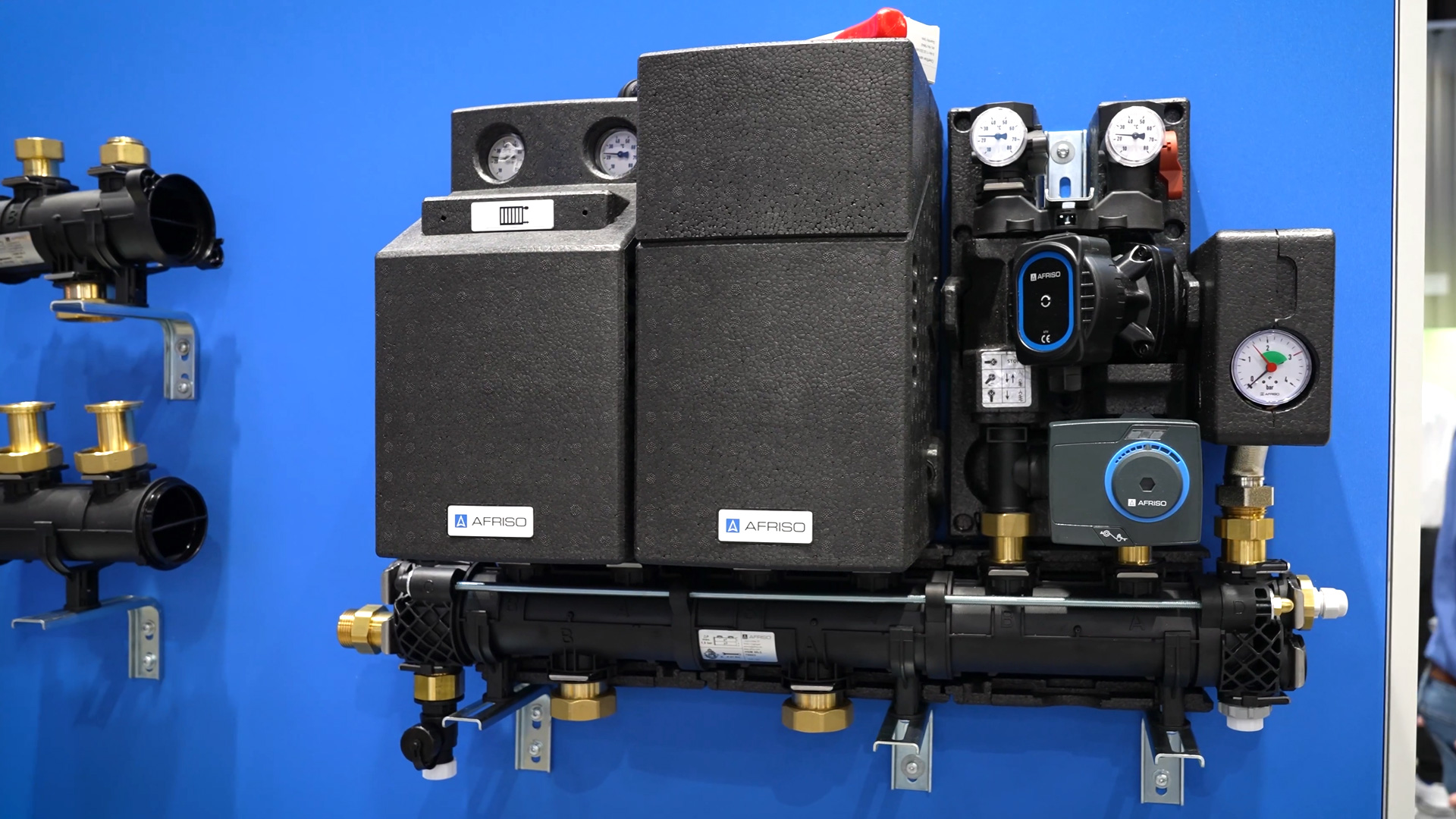
Integration of buffer tanks and hydraulic separators in the HSM manifold
A key element is the integration of buffer tanks. The manifold allows for the integration of different tank sizes – from compact variants to larger volumes. Crucial here is the integration via the return flow. This design ensures that the tank is not constantly flushed through. Instead, it provides targeted support to the heat pump when necessary. At the same time, direct operation is maintained, which improves the system’s efficiency. Additionally, the manifold can be converted into a hydraulic diverter. To do this, a factory-fitted plug is replaced, thereby connecting the flow and return lines. This function ensures that different flow rates within the system can be balanced. Alternatively, a bypass valve can be integrated at the same point. This only intervenes when heating circuits are closed and the flow rate must be maintained. The combination of buffer tank, diverter function and bypass valve demonstrates how several safety-critical functions can be bundled into a single component.

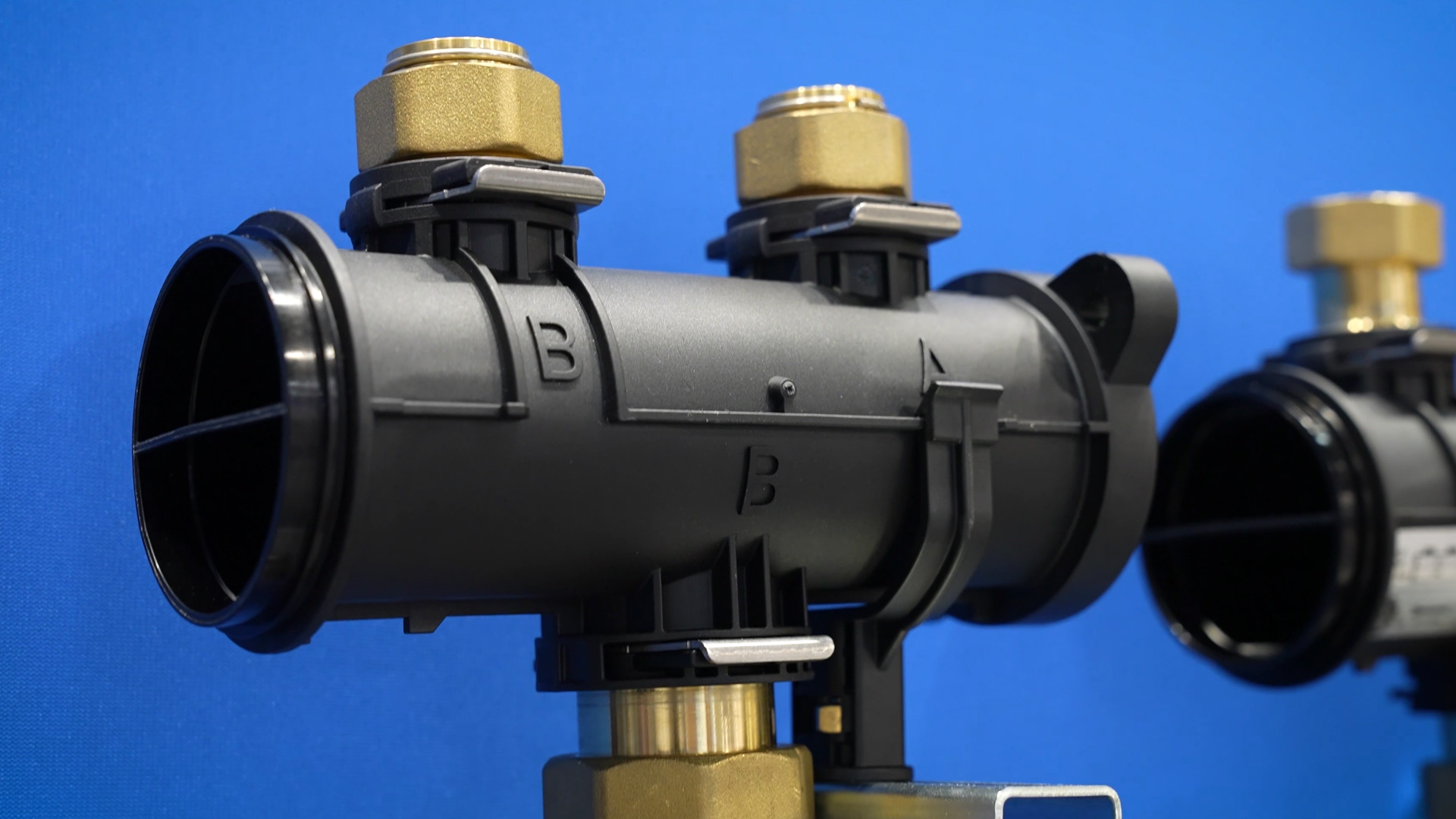
Compact pump groups and flexible expansion in the HSM manifold
Another feature is the compact design. Pump groups can be integrated with minimal spacing, which is particularly relevant where space is limited. With a centre-to-centre distance of around 90 millimetres, the installation remains neat and tidy even in confined technical rooms. The structure also allows several components to be placed close together. This results in a high functional density within a small space. For detached and semi-detached houses, where space is often a limiting factor, this offers a clear advantage. Typical applications can be summarised as follows:
- Integration of various buffer tank sizes
- Retrofitting of a relief valve or hydraulic diverter
- Adjustment of flow and return without additional piping
- Compact integration of pump groups in confined spaces
Polymer materials in the HSM manifold instead of traditional steel
A key difference from traditional solutions lies in the material. Instead of steel, Afriso relies on polymer materials that are specifically optimised for the respective application. These are not simple plastics, but a material blend with specific properties. These materials are corrosion-resistant and unaffected by moisture or condensation. This aspect is particularly important for heat pumps that are also used in cooling mode. Condensation can cause problems with metal components, whilst polymer solutions remain stable. Furthermore, these materials allow for the creation of complex geometries that would be difficult to achieve with traditional materials. Afriso utilises this advantage to structurally integrate features such as plug connections or modular transitions.

Applications and cost-effectiveness of the HSM manifold
The HSM manifold is designed for typical heat pump applications in single-family and two-family homes. It covers output ranges of approximately 10 to 15 kilowatts, depending on the respective flow rate and system design. Economically, too, the system is deliberately positioned in direct comparison to traditional solutions. The price is in a range comparable to that of steel manifolds. At the same time, additional components are not required, as functions such as hydraulic separators or expansion options are already integrated. This changes the calculation at the system level. Installation costs, material usage and retrofitability all come together to create a solution that must be assessed differently, not only technically but also economically. The HSM manifold thus reflects a clear trend in building services engineering: individual components are increasingly being replaced by integrated systems that perform multiple functions and can be flexibly adapted to different requirements.


Trade fair reporting Germany - Trade fair knowledge, dates & events


