AIKO: Solarmodule mit integrierter Verschattungsoptimierung für mehr Ertrag
von Bastian Velonavy - 2024-07-05Photovoltaik Module mit hoher Effizienz und Leistung stehen zunehmend im Mittelpunkt technischer Entwicklungen. Während sich viele Anbieter auf Standardlösungen konzentrieren, verschiebt sich der Wettbewerb stärker in Richtung Wirkungsgrad, Leistungsdichte und Verhalten unter realen Bedingungen.
Photovoltaik-Module entwickeln sich zunehmend in Richtung höherer Effizienz und stabilerer Leistung unter realen Bedingungen. Die Kombination aus Zelltechnologie, Moduldesign und elektrischer Auslegung entscheidet darüber, wie viel Energie tatsächlich erzeugt wird. Dabei spielen Faktoren wie Temperaturverhalten, Verschattung und Kontaktierung eine größere Rolle als in früheren Generationen.
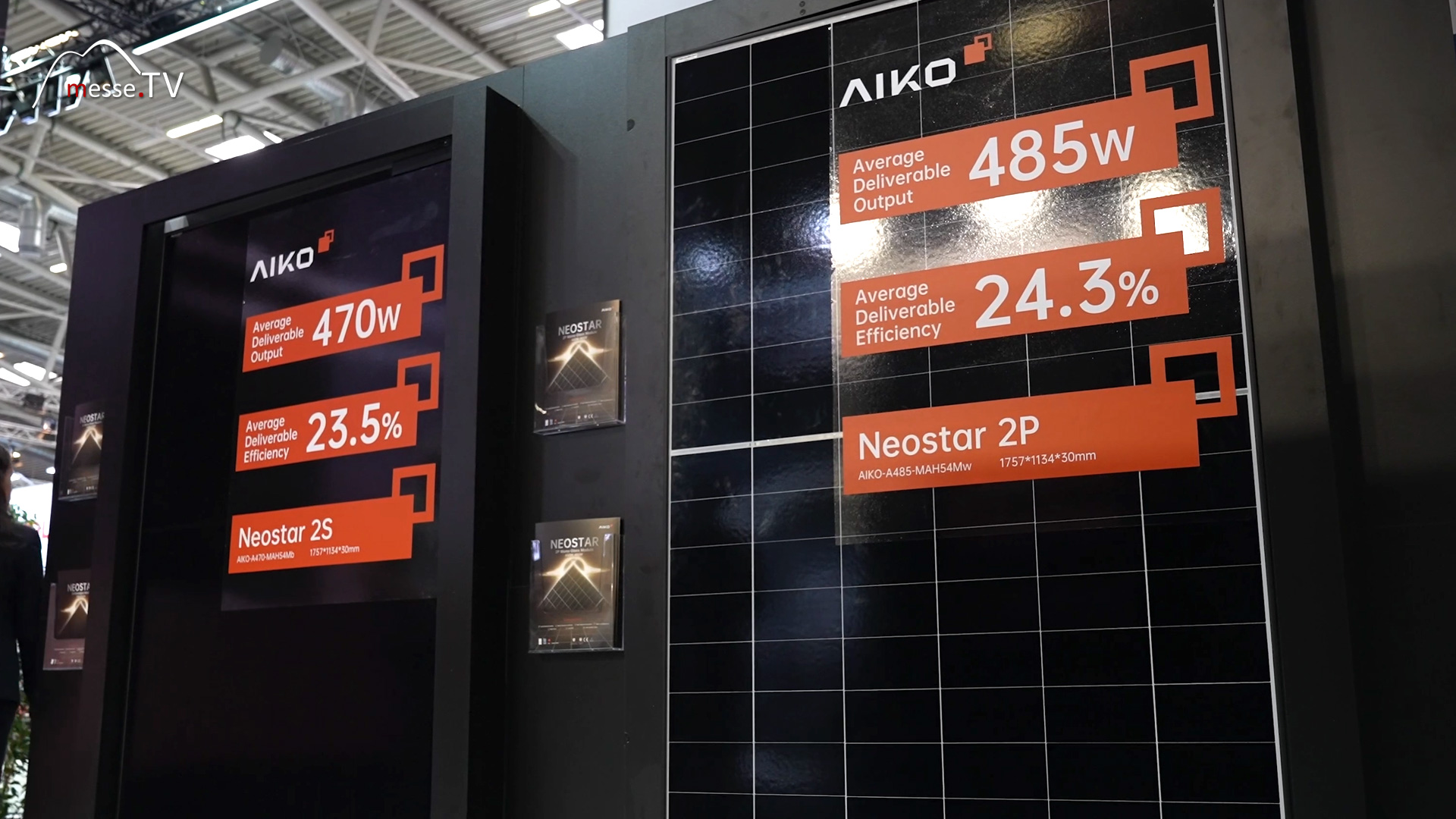

Aiko Photovoltaik Module mit Rückseitenkontaktzelle
Aiko wurde 2009 gegründet und war zunächst ausschließlich als Hersteller von Solarzellen tätig. Die Produktion richtete sich an andere Modulhersteller, die die Zellen weiterverarbeiteten. Erst mit der Entwicklung einer eigenen Rückseitenkontaktzelle im Jahr 2021 änderte sich die strategische Ausrichtung. Diese Zelltechnologie verlagert sämtliche elektrischen Kontakte auf die Rückseite. Dadurch bleibt die Vorderseite der Zelle vollständig frei von leitenden Strukturen wie Busbars. Das führt zu einer größeren aktiven Fläche, die Sonnenlicht aufnehmen kann. Aiko nutzt diese Technologie inzwischen für eigene Module, um die Vorteile direkt im Produkt umzusetzen. Der Schritt vom Zelllieferanten zum Modulhersteller ist dabei eine logische Konsequenz aus dem Anspruch, die technische Leistungsfähigkeit vollständig zu kontrollieren.
Neostar 2 Generation für Aufdach-Anwendungen
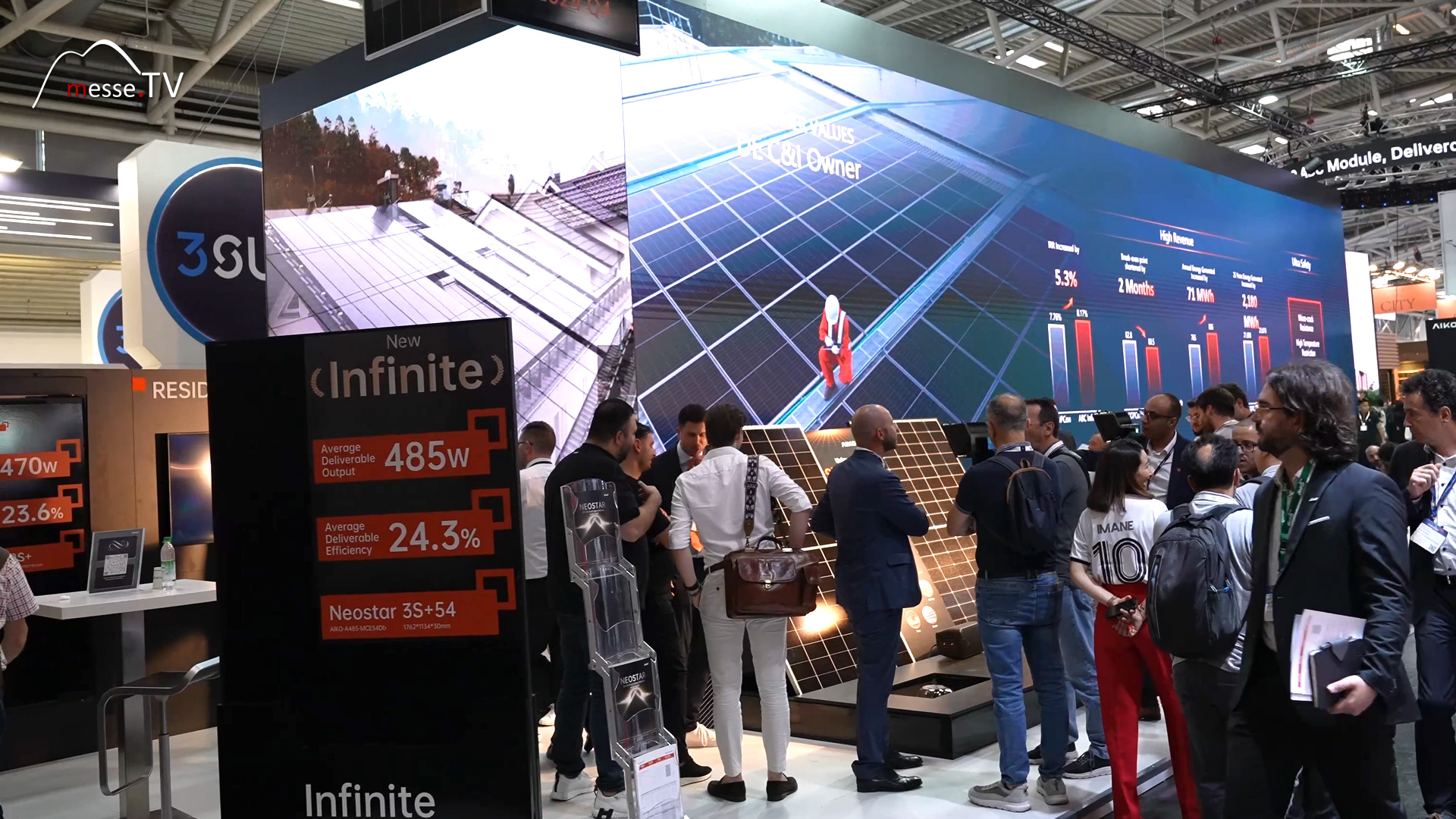
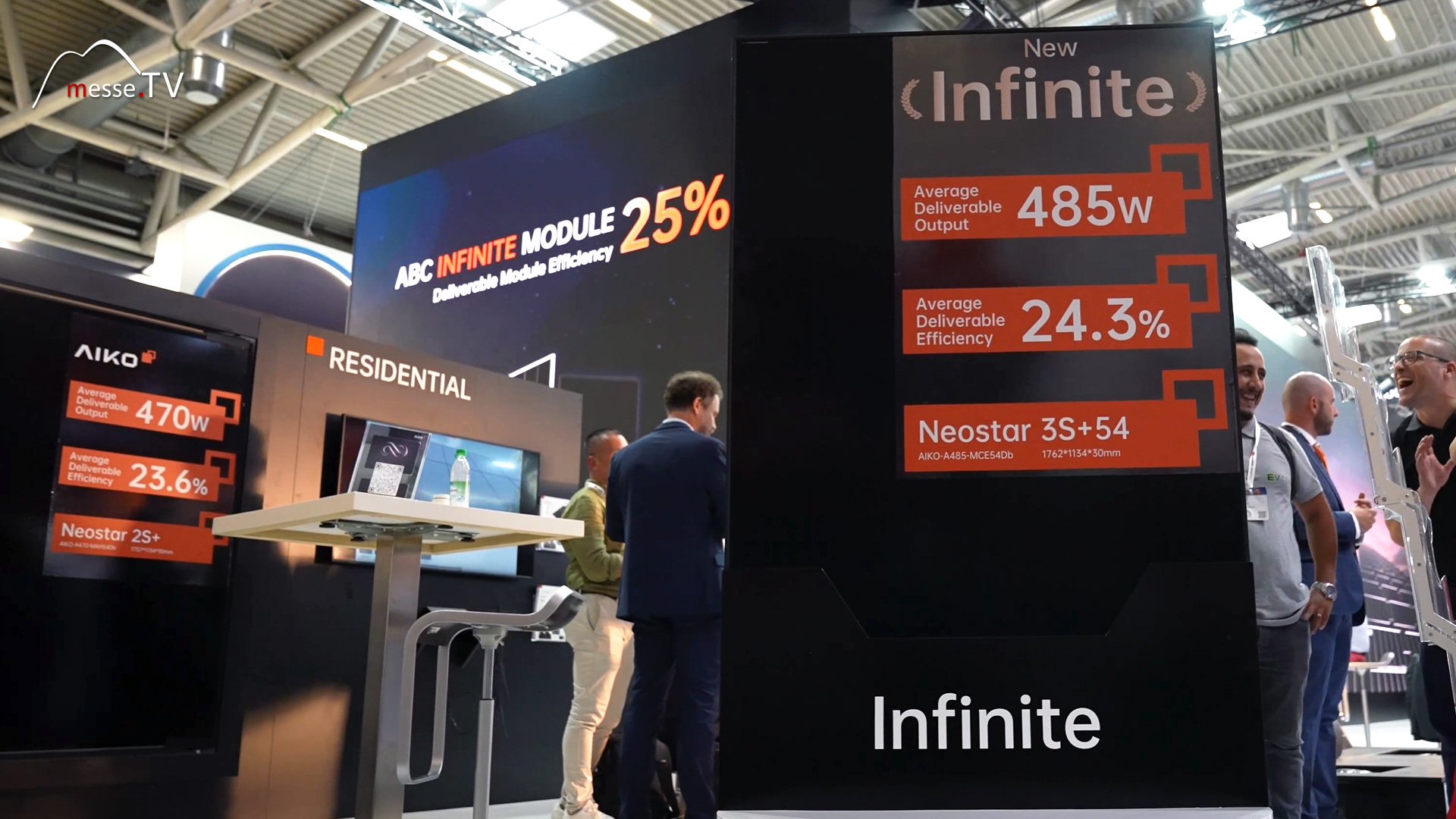
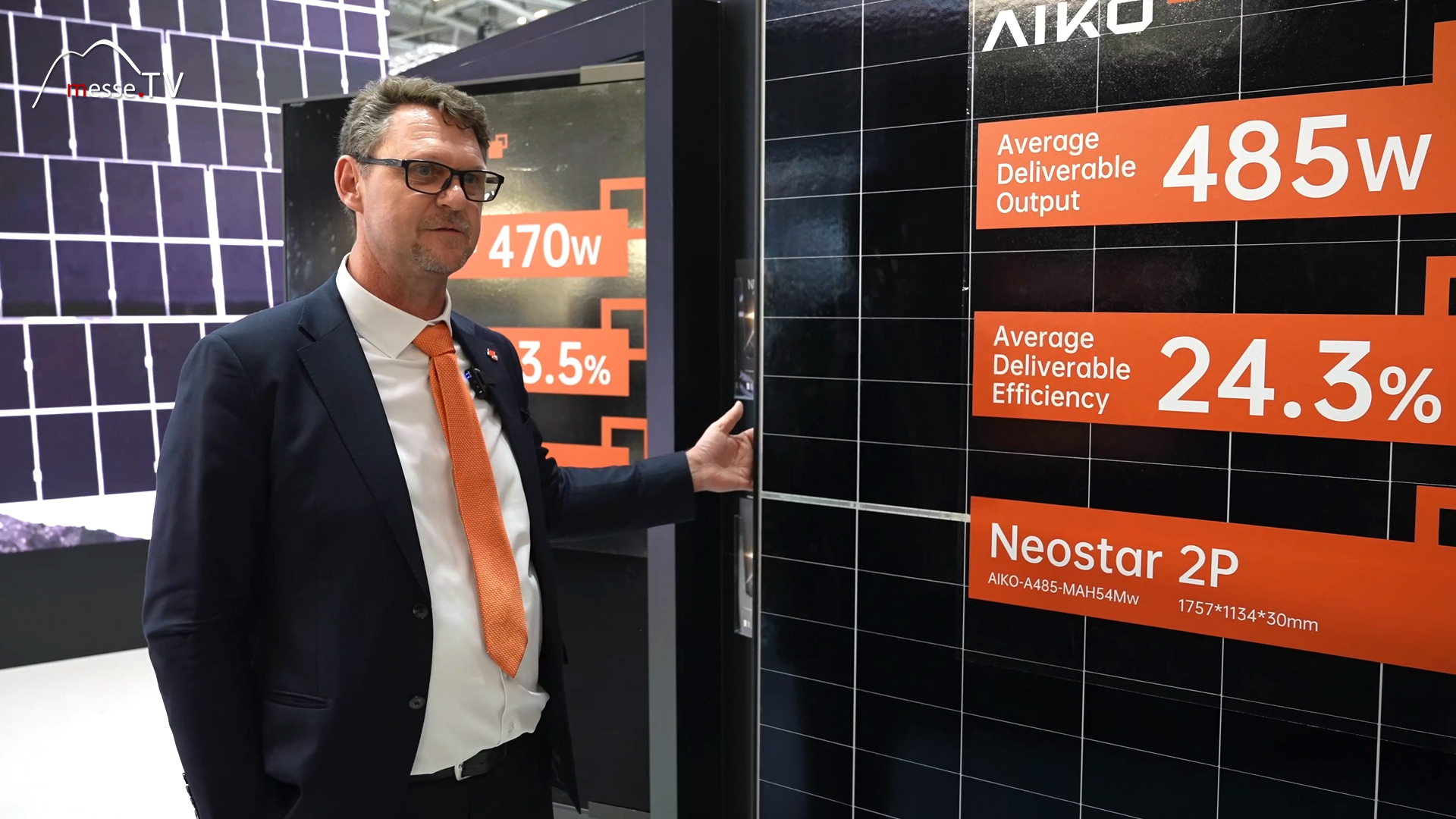
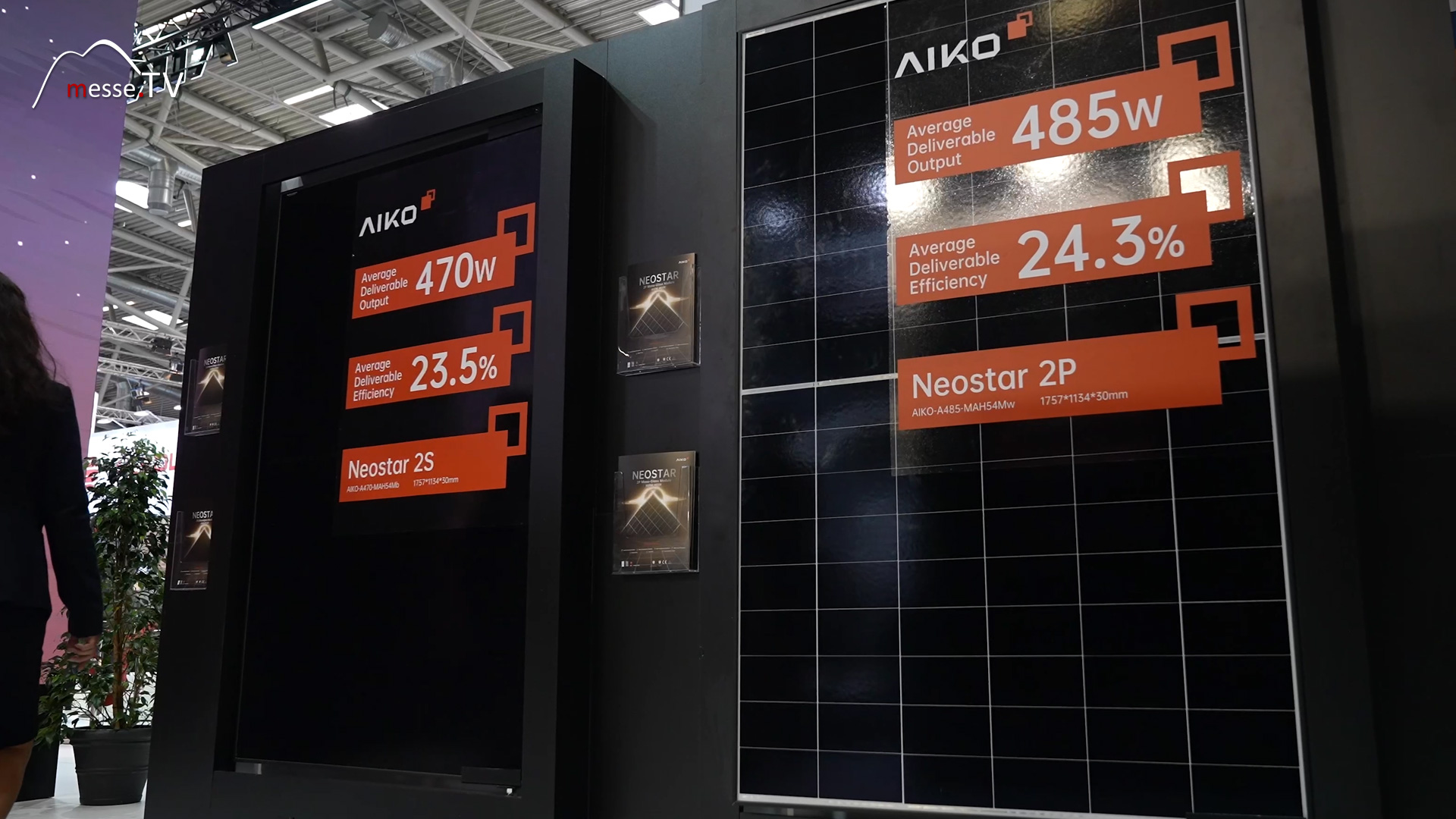
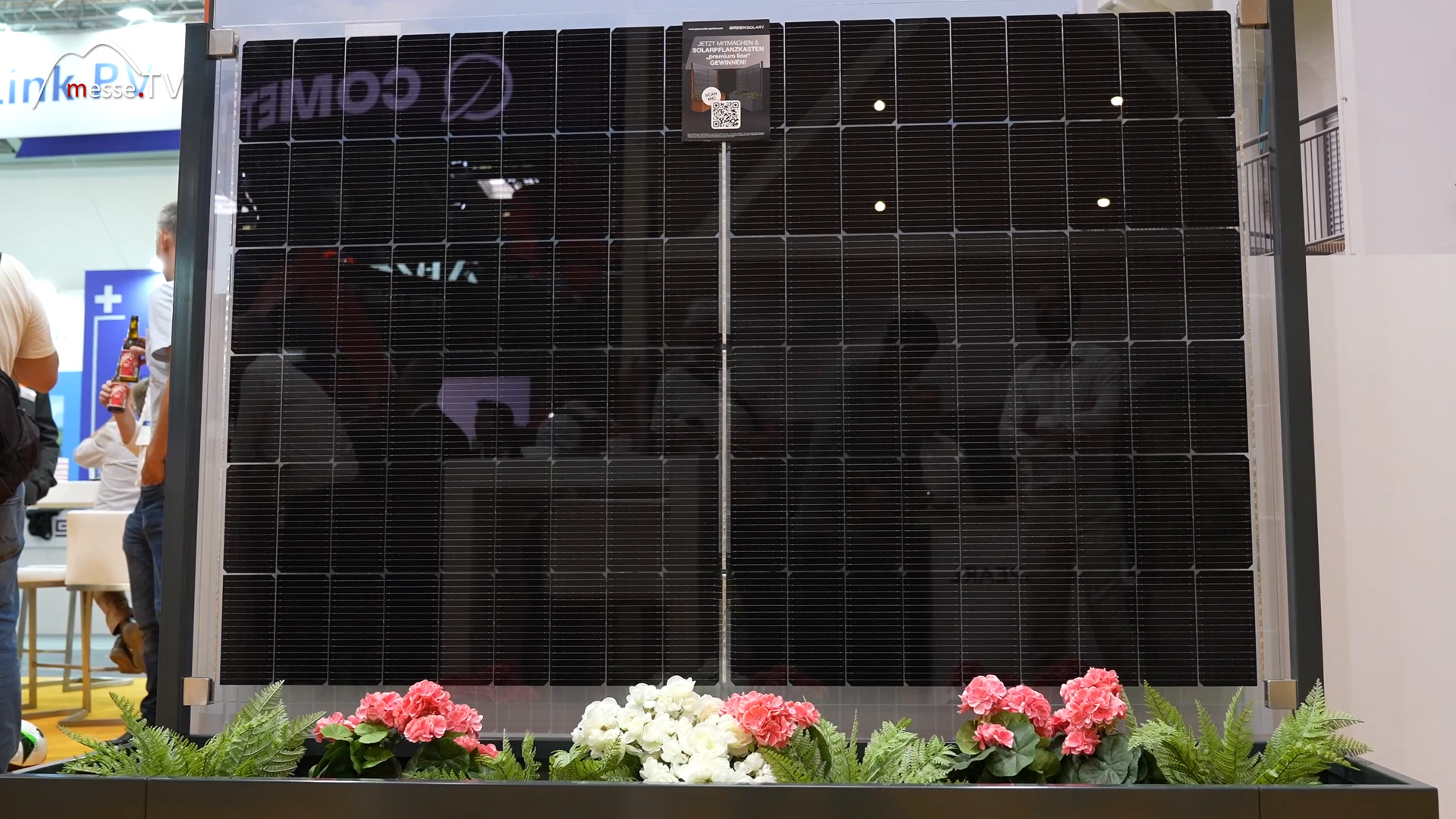
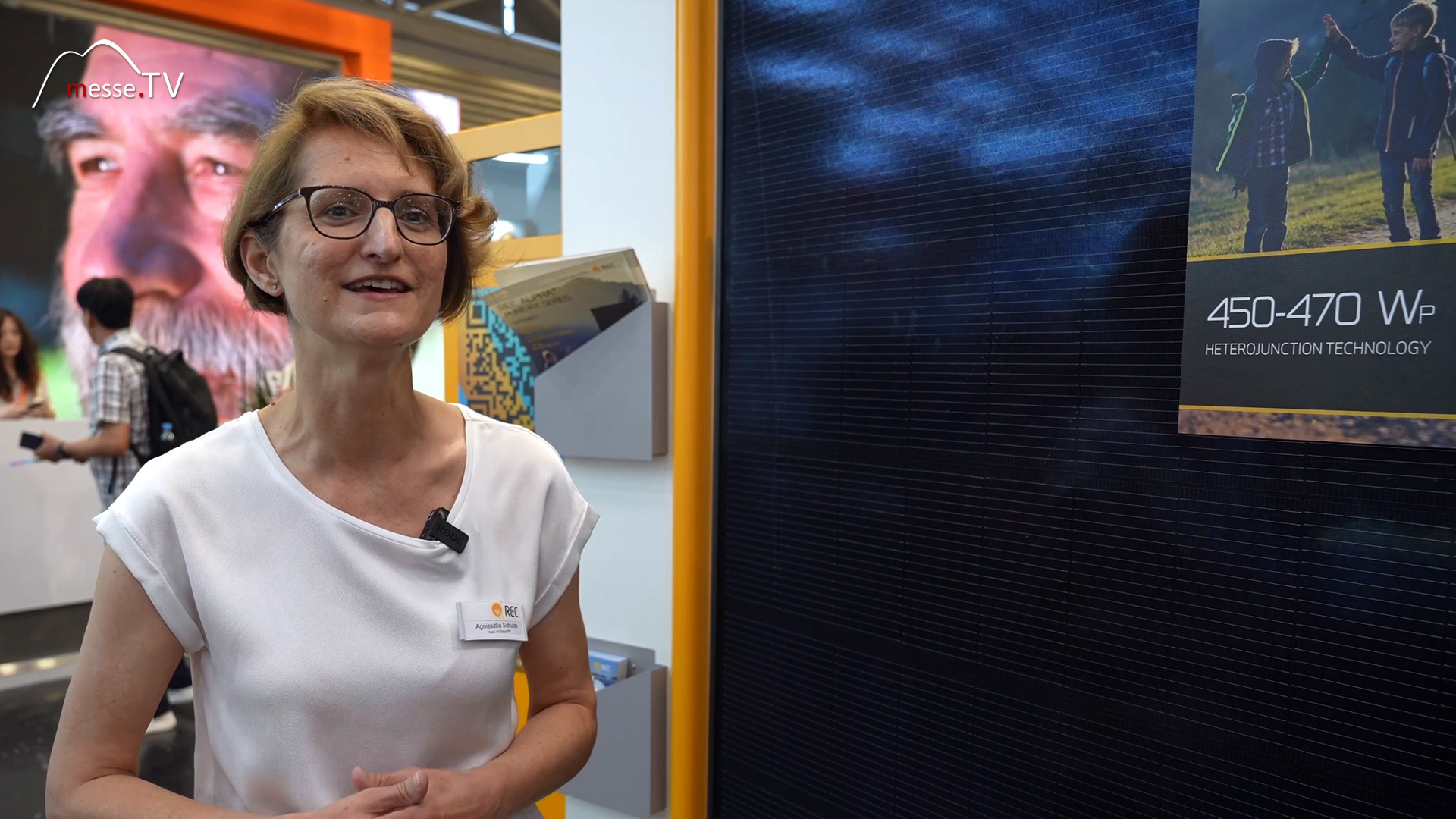
Mit der Neostar 2 Generation richtet sich Aiko gezielt an den privaten Aufdach-Bereich. Die Module kombinieren technische Eigenschaften mit einem gestalterischen Ansatz, der in diesem Segment zunehmend gefragt ist. Durch die Rückseitenkontaktzelle entsteht eine homogene Oberfläche ohne sichtbare Leiterbahnen. In Kombination mit einem schwarzen Backsheet ergibt sich ein durchgehend dunkles Erscheinungsbild. Diese sogenannte Full-Black-Optik wird insbesondere bei Wohngebäuden häufig bevorzugt. Technisch erreicht das Modul eine Leistung von 470 Watt bei einer Effizienz von 23,5 Prozent. Diese Werte ordnen es im oberen Bereich aktueller Aufdachlösungen ein. Entscheidend ist dabei nicht nur die maximale Leistung, sondern auch die Stabilität dieser Leistung unter wechselnden Bedingungen.
Temperaturkoeffizient als Faktor für reale Leistung
Ein oft unterschätzter Punkt ist das Verhalten bei steigenden Temperaturen. Photovoltaik Module verlieren mit zunehmender Erwärmung an Leistung. Der sogenannte Temperaturkoeffizient gibt an, wie stark dieser Effekt ausfällt. Bei Aiko liegt dieser Wert bei minus 0,26 Prozent pro Grad Celsius. Viele herkömmliche Module bewegen sich eher im Bereich von minus 0,29 bis minus 0,3. Der Unterschied erscheint auf den ersten Blick gering, summiert sich jedoch über die gesamte Anlage. Gerade bei größeren Installationen oder in sonnenreichen Regionen kann dieser Effekt messbar werden. Ein geringerer Leistungsverlust pro Grad führt dazu, dass über den Tag hinweg mehr Energie erzeugt wird.
Verschattungsoptimierung durch Zellarchitektur
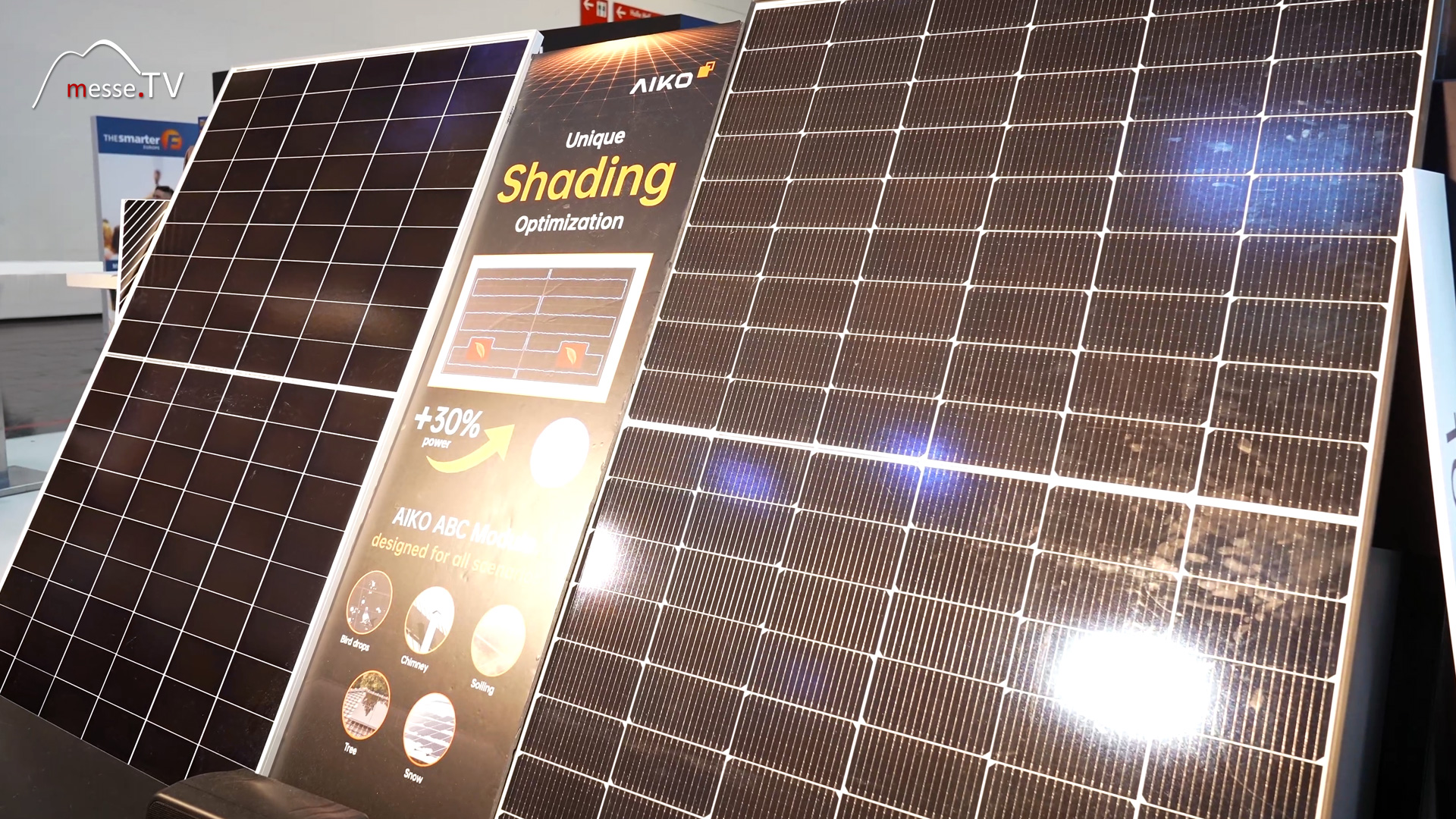
Ein zentrales Problem klassischer Module ist die Verschattung. Fällt Schatten auf einzelne Zellen, kann das die Leistung ganzer Zellstränge beeinträchtigen. In herkömmlichen Systemen werden betroffene Bereiche häufig über Bypass-Dioden abgeschaltet. Aiko verfolgt einen anderen Ansatz. Die Rückseitenkontaktzellen arbeiten mit niedrigeren Spannungen und ermöglichen eine feinere Steuerung innerhalb des Moduls. Wird eine Zelle verschattet, kann sie gezielt umgangen werden, ohne dass der gesamte Strang ausfällt. Der technische Hintergrund liegt in den kürzeren Wegen, die Elektronen innerhalb der Zelle zurücklegen müssen. Während bei klassischen Zellen eine Distanz von etwa 130 Mikrometern überwunden wird, reduziert sich dieser Weg auf rund 30 Mikrometer. Dadurch bleibt der Stromfluss auch bei Teilverschattung stabiler.
Vergleich mit konventionellen Modulen im Betrieb
Der Unterschied wird besonders deutlich im direkten Vergleich. In Demonstrationen zeigt sich, dass bei wanderndem Schatten die Leistung konventioneller Module stark einbrechen kann. Sobald ein zentraler Bereich betroffen ist, sinkt die Energieproduktion deutlich oder bricht vollständig ab. Bei Modulen mit Rückseitenkontaktzelle bleibt die Leistung dagegen vergleichsweise konstant. Einzelne verschattete Bereiche wirken sich weniger stark auf das Gesamtsystem aus. Das führt zu einer gleichmäßigeren Energieproduktion über den Tagesverlauf. Die wichtigsten technischen Vorteile lassen sich zusammenfassen:
- freie Zelloberfläche ohne Frontkontakte
- geringerer Leistungsverlust bei steigender Temperatur
- stabilere Energieproduktion bei Teilverschattung
- höhere Effizienz durch optimierte Zellstruktur
- homogene Optik für den Aufdach-Bereich
Entwicklung von Zelltechnologie zum Modul
Die Entwicklung zeigt, wie stark sich der Fokus in der Photovoltaik verschoben hat. Während früher vor allem die installierte Leistung im Vordergrund stand, rückt heute die tatsächliche Energieausbeute stärker in den Fokus. Aiko nutzt seine Erfahrung aus der Zellproduktion, um diesen Ansatz in komplette Module zu übertragen. Die Kontrolle über die gesamte Wertschöpfungskette ermöglicht es, technische Details gezielt zu optimieren. Gleichzeitig wird deutlich, dass Fortschritte nicht nur über größere Flächen oder höhere Nennleistungen erreicht werden. Entscheidend sind die physikalischen Eigenschaften der Zellen und deren Verhalten unter realen Bedingungen. Photovoltaik Module entwickeln sich damit von standardisierten Produkten hin zu technologisch differenzierten Systemen. Effizienz, Temperaturverhalten und Verschattungsresistenz werden zu zentralen Kriterien – und genau hier entscheidet sich, wie viel Energie eine Anlage tatsächlich liefert.
Messe-Berichterstattung bundesweit - Messewissen, Termine & Veranstaltungen


