SFC Energy Hydrogen Cabinets as an alternative to diesel generators
by J. Groh - 2024-07-24At smarter E in Munich, SFC Energy is presenting modular fuel cell solutions for applications where a reliable power supply is crucial. The Munich-based company develops and manufactures its own systems and delivers them worldwide.
The focus of the trade fair presentation is on hydrogen cabinets – scalable energy solutions based on hydrogen fuel cells, which are intended to replace conventional diesel generators, particularly in the emergency power sector. SFC Energy is an international fuel cell manufacturer and covers a wide range of applications with two different technologies. In addition to hydrogen fuel cell technology, the portfolio also includes direct methanol fuel cells. Both approaches aim to provide off-grid or secure energy wherever customers depend on a stable supply.
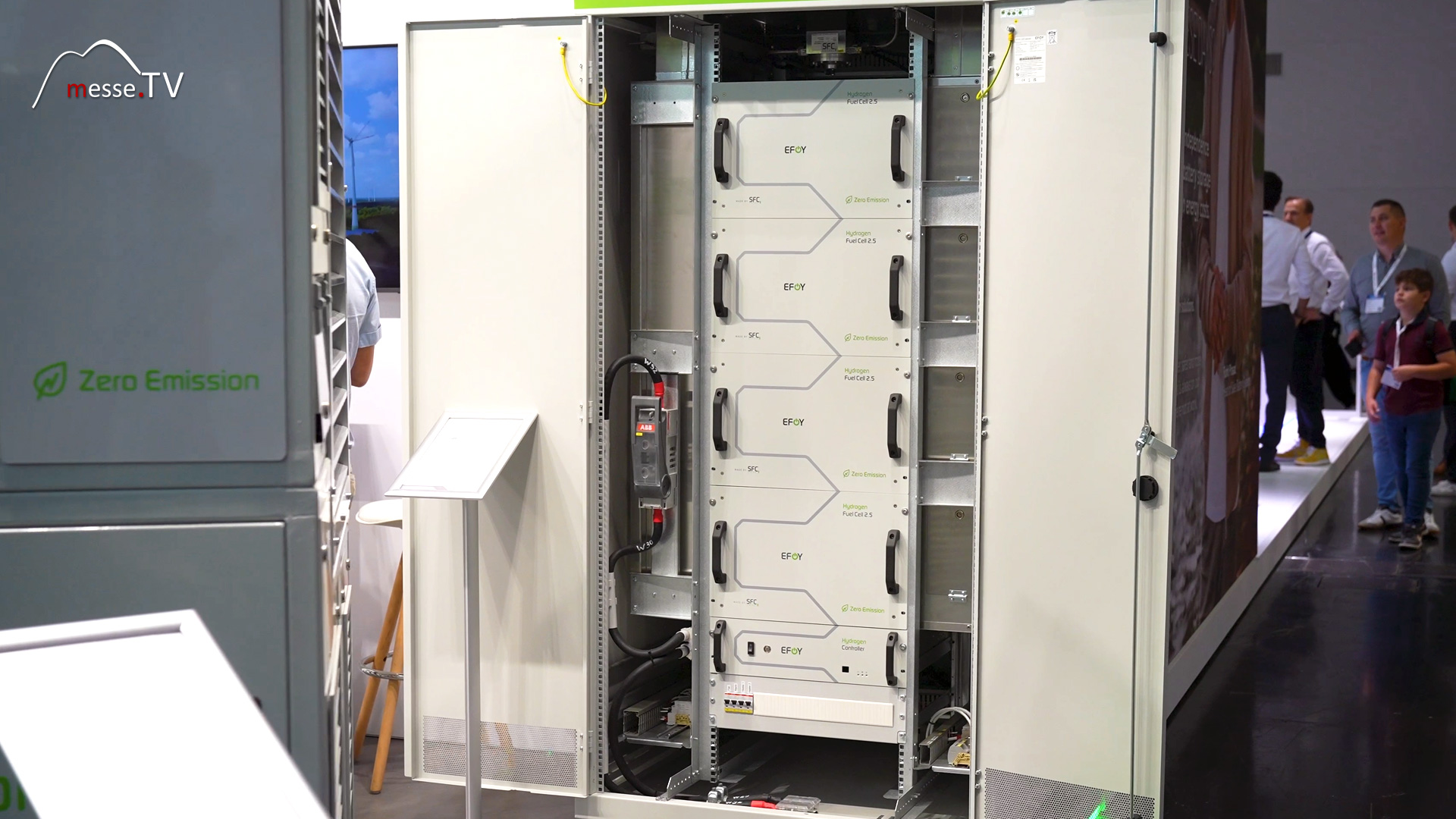
Hydrogen Cabinets: Modular energy solution with 10 kilowatts
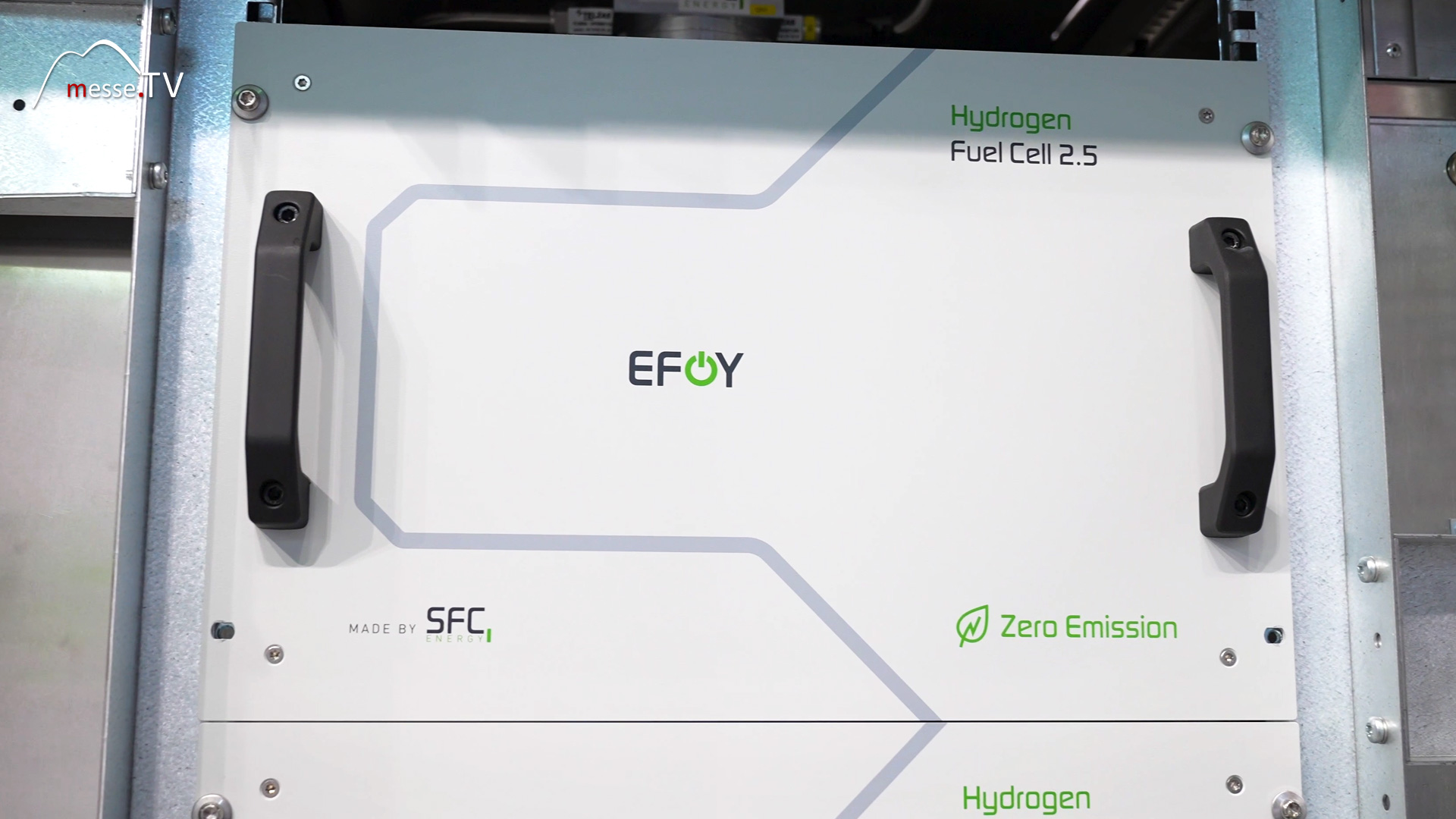
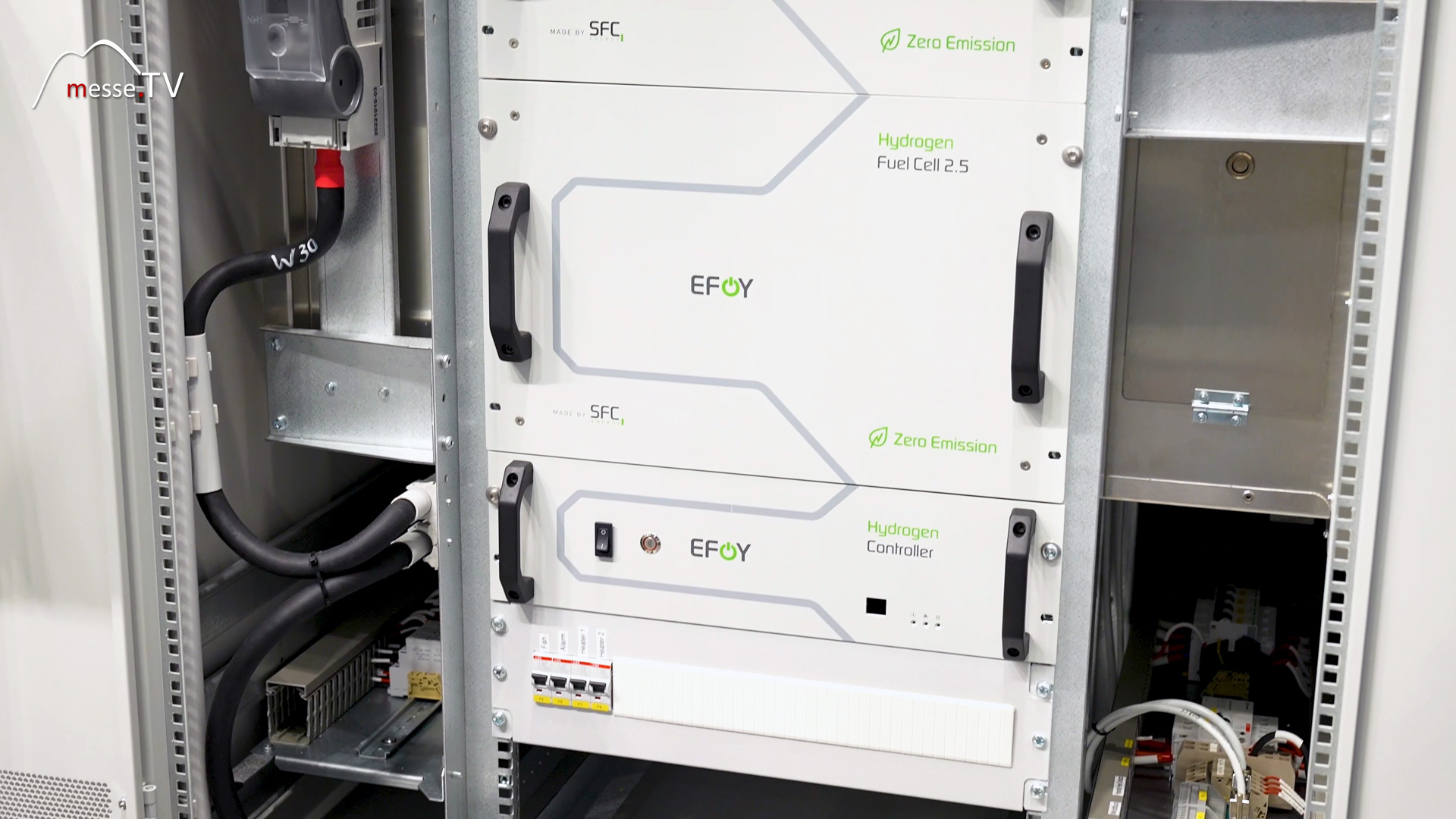
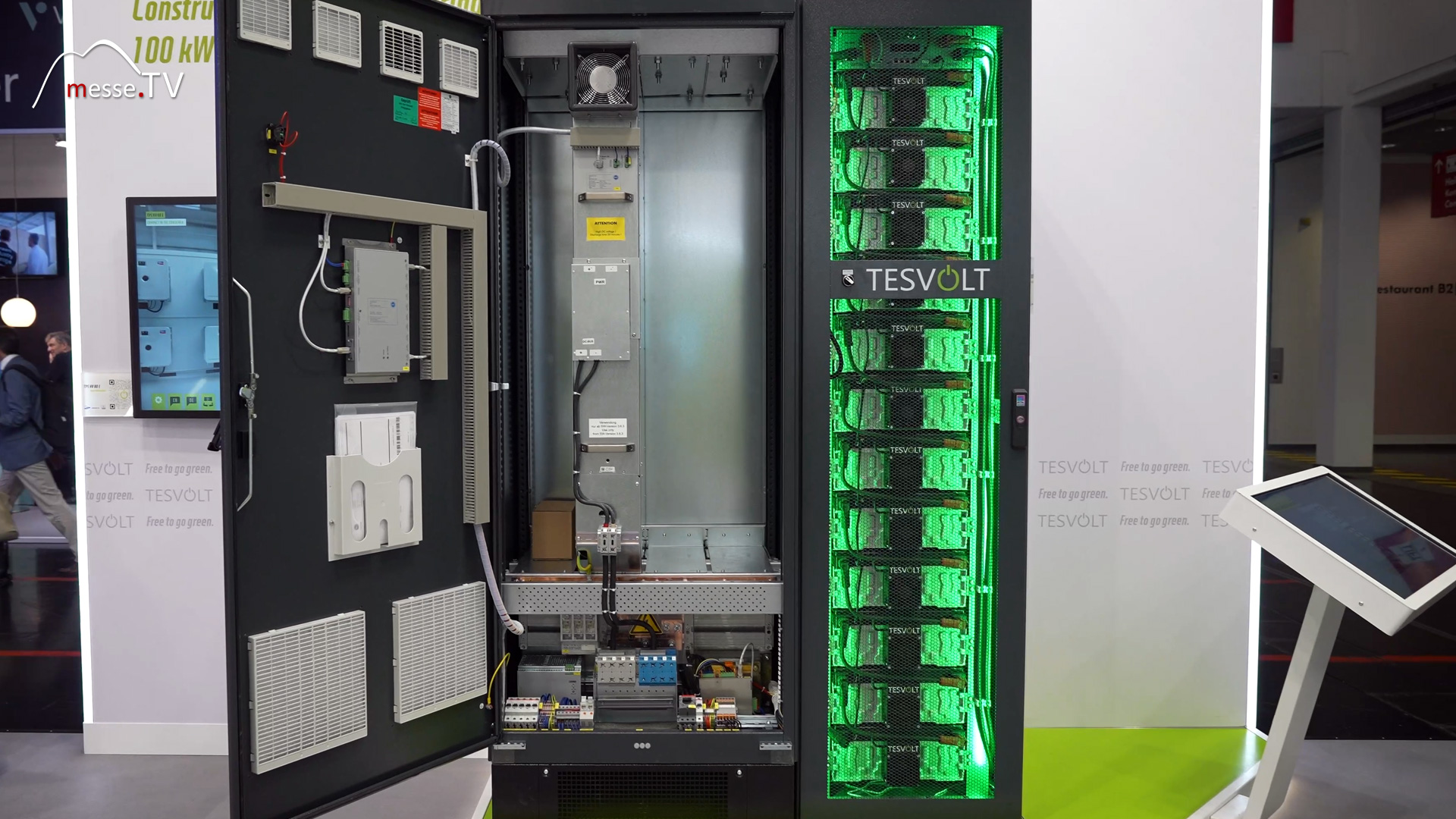
The focus is on hydrogen cabinets, modular systems consisting of several fuel cell modules. Each module delivers two and a half kilowatts of electrical power. In the configuration shown at the trade fair, this results in an energy solution with ten kilowatts. The modules are integrated into a housing, supplemented by controllers, air ducting, hydrogen piping and all the electrical peripherals. The concept is designed for scalability. Several modules can be combined as required. The decisive factor here is not only the pure performance, but also the possibility of obtaining a fully integrated solution in which control, energy output and safety technology are coordinated. For operators, this means a predictable supply without the complexity of individual components from different manufacturers.
Backup power and emergency power for critical infrastructure
A typical application scenario is the emergency power sector. Here, the systems replace conventional diesel generators as backup power. This is particularly relevant for critical infrastructure, where failures can have significant consequences. The protection of communication systems, data centres or other sensitive facilities is one of the core applications. According to the company, the market is showing a significant increase in interest in alternatives to diesel generators. The reasons for this are stricter environmental regulations, increasing emission requirements and the desire for quieter and lower-maintenance systems. Fuel cell solutions offer an option here, as they do not require a combustion engine and do not produce classic exhaust gases locally.
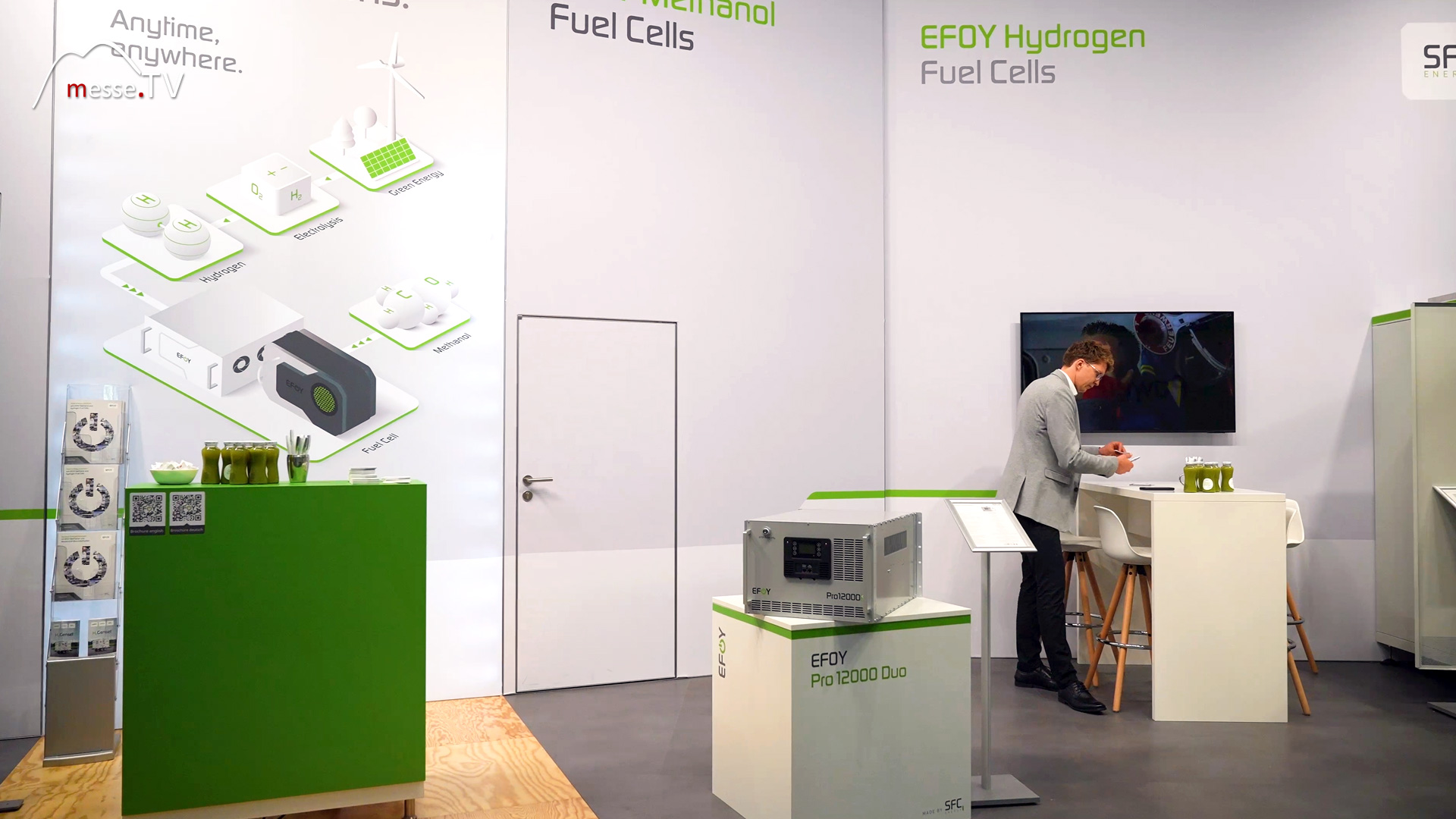
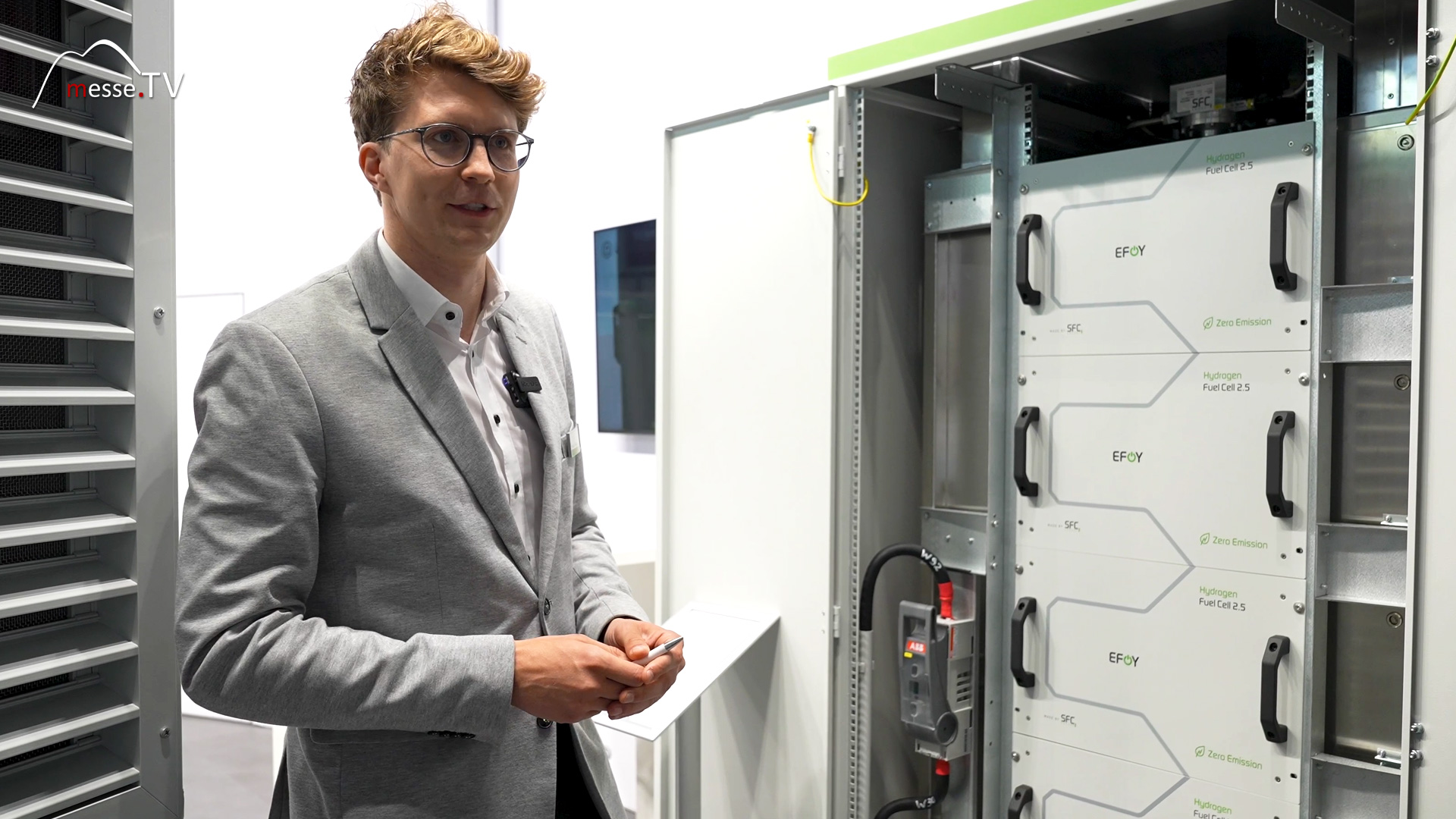
Applications from festivals to construction sites Power supply
In addition to securing stationary infrastructure, the systems are also used in mobile applications. One example is festivals, where stages are supplied with electrical power. Such applications place special demands on reliability and noise levels. Fuel cells can be an alternative here, as they are significantly quieter in operation than conventional generators. Another field is construction site power supply. Diesel generators are commonly used for temporary projects where there is no grid connection or where the grid capacity is insufficient. SFC Energy positions its products as an alternative in precisely this market segment. The aim is to gradually replace conventional solutions in all these areas.
Technological basis: hydrogen and direct methanol
The company works with two technologies, each of which has its own advantages. Hydrogen fuel cell technology is mainly used in larger power ranges, as demonstrated by the hydrogen cabinets. The direct methanol fuel cell is suitable for smaller applications and off-grid scenarios where a compact and self-sufficient solution is required. What both approaches have in common is the electrochemical conversion of chemical energy into electrical energy. Instead of a combustion process, a controlled reaction takes place that generates electricity. The decisive factor for customers is the provision of electrical energy in a form that can be seamlessly integrated into existing systems.

Market interest and strategic positioning
According to company representatives, there is broad interest from various industries at smarter E. Discussions range from infrastructure operators to event organisers and construction companies. The focus is less on individual components and more on complete energy solutions that can be expanded modularly and adapted to specific requirements. In this context, SFC Energy sees itself not only as a component supplier, but also as a provider of integrated systems. The combination of fuel cell modules, control, piping and energy output in a single cabinet is designed to reduce installation costs and simplify planning. At the same time, the company is addressing a market that is undergoing radical change: away from diesel generators and towards alternative technologies. With its hydrogen cabinets, SFC Energy is clearly positioning itself in the growing segment of lower-emission backup solutions. Whether in critical infrastructure, at festivals or for power supply on construction sites – wherever diesel generators have dominated until now, fuel cells are set to offer a technically mature and marketable alternative.
Trade fair reporting Germany - Trade fair knowledge, dates & events


