3QD2 circuit-breaker for direct current applications
by J. Groh - 2026-04-22The development of modern energy infrastructures is currently visibly shifting towards direct current. What was long considered a special application is increasingly becoming the focus of attention due to rising power requirements in data centres, industry and logistics.
The 3QD2 circuit-breaker is a system that addresses precisely this interface: as a fully electronic protective mechanism for DC applications with extremely short response times. The focus is not only on a new generation of devices, but also on a fundamental change in the way electrical systems are protected. Traditional mechanical switches are reaching their limits with increasing power density and rapidly changing load profiles. This is where a concept comes in that combines electronics and mechanics to increase reaction speed and safety at the same time.
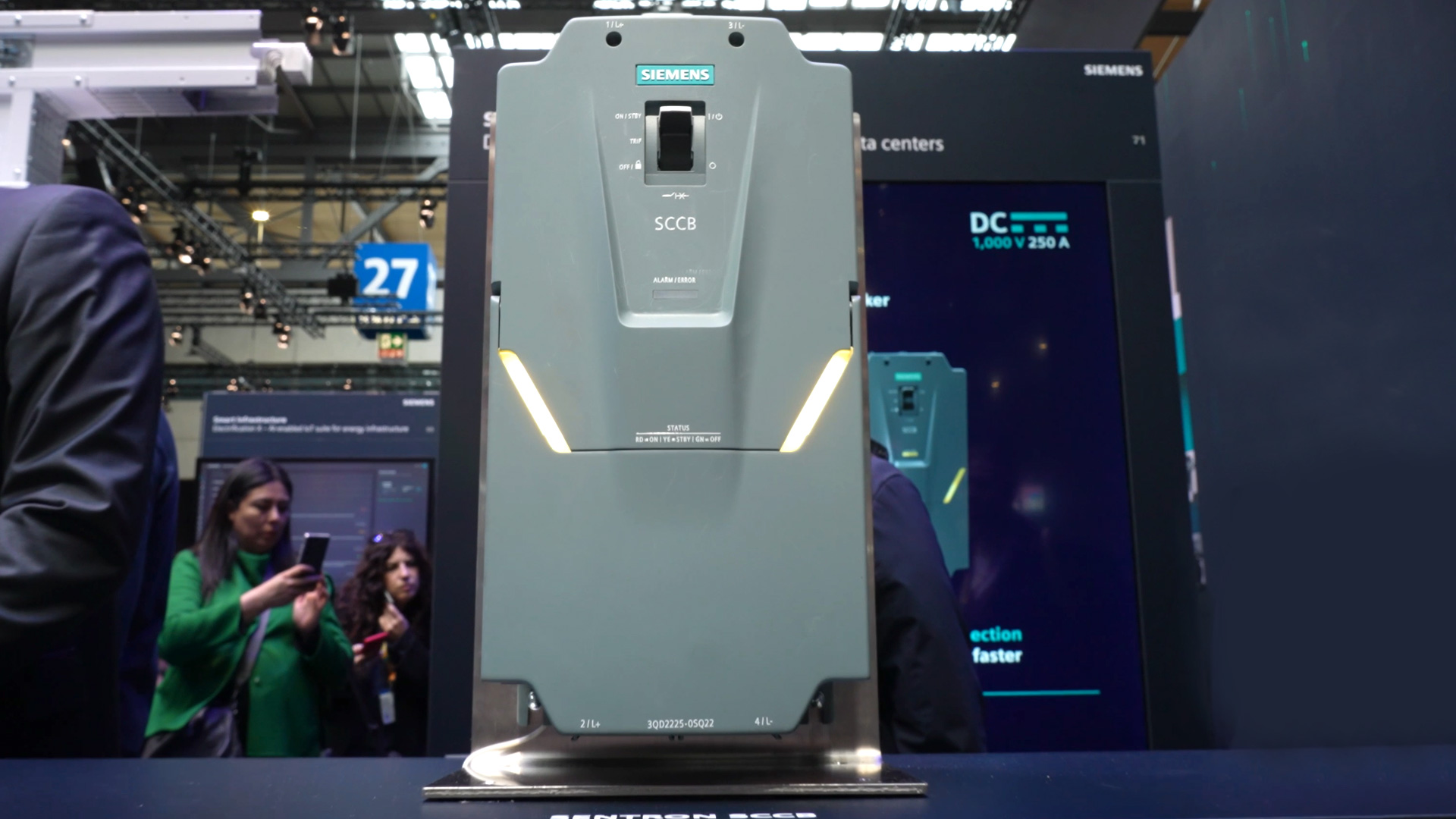

Siemens 3QD2 as a fully electronic circuit-breaker for direct current
The 3QD2 is designed as a solid-state circuit breaker and represents a new product category within Siemens AG. It has been specially developed for DC applications in which peak loads and dynamic loads play a central role. Unlike conventional circuit breakers, the system is based on fully electronic current control, which continuously monitors currents and can intervene within microseconds. The combination of electronic power section and additional mechanical isolating contact is crucial here. While the electronics control the current flow and detect faults, the mechanical contact ensures physical separation in line with classic safety requirements. The system therefore fulfils both modern and established standards. The features can be clearly summarised:
- Fully electronic current control with integrated monitoring
- Mechanical isolating contact for visible safety
- Detection and disconnection of short circuits in microseconds
- Integration into existing power distribution systems
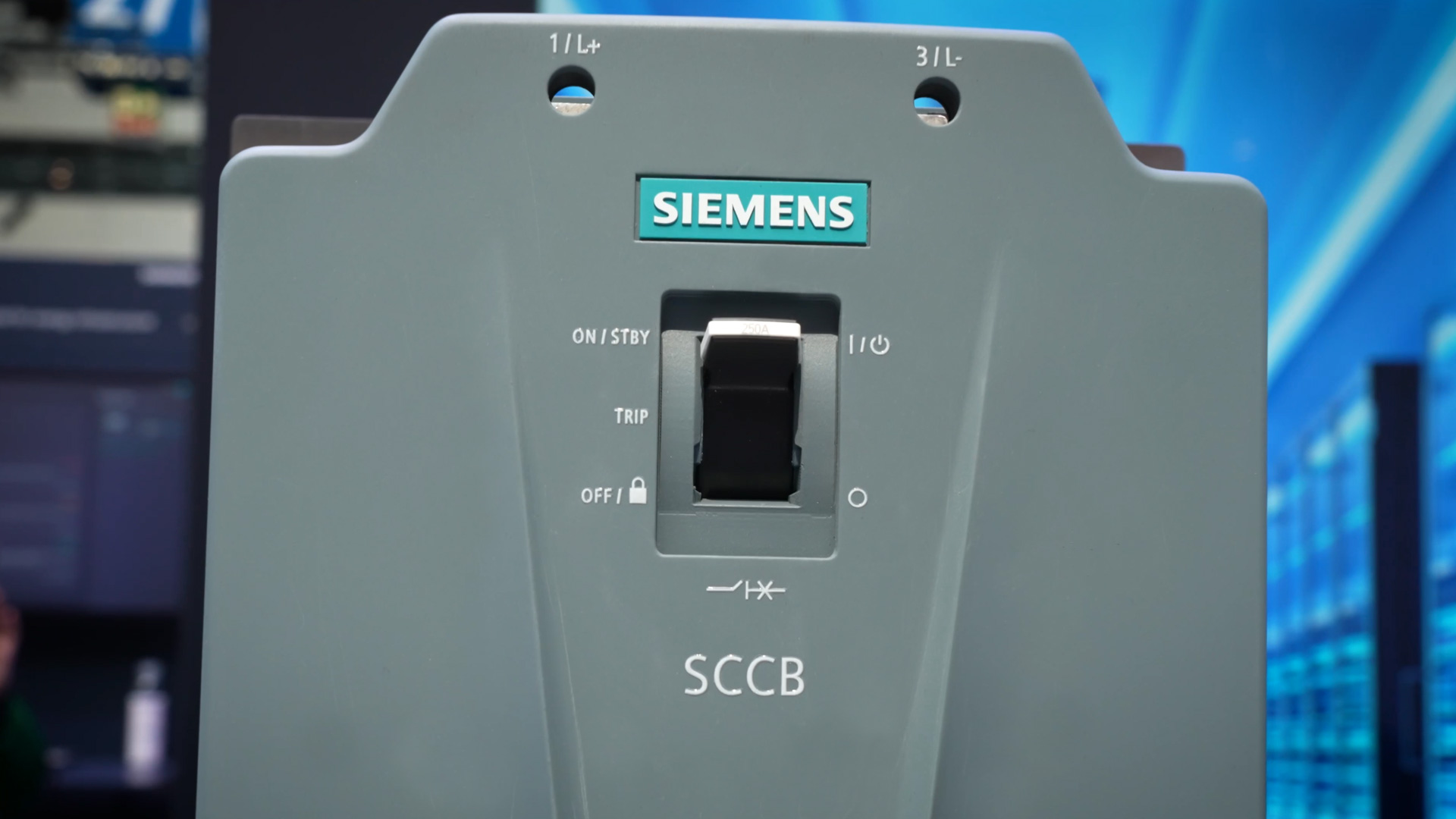
Microsecond-fast switch-off reduces short-circuit power
A key feature of the system is its speed. With a switch-off time of around two to three microseconds, the 3QD2 reacts around a thousand times faster than mechanical switches. This speed has a direct impact on the design of electrical systems. Short-circuit currents can be significantly reduced as they do not even reach the critical values that occur in slower systems. The reduction by a factor of 1000 fundamentally changes the framework conditions for cables, components and protective mechanisms. In practice, this means: less material required, lower thermal load and overall higher operational reliability. The physical consequences are remarkable. Even under extreme loads, an energised circuit can be disconnected without a visible arc occurring. It is precisely this property that makes electronic switches interesting for highly dynamic applications.

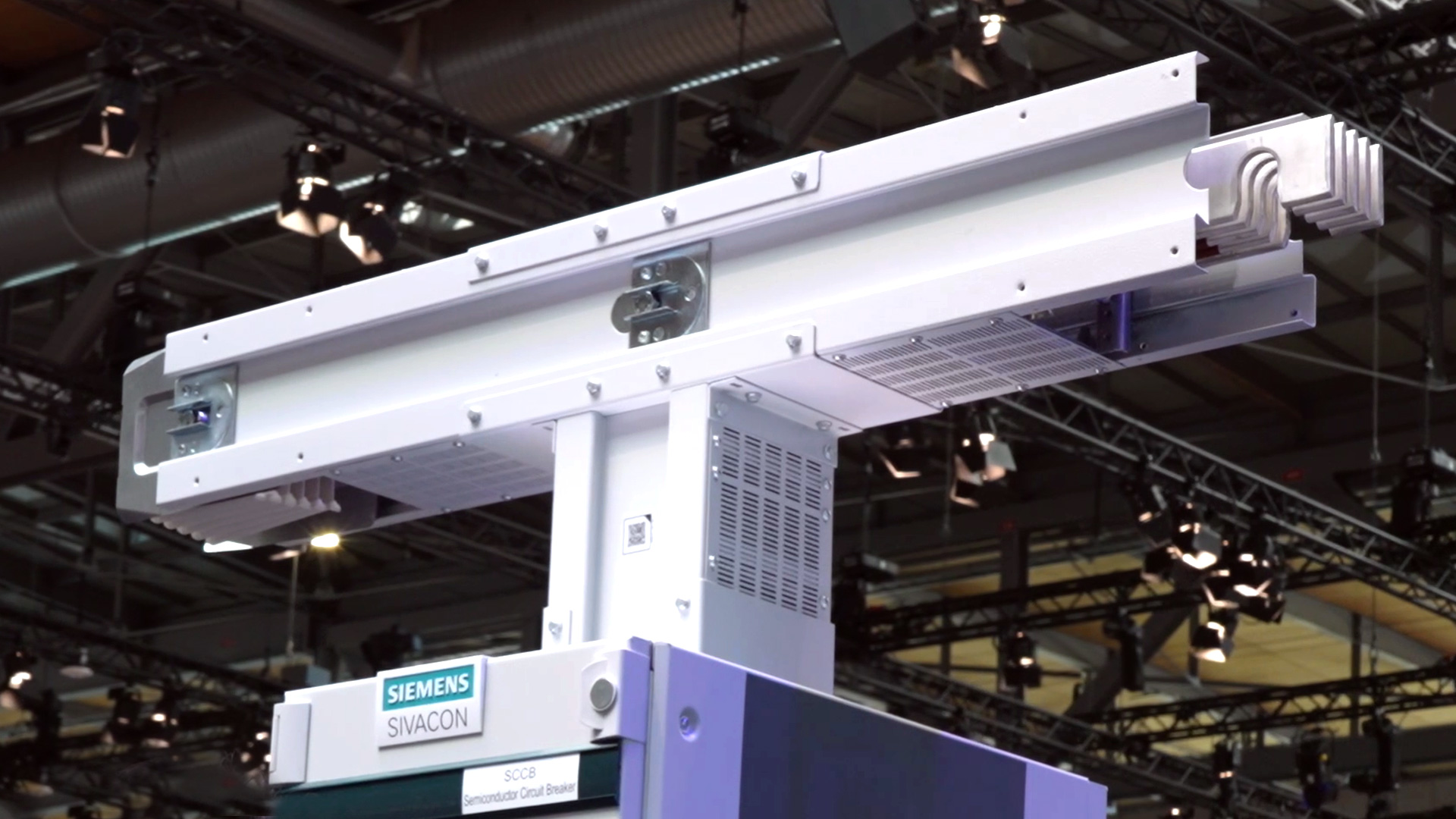
Integration in Sivacon systems and DC busbars
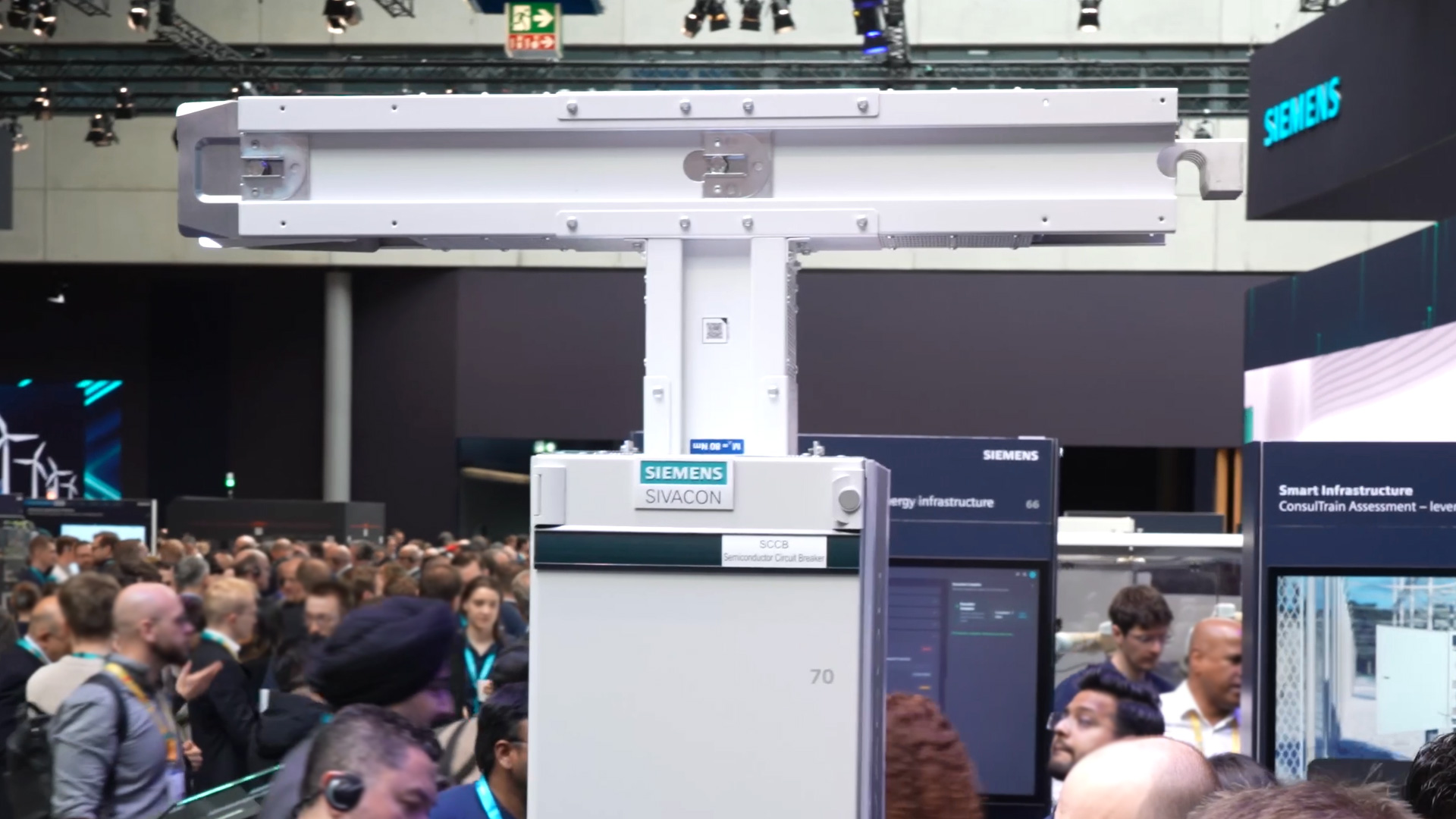
The switch is not used in isolation, but within complete power distribution systems. In the application shown, the 3QD2 is integrated into a Sivacon supply cabinet. The system is supplemented by a CE-approved DC busbar, which is designed for high currents. The combination of switch and busbar demonstrates how DC infrastructures can be integrated into existing industrial environments. The decisive factor here is scalability. Systems can be modular and can be adapted to different power requirements. The performance data emphasises this approach. The switch can carry currents of up to 250 amps at voltages of up to 1000 volts. This results in protection for applications up to around 250 kilowatts - a range that is particularly relevant for industrial systems and infrastructure components.
Direct current as the key to increasing power density
Technical development is closely linked to increasing power density, particularly in data centres. Today, modern server racks achieve performance values that are many times higher than those of previous generations. In the future, an increase in performance of up to forty times is expected. Direct current offers structural advantages here. It enables more efficient energy transmission and reduces losses. A simple example shows the dimensions: a conductor rail that carries 5000 amperes in alternating current mode can transmit around 8600 amperes in direct current mode. At the same time, the amount of material used is reduced as less copper is required. These efficiency gains are crucial when it comes to meeting increasing energy requirements while keeping the infrastructure manageable.
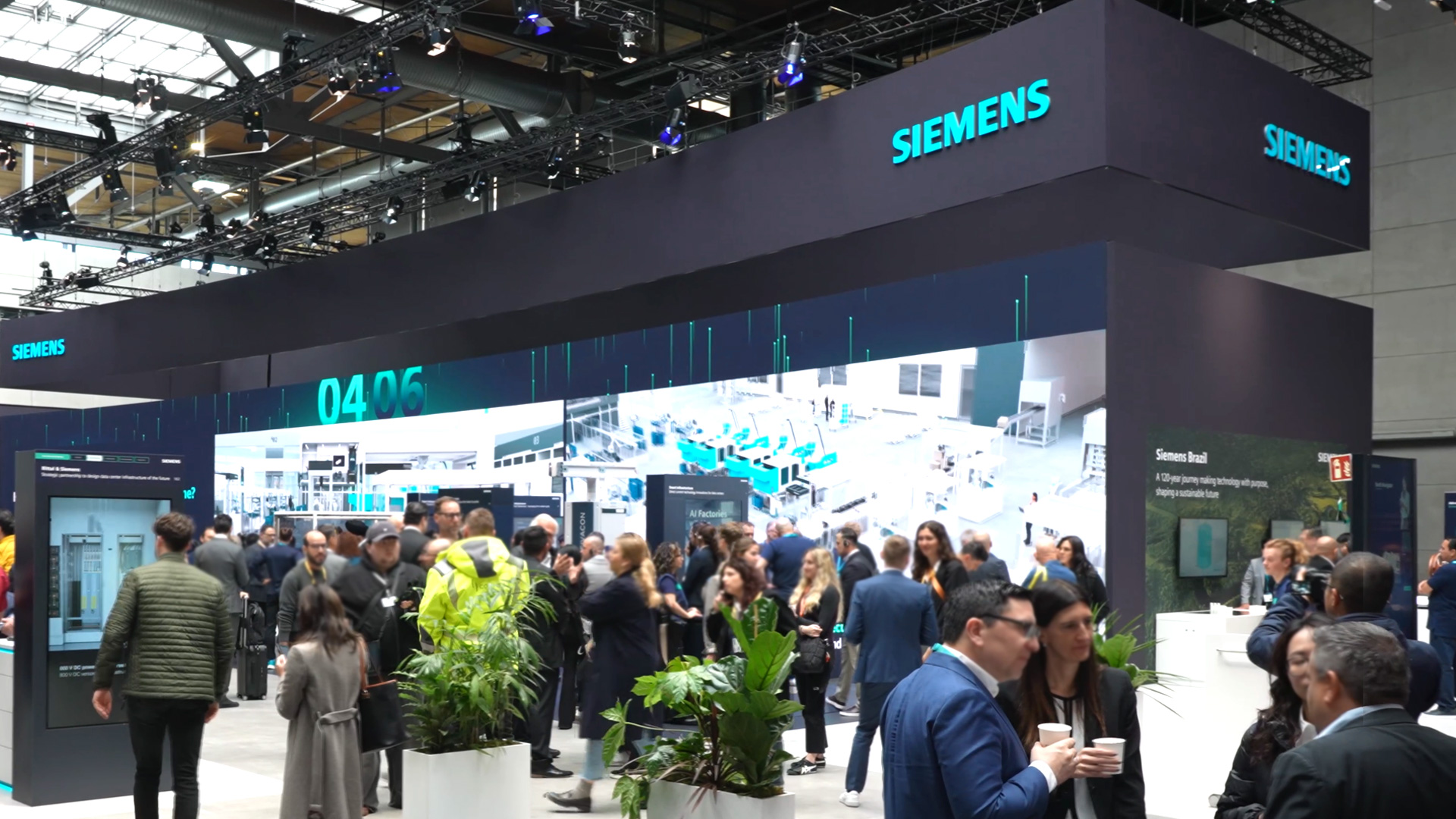
Applications in data centres and logistics systems
The switch's areas of application extend beyond data centres. Automated logistics systems are another example. In modern warehouse systems, storage and retrieval machines and conveyor technology must be operated reliably, often under high capacity utilisation and with low tolerances for failures. Rapid fault detection plays a key role here. Systems must not only work reliably, but also react immediately in the event of faults. A circuit breaker that switches off within microseconds prevents consequential damage and stabilises the entire process. The requirements can be summarised in two points:
- High availability with simultaneously increasing power density
- Fast fault response to prevent system failures
Prospects for electronic circuit-breakers in power distribution
The 3QD2 reveals an approach that goes beyond a single product. Electronic circuit-breakers are changing the structure of power distribution systems. They react faster, can be controlled more precisely and open up new possibilities in system design. The role of manufacturers such as Siemens is not only to develop individual components, but also to integrate these technologies into existing infrastructures. Organisations such as the OpenSEA Alliance are driving standardisation forward in parallel in order to make DC systems more widely usable. The development is still in its infancy, but is heading in a clear direction. As performance requirements increase, the combination of direct current and electronic protection is increasingly becoming the standard. Systems such as the 3QD2 mark a transition from classic protection technology to digitally characterised energy distribution, in which speed and efficiency are key factors.
Trade fair reporting Germany - Trade fair knowledge, dates & events


