S700 exoskeleton with data cable for industrial loads
by J. Groh - 2026-04-28Exoskeletons are one of the most visible developments in the industrial working environment. They intervene directly in the physical strain of skilled workers and push the boundaries of what is possible manually over longer periods of time.
At the same time, new demands are being placed on the technical infrastructure of these systems. This is because the actual performance depends not only on mechanics and ergonomics, but also on reliable communication between sensors, controls and actuators. The system shown here combines precisely these levels. An exoskeleton that supports physical labour meets cabling that has to function under extreme conditions. This combination illustrates how closely mechanics and data transmission are now interlinked.
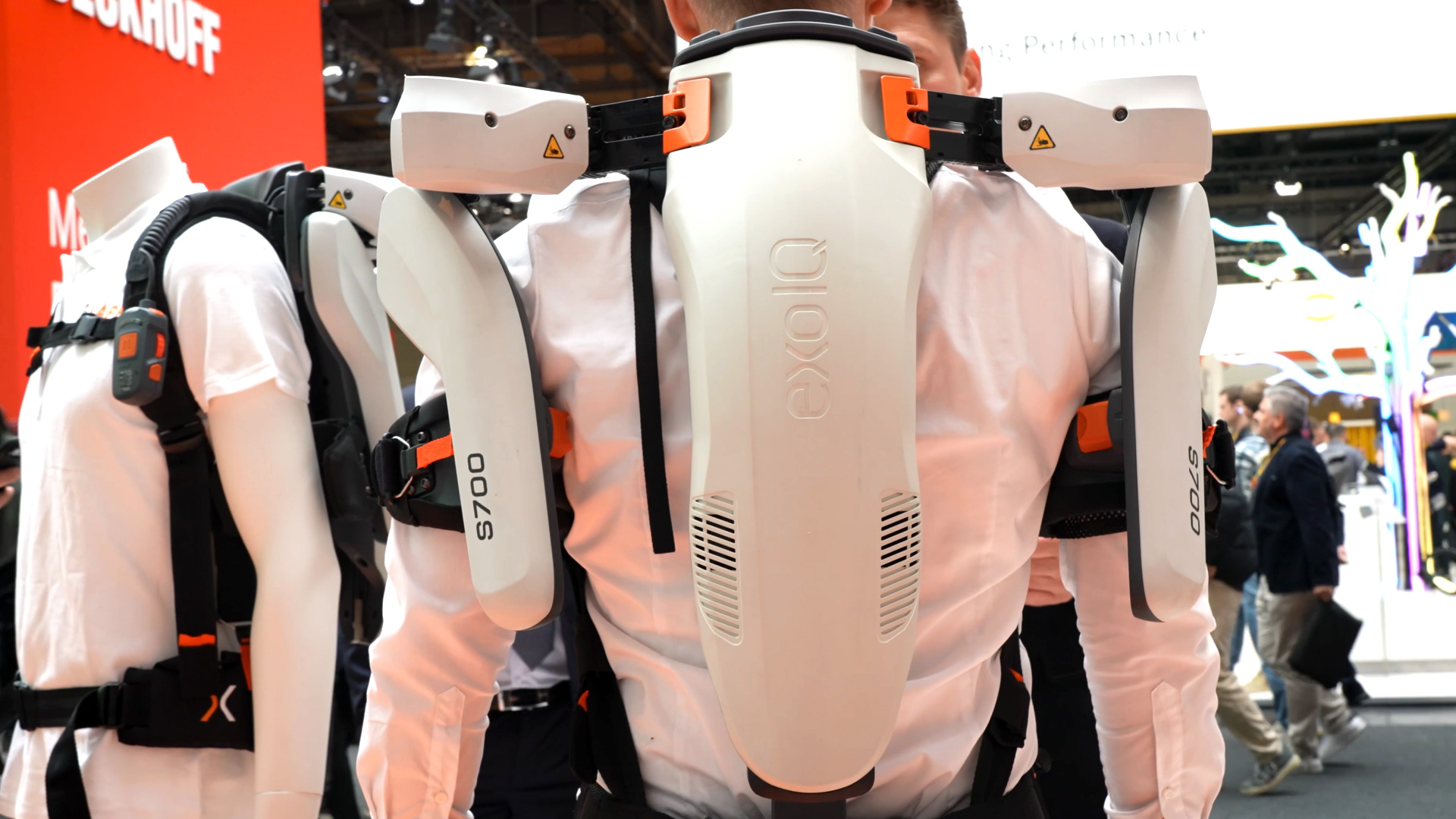

S700 exoskeleton from exoIQ for overhead work in manual trades
The S700 model from exoIQ is designed to support overhead and overhead work in particular. Such activities are among the most physically demanding tasks in the skilled trades. They often lead to rapid fatigue and long-term muscular strain damage. This is precisely where the exoskeleton comes in. It relieves the muscles, stabilises movement sequences and reduces the effort required. The aim is not to completely automate the work, but to noticeably reduce the strain on the person. The effect is particularly noticeable during repetitive tasks. If arms have to be held in a raised position for long periods of time, the system takes on part of the load. This not only stabilises performance throughout the working day, but also reduces the risk of premature wear.
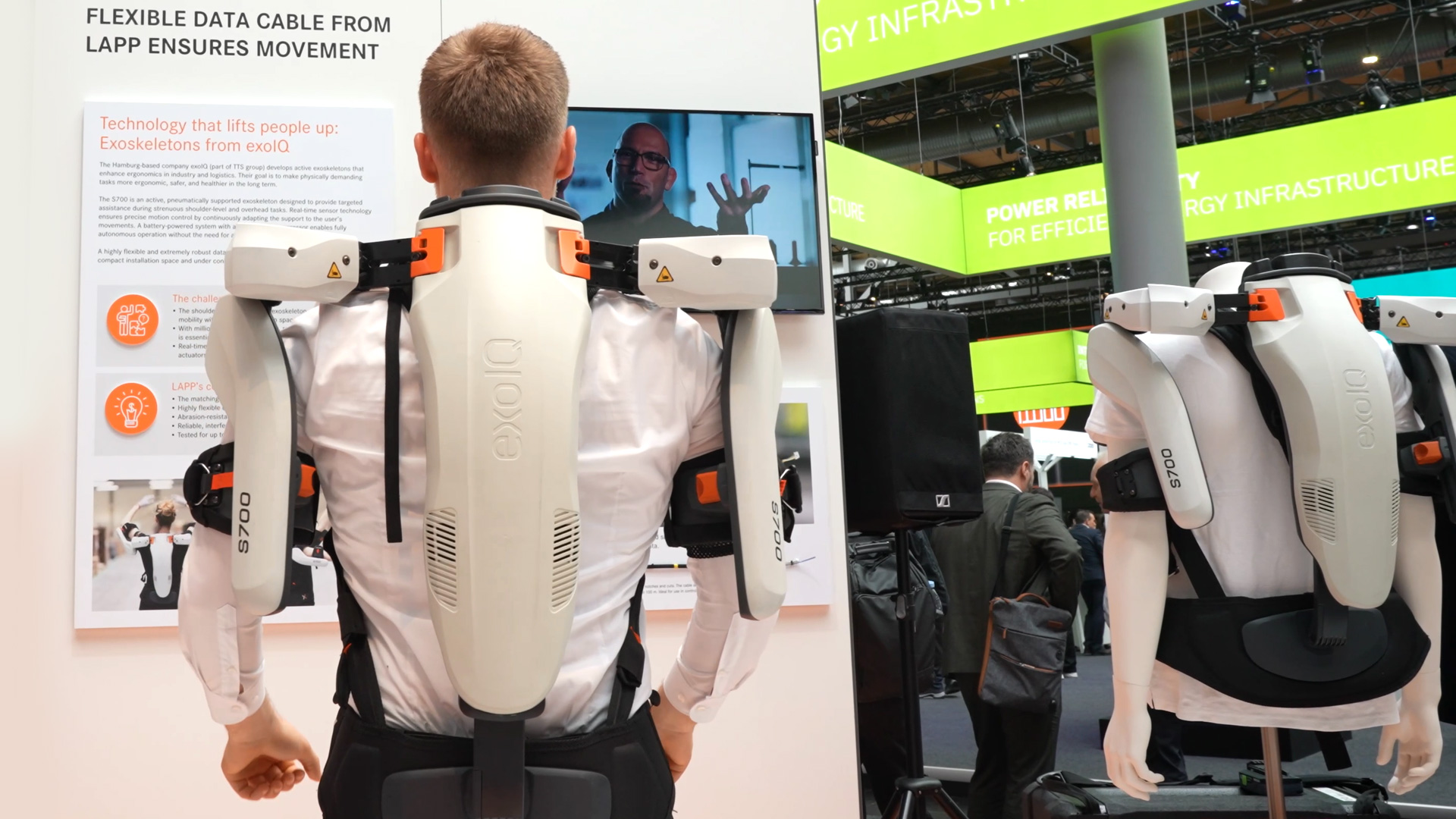
Lapp Unitronic FD P plus data cable integrated in the exoskeleton
However, the special technical feature is not just the exoskeleton itself, but also the cabling behind it. In this application, Lapp is responsible for all data communication within the system. Sensors in the arm modules, the control unit in the back area and other components are connected to each other via data cables. The Unitronic FD P plus is used here. This cable has been specially developed for applications in which permanent movement takes place in a confined space. These are precisely the conditions found in the exoskeleton. The cables run along the arms, are continuously bent and have to ensure stable data transmission at the same time. The challenge is obvious: data cables are structurally complex and react sensitively to mechanical stress. Permanent movement leads to material fatigue, especially with small bending radii. This makes it all the more important to have a design that is precisely tailored to these conditions.

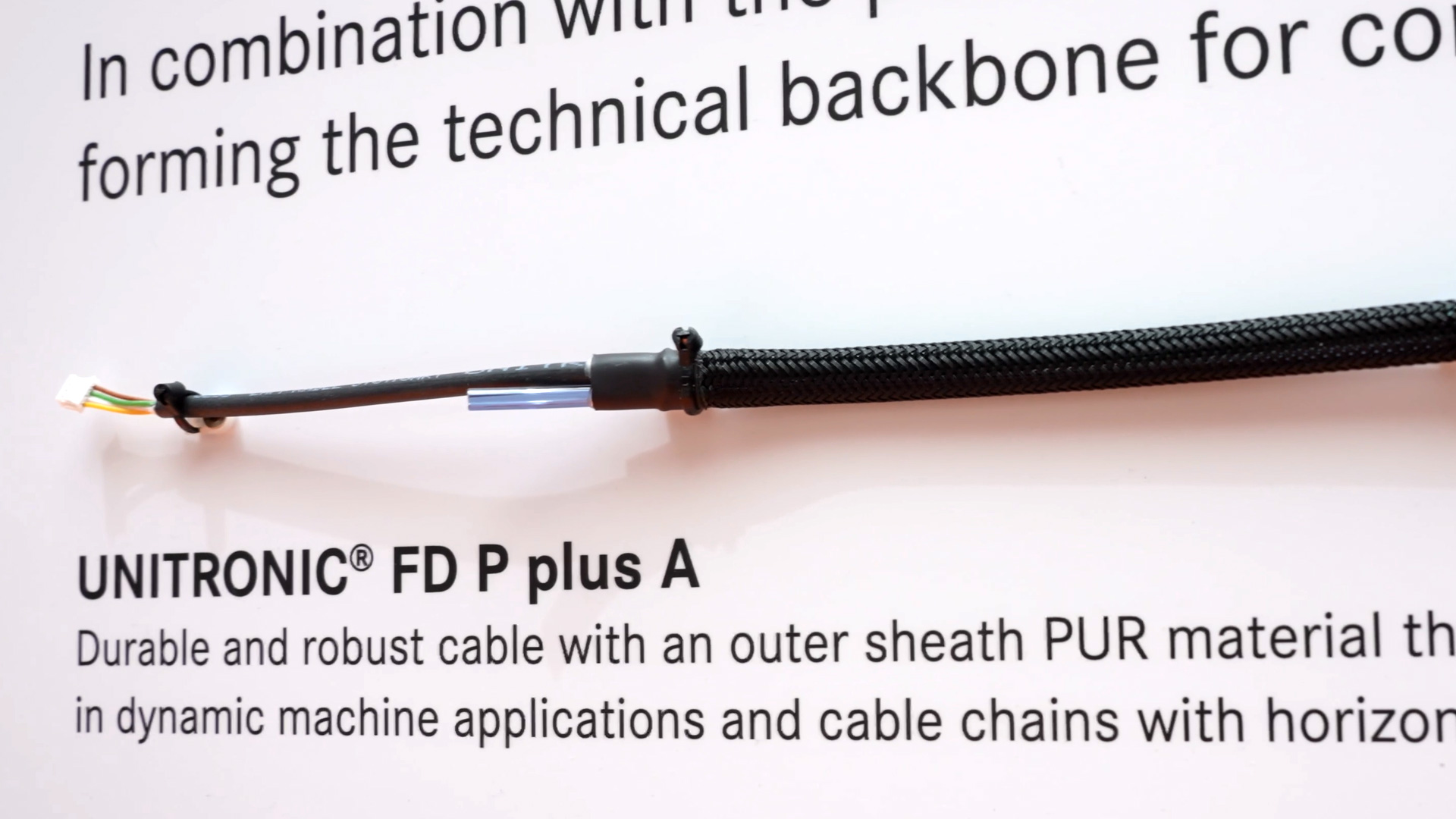
Dynamic load and cabling in the hosepack
In the exoskeleton, pneumatic components and data cables are routed together in hosepacks. This bundling saves space, but increases the demands on each individual element. The cables not only have to be flexible, but also withstand abrasion, pressure and repeated movements. The load is mainly caused by short travel distances. In contrast to long cable runs or stationary installations, constantly changing forces act on the material. Every movement of the arm leads to mechanical stress on the cable. The properties of the cable used can be clearly described:
- designed for permanent dynamic movement
- suitable for tight bending radii and limited installation space
- abrasion-resistant polyurethane outer sheath
- designed for over ten million movement cycles
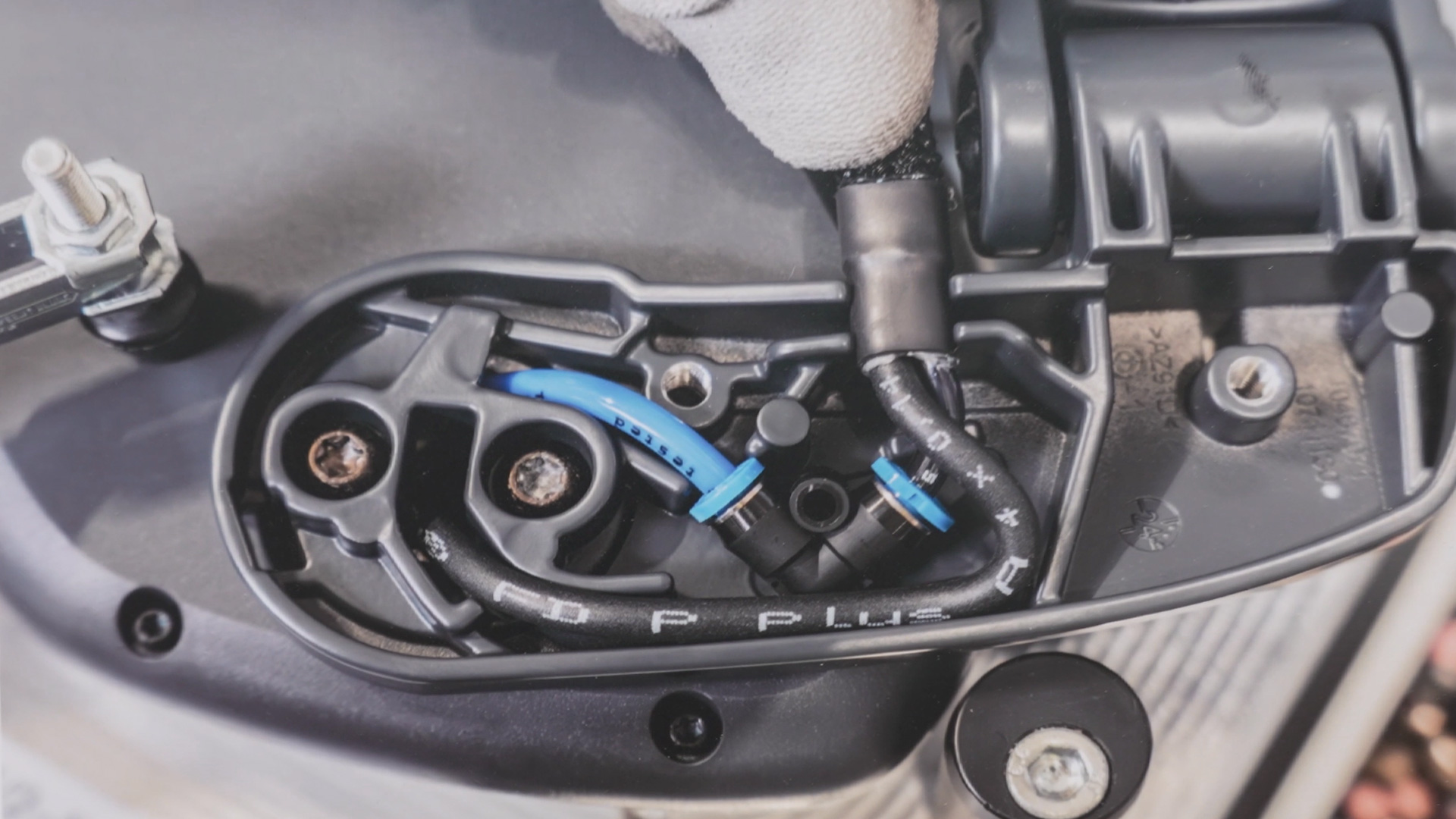
Sensors and communication between the controller and arms
The function of the exoskeleton is based on a continuous exchange of data. Sensors record movements, forces and positions, the control unit processes this information and returns corresponding signals. The system can only provide meaningful support if this communication is stable and works without delay. The data cable plays a central role here. It connects the individual modules with each other and ensures that information is transmitted in real time. Without this connection, the exoskeleton would merely be a mechanical construction without adaptive capabilities. Reliability is crucial, especially in applications with human interaction. Delays or failures in communication could not only impair function, but also affect safety. This is why cabling is considered an integral part of the system.
Requirements for data cables in robotics and exoskeletons
The development shows an overarching trend. With the increasing spread of robotics, exoskeletons and humanoid systems, the demands on cabling are also increasing. Cables are becoming the ‘nervous system’ of these technologies. They not only transmit signals, but also ensure the functionality of entire systems. Lapp is positioning itself in this environment with solutions that are designed for extreme loads. It's not just about durability, but also about performance. Data must be transmitted quickly, without interference and under difficult conditions. At the same time, application scenarios are changing. Systems are becoming more compact, more mobile and more complex. This increases the requirements for bending radii, service life and mechanical robustness. The trend is clearly moving in the direction of higher load capacity and smaller space requirements.
Development of cabling with increasing requirements in the industry
The increasing integration of robotics and assistive systems in industrial processes is leading to a shift in technical priorities. While machines and mechanical components used to take centre stage, the focus is now increasingly shifting to the data transmission infrastructure. This is particularly evident in applications such as exoskeletons. Here it becomes clear that modern systems only work if all components are harmonised. Mechanics, sensors and cabling form a unit that can only work together. The development of data cables follows a clear pattern: greater flexibility, longer service life and better adaptation to dynamic environments. Systems such as the S700 make it clear that these requirements are not theoretical, but arise directly from practical experience. This makes cabling a decisive factor in the performance of modern technologies. It is no longer just a connecting element, but a central component of the entire system architecture.
Trade fair reporting Germany - Trade fair knowledge, dates & events


