Test device hipot ONE for electrical tests with AI
by A. Bergmeier - 2026-04-21In the industrial testing of electrical components, quality is not only determined by the design, but also by the reliability of the measurement processes.
Test devices must cover different parameters, work reproducibly and at the same time be able to be integrated into existing processes. With the hipot ONE, erfi is presenting a system that addresses precisely this interface: as a multifunctional testing device that combines classic measuring tasks with AI-supported operating logic. The device was developed specifically for Hannover Messe 2026 and was only ready for series production shortly before the presentation. Accordingly, the focus is less on a product that has grown over the years and more on a system that bundles and restructures current requirements for testing processes.
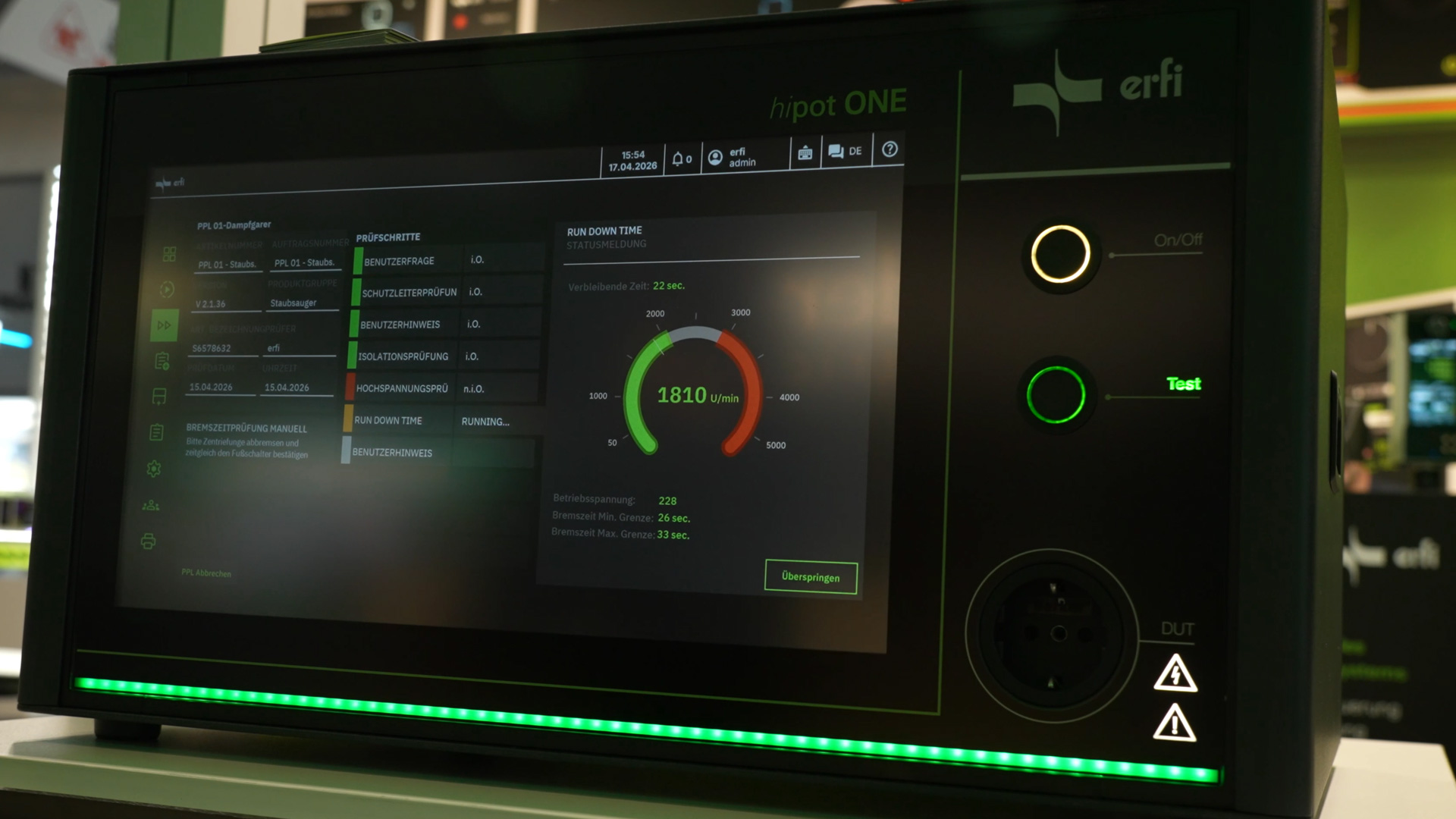

erfi hipot ONE as a multifunctional testing device for electrical safety
At its core, the hipot ONE covers several central test areas. These include high-voltage tests as well as measurements of insulation resistance, protective conductor tests and leakage currents. The device is therefore aimed at applications in which electrical safety not only needs to be tested once, but also documented regularly. The combination of these functions in one device is not new, but the way in which the test sequences are organised is. Instead of carrying out individual measurements in isolation, the system allows the compilation of complete test sequences. These are defined once and then processed automatically. For users, this means that recurring test tasks do not have to be reconfigured each time. This is particularly relevant in production environments with changing test specimens. Different products can be assessed with identical test sequences, provided the requirements are comparable. This reduces the set-up effort and increases the consistency of the results.
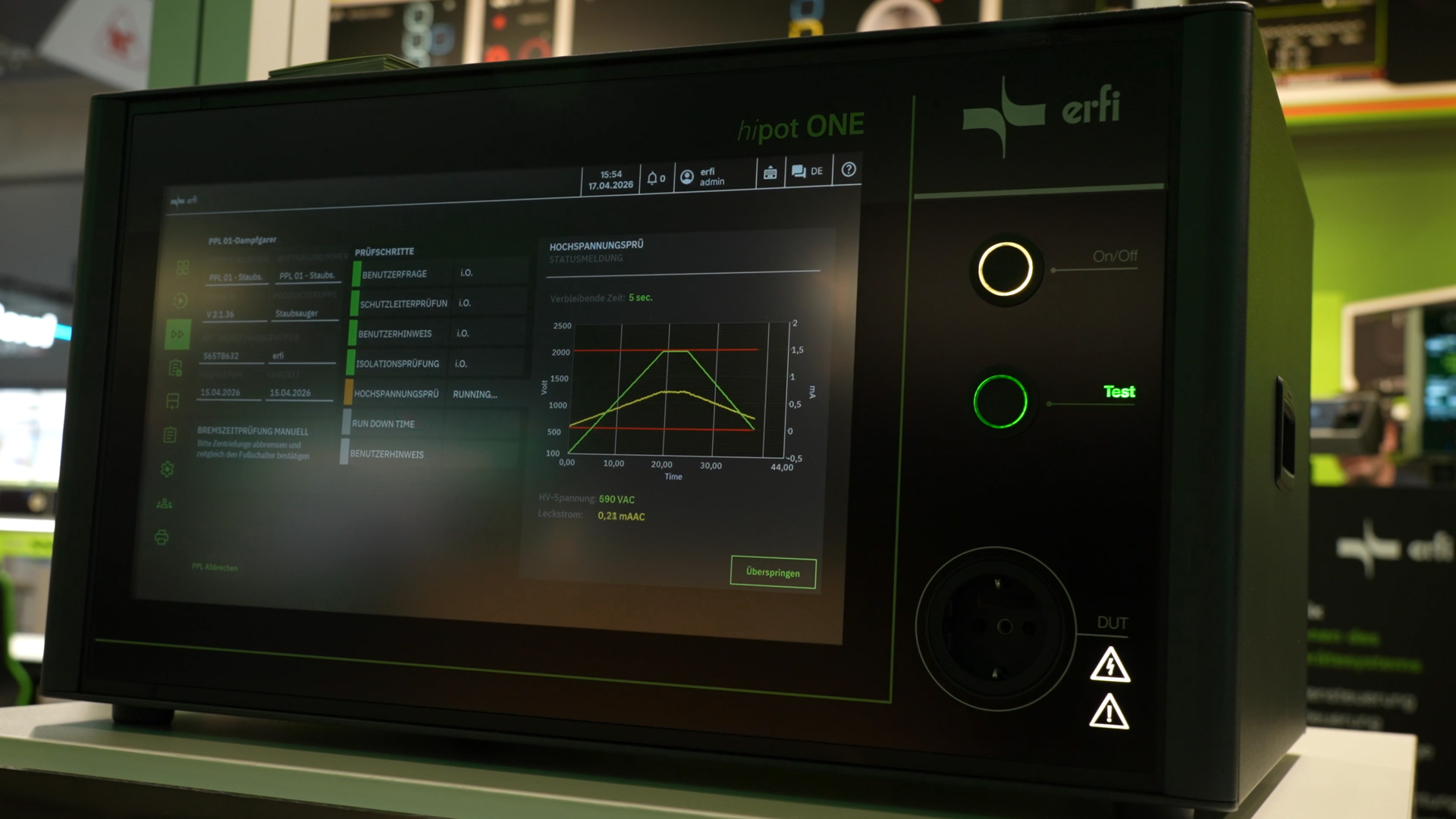
AI co-pilot in hipot ONE for test plan creation
A central element of the system is the integrated co-pilot. This is an AI-supported function that supports the user in creating inspection plans. The user can either enter requirements via a structured menu or switch directly to a test sequence and define it step by step. The co-pilot assumes an intermediary role between the user and the system. It helps to derive specific test sequences from requirements. This is particularly relevant when complex test requirements exist or different standards need to be taken into account. The process itself is clearly structured. Once a test plan has been defined, it is processed sequentially. Each step follows the previous one without the user having to intervene. The test specimen is fully tested and the results are immediately available. This automation not only reduces the time required, but also the susceptibility to errors during execution.
Automated test sequences and repeatability in the test process
The strength of the system lies in its repeatability. Test plans can be saved and called up again at any time. This makes it possible to apply identical tests to different products without having to redefine the processes each time. For companies, this means above all a simplification of day-to-day operations. Inspection processes are standardised and operation is reduced to just a few steps. Once started, the test runs automatically. Especially in environments with a high number of items or many variants, this leads to a noticeable reduction in workload. The structure of such test sequences can be clearly summarised:
- Creation of customised test plans via menu or direct process
- Sequential processing of all defined test steps
- Saving and reuse of identical test sequences
- Automated start and complete execution without intervention

Operating concept, display and ESG glass in use
In addition to the test processes, operation plays a central role. The device has a 15.6-inch display with touch function, which serves as the central interface. The glass front is made of toughened safety glass and is protected against scratches and breakage. In addition, an anti-fingerprint coating ensures that the surface remains legible even with frequent use. The operating logic has been deliberately minimised. Instead of complex keypads, there are just a few operating elements. Many functions are controlled directly via the display. The aim is to simplify access to the system without restricting the depth of functions. This approach is not just a question of ergonomics. In practice, ease of use determines how quickly a device can be integrated into existing processes. A system that can be used without lengthy familiarisation reduces downtimes and facilitates the introduction of new test methods.
Further development and prospects for the testing device
The current version of the hipot ONE is intended as a starting point. The manufacturer plans to integrate further test methods and expand the functions even further. This is not only about additional measurement options, but also about the accessibility of existing functions. One focus is on making inspection processes quicker to call up and further simplifying operation. The combination of automated processes and AI support is to be further expanded. The aim is to increasingly relieve the user of manual configuration steps. Overall, this shows a development that goes beyond the individual device. Test devices are changing from pure measuring instruments to systems that structure processes and prepare decisions. The hipot ONE is an example of this change: as a device that fulfils classic measuring tasks, but at the same time reorganises the testing process itself.
Trade fair reporting Germany - Trade fair knowledge, dates & events


