Neuro Optics reduces cognitive strain in modern spectacle lenses
by A. Bergmeier - 2026-01-19For decades, spectacle lenses have been evaluated primarily according to optical criteria: visual acuity, distortion, transitions. With a new product portfolio, this focus is shifting fundamentally. Vision is no longer understood exclusively as an optical process, but as a cognitive process that places a measurable strain on the brain. This is precisely where a new approach developed by Zeiss Vision Care on a scientific basis comes in.
The central question is how much different visual impressions strain mental processing. After all, vision does not end at the retina, but continues in the brain – where information is interpreted, filtered and processed. This perspective fundamentally changes the evaluation of spectacle lenses.
Blurred vision as a measurable cognitive strain
It has long been known that blurred vision is perceived as unpleasant. What is new, however, is the scientific evidence that blurred vision leads to increased cognitive strain. This means that the brain has to work harder to compensate for unclear or unstable visual impressions. This finding was not derived theoretically, but proven experimentally. Extensive series of measurements showed that certain degrees of blurring cause measurable fluctuations in brain activity. The decisive factor here is not only the extent of the blurring, but also its position in the field of vision.

Research at the Vision Science Lab in Tübingen
The basis for this approach was developed at the Vision Science Lab in Tübingen. There, EEG measurements were carried out to analyse the electrical activity of the brain during different visual situations. The aim was to objectively record the relationships between eye movements, blur distribution and cognitive load. The results clearly showed that certain blur patterns are significantly more stressful than others. The frequently used gaze directions in everyday life are particularly relevant here. When blurring occurs in these areas, the cognitive load increases measurably. This data forms the scientific basis for a new understanding of spectacle lens design.
Neuro Optics as a new design principle
A design approach was derived from the research results, which is summarised under the term Neuro Optics. The central idea is not to minimise blurring across the board – which is physically impossible anyway – but to distribute it in a targeted manner. A frequently used image aptly describes this principle: blurring cannot be removed, but only redistributed like sand in a box. The decisive factors are where it is located and how steeply it rises. Neuro Optics uses this principle to make the main viewing directions particularly calm and to specifically relieve less relevant zones.

ClearMind as an application of scientific findings
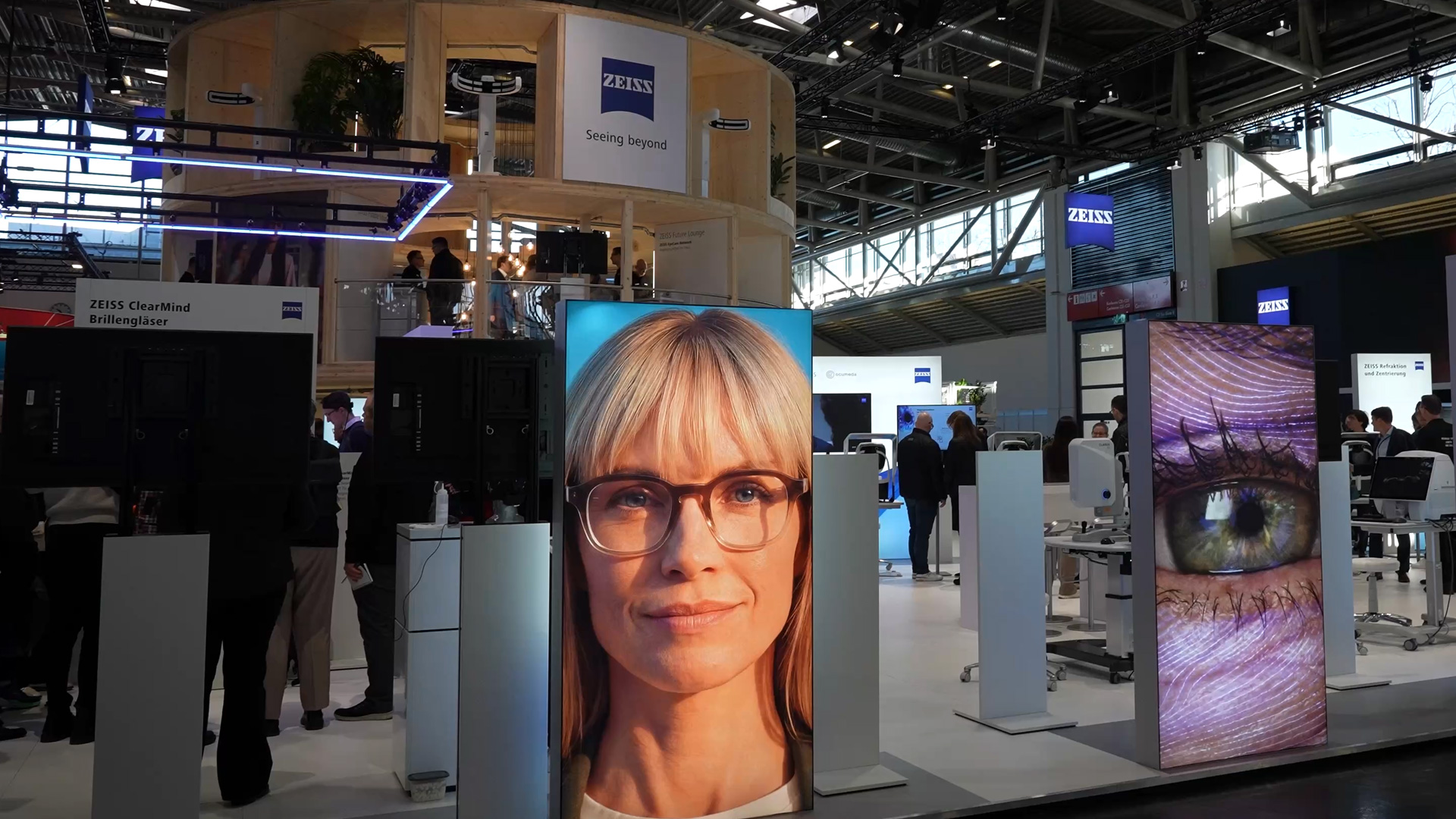
These findings are incorporated into the ClearMind product portfolio developed by Zeiss Vision Care. It includes both single vision digital lenses and progressive lenses and is consistently based on neurophysiological research results. ClearMind lenses take typical eye movements into account and optimise the lens geometry to reduce cognitively stressful blurring. The aim is to achieve a calmer visual impression that puts less strain on the brain – especially during prolonged visual tasks or frequent changes of gaze.

Wide portfolio for different visual needs
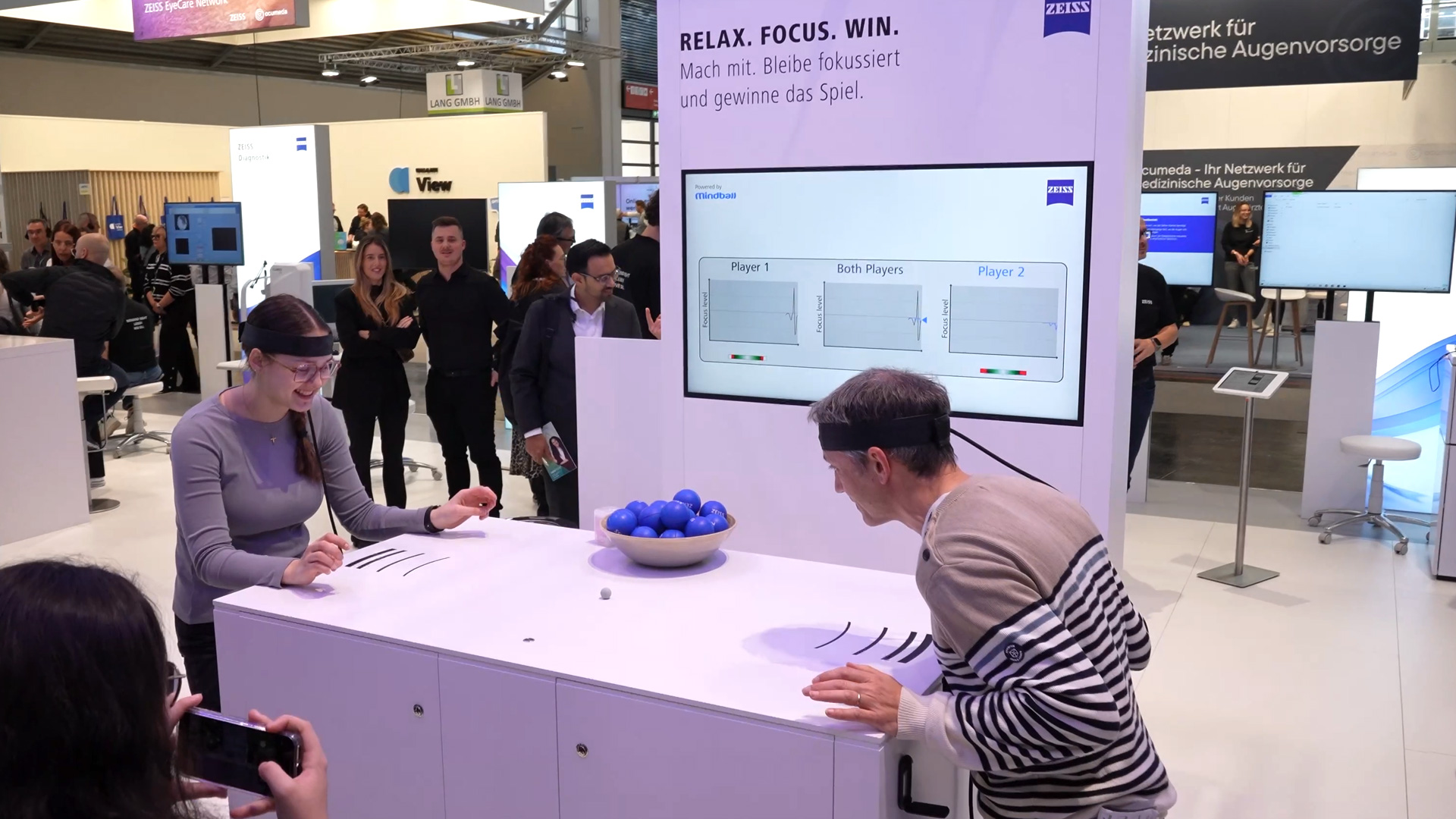
The ClearMind portfolio is not limited to a single target group, but covers different stages of life and vision. These include, among others:
- Single vision digital lenses for younger adults with high near vision demands
- Intermediate solutions for people with early presbyopia
- Progressive lenses with optimised transitions between near and far vision
- Designs tailored to individual primary viewing directions
Distinction from purely AI-based approaches
It is striking that the fundamental findings do not originate from automated AI models. The research was based on manual EEG measurements, classic vision tests and careful data evaluation. Artificial intelligence may assist with fine-tuning in the future, but it was not the origin of the concept. This fact in particular underlines the scientific rigour of the approach. It is not a mathematical approximation, but a design derived directly from physiological measurements.

Significance for the eyewear market
With ClearMind and the Neuro Optics approach, Zeiss Vision Care is expanding the concept of quality in eyeglass lenses. Sharp vision alone is no longer enough. The decisive factor is how relaxed vision is for the brain. In an increasingly digital working and living environment, where visual demands are constantly rising, this aspect is becoming even more important. Eyeglass lenses are thus becoming a tool that not only offers optical correction, but also contributes to mental relief.
Trade fair reporting Germany - Trade fair knowledge, dates & events


