Hydrogen as a long-term storage solution for industry
by J. Groh - 2026-06-26Green hydrogen is regarded as a key component of the energy transition. Nevertheless, the technology still faces a key challenge: whilst its environmental significance is largely undisputed, the commercial implementation of many projects remains difficult.
High investment costs, a lack of transport infrastructure and uncertain business models are holding back market take-up. At the same time, there is a growing need for solutions to store large quantities of renewable energy over the long term and utilise it industrially. At ees Europe in Munich, it became clear that hydrogen is increasingly no longer viewed as a stand-alone technology, but rather as a component of complex energy systems that link power generation, industrial processes, infrastructure and digitalisation.
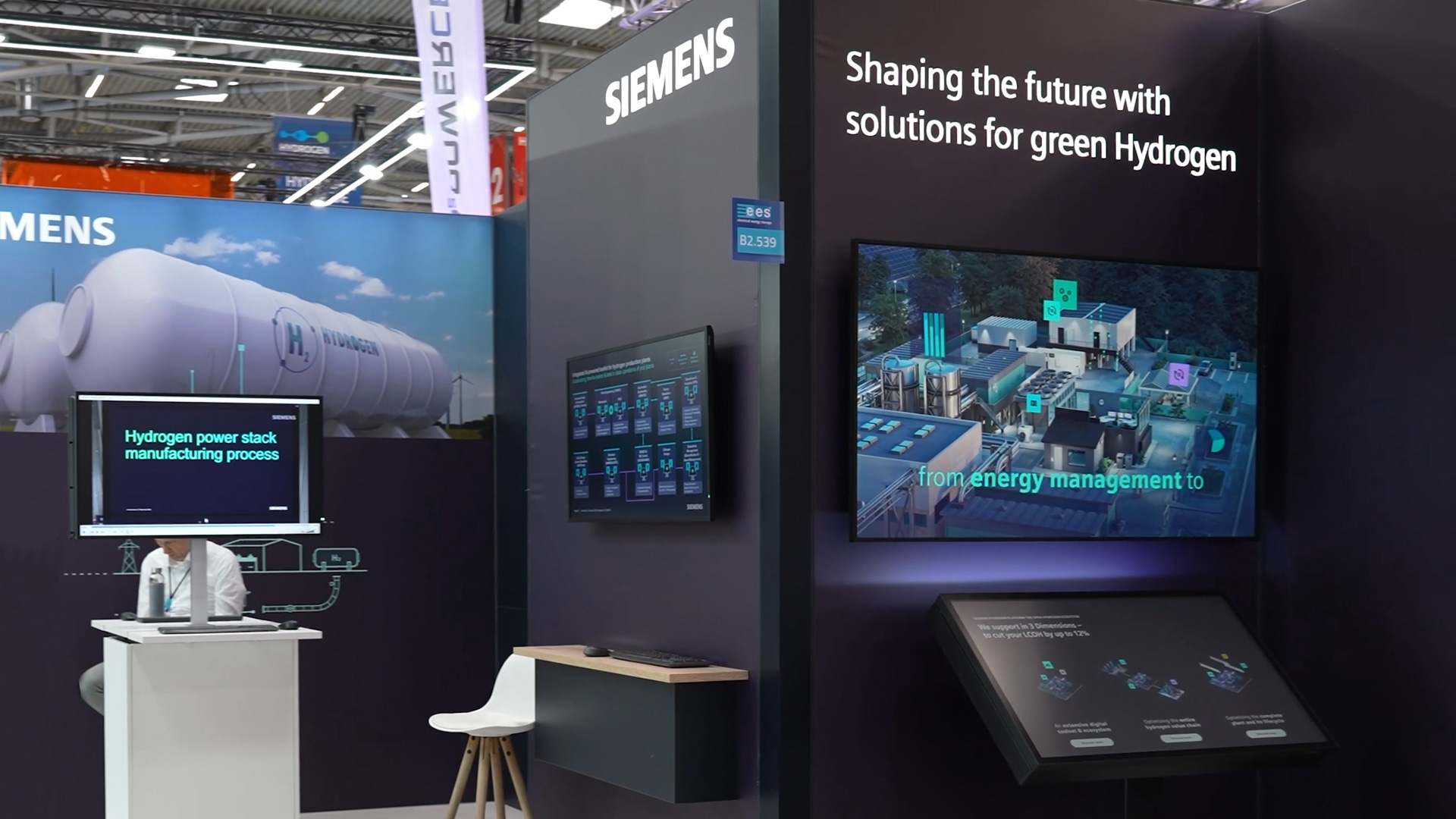

Siemens is developing hydrogen concepts for the entire value chain
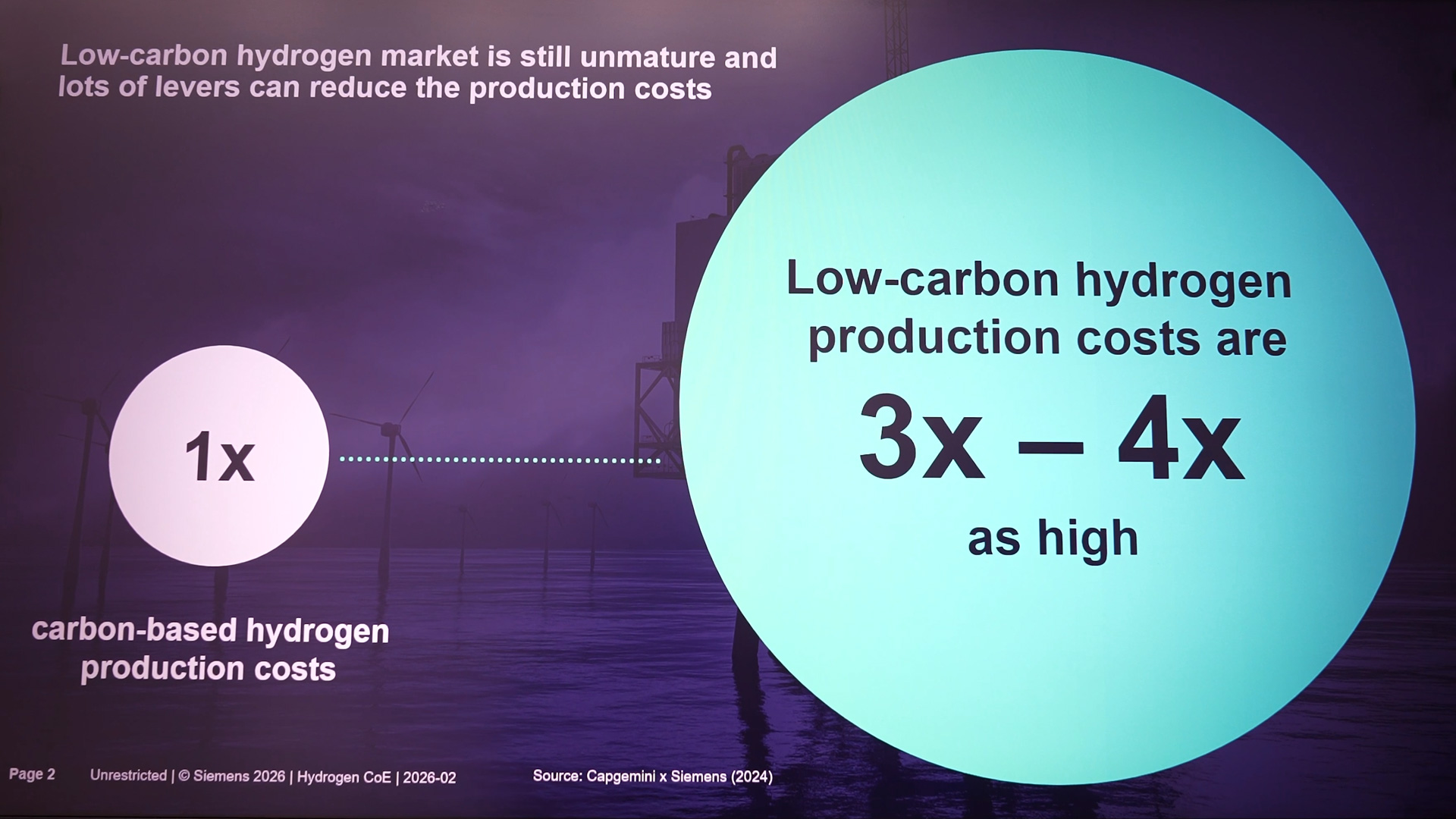
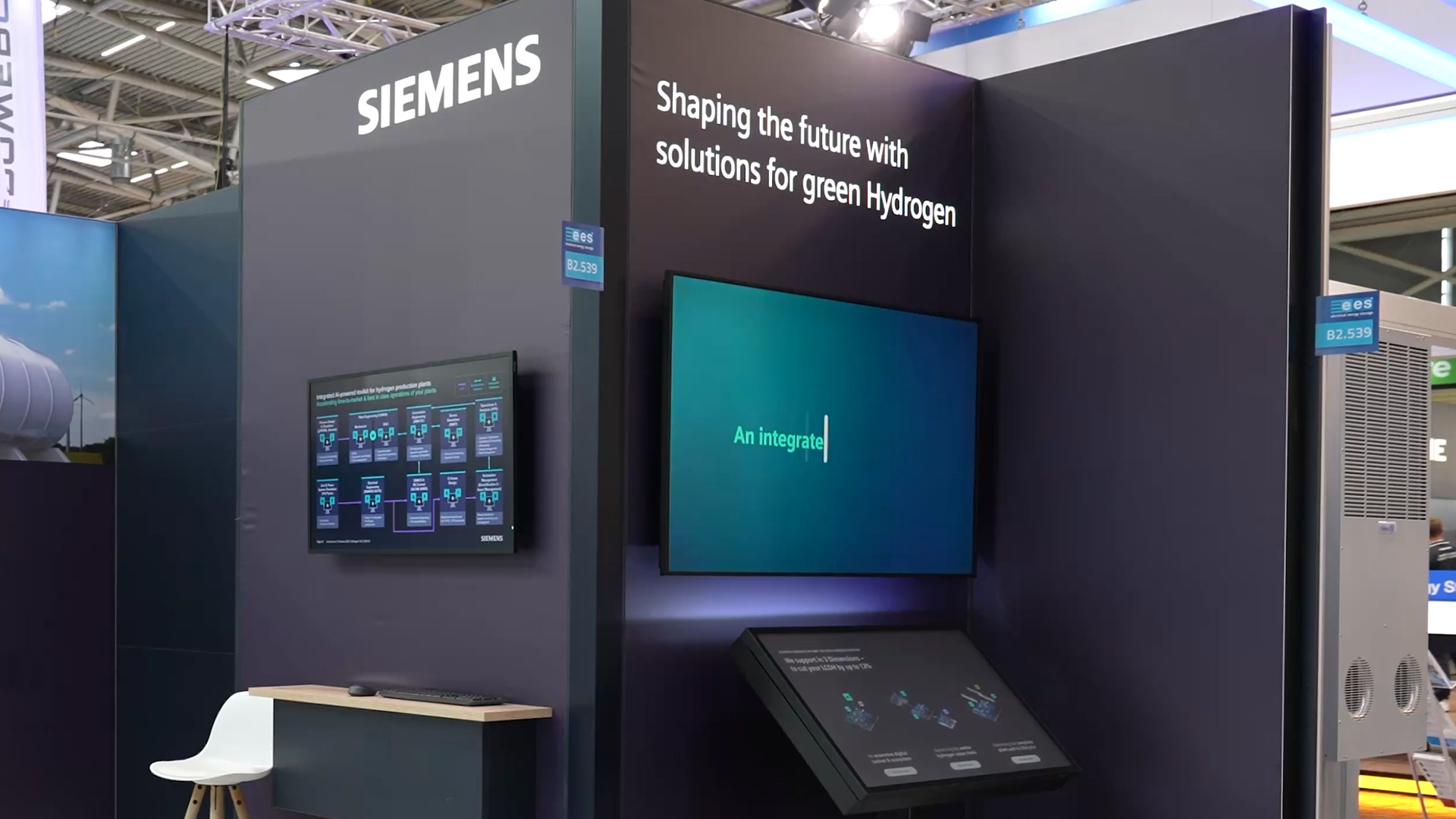
Rather than offering individual components alone, Siemens takes a holistic advisory approach. This begins with technical feasibility studies and economic viability analyses to assess investment and operating costs. The aim is to support companies in planning economically viable hydrogen projects. A key aspect of this is considering the entire value chain – from energy supply through hydrogen production to storage and subsequent use. With the help of digital twins, different scenarios can be simulated and plants optimised even before construction begins. This enables technical risks to be reduced and processes to be designed more efficiently. Precisely because hydrogen does not yet have an infrastructure as well-developed as that for crude oil or natural gas, many projects must be planned on a case-by-case basis. Consequently, the integration of process consultancy, network planning and plant design is becoming increasingly important.
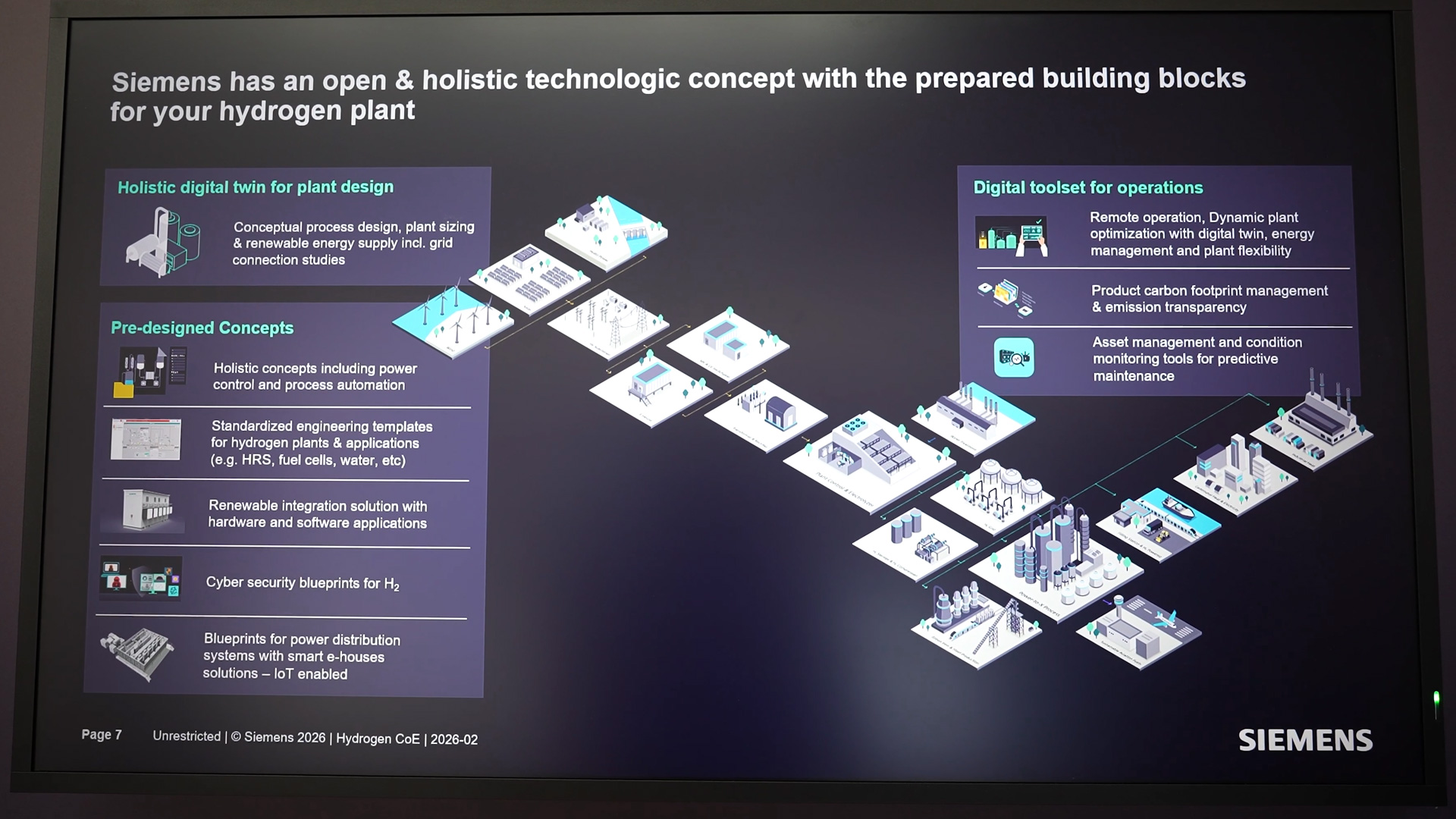
Green hydrogen requires new infrastructure and alternative energy sources
Another obstacle remains the lack of transport and distribution infrastructure. Whilst electricity grids, oil and gas pipelines have been developed over decades, a hydrogen network is still under construction in many places. For this reason, numerous industrial projects are currently relying on hydrogen-based energy carriers that can be transported or stored more easily. These include, amongst others:
- Ammonia as a transport medium for hydrogen
- E-methanol for industrial applications
- E-SAF as a sustainable aviation fuel
- integrated production chains for energy-intensive industries
- digital planning of the entire process chain
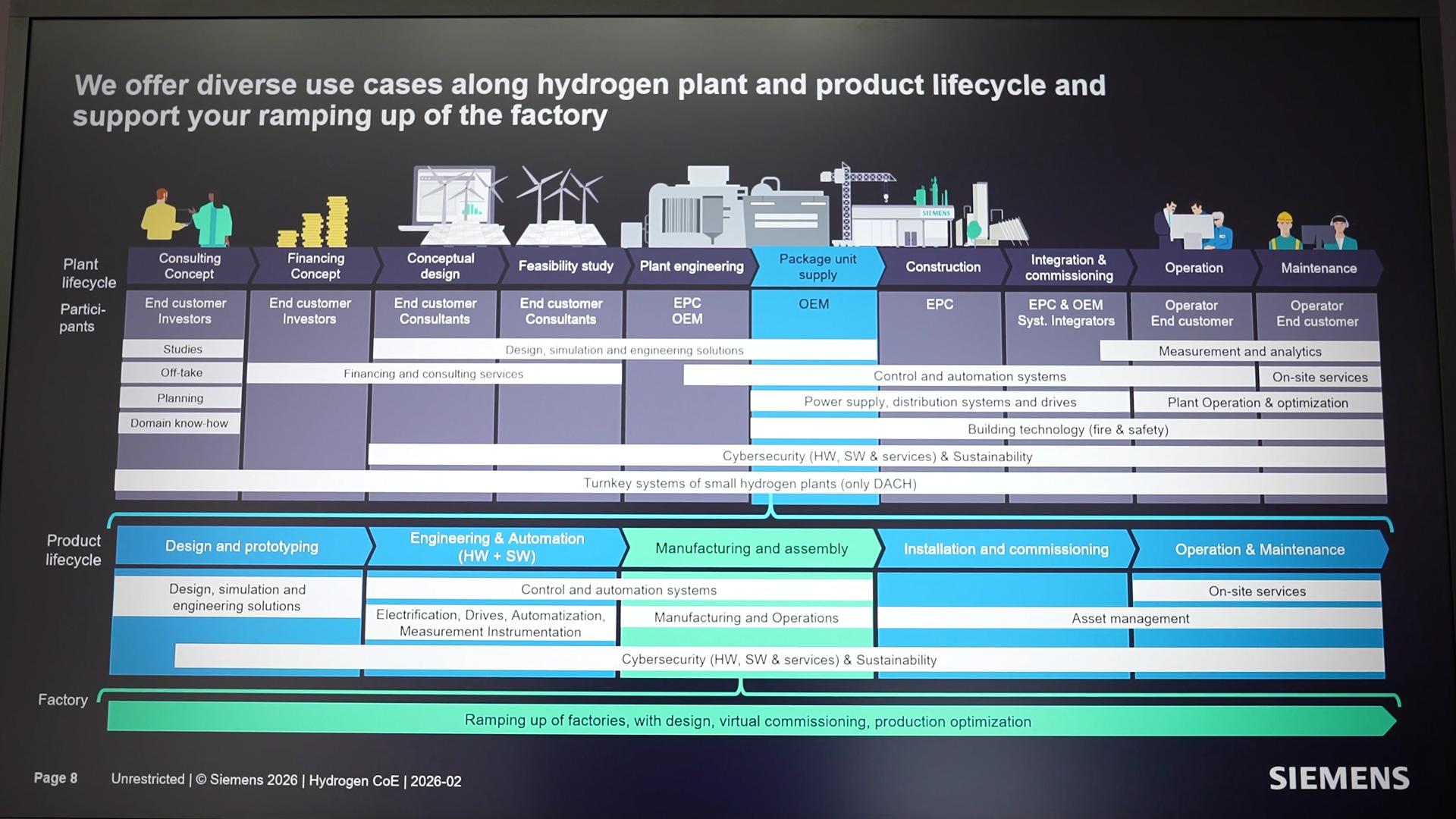
Siemens supports electrolysers and industrial manufacturing
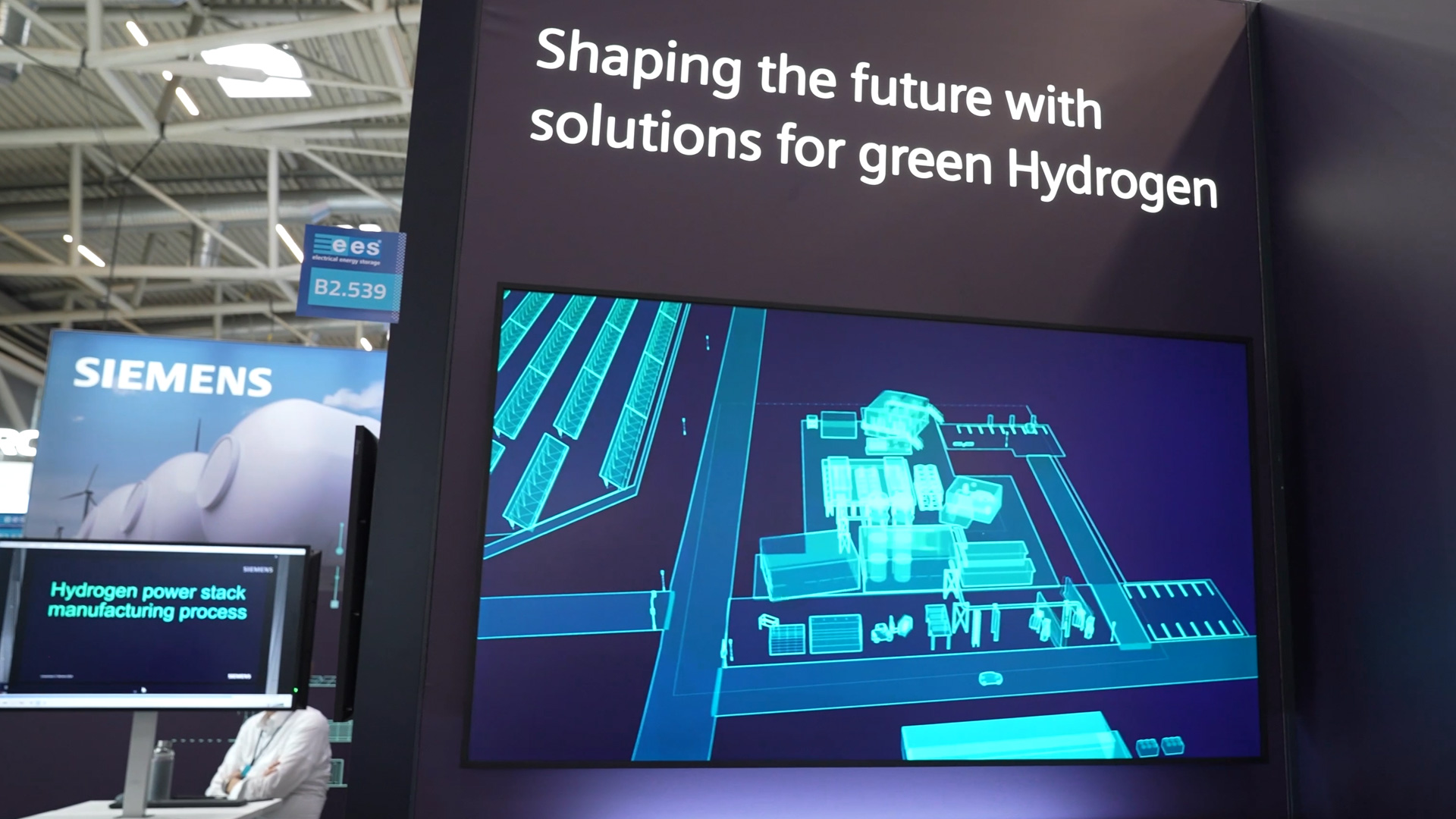
In addition to planning complete hydrogen projects, Siemens is also involved in the production of the necessary equipment. The company develops manufacturing solutions for producers of electrolysers, drawing on its experience in industrial automation, for example from the automotive sector. This shifts the focus not only to the operation of individual hydrogen plants, but also to their cost-effective mass production. The more efficiently electrolysers can be produced, the greater the potential for reducing investment costs in the long term. It is precisely this scaling effect that is regarded as a crucial prerequisite for green hydrogen to become more competitive in the future. In parallel, concepts are being developed in which the electricity grid, production processes and plant control systems are coordinated with one another as early as the planning phase. Digitalisation plays a key role here, as it makes complex industrial plants transparent and allows potential for optimisation to be identified at an early stage.
Hydrogen complements battery storage for seasonal energy storage
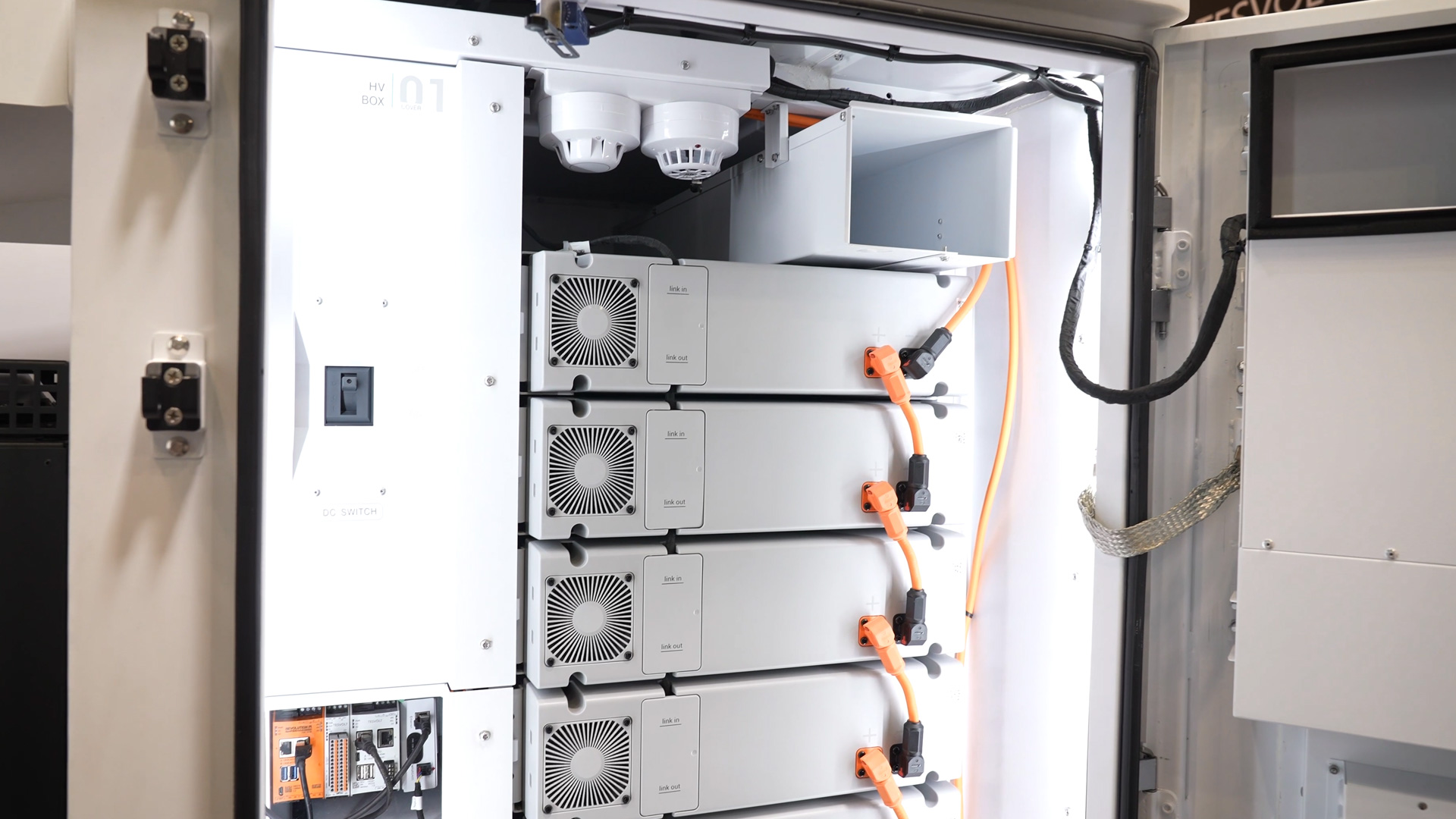
Whilst battery storage is currently used primarily for short-term applications – such as optimising self-consumption from photovoltaic systems or balancing daily load fluctuations – hydrogen takes a different approach. Batteries are particularly suitable for storage periods of hours or a few days. However, if surplus solar or wind power from the summer is to remain available into the winter months, electrochemical storage systems reach their economic and technical limits. This is precisely where hydrogen can serve as a complement. Surplus renewable energy is used to produce hydrogen. This can be stored over longer periods and later used again to generate electricity or directly in industrial processes. Despite lower efficiency compared to battery storage, this concept can be worthwhile if large quantities of renewable energy would otherwise remain unused.
The hydrogen market faces a long-term development
The sector is currently in a phase of consolidation. Numerous start-ups have emerged in recent years, but many projects have been discontinued or postponed due to difficult market conditions. At the same time, there is a growing realisation that building a new energy infrastructure takes time. Comparisons with the early development of the internet illustrate this dynamic: many companies are entering the market, but only a fraction will establish themselves in the long term. Viable business models, scalable technologies and the expansion of infrastructure will be crucial. The development of hydrogen networks, storage facilities and industrial applications is therefore likely to resemble a marathon rather than a sprint. At the same time, with every additional photovoltaic and wind power plant, the need grows to make renewable energy available not only in the short term but also on a seasonal basis. Hydrogen could play an important role in this in future – not as a replacement for battery storage, but as a complementary component of an increasingly interconnected energy system.
Trade fair reporting Germany - Trade fair knowledge, dates & events


