ees Europe 2026 Munich: Storage for the energy transition
As photovoltaic and wind energy continue to expand, the importance of modern energy storage is growing. Electricity from renewable sources is not always available when it is needed. Storage technologies are therefore becoming a key component of the energy supply. ees Europe 2026 in Munich addresses this development and focuses on the technologies, concepts and business models designed to ensure greater flexibility in energy systems in the future.
Articles on ees Europe 2026 in Munich
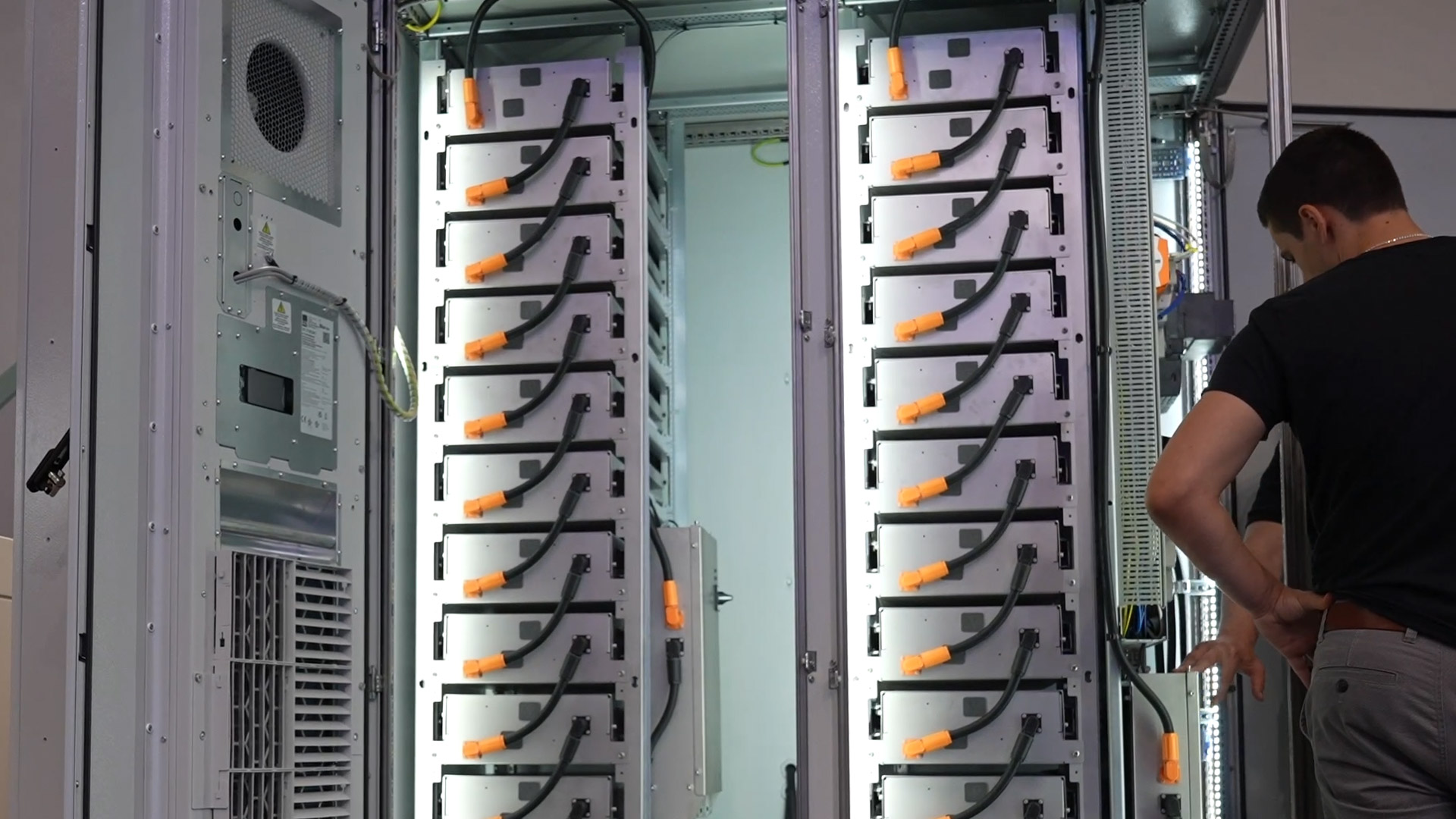
The event is regarded as one of the most important international trade fairs for electrical energy storage. The focus is on battery storage for domestic, commercial, industrial and utility applications. At the same time, topics such as battery recycling, second-life concepts, energy management and the integration of storage systems into electricity grids are coming increasingly into focus.
Large-scale storage systems are becoming increasingly important for electricity grids
One of the key focal points of this year’s event is large-scale battery storage. As the share of renewable energy increases, so does the need for flexible storage systems that can absorb surplus electricity and make it available again at a later date. Energy suppliers and grid operators, in particular, are increasingly investing in storage facilities in the multi-megawatt range. These systems perform tasks that were previously carried out mainly by conventional power stations. These include stabilising electricity grids, providing balancing energy and supporting peak loads. Key topics include:
- Large-scale storage for energy suppliers and grid operators
- Grid stabilisation through battery systems
- Storage of electricity from photovoltaic and wind power
- Flexible marketing of stored energy
- Integration of storage systems into modern electricity grids
Commercial and industrial sectors are turning to energy storage
Alongside large-scale grid storage, applications for the commercial and industrial sectors are also a key focus. Companies are facing rising energy costs, higher demands for security of supply and a desire to make better use of their own energy sources. Battery storage enables peak loads to be reduced, self-generated electricity to be used more efficiently and energy costs to be planned more effectively. Storage solutions combined with photovoltaic systems on industrial and commercial rooftops are of particular interest. Modern energy management systems play a central role in this. They analyse generation and consumption in real time and automatically control charging and discharging processes. This allows storage systems to be used much more efficiently than was possible just a few years ago.
Battery manufacturing and supply chains remain key issues
The development of battery technology does not depend solely on new cell chemistries. Production capacities, the availability of raw materials and stable supply chains are equally important. That is why battery manufacturing will remain one of the industry’s key issues in 2026. Manufacturers are working on more efficient production processes, higher energy density and improved cost-effectiveness. At the same time, issues of security of supply are a key focus. The European battery industry aims to become less reliant on non-European supply chains and to expand its own production capacities. This involves not only the manufacture of battery cells, but the entire value chain – from material extraction through production to recycling.
Second-life applications and battery recycling are gaining in importance
As the number of installed battery systems rises, so too does the importance of sustainable utilisation concepts. That is why second-life applications and recycling are among the key topics at this year’s event. Second-life concepts enable batteries to be reused in stationary storage solutions after their service life in vehicles or other applications. This can significantly extend their service life. At the same time, battery recycling is developing into a market in its own right. The aim is to recover valuable raw materials and reintroduce them into the production process. In view of rising demand for lithium, nickel and other materials, this sector is becoming increasingly important. The focus is on:
- Reuse of used battery systems
- Recovery of valuable raw materials
- Recycling processes for modern battery cells
- Circular economy in the storage sector
- Sustainability throughout the entire value chain
Energy management links storage and energy supply
Another key focus is on smart energy management systems. Storage systems only realise their full potential when they are integrated into a wider system. Digital platforms continuously analyse electricity consumption, generation and storage levels. On this basis, energy flows can be controlled automatically. This becomes particularly relevant when photovoltaics, battery storage, charging infrastructure and industrial processes are linked together. The importance of such systems grows with every additional decentralised energy source. They ensure that electricity is used where it is needed, whilst also helping to relieve the strain on the grids.
Storage technologies are becoming key to the energy transition
ees Europe 2026 clearly demonstrates how rapidly the energy storage market is evolving. Battery storage systems are increasingly taking on roles within the electricity grid, helping businesses optimise their energy consumption and creating new opportunities for the use of renewable energy. Large-scale storage, commercial applications, battery manufacturing, recycling, second-life concepts and smart energy management systems are the key themes this year. They demonstrate that storage technologies have long since become far more than just a complement to photovoltaics and wind power. They are evolving into a central element of modern energy systems and play a crucial role in future energy supply.
Trade fair reporting Germany - Trade fair knowledge, dates & events


