Battery storage systems are becoming digital energy platforms
by A. Bergmeier - 2026-06-25Battery storage systems are evolving rapidly. Whilst they were originally used primarily to temporarily store surplus solar power, they are now increasingly taking on roles in energy management, grid stabilisation and the trading of flexibility.
With the growing number of renewable energy sources, new business models are emerging in which storage systems no longer merely buffer energy, but actively participate in the electricity market. This transformation is particularly evident at ees Europe in Munich. There, Tesvolt is presenting a portfolio ranging from small commercial storage systems to large-scale storage solutions for energy suppliers. The focus is not solely on hardware and storage capacity, but also on digital platforms, cybersecurity and intelligent operational strategies designed to generate additional revenue.
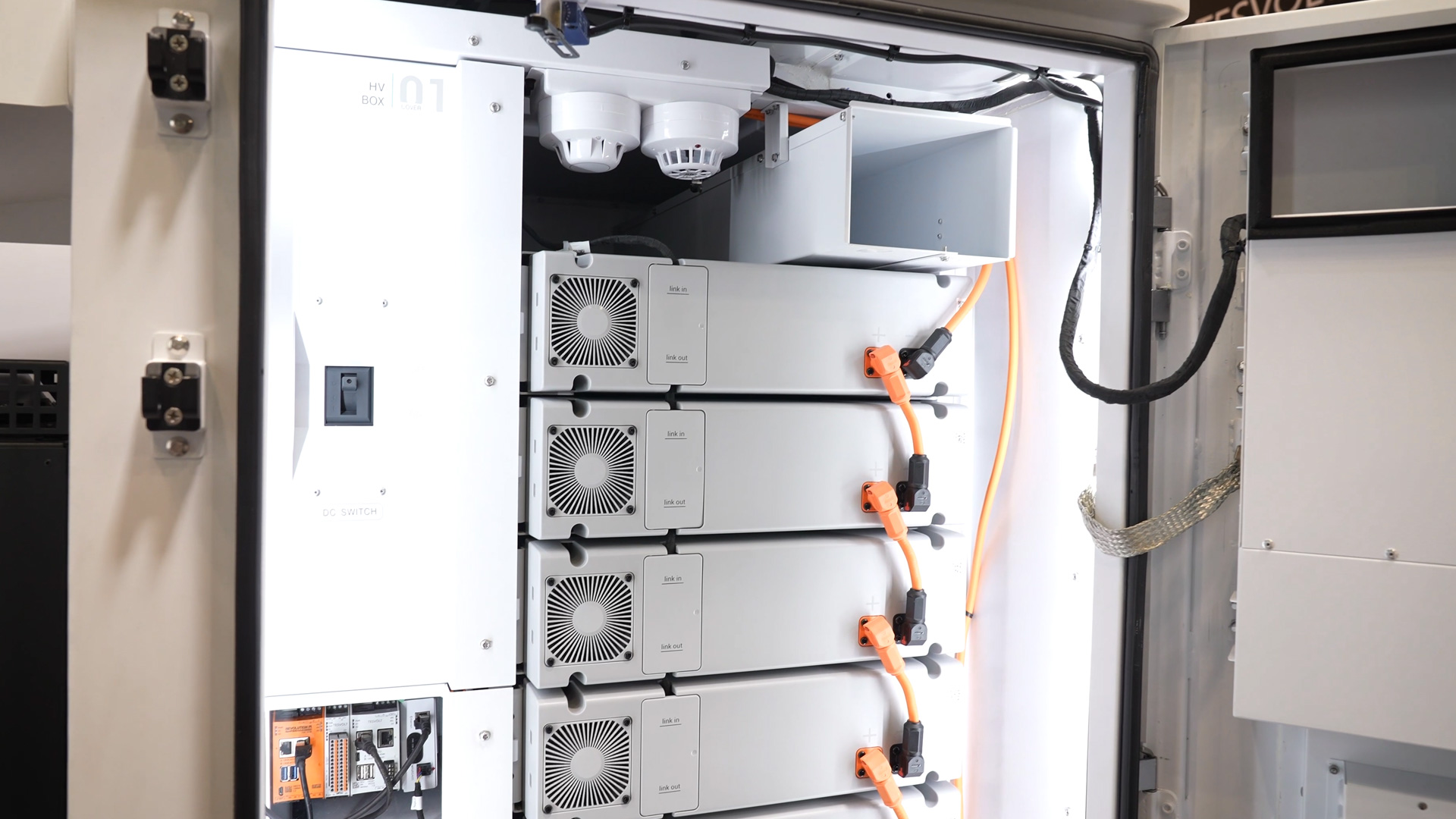

Tesvolt combines storage technology with energy trading
The company pursues an integrated approach. In addition to battery storage systems, the overall concept includes inverters, battery management systems, cloud connectivity and digital services. The aim is to provide storage systems for a wide variety of market segments – from small commercial enterprises and industrial companies to large-scale utility projects. A key focus is on the so-called cross-market strategy. This involves combining different revenue models. In addition to traditional flexibility trading, battery storage systems can simultaneously provide services for the balancing energy market. According to Tesvolt, this combined approach is possible from a capacity of just 50 kilowatts. To integrate smaller systems as well, numerous decentralised storage units are grouped together to form a virtual power plant. This gives operators access to markets that were previously reserved mainly for larger systems.
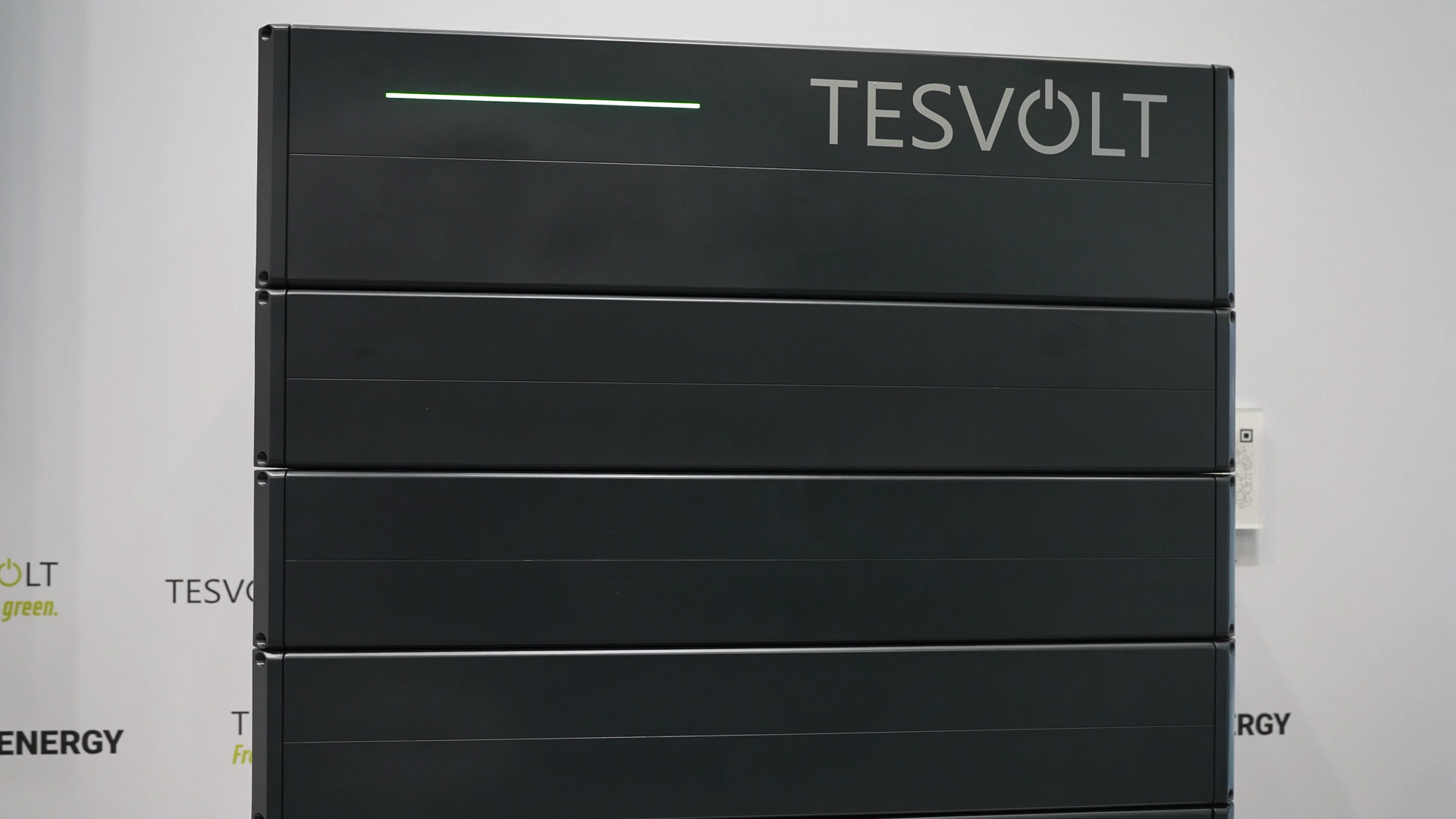
Taytan is aimed at small commercial businesses
For smaller businesses, Tesvolt is introducing the Taytan battery storage system. The modular system covers power ranges from around 8.5 to 50 kilowatts and, as a stackable solution, achieves storage capacities of up to 62.5 kilowatt-hours. The storage system was developed specifically for traditional commercial applications. These include optimising self-consumption, dynamic electricity tariffs, peak load shaving and so-called multi-use applications, where several functions are utilised simultaneously. The most important applications include:
- Optimising self-consumption from photovoltaic systems
- Peak load shaving to reduce electricity costs
- Use of dynamic electricity tariffs
- Multi-purpose use of the storage system for various applications
- Indoor use in small commercial settings
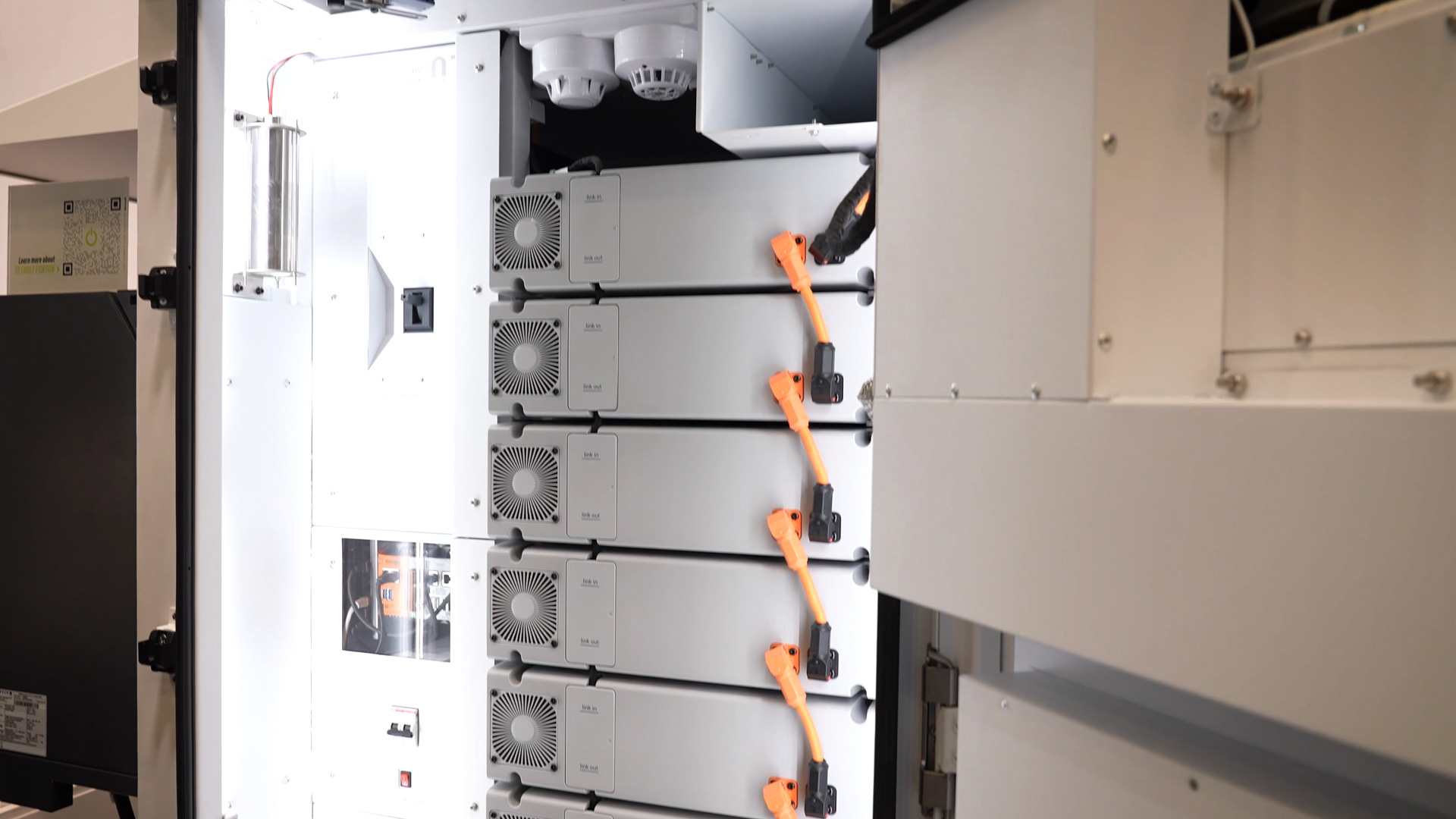
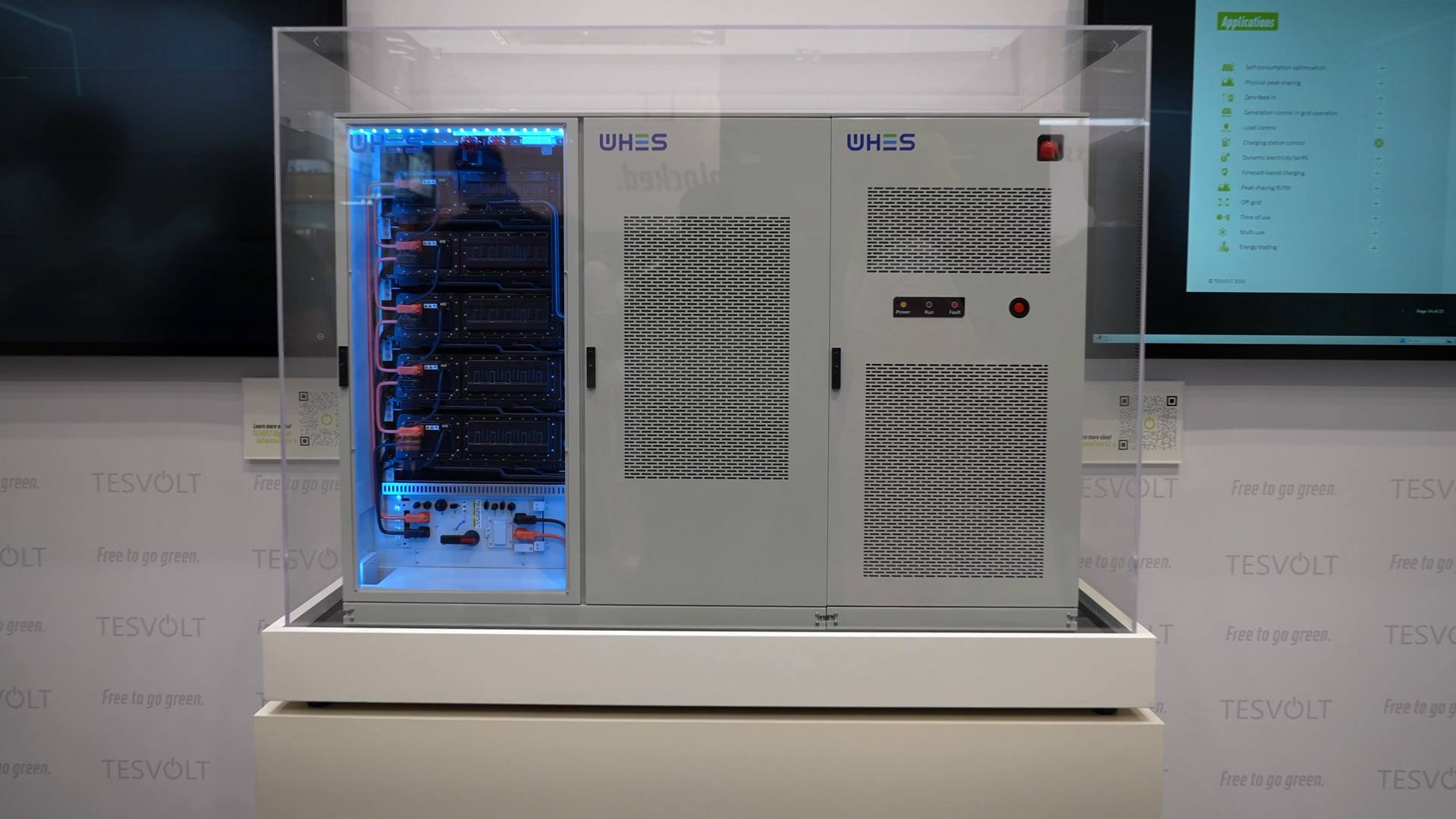
Forton optimises battery storage for frequent charging cycles
Tesvolt positions the Forton storage system in the mid-range power segment. This system was specifically developed for applications where batteries are charged and discharged several times a day. It is precisely this high number of cycles that plays a decisive role in energy trading. With a guarantee of 15,000 charge cycles, Forton is suitable for operating strategies where electricity is stored at off-peak times and fed back into the grid when market prices are higher. The system is available with various inverter options and can therefore be integrated into both new installations and existing photovoltaic systems. This operating mode opens up additional economic opportunities, particularly for businesses with higher electricity consumption. Battery storage is thus no longer viewed solely as a cost factor, but increasingly as an active component of energy procurement.
Container solutions serve industrial and utility projects
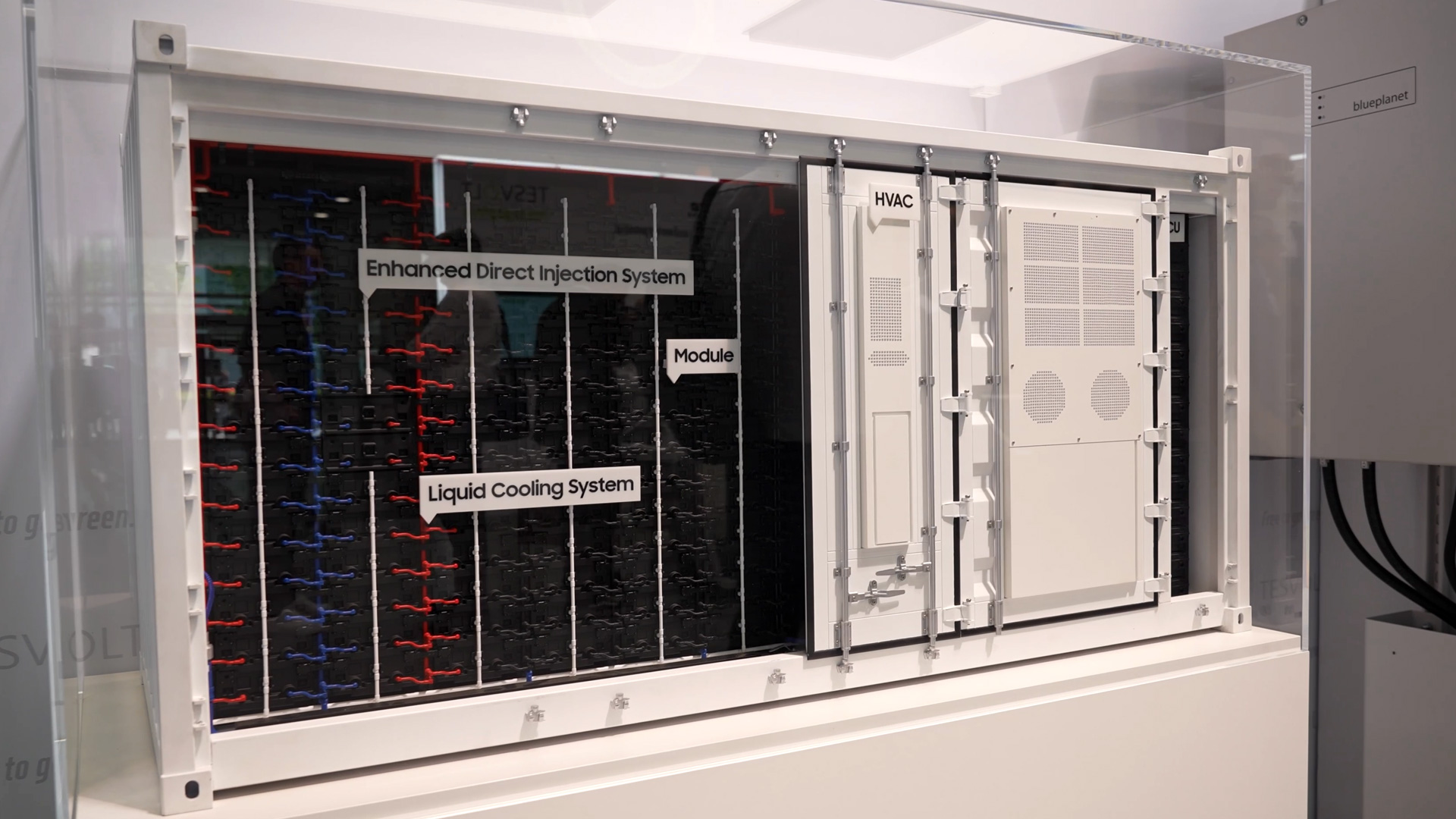
For larger applications, the portfolio also includes container solutions with storage capacities of around five megawatt-hours. These systems are aimed at industrial companies, grid operators and energy suppliers. Several containers can be combined, allowing storage capacities to be expanded flexibly. In addition, Tesvolt also offers EPC services on request, covering everything from planning to the turnkey implementation of a project. With this scalability, the company is responding to the growing demand for large-scale battery storage systems designed to better integrate renewable energy into the electricity grid and balance out grid fluctuations.
Digitalisation and cybersecurity are becoming a competitive factor
Alongside the actual storage technology, digital services are becoming increasingly important. All systems are cloud-enabled and allow for continuous monitoring as well as the implementation of new business models. Tesvolt pays particular attention to data security. As battery storage systems become increasingly networked and sensitive operational data is processed in cloud systems, the importance of cybersecurity is growing. The aim is to protect operators from unauthorised access and data theft. At the same time, smart operational strategies are fundamentally changing the economic benefits of storage systems. According to the company’s assessment, battery storage systems will increasingly become standardised hardware in future. Competitive advantages will arise primarily from smart software, automated operational management and the optimal marketing of available storage capacity. This marks a significant shift in the industry’s focus. In future, it will not be the size of a battery storage system alone that determines its economic viability, but rather the ability to intelligently control energy flows, combine different revenue streams and, at the same time, meet the highest standards of data security.
Trade fair reporting Germany - Trade fair knowledge, dates & events


