Quality control for plates with AI in crockery production
by B. Velonavy - 2026-04-23Surface defects, dark spots, flaking or small flaws in the material can impair usability and at the same time reduce the visual quality. This is precisely where the system presented here comes in.
It inspects plates fully automatically after production and is designed to detect defects where previously visual inspection, experience and labour were often required. Particularly noteworthy is the requirement to reliably assess not only white but also coloured plates. This makes a significant difference in practice. Depending on the glaze, colour and lighting conditions, contrasts and surface effects change considerably. What is clearly visible on a light-coloured plate may be much more difficult to see on a darker or coloured surface. This is precisely why the claim that this is the first machine on the market that can identify defects on both white and coloured plates is of particular interest to the industry.
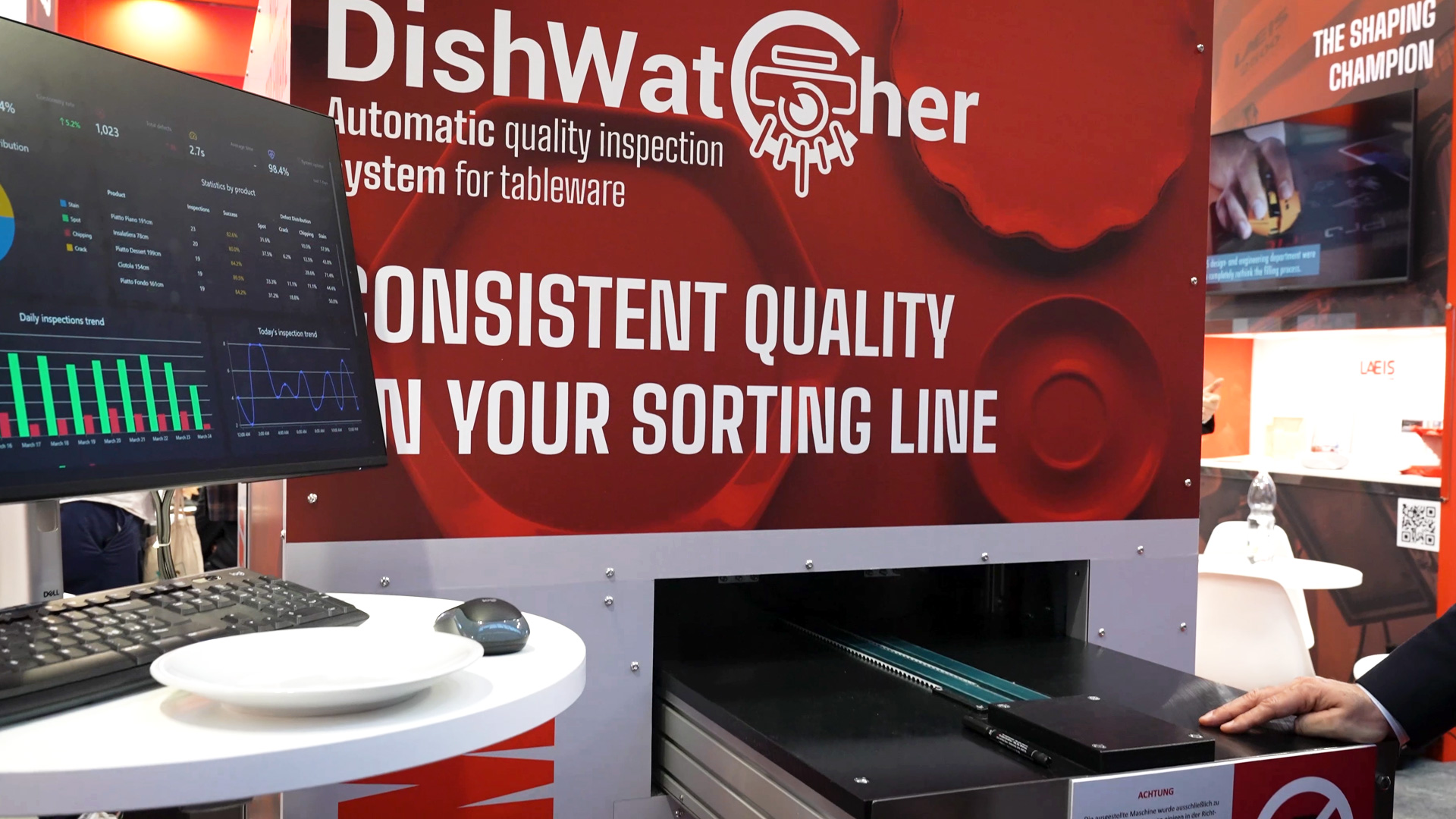

Sacmi and the automatic inspection of plates
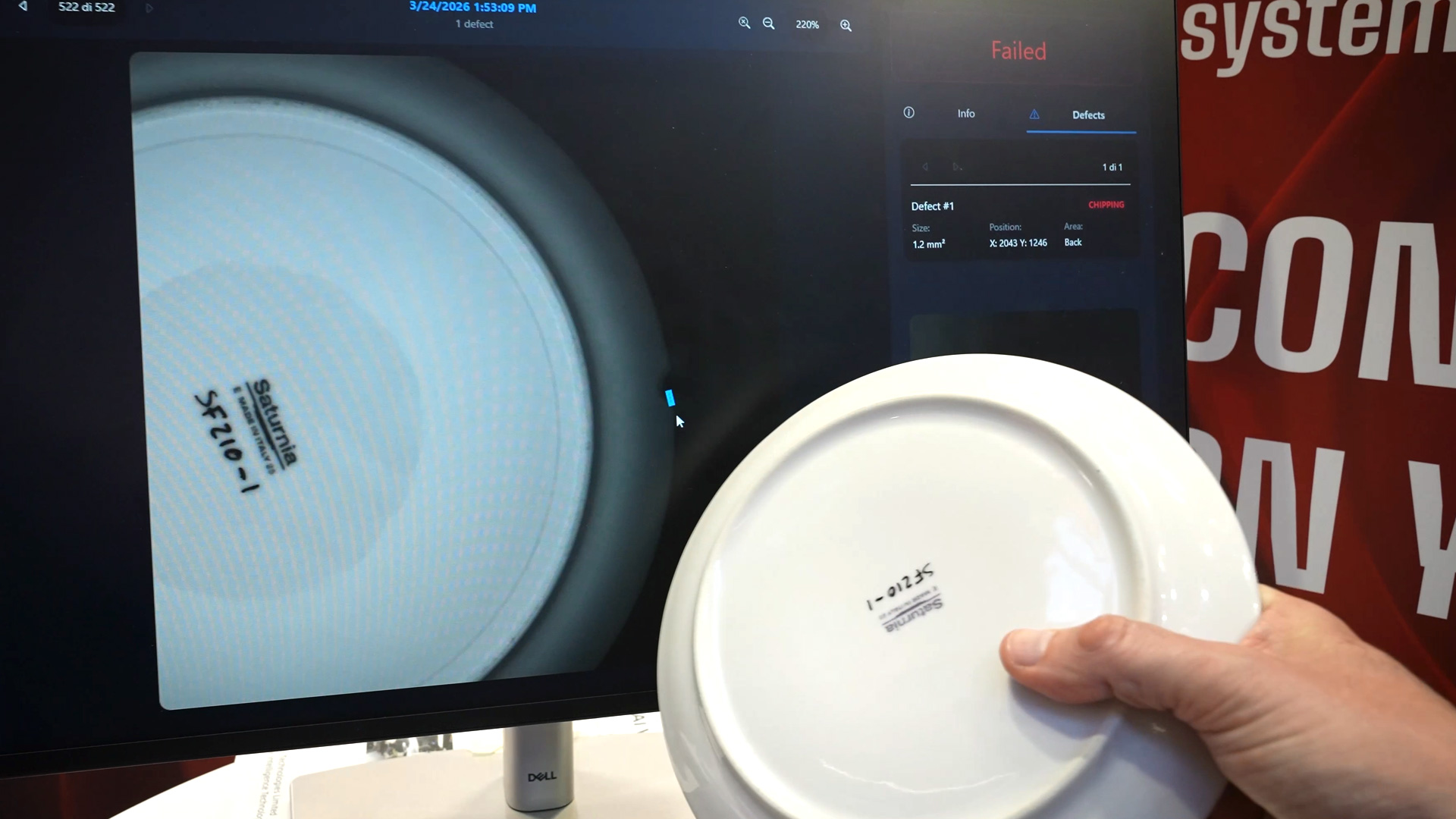
Sacmi is presenting a machine designed as a quality control system for crockery items, in particular for plates after production has been completed. The basic idea is clear: a plate is placed on the system, the inspection process starts and the system automatically inspects the part. The plate is then output again on the other side. If the system detects a defect, a warning message is issued. The operator can immediately see whether a part has passed the test or not. In the trade fair environment, this is done on a demonstrator. There it is possible to see how a labelled plate is inserted, how the process starts and how the system clearly reports a fault. In real production, however, the process is not intended as an individual inspection, but as an integrated part of a line. Plates then run continuously through the system without the need for manual intervention between infeed, inspection and evaluation. This is precisely where the industrial added value lies: quality control is transformed from a downstream visual inspection process into an automated part of ongoing production.
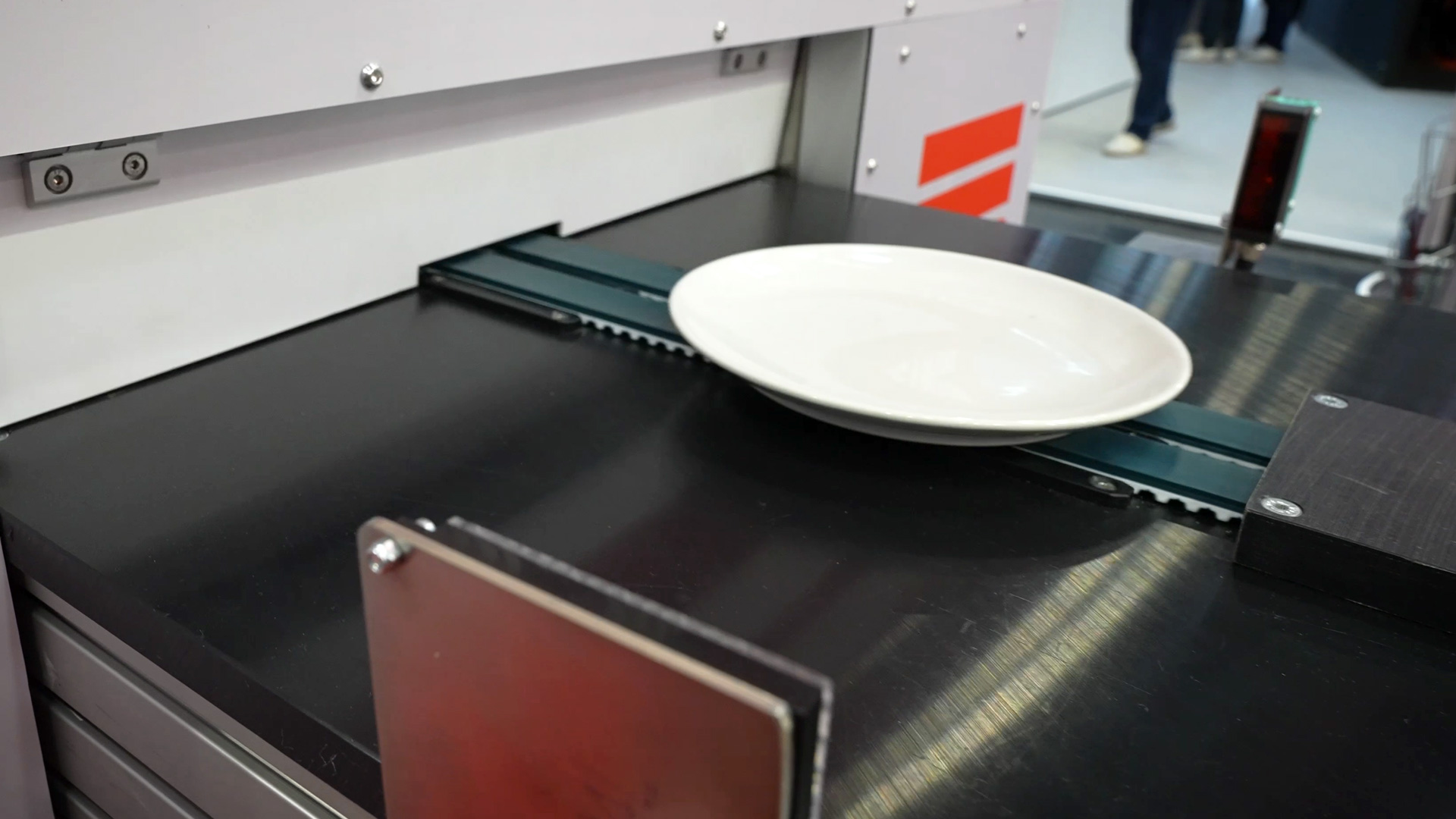
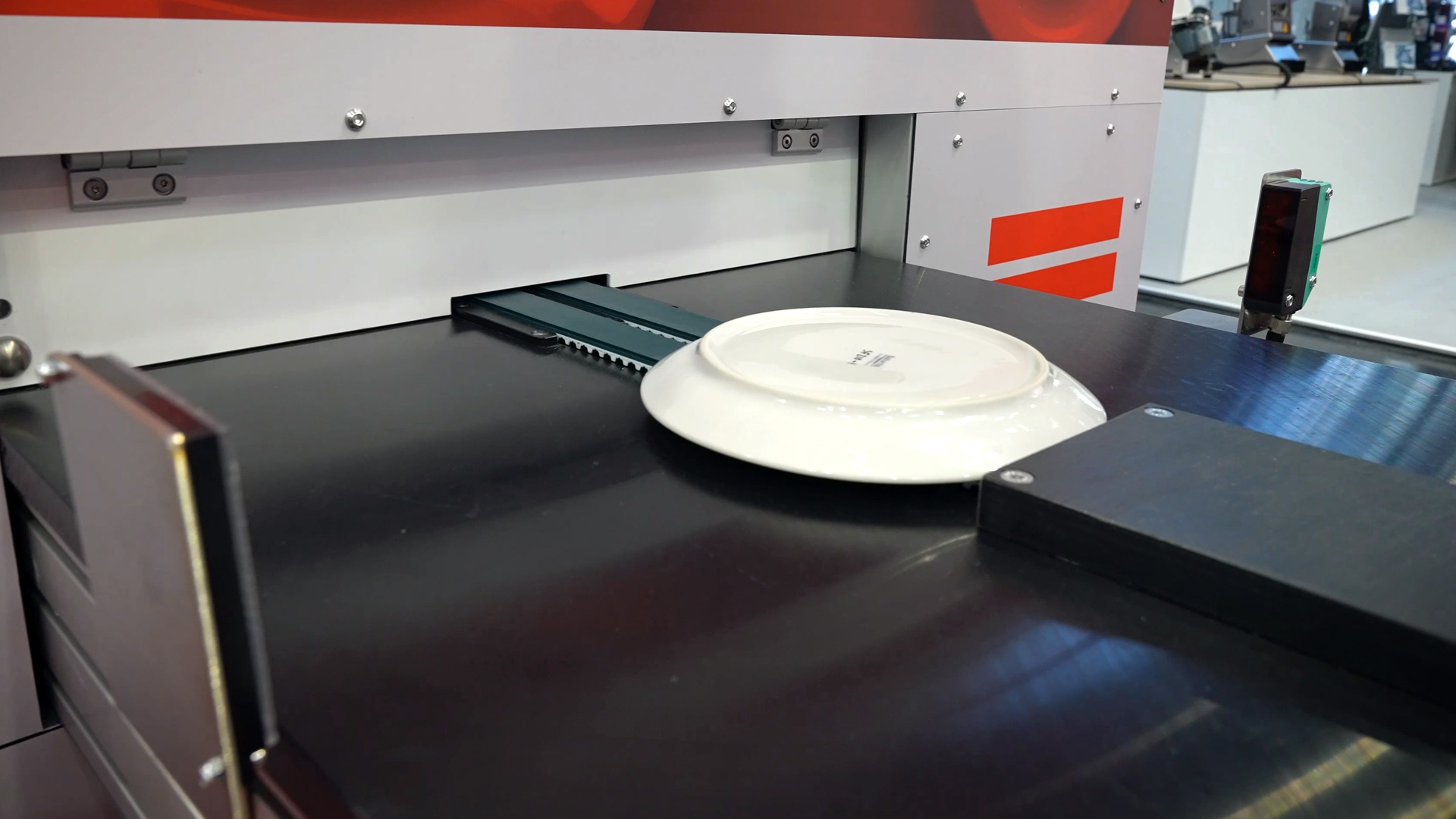
Camera system, lighting and AI evaluation in the system
The technical basis of the system is a camera system with special lighting. This combination is crucial because defects on ceramic surfaces are not visible in the same way in every lighting situation. Certain areas of the disc must be specifically highlighted so that surface defects, material chipping or irregularities can be reliably detected. The lighting is therefore not just an accessory, but part of the actual inspection strategy. An algorithm based on artificial intelligence takes care of the evaluation. It was developed in the Sacmi Group's Digital Hub, which specialises in AI and advanced image recognition applications. The role of AI is not simply to collect image data, but to evaluate features, classify differences and derive a reliable decision from the image material. This is relevant for production because it is not just a matter of recognising a conspicuous pattern, but of reproducibly distinguishing between an acceptable surface and an actual defect. This differentiation is particularly important in ceramic production. Slight shading, glaze gradients or colour peculiarities must not be mistaken for defects. A system that works reliably in this environment must therefore do more than classic image processing with fixed threshold values. This is precisely where the AI-based approach comes in.

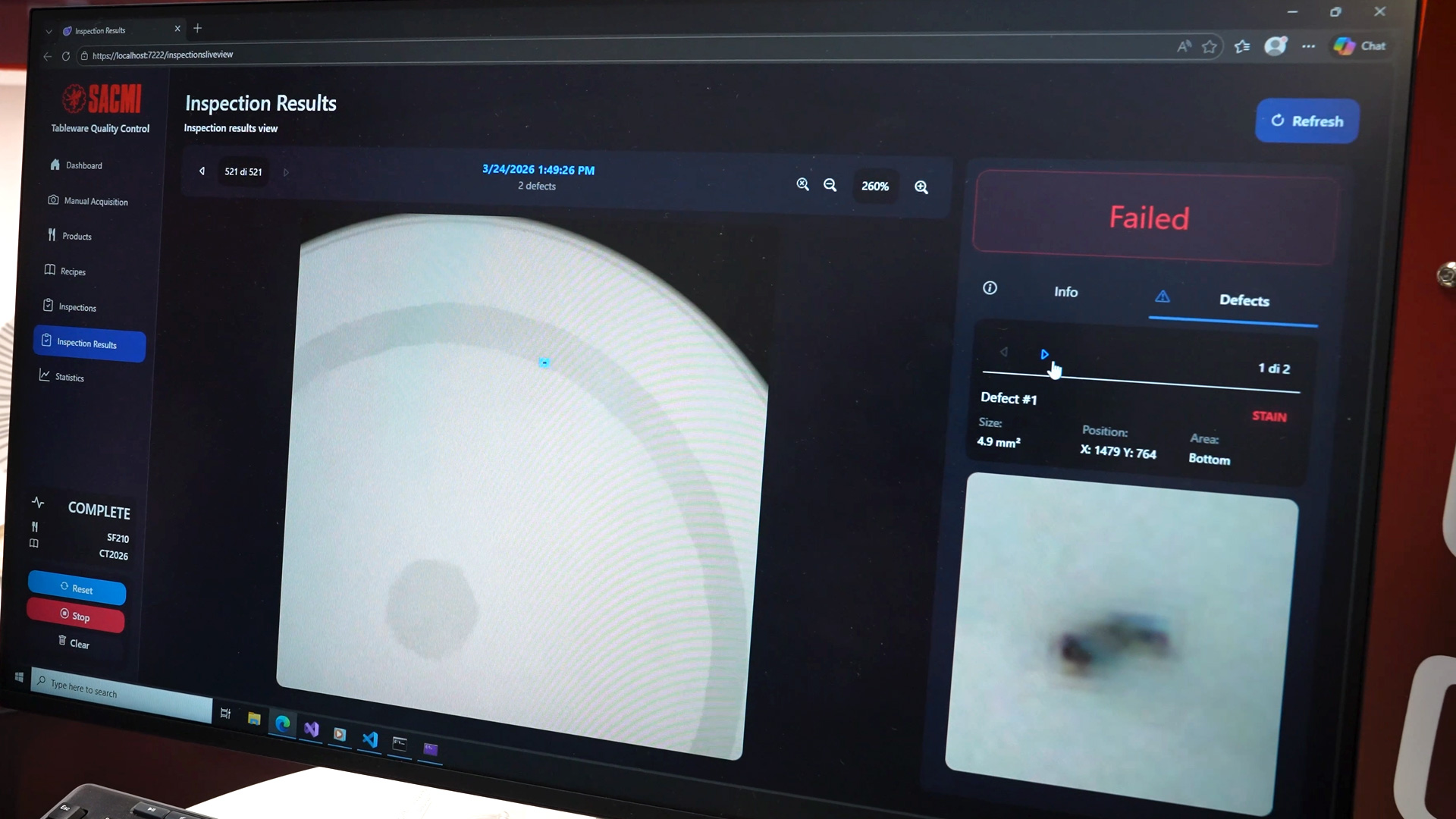
Which defects the inspection system recognises
The machine is designed to identify different types of defects. These include black spots and general surface defects, but also chipping or missing material on the plate. The system therefore not only covers cosmetic defects, but also defects that may indicate problems in the material or in previous production steps. This is important for manufacturers for several reasons. Firstly, it increases the certainty that faulty goods will be removed from the process at an early stage. Secondly, conclusions can be drawn about production if certain defects occur more frequently. Thirdly, the comparability of the inspection is improved. Where previously human visual inspection could be influenced by fatigue, experience or daily form, an automated system provides a more consistent basis for evaluation. This is particularly important in lines with high output. The task there is not just to find individual defective parts, but to ensure consistent quality across large quantities. An inspection process that reliably distinguishes between good and faulty parts thus becomes a central production step in itself.
Sacmi, SAMA and integration into tableware production
The system does not stand alone, but is part of a broader machine portfolio in the tableware sector. Within this environment, the Sacmi Group also refers to SAMA in Germany, a company with a long tradition of producing machines for the manufacture of tableware. Here, the focus is not just on individual testing systems, but on the entire process chain: cups, plates and similar products are manufactured using machines that cover pressing, glazing, finishing, quality control and the necessary automation. This makes it clear that the solution shown here is not a single, unrelated component. It fits into a production environment in which ceramic items are processed, finished and checked step by step. Quality inspection is therefore not at the edge of production, but at the centre of a complex process in which each step has an impact on the next. When a final inspection system is integrated into this environment, it not only creates efficiency benefits, but also improves the ability to systematically detect process errors.

Why automated quality control is becoming more important in ceramics
The development also reflects a larger trend in the industry. Quality control is increasingly shifting from spot checks to data-based, automated processes. This is particularly true where quantities are high, surfaces remain demanding and defect patterns vary greatly. In tableware production, there is also the fact that designs, colours and decors have become more diverse. This also increases the effort required to reliably assess products. Sacmi has responded to this with a system that is not limited to rigid pattern recognition, but instead relies on differentiated image evaluation. For manufacturers, this means a reduction in the workload during operation and, at the same time, greater process reliability. Not every defect recognised is just a reject check. It is often also a matter of understanding production conditions more precisely and not just determining quality at the end, but making it systematically controllable. The machine on show is therefore more than just a single test station. It symbolises a change in the ceramics industry in which visual inspection is increasingly being supplemented or replaced by automated systems integrated into production lines. Particularly in the case of plates, the quality of which is often decided at first glance, this step is likely to become increasingly important for many manufacturers, both economically and organisationally.
Trade fair reporting Germany - Trade fair knowledge, dates & events


