Refractory products for the glass industry and battery cells
by A. Bergmeier - 2026-04-29Refractory materials are rarely the centre of attention when talking about glass production, battery cells or industrial high-temperature processes. Yet the stability, process reliability and service life of many systems depend precisely on these components.
Where liquid glass is processed or lithium is prepared for battery cells, extreme temperatures, high mechanical loads and chemical stresses affect the material over long periods of time. With new products for the glass industry and for battery cell production, Refratechnik demonstrates how broadly the field of application for refractory components has developed in the meantime. Although the company has been in existence for 139 years, these applications are a new segment. The move shows that traditional materials expertise is increasingly moving into areas that are strongly characterised by energy, mobility and industrial transformation.

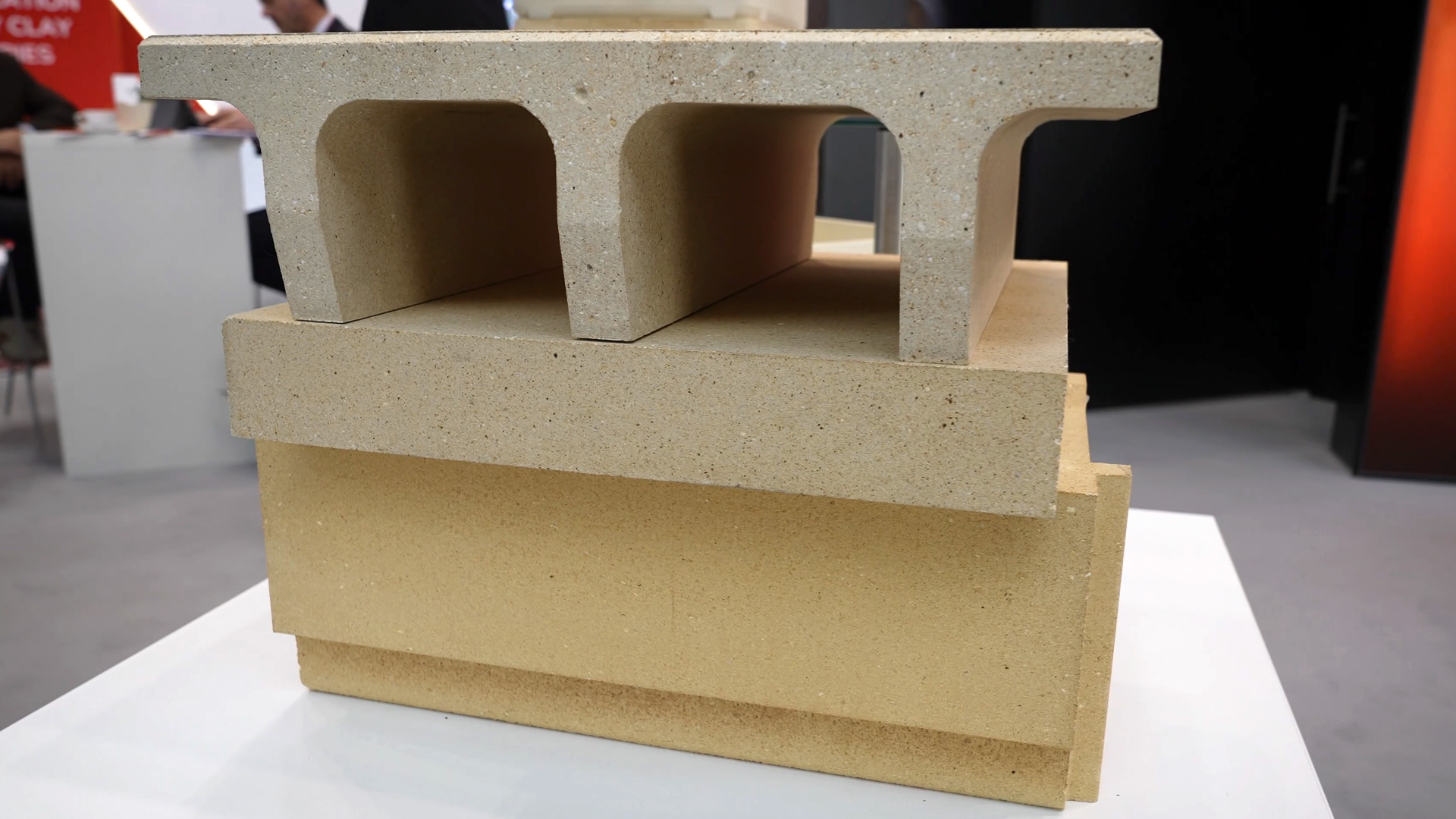
Refratechnik bottom block for glass tanks in the glass industry
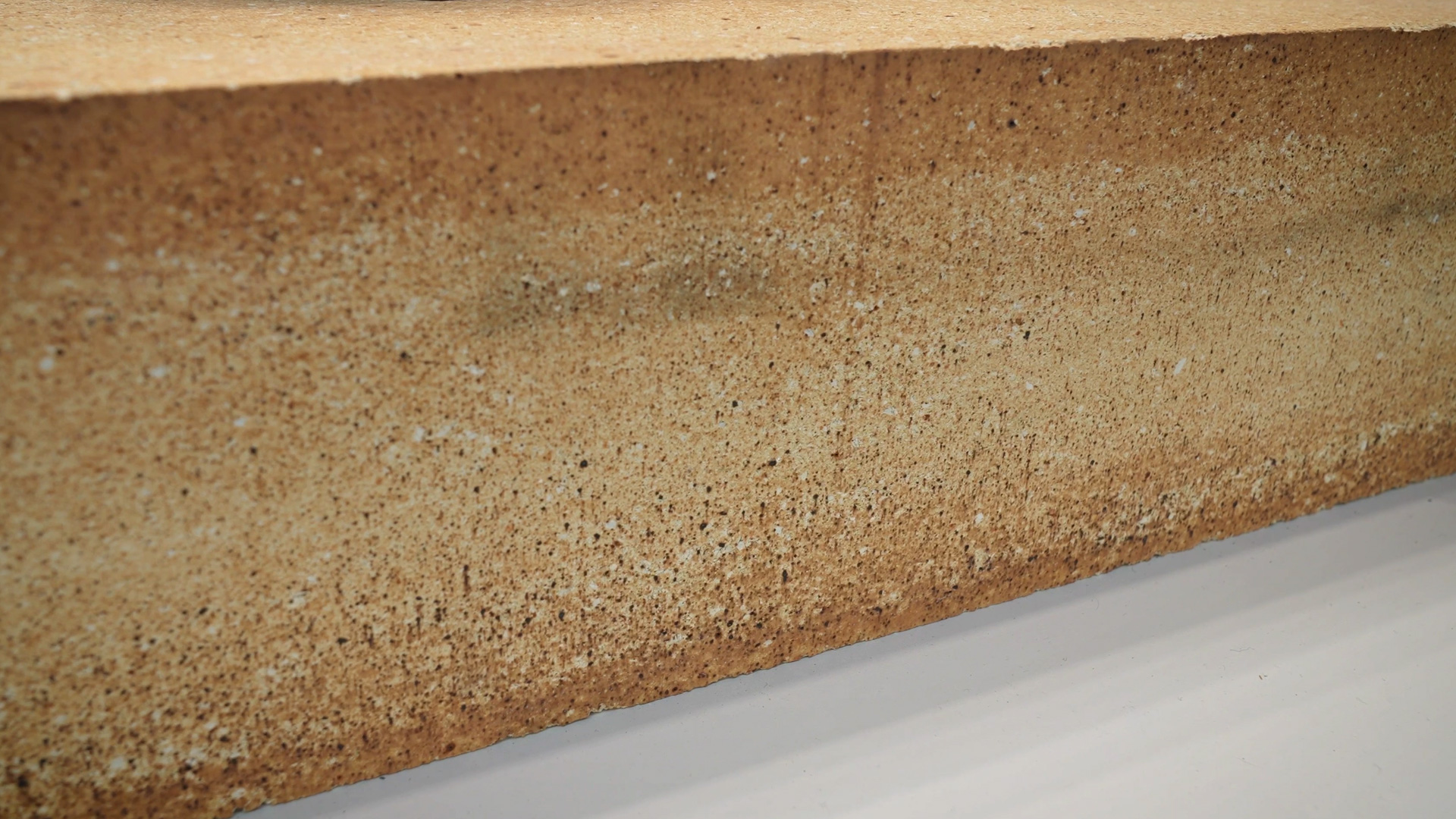
A central exhibit is a so-called bottom block. It is used in glass tanks, i.e. where liquid glass is spread out and further processed. Such components have to withstand enormous thermal loads. At the same time, they must not become unstable under these conditions or jeopardise the process by cracking or flaking. The base block shown here measures 800 by 500 millimetres and is 200 millimetres thick. With a weight of more than 200 kilograms, it is not a standard component that is simply inserted into a system. The production, handling and thermal treatment alone require special care. It is crucial that the brick does not crack during firing and later in use. This is precisely where a significant part of the expertise lies. Refractory components of this size must be constructed and treated in such a way that they retain their dimensional stability even at high temperatures. Material mixing, compaction, drying and firing are all interlinked. Errors in a single step can have massive consequences later on.
Checker bricks for regenerators in glass production
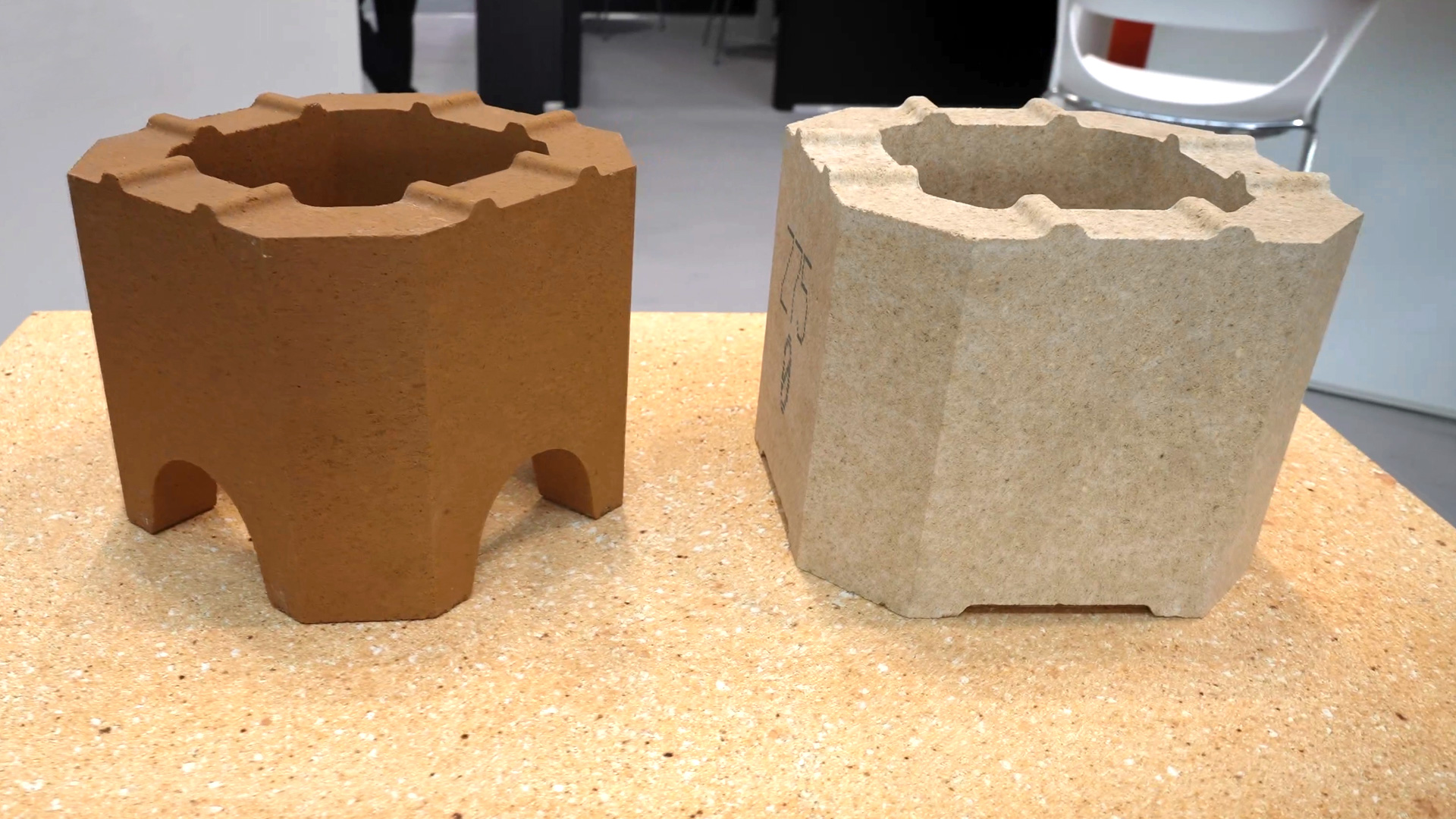
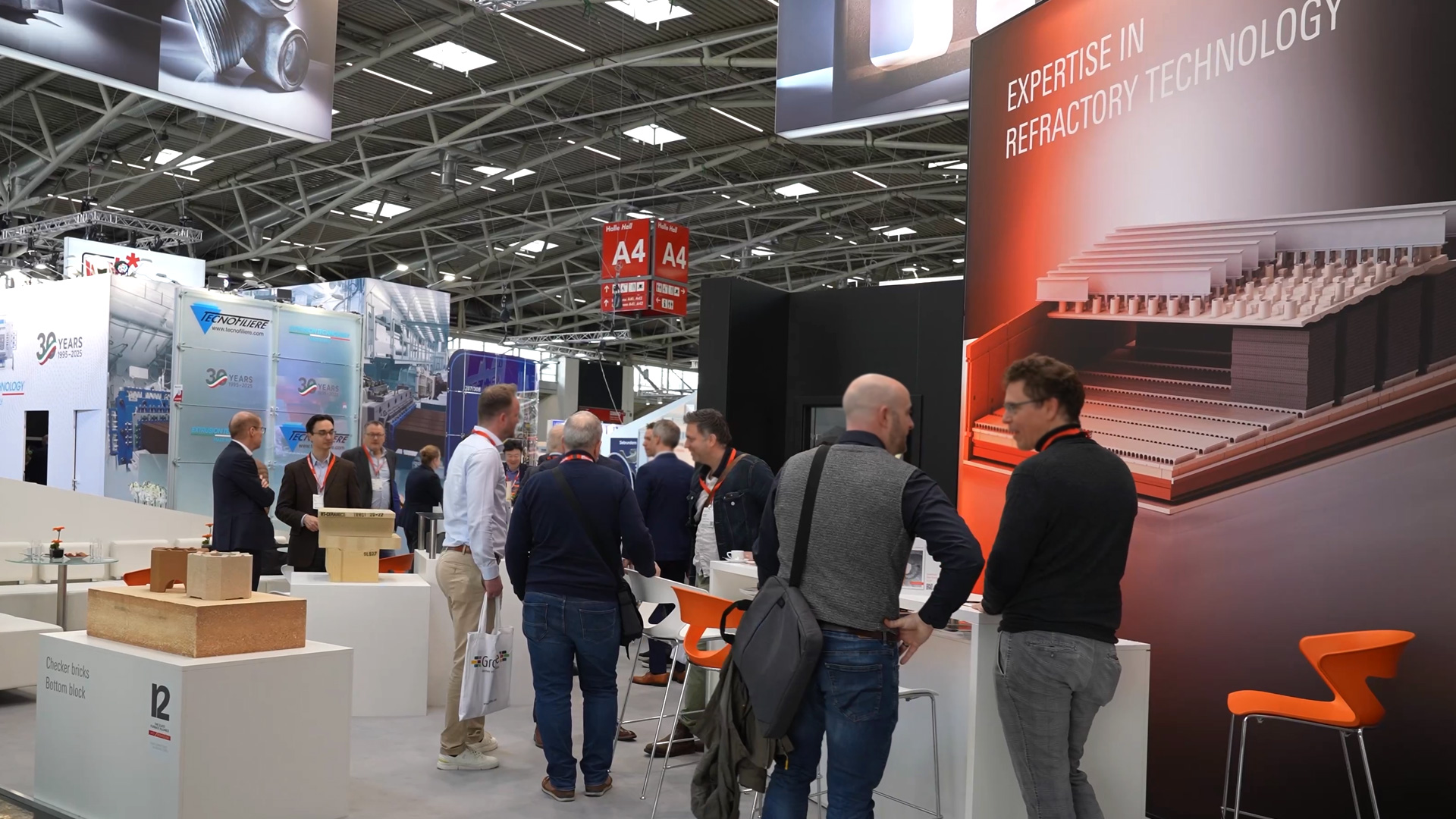
Checker bricks, also known as pot bricks, are shown next to the base brick. They are used in the regenerator of a glass melting plant. There they are stacked on top of each other and heated by hot air. The stored heat is then used to energise the process in the glass furnace. These components therefore fulfil a function that goes beyond pure stability. They are part of the thermal management of the system. This is particularly important in the glass industry because the processing of glass requires high temperatures and energy efficiency plays a key role. The more reliably such storage stones work, the more stable the process can be managed. The demands on the bricks are correspondingly high. They must be able to withstand alternating thermal loads, must not lose their structure and must fulfil their function over longer operating times. For manufacturers, this results in a challenging interplay between material development and industrial production.

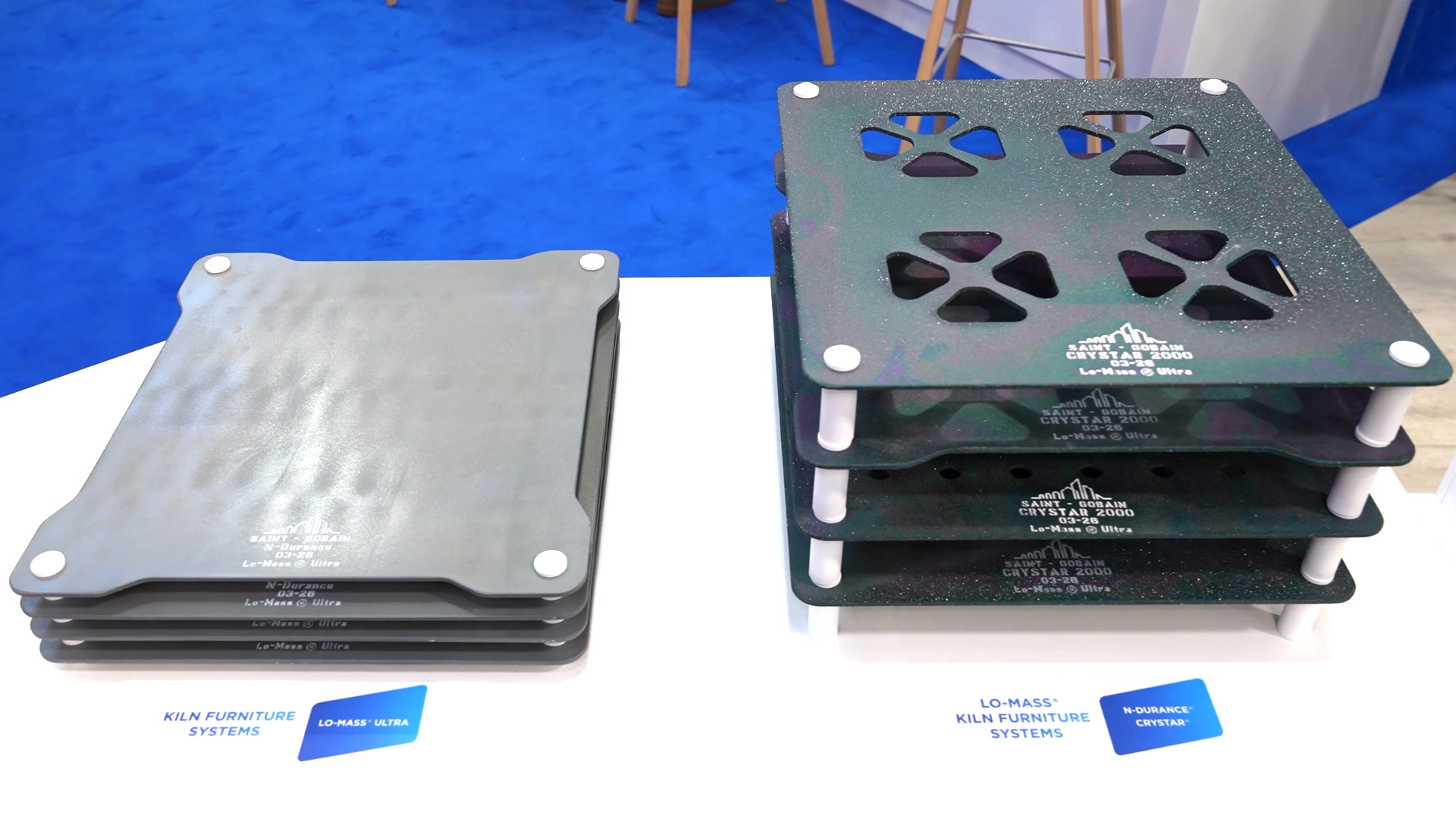
Saggers for lithium in battery cell production
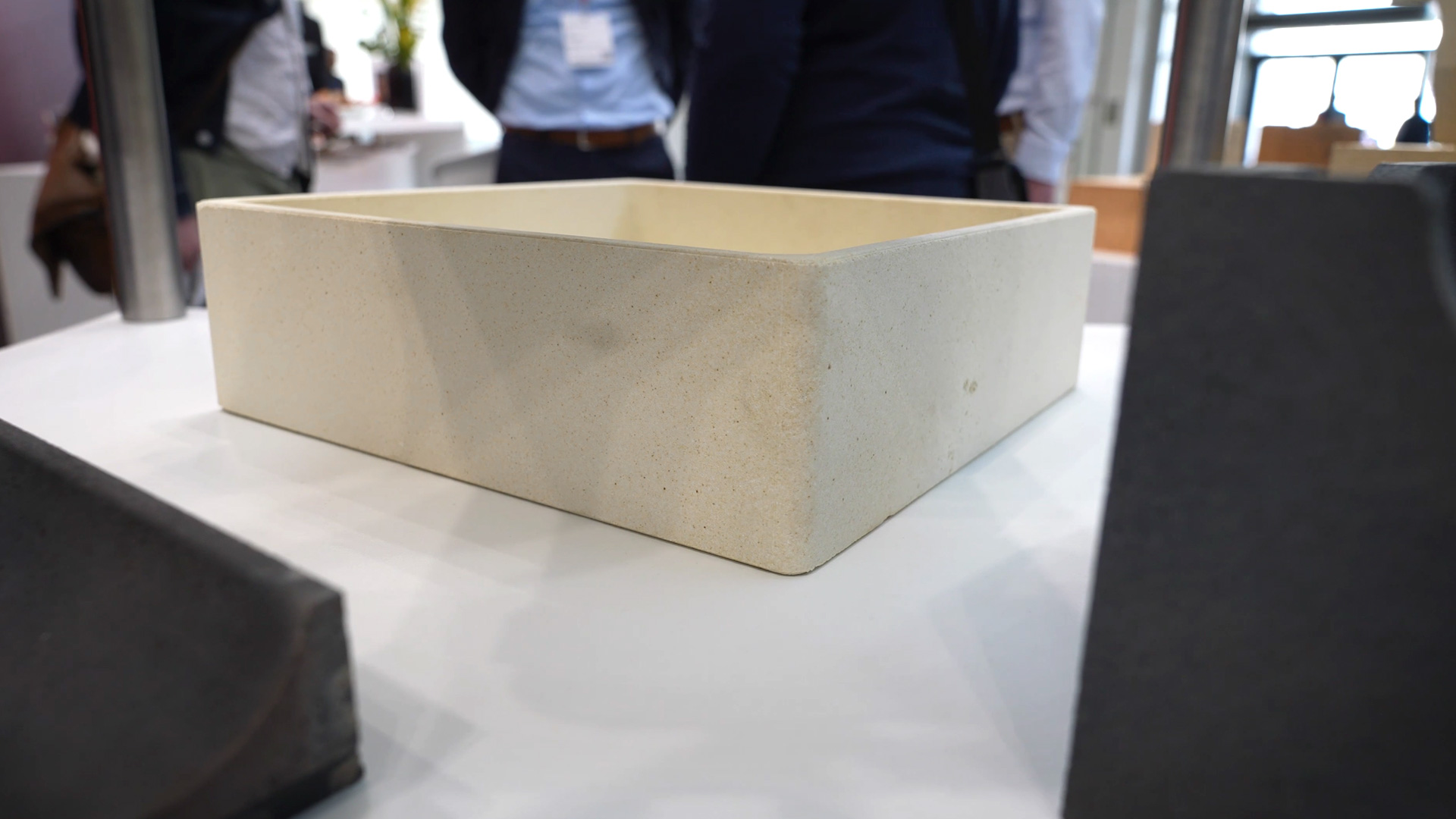
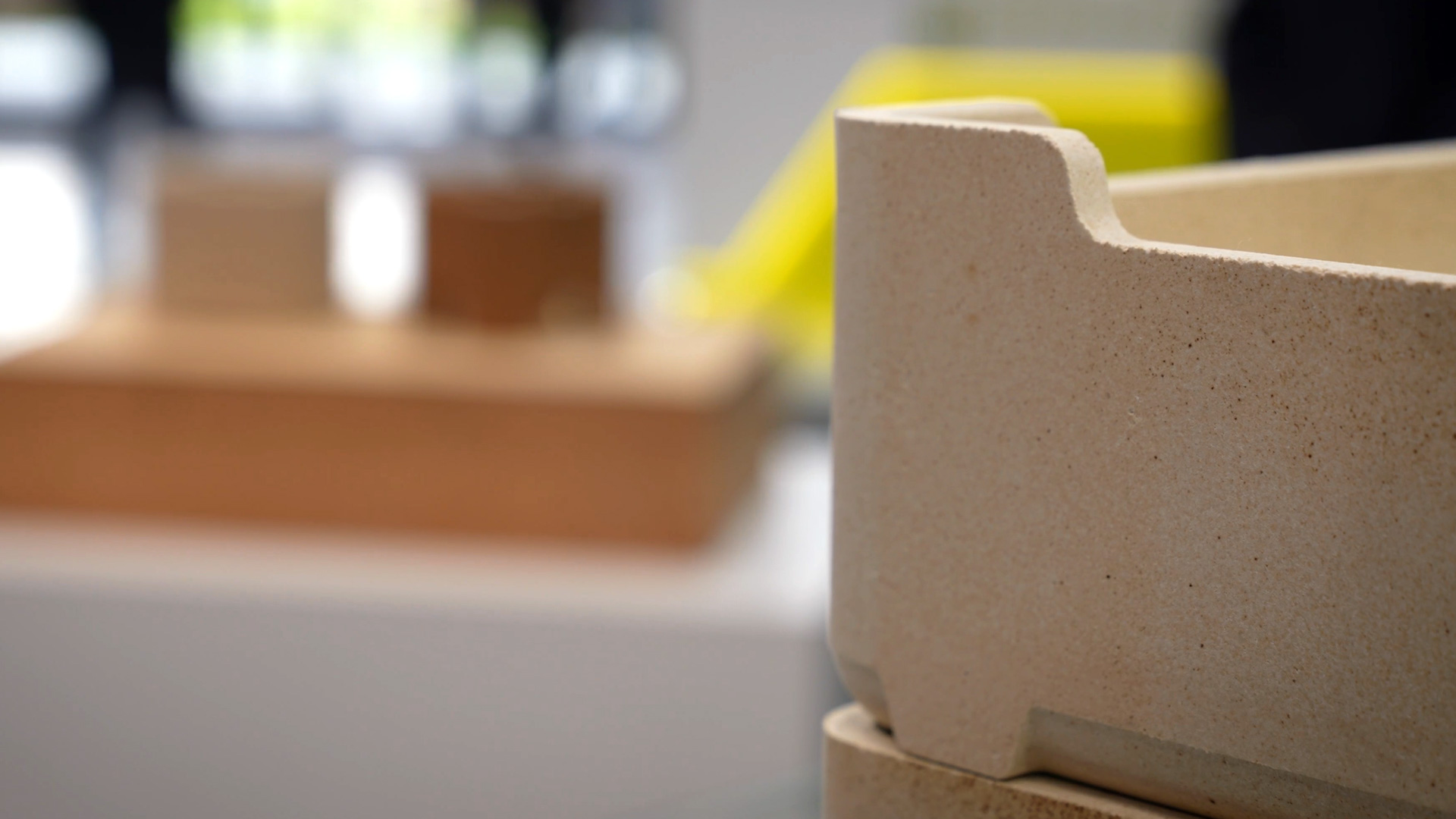
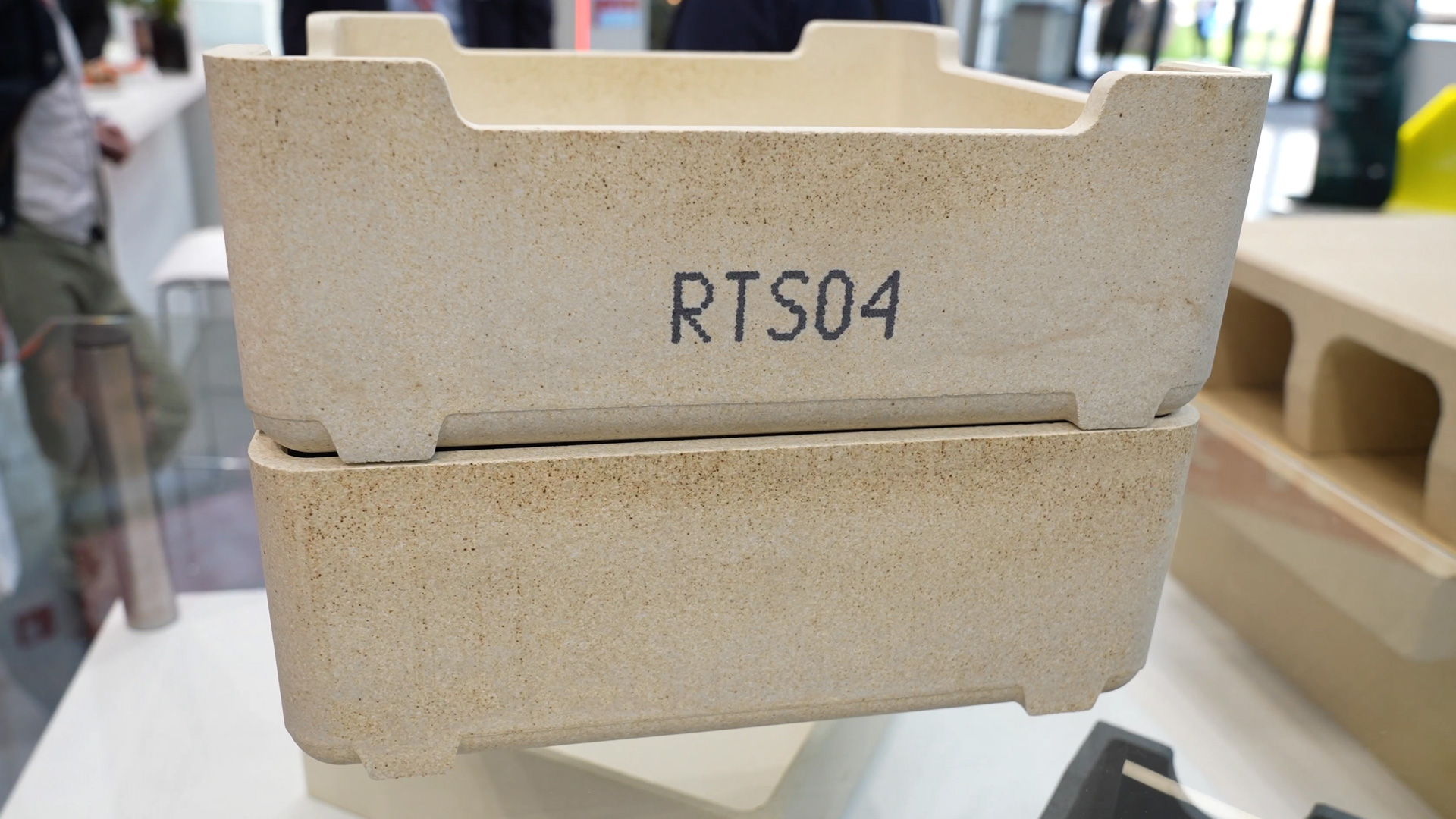
A second new product area concerns saggers. These ceramic shells are used for tempering lithium. The lithium is then processed further and used in battery cell production, for example for electric cars. Saggers are therefore at the very beginning of a value chain that is of central importance for electromobility. The material is heated and thermally treated in these trays before it can be used in battery cells in later stages. The components not only have to withstand high temperatures, they also have to survive repeated process cycles. A longer service life has a direct impact on operating costs, system availability and production reliability. The most important features of the saggers on display can be summarised as follows:
- Use in tempering lithium for battery cells
- dry-pressed production at the Melle plant in Germany
- special geometry with patented feet
- designed for a longer service life compared to standard saggers
Dry-pressed saggers instead of cast slip mass
One particular difference lies in the production process. The saggers are dry-pressed and not moulded from slurry, as is the case with many competitor products. This difference is technically significant because the pressing and moulding processes can affect density, structure and dimensional accuracy. With dry pressing, geometries can be specifically moulded and compacted. The uniform material structure can be decisive, especially for components that are used in the high-temperature range. Refratechnik also refers to special feet that have been patented and are designed to increase the service life of the saggers. This foot geometry distinguishes the new components from standard saggers. It should help to better absorb loads during operation and reduce wear. For users, this can mean that shells need to be replaced less frequently and production processes run more stably.
Refractory technology between traditional industry and new markets
The products on display clearly show how refractory technology is changing. On the one hand, the glass industry remains a traditional field of application with high thermal requirements. On the other hand, battery cell production and electromobility are giving rise to new industrial applications that require high-performance ceramic components. For companies such as Refratechnik, this means an expansion of existing expertise. Many years of experience with high-temperature materials are being transferred to markets that are growing rapidly and at the same time have high technical requirements. It is particularly interesting that the two product areas have different focuses: In the glass industry, the focus is on solid, stable components for melting and regeneration processes. In battery cell production, the focus is on the service life of process aids. What both areas have in common is the importance of the material. Refractory components have to work under conditions that would quickly destroy normal materials. Their quality is not evident the first time they are used, but over many process cycles. This is precisely why details such as geometry, manufacturing process and thermal treatment determine whether a component functions reliably in everyday industrial use.
Trade fair reporting Germany - Trade fair knowledge, dates & events


