Charging infrastructure for electric buses and lorries at depots
by B. Velonavy - 2026-07-16The electrification of heavy commercial vehicles is changing not only the vehicles themselves, but also the requirements for depots and maintenance centres. Whereas a diesel refuelling point used to suffice, today charging points, power supply, load management and parking spaces must all be planned together.
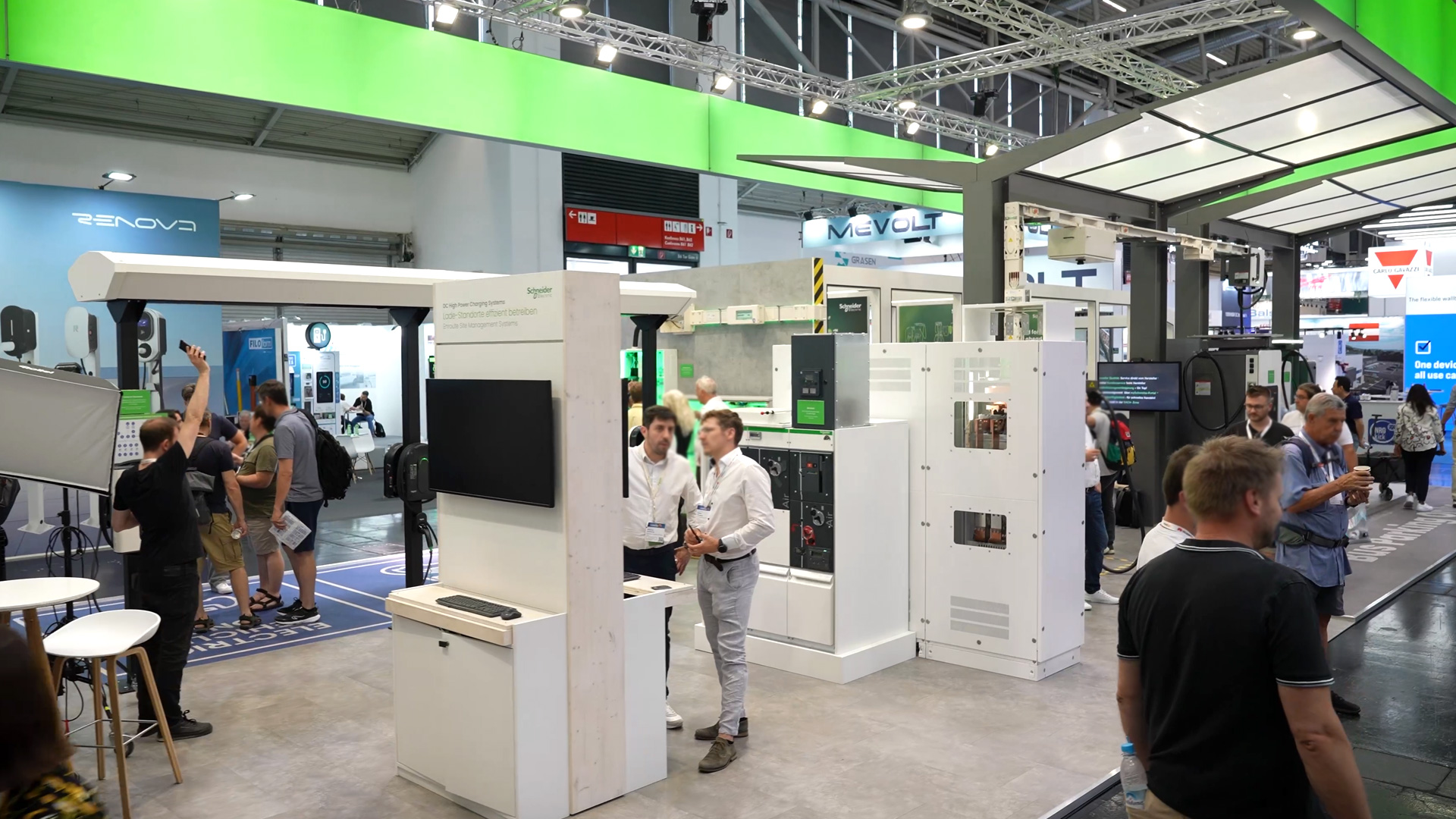
For bus and lorry fleets in particular, the infrastructure determines whether vehicles can reliably return to daily service. At Power2Drive Europe, Schneider Electric is showcasing the DC 720, a charging system specifically designed for such complex depot applications. At the heart of the system is a modular solution that connects various charging points to a central power supply. The main aim is to make better use of existing space and to set up the charging infrastructure in such a way that it can be expanded later.
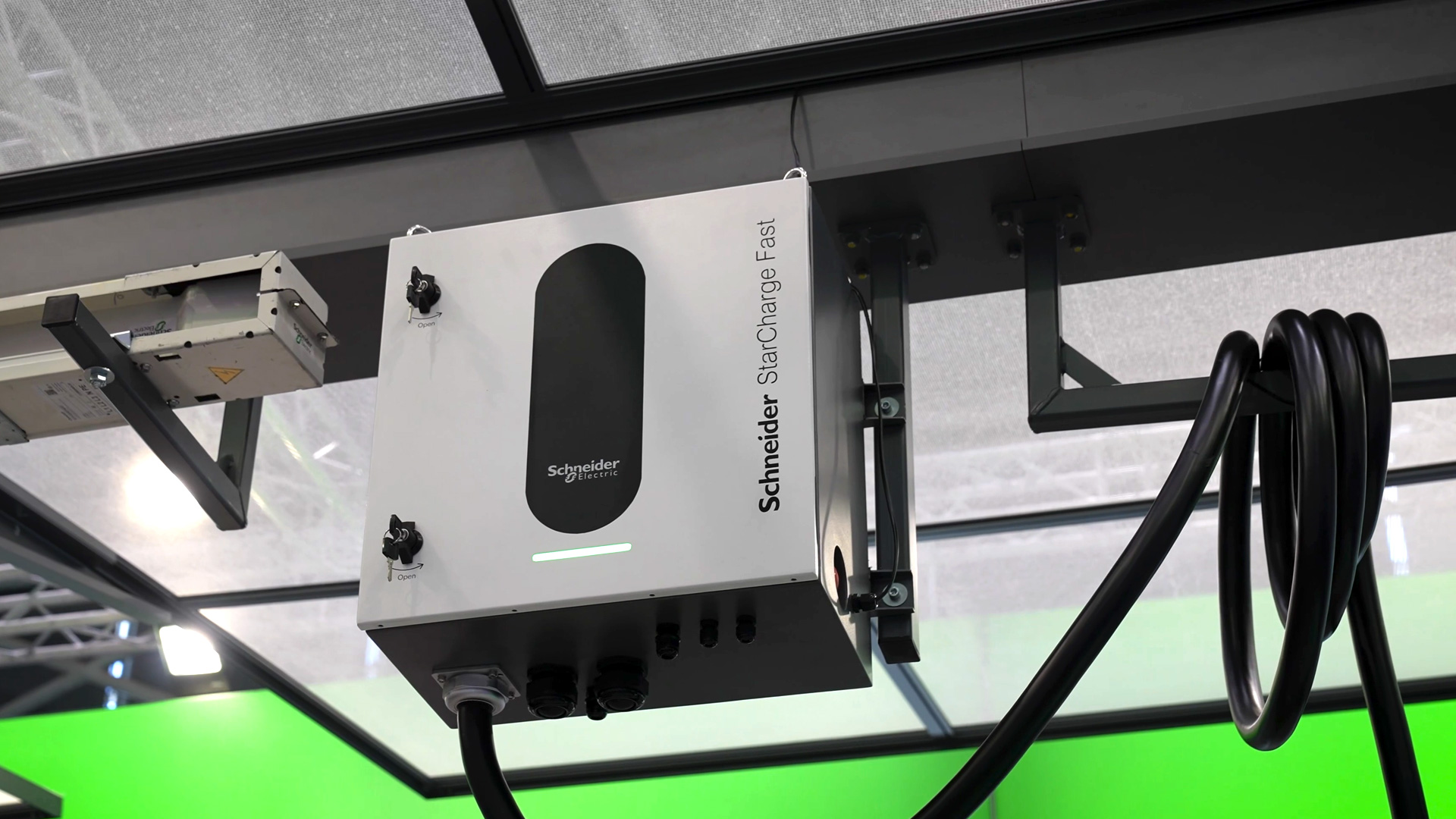
Schneider Electric’s DC 720 uses ceiling-mounted charging points
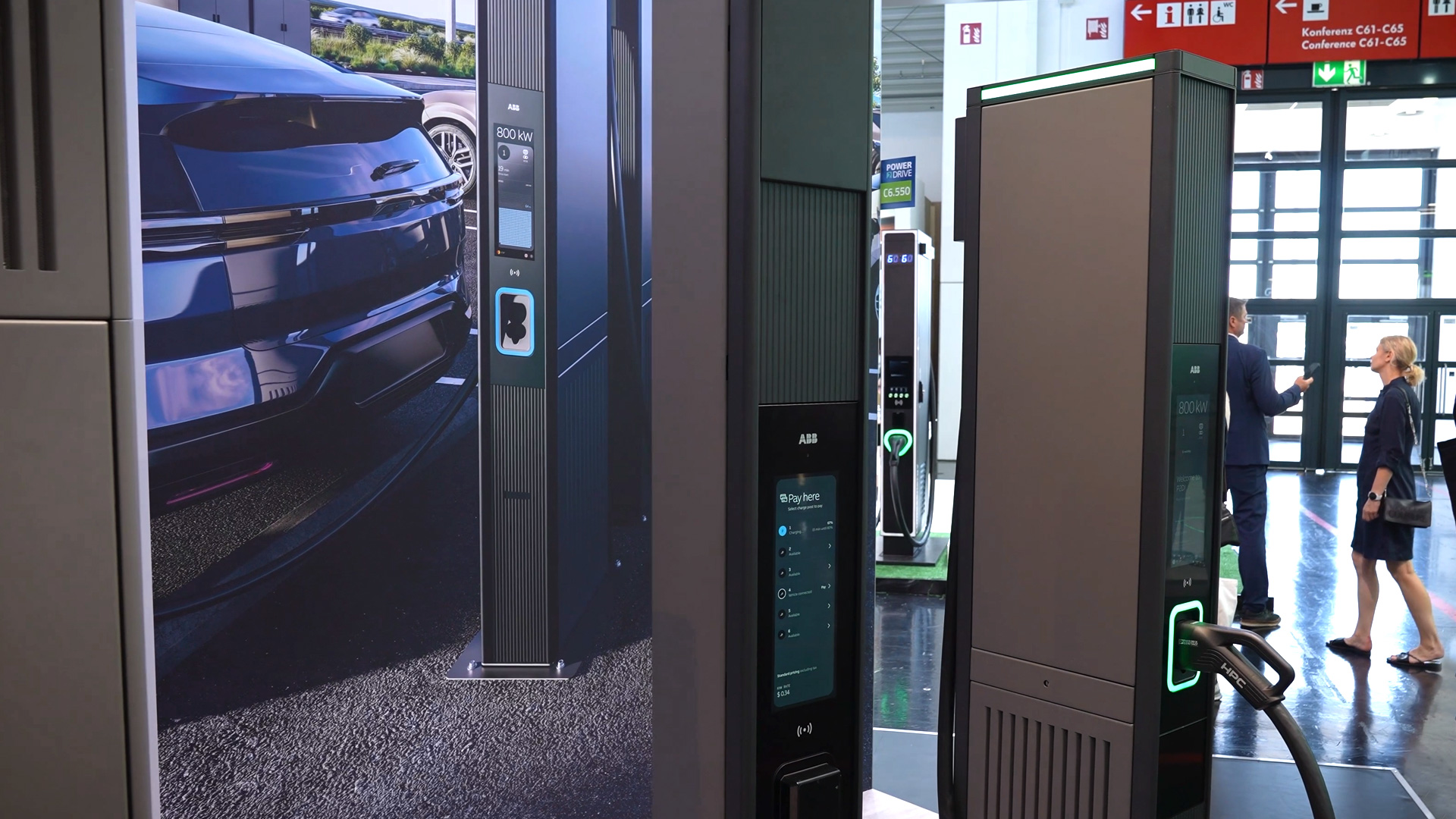
Space is at a premium in many bus and lorry depots. Additional charging points between parking bays can restrict manoeuvring space or complicate operational procedures. The DC 720 therefore relies, amongst other things, on so-called overhead chargers. With this system, the charging cable is lowered from the ceiling and only extended to the vehicle when required. A central power supply can serve up to twelve such charging points. This allows vehicles to be charged in existing parking bays without the need to install a floor-mounted charging point at every parking space. Alternatively, the system can be combined with traditional floor-mounted dispensers. According to the manufacturer, up to six of these units, each with two charging points, can be connected to a single power supply. The floor-mounted dispensers comply with metrology regulations and are therefore also suitable for use outside enclosed depots.
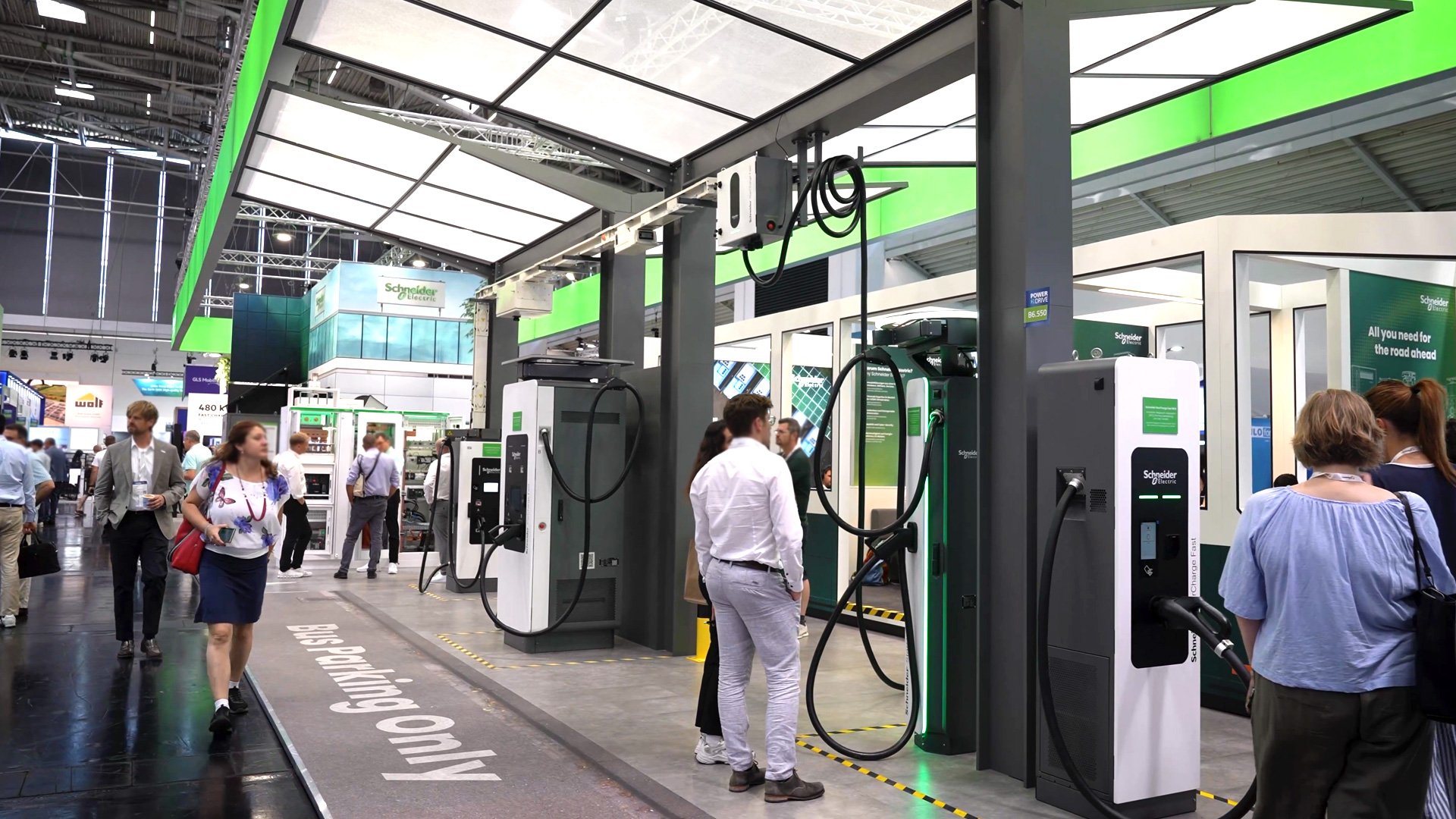
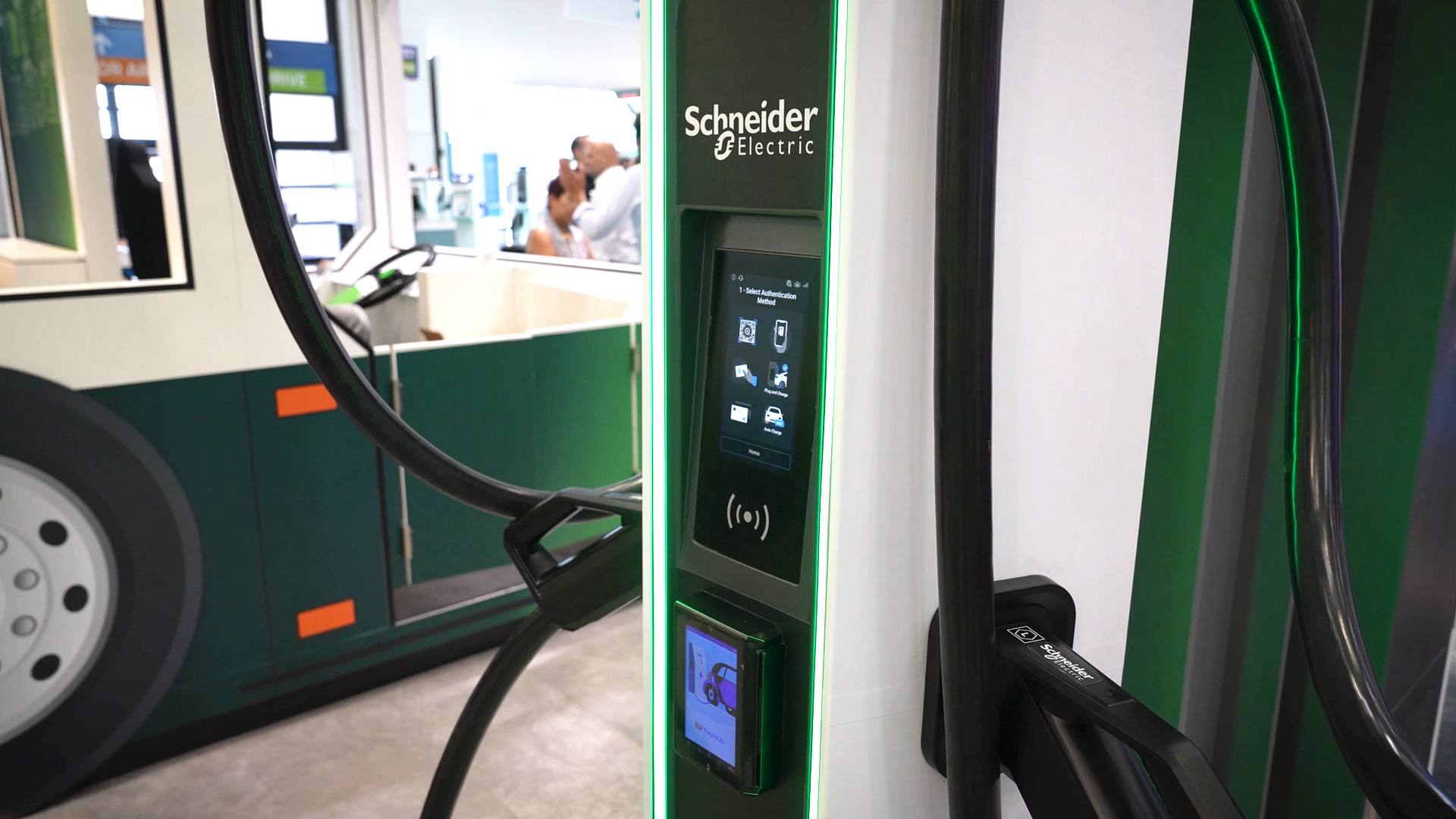
Busbars make the DC 720 modularly expandable
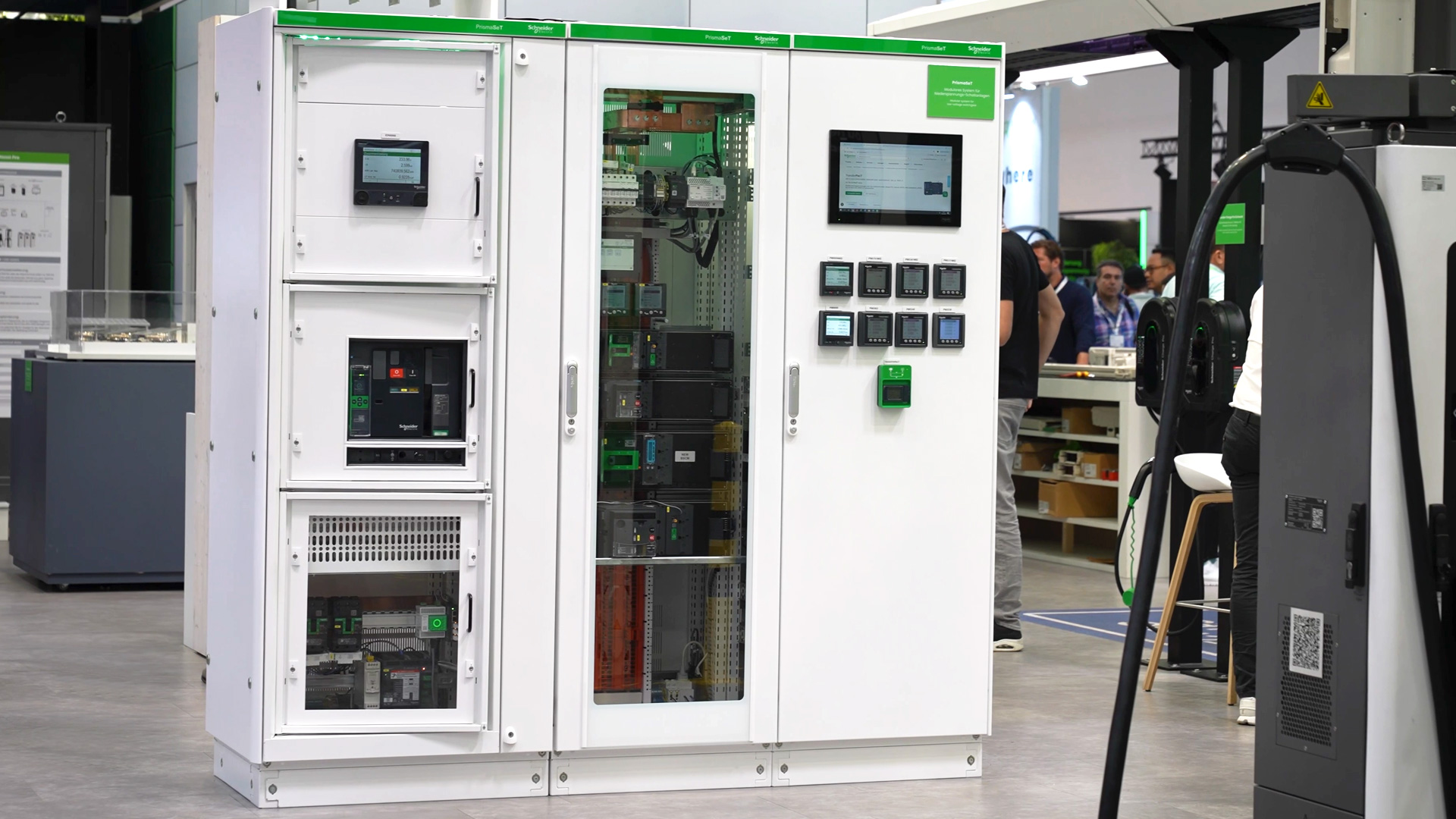
Another key component of the system is the distribution of electrical power. Schneider Electric utilises a busbar system for this purpose, which can be used in place of conventional cabling. This design offers several advantages for operators. New charging points can be added more easily without having to completely dismantle or re-lay existing cable installations. At the same time, according to the company, the open design improves heat dissipation. The key components of the system include:
- centralised power supply for multiple charging points
- up to twelve overhead chargers per system
- floor-mounted dispensers with two charging points
- modularly expandable busbar distribution system
- Integration of battery storage and renewable energy
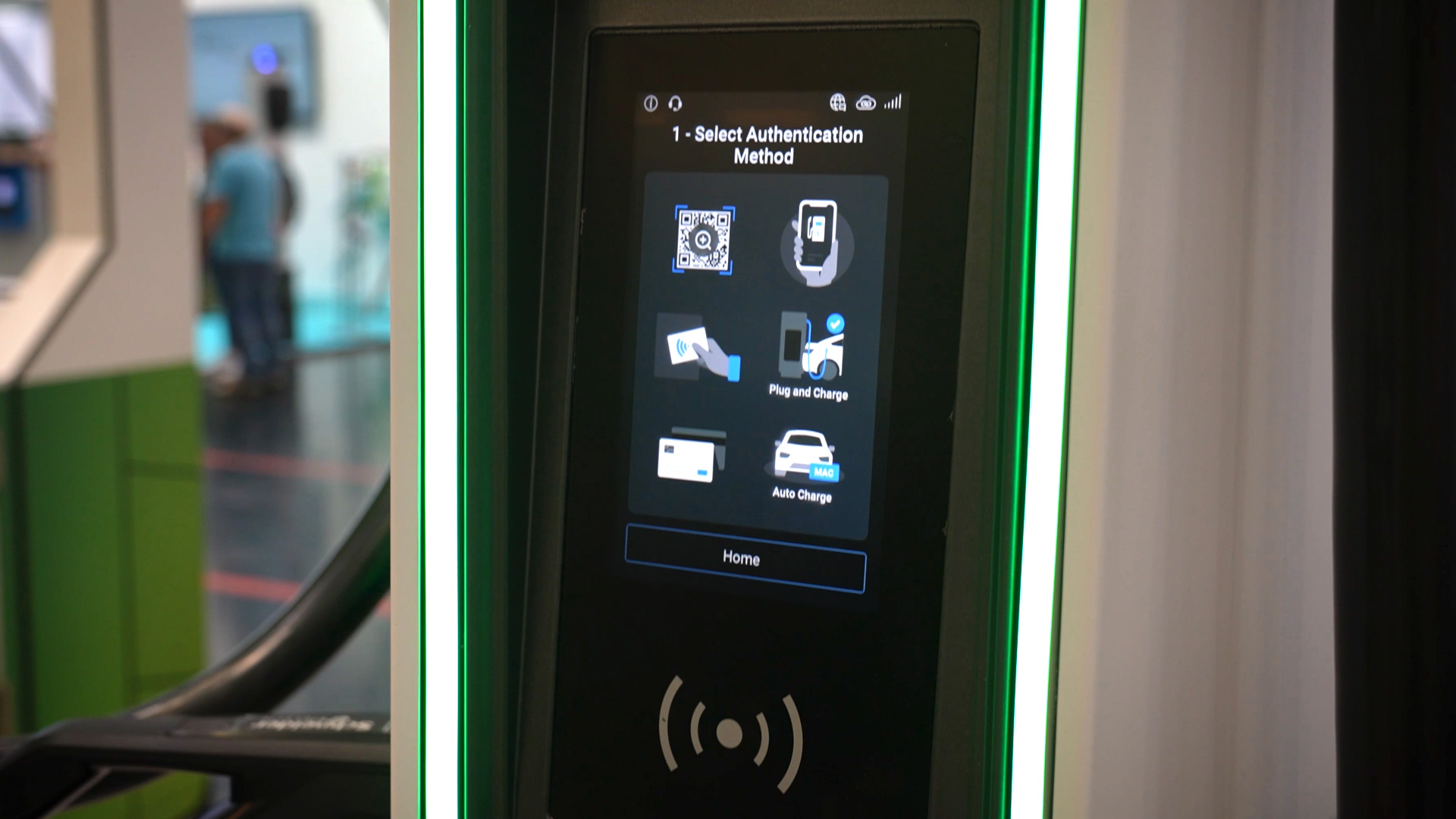
Battery storage and software optimise charging at the depot
A high-performance charging infrastructure does not necessarily have to draw high power from the public grid on a permanent basis. The DC 720 can be combined with battery storage systems and renewable energy sources. Fleet operators can, for example, store solar power temporarily and use it later to charge their vehicles. Similarly, energy can be drawn from the grid during periods of low electricity prices and stored in a stationary storage system. Energy management plays a key role here. It can reschedule charging times and supply vehicles with electricity at the most cost-effective times. Energy requirements can be calculated with relative precision, particularly for fleets with fixed timetables. An additional ‘wake-up’ function makes it possible to automatically prepare vehicles before departure. In winter, for example, pre-conditioning can be started whilst the bus or lorry is still connected to the charging station. This means that the energy required for pre-heating does not have to come directly from the vehicle’s battery.
Depot charging is particularly well suited to predictable fleets
Bus companies, local authority operations and waste management companies are among the obvious areas of application. Their vehicles often follow recurring routes and return regularly to the same location. This makes it possible to determine relatively precisely when a vehicle is in the depot, how much energy it requires and when it must be ready for service again. It is precisely this predictability that facilitates the operation of electric fleets. In addition to such closed-loop applications, the floor-mounted charging points can also be used at public locations, such as on motorways or at service stations. The system thus covers both traditional depot applications and publicly accessible charging infrastructure.
Electric fleets are changing the way depots are planned
With the switch to electric buses and lorries, the depot is increasingly becoming an energy system in its own right. Charging points, grid connections, battery storage, photovoltaics and software must all be coordinated. With the DC 720, Schneider Electric is pursuing an approach that connects these components in a modular way. For large fleets in particular, it will be crucial in future not only to provide the highest possible charging power, but also to distribute the available energy intelligently across many vehicles. Battery operation is likely to become particularly important where routes can be planned and vehicles regularly return to fixed locations. The real challenge therefore lies less and less with the individual charger. The crucial question is how an entire depot can be designed so that electric buses and lorries can be charged reliably, in a space-saving manner and cost-effectively.

Trade fair reporting Germany - Trade fair knowledge, dates & events


