Tracking systems are changing the yield of large solar parks
by J. Groh - 2026-07-07The rapid expansion of photovoltaics is leading to a new problem: More and more solar installations are producing their highest output at the same time of day. Traditional, south-facing solar parks in particular feed large amounts of electricity into the grid around midday.
However, when supply is particularly high, the economic value of the electricity generated falls. It is therefore becoming increasingly crucial for operators to consider not only how much energy an installation generates, but also at what time of day. At Intersolar Europe in Munich, Ideematec showcased tracking systems that automatically align solar panels with the sun’s position. According to the company, the German firm has installed systems with a total capacity of around ten gigawatts. The technical approach is designed to increase energy yield whilst simultaneously shifting a larger proportion of electricity production to the morning and evening hours.
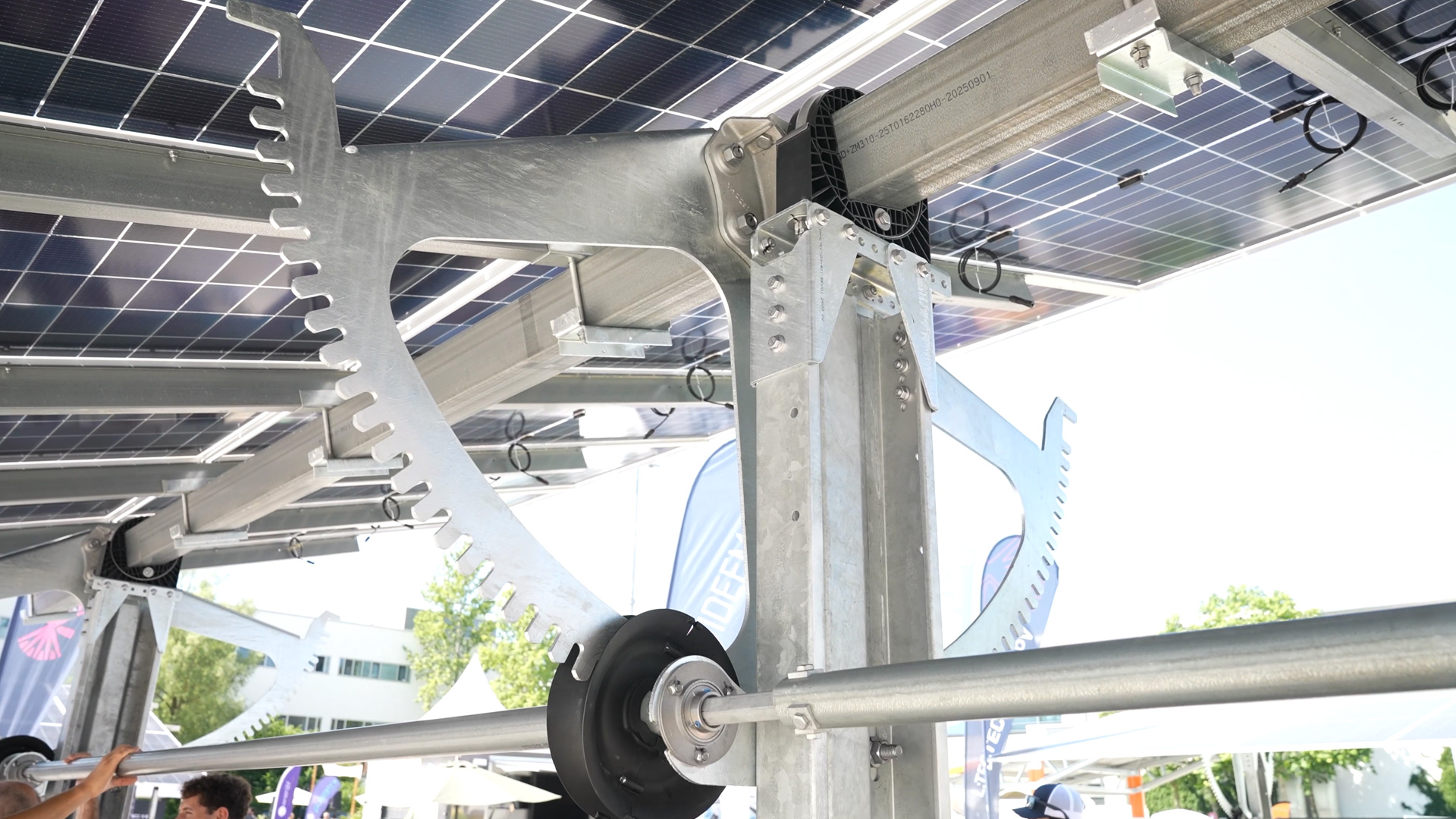

Ideematec uses astronomical tracking to align solar panels with the sun
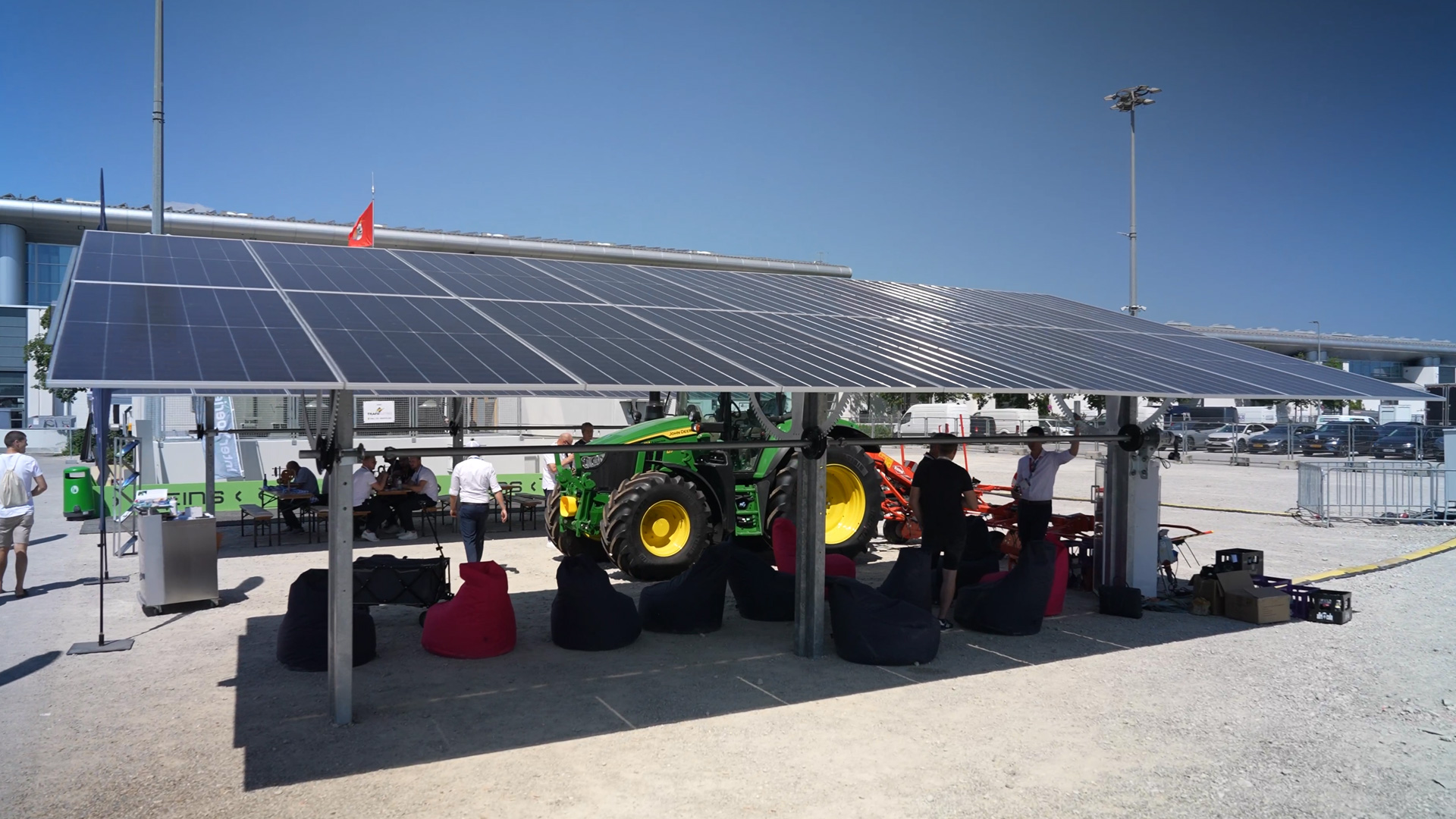
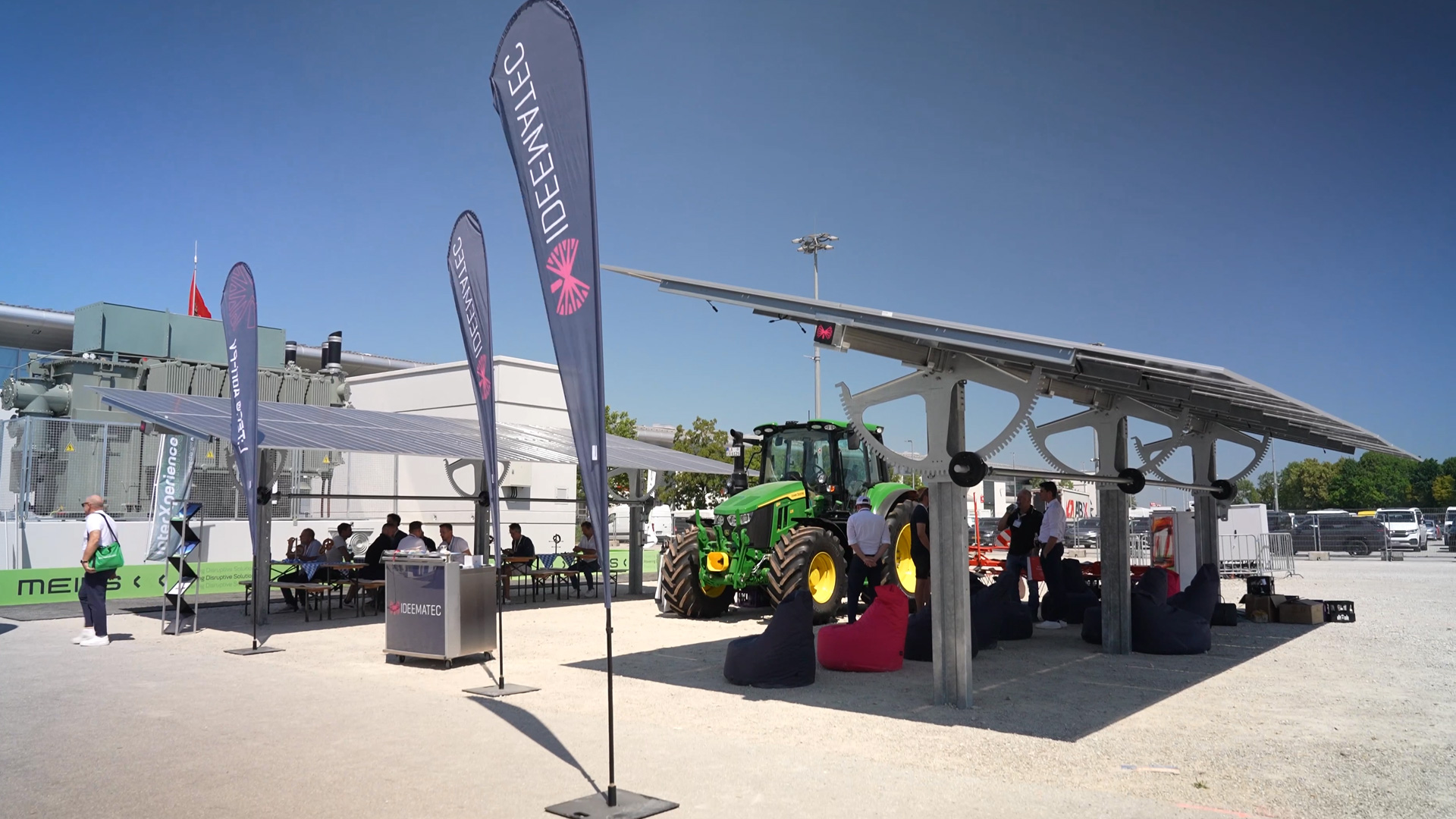
In a tracking system – often referred to as a solar tracker – the solar panels do not remain permanently in a fixed position. A drive train moves the panels via a toothed ring and adjusts their angle throughout the day to match the sun’s position. Ideematec’s system utilises astronomical tracking. Instead of measuring current solar irradiance via sensors, the sun’s position is calculated mathematically. This is based on the geographical coordinates of the respective solar park, as well as the date and time of day. This allows the sun’s position to be determined precisely for every day of the year. The system knows in advance the position the sun will occupy at a specific time and aligns the modules accordingly. This approach can offer particular advantages in changing cloud conditions. Irradiance sensors can react to varying light conditions and thereby determine what they perceive to be the optimal module position, even though the actual position of the sun remains unchanged. Astronomical tracking, by contrast, is guided by the calculated path of the sun, regardless of the weather.
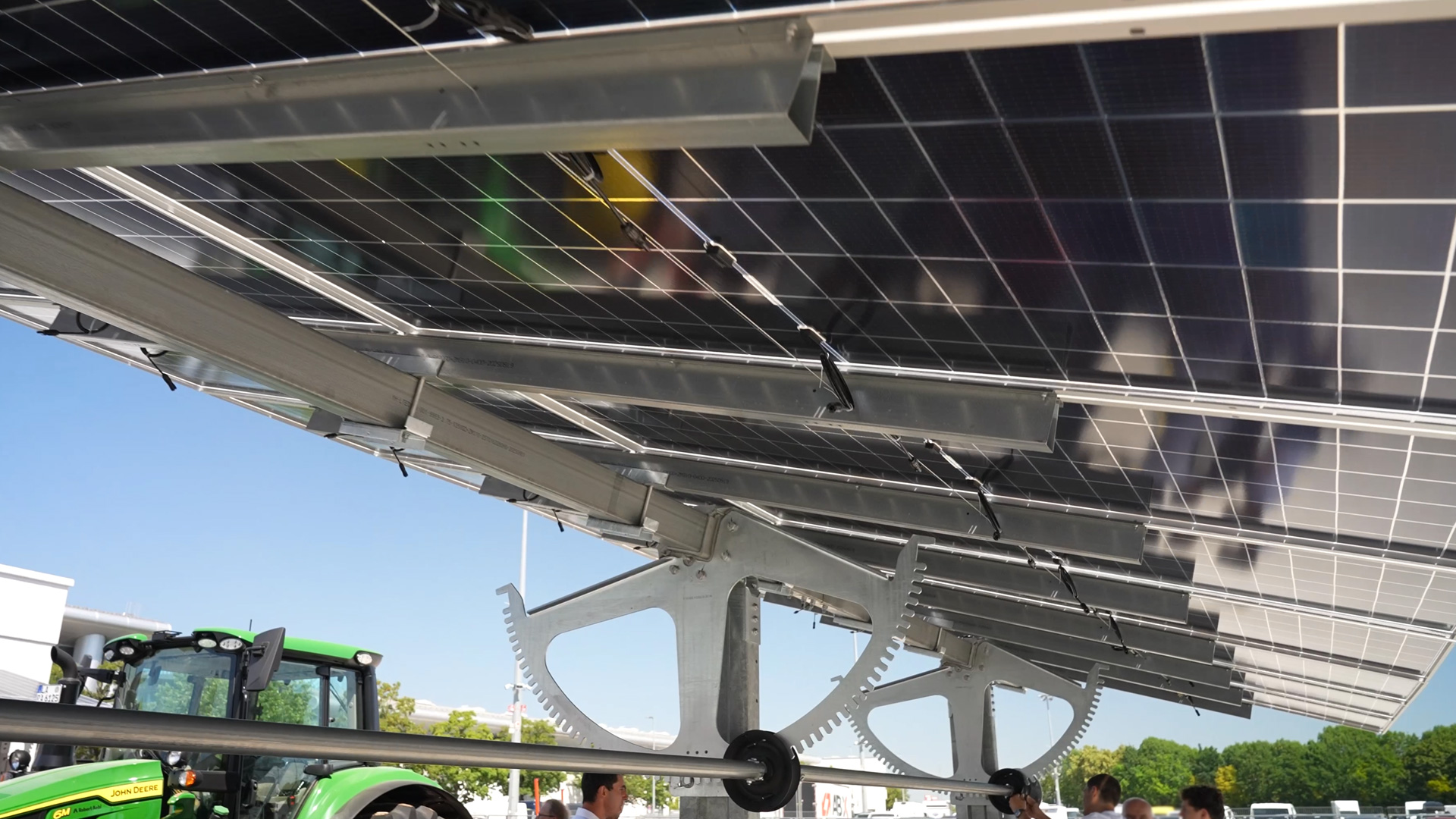
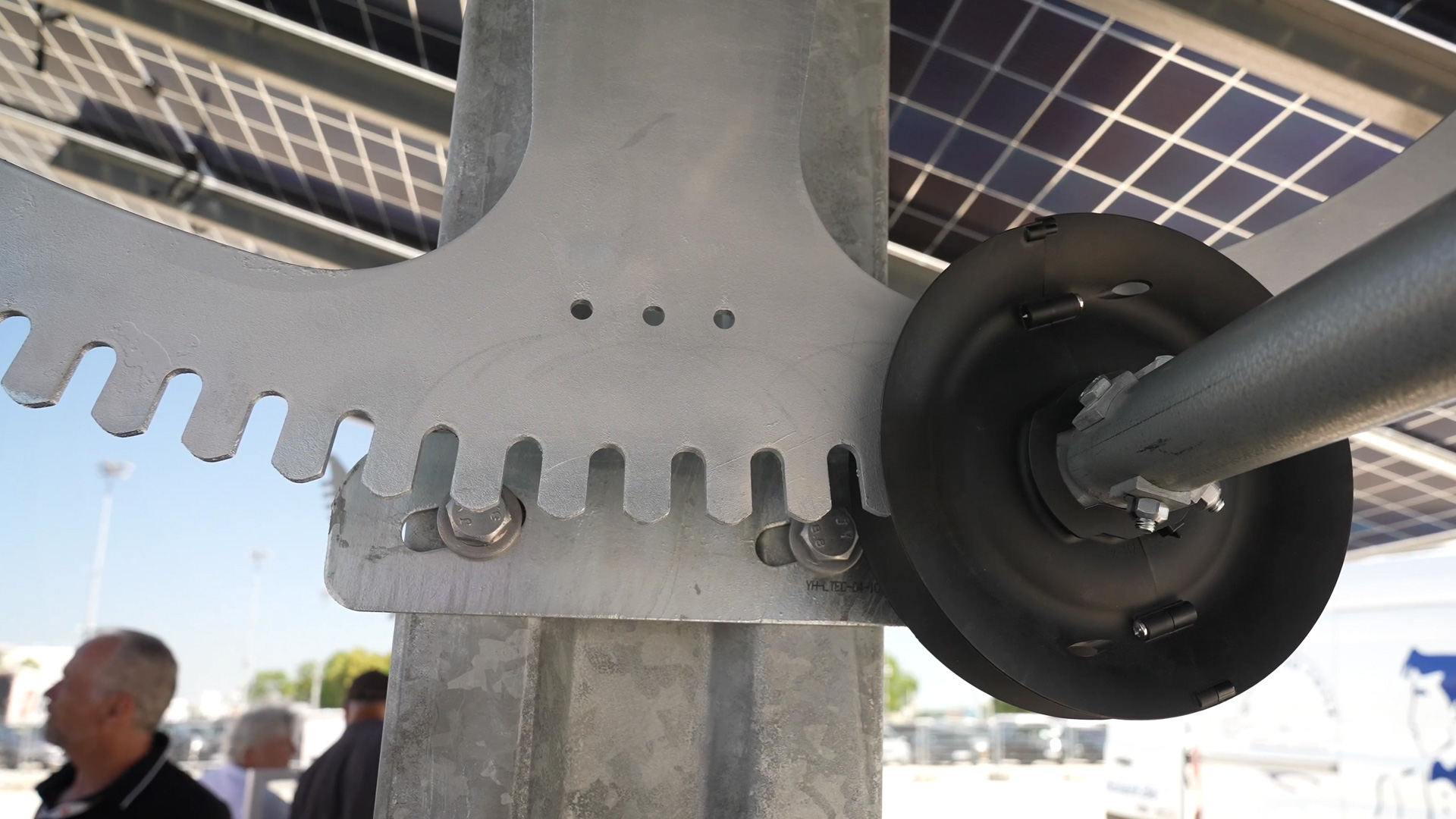
Solar trackers shift electricity generation to the morning and evening
The economic benefit of a tracker does not stem solely from a higher total yield. The temporal distribution of electricity generation is just as important. Whilst solar modules fixed in a south-facing orientation often reach their peak output around midday, tracking modules follow the sun throughout the day. As a result, electricity generation begins earlier and remains at a higher level for longer in the evening. This can be particularly economically advantageous in markets with a highly developed photovoltaic sector. When large quantities of solar power are fed into the grid simultaneously at midday, electricity prices on the power exchange can drop significantly at times. Key features of tracking systems include:
- automatic alignment of the solar modules with the sun’s position
- astronomical tracking based on location coordinates
- higher electricity production in the morning and evening hours
- mechanical tracking via a drive train and ring gear
- use in large solar parks and agri-photovoltaic installations
Agri-photovoltaics leaves room for large agricultural machinery
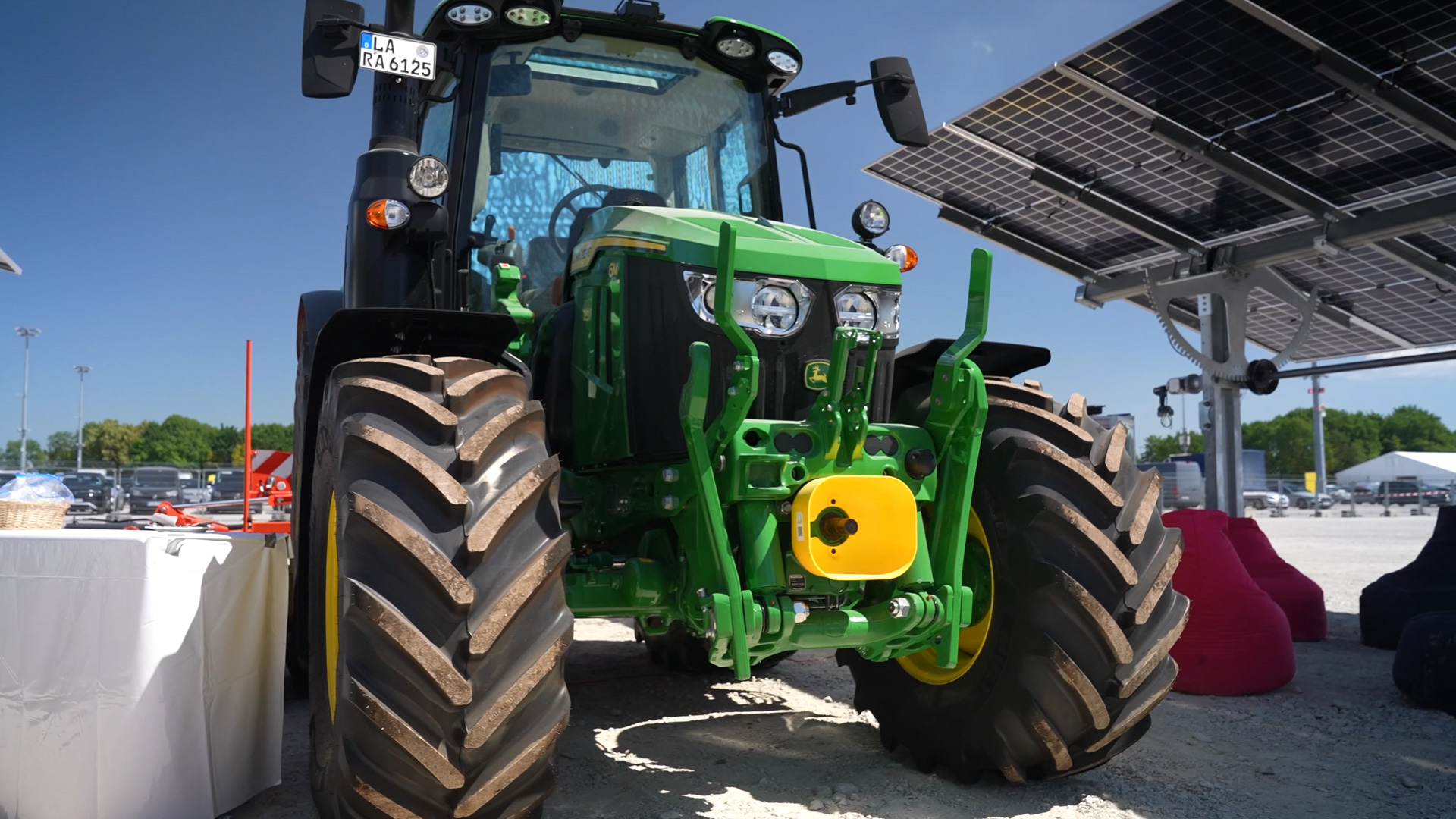
Another key area of focus is agri-photovoltaics. This combines agricultural use with electricity generation on the same plot of land. The solar installation does not replace farming operations, but must be integrated into the existing workflows of an agricultural holding. The tracking systems are therefore designed to ensure there is sufficient space between the rows of modules for agricultural machinery. At the trade fair, the company demonstrated this using a tractor and a nine-metre-wide implement. The aim was to illustrate the scale modern agricultural technology has reached and the clearances a photovoltaic system must allow for. This is a crucial point for farmers. A plot of land can only be used for agriculture in the long term if sowing, cultivation and harvesting can still be carried out using existing machinery. Solar trackers offer an additional advantage here: depending on the stage of work, the modules can be moved into a position that maximises the available space. This is intended to alleviate the traditional competition for land between agriculture and photovoltaics. Instead of converting arable land entirely into solar parks, both forms of land use can be combined.
Tracking systems are gaining in importance in Germany
According to Ideematec, tracking systems with a capacity of more than 625 megawatts were installed within just 18 months. This illustrates the scale the market has now reached. The company sees further growth potential, particularly in Central Europe. Germany is one of the markets where large photovoltaic capacities are already installed. It is precisely there that the temporal distribution of electricity production is becoming increasingly relevant. Traditional south-facing installations deliver high yields during midday hours. However, with every additional solar farm, the concentration of feed-in during this period intensifies. Tracking systems can shift part of the production to different times of day, thereby better aligning it with actual demand on the electricity grid.
Solar trackers combine land use and the electricity market
In future, the development of large solar parks will be shaped more strongly by two questions: when is the electricity produced, and how efficiently is the land used? Solar trackers address both of these points. Automatic tracking allows electricity generation to be spread more evenly throughout the day. At the same time, agri-photovoltaics enables the land to be used for agricultural purposes in parallel. This fundamentally changes the requirements for planning solar parks. With its tracking systems, Ideematec combines mechanical engineering with astronomical control. This approach demonstrates that the next step in the development of photovoltaics need not rely solely on more powerful solar modules. The movement of the modules and the intelligent use of existing land can also determine how cost-effectively solar power is generated in the future.
Trade fair reporting Germany - Trade fair knowledge, dates & events


