Intersolar 2026 Munich showcases new approaches to solar energy
The solar industry is currently in a phase where the focus is no longer solely on the expansion of new photovoltaic installations. It is becoming increasingly crucial to consider how solar power can be stored, managed, marketed and integrated into other energy sectors. Intersolar 2026 in Munich addresses this development and focuses on large-scale photovoltaics, battery storage, agri-PV, floating PV, system integration and digital energy management solutions.
Articles on Intersolar 2026 in Munich
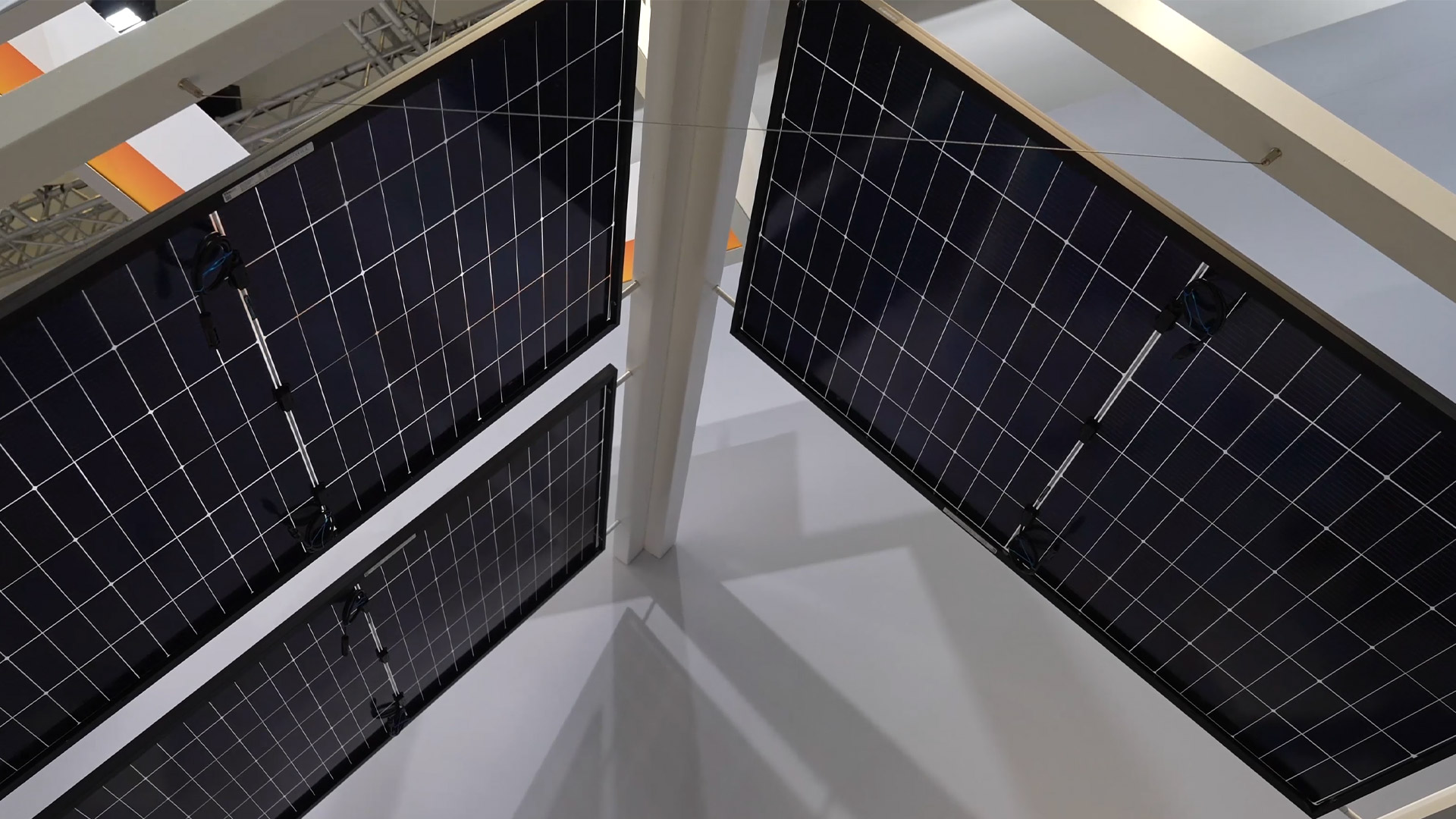
The focus is therefore not only on modules, inverters and mounting systems, but on complete energy concepts. Operators, project developers, installers, energy suppliers and industrial companies are seeking solutions that coordinate generation, consumption and storage more precisely. This year’s key themes demonstrate that the solar industry is increasingly evolving into a systems market.
Large-scale installations and hybrid power plants are gaining in importance
A key focus is on large-scale photovoltaic projects. Ground-mounted installations remain a central component of the continued expansion of renewable energy. At the same time, the technical requirements for such projects are changing. Increasingly, solar parks are being combined with battery storage, smart inverters and digital plant control systems. Hybrid power plants combine several technologies into a single energy system. They can not only generate electricity but also supply it at a later time and respond more flexibly to grid requirements. This is particularly important as the share of renewable energy in the electricity system continues to rise. Relevant topics include:
- Photovoltaic power plants with integrated battery storage
- grid-forming inverters for stabilising electricity grids
- digital control of large solar parks
- direct marketing and flexible electricity use
- energy management for commerce and industry
Battery storage is becoming a central component of modern solar projects
Storage technology is one of the event’s key topics. Battery systems make it possible to use solar power when it is actually needed. This applies to private buildings as well as commercial premises, industrial facilities and large-scale energy projects. In the commercial sector, storage helps to reduce peak loads and increase self-consumption. At grid level, large battery systems can balance out fluctuations and provide system services. As a result, storage is evolving from a supplementary component into a central building block of modern energy concepts. Solutions that do not view storage in isolation, but integrate it into an overarching energy management system, are particularly relevant. Software, measurement systems and automated control are increasingly determining how efficiently a system operates.
Agri-PV and floating PV expand land use
Another key focus of Intersolar 2026 is on new forms of land use. Agri-PV and floating PV are regarded as important approaches for tapping into additional potential for solar power generation. Agri-PV combines agriculture and photovoltaics on the same plot of land. Depending on the system design, crops can grow beneath or between the modules whilst electricity is generated at the same time. This creates additional uses for agricultural land without taking areas completely out of production. Floating PV utilises bodies of water for solar installations. Such systems can be installed on lakes, reservoirs or other suitable bodies of water. This technology is becoming increasingly attractive, particularly in regions where land is in short supply. The focus here is on:
- Mounting systems for various agricultural uses
- Dual use of land through Agri-PV
- Floating solar installations on bodies of water
- Combination with storage technology
- economic concepts for new project types
Digitalisation links generation, consumption and the grid
Digitalisation is shaping almost every area of the solar industry. Modern systems continuously provide operational data that can be used for monitoring, maintenance, forecasting and optimisation. Digital platforms help to analyse and automatically control energy flows. This becomes particularly relevant for businesses when photovoltaics are linked to storage, charging infrastructure, heating applications or production processes. In such cases, simple system monitoring is no longer sufficient. What is needed are systems that jointly assess electricity generation, consumption, storage levels and the grid situation. This also brings sector coupling more firmly into the spotlight. Solar power should not merely be fed into the grid, but specifically utilised for electric mobility, heating and industrial applications. The intelligent integration of these areas is one of the industry’s key future themes.
Solar energy is evolving into an integrated energy system
Intersolar 2026 demonstrates how the photovoltaic industry is evolving. Solar energy remains the foundation, but the key innovations are increasingly emerging at the interfaces with storage technology, digitalisation, grid control and sector coupling. Large-scale plants, hybrid power stations, battery storage, agri-PV, floating PV and digital energy management systems are the key themes of this year’s event. This makes it clear that the industry is no longer just talking about new generation capacity, but about flexible, interconnected and economically manageable energy systems.
Trade fair reporting Germany - Trade fair knowledge, dates & events


