Solar fences open up new spaces for photovoltaics
by A. Bergmeier - 2026-06-30Photovoltaics are increasingly being installed in places where electricity generation was previously rarely considered. Alongside rooftop systems, façades, car parks and open spaces are gaining in importance. Fences, too, could make a greater contribution in future.
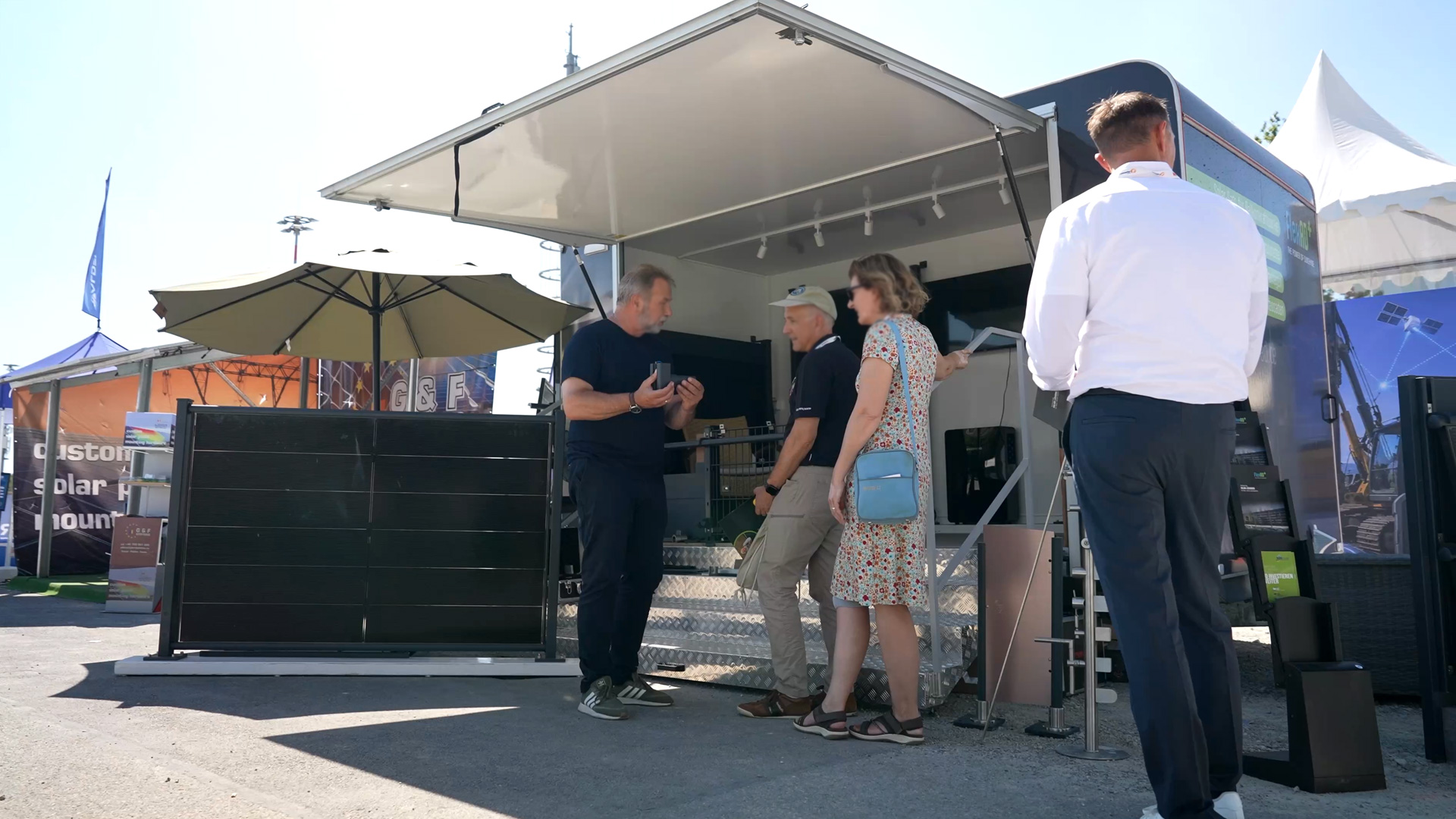
They demarcate plots of land anyway, are often well-oriented and offer a space that has hitherto been underutilised for energy generation. At Intersolar Europe, the FlexAD system was unveiled – a concept that integrates standard modules into a modular fence system, thereby enabling the cost-effective use of existing property boundaries.
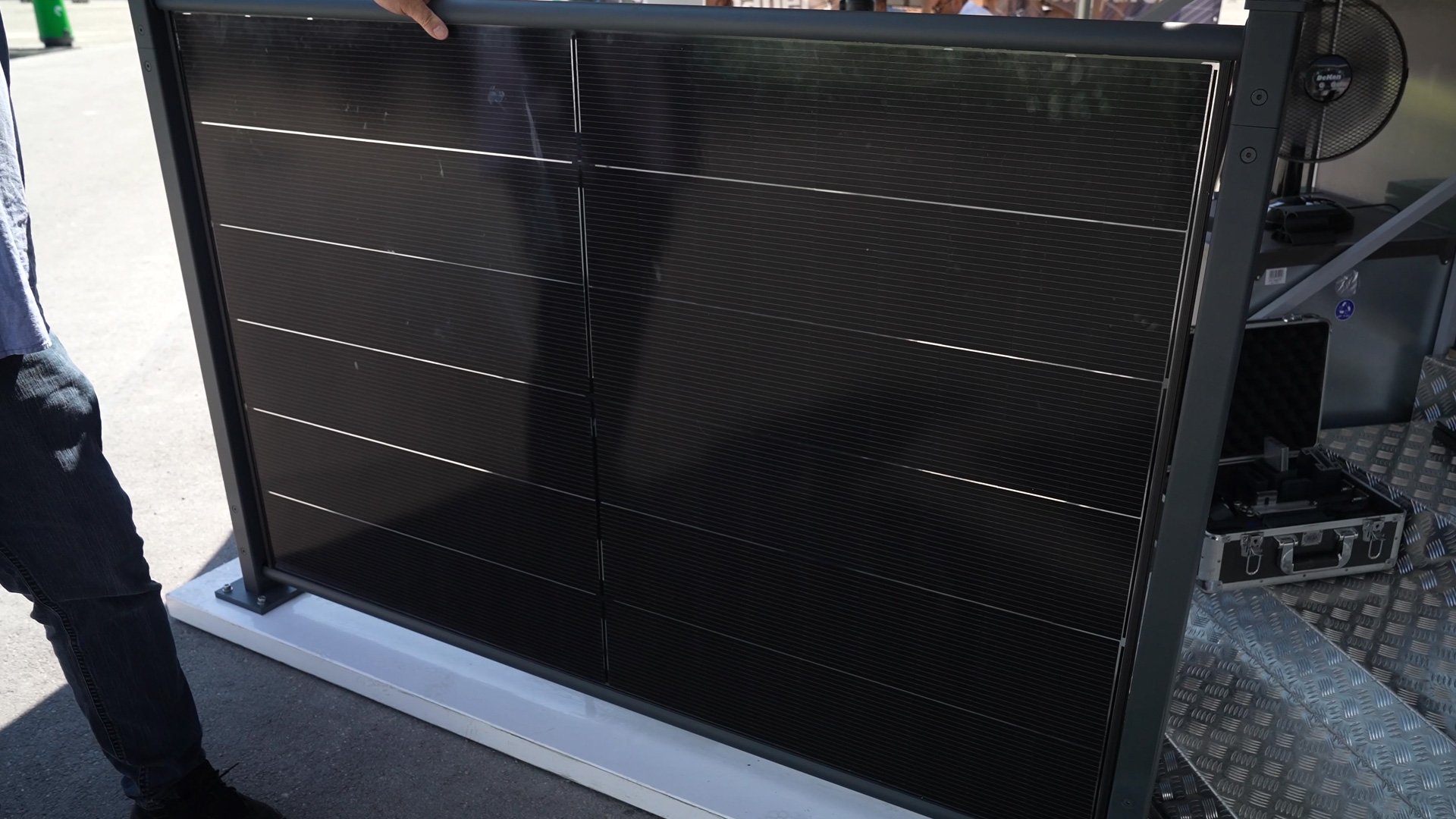

Harald Böhl GmbH showcases FlexAD as a modular solar fence system
Harald Böhl GmbH has been developing fencing systems for several decades and has now applied its expertise to the field of photovoltaics. The FlexAD system is based on a modular principle, whereby standard solar modules can be fitted into 30-millimetre-thick aluminium profiles. This ensures the structure remains flexible and can be extended or adapted as required. One advantage of the concept is that it is not limited to the use of photovoltaic modules. In principle, the system also allows for other types of infill, enabling a range of design and functional requirements to be met. Both horizontal and vertical installation options are available for the solar modules. This allows property boundaries to be customised without being restricted to standardised formats. The combination of existing fencing technology and standard solar modules is intended to make it easier to get started, as no specially developed modules are required.
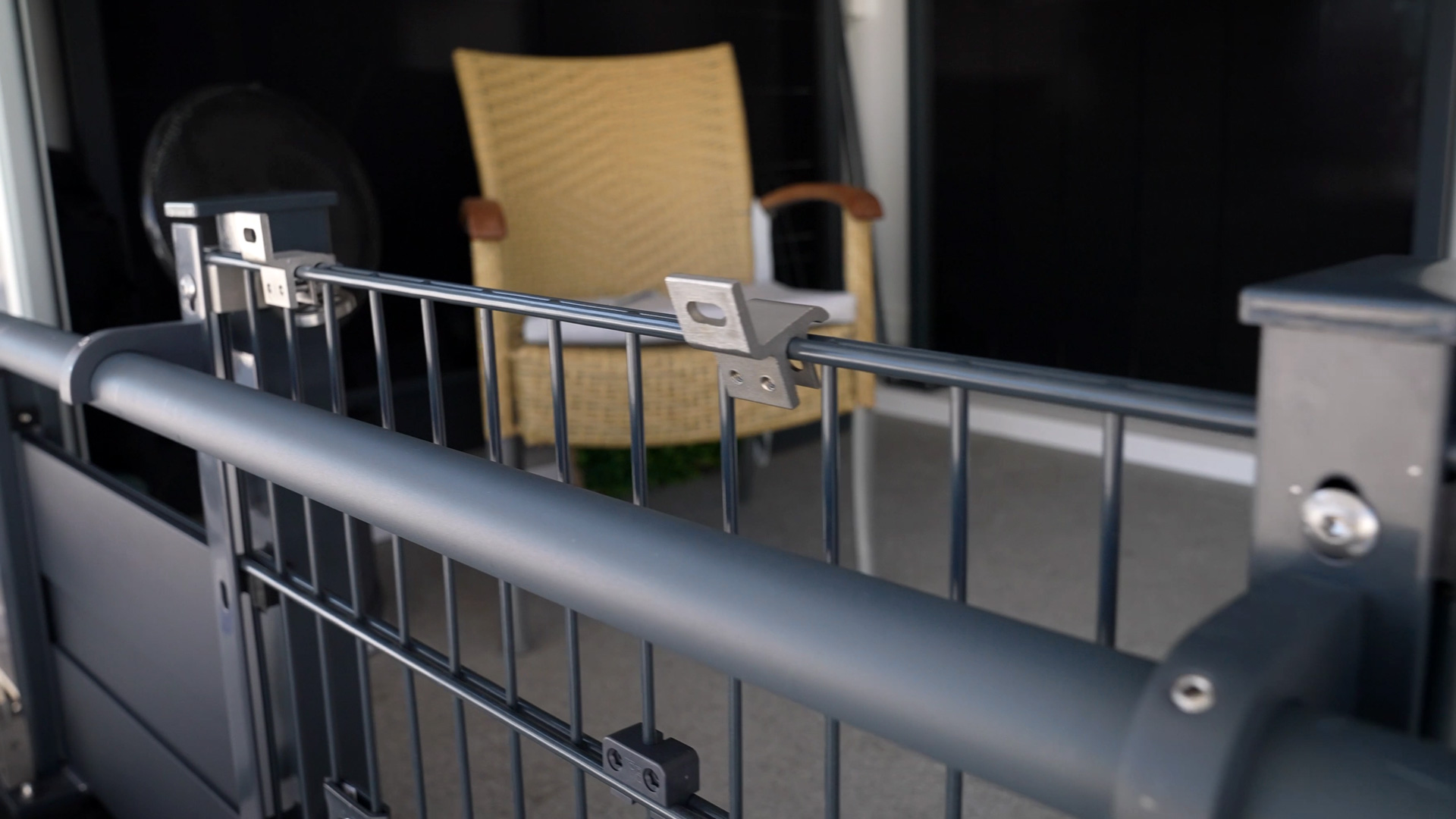

FlexAD uses bifacial modules for morning and evening output
At the heart of the system are bifacial photovoltaic modules. They generate electricity on both the front and the back and are therefore particularly suitable for vertical installations. Whilst traditional rooftop systems often achieve their highest output at midday, electricity production from an east-west-facing solar fence is more evenly distributed across the morning and evening hours. It is precisely this shift in timing that is becoming increasingly important. In many regions, the revenue from feed-in solar power drops during midday hours because large quantities of photovoltaic electricity are already available at that time. Higher electricity production in the morning and evening can therefore offer economic advantages for both self-consumption and feeding electricity into the grid. According to the company, the vertical arrangement enables yields to be achieved that are comparable to those of an optimally oriented rooftop system. At the same time, the fence remains fully intact as a property boundary. The system’s key features:
- Installation of standard photovoltaic modules with 30-millimetre frames
- Horizontal or vertical mounting of the modules
- Use of bifacial solar modules for power generation on both sides
- Modular, expandable system
- Alternative fillings available alongside photovoltaics

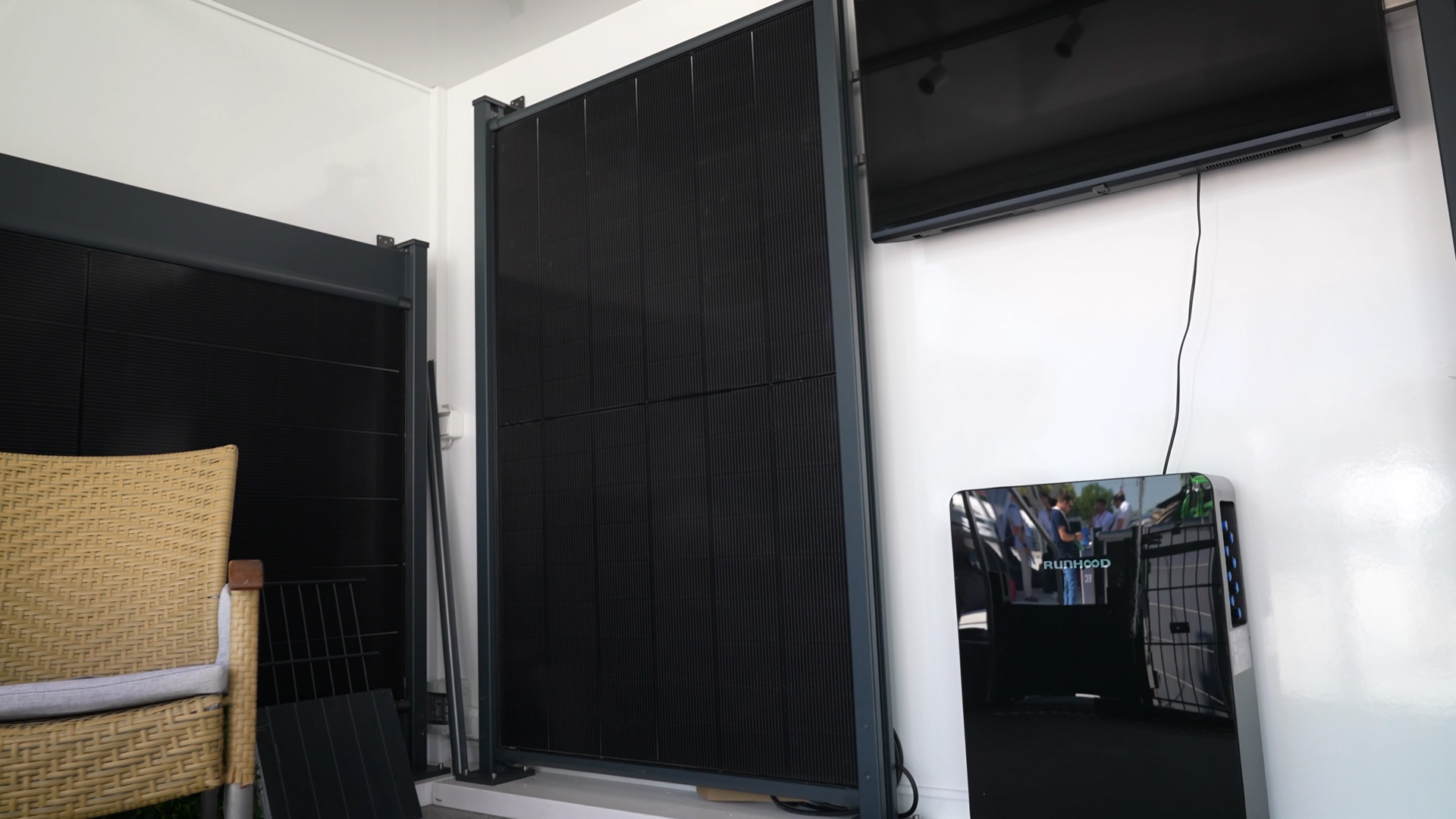
Retrofitting existing wire mesh fences expands the range of applications
In addition to the complete solar fence, a second solution was presented, designed for existing fencing systems. For this, a special bracket is hooked into and screwed onto conventional wire mesh fences. The solar module is then attached to the rear and can be integrated into the existing fence system without the need for major alterations. This allows property fences that are already in place to be retrofitted for electricity generation. At the same time, it provides an opaque privacy screen, as the modules can completely cover the fence surface. According to the company, the material costs for the mounting bracket are around 20 euros per module. Combined with current module prices, this results in a comparatively cost-effective way of increasing photovoltaic capacity without having to erect new support structures.
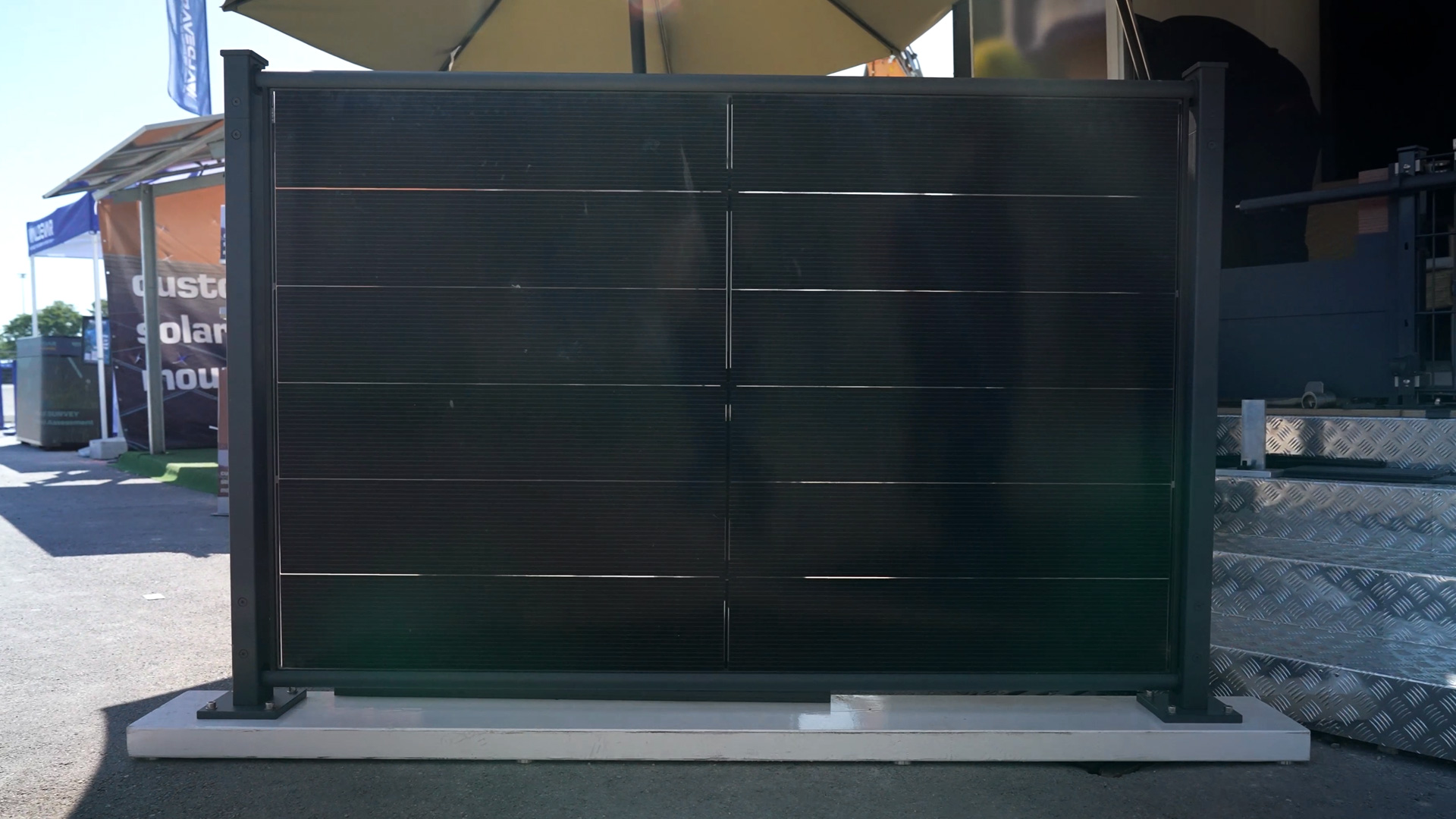
Cost-effectiveness stems from existing space
A key idea behind the concept is the use of existing infrastructure. Fences must be erected independently of a photovoltaic system. If they are used simultaneously to generate electricity, this generates additional revenue without the need to seal off new areas or construct separate substructures. For newly erected fence sections, the company quotes material costs of around 300 euros for the first section, including the solar module, and significantly lower costs for subsequent sections. Under favourable conditions, a solar fence could pay for itself within a few years. However, such figures depend heavily on electricity prices, self-consumption and location. The concept appears particularly interesting for commercial premises, agricultural land or plots with long perimeter fences where large lengths of fencing are available.
Solar fences could become part of decentralised energy systems
With the expansion of renewable energies, the use of previously untapped areas is increasingly coming into focus. In addition to roofs, noise barriers, façades and property fences offer further potential for bringing photovoltaics closer to the point of consumption. At the same time, battery storage systems and bidirectional charging are transforming the possibilities for self-consumption. In future, electricity generated by a solar fence could not only be used directly within the building, but also temporarily stored in stationary storage systems or electric vehicles. As a result, property boundaries are evolving from mere demarcation elements into components of decentralised energy systems. The FlexAD system demonstrates how existing fencing technology can be combined with photovoltaics, thereby opening up additional space for electricity generation.
Trade fair reporting Germany - Trade fair knowledge, dates & events


