Digitisation in therapy practices: software, scan app, billing
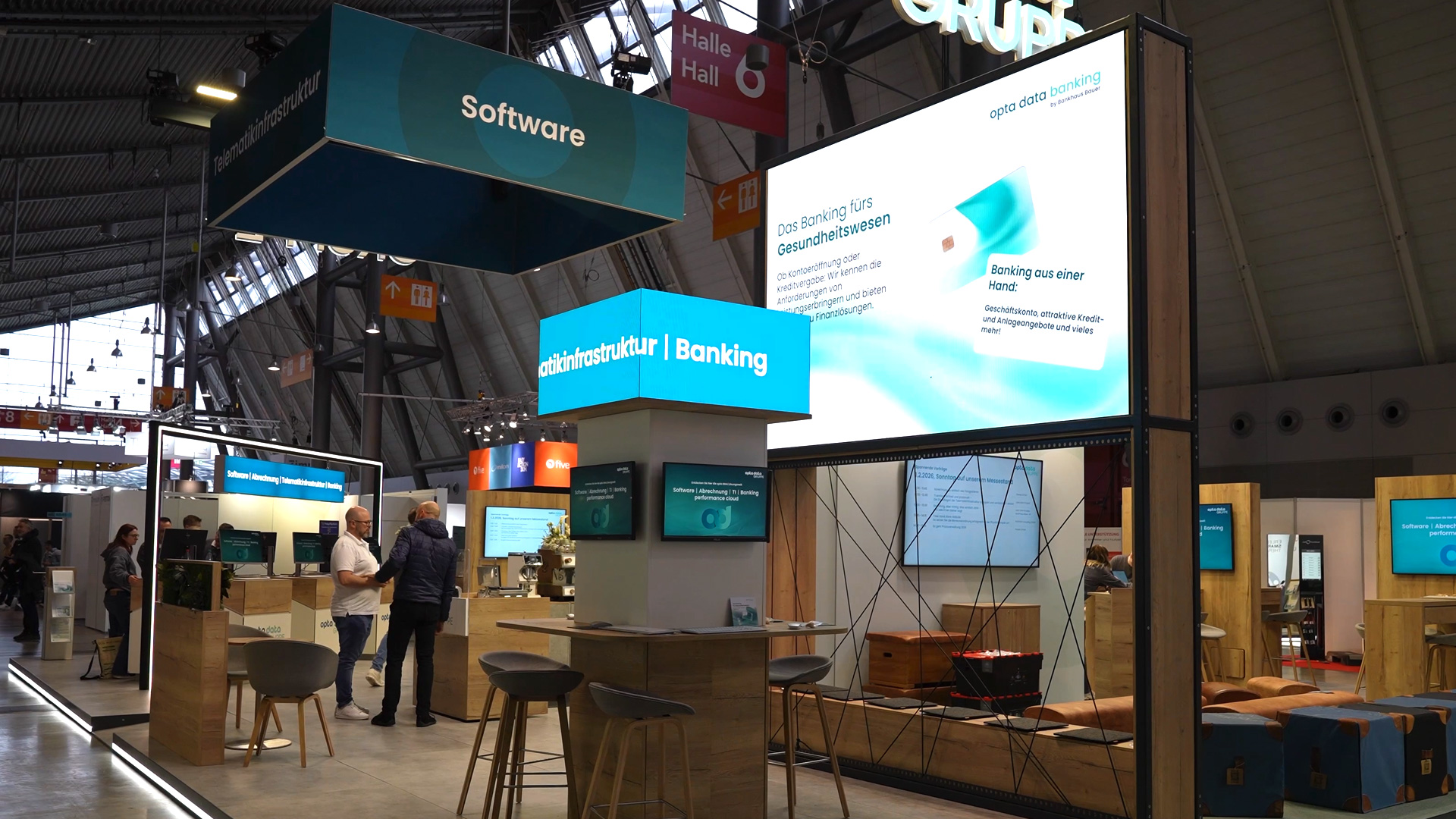
by A. Bergmeier - 2026-02-10In many practices, digitisation still seems like a project to be tackled ‘sometime’ – until new requirements relating to telematics infrastructure, e-prescriptions and digital processes suddenly create pressure. This is exactly where providers come in, not only supplying technology, but also designing the transition in such a way that teams can make the switch from everyday paper-based processes to practical workflows.
A key argument: those who make the switch now are not making a hasty decision, but can neatly sort out processes, clarify responsibilities and gradually make their own therapy practice more stable. Opta Data describes this moment as a turning point: many practices still work largely in analogue mode, have only recently begun to engage more intensively with digital processes, and nevertheless want to be able to act quickly. The claim that it should not be ‘rocket science’ sounds simple at first, but in reality it is crucial: if software is not intuitive in everyday use, it costs time, creates detours – and is ultimately circumvented.
Practice software: appointments, documentation and billing in one process
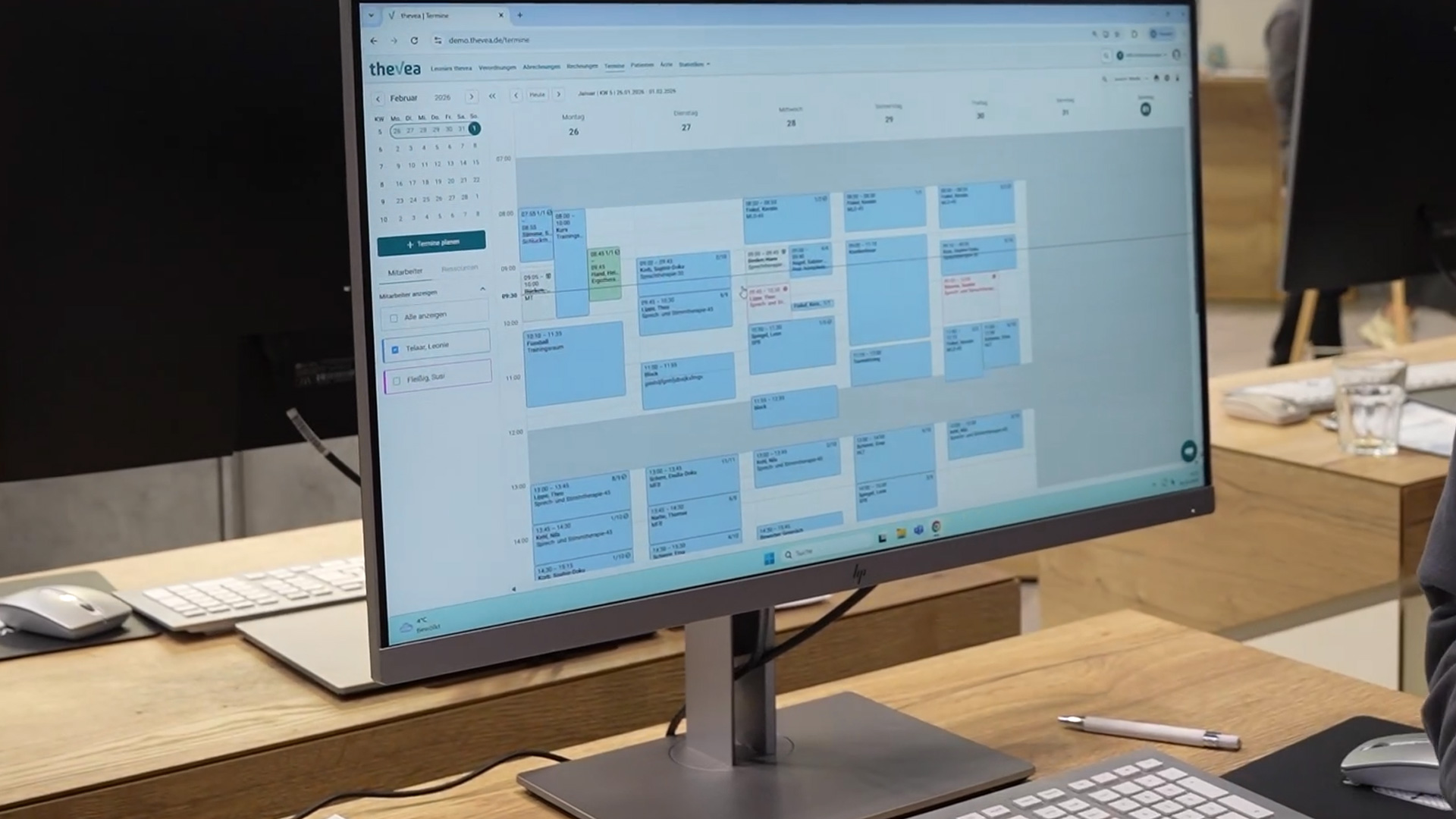
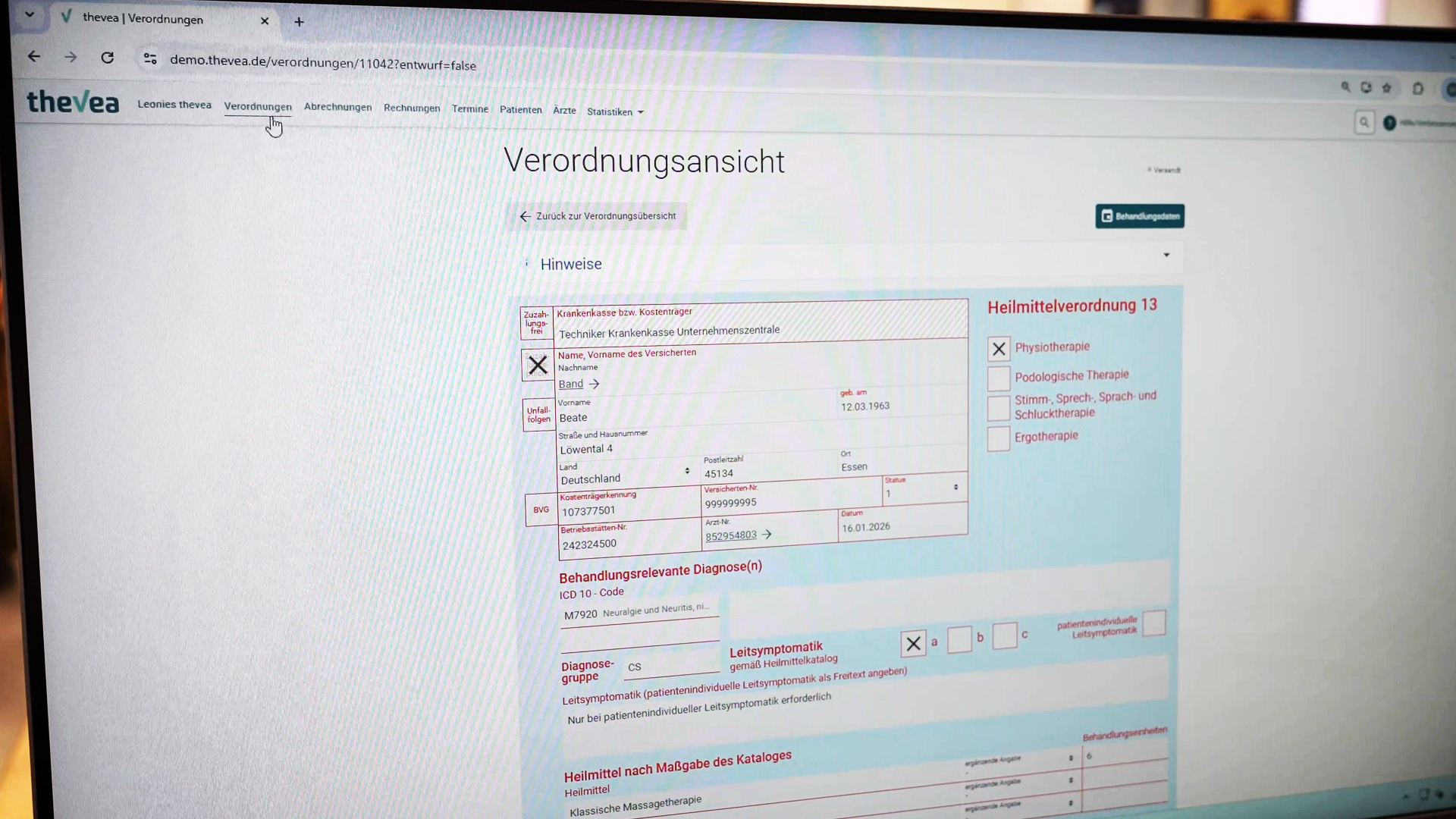
The core of the solution is software that guides workflows in such a way that as little switching between masks, lists and menus as possible is necessary. An example from the process: if an appointment in the calendar is set to ‘completed’, the follow-up question immediately arises as to whether this date should be considered the treatment date and whether it should be documented. This may seem trivial, but it is precisely the point at which practices otherwise start jumping around: checking prescription data, opening documentation, preparing billing, adding data – and then back to the calendar. The logic behind this is that processes should appear where they are expected. Instead of switching back and forth, the next steps are displayed as soon as they become relevant. For teams that want to get started without extensive training, this is often a prerequisite for ensuring that digitalisation is not perceived as an additional task, but rather as a relief in the rhythm of treatment in the therapy practice.
thevea Scan App: Prescriptions entered into the system via photo
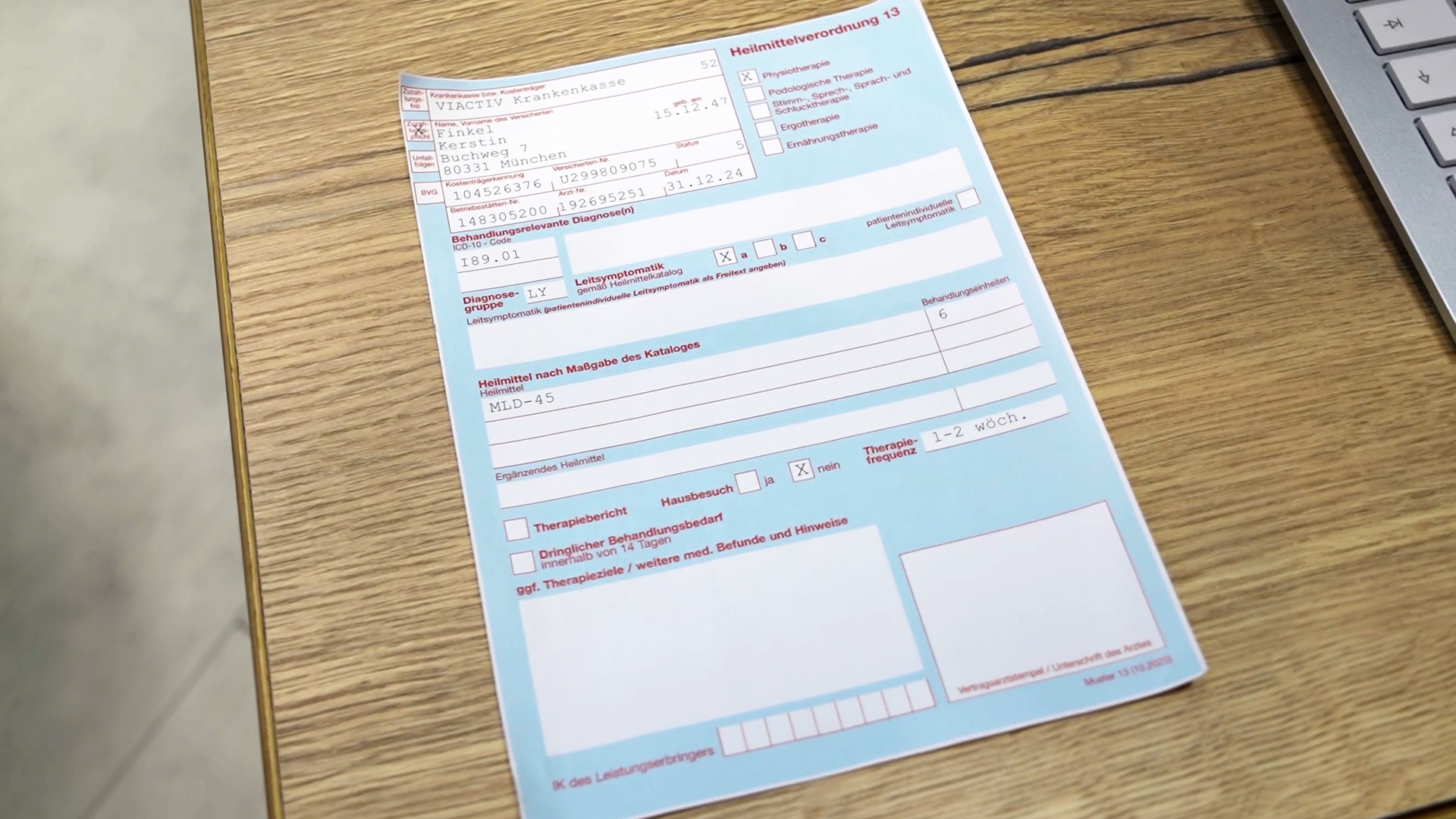
The centrepiece is the thevea Scan App, which, as a functional scanning app, replaces the step that is particularly time-consuming in many practices: typing prescriptions manually – including diagnosis groups, codes and other information. Instead, the prescription is captured with a photo, automatically recognised, saved with a click and transferred to the system. This not only saves typing effort, but also addresses a second, very practical pain point: errors on the prescription. If the information does not match, there is a risk of problems with billing – in the worst case, a therapy practice is left with the costs. This is where the idea of checking the prescription immediately after scanning comes in. In addition to the prescription, further data is created in the same step: patient files, doctor's notes, everything that used to be distributed and done manually is now created in an automated process.

Billing at the click of a button: bundle prescriptions and control payments
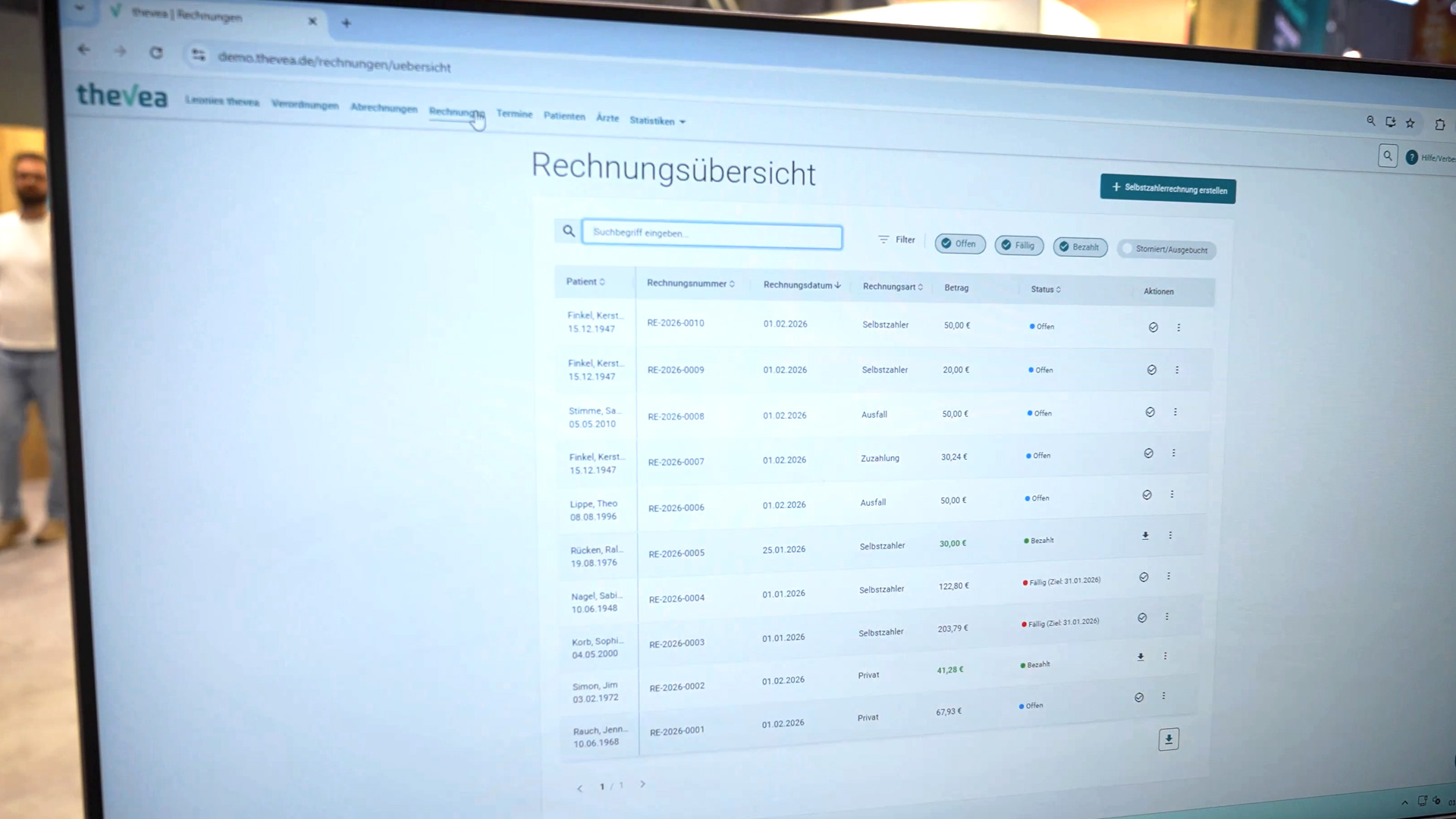
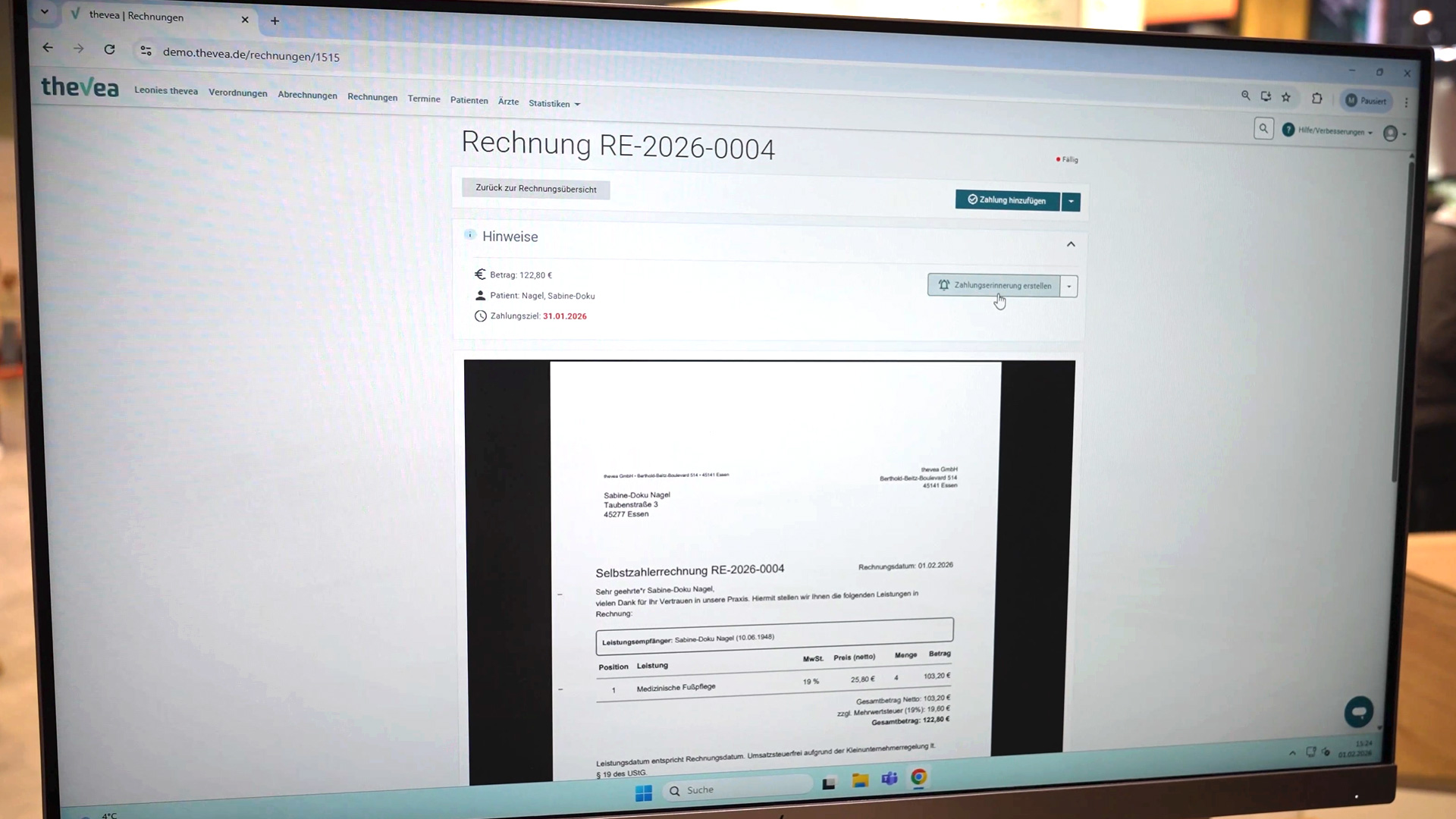
Once treatment is complete, the system automatically recognises when it is the last treatment and stores the prescription in the background, ready for billing. For practice owners, this means that there is no need to collect individual prescriptions at the end of the month. Instead, the software displays all billable prescriptions together. Billing is structured. A few decisions are all it takes to determine when payment should be made. Multiple locations or institution codes can also be taken into account. Billing with a click is not an isolated step, but the result of a previously conducted process. After bundling, the prescriptions are sent, accompanied by a cover note, and the money is paid out after the agreed period.
Appointment reminders via text message and email: reducing cancellations
In addition to prescriptions and billing, appointment scheduling plays a silent but important role, because cancellations directly disrupt revenue and workflow. The system described above includes an appointment search function that determines suitable time slots and provides specific suggestions. In addition, reminders can be sent automatically via text message and email to reduce the cancellation rate. This is more than just a convenience, especially in practices with tight schedules: every gap causes follow-up problems throughout the week, from the waiting room to team planning. Digital reminders do not replace the relationship with the patient, but they do reduce the number of cases in which appointments are simply missed.
Opta data tariffs and service packages: software plus contact person
Opta Data emphasises that software and services are organised separately in tiers. The software is divided into different tariffs, while services relating to billing, control and support can be added as required. This allows the system to be adapted to the size and structure of the respective therapy practice. The entry-level price is considered comparatively low, with the total cost being made up of the selected modules and services. The decisive factor is not so much the absolute amount as the question of which tasks can be permanently eliminated or simplified.
Why the timing is important right now
Regardless of the provider, the fundamental question for every therapy practice remains the same: what really needs to be digitised to make everyday life noticeably better? Telematics infrastructure and e-prescriptions set the framework, but acceptance comes from small friction losses: less double entry, less searching, less media breaks. Those who think of digitalisation as a process chain – from prescription to appointment, documentation and billing to payment – gain one thing above all else: peace of mind in the process. This is precisely the aim of the combination of software, scan app and integrated billing described here, supplemented by service modules. Opta Data positions itself as a companion for practices that do not want to start with a large project plan, but with a system that guides them through their daily work – step by step, without every team member having to become an IT professional first.




Trade fair reporting Germany - Trade fair knowledge, dates & events


