Keiser leg press with pneumatic resistance in training
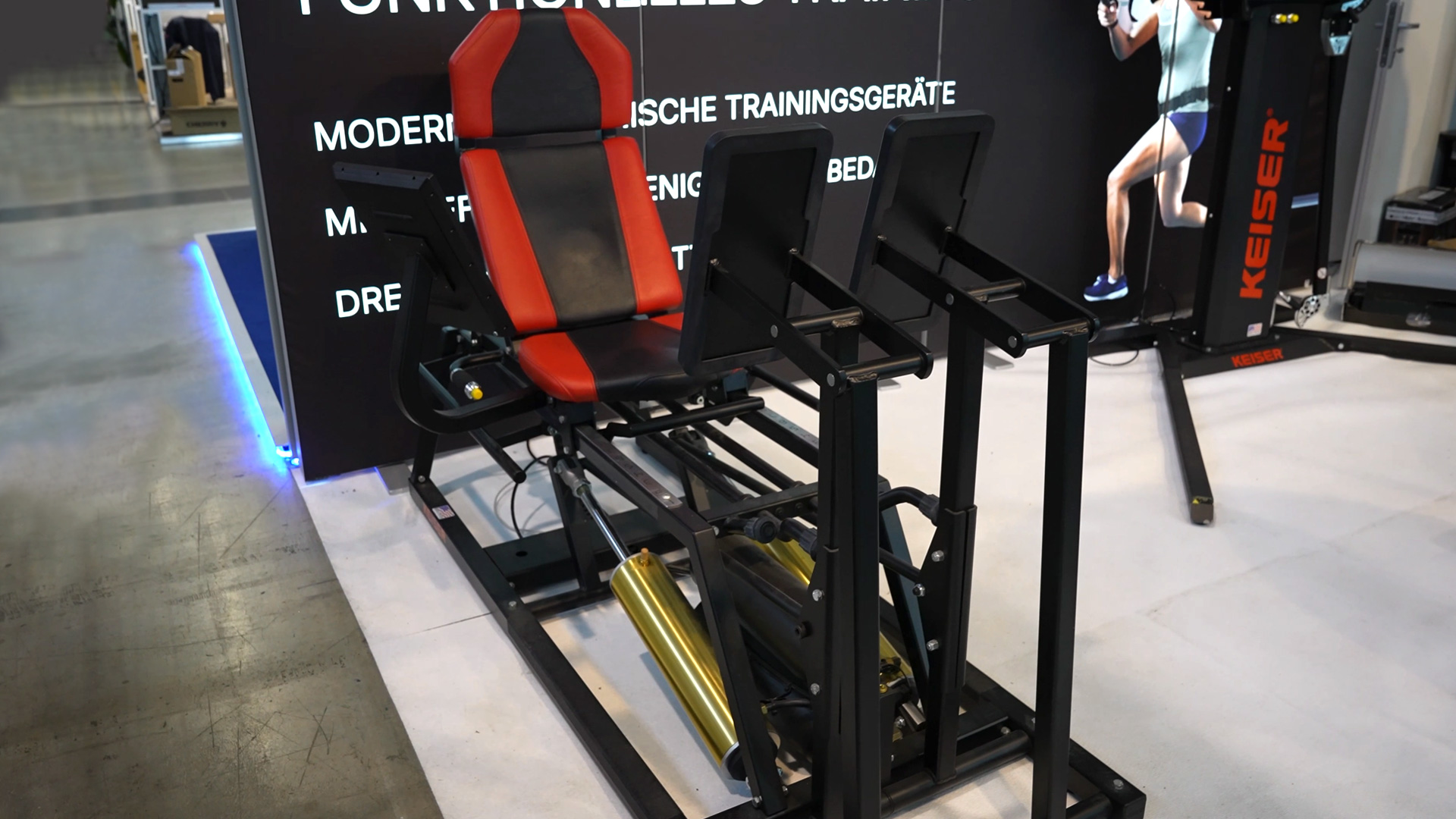
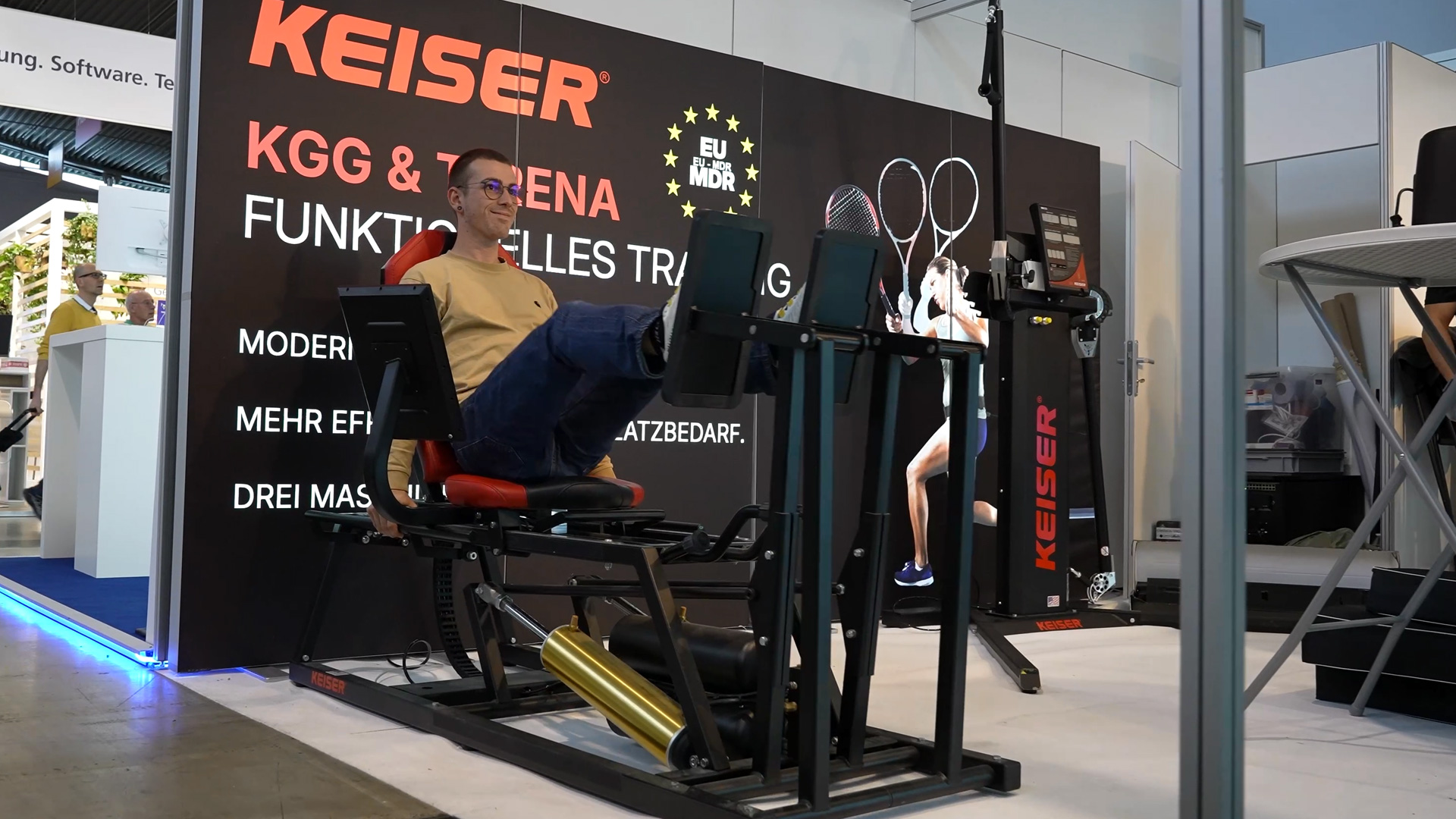
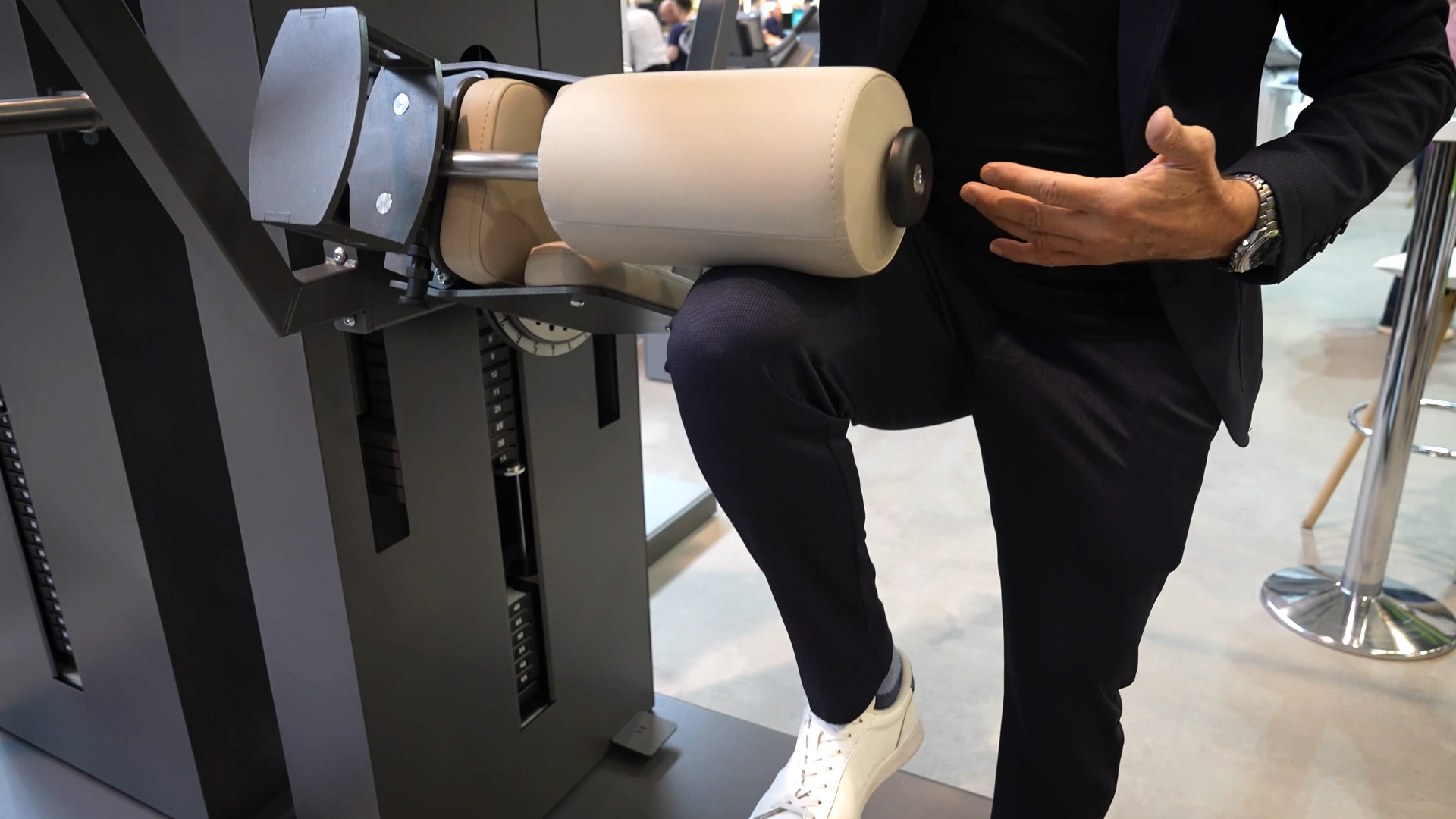
by B. Velonavy - 2026-02-05Anyone involved in strength training, rehabilitation or performance-oriented diagnostics will sooner or later come across systems that deliberately break with classic weight stacks. This is exactly where Keiser's leg press comes in, which relies on pneumatic resistance and thus pursues a training principle that differs significantly from conventional solutions. Instead of moving mass, resistance is generated via cylinders and air pressure – with noticeable consequences for training, control and evaluation.
The fundamental difference lies in the structure of the resistance. While inertia and acceleration of the weights play a central role in classic devices, this system works independently of mass. The pressure is built up via cylinders and can be adjusted in fine increments. This allows the resistance to be adjusted by the kilo without mechanical modifications or interruptions. What is particularly relevant here is that this adjustment can also be made during movement. This opens up training forms that are difficult to replicate cleanly with conventional systems.

Pneumatic resistance instead of weight blocks
The idea behind the pneumatic approach is not new, but it has been consistently refined here. The resistance remains constant throughout the entire movement – regardless of whether the work is slow or explosive. This is a crucial point, because this is precisely where classic weight training equipment reaches its limits. Inertia inevitably leads to delays in the force curve. With fast movements, this means that the neural stimulus is designed more for deceleration than acceleration. The air-based system circumvents this problem. At the same time, the design allows complete freedom of movement across the entire range of motion. The range of motion is not limited by rigid mechanical stops, but can be actively used and evaluated. This is particularly relevant in therapy, but also in performance-oriented training, where movement quality plays a central role.
Measurable data during every movement
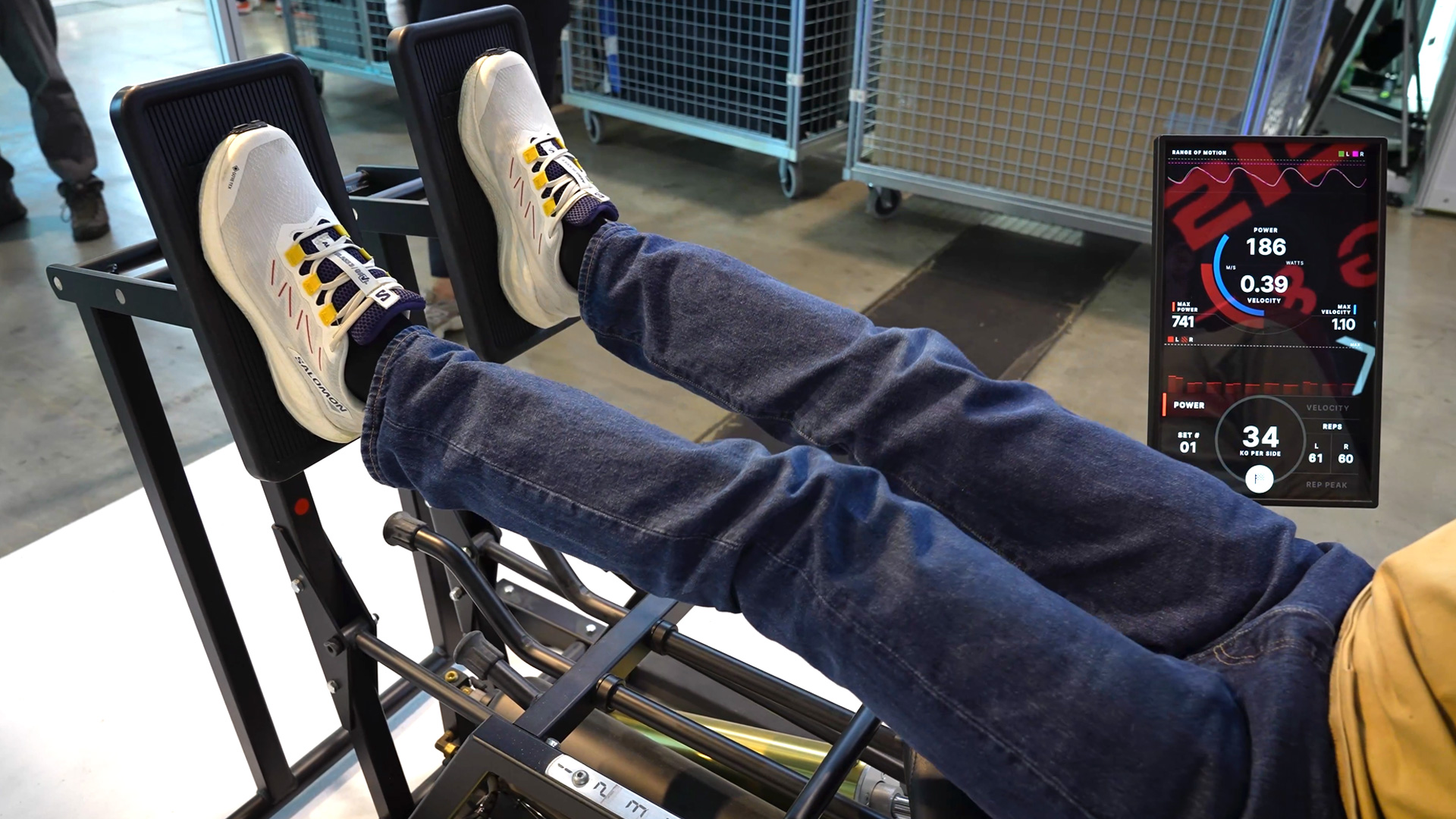
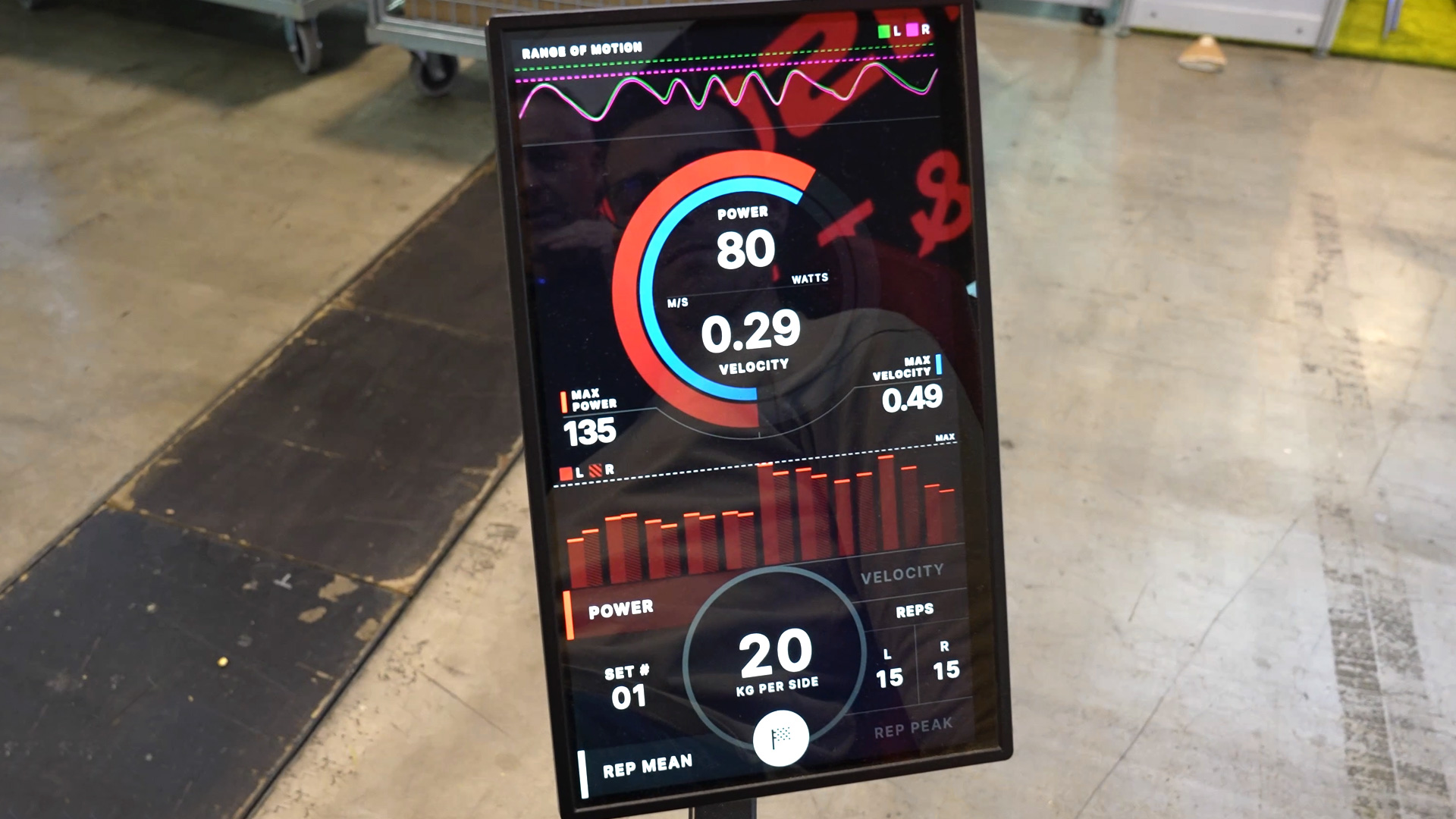
Another key aspect is the integrated diagnostics. Data is continuously recorded during the exercise, including range of motion, movement speed and the wattage generated. These values are displayed in real time and then stored. This allows training sessions to be not only subjectively assessed, but also objectively compared. Differences between the right and left sides become visible, as do changes over several sessions. The display of wattage in particular provides important information. Power is the result of the interaction between resistance and speed. The higher the power achieved, the greater the potential for fast movements, jumps or changes of direction. These relationships can be clearly displayed with the system without the need for external measuring devices.
Training at any speed
A key feature of the leg press is the ability to work at any speed with the same resistance. Slow, controlled movements are just as possible as explosive movements. The resistance does not adjust to the speed, but remains constant. This allows you to work specifically on speed – a point that is often neglected in classic strength training. This feature is also the reason why the system is used in both competitive sports and therapeutic facilities. Speed is not an exclusive ability of athletes, but a fundamental motor skill that should be maintained into old age. If it is not trained, it is lost. The device enables precisely this approach without overtaxing users.

Load velocity-based training and monitoring
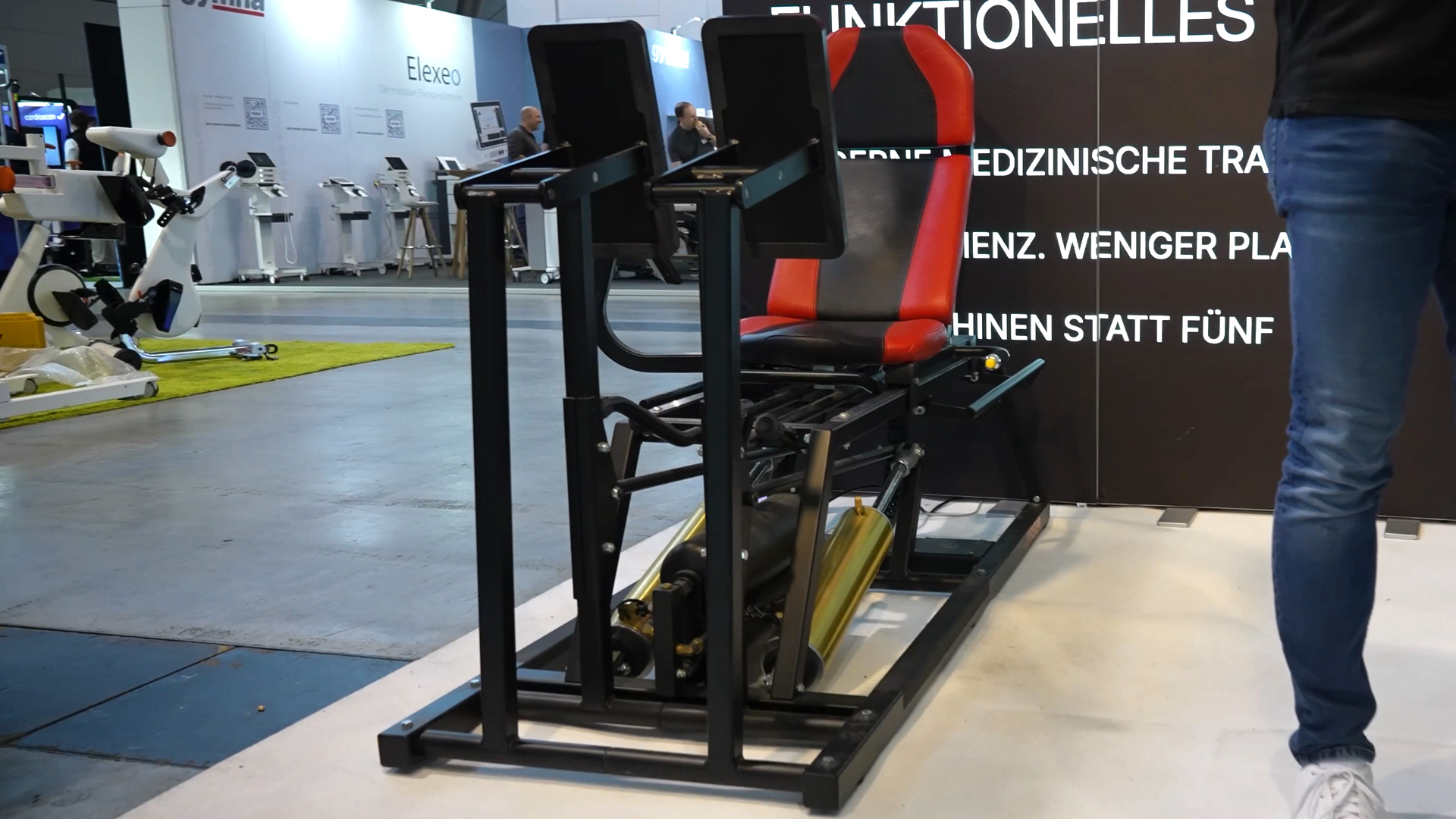
Load velocity-based training is playing an increasingly important role in modern training. In this approach, training is not controlled solely by weights, but by the actual movement speed achieved at a certain resistance. The leg press automatically provides the necessary data for this. Each unit is documented, deviations become visible and progress can be measured. This type of monitoring is not only relevant in elite sports. It also allows for more precise control of loads in rehabilitation or preventive training. Instead of making blanket specifications, it is possible to respond individually – depending on the condition on the day, muscular imbalances or the training goal.
Areas of application from therapy to competitive sports
The system is used in a wide variety of environments. In addition to professional training centres, it can also be found in therapeutic facilities and geriatric care. Its key advantage lies in its adaptability. Where little strength is available, work can be carried out safely and in a controlled manner. At the same time, high performance requirements can also be easily mapped. The combination of constant resistance, free movement speed and integrated diagnostics makes the leg press a tool that combines training and analysis. It does not replace training concepts, but provides the technical basis for implementing them more precisely and understanding them better.
- Constant resistance regardless of movement speed
- Stepless adjustment even during the exercise
- Measurement of range of motion, speed and wattage
- Suitable for therapy, prevention and competitive sports
Trade fair reporting Germany - Trade fair knowledge, dates & events


