Manuthera 242 makes therapeutic work easier without gravity
by J. Groh - 2026-02-04In many therapeutic workflows, it is not only the technique that determines the success of the treatment, but also the conditions under which the work is carried out. Posture, physical exertion and the ability to examine and treat with precision influence both the therapist and the patient.
The Manuthera 242 therapy table addresses precisely this issue. It was developed to enable treatments to be carried out under conditions in which gravity is largely eliminated and movements can be performed in a controlled, calm and efficient manner. The system was presented at Sport-Tec as a product from Finland. The focus is not on spectacular technology, but on noticeable relief in everyday therapeutic practice. The couch actively supports the therapist in their work and at the same time creates a relaxed starting position for the patient.
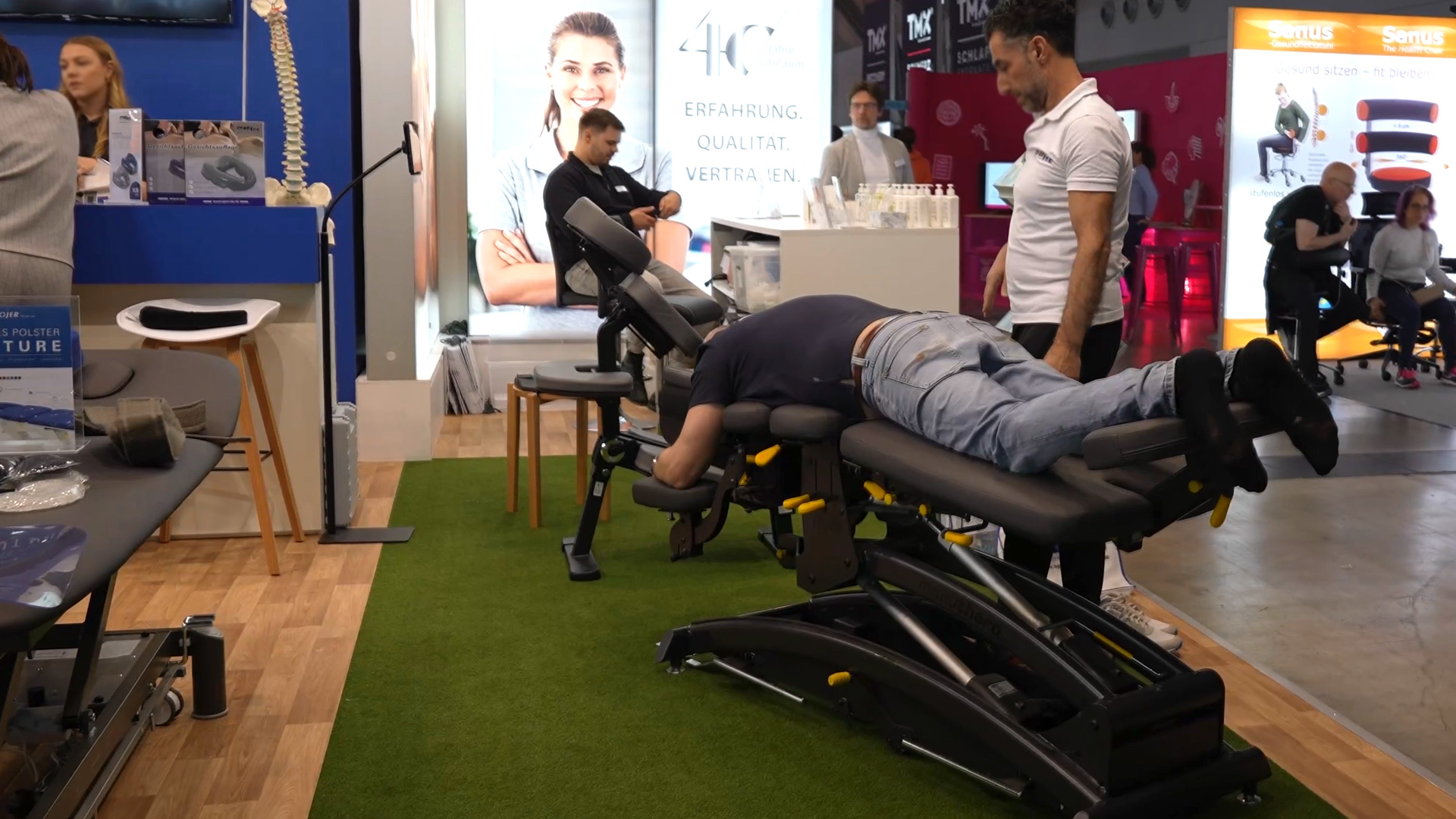

Working without gravity as a central principle
The basic concept of the Manuthera 242 is based on the idea of largely neutralising the effects of gravity during examination and treatment. This allows movements to be performed that would require significantly more strength and stabilisation when standing or on conventional tables. For the therapist, this means working on a different level, as techniques can be applied more easily and precisely. The absence of gravity has a direct effect on the patient's muscle tone. Tension is reduced, tissue becomes more accessible, and palpation and mobilisation can be performed more calmly. At the same time, the therapist can combine examination and treatment without having to constantly change position.
Efficient examination of the spine in a relaxed position
A key area of application for the Manuthera 242 is the examination of the spine, especially the lumbar spine. While active findings are often collected in a standing position, the table offers ideal conditions for passive findings. Flexion, extension and differentiated movement tests can be performed without the patient having to actively resist. Gravity-free positioning significantly simplifies the assessment, especially in cases of back pain or a suspected slipped disc. The therapist can calmly check the range of motion without it being distorted by muscle tension or evasive movements. This creates a more precise basis for further treatment.
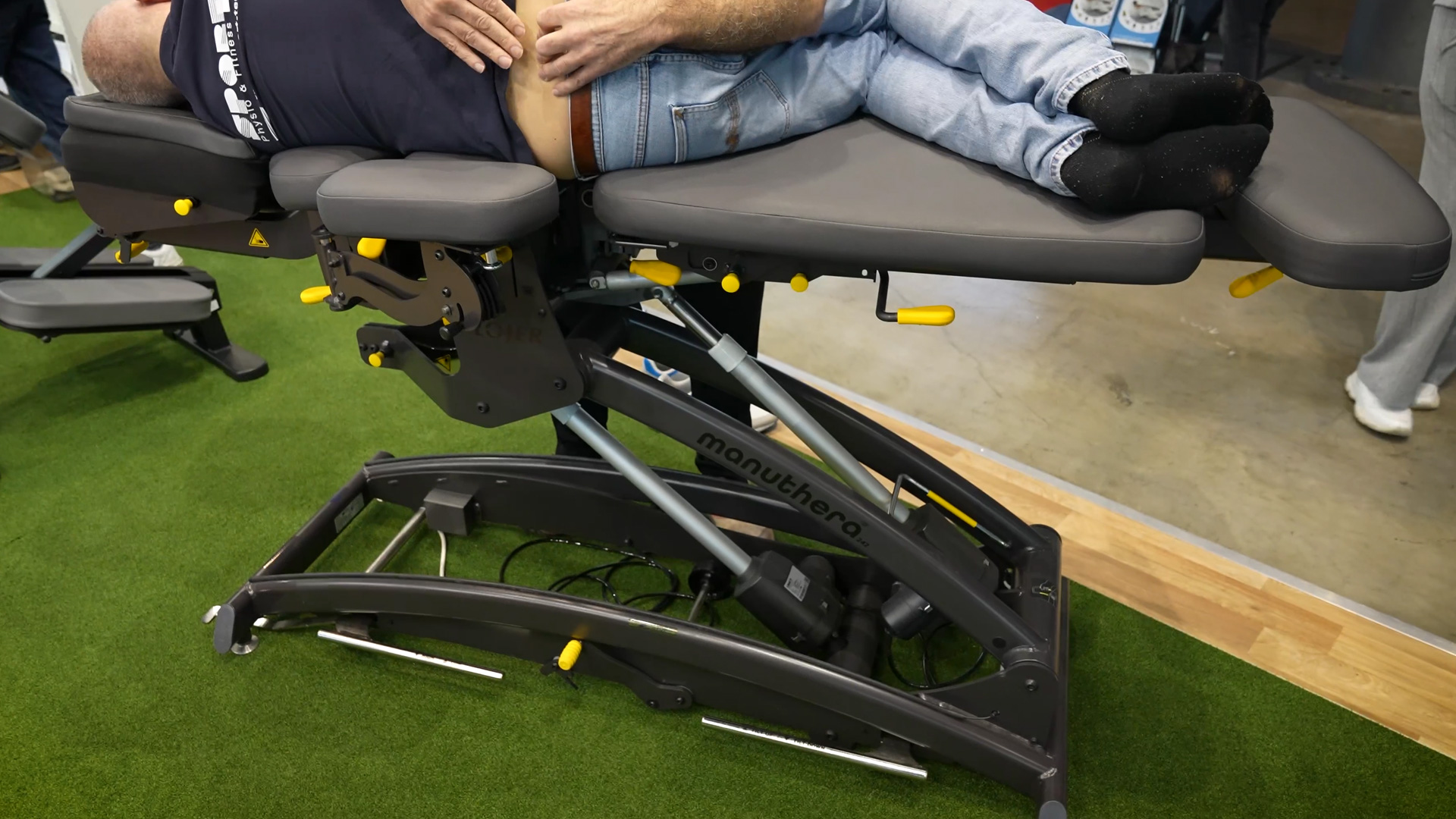
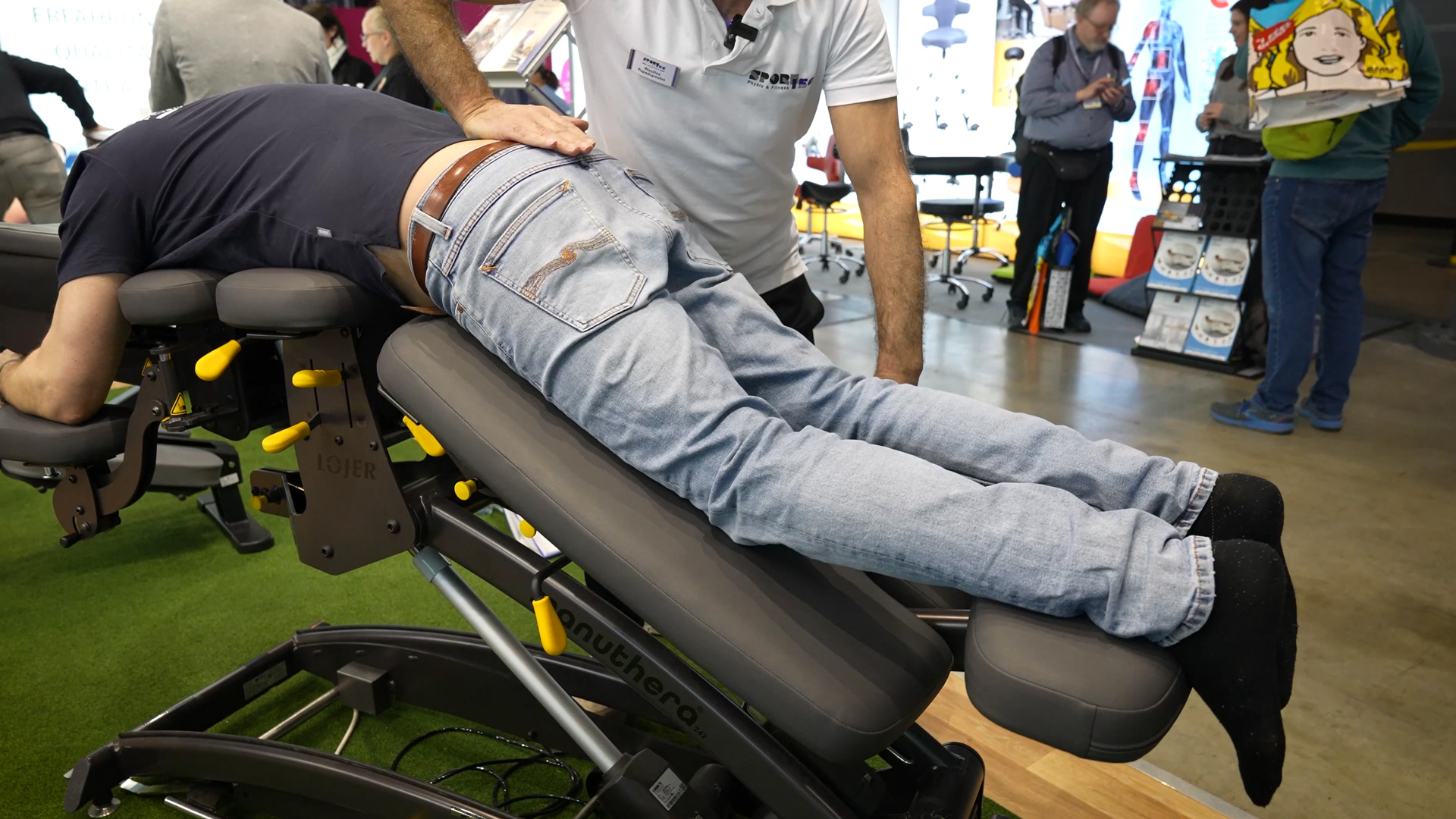
Targeted and energy-saving use of manual techniques
For manual therapists, physiotherapists and osteopaths, the precise application of their own strength plays a central role. The Manuthera 242 helps to perform manual techniques with significantly less physical effort. Movements in the direction of extension, flexion or traction can be initiated in a controlled manner without the need for high leverage forces. This not only relieves the patient, but also the therapist themselves. Repeated treatments can be carried out in a concentrated manner without fatigue or overload compromising the quality of the work. The table does not replace specialist knowledge, but acts as a tool that makes existing techniques more effective.
Three-dimensional movements with the 3D function
Another feature of the Manuthera 242 is the ability to perform movements in three dimensions. Rotation, flexion and extension can be combined to enable complex mobilisations. By freeing the patient from the pull of gravity, these movements can be performed carefully and with fine control. The therapist decides the direction, speed and intensity at any given moment. The dosage depends on the individual condition of the patient and can be adjusted at any time. This enables work that is both structured and flexible and can be adapted to the respective findings.
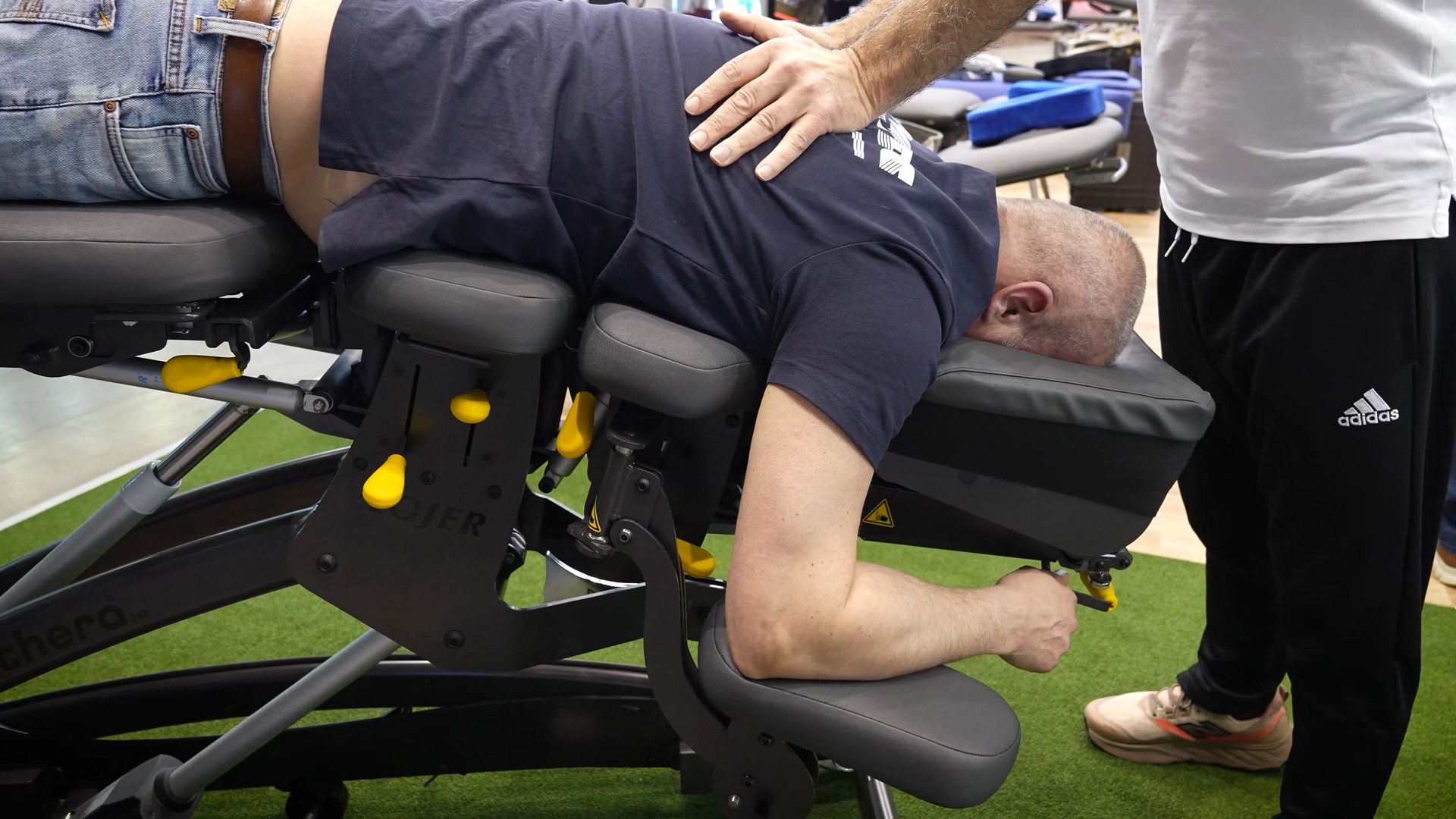
Advantages of gravity-reduced therapy at a glance
- Reduced muscle tone through relaxed positioning
- Energy-saving work for the therapist
- Combination of examination and treatment in one position
- Precise dosage of manual techniques
- Three-dimensional movement options including rotation and traction
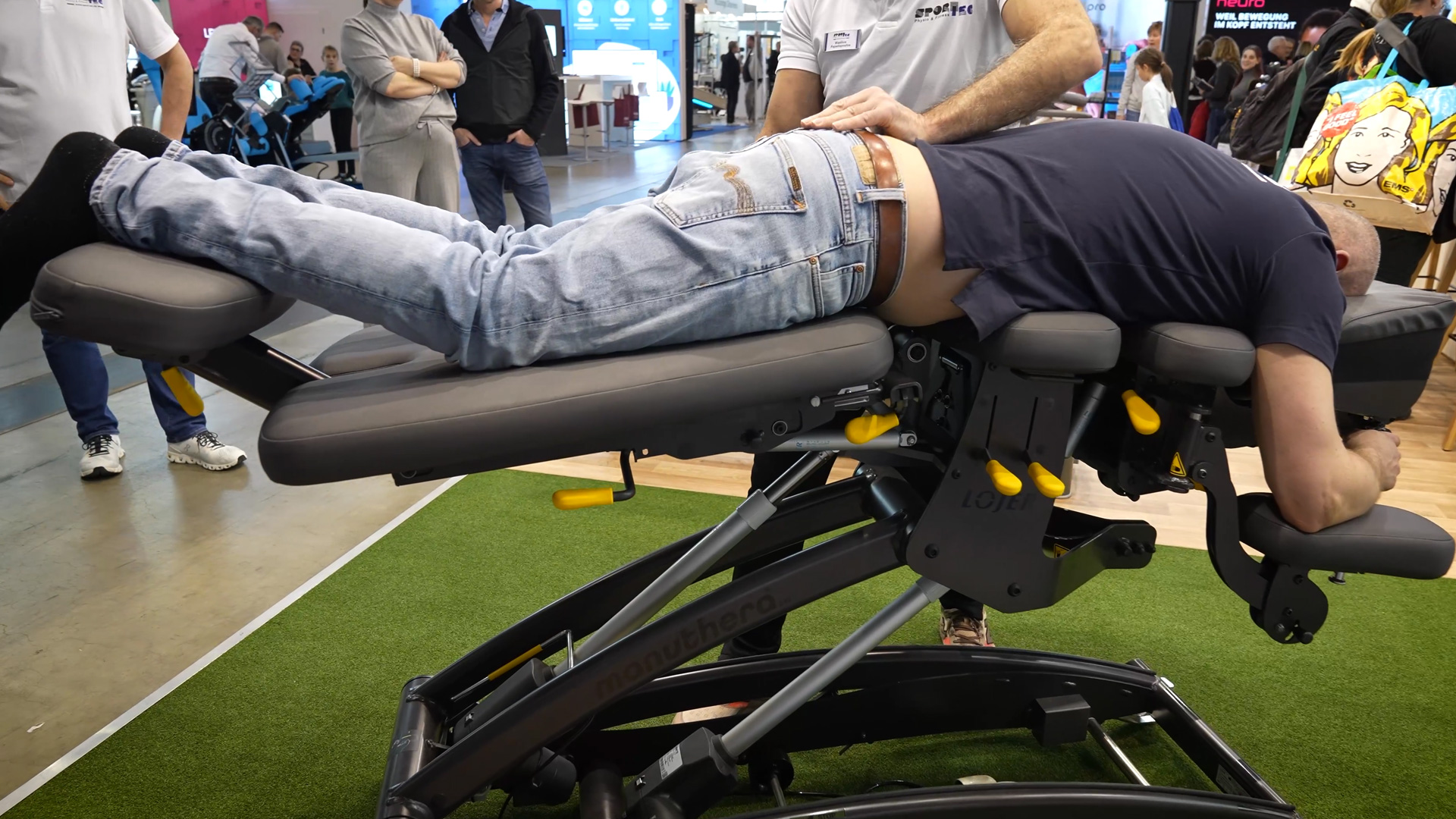
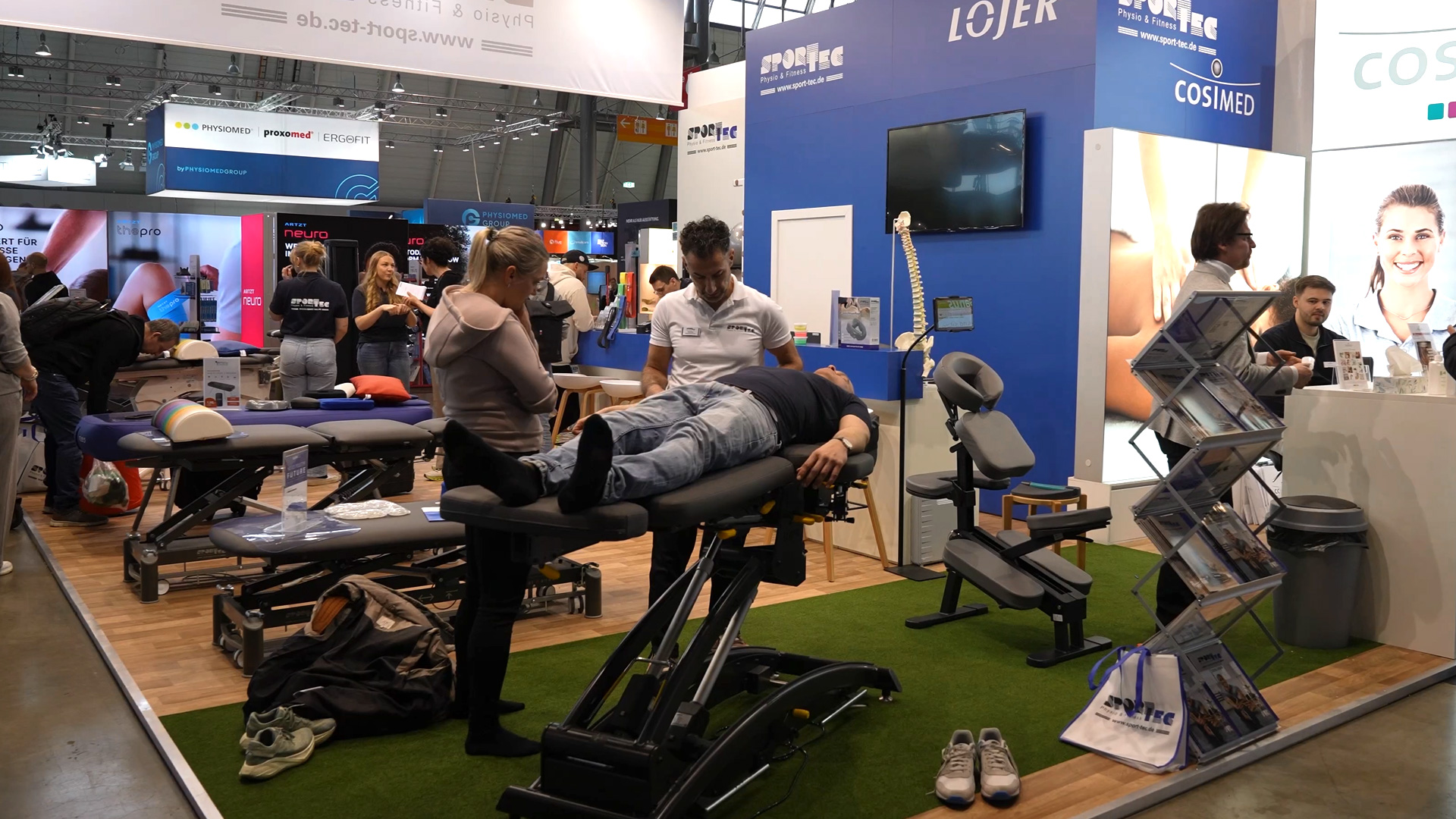
Use in therapy centres and economic classification
The Manuthera 242 is primarily aimed at therapy centres that value efficient processes and sustainable working conditions. By reducing the strain of everyday treatment, the quality of therapy can be maintained at a stable level, even when the centre is operating at full capacity. At the same time, patients benefit from a calm, controlled treatment situation in which movements are performed without unnecessary tension. With a purchase price of around £10,000, the couch represents an investment that must be carefully planned. However, this is offset by ergonomic advantages, more precise diagnostics and the possibility of implementing therapeutic techniques more gently in the long term. In this area of tension, the Manuthera 242 positions itself as a specialised tool for professional applications.
Support instead of replacement of therapeutic competence
It is crucial that the Manuthera 242 does not replace the therapist, but supports them. Professional competence, experience and empathy remain the basis of any successful treatment. However, the couch creates conditions under which these skills can be optimally utilised. The reduction of external stress creates space for concentrated work. This benefits both the therapist and the patient and makes gravity-reduced therapy a tool that can be meaningfully integrated into modern treatment concepts.
Trade fair reporting Germany - Trade fair knowledge, dates & events


