PCR device for liquids with disposables and fluidic system
by A. Bergmeier - 2026-04-09The development of PCR devices has undergone a significant shift in recent years. While traditional laboratory analysis has long relied on centralized structures, compact point-of-care systems are becoming increasingly important.
A device presented at Analytica shows how this development can be technically implemented: through the combination of modular fluidics, disposables and a clearly separated system architecture. Essentially, the aim is to efficiently analyze liquids such as blood or urine without critical components coming into permanent contact with the medium. This approach not only changes the hygiene requirements, but also the flexibility of the application.
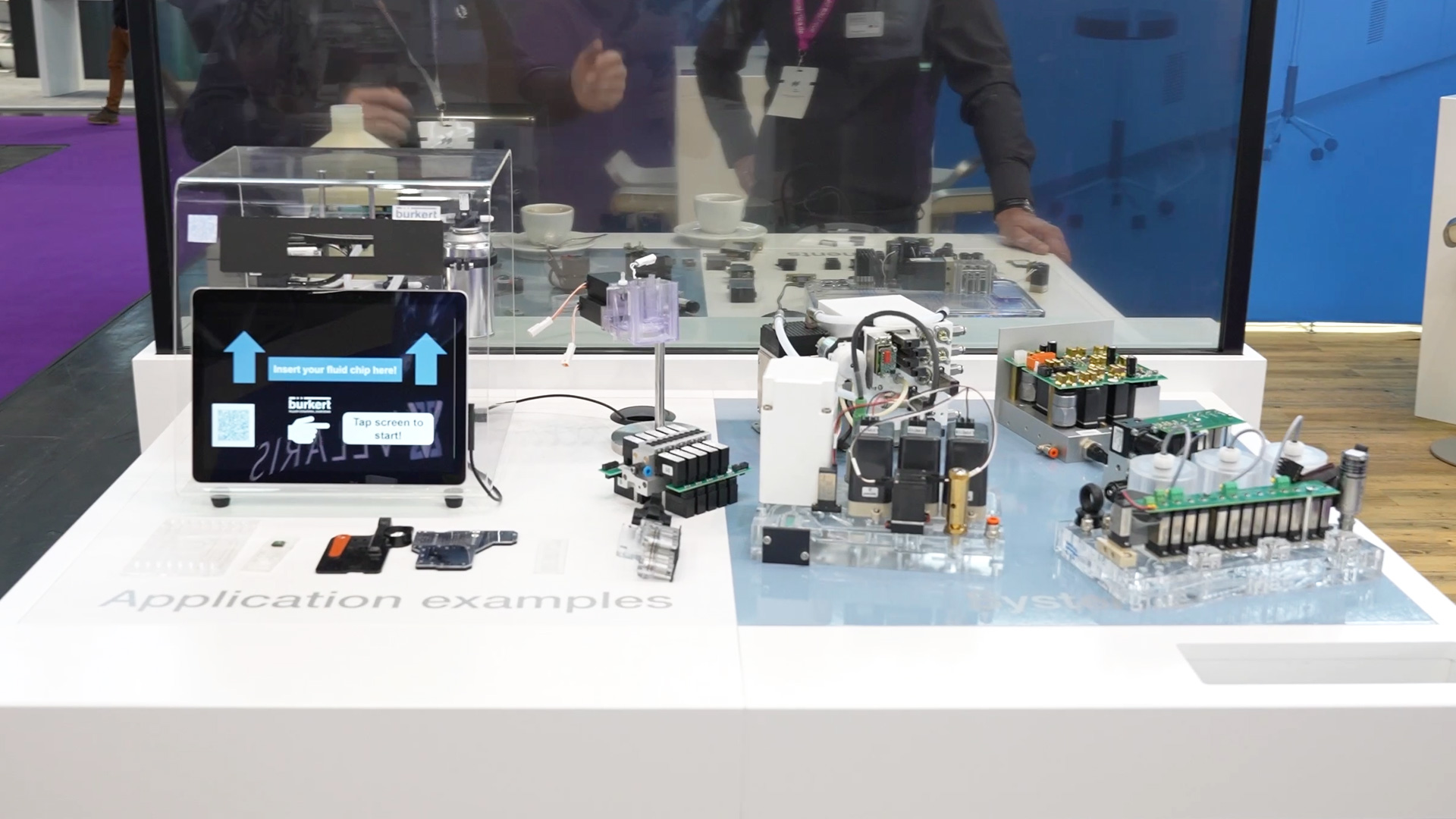

Bürkert PCR device consistently separates fluidics and disposables
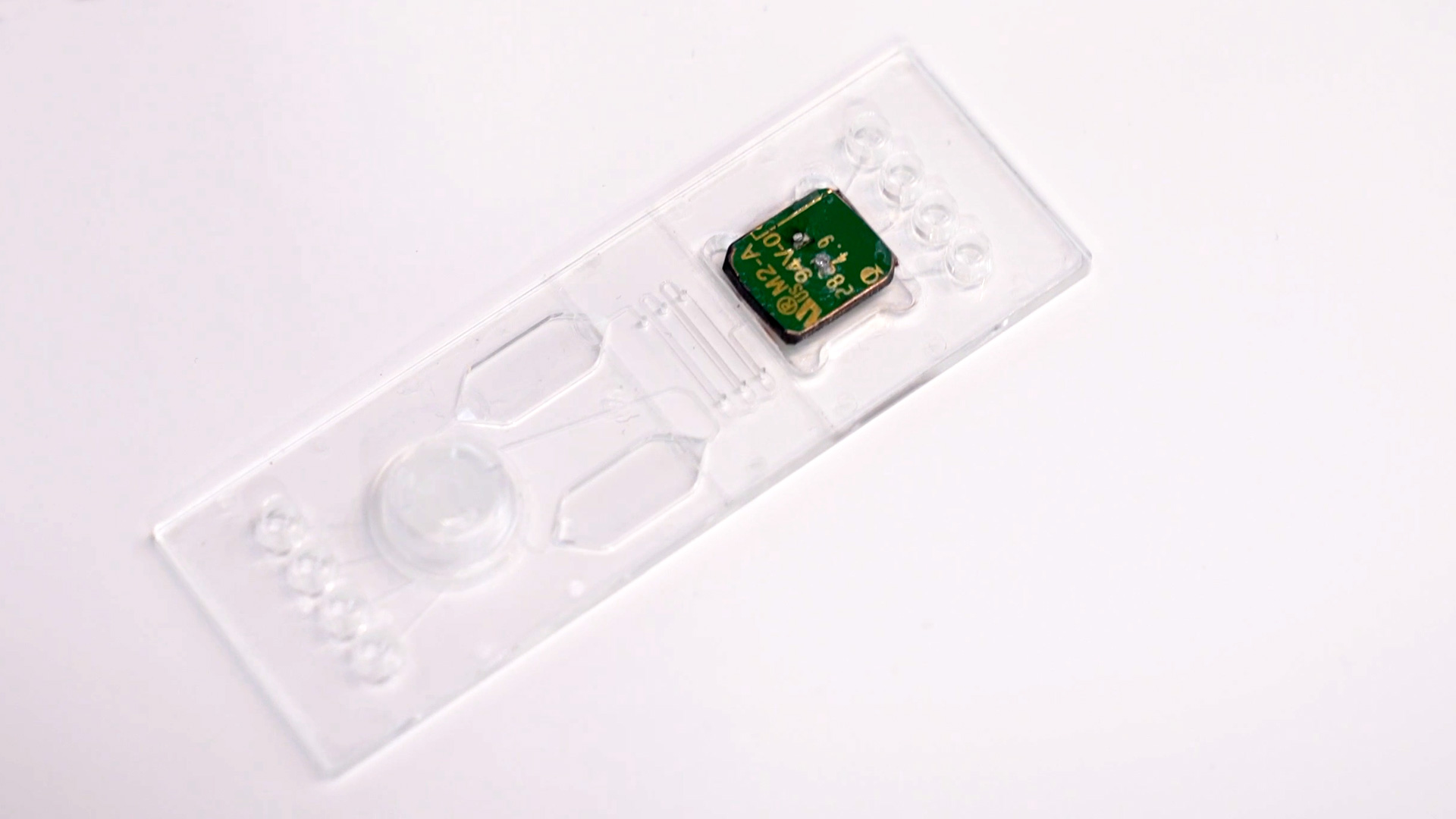
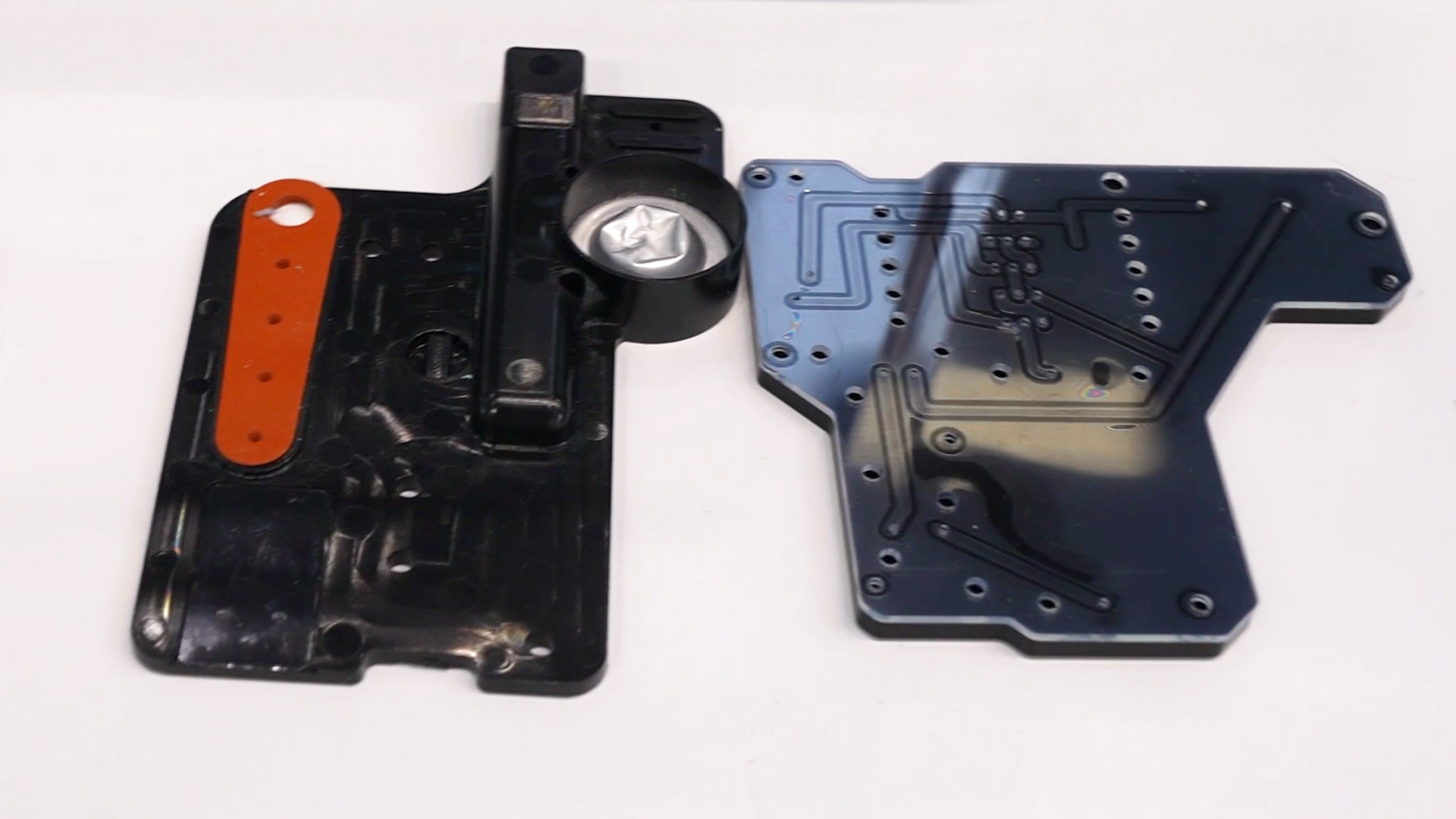
The system presented is based on a clear functional separation. A central multi-use unit contains the fluidics, which remain permanently in the device. This is deliberately not designed to be in contact with the media. In contrast, the actual sample is carried out using replaceable disposables, which are discarded after each use. These disposables are organized as cassettes that are inserted into the device. Inside these cassettes are chips with microfluidic channels. The entire reaction - including potentially contaminated media - is thus completely confined to the disposable components. This significantly reduces the risk of cross-contamination and simplifies maintenance and cleaning, as the central unit does not come into contact with biological samples.
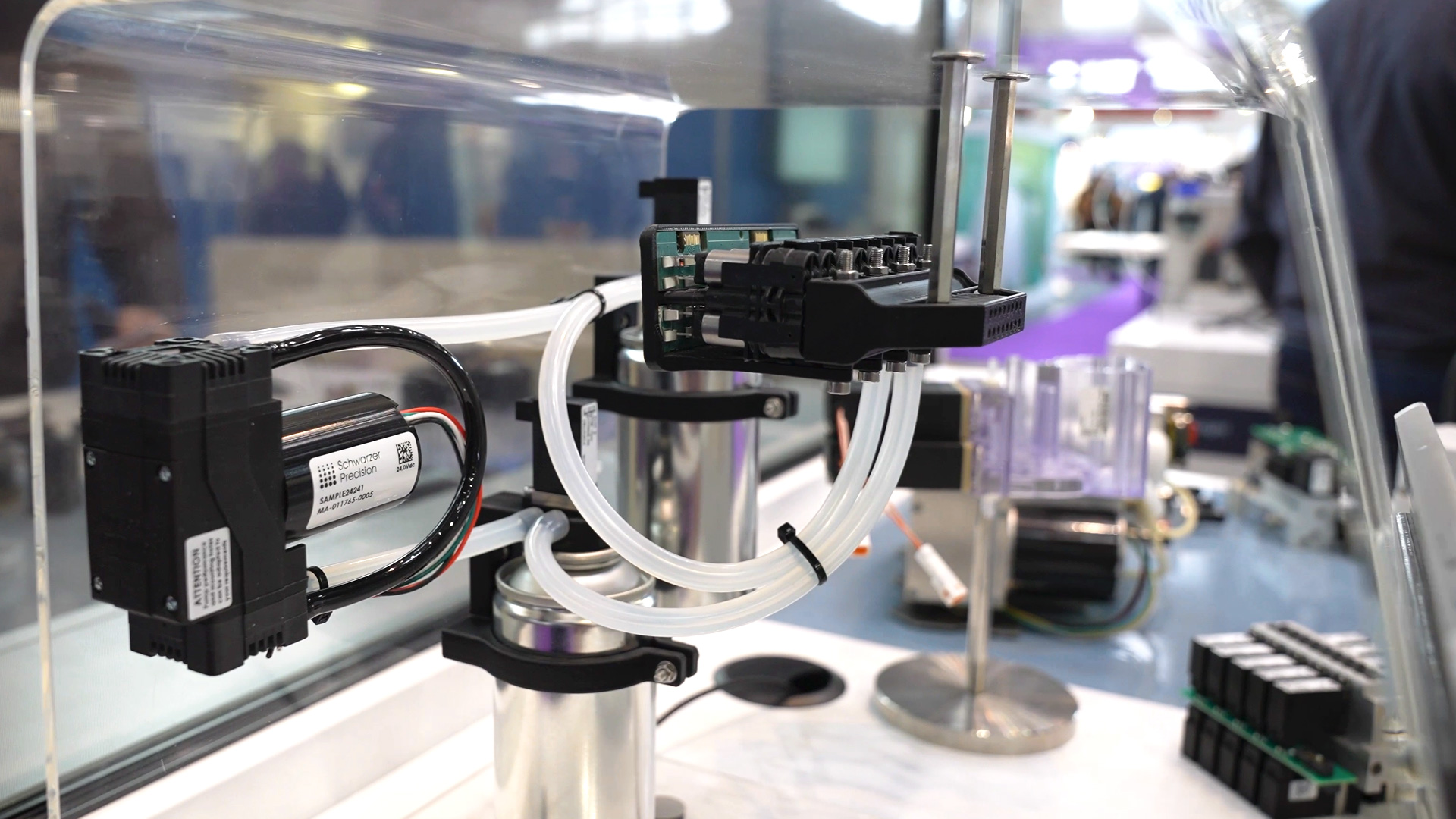
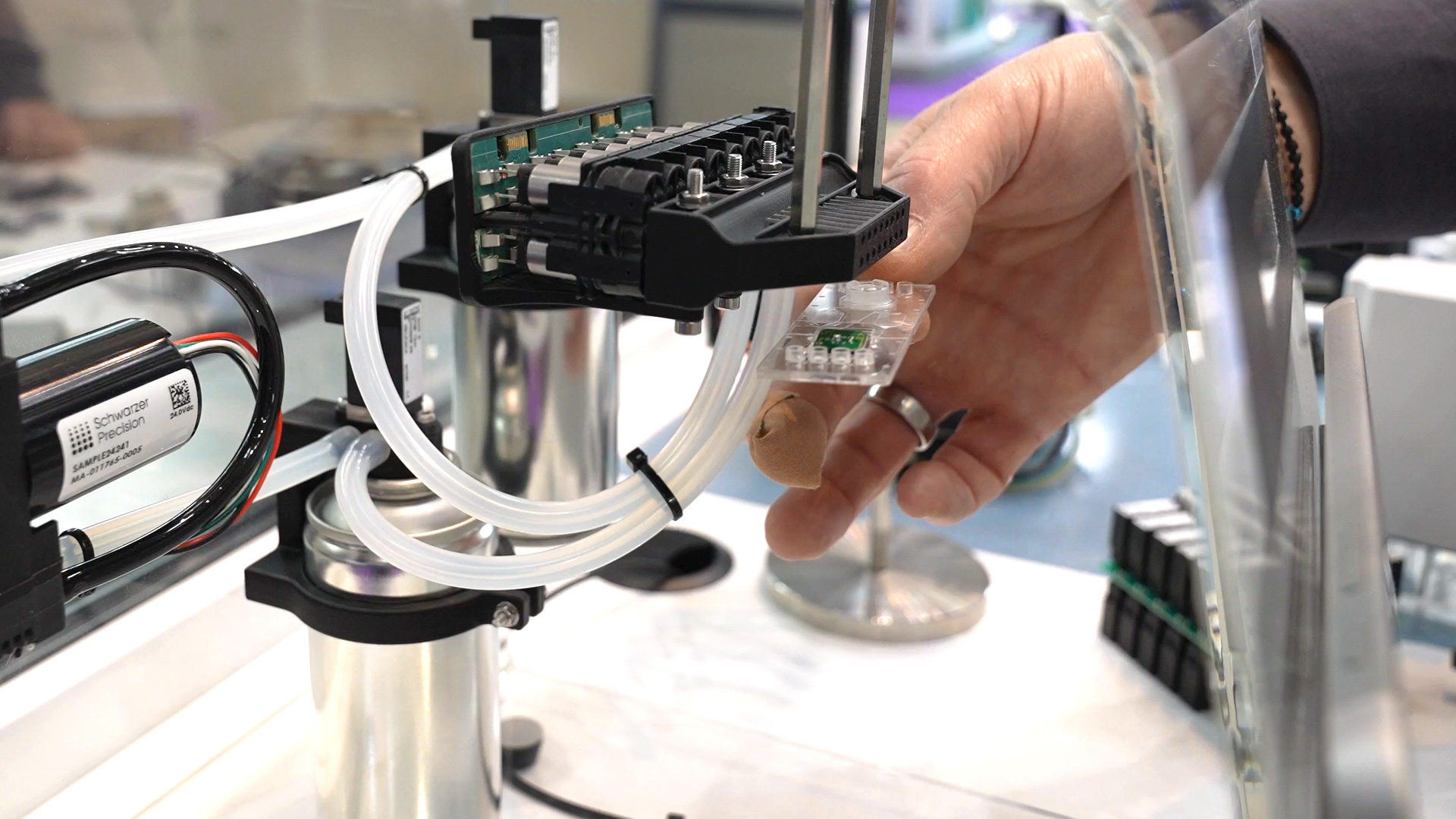
Fluidic system controls channels via pneumatic valves
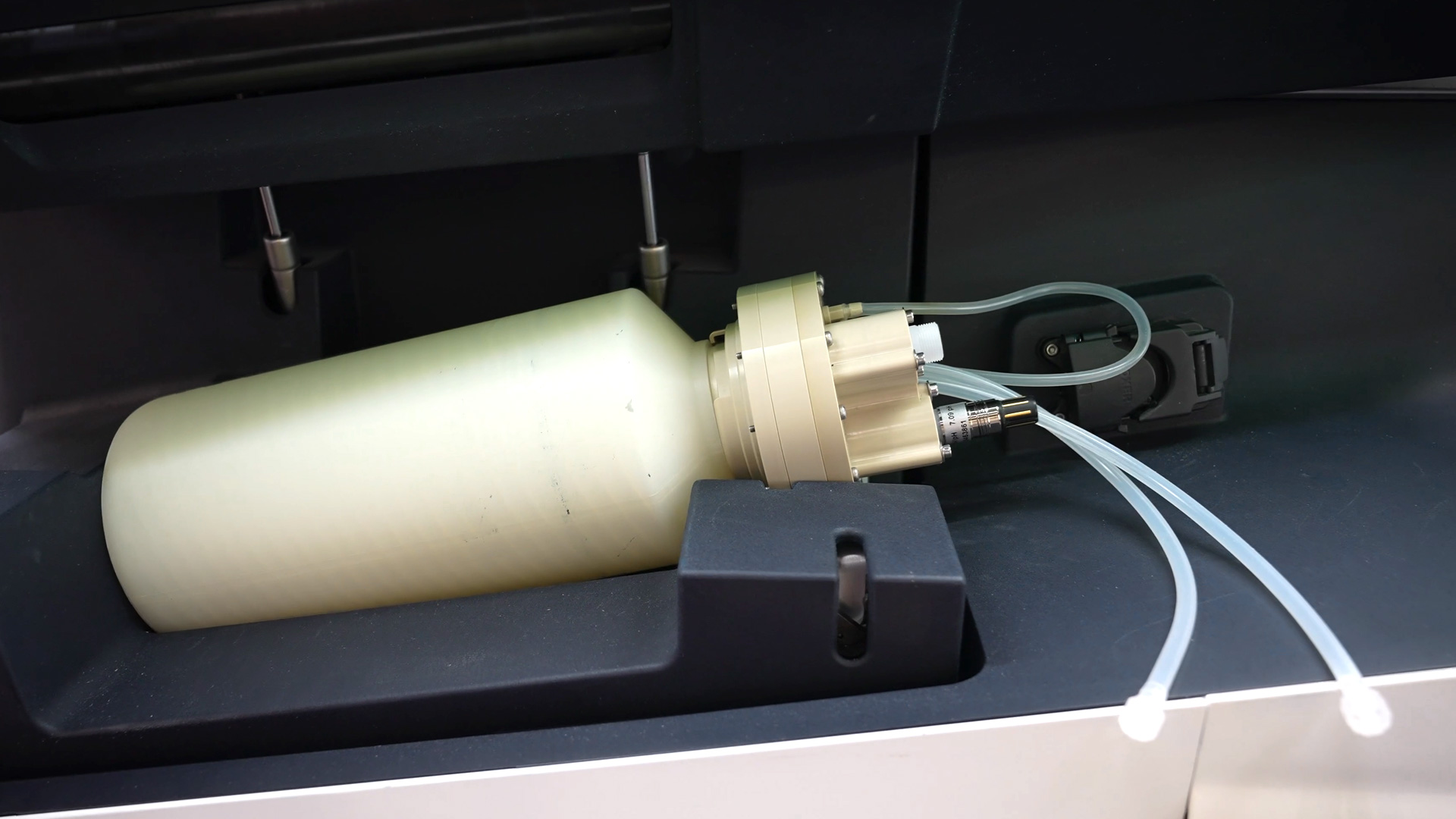
The fluids are controlled by a precisely tuned fluidic system. Pressure conditions are built up within the device which have a targeted effect on the disposables. A time-pressure dosing system is used in which negative pressure and positive pressure are generated and stored in separate containers. Valves are activated via this pressure control, which in turn open or close the microfluidic channels in the chip. This makes it possible to precisely control when and how a liquid is moved within the system. A typical process involves several steps:
- Generation of negative and positive pressure in the system
- Control of pneumatic valves for channel release
- Transport of the liquid through defined microchannels
- Conducting the reaction within the disposable chip
- Closure and removal of the cassette without contact with the fluid

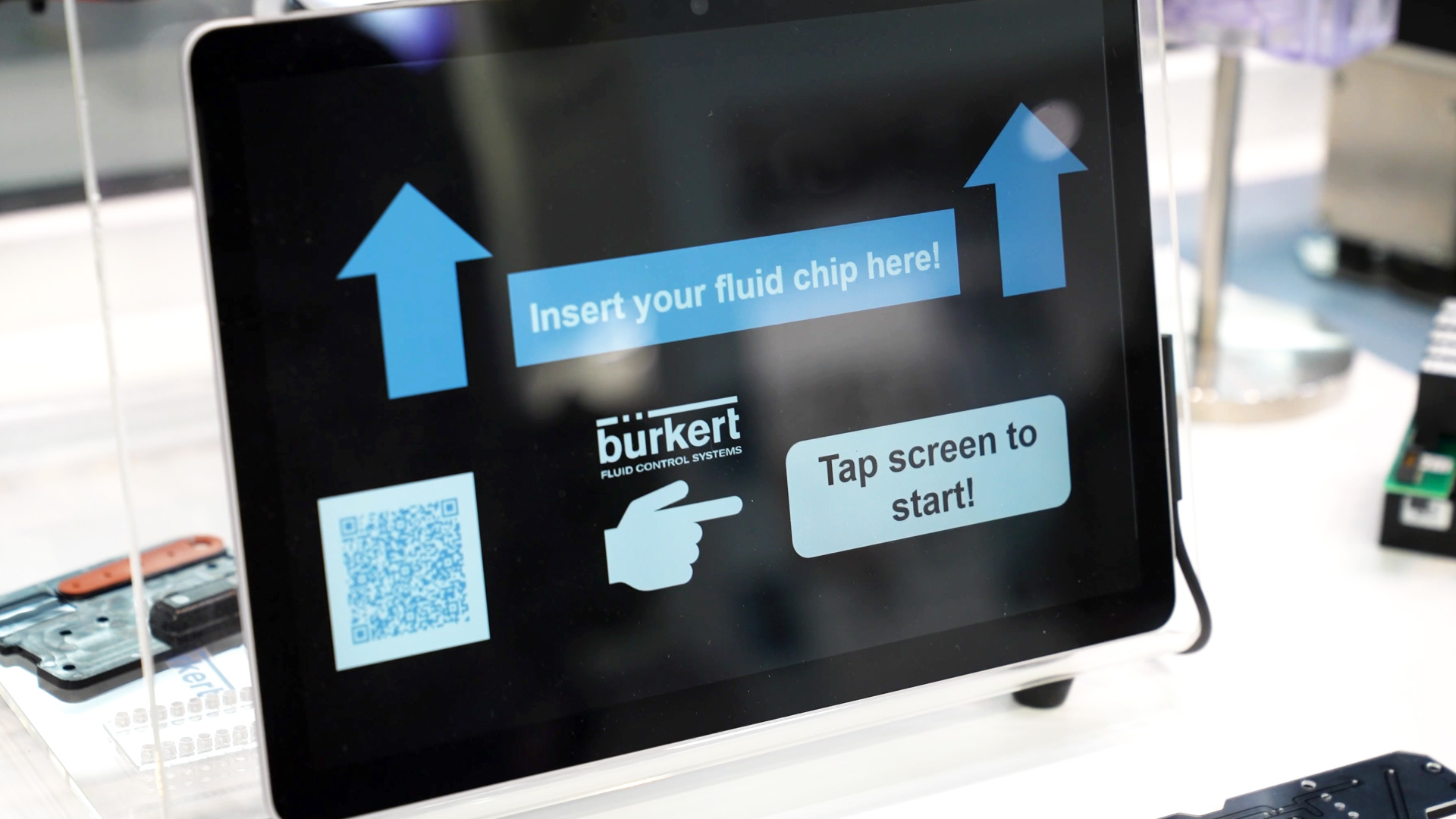
Disposables with integrated sensors expand analysis functions
A key development step is the integration of sensors directly into the disposables. The chips not only contain channels for liquid transport, but also semiconductor components that can record measured values. One example is an integrated pH sensor that is built directly into the disposable. The electrical connection to the multi-use unit is made via contact points as soon as the cassette is inserted. This allows measurement data to be recorded and displayed directly from the reaction. The advantage of this approach lies in the combination of precision and cost-effectiveness. The sensor system is not installed as a permanent component in the device, but rather as a cost-effective part of the disposable components. This opens up scope for different analysis variants without having to change the basic system.
PCR device reduces development time for manufacturers
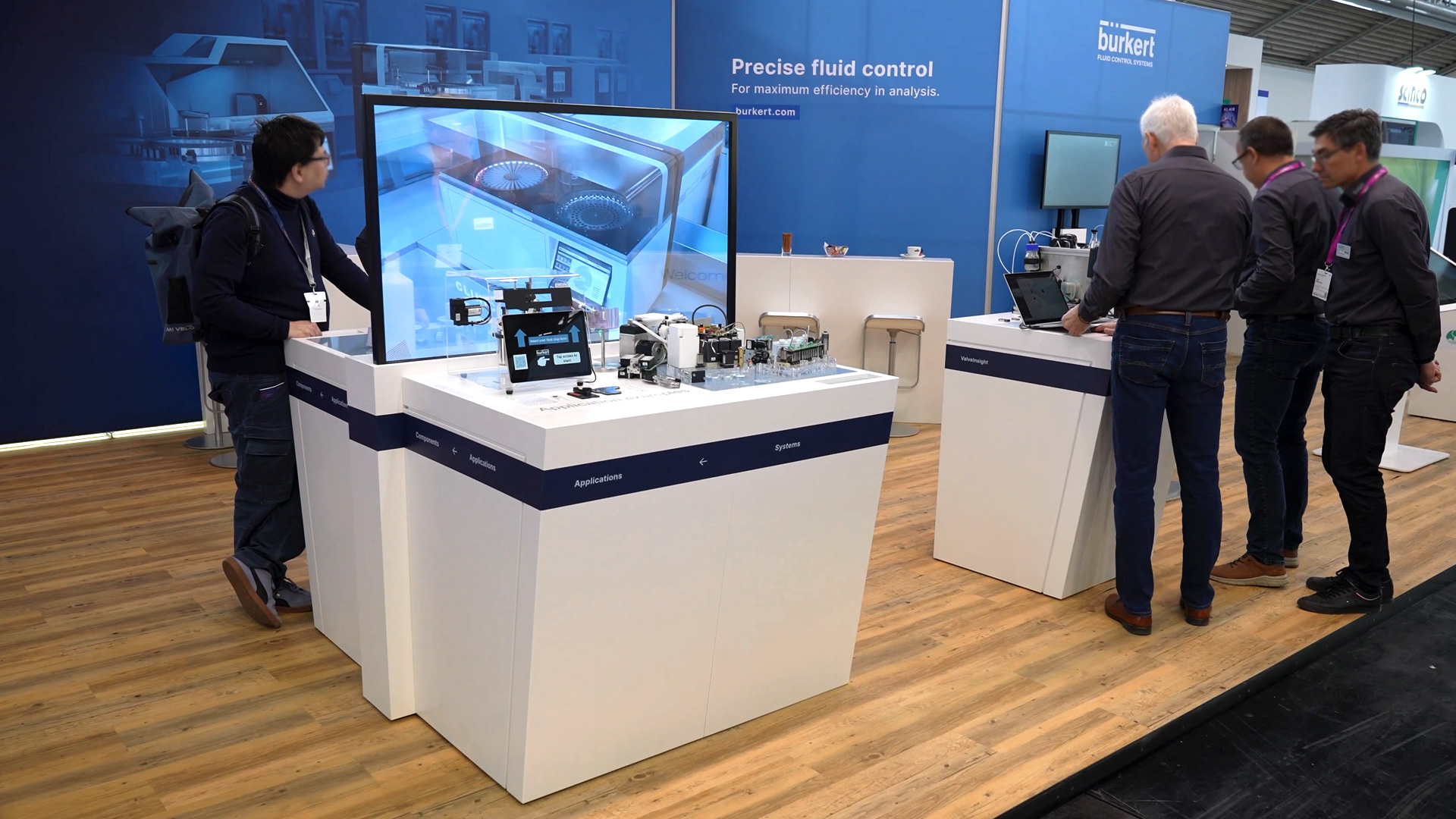
In addition to laboratory applications, the concept is also aimed at device manufacturers. The system is designed in such a way that central components are already available and can be individually adapted. Only the front area, in which the disposables are integrated, is customized. This modularity has a direct impact on development time. Manufacturers can fall back on existing fluidic solutions instead of developing their own systems from scratch. This not only shortens the time-to-market, but also reduces the technical risks in development. At the same time, there are economic advantages. Standardized components reduce costs, which enables more flexible pricing - a factor that is particularly relevant in international competition.
Flexible applications for PCR devices in diagnostics and analytics
The range of applications for such systems is broad. The initial focus is on applications in the field of diagnostics, particularly where rapid results are required directly on site. Liquids such as blood or urine can be analyzed without the need for a complex laboratory infrastructure. In addition, the architecture opens up possibilities for further applications in general analytics. The decisive factor here is not the specific test method, but the ability to move and analyze liquids in a precise and controlled manner. The combination of modular fluidics, interchangeable disposables and integrated sensors creates a platform that can be adapted to different requirements. This shifts the role of such devices away from being a specialized stand-alone device to a flexible system that can be configured according to the application. This development shows that PCR devices are not only becoming more powerful, but also more versatile. The technical basis for this lies less in individual components than in the way in which they are combined with each other.
Trade fair reporting Germany - Trade fair knowledge, dates & events


