Spannkopf Systeme für flexible Zerspanung und Automation
von Jürgen Groh - 2024-09-19In der Zerspanung verändert sich die Rolle der Spanntechnik grundlegend. Während früher stabile Serien im Vordergrund standen, sind heute wechselnde Bauteile, kurze Rüstzeiten und automatisierte Abläufe entscheidend.
Der Spannkopf wird dabei zum zentralen Element, weil er bestimmt, wie schnell und präzise ein Werkstück in den Prozess eingebunden werden kann. Im Kern geht es um Flexibilität: Systeme müssen sich ohne großen Aufwand an neue Durchmesser, Spannrichtungen oder Maschinen anpassen lassen. Genau hier zeigen sich aktuelle Entwicklungen, die weit über klassische Spannmittel hinausgehen.
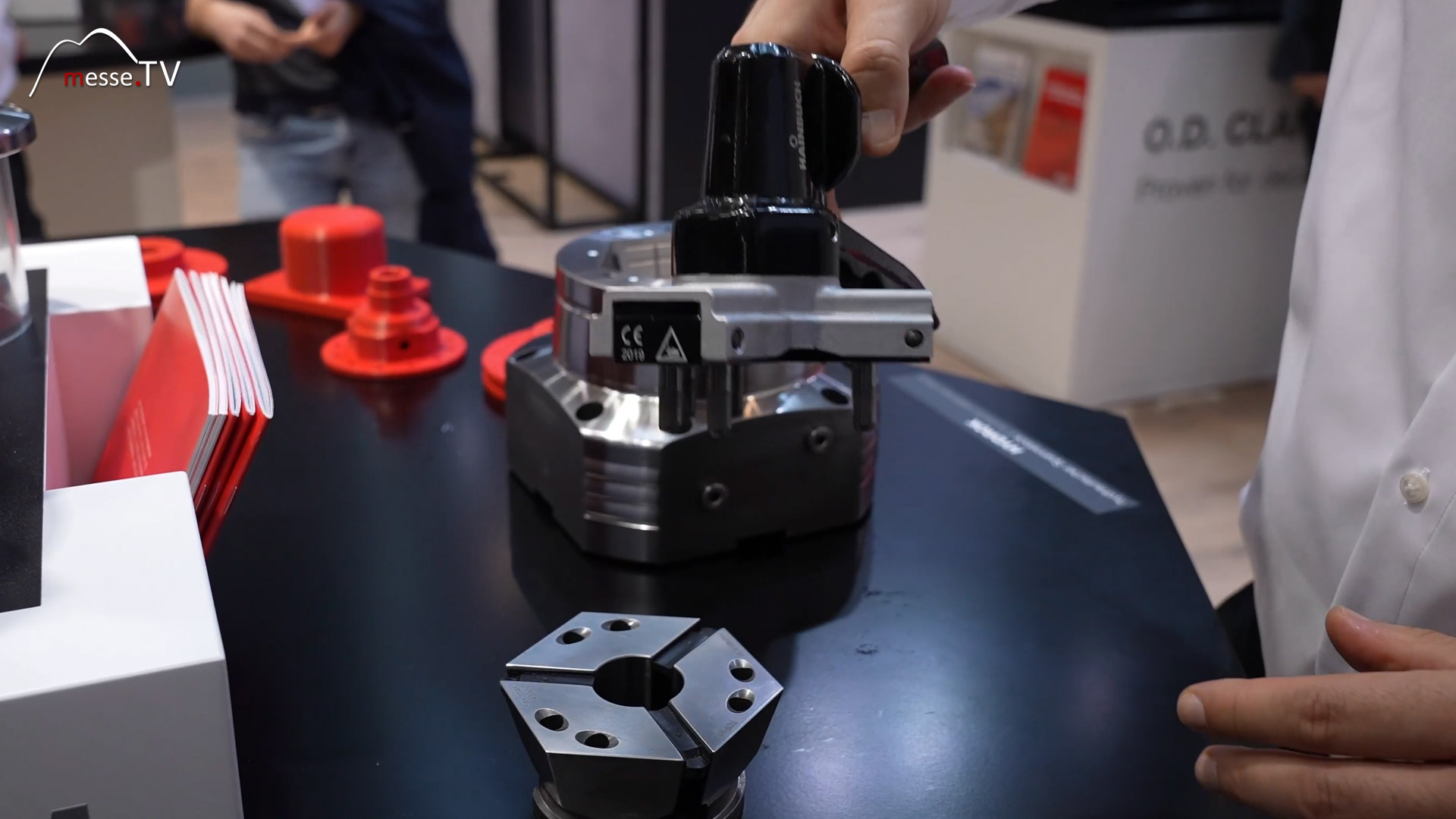

Hainbuch Spannkopf System mit tauschkompatiblen Komponenten
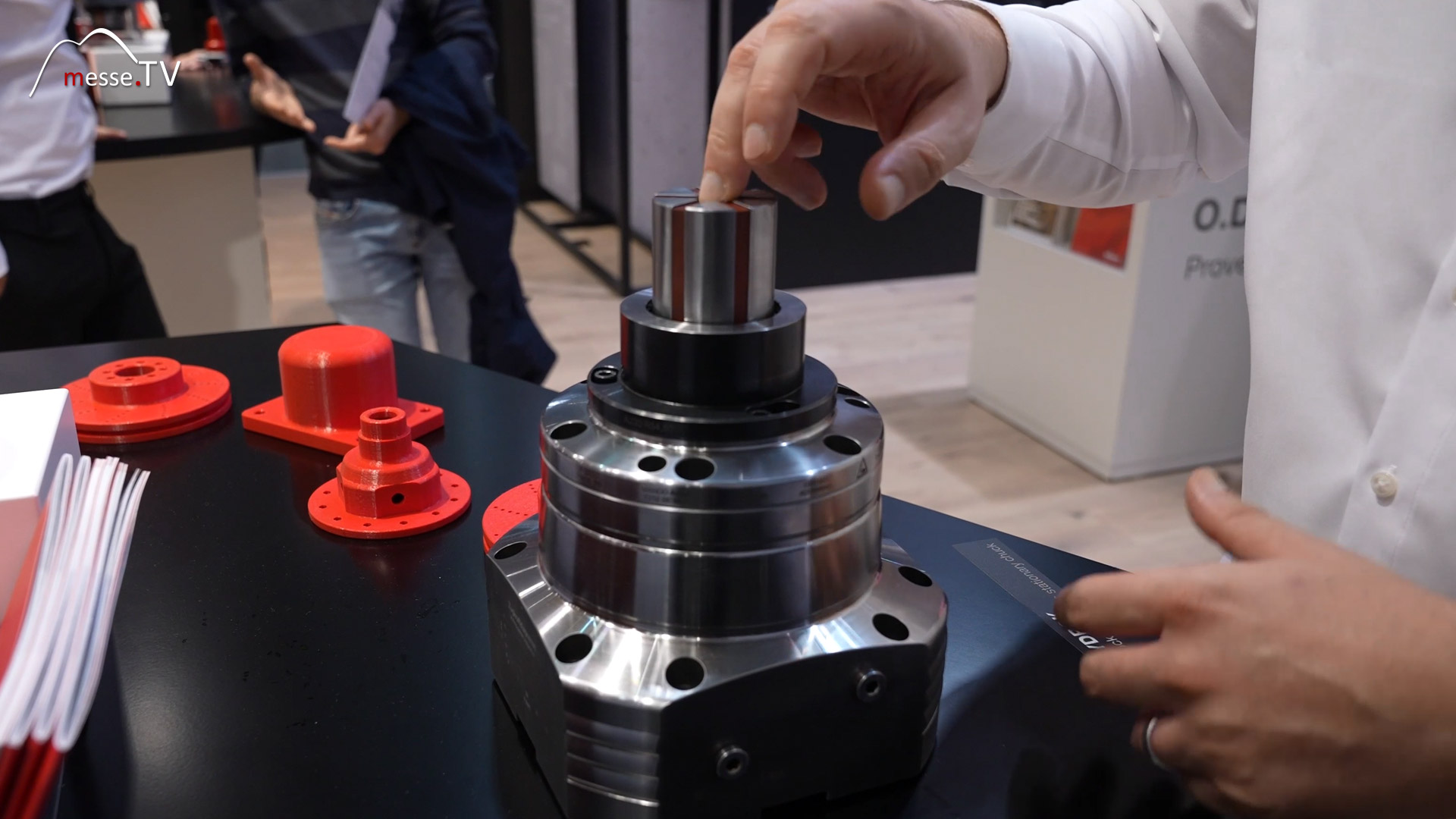
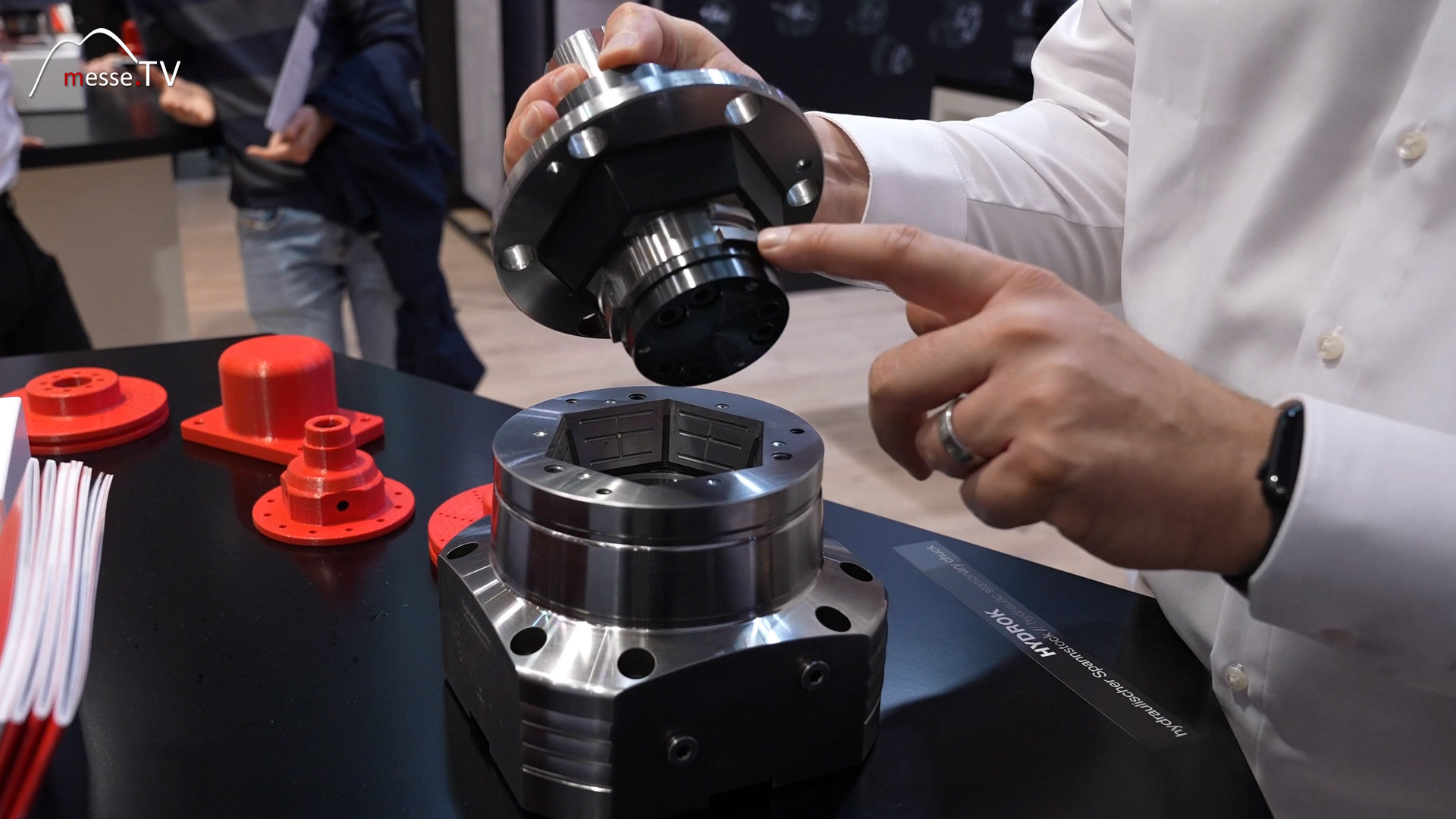
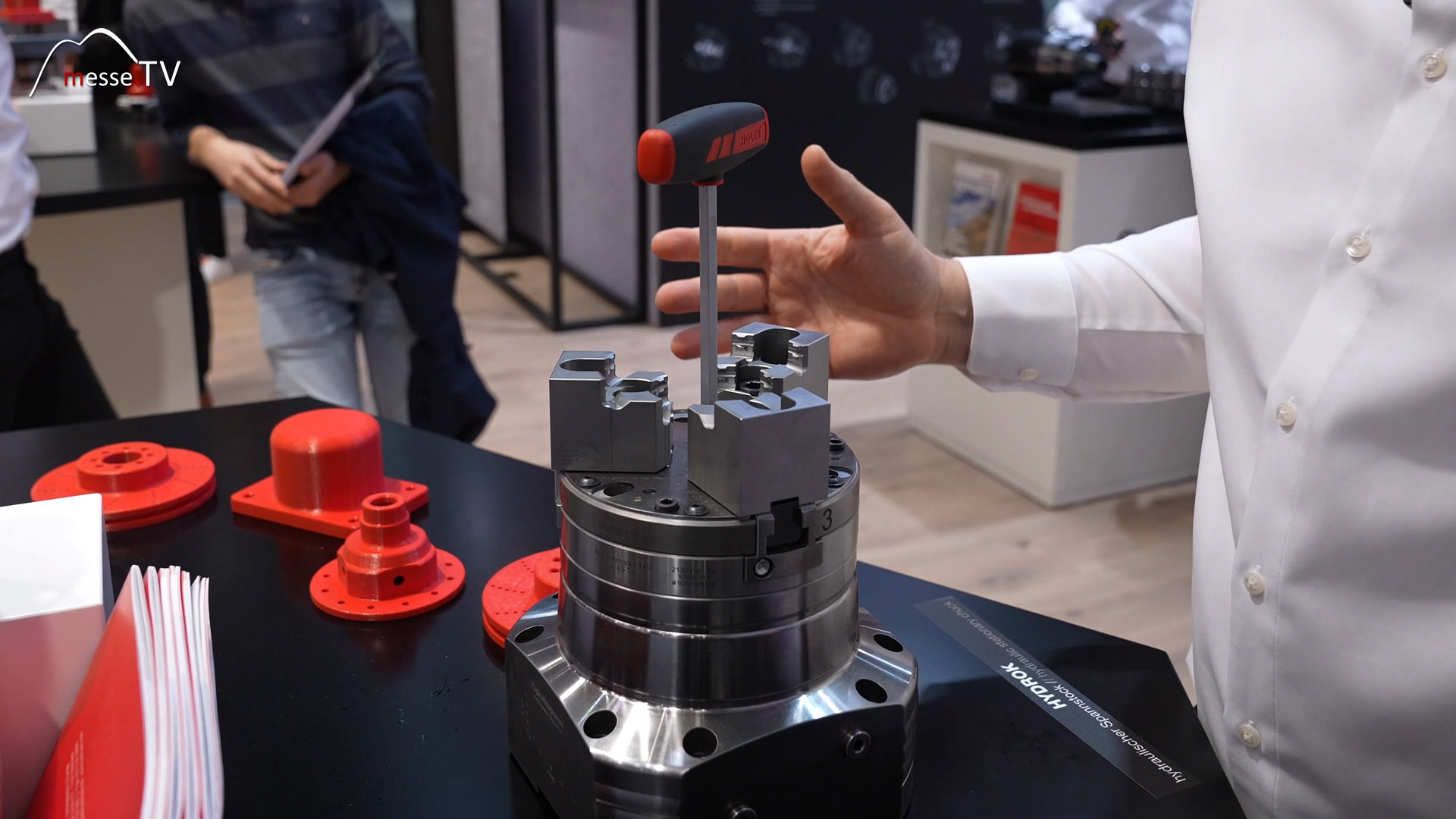
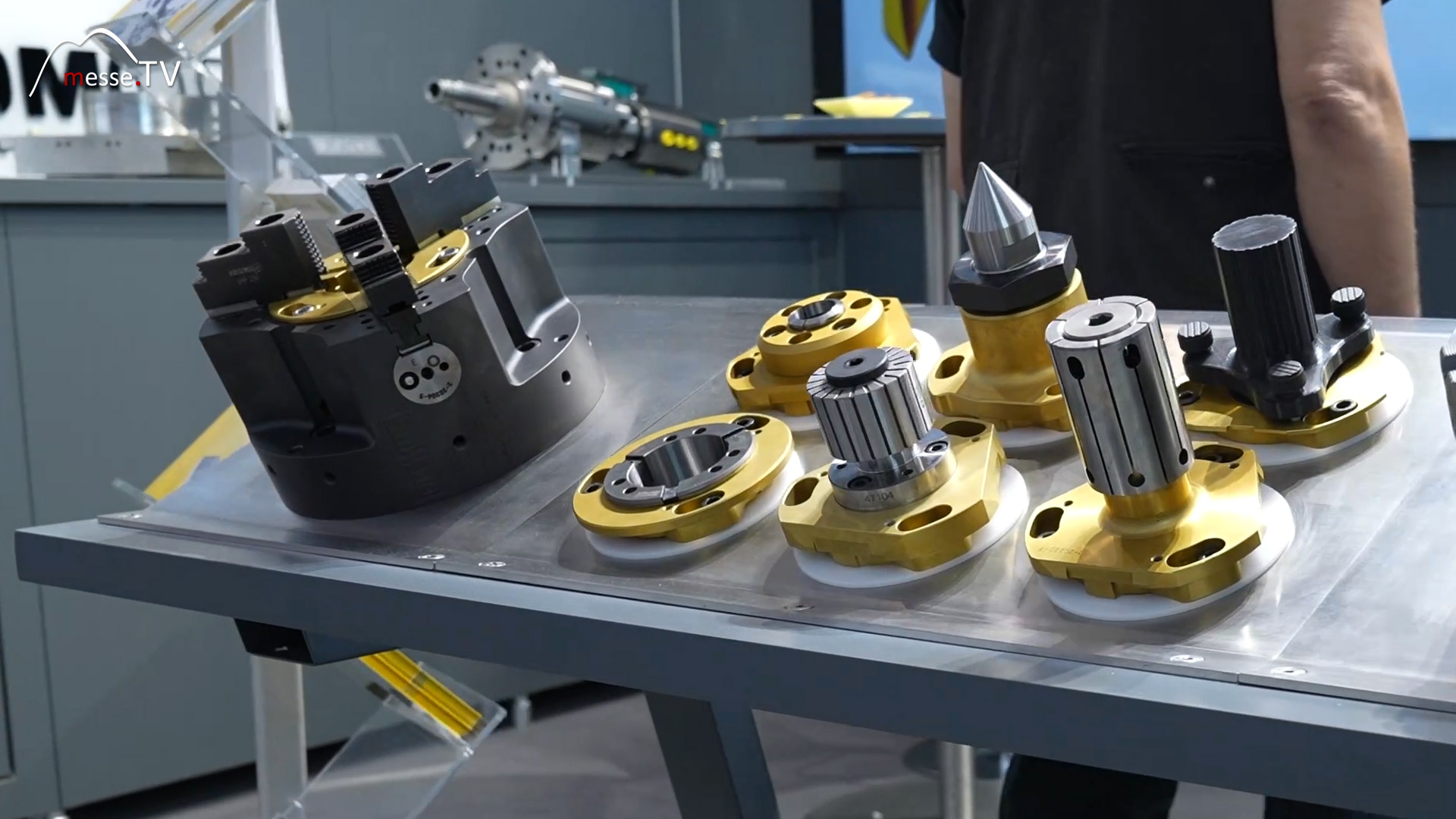
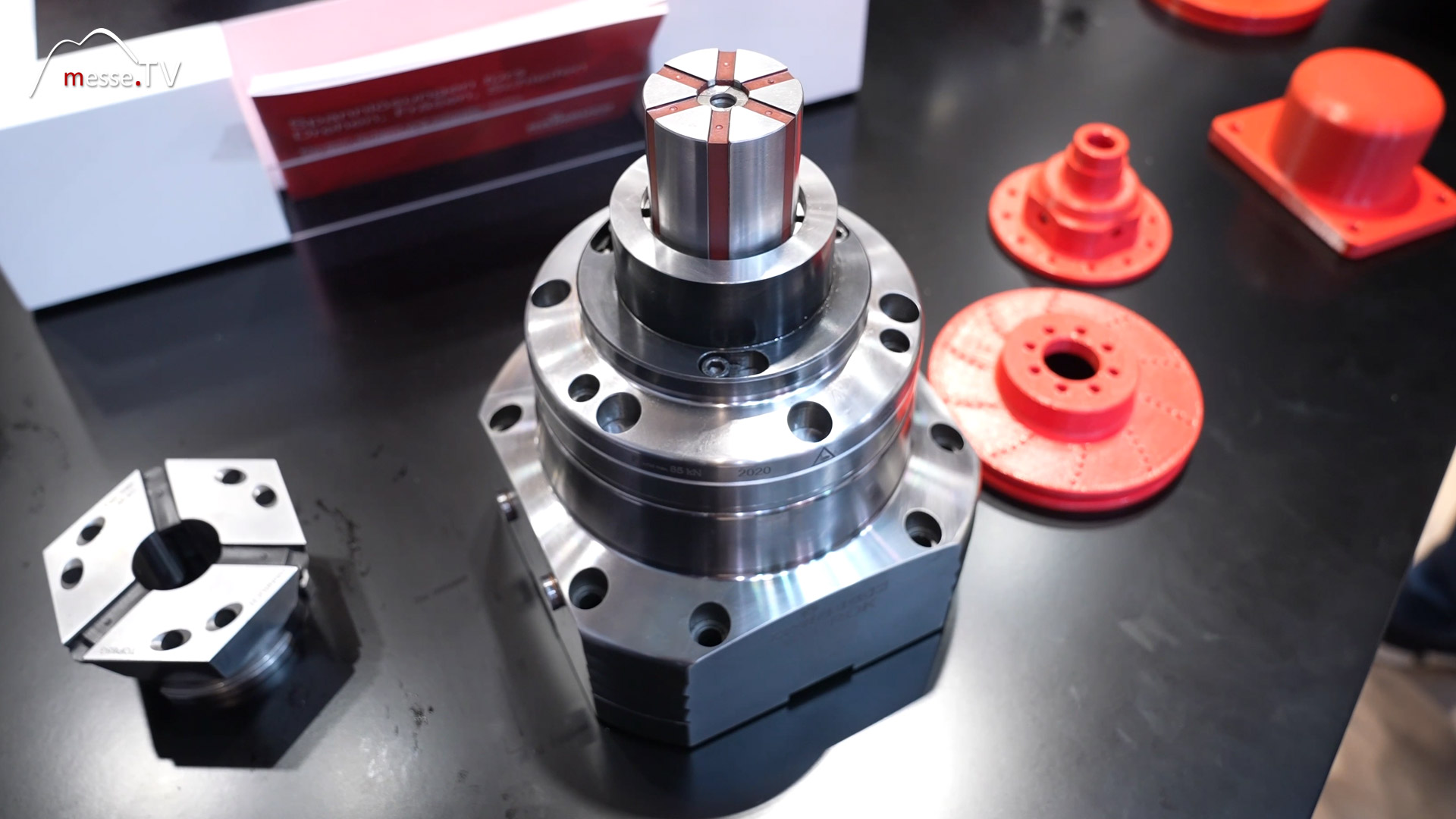
Hainbuch setzt bei seinem Spannkopf System auf vollständige Austauschbarkeit. Der Anwender kann einzelne Komponenten ohne Werkzeugwechsel im laufenden Ablauf tauschen. Ein Spannkopf wird gelöst, entnommen und durch ein anderes Element ersetzt – der Wechsel erfolgt in Sekunden. Dieses Prinzip gilt nicht nur für unterschiedliche Durchmesser. Auch der Wechsel von Außenspannung auf Innenspannung ist unmittelbar möglich. Statt eines komplett neuen Spannsystems genügt der Austausch des Kopfes oder die Verwendung eines passenden Adapters. Die mechanische Grundlage bildet ein durchgängiges System mit kompatiblen Schnittstellen. Dadurch lassen sich verschiedene Module kombinieren, ohne dass zusätzliche Anpassungen notwendig sind. Für den Anwender bedeutet das eine deutliche Reduktion der Rüstzeiten und eine höhere Auslastung der Maschine.
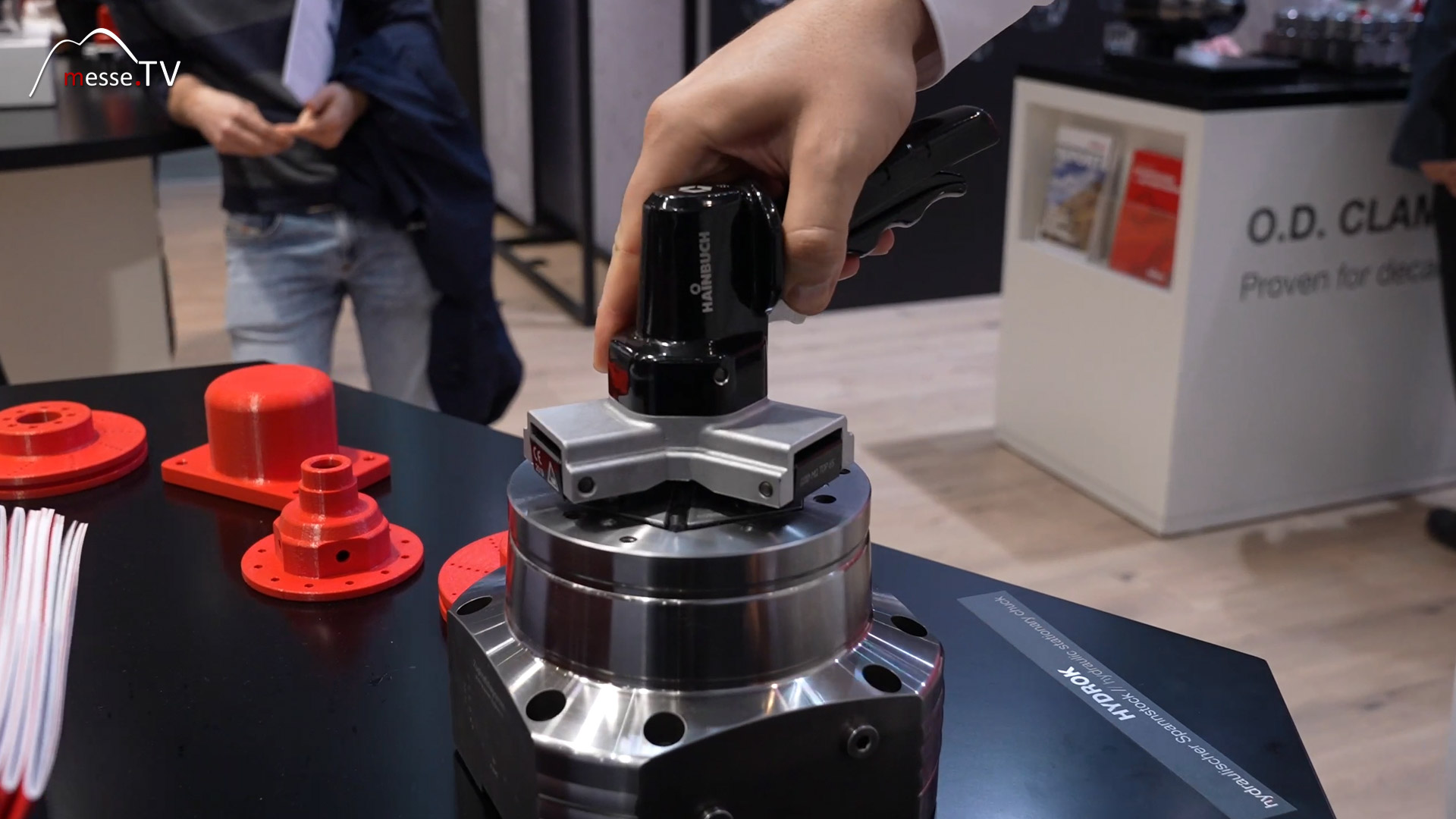
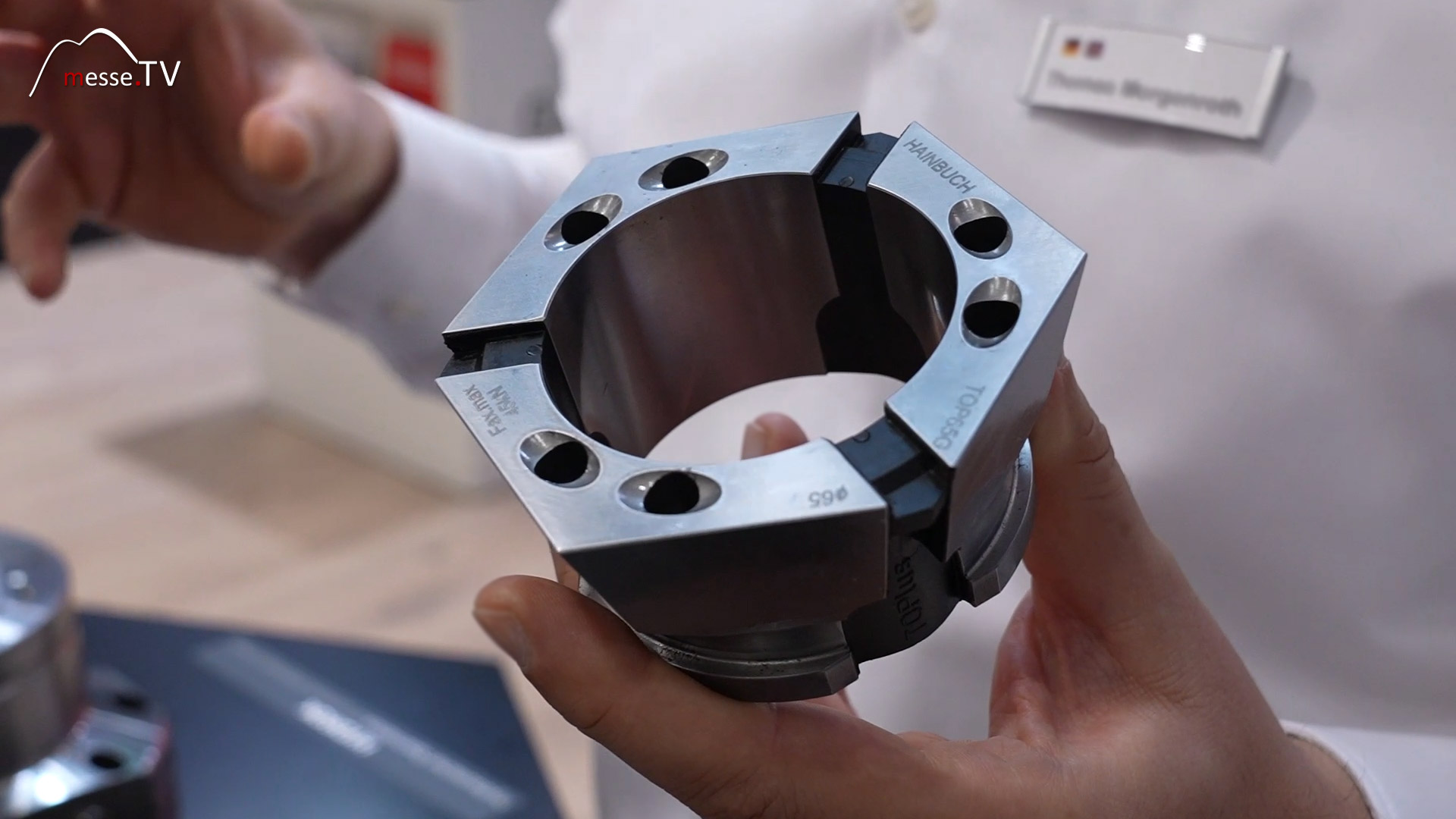
Adapt System und Backenmodul für unterschiedliche Spannaufgaben
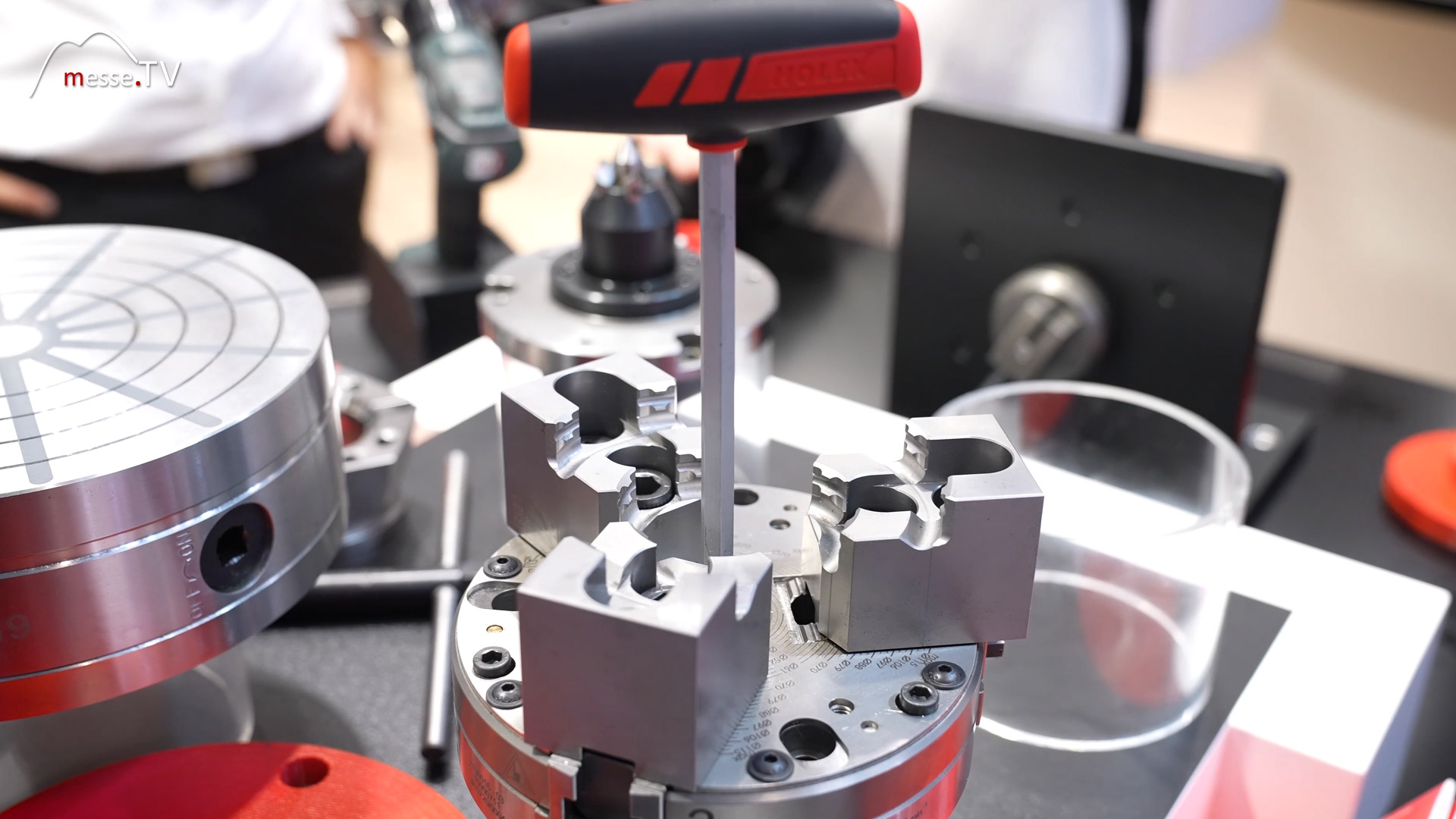
Ergänzt wird das System durch das Adapt System, das zusätzliche Spannvarianten ermöglicht. Neben klassischen Spannköpfen können auch Backenmodule eingesetzt werden, etwa in Form eines Drei-Backenfutters. Diese Erweiterung ist vor allem bei größeren Bauteilen relevant. Während Spannköpfe für definierte Durchmesser optimiert sind, erlaubt das Backenmodul eine flexiblere Aufnahme. Auch Zentrierspitzen lassen sich integrieren, ohne dass eine mechanische Anpassung erforderlich ist.
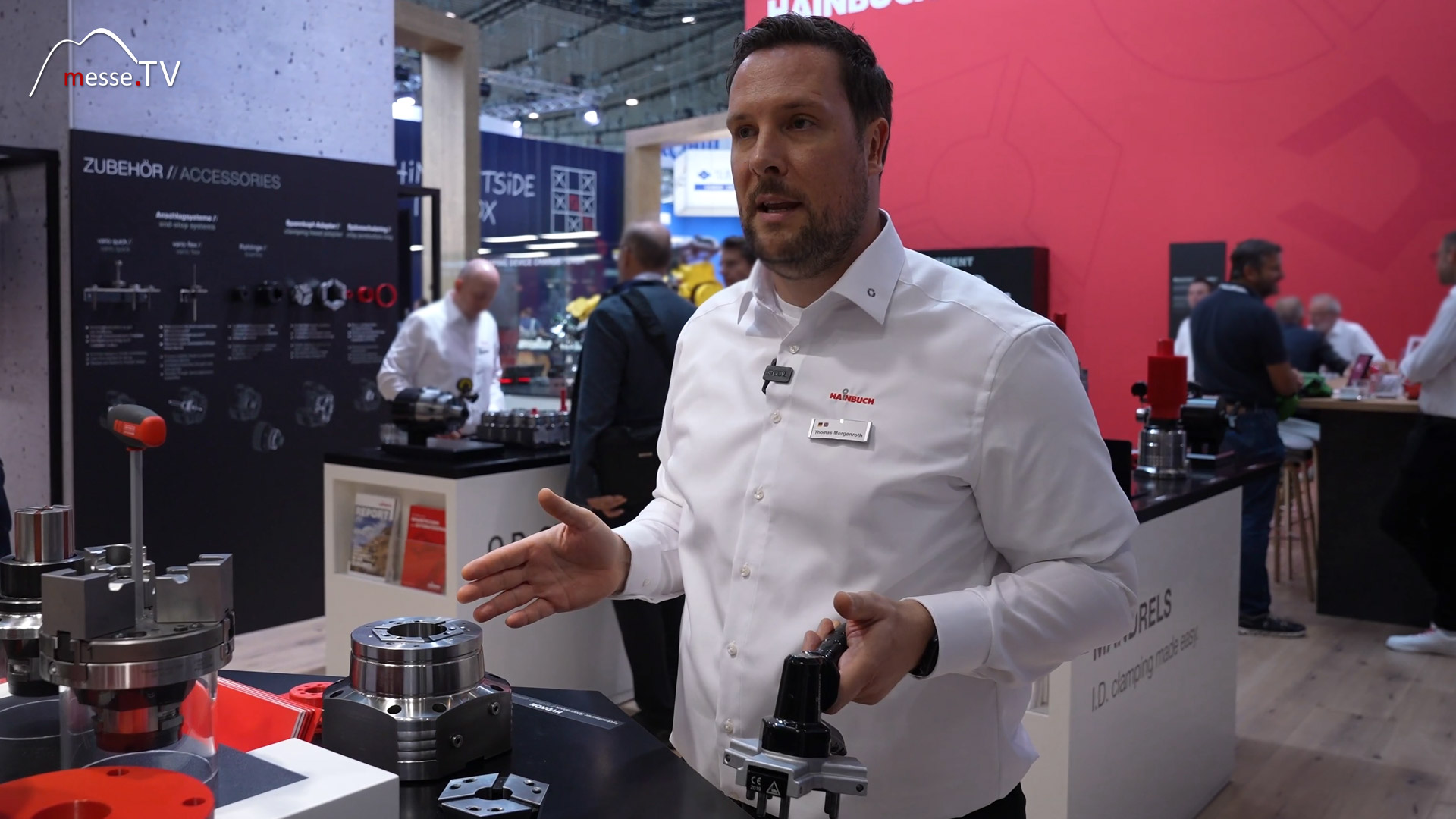
Die Positionierung erfolgt über eine präzise Kupplungsmechanik, die eine Wiederholgenauigkeit im Mikrometerbereich erreicht. Damit bleibt die Genauigkeit auch bei häufigem Wechsel erhalten – ein entscheidender Punkt für automatisierte Prozesse. Die wichtigsten Funktionen im Überblick:
- schneller Wechsel zwischen verschiedenen Spannköpfen
- Umstellung von Außen- auf Innenspannung ohne Umbau
- Integration von Drei-Backenfutter und Zentrierspitzen
- durchgängige Systemkompatibilität über alle Module
- Wechselgenauigkeit im Mikrometerbereich
Rüsten mit Roboter und Schnellwechselsystem
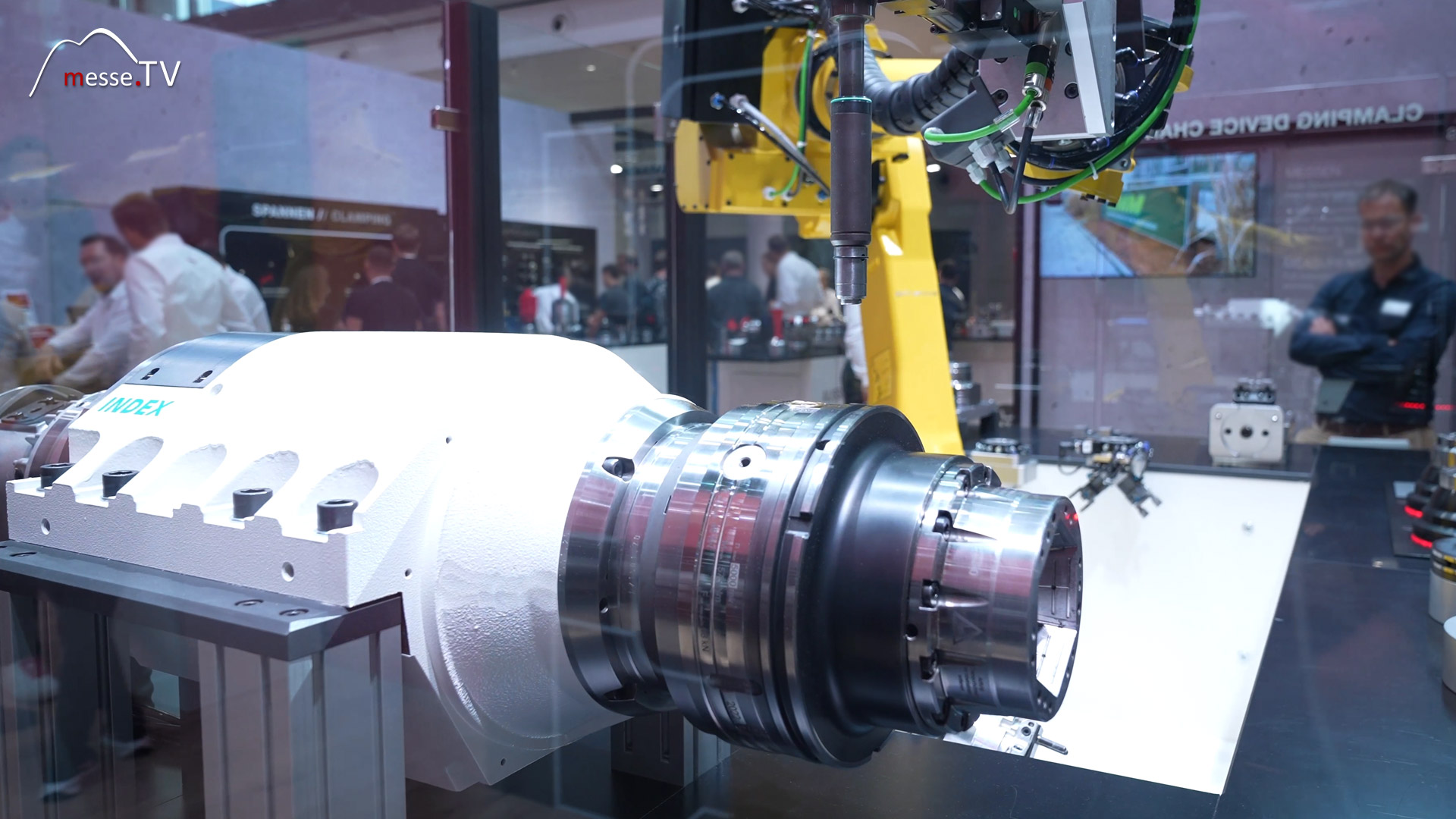
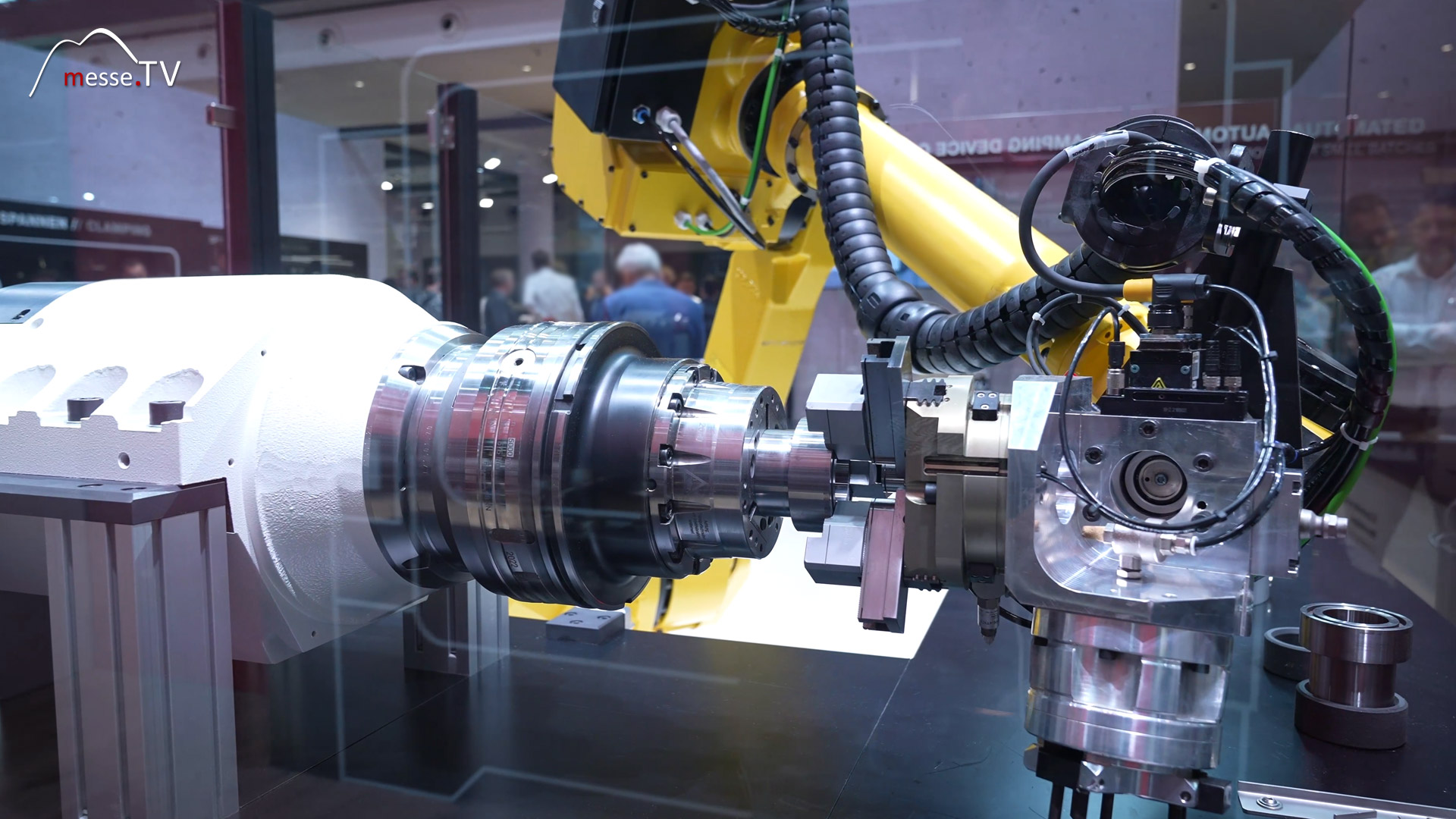
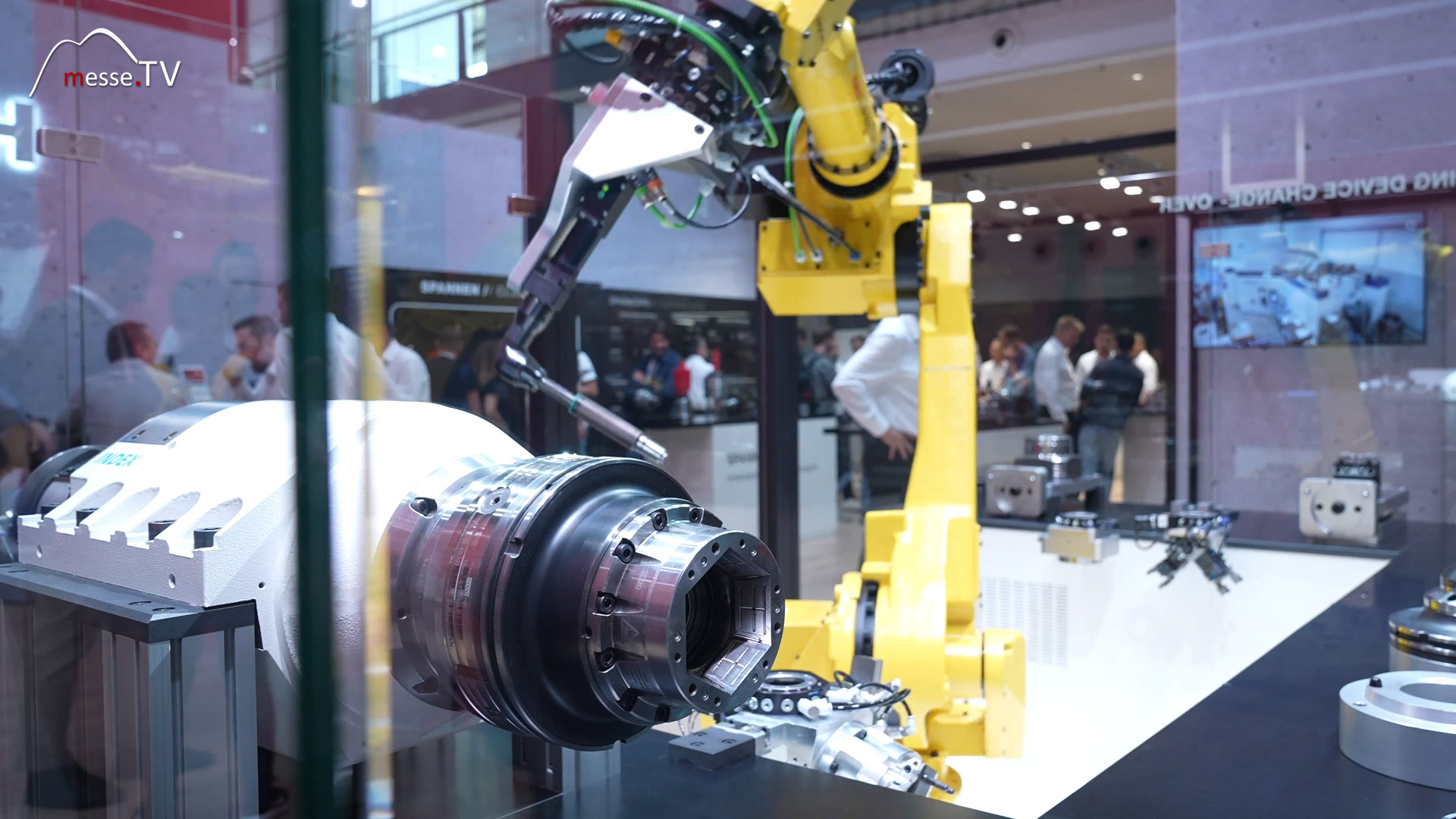
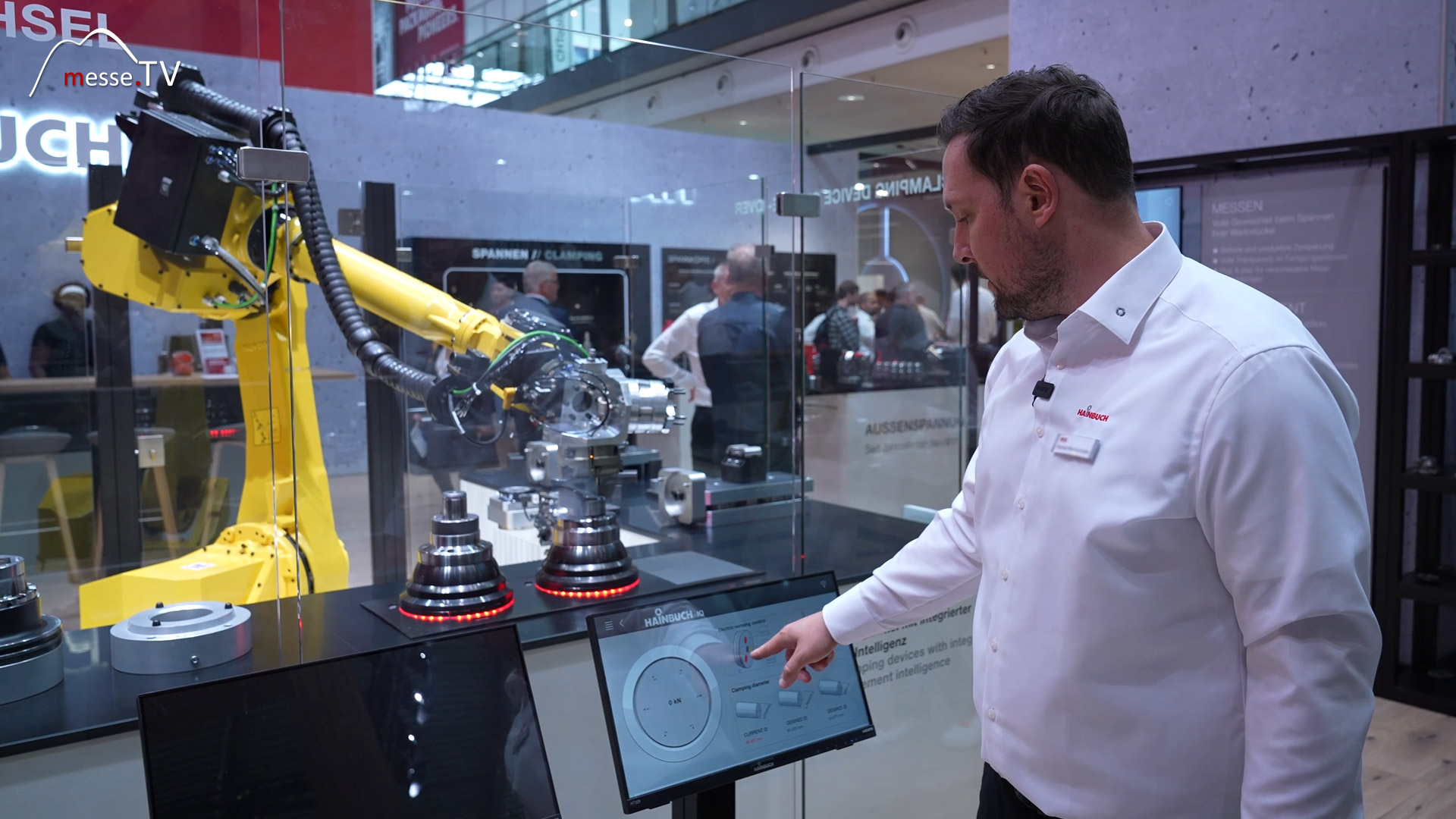
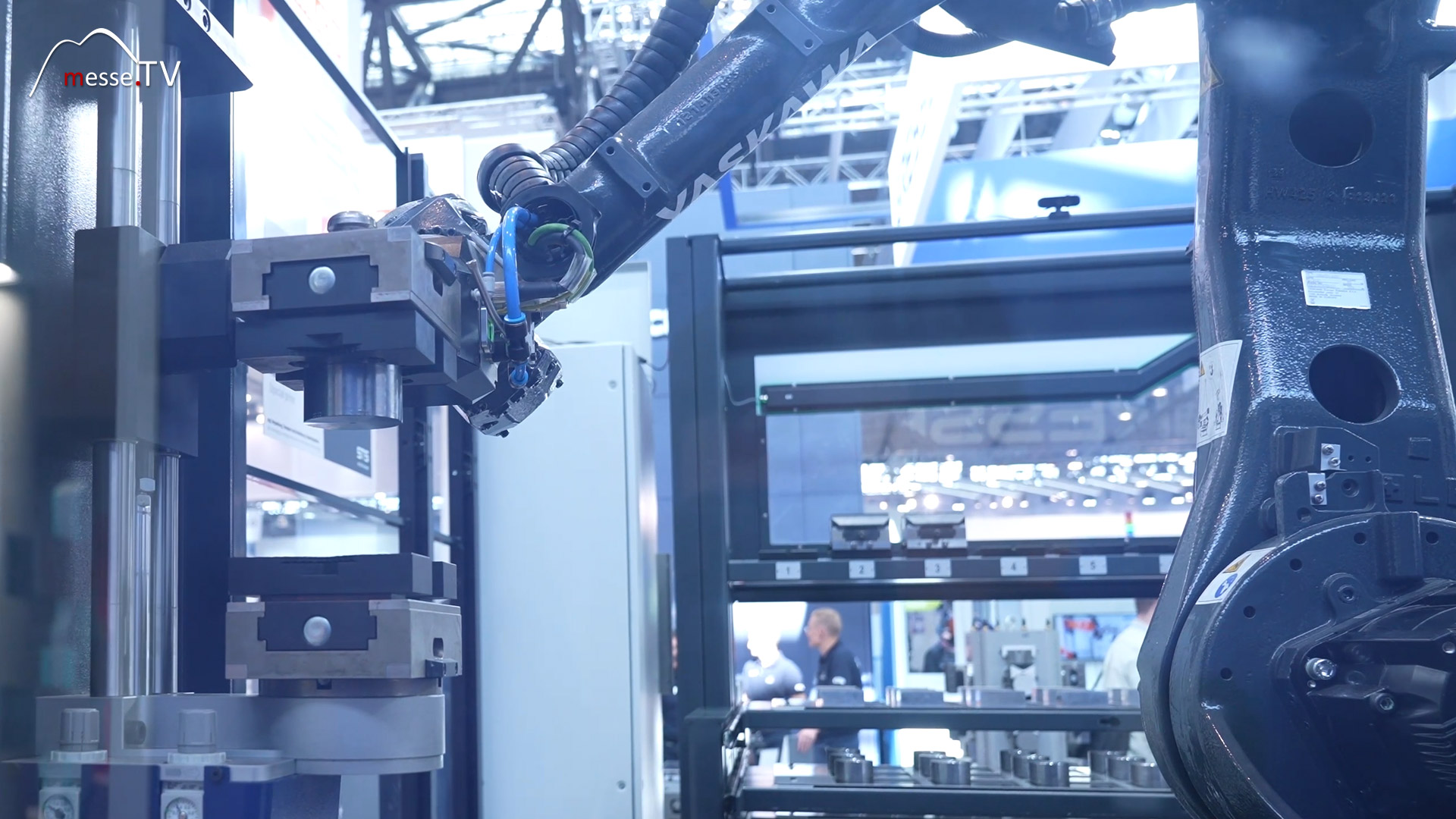
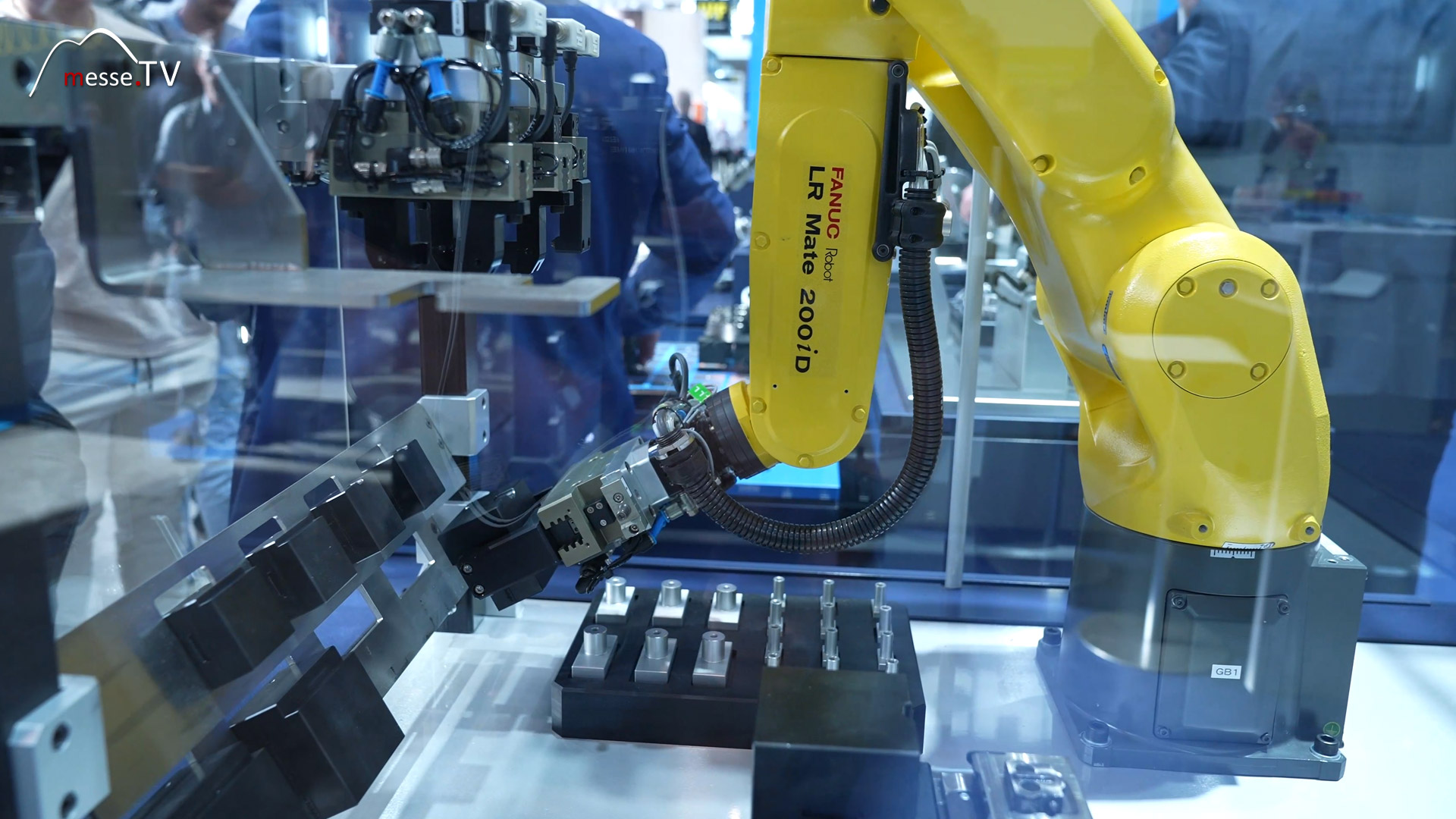
Die manuelle Wechseltechnik bildet die Grundlage für automatisierte Abläufe. In der gezeigten Anwendung übernimmt ein Roboter das komplette Rüsten des Futters. Spannköpfe werden entnommen, abgelegt und durch andere Komponenten ersetzt. Ein Drehmomentschrauber löst das Futter von der Spindel, anschließend wird ein neues Spannmittel eingesetzt. Der gesamte Prozess läuft ohne menschlichen Eingriff ab. Entscheidend ist dabei die Kombination aus mechanischer Einfachheit und definierter Schnittstelle. Das Schnellwechselsystem reduziert den Rüstvorgang auf wenige Schritte. Eine zentrale Schraube genügt, um das Futter zu lösen oder zu fixieren. Für automatisierte Zellen bedeutet das eine deutliche Vereinfachung der Abläufe.

IQ Spannfutter mit Sensorik für Prozesskontrolle
Neben der mechanischen Flexibilität erweitert Hainbuch seine Systeme um sensorbasierte Funktionen. Die sogenannten IQ Spannfutter integrieren Messsysteme, die den Spannzustand überwachen. Erfasst werden unter anderem der Spannbereich, die tatsächliche Spannkraft und die Position des Werkstücks. Diese Daten werden direkt an die Maschine übermittelt. Erst wenn alle Parameter im zulässigen Bereich liegen, wird der Bearbeitungsprozess freigegeben. Weicht ein Wert ab, stoppt die Anlage automatisch. Das verhindert Fehlbearbeitungen und erhöht die Prozesssicherheit. Gleichzeitig wird die Spanntechnik zu einem aktiven Bestandteil der Maschinensteuerung.
Einsatz in Zerspanung, Luftfahrt und Medizintechnik
Die Systeme sind nicht auf eine einzelne Branche beschränkt. Hainbuch adressiert Anwendungen in der Automobilindustrie ebenso wie in der Luft- und Raumfahrt oder in der Medizintechnik. Gemeinsam ist diesen Bereichen der hohe Anspruch an Präzision und Wiederholgenauigkeit. Gleichzeitig steigen die Anforderungen an Flexibilität, weil Losgrößen kleiner werden und Bauteile häufiger wechseln. Spanntechnik entwickelt sich damit vom passiven Haltesystem zum integrierten Bestandteil der Fertigung. Der Spannkopf übernimmt nicht nur die Fixierung des Werkstücks, sondern beeinflusst zunehmend die Effizienz und Stabilität des gesamten Prozesses.
Entwicklung von mechanischer Spanntechnik zur intelligenten Lösung
Die gezeigten Systeme markieren einen Übergang. Klassische Spannmittel bestehen aus robusten, aber rein mechanischen Komponenten. Moderne Lösungen verbinden diese Mechanik mit Sensorik und Automatisierung. Der Vorteil liegt nicht nur in der Zeitersparnis beim Rüsten. Entscheidend ist die Möglichkeit, Prozesse stabil und reproduzierbar abzubilden – auch ohne direkte Kontrolle durch den Bediener.
Damit wird die Spanntechnik zu einem eigenständigen Faktor in der Produktionsstrategie. Wer Bauteile schnell und zuverlässig wechseln kann, gewinnt Spielraum in der Fertigung. Genau dieser Spielraum entscheidet zunehmend über Wettbewerbsfähigkeit in der Zerspanung.
Messe-Berichterstattung bundesweit - Messewissen, Termine & Veranstaltungen


