TRUMPF TruPlasma RF 1000 series – 3 kW generator
by J. Groh - 2025-11-28The TRUMPF TruPlasma RF 1000: 3 kW RF generator for plasma and etching is designed as an industrial process system for applications in semiconductor, microelectronics, and photovoltaic manufacturing. The TRUMPF TruPlasma RF 1000 series – 3 kW generator delivers constant, precisely controllable high-frequency power at 13.56 MHz, supporting stable etching and coating processes. Features such as multilevel pulsing, integrated analysis tools, and industrial fieldbus interfaces make the generator a long-term platform for reproducible plasma applications.
The 3 kW generator from the TruPlasma RF 1000 series by TRUMPF is regarded as a robust working system for stable processes in production lines in the semiconductor and PV industries. In systems for etching and coating processes, it delivers constant RF power at 13.56 MHz, supporting structures that require high control over energy input and process stability. The generator is used internationally in North America, Europe, and Asia, where it has established itself as a reliable platform.
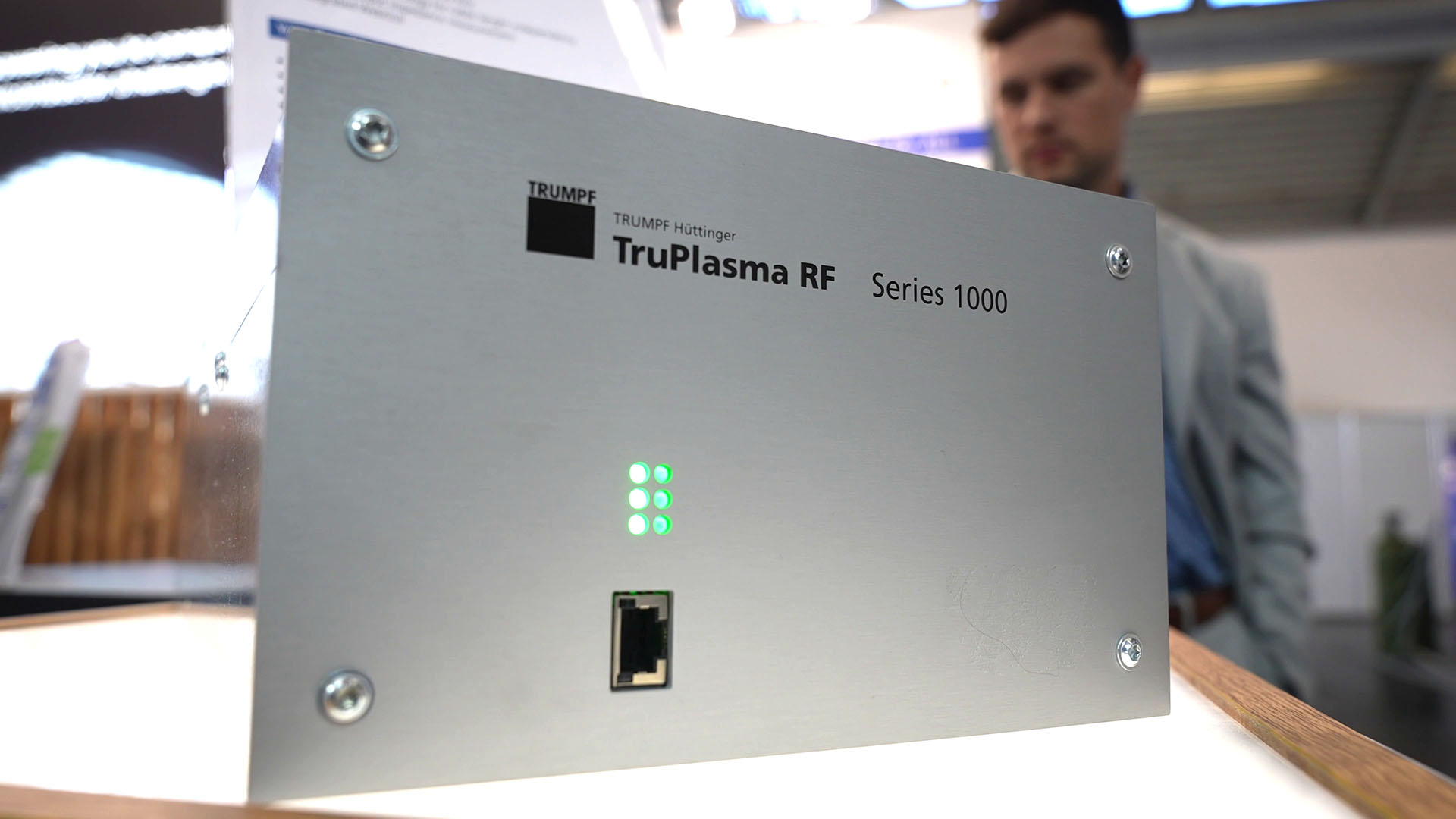

TruPlasma RF 1000 Generator power at 13.56 MHz
The generator provides up to 3 kW of output power and operates at the standard base frequency of 13.56 MHz. The water-cooled design stabilizes the thermal load during continuous operation, which plays a key role in systems for plasma and etching processes. The constant supply to the process chamber enables reproducible layers and defined etching geometries to be achieved, which are required in the microelectronics and optical industries.
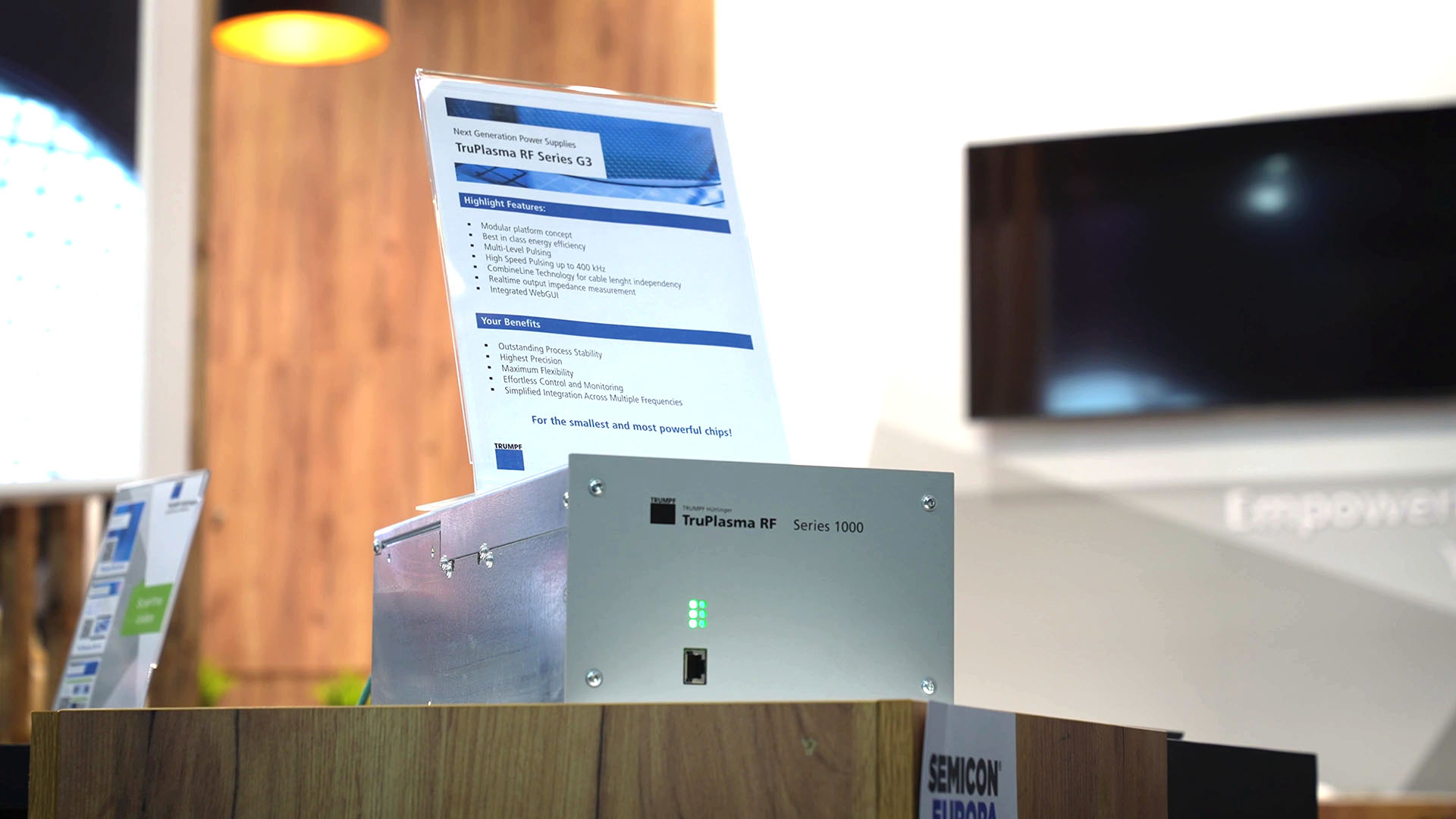
Plasma generator with precision and efficiency in industrial use
In semiconductor manufacturing, the accuracy of the energy supply determines whether structures will function reliably later on. The generator addresses these requirements with high electrical efficiency and precise power delivery. Manufacturers use these properties for controlled etching profiles and homogeneous coatings – both in classic semiconductor technology and in areas such as optical components or photovoltaic modules.


Multilevel pulsing up to 400 kHz
A key feature of the system is multilevel pulsing. Pulse frequencies up to 400 kHz, various pulse levels, and definable ramp and burst functions allow process patterns that are precisely tailored to customer-specific requirements. The pulse profiles can be designed so that energy input, reaction behavior, and plasma properties remain precisely controllable.
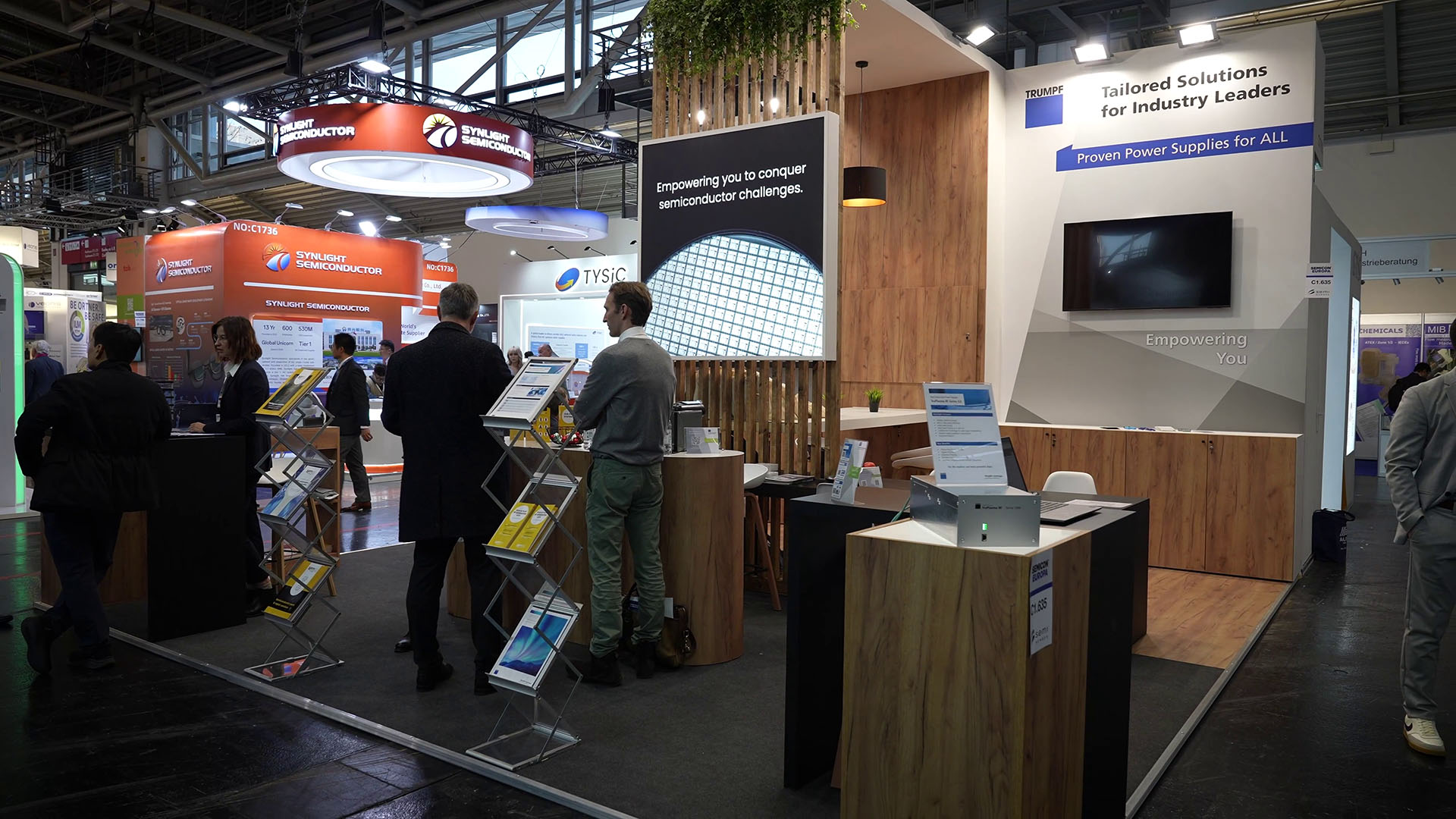
Generator analysis functions and fieldbus integration
Fieldbus interfaces such as Ethernet-based systems, WEISSnet, or PROFINET are available for operation. In addition, a laptop can be connected directly to the generator to obtain live analyses of the process parameters. The user can view Smith charts, pulse patterns, and trend curves in real time and adjust values immediately. External measuring points can be integrated so that complete process sequences can be documented—a function that offers significant advantages in optimization and troubleshooting.
TRUMPF Future-proof thanks to customer-specific requirements
Requirements in microelectronics are constantly evolving. That is why the generator is understood as a system that is developed further in collaboration with users. Individual process specifications increasingly determine the direction of development, and TRUMPF responds to this by continuously adapting functions, interfaces, and analysis tools. The goal remains to provide a solution that can be used in the long term wherever precise high-frequency energy is required.

Trade fair reporting Germany - Trade fair knowledge, dates & events


