Gore-Tex sustainability, carbon targets and production
by A. Bergmeier - 2026-03-18Sustainability is no longer an additional topic in the textile industry, but a strategic core area. Gore-Tex pursues an approach that not only focuses on individual measures, but also includes the entire production, energy supply and supply chain. The focus is on reducing carbon emissions - measurably and in the long term.
The company has set itself clear targets: since 2019, the carbon value in its own production has already been reduced by around 65 per cent. This figure is to be further reduced to minus 85 per cent by 2030. This makes it clear that it is not about short-term optimisation, but about a fundamental transformation of industrial processes.
Gore-Tex carbon reduction as a central business goal
In contrast to many other companies, carbon is not viewed in isolation, but is managed as an equally important key figure alongside traditional economic goals. This anchoring at a strategic level changes the priorities within the organisation. The reduction takes place along several levers. One central starting point is the energy supply at the production sites. While the switch to renewable energies is comparatively easy to implement in Europe, the picture is much more complex in other regions. In the USA, for example, own solar parks had to be built in order to ensure a corresponding supply. In China, on the other hand, the switch required negotiations with government agencies in order to gain access to renewable energy. These differences illustrate the extent to which global production structures influence the realisation of sustainability goals.

Production and energy sources at the centre of the transformation
In addition to the energy source, the technical equipment used in production also plays a decisive role. Machines, processes and systems are continuously reviewed and adapted in order to reduce energy consumption. This is not about individual measures, but about the interplay of several factors:
- Conversion to renewable energy sources
- Optimisation and replacement of energy-intensive systems
- Reduction of consumption within the production processes
- continuous analysis of the efficiency of individual steps

Cooperation in the supply chain as a decisive lever
A significant proportion of emissions are not generated directly in our own factory, but along the entire supply chain. Gore-Tex therefore works closely with partners - both with suppliers and with processing companies. This applies, for example, to factories that process materials or manufacture products. Here too, energy sources, machines and processes are scrutinised. The aim is not to implement improvements in isolation, but to anchor them along the entire value chain. With more than 300 brands worldwide on the consumer side, this gives us considerable leverage. Changes can be effective on a large scale if they are implemented together. This approach is understood internally as moving forward together - in other words, as co-operation rather than individual initiative.
Exchange and innovation as part of the sustainability strategy
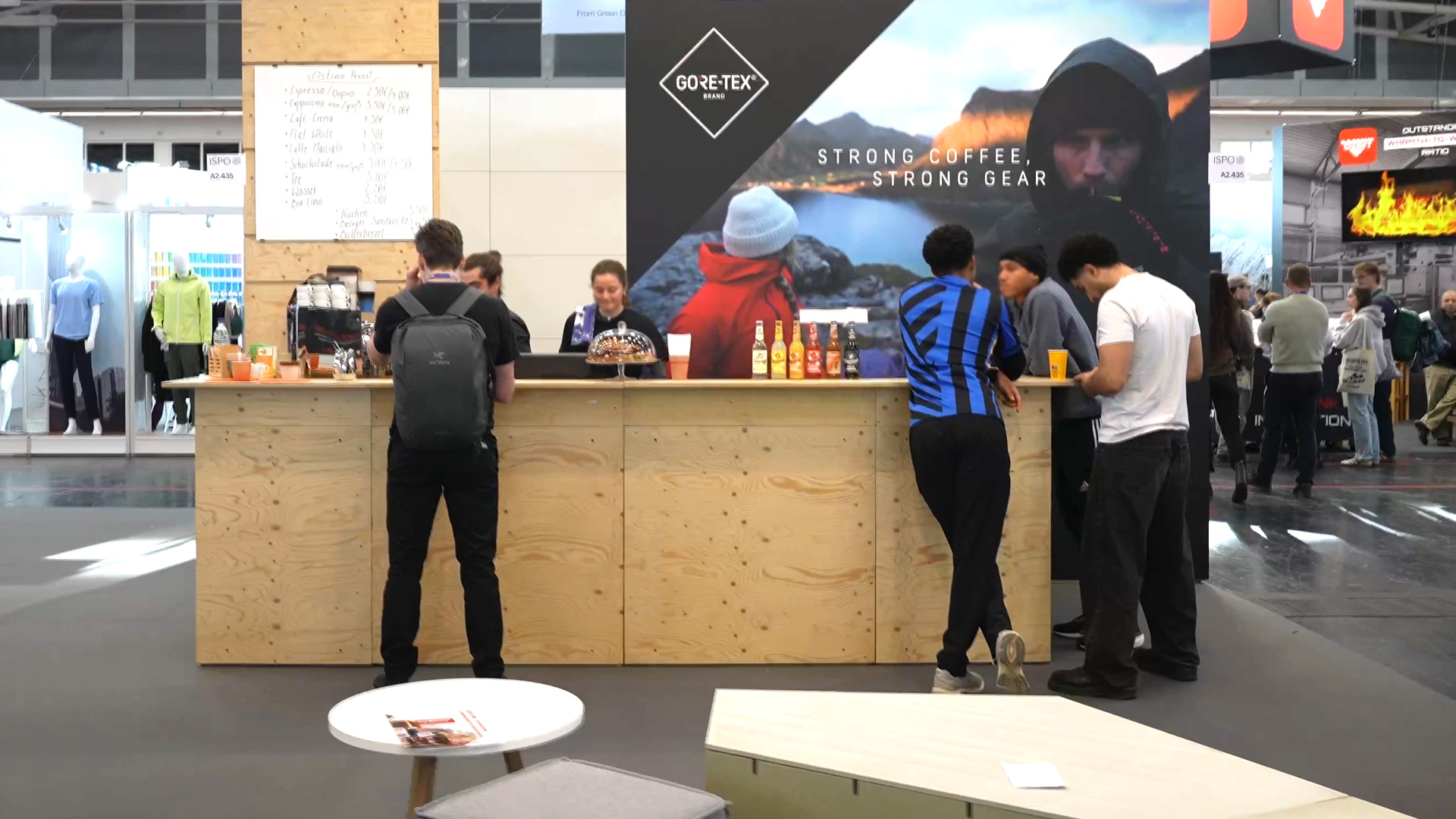
In addition to technical measures, dialogue within the industry also plays an important role. Events and trade fairs are used specifically to discuss ideas and share solutions. Relevant impetus is not only generated in formal meetings. Informal discussions, for example in open areas or meeting zones, often help to develop new perspectives. This aspect is deliberately encouraged, for example by supporting communication areas at events. Innovation is not seen as an isolated process, but as the result of continuous collaboration. Different stakeholders each contribute their own approaches, which are further developed through dialogue.
Product lifespan more important than pure recycling
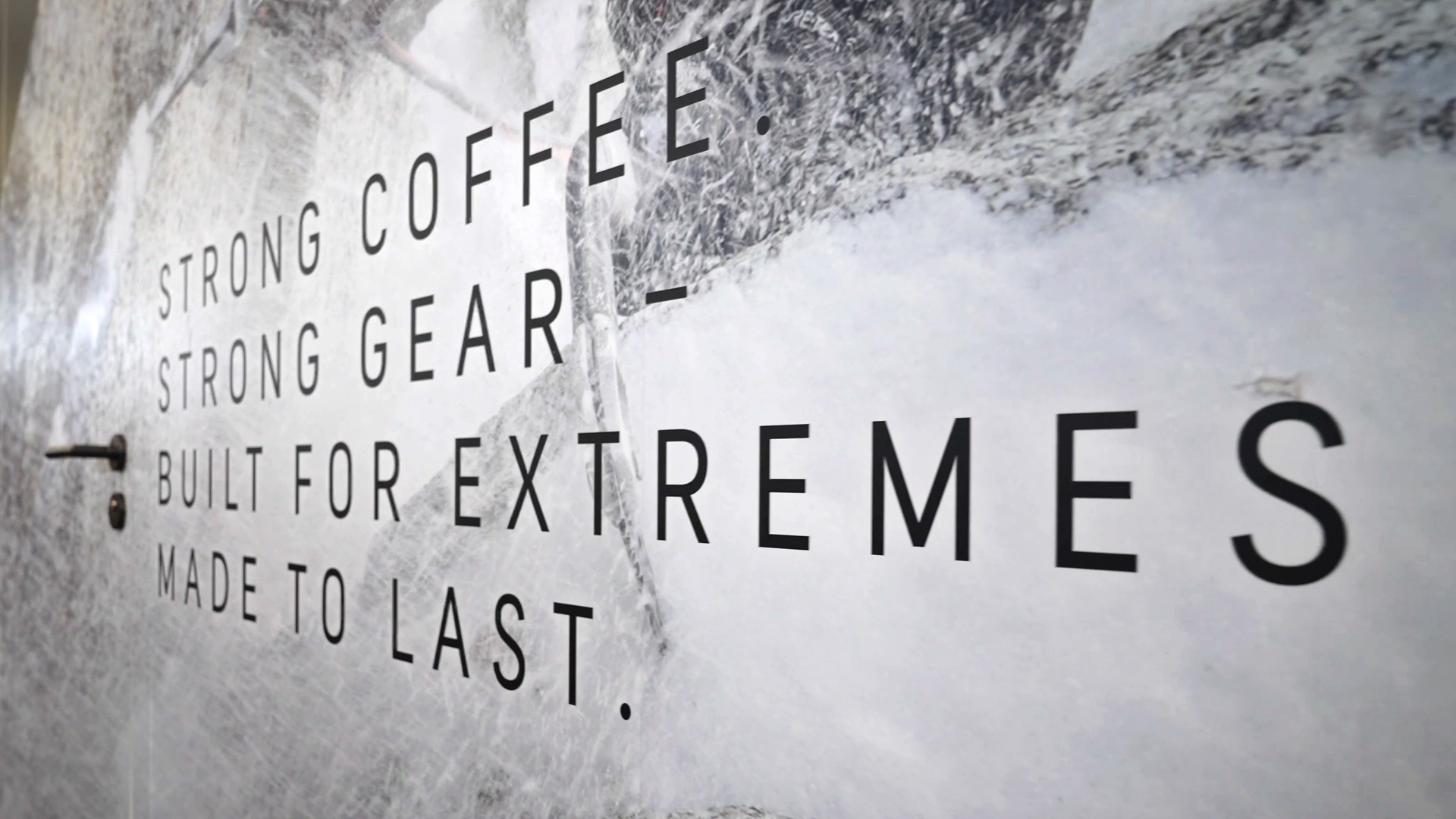
A central point of the sustainability strategy is the evaluation of recycling. While recycling is often perceived as a solution, Gore-Tex only sees it as making a limited contribution to the overall problem. Instead, the lifespan of products takes centre stage. High-quality materials and durable workmanship ensure that products can be used for many years. This spreads the ecological cost of production over a much longer period of time. The principle is simple: The longer a product is used, the lower the environmental impact per unit of use. One example is a high-quality product that is used for many years - in contrast to short-lived alternatives that have to be replaced more quickly. User behaviour is also crucial here. Care, repair and long-term use make a significant contribution to reducing the environmental impact.
Sustainability as an interplay between industry and consumers
The reduction of emissions and resource consumption cannot be achieved by manufacturers alone. It requires co-operation between industry, partners and consumers. Gore-Tex therefore relies on a combination of technological development, co-operation along the supply chain and a conscious product strategy. Quality, durability and use are at the centre of this. The result is an approach that goes beyond traditional measures. Sustainability is not seen as an individual project, but as a continuous process that encompasses production, products and use in equal measure.

Trade fair reporting Germany - Trade fair knowledge, dates & events


