Beöler zur Platinenbeschichtung mit Ventilüberwachung
von Bastian Velonavy - 2024-10-31Die Beschichtung von Platinen ist ein unscheinbarer, aber entscheidender Schritt in der Blechumformung. Auf der Euroblech zeigt Amtec eine Lösung, die genau hier ansetzt.
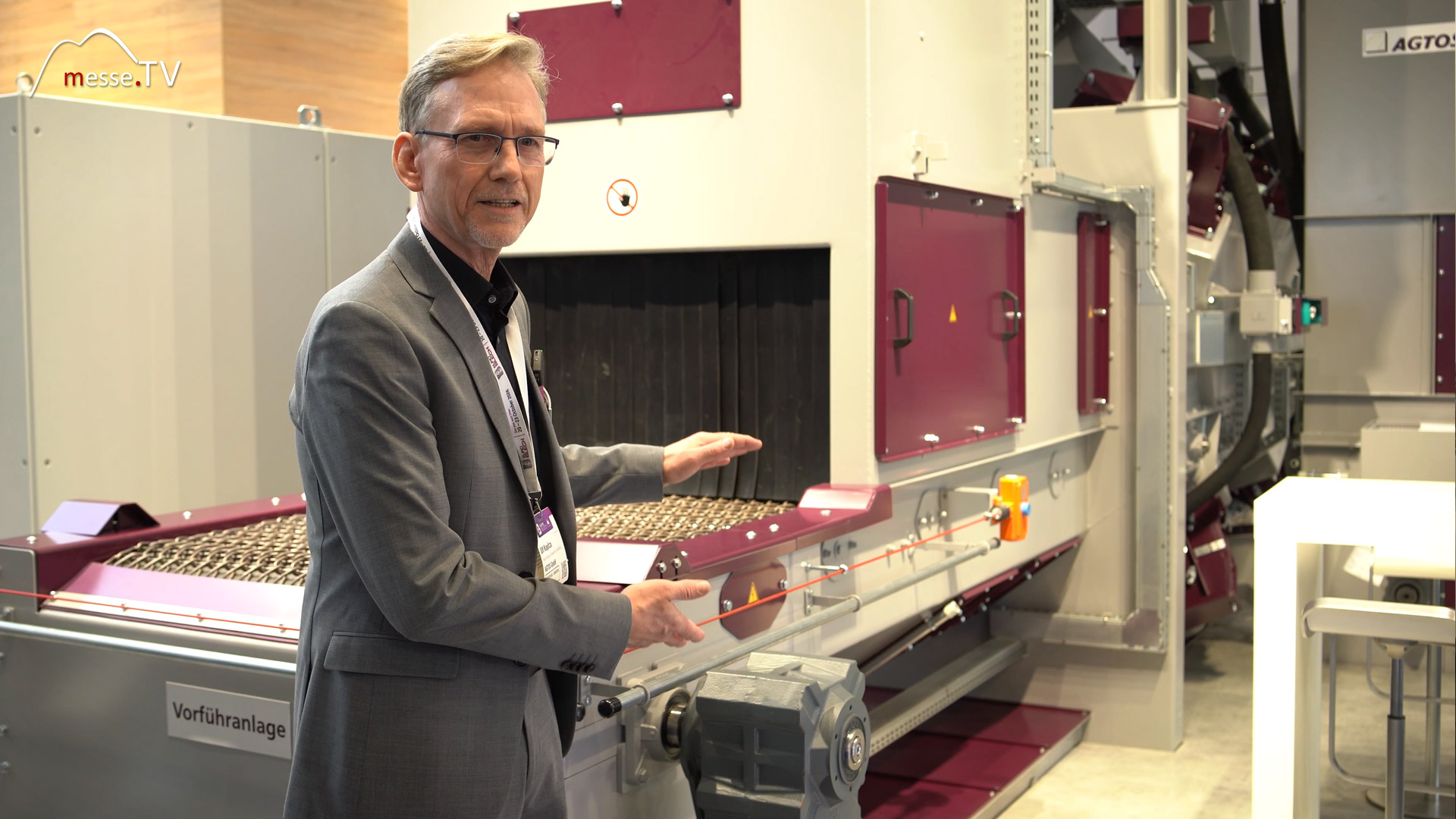
Ein Beöler wird vor Pressenstraßen eingesetzt und sorgt dafür, dass Platinenrohlinge – also zugeschnittene Bleche – gleichmäßig mit Schmiermittel versehen werden. Diese Voraussetzung ist notwendig, damit das Material in der nachfolgenden Umformung kontrolliert fließt und keine Oberflächenfehler entstehen. Die Maschine wirkt auf den ersten Blick wie ein klassisches Aggregat im Prozess. Tatsächlich greift sie jedoch tief in die Qualitätssicherung ein, weil sie nicht nur aufträgt, sondern gleichzeitig überwacht.
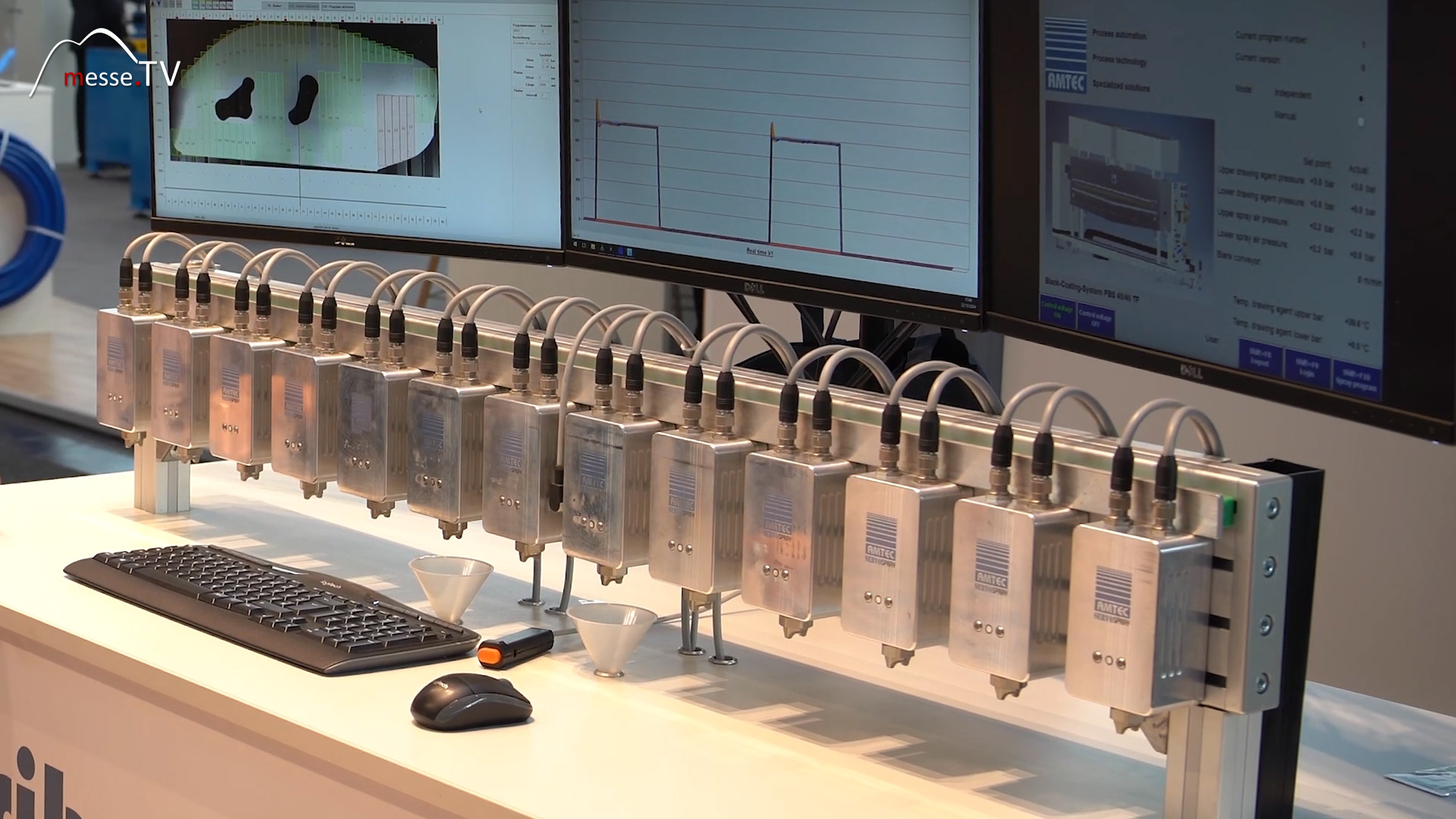
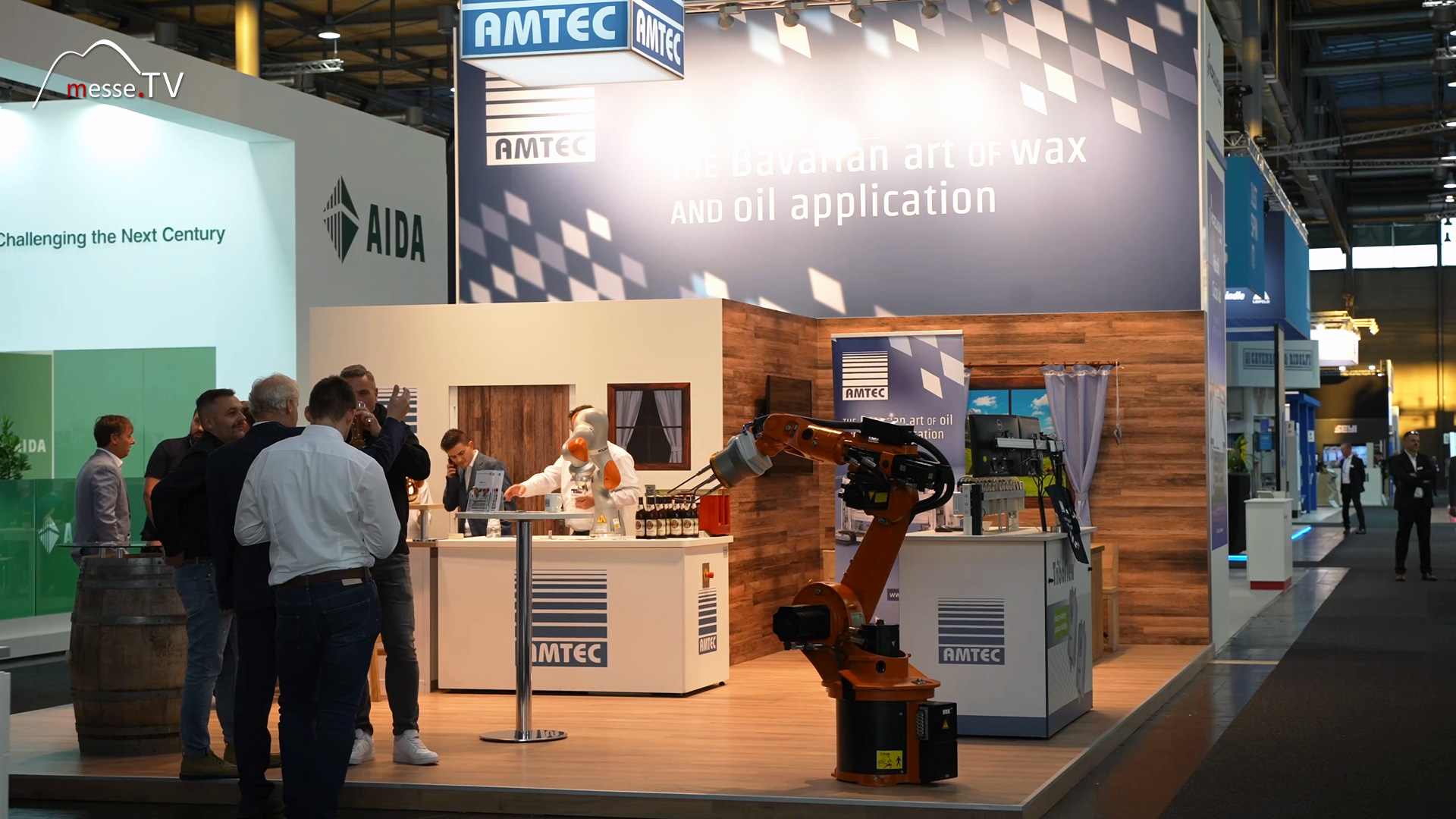
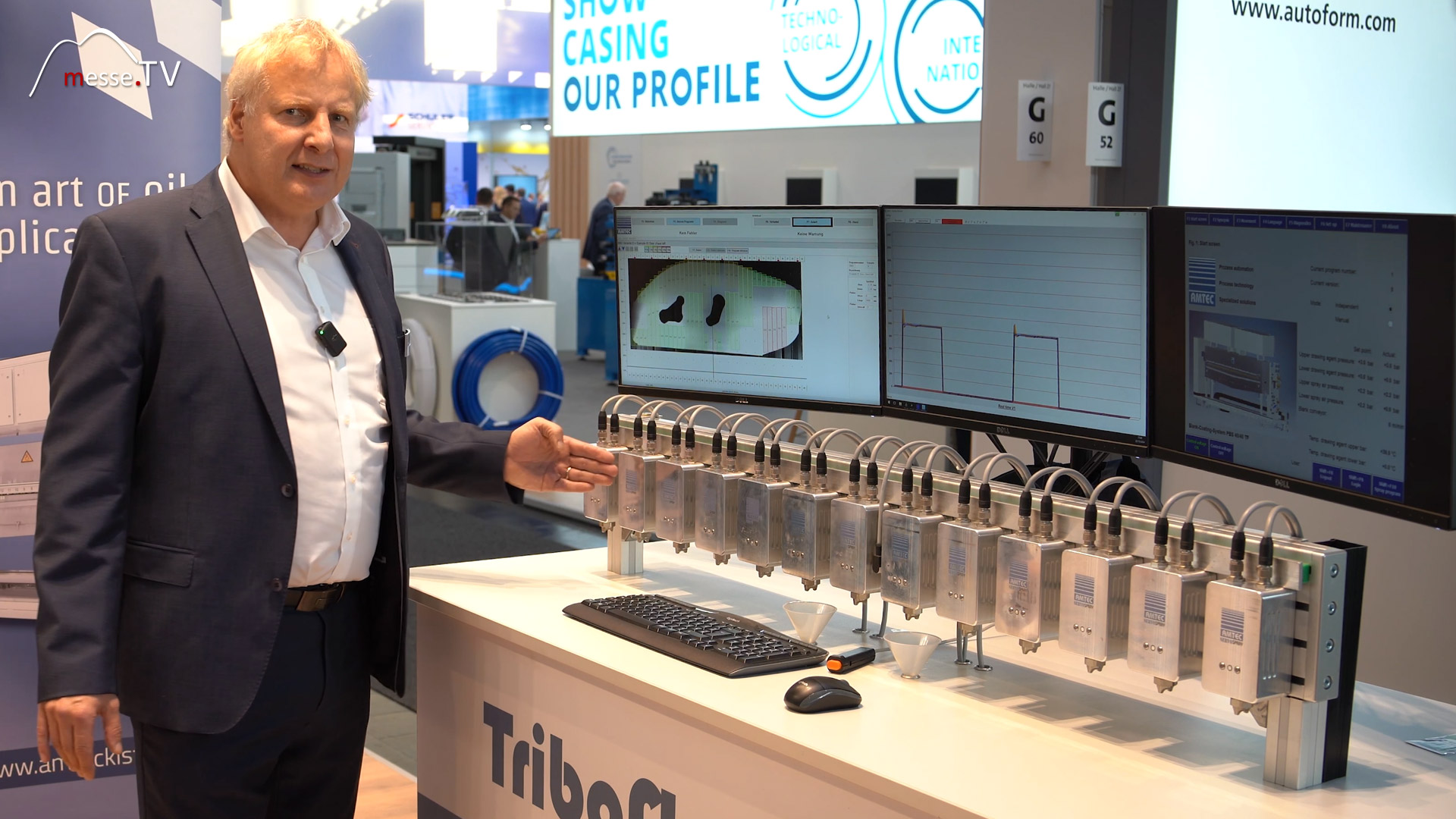
Amtec Beöler mit Ventilen für gleichmäßige Beschichtung
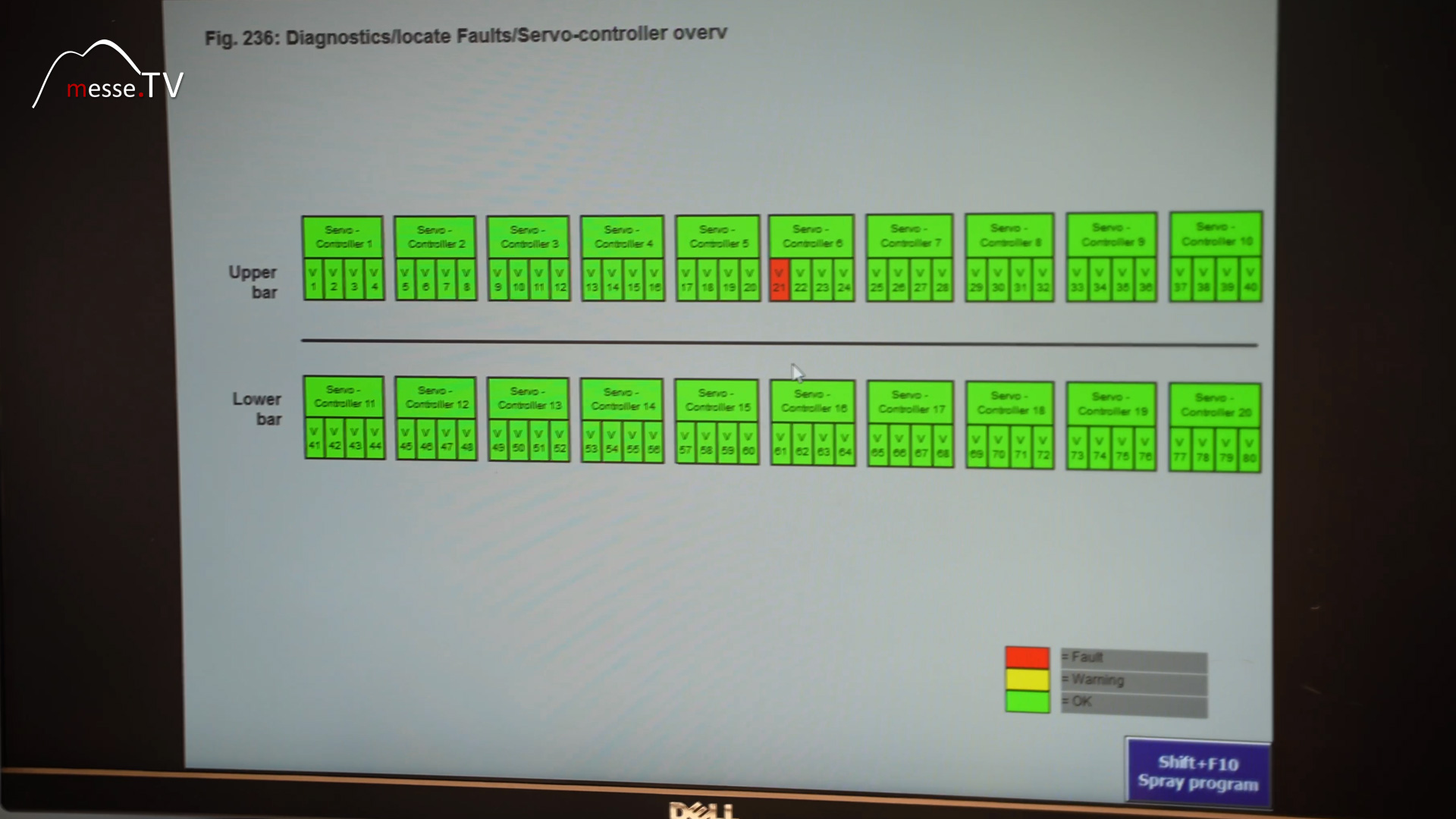
Amtec setzt bei diesem System auf eine Vielzahl einzeln gesteuerter Ventile. Bis zu 80 Einheiten sind verbaut – jeweils 40 oberhalb und unterhalb des durchlaufenden Blechs. Diese Anordnung ermöglicht eine gezielte Verteilung des Schmiermittels über die gesamte Oberfläche. Die Beschichtung erfolgt nicht flächig und gleichförmig, sondern nach definierten Mustern. Je nach Bauteil wird festgelegt, wo mehr oder weniger Schmierstoff benötigt wird. Diese Verteilung wird vorab programmiert und anschließend automatisch umgesetzt. Das Prinzip ist einfach beschrieben, aber technisch anspruchsvoll: Zu wenig Schmierung führt zu erhöhtem Verschleiß und ungleichmäßiger Umformung, zu viel Schmierung kann den Prozess ebenfalls stören. Die Qualität hängt damit unmittelbar von der Präzision der Dosierung ab.
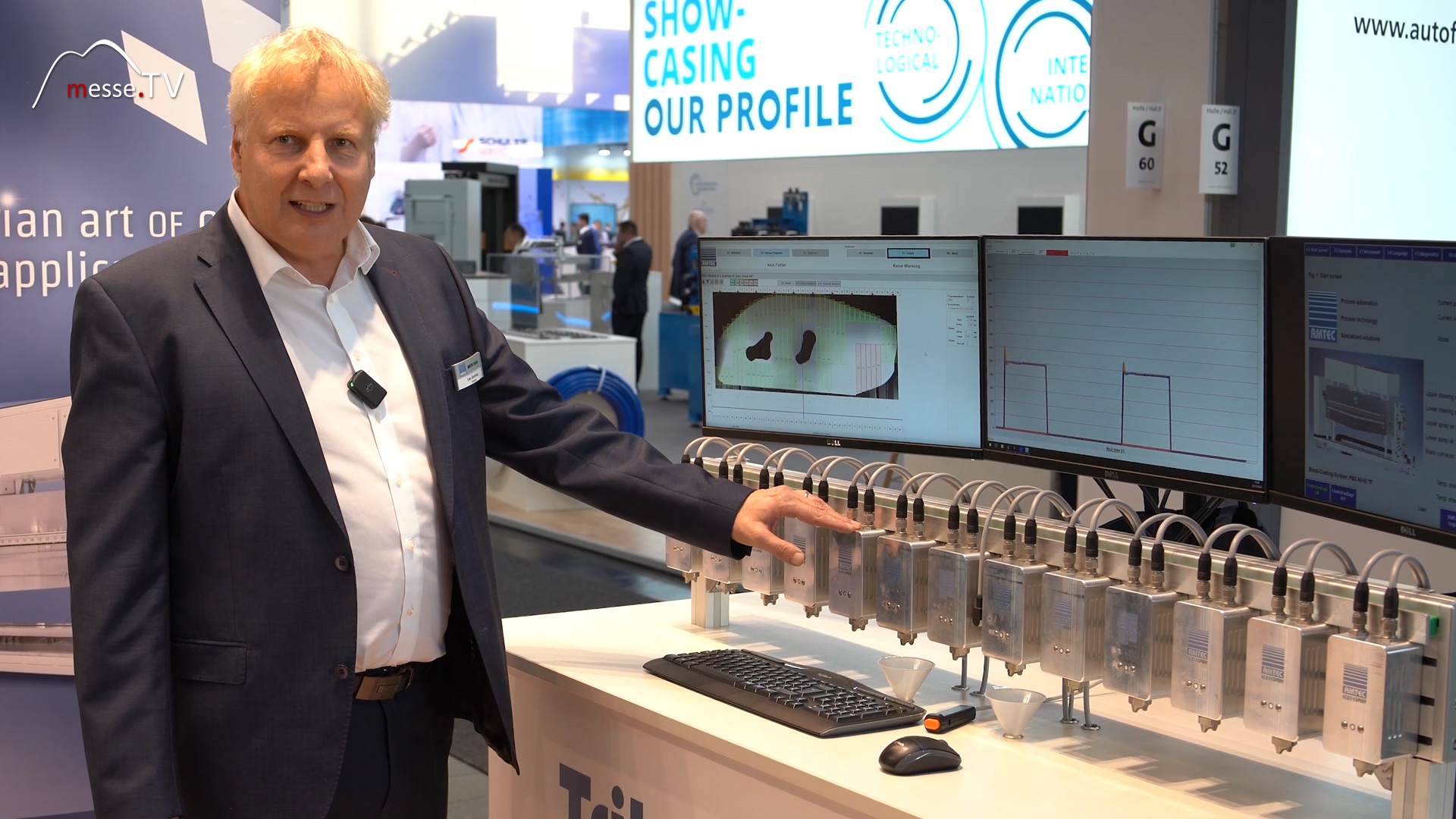
Ventilüberwachung als zentrales Element im Betrieb
Ein grundlegendes Problem in solchen Anlagen ist die fehlende Transparenz. Betreiber können oft nicht sicher beurteilen, ob einzelne Ventile korrekt arbeiten. Abweichungen bleiben zunächst unbemerkt und wirken sich erst später im Umformprozess aus. Amtec begegnet diesem Problem mit einer integrierten Überwachung. Jedes Ventil wird einzeln kontrolliert. Die Maschine erkennt, ob die vorgegebene Schmiermenge tatsächlich erreicht wird und ob die Sprühfunktion korrekt arbeitet. Diese Selbstüberwachung ist direkt in den Prozess eingebunden. Sie liefert kontinuierlich Daten über den Zustand der Anlage und schafft damit eine Grundlage für schnelle Eingriffe. Der Betreiber erhält nicht nur eine allgemeine Rückmeldung, sondern konkrete Hinweise auf einzelne Ventile.

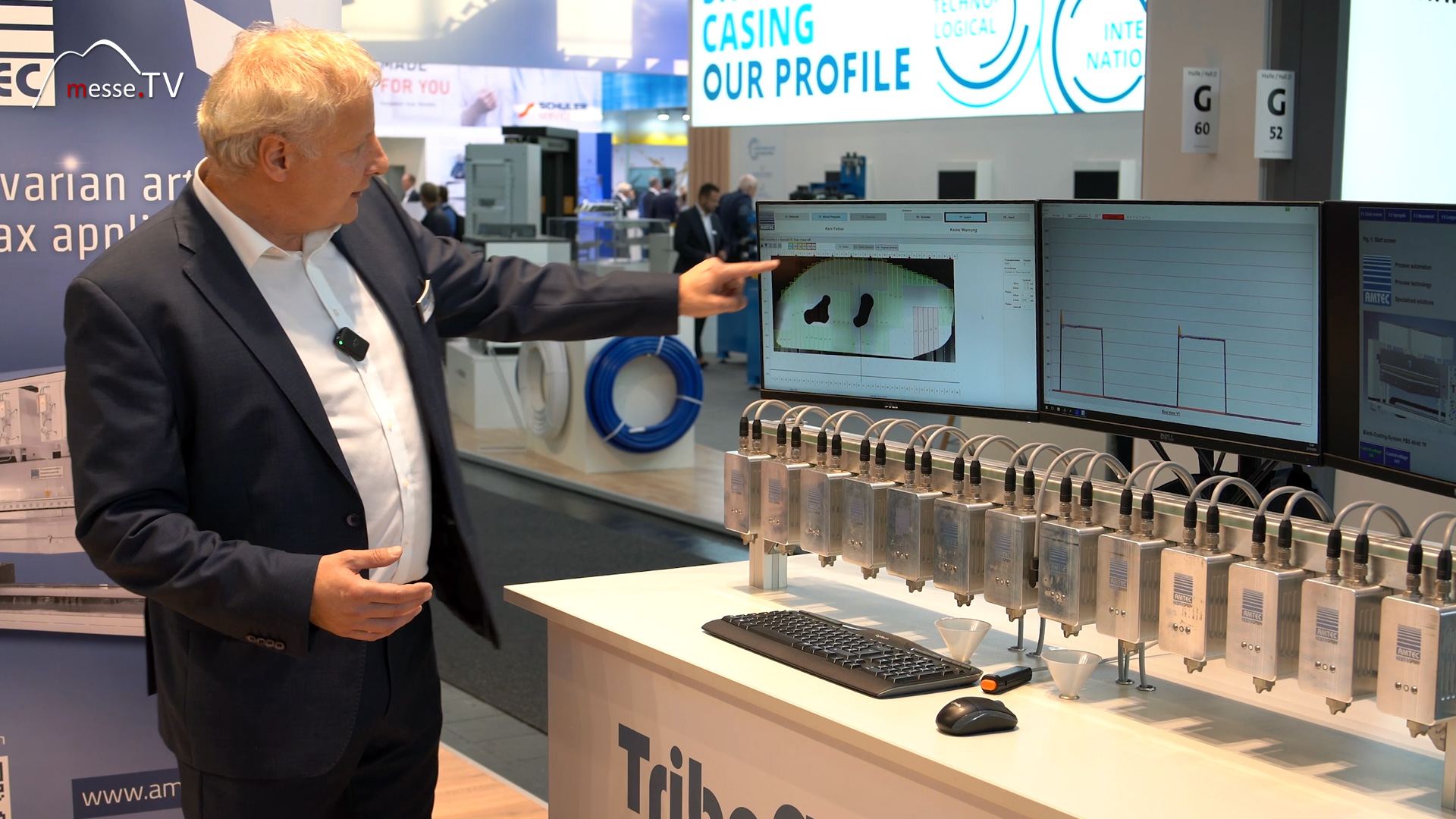
Sensorik und Diagramm zur Kontrolle der Sprühbewegung
Die technische Grundlage dieser Überwachung liegt in der Analyse der Sprühnadelbewegung. Öffnen und Schließen der Ventile erfolgen in präzise definierten Intervallen. Diese Bewegungen werden von integrierten Sensoren erfasst und in Echtzeit ausgewertet. Die Ergebnisse werden in Form von Kurven dargestellt. So lässt sich genau nachvollziehen, wann ein Ventil öffnet, wie lange es aktiv bleibt und wann es wieder schließt. Abweichungen vom Sollzustand werden sofort sichtbar. Ein Beispiel zeigt, wie ein einzelnes Ventil in kurzen Intervallen arbeitet, um das Schmiermittel gezielt zu verteilen. Wird die Sprühnadel manipuliert oder arbeitet sie nicht korrekt, verändert sich die Kurve. Die Maschine erkennt in diesem Fall eine Überdosierung und meldet ein Fehlerbild. Typische Eigenschaften des Systems:
- Überwachung jedes einzelnen Ventils in Echtzeit
- Darstellung der Sprühbewegung als Kurvenverlauf
- Erkennung von Über- oder Unterdosierung
- gezielte Diagnose einzelner Komponenten
- schnelle Reaktion innerhalb von Sekunden
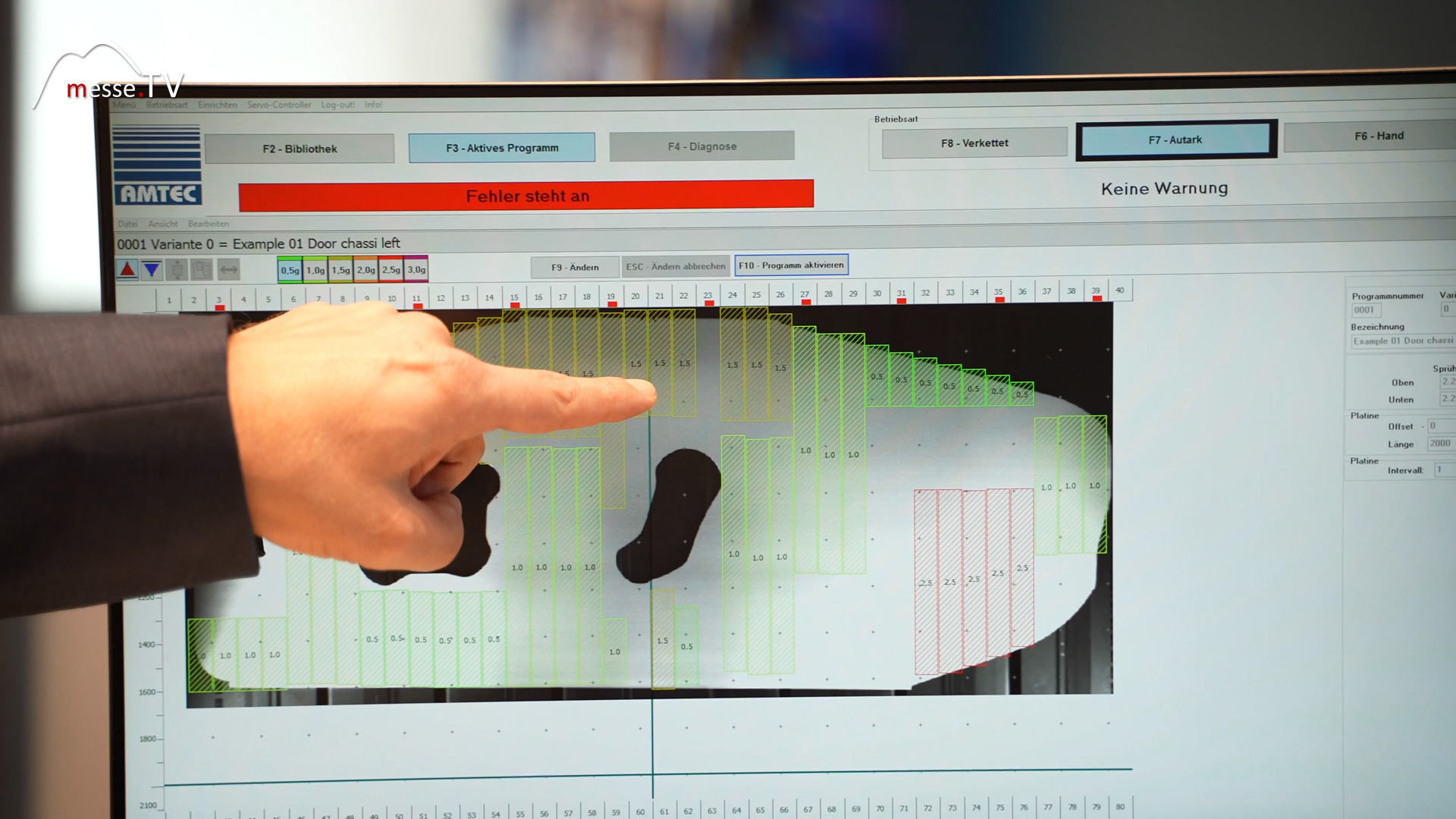
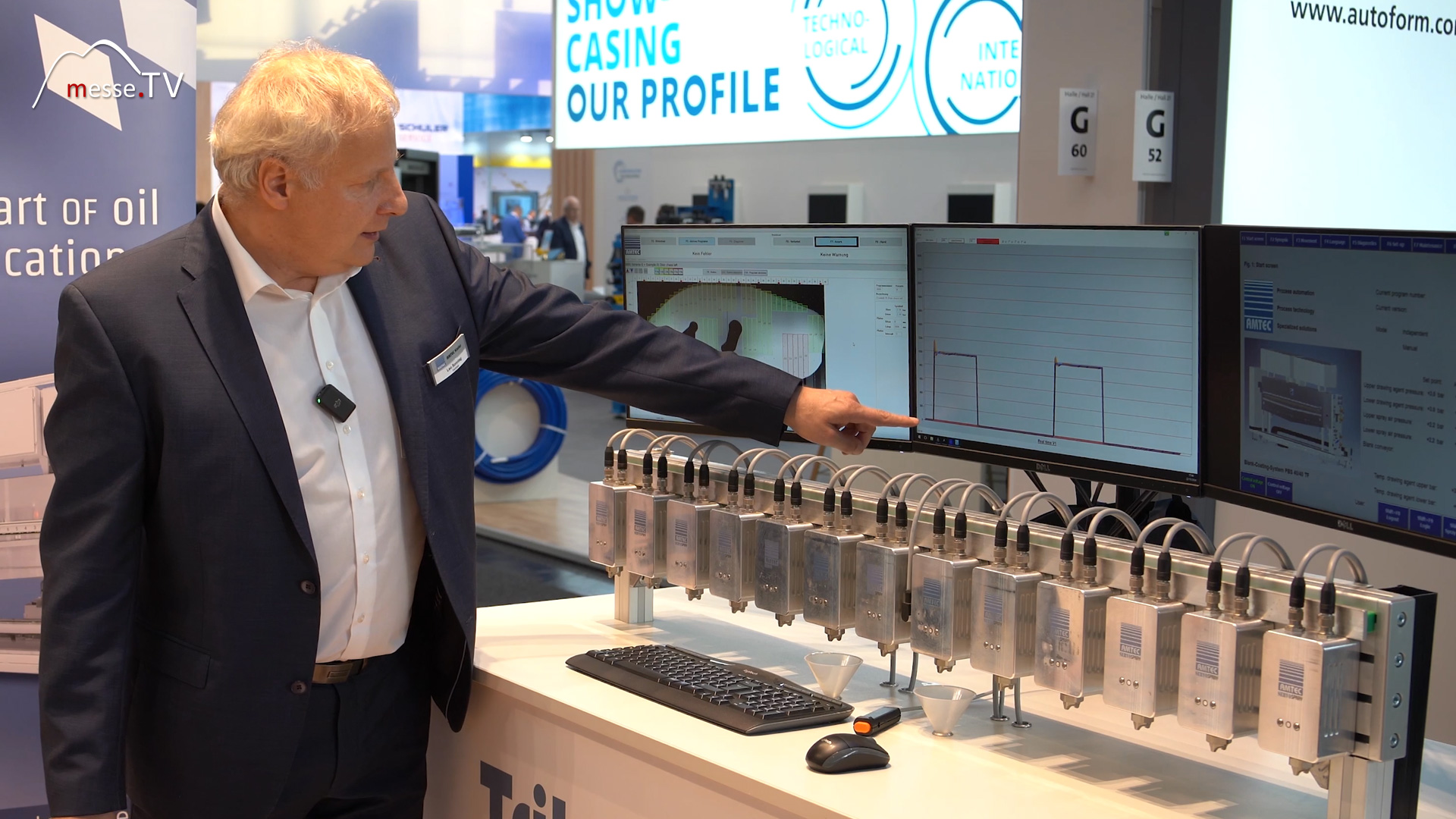
Diagnose von Fehlern und gezielte Eingriffe
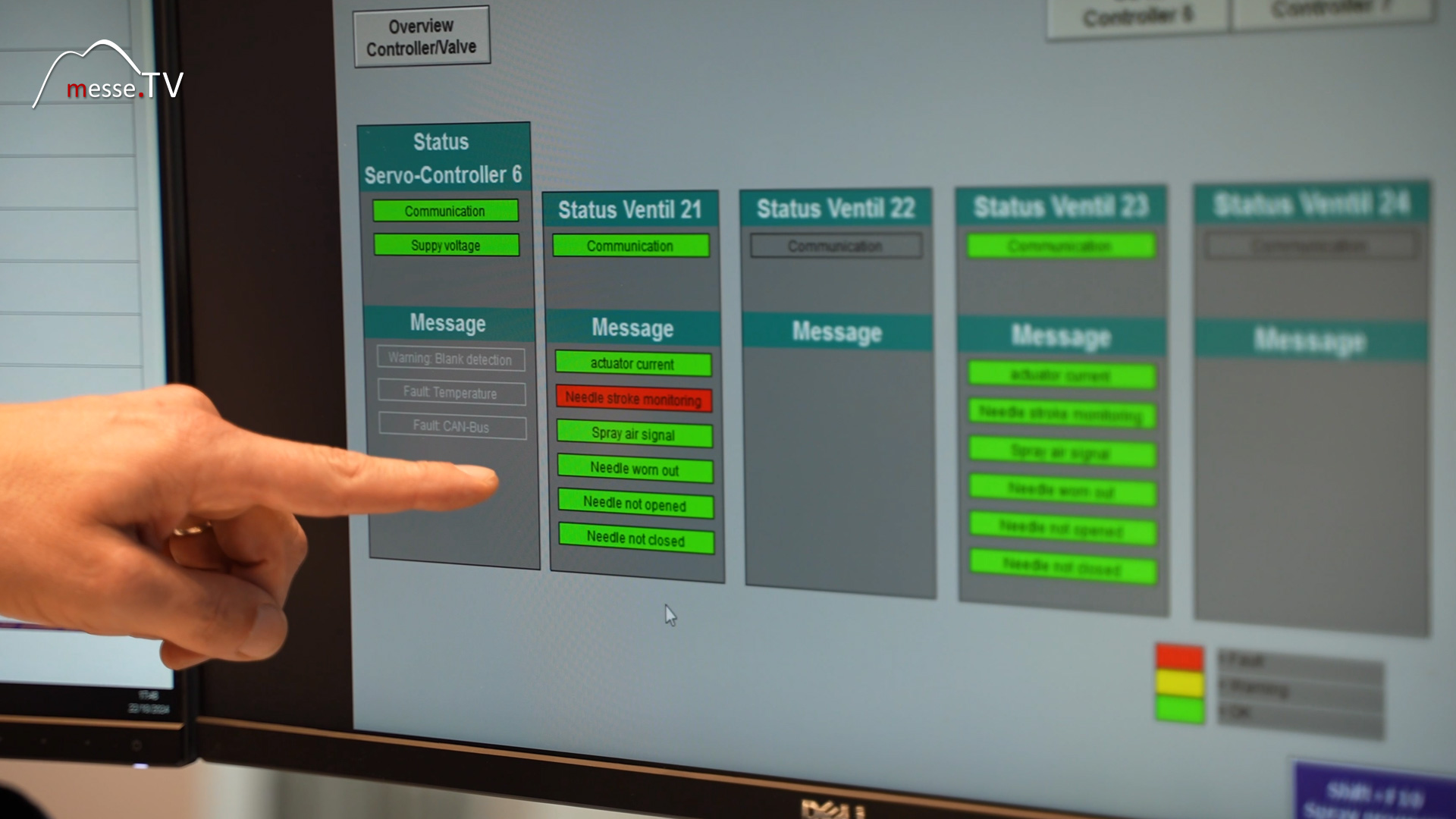
Ein zentraler Vorteil liegt in der unmittelbaren Diagnose. Wird ein Fehler erkannt, kann der Betreiber gezielt reagieren. Das System zeigt exakt an, welches Ventil betroffen ist und welche Abweichung vorliegt. Im gezeigten Beispiel wird ein Fehler im Ventil 21 identifiziert. Die Sprühnadel arbeitet nicht im vorgesehenen Bereich, wodurch zu viel Schmiermittel aufgetragen wird. Diese Information ermöglicht eine direkte Maßnahme – etwa den Austausch des Ventils oder eine Anpassung der Einstellung. Die Alternative wäre eine aufwendige manuelle Kontrolle der gesamten Anlage. Durch die integrierte Überwachung reduziert sich dieser Aufwand erheblich.
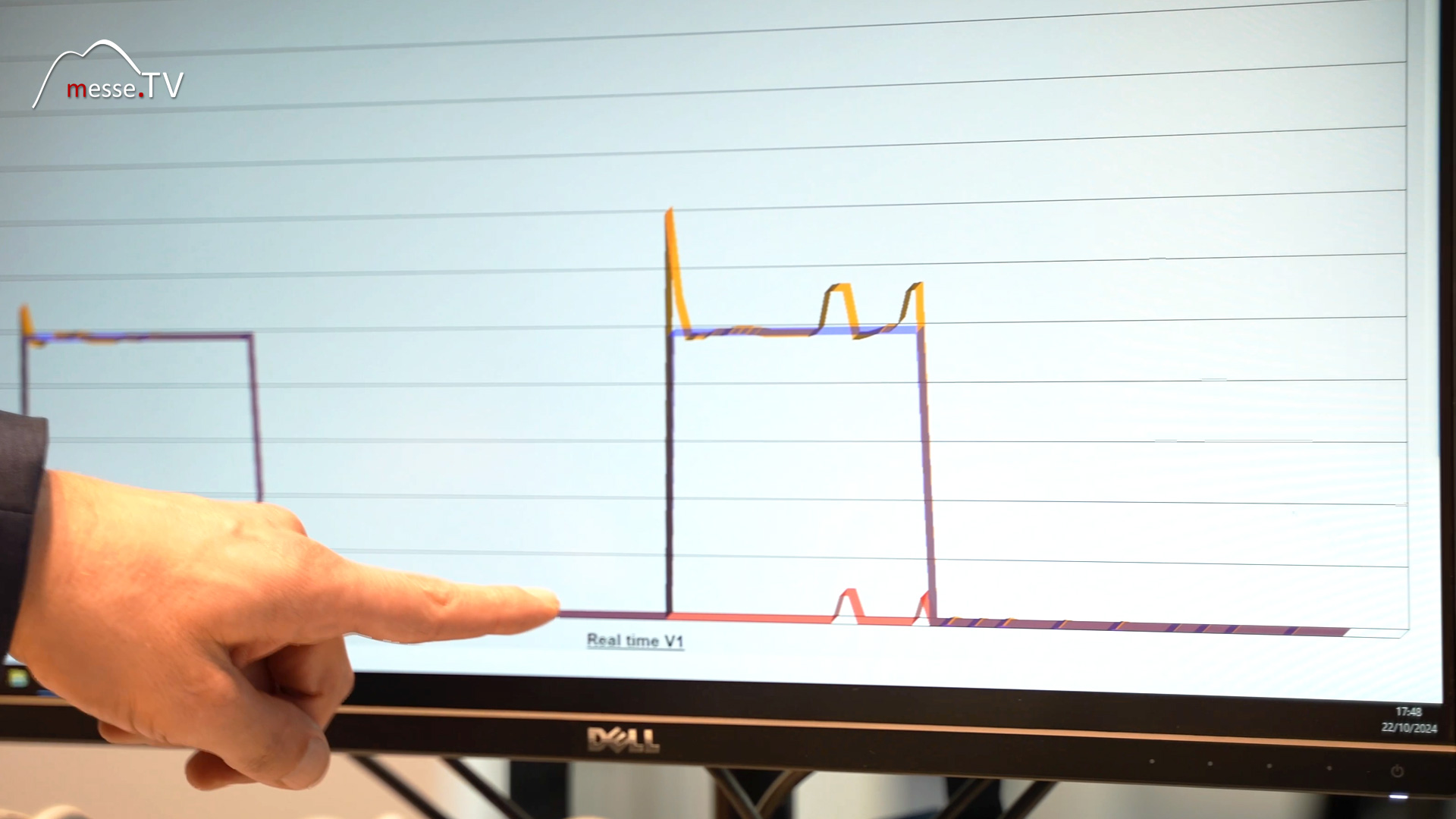
Voice Coil und magnetische Steuerung der Dosierung
Ein wesentlicher technischer Aspekt liegt im Antrieb der Sprühnadel. Amtec setzt auf eine Lösung ohne klassische mechanische Betätigung. Stattdessen kommt ein magnetischer Linearaktuator zum Einsatz, ein sogenannter Voice Coil. Diese Bauweise erlaubt eine besonders präzise Steuerung. Die Bewegung der Sprühnadel erfolgt kontaktarm und lässt sich fein dosieren. Gleichzeitig reduziert sich der mechanische Verschleiß, da weniger Bauteile direkt aufeinander wirken. Die Dosierung des Schmiermittels wird damit nicht nur stabiler, sondern auch schneller anpassbar. Gerade bei wechselnden Bauteilen oder komplexen Geometrien ist diese Flexibilität entscheidend.
Einordnung im Kontext der Pressenstraße
Der Beöler von Amtec zeigt, wie sich ein etablierter Prozessschritt weiterentwickeln lässt. Die eigentliche Aufgabe – das Auftragen von Schmiermittel – bleibt unverändert. Neu ist die konsequente Integration von Überwachung und Diagnose. Damit wird die Maschine zu einem aktiven Bestandteil der Prozesskontrolle. Sie liefert nicht nur Material, sondern auch Informationen. Diese Kombination erhöht die Sicherheit im Betrieb und ermöglicht eine präzisere Steuerung der gesamten Umformlinie. In der Praxis bedeutet das vor allem eines: weniger Unsicherheit. Der Betreiber weiß, ob die Beschichtung den Anforderungen entspricht. Abweichungen werden nicht erst im fertigen Bauteil sichtbar, sondern direkt im Prozess erkannt.
Messe-Berichterstattung bundesweit - Messewissen, Termine & Veranstaltungen


