Martigny Exhibition Centre: exhibition halls, conferences and public events in Valais
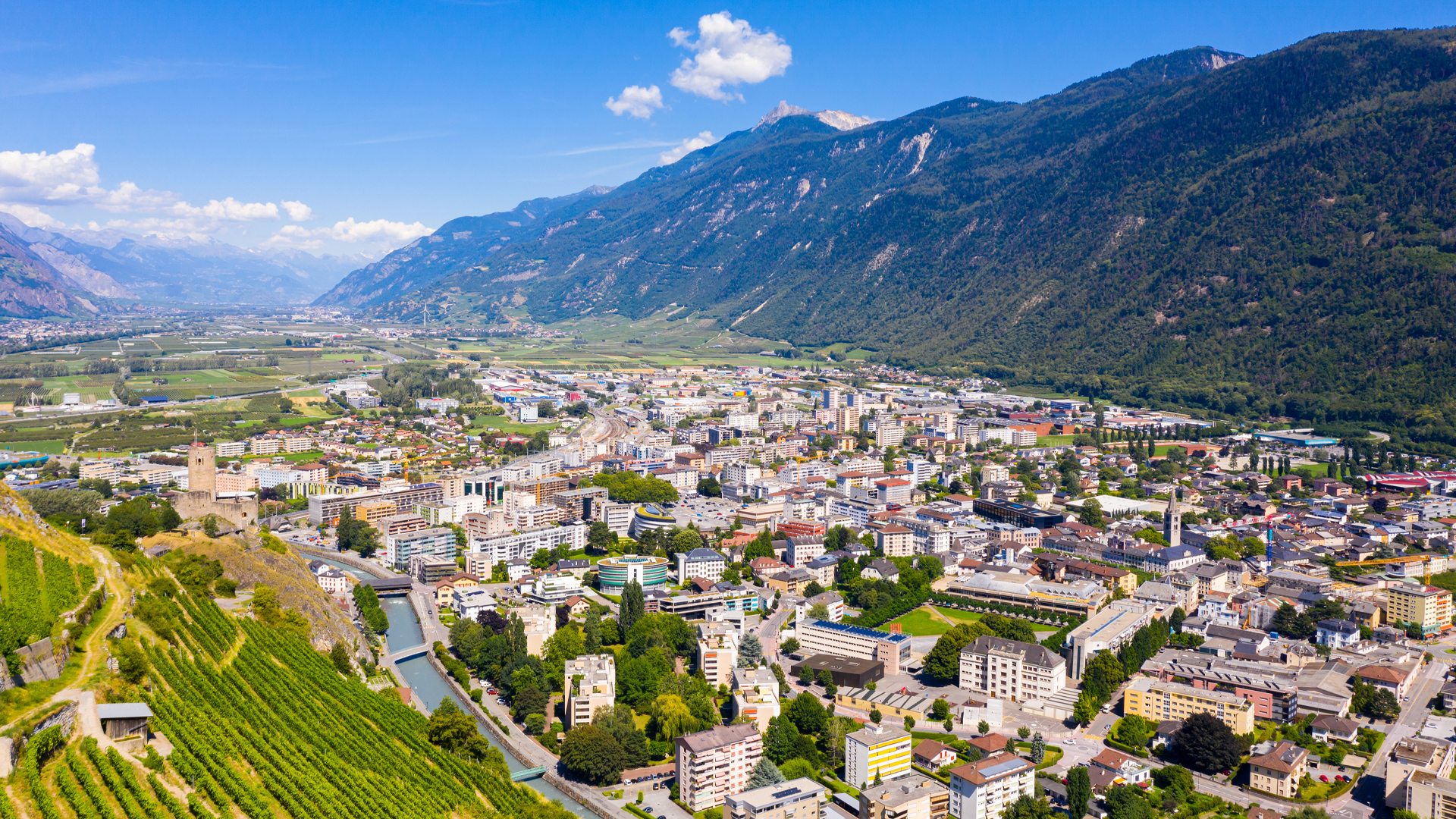
Located between the Alpine region and international transport routes, Martigny has established itself as a versatile event venue. The site combines regional economic power with popular formats and offers flexible infrastructure for trade fairs, conferences and events. The location thus fulfils a strategic role in the event landscape of Western Switzerland.
Which leading trade fairs take place at the Martigny Exhibition Centre?
- Agrovina – Viticulture, oenology
Hub between Alpine passes and the events industry
The Martigny exhibition centre is located at the intersection of transport routes from French-speaking Switzerland, France and Italy. This location is not only geographically convenient, it also shapes the role of the site: visitors to a trade fair, congress or public event here rarely come by chance. Martigny is a transit city, a place of work, a destination for excursions – and the site makes use of precisely this mix. For the region, the Martigny exhibition centre is therefore more than just a shell of halls: it is a meeting place where business, tourism and the public constantly rearrange themselves throughout the year.
From regional exhibition venue to multifunctional facility
The development of modern exhibition centres is similar in many cities: in the past, the focus was on trade shows and sales exhibitions, but today it is more about experiences, dialogue formats and combinations of exhibitions, stages and conferences. In Martigny, too, the profile has broadened over the years. Under the name martignyexpo, the site is operated as an event and exhibition centre; in practice, this means that not only exhibition stands are planned, but also concert seating, congress procedures, catering logistics and security concepts. The Martigny exhibition centre is therefore less of a ‘trade fair’ and more of an infrastructure that can be reconfigured again and again.
Spaces that adapt to the format – not the other way around
One of the location's strengths is its scalability. The site has several exhibition halls with a total area of more than 11,000 square metres, plus around 1,500 square metres of conference areas and landscaped outdoor areas that can be used depending on the event. That may sound like numbers, but in practice it is a question of dramaturgy: a trade fair needs clear signage, quiet areas for discussions and reliable technology; a public format thrives on open zones, short distances and visible ‘attractions’ . This is exactly what the Martigny exhibition centre is designed for. To make the spatial possibilities more tangible, it helps to look at typical usage modules that organisers combine at the location:
- Exhibition halls for stands, special shows and product demonstrations
- Conference rooms for panels, training courses, press conferences and workshops
- Outdoor areas for additional space, food offerings or seasonal formats
- Technical setup for lighting, sound, projection and hybrid transmissions
- Logistics axes for delivery, assembly and dismantling, as well as visitor flow management
The Foire du Valais as a crowd puller and the importance of major flagship events
When talking about Martigny as an event location, one name quickly comes to mind: the Foire du Valais. This ten-day event is considered one of the largest trade fairs in Switzerland and is a fixture in French-speaking Switzerland. Its scale – several hundred exhibitors and well over two hundred thousand visitors – explains why such a leading format is so important for positioning a location. It's not just about reach, but also about routine: a major event of this magnitude sharpens processes, tests safety and traffic concepts, and sets standards that smaller formats can later benefit from.
Specialist topics, specialised trade fairs and the mix that carries the year
Beyond the big public days, the event calendar thrives on specialisation. In Martigny, there are formats that specifically target certain industries – such as wine, gastronomy, agriculture or regional economic topics. In addition, there are special events and recurring dates that function more like a market or festival. For the Martigny exhibition centre, this mix is strategic: it spreads capacity utilisation throughout the year, stabilises revenues and ensures that the site is not only visible during the ‘high season’. It also has a side effect that is relevant for many regions: hotels, restaurants and service providers can plan more reliably because the event cycle becomes more predictable.
Getting there, parking, short distances – why accessibility is part of the concept
No matter how attractive an exhibition centre may be in terms of content, if getting there and back is frustrating, the experience will not be a positive one. In Martigny, accessibility is therefore part of the location logic. The site is close to the A9 motorway and also has good rail connections; depending on the event, additional information about the last mile is provided, in some cases with regional rail or bus connections to the vicinity of the entrance. For many visitors, the question of parking is also important. Parking spaces are regularly designated around the site, which must also be sufficient on days when visitor numbers are high.
What visitors and exhibitors can specifically expect in terms of the event process
The operation of an event venue is not reflected in advertising slogans, but in the details: admission, cloakroom, barrier-free paths, signage, functioning sanitary and service areas, stable power and data connections for exhibitors. The quality of these basics is crucial, especially for formats with a large audience. The Martigny exhibition centre is designed to serve different target groups at the same time: families, trade visitors, exhibitor teams, media – often in quick succession between two events. Typical requirements that organisers must cover during planning can be summarised as follows:
- Visitor guidance with clear orientation, even when crowds are high
- Service points such as cloakroom, catering and information desk
- Accessibility and practical routes for material and people flows
- Technical reliability for stage programmes and presentations
- Plannable logistics windows for set-up and dismantling within tight time frames
Perspective: Why smaller cities with strong exhibition venues can score points
When competing with large cities, a location like Martigny has its own advantage: it is manageable, often quicker to reach than one might think, and it can accommodate formats that would be lost in the competition for exhibition halls in large cities. The Martigny exhibition centre benefits from two developments: on the one hand, many organisers are looking for locations that combine regional roots with supra-regional appeal. On the other hand, the ability to convert halls for different formats is becoming increasingly important – from congresses with streaming components to public exhibitions with stage programmes. It is precisely this flexibility that is the long-term strength of the location.
Trade fair reporting Germany - Trade fair knowledge, dates & events


