Deuter: Backpack systems between alpine tradition and modern outdoor technology
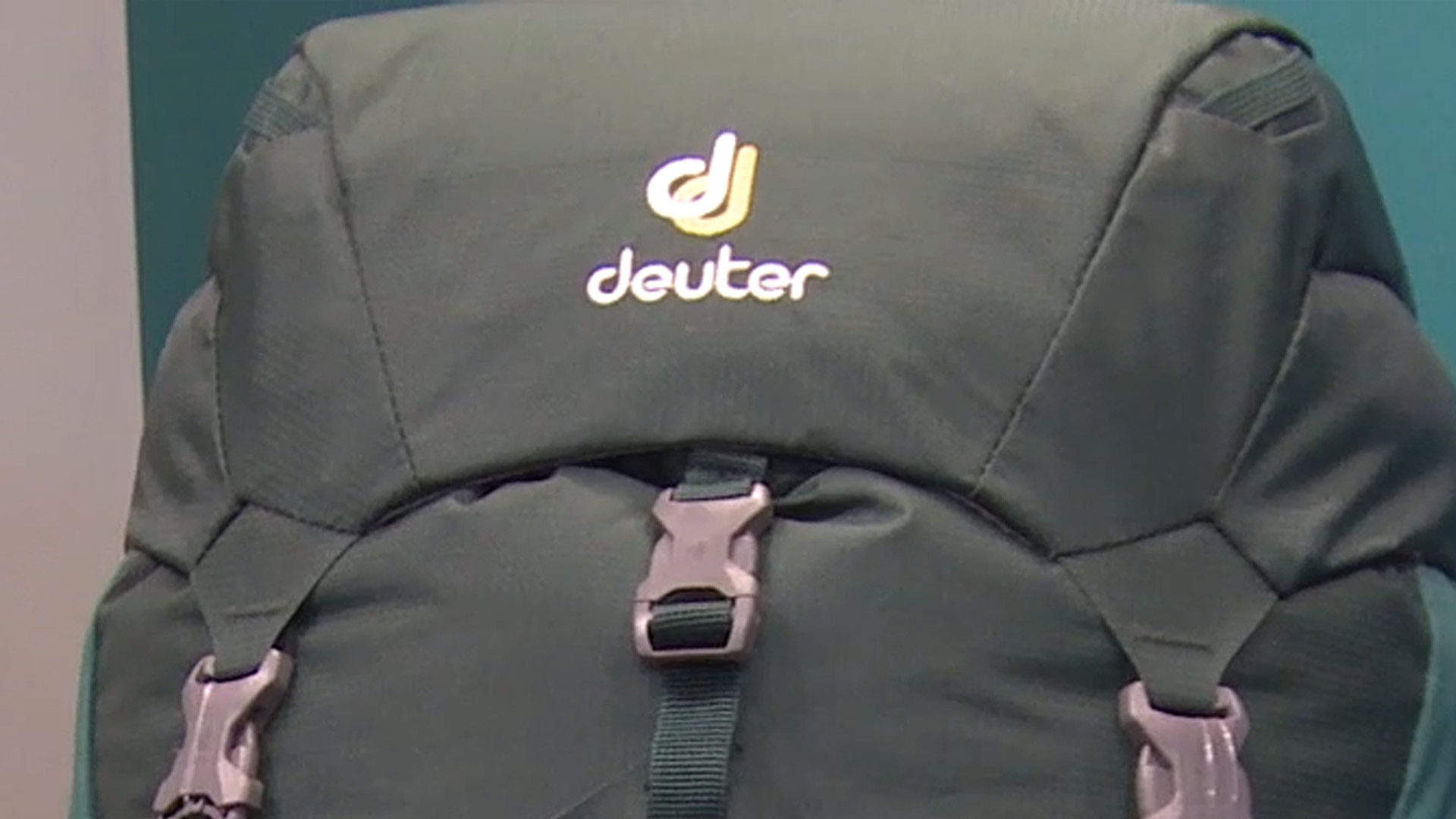
Deuter is one of the most traditional brands in the field of backpacks and outdoor equipment. For more than a century, the company has stood for functional products that are designed for long-term use, high wearing comfort, and practical details. Deuter is aimed at mountaineers, hikers, cyclists, and travelers who use their equipment in real-world conditions and therefore place high demands on materials and construction.
From an Augsburg manufacturer to an international outdoor brand
Deuter was founded in 1898 by Hans Deuter in Augsburg. In its early years, the company produced sacks and mailbags, including for the Royal Bavarian Post Office. However, at the beginning of the 20th century, the focus shifted to backpacks, tents, and other equipment, which were initially used primarily in military and expedition-related environments. An important step in the company's development was its collaboration with mountaineers and expedition teams. In the 1930s, Deuter backpacks were used on demanding high-altitude mountain tours, including in the Himalayas. This early proximity to alpine use had a lasting impact on the technical orientation of the brand and helped establish Deuter as a reliable supplier of mountaineering equipment.
Presence in specialist stores and at outdoor trade fairs
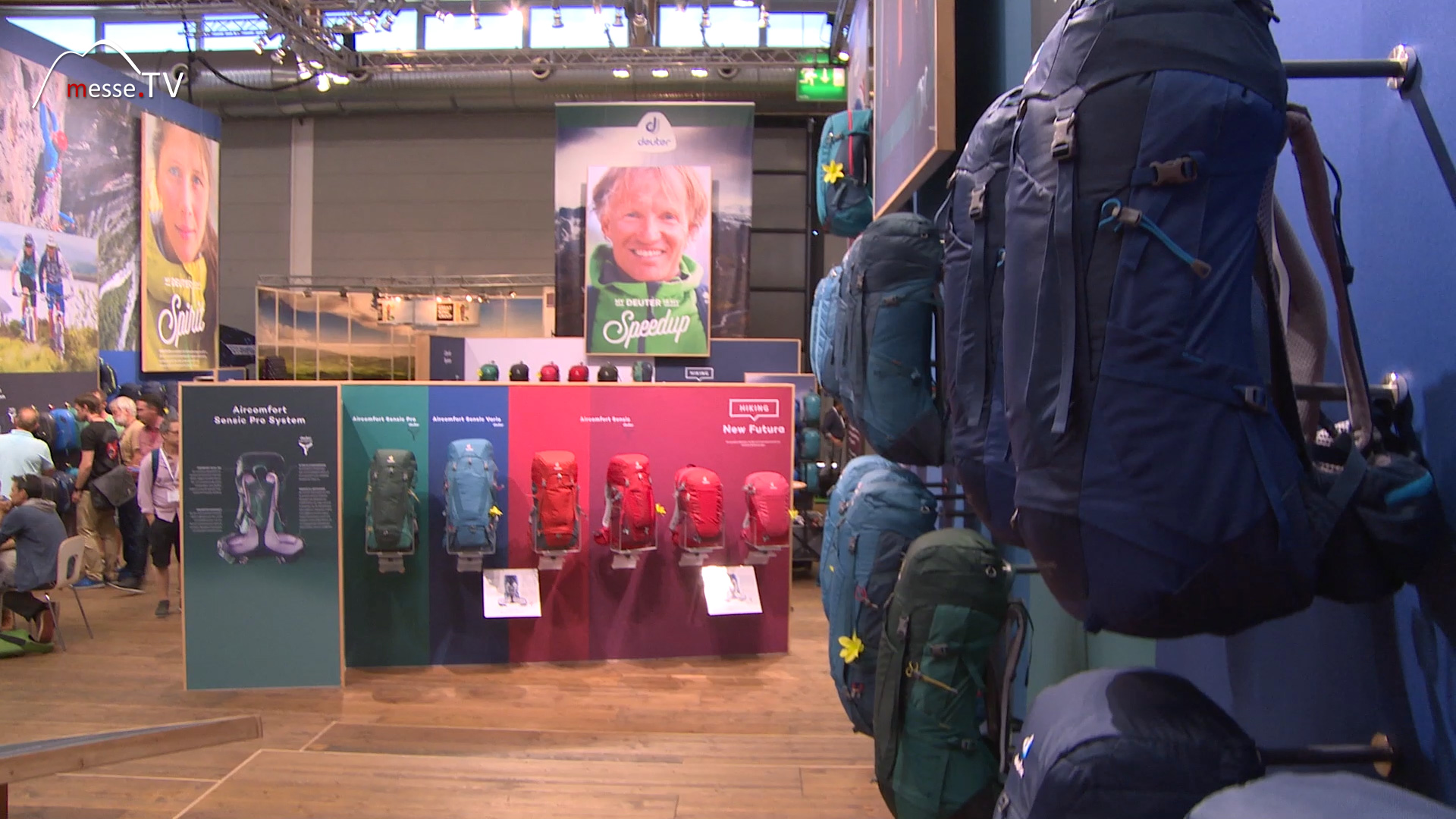
Deuter is regularly represented at international outdoor and sports trade fairs, where new product generations, carrying systems, and material developments are presented. The focus is less on fashion aspects and more on functional improvements, ergonomic concepts, and durability in long-term use. These trade fair appearances are relevant for editorial consideration as they provide insights into the development work. It becomes clear how feedback from practical experience, alpinism, and leisure use is incorporated into new designs and how the requirements for backpacks have changed over the years.
Articles about Deuter on Messe.TV
Deuter Backpacks – Outdoor 2017
When it comes to backpacks, Deuter stands for experience and tradition. This year there are a lot of new products from the backpack specialist. Trade ... Deuter Backpacks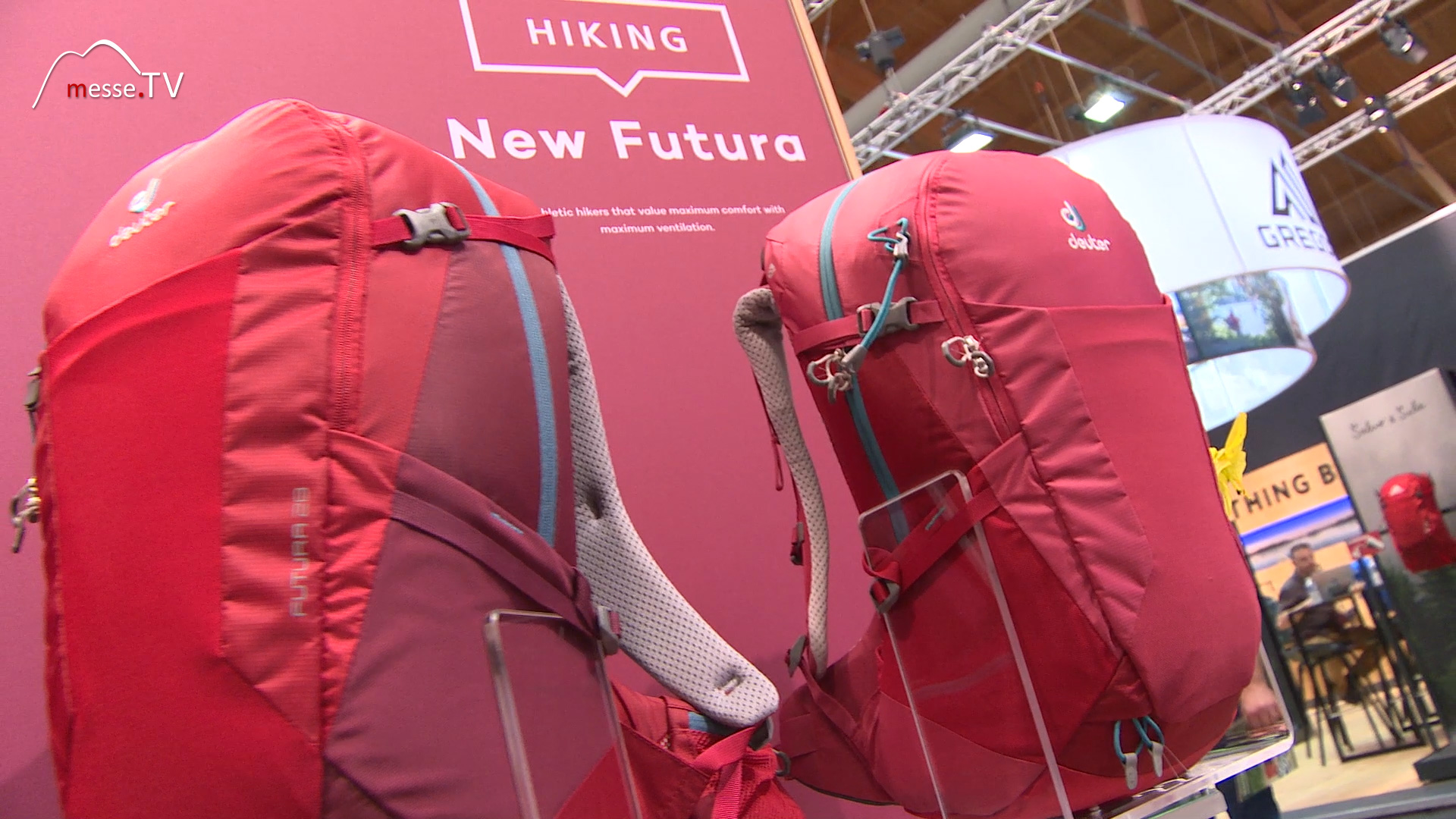
Backpacks and systems for different areas of use
Deuter's product range is clearly structured according to areas of use. Backpacks are available for hiking, trekking, climbing, ski touring, cycling, and travel. A central element of many models is the Aircomfort carrying system, which provides improved ventilation thanks to a tensioned mesh back construction and increases carrying comfort, especially on longer tours. In addition to backpacks, the portfolio also includes complementary equipment and accessories. Key product and equipment areas include:
- Hiking and trekking backpacks with ergonomic carrying systems
- Alpine backpacks for climbing and high-altitude tours
- Cycling and touring backpacks with specific back ventilation
- Sleeping bags for different temperature ranges
- Accessories such as rain covers and safety equipment
Technical development and functionality
Deuter takes a clearly functional approach to product development. Materials, cuts, and carrying systems are designed for durability, repairability, and long-term use. Instead of short-term design trends, the focus is on technical details such as weight distribution, freedom of movement, and durability. Many developments are created in close consultation with experienced users. Feedback from mountaineers, guides, and long-distance hikers is directly incorporated into the optimization of existing models. This practical approach is a key reason for the brand's high acceptance in the outdoor sector.
Sustainability and social responsibility
In recent years, Deuter has continuously expanded its sustainability strategy. The company is increasingly focusing on recycled and resource-saving materials and ensuring that its products have the longest possible service life. Deuter is also a member of the Fair Wear Foundation and is committed to transparent and fair working conditions throughout the supply chain. From a journalistic perspective, the holistic approach is particularly relevant. Sustainability is not viewed in isolation, but is linked to product quality and social responsibility. The goal is to develop equipment that can be used for many years while taking ecological and social standards into account.
Positioning in the international outdoor market
In an international comparison, Deuter occupies a position that is strongly influenced by alpine experience and technical continuity. The brand combines traditional mountaineering expertise with modern material and system development. Deuter is thus exemplary for an outdoor brand that combines functionality, durability, and responsible production. This combination explains the company's long-term relevance in the global market for outdoor equipment.
Trade fair reporting Germany - Trade fair knowledge, dates & events


